Miami's leading receiver was injured in Wednesday's practice. By Wednesday night, two national reporters — ESPN's Pete Thamel and CBS Sports' Matt Zenitz — were reporting a high ankle sprain and surgery, with a return targeted for the College Football Playoff. Miami has not confirmed that development; its only statement says he is still being evaluated.
Next stop: Wisconsin at Iowa + No. 1 Miami at North Carolina — Sat Oct 31 doubleheader · Kinnick Stadium, 12:00 PM ET · Kenan Stadium, 7:30 PM ET
Latest Pegasus headlines: Breaking — Buck and Aikman tension over ESPN contracts, per Front Office Sports — Aikman says he'll be a free agent. Breaking — CFP nearing deal to expand to 24 teams in 2027, per ESPN's Pete Thamel — pending final approvals. Breaking — Rams release kicker Harrison Mevis and sign Blake Grupe off the Jets' practice squad, per NFL Network reports. Final/OT: Bills 37, Rams 34 — an instant classic at SoFi, with Tyler Bass hitting the 45-yard winner after Greg Rousseau blocks Mevis. NFL — Rams LT Alaric Jackson suspended two games for striking Bradley Chubb in the postgame altercation at SoFi. UCLA quarterback Nico Iamaleava is expected to miss the rest of the season with a torn ACL, per On3. The NFL suspends 49ers linebacker Dre Greenlaw one game for his headbutt against Seattle; Greenlaw will appeal, per NFL Network. MLB: FINAL/12 — Rays 4, Brewers 3: Tampa Bay walks off Milwaukee in World Series Game 4 to force a Game 5; Brewers lead the Series 3–1. Warriors center Kristaps Porzingis remains out indefinitely with a health issue, per ESPN. Done deal: Jalen Duren signs 5-year, $200M extension with Pistons — weight clause out (per Shams/ESPN). Final/OT: Kentucky 35, No. 10 LSU 34 at Tour Stop 8 in Lexington. Breaking — Cristiano Ronaldo has walked out of Portugal’s national team camp and says he will tell Portugal the truth about his departure in due course. Ronaldo saga — Airport chase failed, No. 7 goes to Leão for Denmark, Ramos starts. Breaking — AEW Dynamite presents A Tribute to PAC tonight at 8 ET from Pittsburgh, headlined by Will Ospreay versus Ricochet. Breaking — Schefter reports Jayden Daniels likely needs offseason elbow surgery; he is out Sunday in London and Marcus Mariota will start against the Colts. Field Notes: Fireworks over Soldier Field. Final/OT: Ravens 30, Falcons 23 on Sunday Night Football in Atlanta. Money in the Bank: Penta wins the Men’s Money in the Bank ladder match; Liv Morgan is the new Women’s World Champion. Next stop: Sam Houston at Missouri State, Tuesday, October 27 in Springfield, Missouri.
Formula 1 — Antonelli champion at 20, the youngest in history: P3 in Mexico City seals the title; Verstappen wins by 0.799.◆Breaking — Buck and Aikman tension over ESPN contracts, per Front Office Sports — Aikman says he'll be a free agent.◆Breaking — CFP nearing deal to expand to 24 teams in 2027, per ESPN's Pete Thamel — pending final approvals.◆Breaking — Rams release kicker Harrison Mevis and sign Blake Grupe off the Jets' practice squad (per NFL Network).◆Final/OT — Bills 37, Rams 34 · Instant classic at SoFi · Tyler Bass hits the 45-yard winner after Greg Rousseau blocks Mevis.◆NFL — Rams LT Alaric Jackson suspended two games for striking Bradley Chubb in the postgame altercation at SoFi.◆UCLA QB Nico Iamaleava expected to miss the rest of the season with a torn ACL (per On3).◆NFL suspends 49ers LB Dre Greenlaw one game for his headbutt vs. Seattle; Greenlaw will appeal (per NFL Network).◆MLB — FINAL/12: Rays 4, Brewers 3 — Tampa Bay walks it off in World Series Game 4 to force Game 5; Milwaukee leads the Series 3–1.◆Warriors C Kristaps Porzingis remains out indefinitely with a health issue (per ESPN).◆Done deal: Jalen Duren signs 5-year, $200M extension with Pistons — weight clause out (per Shams/ESPN).◆Final/OT — Kentucky 35, No. 10 LSU 34 · Tour Stop 8 · Lexington◆Breaking — Ronaldo walks out on Portugal; says he will tell the country “the truth” in due course.◆Ronaldo saga — Airport chase failed, No. 7 goes to Leão for Denmark, Ramos starts.◆Breaking — AEW Dynamite: A Tribute to PAC tonight at 8 ET from Pittsburgh; Ospreay vs Ricochet headlines.◆Breaking — Schefter: Jayden Daniels likely needs offseason elbow surgery; out Sunday in London, Mariota starts vs Colts.◆Field Notes — “Fireworks over Soldier Field”◆Final/OT — Ravens 30, Falcons 23 · Sunday Night Football · Atlanta◆MITB — Penta wins the Men’s Money in the Bank ladder match; Liv Morgan is the new Women’s World Champion◆Next Stop — Sam Houston at Missouri State · Tue Oct 27 · Springfield, MO◆
Breaking — Buck and Aikman tension over ESPN contracts, per Front Office Sports — Aikman says he'll be a free agent.◆Breaking — CFP nearing deal to expand to 24 teams in 2027, per ESPN's Pete Thamel — pending final approvals.◆Breaking — Rams release kicker Harrison Mevis and sign Blake Grupe off the Jets' practice squad (per NFL Network).◆Final/OT — Bills 37, Rams 34 · Instant classic at SoFi · Tyler Bass hits the 45-yard winner after Greg Rousseau blocks Mevis.◆NFL — Rams LT Alaric Jackson suspended two games for striking Bradley Chubb in the postgame altercation at SoFi.◆UCLA QB Nico Iamaleava expected to miss the rest of the season with a torn ACL (per On3).◆NFL suspends 49ers LB Dre Greenlaw one game for his headbutt vs. Seattle; Greenlaw will appeal (per NFL Network).◆MLB — FINAL/12: Rays 4, Brewers 3 — Tampa Bay walks it off in World Series Game 4 to force Game 5; Milwaukee leads the Series 3–1.◆Warriors C Kristaps Porzingis remains out indefinitely with a health issue (per ESPN).◆Done deal: Jalen Duren signs 5-year, $200M extension with Pistons — weight clause out (per Shams/ESPN).◆Final/OT — Kentucky 35, No. 10 LSU 34 · Tour Stop 8 · Lexington◆Breaking — Ronaldo walks out on Portugal; says he will tell the country “the truth” in due course.◆Ronaldo saga — Airport chase failed, No. 7 goes to Leão for Denmark, Ramos starts.◆Breaking — AEW Dynamite: A Tribute to PAC tonight at 8 ET from Pittsburgh; Ospreay vs Ricochet headlines.◆Breaking — Schefter: Jayden Daniels likely needs offseason elbow surgery; out Sunday in London, Mariota starts vs Colts.◆Field Notes — “Fireworks over Soldier Field”◆Final/OT — Ravens 30, Falcons 23 · Sunday Night Football · Atlanta◆MITB — Penta wins the Men’s Money in the Bank ladder match; Liv Morgan is the new Women’s World Champion◆Next Stop — Sam Houston at Missouri State · Tue Oct 27 · Springfield, MO◆
BREAKING — COLLEGE FOOTBALLNov 4, 2026 · Miami Hurricanes · South Bend
Reports: Toney expected to undergo ankle surgery, with a Playoff return targeted
Miami's leading receiver was injured in Wednesday's practice. By Wednesday night, two national reporters — ESPN's Pete Thamel and CBS Sports' Matt Zenitz — were reporting a high ankle sprain and surgery, with a return targeted for the College Football Playoff. Miami has not confirmed that development; its only statement says he is still being evaluated.
BREAKING — SPORTS MEDIAOct 15, 2026 · Sports Media
Buck–Aikman Booth Tension Boils Over Contracts — Per Reports
Front Office Sports reports the 25-year MNF partnership argued pregame Monday: Buck has a new $108M deal, Aikman has no offer — and said today he'll be a free agent.
BREAKING — COLLEGE FOOTBALLOct 15, 2026 · College Football Playoff
CFP Nearing Deal to Expand to 24 Teams Starting in 2027 — Per Reports
ESPN's Pete Thamel reports the playoff is nearing a deal to double the field, with ESPN set to buy the added games through 2031 — pending final approvals.
GAME RECAP — MONDAY NIGHT FOOTBALLOct 12, 2026 · Buffalo Bills 37, Los Angeles Rams 34 (OT) · SoFi Stadium
An Instant Classic at SoFi: Bills Outlast Rams 37–34 in Overtime
Tyler Bass drilled a 45-yard field goal with 1:55 left in overtime — after Greg Rousseau blocked the Rams' would-be winner — to cap a Monday night classic at SoFi: six lead changes, a 35-point fourth quarter, and two quarterbacks who refused to blink.
The Rams released kicker Harrison Mevis on Tuesday and signed Blake Grupe off the Jets' practice squad, per NFL Network reports. Mevis missed a 50-yarder in the first quarter of Monday night's 37–34 overtime loss to Buffalo and had his 48-yard overtime attempt blocked by Greg Rousseau; he was 5-of-9 on field goals this season.
Postgame footage appears to show Rams left tackle Alaric Jackson striking Bills edge rusher Bradley Chubb following Monday night's overtime classic at SoFi. Injured Rams pass rusher Myles Garrett restrained Chubb. No league discipline has been announced.
BREAKING — COLLEGE FOOTBALLOct 13, 2026 · UCLA
IAMALEAVA OUT FOR THE SEASON
UCLA quarterback Nico Iamaleava is expected to miss the rest of the season with a torn ACL suffered in Saturday's 17–15 win at Oregon, per On3 reports. The No. 12 Bruins (5–0) turn to senior Ty Dieffenbach with Wisconsin visiting the Rose Bowl on Saturday.
BREAKING — NFLOct 13, 2026 · San Francisco 49ers
GREENLAW SUSPENDED ONE GAME
The NFL suspended 49ers linebacker Dre Greenlaw one game for headbutting Seattle's Ernest Jones IV during Sunday's 32–29 win over the Seahawks. Greenlaw will appeal the suspension, per NFL Network reports; if it stands, he misses Monday night's game against Washington.
BREAKING — MLB POSTSEASONOct 13, 2026 · League Championship Series
BREWERS UP 2–0 · GUARDIANS LEAD THE ALCS
Milwaukee beat Los Angeles 7–4 on Monday to take a 2–0 NLCS lead, with the series shifting to Dodger Stadium for Game 3 on Wednesday. In the ALCS, Cleveland stole Game 1 at Tampa Bay 7–3; Game 2 is tonight at Tropicana Field.
GAME RECAP — WWE RAWOct 12, 2026 · House of Wrestling
HAYES IS 946: RAW'S MITB FALLOUT ENDS WITH THE BLOODLINE FLAT ON THE MAT
Monday's Raw fallout from Money in the Bank ended with The Bloodline laid out — the full House of Wrestling recap, with photos throughout.
Milwaukee beat San Diego 3–2 in NLDS Game 1 after Ty France’s would-be go-ahead homer in the ninth inning struck a roof beam at American Family Field and dropped into Jackson Chourio’s glove for an out.Game 2 is Sunday at 4pm ET.
Giannis Antetokounmpo made his Miami debut in a 129–105 preseason win over Toronto in Québec City, finishing with nine points and seven assists in two quarters.A sellout crowd of 18,474 attended the first NBA game played in Québec City.
Illustrative image
BREAKING — FORMULA 1Oct 4, 2026 · Malaysian Grand Prix · Sepang
MAX ENDS THE DROUGHT
Max Verstappen converted pole into victory in a chaotic, storm-delayed Malaysian Grand Prix at Sepang: his first win of 2026 and his first in 15 races. Kimi Antonelli finished second for Mercedes and stretched his championship lead to 84 points after teammate George Russell retired with a power failure. Lewis Hamilton recovered from early trouble to take third for Ferrari.The victory is the first for Red Bull Ford Powertrains.
Illustrative image
BREAKING — UFCOct 4, 2026 · UFC 332 · Salt Lake City
NEW CHAMP IN SALT LAKE CITY
Natalia Silva defeated Wang Cong by unanimous decision — 48–47, 48–47, 49–46 — to win the vacant UFC women’s flyweight title. UFC 332 produced a promotion-record 11 knockouts, including nine in the first round.Payton Talbott stopped former champion Deiveson Figueiredo in the opening round.
Illustrative image
BREAKING — INTERNATIONAL SOCCEROct 4, 2026 · Argentina vs Benin · Buenos Aires
MESSI’S LAST TANGO
Lionel Messi is set to make his final appearance for Argentina on Tuesday, October 6, against Benin at Estadio Monumental. Kickoff is scheduled for 7pm ET, with Messi in line for his 208th and final cap.Tickets sold out in two hours, and members of Argentina’s 2022 World Cup-winning squad have been invited.
Illustrative image
BREAKING — COLLEGE FOOTBALLOct 4, 2026 · No. 25 Missouri 45, No. 8 Florida 17 · Columbia
MIZZOU STUNS NO. 8 FLORIDA
No. 25 Missouri routed No. 8 Florida 45–17 in Columbia behind 211 rushing yards and three touchdowns from Jamal Roberts. Missouri held Florida to 42 rushing yards and secured its first top-10 win since the 2023 Cotton Bowl.Missouri climbed to No. 14 in the new AP Top 25.
Illustrative image
THE REEL
THE REEL — Pegasus Highlights
Our own World Series footage — every clip shot by the Pegasus crew on the ground.
Shot by Pegasus Media
Scroll for more highlights · Tap a clip for sound
Mercedes-Benz Stadium, Atlanta · Pegasus Media
UNDER THE LIGHTS
Primetime
Thursday. Saturday. Sunday. Monday. The games that own the night, presented on one marquee stage.
Next under the lights
Carolina Panthers at Green Bay Packers
00Days
00Hours
00Minutes
00Seconds
Thu · 8:15 PM ET · Prime Video
The night-game calendarAll times Eastern
Broncos 17, Seahawks 14Thu Oct 15 · Empower Field · Thursday Night Football
Chicago Bears at Seattle SeahawksMonday Night Football
ESPN
Jacksonville Jaguars at Baltimore RavensThursday Night Football
Prime Video
Tampa Bay Buccaneers at Chicago BearsSunday Night Football
NBC / Peacock
Buffalo Bills at Minnesota VikingsMonday Night Football
ESPN
Washington Commanders at New York GiantsThursday Night Football
Prime Video
Pittsburgh Steelers at Cincinnati BengalsSunday Night Football
NBC / Peacock
Los Angeles Chargers at Baltimore RavensMonday Night Football
ESPN
Indianapolis Colts at Houston TexansThursday Night Football
Prime Video
Minnesota Vikings vs San Francisco 49ersSunday Night Football · Mexico City
NBC / Peacock
Cincinnati Bengals at Washington CommandersMonday Night Football
ESPN
Kansas City Chiefs at Buffalo BillsThanksgiving Night Football
NBC / Peacock
Denver Broncos at Pittsburgh SteelersBlack Friday Football
Prime Video
New England Patriots at Los Angeles ChargersSunday Night Football
NBC / Peacock
Carolina Panthers at Tampa Bay BuccaneersMonday Night Football
ESPN
Kansas City Chiefs at Los Angeles RamsThursday Night Football
Prime Video
Houston Texans at Pittsburgh SteelersSunday Night Football
NBC / Peacock
Dallas Cowboys at Seattle SeahawksMonday Night Football
ESPN
Minnesota Vikings at New England PatriotsThursday Night Football
Prime Video
Buffalo Bills at Green Bay PackersSunday Night Football
NBC / Peacock
Pittsburgh Steelers at Jacksonville JaguarsMonday Night Football
ESPN
San Francisco 49ers at Los Angeles ChargersThursday Night Football
Prime Video
Detroit Lions at Minnesota VikingsSunday Night Football
NBC / Peacock
New England Patriots at Kansas City ChiefsMonday Night Football
ESPN
Houston Texans at Philadelphia EaglesThursday Night Football
Prime Video
Jacksonville Jaguars at Dallas CowboysSunday Night Football
NBC / Peacock
New York Giants at Detroit LionsMonday Night Football
ESPN
Baltimore Ravens at Cincinnati BengalsThursday Night Football
Prime Video
Philadelphia Eagles at San Francisco 49ersSunday Night Football
NBC / Peacock
Houston Texans at Green Bay PackersMonday Night Football
ESPN
Saturday spotlight · 7:00 PM ET · ESPNFlorida State at No. 3 Miami
Hard Rock Stadium · Miami GardensOct 17, 2026
The rivalry owns Saturday night.
Florida State (3-3) walks into Hard Rock Stadium to face No. 3 Miami (5-0), fresh off a bye week, in the 71st meeting of one of college football's fiercest rivalries.
The series: Saturday is the 71st meeting between Florida State and Miami. The Hurricanes lead the all-time series 37–33 and have won the last two meetings.
Miami's form: The Hurricanes are No. 3 in the AP Top 25 (Oct. 11 poll) at 5–0, and they come in rested off a bye week.
Florida State's form: The Seminoles are 3–3 and arrive off a 44–20 loss at Louisville, looking to play spoiler in Miami Gardens.
Kickoff and broadcast: 7:00 PM ET on ESPN from Hard Rock Stadium in Miami Gardens.
Ten plays. One countdown. The defining highlights from today’s games, revealed from No. 10 all the way to the play of the night.
Building tonight’s countdown.The best plays arrive after the games.
Weekly episode · No peace treaties
Beef of the Week
The grudge, the receipts and every gloriously petty detail — told like the rivalry deserves.
Checking the receipts.The latest episode will land here when the file reaches the desk.
THIS WEEK'S MATCHUP
Weekly rulings · Volume all the way up
Overreaction Meter
The loudest takes in sports get a 1–10 reading and one final verdict: fair or foul.
Calibrating the meter.This week’s takes will appear here when the edition is ready.
Caption contest · Creativity encouraged
Wrong Answers Only
One unforgettable sports image. A stack of impossible captions. One winner gets the crown.
The judges are deliberating.The next caption battle will appear here when the photo drops.
Winning caption
Also receiving votes
Five voices · One unforgettable week
Quote Board
The words that shifted the conversation, stopped the room or told the whole story.
The board is being set.This week’s defining quotes will appear here.
Daily drop · Screenshot responsibly
Stat Nuke
One number that detonates the group chat — with the caption already loaded.
Arming today’s stat.The daily number will appear here when it clears the desk.
Drop this in the group chat
Weekly top 10 · Completely serious criteria
Absurd Rankings
Celebrations, tunnel fits, mascots and whatever else deserves a deeply unnecessary ranking.
The committee is arguing.This week’s extremely important rankings will appear here.
A This Just In companion
Then vs. Now
Meet one athlete from today’s 2006 wire twice: at the moment we’re reliving and where the story stands today.
Connecting two eras.Today’s athlete comparison will appear here.
Then · 2006
Now · 2026
True stories · Two-minute reads
Storytime
The true sports stories too wild for one highlight — numbered, collected and told straight through.
The next story is being filed.The episode index will appear here when the first story lands.
Tactics · Adjustments · The details that decide games
Film Room
Serious X’s-and-O’s breakdowns of the schemes, reads and counters hiding inside the final score.
Loading the tape.The episode index will appear when the Film Room file reaches the desk.
NFL Draft · Year-round evaluation
Draft Hub
The Pegasus big board: prospects stacked by talent, role and projection, with the notes behind every ranking.
Building the board.Prospect rankings will appear here when the big-board file is available.
Official NFL Transactions · NFL Media Portal
The Wire
The official record, straight from the league's daily Transactions files on the NFL media portal — trades, signings, releases, injured-reserve and practice-squad moves of note, filed newest first. As of October 29, 2026 (Personnel Notice No. 250-26); no October 30 file had posted.
Checking the wire.Transactions will appear here when the latest file reaches the desk.
NFL Week 8 · Official capsules & practice record
Previews
The week's information hub: a capsule preview for every game on the slate, plus the complete practice record for every team, updated as the league files each day's report. Built from the NFL's official Week 8 capsules and injury reports.
Checking the slate.This week's capsules and practice reports will appear here when the file reaches the desk.
Hot seats · Openings · Candidate boards
Coaching Carousel
Tracking the pressure points, vacancies and names shaping the next hiring cycle.
The carousel is idle.Hot-seat rankings and openings will appear here when the tracker is filed.
Openings & candidates
Front Office · Five-minute read
The Briefing
A sharp daily executive summary of the deals, rights, valuations and decisions moving the sports business.
The morning file is being assembled.The latest executive brief will appear here when it clears the desk.
College football · Commits and flips
Recruiting Trail
The latest decisions shaping Saturdays, organized by school and grounded in the player’s role.
Following the trail.Commits and flips will appear here when the recruiting file arrives.
Coverage history · Every era in one place
The Archive
Search Pegasus collections across games, interviews, reports and the moments captured from the ground.
Opening the vault.Coverage collections will appear here when the archive index is available.
Tour stops · National food leaderboard
Stadium Grub
Every bite gets a number. The running table of the best stadium food Pegasus finds on the road.
The concessions stand is warming up.Tour-stop rankings will appear here when the first review is filed.
On the ground · Beyond the broadcast
Freeze Frame
What the television cameras missed, found in Pegasus’s own footage and told one revealing moment at a time.
Reviewing the footage.Episodes will appear here when the on-the-ground breakdown file arrives.
World Series 2026 · Milwaukee vs Tampa Bay
The Series in Five Moments
Five games, one first championship — the moments that told the whole World Series, in the order they happened.
1
Game 4 · The walk-off
Tampa Bay stays alive
Tampa Bay's 12th-inning walk-off keeps the series alive — Rays 4, Brewers 3 in Game 4, and Milwaukee's celebration has to wait one more night.
2
Game 5 · 2nd inning
Pratt opens it
Cooper Pratt's RBI single opens the scoring in the clincher — the first run of the night that ends with a title.
3
Game 5 · 6th inning
Contreras makes it 3–0
William Contreras's RBI double makes it 3–0 in the sixth — the World Series MVP driving the clincher open.
4
Game 5 · The dagger
The dagger
Pratt's sacrifice fly in foul territory makes it 4–0 — the dagger, and the ending is in sight.
5
Game 5 · The final out
The pile
A grounder to first for the final out — the pile, and Milwaukee's first championship. William Contreras is named World Series MVP.
01 / LATEST COVERAGE
The newest from the field.
Saturday Night in South Bend — Notre Dame 31, Miami 24, Seven From Sunday — Week 9: Records in Madrid, a Duo for the Ages, and a Walk-Off at Soldier Field, Pegasus Top 10 — Sunday Nov 8: the 10 best plays from a chaotic Sunday, Sunday Night in Chicago — Bucs at Bears, arrivals and warm-ups at Soldier Field, Pegasus Top 10 — Saturday Nov 7: the 10 best plays from a stacked Saturday, Mario Cristobal postgame in South Bend — Miami falls 31-24 at Notre Dame, TOUCHDOWN, COOPER BARKATE — Mensah fade to the corner, Miami cuts Notre Dame lead to 7 again, NOTRE DAME STRIKES DEEP — Carr escapes the pressure, Irish in the end zone, TONIGHT IN SOUTH BEND — light show and fireworks at packed Notre Dame Stadium, THE CANES HAVE ARRIVED — Miami at Notre Dame Stadium, Cristobal leading the walk, GAMEDAY in South Bend — Pegasus at College GameDay before No. 1 Miami at Notre Dame, TONIGHT in South Bend — No. 1 Miami at Notre Dame, 7:30 PM ET, Pegasus on the ground, Night 17 is in the books — Luka 53 in a Cup classic, Tatum 34, Wemby stuffed the sheet, Pegasus Top 10 — Friday Nov 6: the 10 best plays from a loaded Friday across sports, GameDay eve in South Bend — No. 1 Miami at Notre Dame under the lights, Jaguars dismantle Ravens 33-10 in Baltimore — CJ breaks down TNF takeover, Pegasus Top 10 — Thursday Nov 5: the 10 best plays from a wild night across sports, Night 16 is in the books — Booker 30 lifts Phoenix, Curry 29 leads Golden State past Miami, Statement win in Baltimore — Jacksonville 33, Baltimore 10, First half in Baltimore — Jaguars 17, Ravens 3 at the break, THE WALKOUT — Jaguars tunnel walkout at M&T Bank Stadium, Thursday Night Football, Thursday night lights in Baltimore — Jaguars at Ravens arrivals and field work, CJ breaks down Jaguars at Ravens — Henry chasing history, Lawrence leading the way, Prime time in Baltimore — Jaguars at Ravens, Thursday Night Football at M&T Bank Stadium, The Portugal years, in one minute — Cristiano Ronaldo tribute film, Night 15 is in the books — Wemby 52, Klay OT winner, Brunson 33 at the Garden, Klay called game — OT winner with one second left, Heat 117 Clippers 116, Pegasus Top 10 — Wednesday Nov 4: Champions League Matchday 4 leads stacked night, CJ on the Malachi Toney news — reaction to surgery report and CFP return target, Update on Malachi Toney — high ankle sprain, surgery expected, CFP return targeted, Injury update: Malachi Toney rolls ankle in practice, status uncertain for Notre Dame, BREAKING: Ravens complete trade for Jacoby Brissett from Arizona, BREAKING: Deontay Wilder vs. Jai Opetaia is official — co-feature for Fury vs. Joshua, Pegasus Top 10 — Tuesday Nov 3: Champions League blitz leads the night's best plays, First CFP rankings are in — Miami No. 1 for first time in program history, BREAKING — Haas ends Ocon's season, Camara to debut at home São Paulo GP, Primetime in South Bend — No. 1 Miami at No. 3 Notre Dame, Saturday Nov 7 on NBC, Statement win in Seattle — Bears 34, Seahawks 17, Williams 247 yards, Swift 3 TDs, Night 14 is in the books — Shai 43 for Thunder, Luka 42 for Lakers, Memphis falls in OT, Pegasus Top 10 — Monday Nov 2: MNF rout, Luka 42, Raw title change, No. 1 team opens, Monday Night Statement — Bears 34, Seahawks 17, Swift hat trick, Simmons in Bears uniform, First half at Lumen — Bears 13, Seahawks 9, Simmons sack in Bears debut, JSN 43-yard TD, Under the lights at Lumen — Bears at Seahawks closes Week 8 on Monday Night Football, Monday night in Seattle — Caleb Williams, Bears at Seahawks under the lights at Lumen Field, The champs are here — No. 1 Florida arrives in Tampa for No. 14 Miami on opening night, Opening night in Charlottesville — Virginia women open vs Maryland Eastern Shore at JPJ Arena, The Canes are in the building — No. 14 Miami arrives in Tampa for No. 1 Florida, Opening night at Cameron Indoor — No. 2 Duke opens season against Army in Durham, Postgame Voices — Commanders beat Eagles 27-10, Washington’s 27 unanswered on SNF, BREAKING: Lamar Jackson needs surgery on his right thumb and is headed to injured reserve, Pegasus Top 10 — Sunday Nov 1: Burrow 6 TDs, Luka 45, Antonelli youngest F1 champion, 27 Unanswered: Commanders Run Away From the Eagles on Sunday Night, Jayden Daniels takes the field — Eagles at Commanders, SNF at Northwest Stadium, Under the Lights — Eagles at Commanders, Pegasus on the ground at Northwest Stadium, World Champion at 20 — Kimi Antonelli clinches F1 title in Mexico City with P3 finish, Early window chaos — Jaguars hang 42 on Colts, Burrow 462 yards and 5 TDs in OT classic, Breaking — Florida State fires Mike Norvell, Rick Stockstill named interim head coach, Wrong Answers Only — Harry Kane Ballon d’Or group chat, from Pegasus Thunder Ep. 1, No. 1 Miami survives Halloween scare in Chapel Hill — Hurricanes 38, North Carolina 35, Pegasus Top 10 — Halloween night: Valkyries Game 7 title, Wemby 43, Miami 38–35, Night 12 is in the books — Wemby 43 leads Spurs, Maxey 38 carries Philly, Grizzlies 6–0, Back on top in Chapel Hill — Fletcher Jr. third TD puts Miami up 31-28 over UNC, Pregame at Kenan — No. 1 Miami walks the tunnel, tailgates and warmups in Chapel Hill, Halloween primetime in Chapel Hill — No. 1 Miami at North Carolina under the lights, Antonelli is champion at twenty — the youngest in history — as Verstappen wins a red-flagged Mexico City classic, Mexico City FP3 — Norris by 0.001 over Antonelli, Leclerc third, Hirakawa P19 for Haas, Mexico City FP3 — Norris steals final practice by 0.001, Piastri fourth, Verstappen fifth, Night 11 face-cam — Maxey 27 lifts Sixers over Knicks 98–93 on Cup opening night, The Tape Block — Cowboys 38, Eagles 21, Dallas closes on 18 unanswered, BREAKING — Ocon dropped in Mexico, Hirakawa takes Haas seat for rest of weekend, Night 11 — Maxey 27 as Sixers beat Knicks again, Flagg and Kyrie combine for 68, Mexico City FP2 — Leclerc sweeps Friday, Norris second, Russell third, Mexico City FP1 — Leclerc fastest, Antonelli second, Vesti leads rookies, Kyrie Irving watch — report links him to Miami, Heat monitoring Dallas situation, CHAMPIONS — Brewers win first World Series title, Milwaukee brings the trophy home, Overreaction Meter — CJ rules foul on a Brewers sweep in Pegasus Thunder Ep. 1, Night 10 — Okongwu 29 and 12 as Hawks hold off Cavaliers, Grizzlies stay perfect, BREAKING: Carolina cleans house on defense — Panthers fire DC Ejiro Evero, Thursday night at Lambeau — Packers 27, Panthers 19, full Pegasus recap, Night 10 finals are in the books — Okongwu 29/12, Hawks hold off Cavaliers 114-111, Final from Lambeau — Packers 27, Panthers 19, Love throws three touchdowns, First half at Lambeau — Packers 20, Panthers 10, Golden TD closes the half, The champs are in the building — Brewers honored at Lambeau after World Series title, Lambeau primetime scene — Panthers at Packers, Golden active under the lights, Thursday night at Lambeau — Packers vs Panthers, two top-5 passing offenses, BLOCKBUSTER — Jeffery Simmons traded to Bears for two first-round picks, Stat Nuke — Milwaukee scored eight runs with two outs in the fifth of World Series Game 3, A city waited its whole life for one night — Brewers win first World Series, 24 Seconds Night 9 — Curry 44, Brunson 38, Maxey and Embiid close out Indiana, World Champions — Brewers win first World Series, 4-1 over Tampa Bay in Game 5, The Dagger — Pratt lifts it, Contreras scores, Brewers up 4–0 in World Series Game 5, The ultimate scene-setter — Game 5 at the Trop, Brewers one win from first title, World Series Game 5 — Brewers one win from first title, Rays fight to stay alive, Rasmussen starts Game 5 on three days’ rest — Rays’ season on the line vs Brewers, Checo stays — Sergio Pérez signs Cadillac F1 extension through 2029, Pegasus Thunder Ep. 1 — Cowboys-Eagles beef at the Linc, CeeDee Lamb speaks out, 24 Seconds No. 8 — Luka 41 in a loss, Tatum game-winner in OT, Wemby fills stat sheet, Rays walk off Brewers in 12 — Rays 4, Brewers 3 in Game 4, Milwaukee still leads 3-1, 10 stops, one tour — College Football Tour heads to Springfield for Stop 11, 24 Seconds No. 7 — Cooper Flagg drops 29 with 11 dimes as Dallas wins in Miami, Cowboys 38, Eagles 21 — MNF highlights: Dallas closes on 18 unanswered at the Linc, BREAKING: Jay-Z to headline Super Bowl LXI halftime show, The Trop is shaking — 40,000 on their feet in Game 3, What a World Series night sounds like — full house at the Trop for Game 3, Warmups at the Linc — Cowboys at Eagles, Monday Night Football in Philadelphia, Game 3 at the Trop — World Series, Brewers at Rays, Pregame at the Linc — Cowboys at Eagles, Monday Night Football in Philadelphia, Sports Equinox — the 33rd in history, all five leagues playing on the same night, 24 Seconds No. 6 — Luka drops 52 in Utah, Pistons win battle of unbeatens in Philly, Seahawks 20, Chiefs 3 — CJ’s recap from Lumen Field, Seattle 20, Kansas City 3 — Final from Lumen Field, Antonelli conquers Austin — wins USGP for 9th win of 2026, title fight heads to Mexico, SNF arrivals at Lumen Field — Mahomes and Kelce in the building, El Clásico belongs to Madrid — Mbappé brace leads 2-1 win at Barcelona, Film Room Rewind — The verdict: when LeBron became an all-time great, No LeBron, No Problem — Embiid triple-double leads Sixers past Bucks 127-116, 24 Seconds No. 5 — Embiid triple-double leads Philly, Booker goes for 43 in Phoenix, In Their Words — Sixers postgame in Philly after 127-116 win over Bucks, What a night in Philly — Embiid triple-double, Brown 27 as Sixers beat Bucks 127-116, Pole in Austin — Kimi Antonelli tops qualifying at the USGP, Malachi Toney on being a role model after record 16-catch day vs Pitt, In Their Words — No. 1 Miami 52, Pitt 23, Canes postgame at Hard Rock, A day at Hard Rock — No. 1 Miami 52-23 over Pitt to stay perfect at 7-0, First career touchdown — Mensah finds Gavin Mueller with 40 seconds left in the half, Film Room Rewind — Ray Allen’s corner three and the rebound that saved Game 6, Hard Rock is awake — Pitt at Miami, 24 Seconds No. 4 — Tatum took over late, Celtics hold off Knicks 107-103 at TD Garden, In Their Words — Celtics on Tatum’s takeover at TD Garden, Tatum responds to Brown’s cap comment after 36-point night, CJ’s Recap — Celtics 107, Knicks 103 at TD Garden, Home opener highlights from TD Garden — Knicks at Celtics, Jordan Walsh picks up Jalen Brunson full court at TD Garden, Jayson Tatum getting loose for the home opener at TD Garden, Paul Pierce signing autographs for Celtics fans at TD Garden, THE BLOCK, frame by frame — the split second that made LeBron’s chase-down possible, Inside TD Garden, two hours before the Celtics’ home opener vs the Knicks, BREAKING: Bukayo Saka out for Arsenal vs Everton on Saturday with thigh injury, Bears 30, Patriots 24 — Final from Soldier Field: CJ’s full recap, Bears 30, Patriots 24 — TNF highlights: the full story in three minutes from Soldier Field, 24 Seconds No. 3 — 76ers erase 29-point deficit, biggest comeback win of LeBron’s career, CJ’s full recap: 76ers erase 29-point deficit to beat Cleveland 114-106, Nick Nurse on the 76ers’ second-half turnaround — and what impresses him about Tyrese Maxey, Courtside with LeBron James after the 76ers’ 29-point comeback win over Cleveland, 114-106, 76ers storm back from 29 down to take the lead vs Cavaliers in Philadelphia, Drake Maye warming up at Soldier Field, Opening intros in Philadelphia — the 76ers take the floor for Opening Night, Drake Maye is in the building, LeBron James warming up in Philadelphia — his first Opening Night as a 76er, Mike Vrabel has arrived at Soldier Field, 24 Seconds No. 2: Ant spoils Giannis' Miami debut, Luka half-court bank, Haliburton returns, 24 Seconds: Opening night — Detroit stuns Boston, Sixers spoil ring night, OKC stops Wemby, BREAKING: Terry McLaurin’s season is over — torn patellar tendon, surgery, out for the year, KCP on NBA opening night: the ring-night team has to take the first loss, 49ers 23, Commanders 17 — MNF highlights from Levi's, 49ers 23, Commanders 17 — Final from Levi's Stadium, NFL suspends Bills safety C.J. Gardner-Johnson one game for spitting at Brock Bowers, BREAKING: Jalen Hurts out for the season with DVT and blood clots, Packers 23, Cowboys 13 — Green Bay defense owns SNF: CJ’s face-cam recap from Lambeau, FINAL: Packers 23, Cowboys 13 — Green Bay holds off Dallas at Lambeau, Cowboys and Packers separated during warmups at Lambeau before SNF, Sunday night at Lambeau, Dallas Cowboys arrive at Lambeau Field ahead of Sunday Night Football vs the Packers, Miami is the new No. 1 in the AP Top 25, Auburn upsets No. 1 Georgia 27-24 on walk-off field goal in Athens, CJ’s full breakdown: Miami beats FSU 43-35 in double overtime at Hard Rock, An instant classic at Hard Rock — Miami survives FSU 43-35 in double overtime, Michael Irvin shares his thoughts after an instant classic between FSU and Miami, Michael Irvin in the house as the Canes take the lead, All tied up at the half — Florida State 14, No. 3 Miami 14 at Hard Rock, Breaking: A.J. Brown activated from injured reserve, expected Sunday vs Jets, Darian Mensah locked in at Hard Rock Stadium, Florida State takes the field ahead of rivalry game at No. 3 Miami, It’s Saturday in Athens, PFL Chicago recap: Jena Bishop rallies to win inaugural flyweight title 48-47, Jena Bishop survives Carmouche to become first-ever PFL women’s flyweight champion, Jena Bishop arrives dancing at Wintrust ahead of PFL title fight vs Carmouche, PFL Chicago undercard delivering with body-shot, ground-and-pound and first-round finishes, Stars out in Chicago: Dakota Ditcheva in the house for PFL Chicago flyweight night, First chapter was war: Carmouche vs Bishop run it back for PFL flyweight title in Chicago, Fight Day in Chicago: Carmouche vs Bishop for inaugural PFL women’s flyweight title, 17-14 in overtime: Denver defense leads Broncos past Seahawks at Mile High, Broncos walk off Seahawks 17-14 in OT on Thursday Night Football in Denver, Sam Darnold reacts after Seahawks OT loss in Denver, Brewers sweep Dodgers in NLCS to clinch first World Series trip since 1982, Throwback Night in Denver, Jaylen Waddle signs for the fans pregame, PRIMETIME: Seahawks at Broncos under the lights in Denver, QB Bo Nix ahead of Thursday Night Football at Mile High, 25 years together: Buck gets $108M, Aikman gets silence, THE PLAYOFF MIGHT DOUBLE — CFP could expand from 12 to 24 teams starting in 2027, Inter Miami 2-0 NYCFC: Berterame and De Paul score as Herons clinch playoff spot, Miami strike first: Berterame opens the scoring, Greg Rousseau named AFC Special Teams Player of the Week, Clinch night in Miami: Inter Miami vs NYCFC, INJURY UPDATE: Michael Penix Jr. back at practice, on track to start Sunday vs Chicago, BREAKING: Rams LT Alaric Jackson suspended two games for striking Bradley Chubb, THE REMATCH: Carmouche vs. Bishop for the inaugural PFL women's flyweight title, F1 returns to Africa: Rwanda signs 10-year deal to host the African Grand Prix, THIS IS PEGASUS — everything Pegasus covers, in one place, Bills outlast Rams 37-34 in OT classic at SoFi on Monday Night Football, BREAKING: Rams release kicker Harrison Mevis after OT loss to Buffalo, An Instant Classic at SoFi: Bills Outlast Rams 37–34 in Overtime, Did the refs ice the kicker in OT? Mevis from 48, blocked by Rousseau, BREAKING: Postgame altercation at SoFi after Bills' 37-34 OT win over Rams, An instant classic at SoFi: Bills outlast Rams 37-34 in overtime on MNF, Sean McVay blames himself for Rams' OT call and long field goal try, First half at SoFi: Bills lead Rams 13-7 at the break, Hayes Is 946: Raw's MITB Fallout Ends With The Bloodline Flat On The Mat.
Final · College Football · No. 1 Miami at Notre Dame · Notre Dame StadiumNov 8, 2026 · Notre Dame Stadium · South Bend
SATURDAY NIGHT IN SOUTH BEND — Notre Dame 31, Miami 24.
SATURDAY NIGHT IN SOUTH BEND — Notre Dame holds off No. 1 Miami 31–24 under the lights at Notre Dame Stadium, with Pegasus on the ground in South Bend for the primetime finish.
NFL · Seven From Sunday · Week 9Nov 9, 2026 · Soldier Field · Chicago
Seven From Sunday — Week 9: Records in Madrid, a Duo for the Ages, and a Walk-Off at Soldier Field
The league's own statistical spine from Sunday, November 8 — crossed with Pegasus's weekend on the ground, from the 1 PM window to Sunday night in Chicago.
Sunday Night Football · NFL · Tampa Bay Buccaneers at Chicago Bears · Soldier FieldNov 8, 2026 · Soldier Field · Chicago
SUNDAY NIGHT IN CHICAGO — Bucs at Bears, arrivals and warm-ups at Soldier Field.
SUNDAY NIGHT IN CHICAGO — the Tampa Bay Buccaneers visit the Chicago Bears for Sunday Night Football, and Pegasus is on the ground at Soldier Field for the arrivals and warm-ups under the lights.
Postgame · College Football · No. 1 Miami at Notre Dame · Notre Dame StadiumNov 7, 2026 · Notre Dame Stadium · South Bend
MARIO CRISTOBAL POSTGAME — Miami falls 31-24 at Notre Dame in South Bend.
MARIO CRISTOBAL POSTGAME — head coach Mario Cristobal addresses the media after No. 1 Miami's 31–24 loss at Notre Dame, with Pegasus on the ground at Notre Dame Stadium in South Bend for the postgame reaction.
Game Action · College Football · No. 1 Miami at Notre Dame · Notre Dame StadiumNov 7, 2026 · Notre Dame Stadium · South Bend
TOUCHDOWN, COOPER BARKATE — Mensah fade to the corner, Miami cuts Notre Dame lead to 7 again.
TOUCHDOWN, COOPER BARKATE — Darian Mensah fades it to the corner and Cooper Barkate hauls it in for the score, and Miami cuts the Notre Dame lead to 7 again, with Pegasus on the ground at a packed Notre Dame Stadium for the primetime showdown in South Bend.
Game Action · College Football · No. 1 Miami at Notre Dame · Notre Dame StadiumNov 7, 2026 · Notre Dame Stadium · South Bend
NOTRE DAME STRIKES DEEP — Carr escapes the pressure, Irish in the end zone.
NOTRE DAME STRIKES DEEP — Carr escapes the pressure and Notre Dame finds the end zone, with Pegasus on the ground at a packed Notre Dame Stadium for the primetime showdown against No. 1 Miami.
Stadium Scene · College Football · No. 1 Miami at Notre Dame · Notre Dame StadiumNov 7, 2026 · Notre Dame Stadium · South Bend
TONIGHT IN SOUTH BEND — light show and fireworks at packed Notre Dame Stadium.
TONIGHT IN SOUTH BEND — the light show and fireworks light up a packed Notre Dame Stadium, with Pegasus on the ground for No. 1 Miami at Notre Dame under the lights.
Arrivals · College Football · No. 1 Miami at Notre Dame · Notre Dame StadiumNov 7, 2026 · Notre Dame Stadium · South Bend
THE CANES HAVE ARRIVED — Miami at Notre Dame Stadium, Cristobal leading the walk.
THE CANES HAVE ARRIVED — Miami walks into Notre Dame Stadium with Mario Cristobal leading the way, and Pegasus is on the ground in South Bend as the No. 1 Hurricanes arrive for the primetime showdown at Notre Dame.
GameDay · College Football · No. 1 Miami at Notre Dame · College GameDayNov 7, 2026 · Notre Dame Stadium · South Bend
GAMEDAY in South Bend — Pegasus at College GameDay before No. 1 Miami at Notre Dame.
GAMEDAY in South Bend — Pegasus is on the ground at College GameDay ahead of No. 1 Miami at Notre Dame, taking in the GameDay scene outside Notre Dame Stadium before the primetime showdown under the lights.
Tonight · College Football · No. 1 Miami at Notre Dame · Notre Dame StadiumNov 7, 2026 · Notre Dame Stadium · South Bend
TONIGHT in South Bend — No. 1 Miami at Notre Dame, 7:30 PM ET, Pegasus on the ground.
TONIGHT in South Bend — No. 1 Miami at Notre Dame kicks off at 7:30 PM ET at Notre Dame Stadium, and Pegasus is on the ground for the primetime showdown under the lights.
24 Seconds · Night 17 · NBANov 6, 2026 · NBA · Beyond the Arc
Night 17 is in the books — Luka 53 in a Cup classic, Tatum 34, Wemby stuffed the sheet.
Night 17 is in the books — Luka Dončić drops 53 in a Cup classic, Jayson Tatum goes for 34 and Victor Wembanyama stuffs the stat sheet, in the fastest full-slate breakdown in the game.
GameDay Eve · College Football · No. 1 Miami at Notre Dame · Notre Dame StadiumNov 6, 2026 · Notre Dame Stadium · South Bend
GameDay eve in South Bend — No. 1 Miami at Notre Dame under the lights.
Pegasus is on the ground in South Bend on GameDay eve, as No. 1 Miami gets set to face Notre Dame under the lights at Notre Dame Stadium in a primetime showdown.
Thursday Night Football · NFL · Jacksonville Jaguars at Baltimore RavensNov 6, 2026 · M&T Bank Stadium · Baltimore
Jaguars dismantle Ravens 33-10 in Baltimore — CJ breaks down TNF takeover.
Jaguars dismantle Ravens 33-10 in Baltimore — CJ breaks down the Thursday Night Football takeover, as the Jacksonville Jaguars roll past the Baltimore Ravens at M&T Bank Stadium, with Pegasus on the ground for the full-game recap.
24 Seconds · Night 16 · NBANov 5, 2026 · NBA · Beyond the Arc
Night 16 is in the books — Booker 30 lifts Phoenix, Curry 29 leads Golden State past Miami.
Night 16 is in the books — Devin Booker goes for 30 to lift Phoenix and Stephen Curry drops 29 to lead Golden State past Miami, in the fastest full-slate breakdown in the game.
Thursday Night Football · NFL · Jacksonville Jaguars at Baltimore RavensNov 5, 2026 · M&T Bank Stadium · Baltimore
Statement win in Baltimore — Jacksonville 33, Baltimore 10.
Statement win in Baltimore — the Jacksonville Jaguars close out Thursday Night Football with a 33–10 win over the Baltimore Ravens at M&T Bank Stadium, and Pegasus is on the ground for the statement finish.
Thursday Night Football · NFL · Jacksonville Jaguars at Baltimore RavensNov 5, 2026 · M&T Bank Stadium · Baltimore
First half in Baltimore — Jaguars 17, Ravens 3 at the break.
First half in Baltimore — the Jacksonville Jaguars lead the Baltimore Ravens 17–3 at the break on Thursday Night Football at M&T Bank Stadium, with Pegasus on the ground in Baltimore.
Thursday Night Football · NFL · Jacksonville Jaguars at Baltimore RavensNov 5, 2026 · M&T Bank Stadium · Baltimore
THE WALKOUT — Jaguars tunnel walkout at M&T Bank Stadium, Thursday Night Football.
THE WALKOUT — the Jacksonville Jaguars come through the tunnel at M&T Bank Stadium for Thursday Night Football against the Baltimore Ravens, and Pegasus is on the ground in Baltimore as the Jags take the field under the lights.
Thursday Night Football · NFL · Jaguars at Ravens · M&T Bank StadiumNov 5, 2026 · M&T Bank Stadium · Baltimore
Thursday night lights in Baltimore — Jaguars at Ravens arrivals and field work.
Thursday night lights in Baltimore — the Jaguars and Ravens arrive and get their field work in at M&T Bank Stadium ahead of Thursday Night Football, with Pegasus on the ground for arrivals under the lights.
Breakdown · NFL · Jacksonville Jaguars at Baltimore RavensNov 5, 2026 · M&T Bank Stadium · Baltimore
CJ breaks down Jaguars at Ravens — Henry chasing history, Lawrence leading the way.
CJ breaks down Jaguars at Ravens — Derrick Henry chasing history on Thursday Night Football, with Trevor Lawrence leading the way for Jacksonville at M&T Bank Stadium.
Primetime · NFL · Jacksonville Jaguars at Baltimore RavensNov 5, 2026 · M&T Bank Stadium · Baltimore
Prime time in Baltimore — Jaguars at Ravens, Thursday Night Football at M&T Bank Stadium.
Prime time in Baltimore — the Jacksonville Jaguars roll into M&T Bank Stadium to face the Baltimore Ravens on Thursday Night Football, and Pegasus is on the ground under the lights.
24 Seconds · Night 15 · NBANov 4, 2026 · NBA · Beyond the Arc
Night 15 is in the books — Wemby 52, Klay OT winner, Brunson 33 at the Garden.
Night 15 is in the books — Victor Wembanyama goes for 52, Klay Thompson hits the overtime winner, and Jalen Brunson drops 33 at Madison Square Garden, in the fastest full-slate breakdown in the game.
NBA · Miami Heat at Los Angeles ClippersNov 4, 2026 · Miami Heat at Los Angeles Clippers
Klay called game — OT winner with one second left, Heat 117, Clippers 116.
Klay called game — Klay Thompson buries the game-winner in overtime with one second left, lifting the Miami Heat past the Los Angeles Clippers 117–116.
Pegasus Top 10 · Wednesday · All SportsNov 4, 2026 · Pegasus Top 10 · Wednesday
Pegasus Top 10 — Wednesday Nov 4: Champions League Matchday 4 leads stacked night.
Pegasus Top 10 — Wednesday Nov 4, counting down the best plays of a stacked night across sports, led by Champions League Matchday 4 at the top of the countdown.
College Football Playoff · First Rankings · Miami HurricanesNov 3, 2026 · College Football Playoff · Miami Hurricanes
First CFP rankings are in — Miami No. 1 for first time in program history.
The first College Football Playoff rankings are in, and Miami sits at No. 1 for the first time in program history — a landmark moment for the Hurricanes as the CFP picture begins to take shape.
Breaking · Formula 1 · Haas · São Paulo Grand PrixNov 3, 2026 · Interlagos · São Paulo
BREAKING — Haas ends Ocon's season, Camara to debut at home São Paulo GP.
BREAKING — Haas has ended Esteban Ocon's season effective immediately, and Rafael Camara — the 21-year-old F2 leader and Haas's 2027 driver — makes his Formula 1 debut at his home São Paulo Grand Prix alongside Ollie Bearman.
Primetime · College Football · No. 1 Miami at No. 3 Notre Dame · Notre Dame StadiumNov 3, 2026 · No. 1 Miami Hurricanes at No. 3 Notre Dame Fighting Irish · Notre Dame Stadium, South Bend
Primetime in South Bend — No. 1 Miami at No. 3 Notre Dame, Saturday Nov 7 on NBC.
Primetime in South Bend — No. 1 Miami travels to Notre Dame Stadium to face No. 3 Notre Dame on Saturday, Nov 7 on NBC, a top-three primetime showdown under the lights with Pegasus on the ground in South Bend.
Monday Night Football · NFL · Bears at Seahawks · Lumen FieldNov 2, 2026 · Chicago Bears at Seattle Seahawks · Lumen Field, Seattle
Statement win in Seattle — Bears 34, Seahawks 17, Williams 247 yards, Swift 3 TDs.
Statement win in Seattle — Chicago closes out Monday Night Football with a 34–17 win over the Seahawks at Lumen Field, as Caleb Williams throws for 247 yards and D’Andre Swift scores three touchdowns, with Pegasus on the ground in Seattle.
The records in reach in Week 9 (Nov 5–9) — carried from the NFL's Week 8 "What To Look For" release, updated with Week 8 results and verified Nov 4, 2026.
THE HEADLINE CHASE
DERRICK HENRY — Baltimore Ravens
One touchdown from two milestones at once. Henry enters Thursday Night Football with 136 career scrimmage touchdowns and 9 this season. One TD against Jacksonville (Thu Nov 5, 8:15 PM ET) gives him 137 career scrimmage TDs — passing Marshall Faulk (136) outright for the 4th-most touchdowns by a running back in NFL history — and 10 on the season, his ninth straight season with 10+ scrimmage touchdowns. Only Jerry Rice (10 straight, 1986–95) and LaDainian Tomlinson (9 straight, 2001–09) have done that.
THE REST OF THE CHASE
1. Travis Kelce — Kansas City Chiefs · Jets at Chiefs, Sun Nov 8, 1:00 PM ETSunday is Kelce's 200th career game, and he enters it with 1,109 receptions. Six catches tie Jerry Rice (1,115) for the 2nd-most receptions in a player's first 200 career games; seven tie Larry Fitzgerald (1,116) for the most; eight break the record outright.
2. Jaxon Smith-Njigba — Seattle Seahawks · Cardinals at Seahawks, Sun Nov 8, 4:25 PM ETSmith-Njigba needs 15 receiving yards for a 1,000-yard season. His 985 yards through eight games are the 2nd-most in the Super Bowl era through a player's first eight games of a season, behind only Tyreek Hill's 1,014 in 2023.
3. Jahmyr Gibbs — Detroit Lions · Lions at Dolphins, Sun Nov 8, 1:00 PM ETGibbs has 59 touchdowns in his first four seasons, tied with Alvin Kamara for 3rd-most all-time. One more ties LaDainian Tomlinson (60) for 2nd; two tie Terrell Davis (61) for the most in a player's first four seasons.
4. Trey McBride — Arizona Cardinals · Cardinals at Seahawks, Sun Nov 8, 4:25 PM ETMcBride has caught at least seven passes in 10 straight games. Seven more on Sunday makes 11 straight, tying Cooper Kupp for the 2nd-longest such streak in NFL history, behind Antonio Brown's 14.
5. Puka Nacua — Los Angeles Rams · Rams at Commanders, Sun Nov 8, 1:00 PM ETNacua has 20 games with 100+ receiving yards in his first four seasons, tied with A.J. Green for 3rd-most. One more 100-yard game moves him past Green, behind only Justin Jefferson (29) and Randy Moss (23).
Full coverage all week at pegasusmediasports.com — recaps, highlights and the Monday newsletter.
24 Seconds · Night 14 · NBANov 2, 2026 · NBA · Beyond the Arc
Night 14 is in the books — Shai 43 for Thunder, Luka 42 for Lakers, Memphis falls in OT.
Night 14 is in the books — Shai Gilgeous-Alexander goes for 43 to lead Oklahoma City, Luka Dončić drops 42 for the Lakers, and Memphis falls in overtime, in the fastest full-slate breakdown in the game.
Pegasus Top 10 · Monday · All SportsNov 2, 2026 · Pegasus Top 10 · Monday
Pegasus Top 10 — Monday Nov 2: MNF rout, Luka 42, Raw title change, No. 1 team opens.
Pegasus Top 10 — Monday Nov 2, counting down the best of a loaded day across sports: the Monday Night Football rout in Seattle, Luka Dončić’s 42, a title change on Raw, and the No. 1 team opening its season.
Monday Night Football · NFL · Bears at Seahawks · Lumen FieldNov 2, 2026 · Chicago Bears at Seattle Seahawks · Lumen Field, Seattle
Monday Night Statement — Bears 34, Seahawks 17, Swift hat trick, Simmons in Bears uniform.
Monday Night Statement at Lumen Field — Chicago beats Seattle 34–17 to close out Monday Night Football, with Swift scoring a hat trick and Simmons on the field in a Bears uniform, with Pegasus on the ground in Seattle.
Monday Night Football · NFL · Bears at Seahawks · Lumen FieldNov 2, 2026 · Chicago Bears at Seattle Seahawks · Lumen Field, Seattle
First half at Lumen — Bears 13, Seahawks 9, Simmons sack in Bears debut, JSN 43-yard TD.
First half at Lumen Field — Chicago takes a 13–9 lead over Seattle into the break on Monday Night Football, with Jeffery Simmons recording a sack in his Bears debut and Jaxon Smith-Njigba scoring on a 43-yard touchdown, with Pegasus on the ground in Seattle.
Monday Night Football · NFL · Bears at Seahawks · Lumen FieldNov 2, 2026 · Chicago Bears at Seattle Seahawks · Lumen Field, Seattle
Under the lights at Lumen — Bears at Seahawks closes Week 8 on Monday Night Football.
Under the lights at Lumen Field — the Bears and Seahawks close out Week 8 on Monday Night Football, with Pegasus on the ground in Seattle for the primetime finale.
Monday Night Football · NFL · Bears at Seahawks · Lumen FieldNov 2, 2026 · Chicago Bears at Seattle Seahawks · Lumen Field, Seattle
Monday night in Seattle — Caleb Williams, Bears at Seahawks under the lights at Lumen Field.
Monday night in Seattle — Caleb Williams leads the Bears into Lumen Field to face the Seahawks under the lights, with Pegasus on the ground for Monday Night Football.
College Basketball · Opening Night · No. 1 Florida vs No. 14 Miami · TampaNov 2, 2026 · No. 1 Florida Gators vs No. 14 Miami Hurricanes · Tampa
The champs are here — No. 1 Florida arrives in Tampa for No. 14 Miami on opening night.
The champs are here — No. 1 Florida arrives in Tampa for an opening-night showdown with No. 14 Miami, with Pegasus on the ground as the college basketball season tips off.
Women’s College Basketball · Opening Night · Virginia vs Maryland Eastern Shore · JPJ ArenaNov 2, 2026 · Virginia Cavaliers vs Maryland Eastern Shore · John Paul Jones Arena, Charlottesville
Opening night in Charlottesville — Virginia women open vs Maryland Eastern Shore at JPJ Arena.
Opening night in Charlottesville — the Virginia women open their season against Maryland Eastern Shore at John Paul Jones Arena, with Pegasus on the ground at JPJ.
College Basketball · Opening Night · No. 2 Duke vs Army · Cameron Indoor StadiumNov 2, 2026 · No. 2 Duke Blue Devils vs Army Black Knights · Cameron Indoor Stadium, Durham
Opening night at Cameron Indoor — No. 2 Duke opens season against Army in Durham.
Opening night at Cameron Indoor — No. 2 Duke opens its season against Army in Durham, with Pegasus on the ground at Cameron Indoor.
Postgame Voices from Northwest Stadium — Washington beats Philadelphia 27–10 on Sunday Night Football, scoring 27 unanswered points after trailing 10–0, with Pegasus on the ground in Landover for the postgame reaction.
Pegasus Top 10 · Sunday · All SportsNov 1, 2026 · Pegasus Top 10 · Sunday
Pegasus Top 10 — Sunday Nov 1: Burrow 6 TDs, Luka 45, Antonelli youngest F1 champion.
Pegasus Top 10 — Sunday Nov 1, counting down the best of a huge day across sports: Joe Burrow throws six touchdowns, Luka Dončić goes for 45, and Kimi Antonelli becomes the youngest Formula 1 champion in history.
Sunday Night Football · Game Recap · Northwest StadiumNov 1, 2026 · Philadelphia Eagles at Washington Commanders · Northwest Stadium
27 Unanswered: Commanders Run Away From the Eagles on Sunday Night
Philadelphia led 10–0 ten minutes in at Northwest Stadium — then Washington scored the next 27 points to win 27–10, sending the Eagles to a sixth straight loss, their longest skid since 2012. Pegasus Media’s full game recap is in Articles.
Sunday Night Football · NFL · Eagles at Commanders · Northwest StadiumNov 1, 2026 · Philadelphia Eagles at Washington Commanders · Northwest Stadium
Jayden Daniels takes the field — Eagles at Commanders, SNF at Northwest Stadium.
Jayden Daniels takes the field at Northwest Stadium as Washington hosts Philadelphia under the Sunday Night Football lights, with Pegasus on the ground in Landover for the primetime NFC East showdown.
Formula 1 · Mexico City Grand Prix · World ChampionNov 1, 2026 · Autódromo Hermanos Rodríguez · Mexico City
World Champion at 20 — Kimi Antonelli clinches F1 title in Mexico City with P3 finish.
World Champion at 20 — Kimi Antonelli clinches the Formula 1 world championship in Mexico City with a P3 finish, becoming the youngest title winner in F1 history.
NFL · Early Window · SundayNov 1, 2026 · NFL · Early Window
Early window chaos — Jaguars hang 42 on Colts, Burrow 462 yards and 5 TDs in OT classic.
Early window chaos — the Jaguars hang 42 on the Colts, and Joe Burrow throws for 462 yards and 5 touchdowns in an overtime classic, headlining a wild opening window across the NFL.
Breaking · College Football · Florida State SeminolesNov 1, 2026 · Florida State Seminoles · College Football
Breaking — Florida State fires Mike Norvell, Rick Stockstill named interim head coach.
Breaking — Florida State fires head coach Mike Norvell, with Rick Stockstill named interim head coach as the Seminoles make a change at the top in Tallahassee.
Wrong Answers Only — Harry Kane Ballon d’Or group chat, from Pegasus Thunder Ep. 1.
Wrong Answers Only — the Harry Kane Ballon d’Or group chat gets the Pegasus Thunder treatment in Episode 1, as CJ trades the most gloriously wrong answers in the newest segment from Pegasus Thunder.
Final · No. 1 Miami at North Carolina · Kenan StadiumNov 1, 2026 · No. 1 Miami Hurricanes at North Carolina Tar Heels · Kenan Stadium, Chapel Hill
No. 1 Miami survives Halloween scare in Chapel Hill — Hurricanes 38, North Carolina 35.
No. 1 Miami survives a Halloween scare in Chapel Hill — the Hurricanes hold off North Carolina 38–35 at Kenan Stadium to stay unbeaten, with Pegasus on the ground for the primetime thriller.
Pegasus Top 10 · Halloween NightNov 1, 2026 · Pegasus Top 10 · Halloween Night
Pegasus Top 10 — Halloween night: Valkyries Game 7 title, Wemby 43, Miami 38–35.
Pegasus Top 10 — Halloween night, counting down the best of a wild night: the Valkyries’ Game 7 title, Wemby going for 43, and Miami’s 38–35 escape in Chapel Hill.
24 Seconds · Night 12 · NBANov 1, 2026 · NBA · Beyond the Arc
Night 12 is in the books — Wemby 43 leads Spurs, Maxey 38 carries Philly, Grizzlies 6–0.
Night 12 is in the books — Victor Wembanyama goes for 43 to lead San Antonio, Tyrese Maxey drops 38 to carry Philadelphia, and Memphis stays perfect at 6–0, in the fastest full-slate breakdown in the game.
Touchdown · No. 1 Miami at North Carolina · Kenan StadiumOct 31, 2026 · No. 1 Miami Hurricanes at North Carolina Tar Heels · Kenan Stadium, Chapel Hill
Back on top in Chapel Hill — Fletcher Jr. third TD puts Miami up 31-28 over UNC.
Back on top in Chapel Hill — Fletcher Jr.'s third touchdown of the night puts No. 1 Miami up 31–28 over North Carolina at Kenan Stadium, as Pegasus covers the Halloween primetime matchup on the ground in Chapel Hill.
Pregame · College Football Tour · Kenan StadiumOct 31, 2026 · No. 1 Miami Hurricanes at North Carolina Tar Heels · Kenan Stadium, Chapel Hill
Pregame at Kenan — No. 1 Miami walks the tunnel, tailgates and warmups in Chapel Hill.
Pregame at Kenan — No. 1 Miami walks the tunnel in Chapel Hill, with tailgates and warmups before kickoff as Pegasus is on the ground at Kenan Stadium for the Halloween primetime matchup with North Carolina.
Primetime · Halloween · No. 1 Miami at North CarolinaOct 31, 2026 · No. 1 Miami Hurricanes at North Carolina Tar Heels · Kenan Stadium, Chapel Hill
Halloween primetime in Chapel Hill — No. 1 Miami at North Carolina under the lights.
Halloween primetime in Chapel Hill — No. 1 Miami at North Carolina under the lights at Kenan Stadium, with Pegasus on the ground for the Saturday night showdown.
Formula 1 · Race Recap · Mexico City Grand PrixNov 1, 2026 · Autódromo Hermanos Rodríguez · Mexico City
Antonelli is champion at twenty — the youngest in history — as Verstappen wins a red-flagged Mexico City classic.
Kimi Antonelli finished third in a chaotic, red-flagged Mexico City Grand Prix won by Max Verstappen to seal the 2026 World Championship with four races to spare — at 20 years and 68 days, the youngest champion Formula 1 has ever had. Pegasus Media’s full race recap is in Articles.
Formula 1 · FP3 · Mexico City Grand PrixOct 31, 2026 · Autódromo Hermanos Rodríguez · Mexico City
Mexico City FP3 — Norris by 0.001 over Antonelli, Leclerc third, Hirakawa P19 for Haas.
Mexico City FP3 — Lando Norris tops final practice for the Mexico City Grand Prix by 0.001 over Kimi Antonelli, with Charles Leclerc third and Hirakawa P19 for Haas in the final session before qualifying.
Formula 1 · FP3 · Mexico City Grand PrixOct 31, 2026 · Autódromo Hermanos Rodríguez · Mexico City
Mexico City FP3 — Norris steals final practice by 0.001, Piastri fourth, Verstappen fifth.
Mexico City FP3 — Lando Norris steals final practice in Mexico City by 0.001, with Oscar Piastri fourth and Max Verstappen fifth in the final session before qualifying at the Mexico City Grand Prix.
Night 11 · Face-Cam · NBA Cup · Beyond the ArcOct 31, 2026 · NBA · Beyond the Arc
Night 11 face-cam — Maxey 27 lifts Sixers over Knicks 98–93 on Cup opening night.
CJ goes face-to-camera for Night 11 — Tyrese Maxey goes for 27 as Philadelphia beats New York 98–93 on NBA Cup opening night, in the newest Pegasus face-cam from Beyond the Arc.
The Tape Block · NFL · Cowboys at EaglesOct 31, 2026 · Dallas Cowboys at Philadelphia Eagles · Lincoln Financial Field
The Tape Block — Cowboys 38, Eagles 21, Dallas closes on 18 unanswered.
The Tape Block — Dallas closes on 18 unanswered to beat Philadelphia 38–21 at the Linc, breaking down how the Cowboys finished off the Eagles in the newest Pegasus film breakdown.
Night 11 · NBA · Beyond the ArcOct 31, 2026 · NBA · Beyond the Arc
Night 11 — Maxey 27 as Sixers beat Knicks again, Flagg and Kyrie combine for 68.
Night 11 — Tyrese Maxey goes for 27 as Philadelphia beats New York again, and Cooper Flagg and Kyrie Irving combine for 68 for Dallas, in the newest Pegasus breakdown of the night.
Formula 1 · FP2 · Mexico City Grand PrixOct 30, 2026 · Autódromo Hermanos Rodríguez · Mexico City
Mexico City FP2 — Leclerc sweeps Friday, Norris second, Russell third.
Mexico City FP2 — Charles Leclerc sweeps Friday in Mexico City, topping second practice after also leading FP1, with Lando Norris second and George Russell third in the second session of the Mexico City Grand Prix weekend.
Mexico City FP1 — Leclerc is fastest in first practice for the Mexico City Grand Prix, Antonelli goes second, and Vesti leads the rookies in the opening session of the weekend.
Champions · World Series · Milwaukee BrewersOct 30, 2026 · Milwaukee Brewers · World Series
CHAMPIONS — Brewers win first World Series title, Milwaukee brings the trophy home.
CHAMPIONS — The Milwaukee Brewers win their first World Series title, bringing the trophy home to Milwaukee in a championship moment for the city and its fans.
Overreaction Meter — CJ rules foul on a Brewers sweep in Pegasus Thunder Ep. 1.
Overreaction Meter — CJ rules foul on a Brewers sweep in Pegasus Thunder Ep. 1, putting the call on the meter in the newest segment from Pegasus Thunder.
Night 10 · NBA · Beyond the ArcOct 30, 2026 · NBA · Beyond the Arc
Night 10 — Okongwu 29 and 12 as Hawks hold off Cavaliers, Grizzlies stay perfect.
Night 10 — Onyeka Okongwu goes for 29 points and 12 rebounds as Atlanta holds off Cleveland 114–111, and Memphis stays perfect with a 124–103 win over Portland, in the newest Pegasus breakdown of the night.
BREAKING: Carolina cleans house on defense — Panthers fire DC Ejiro Evero.
BREAKING — Carolina cleans house on defense, as the Panthers fire defensive coordinator Ejiro Evero in a major shakeup on the defensive side of the ball.
Thursday Night Football · Final · NFLOct 30, 2026 · Carolina Panthers at Green Bay Packers · Lambeau Field
Thursday night at Lambeau — Packers 27, Panthers 19, full Pegasus recap.
Thursday night at Lambeau Field — Green Bay holds off Carolina 27–19 on Thursday Night Football, with Jordan Love throwing three touchdowns, in the full Pegasus recap from the ground in Green Bay.
24 Seconds · Night 10 · NBAOct 30, 2026 · NBA · Beyond the Arc
Night 10 finals are in the books — Okongwu 29/12, Hawks hold off Cavaliers 114-111.
Night 10 finals are in the books — Onyeka Okongwu goes for 29 points and 12 rebounds as Atlanta holds off Cleveland 114–111, Jeremiah Fears drops 22 and 13 as New Orleans beats Sacramento 132–120, and Memphis stays perfect at 5–0 with a 124–103 win that ends Portland’s 3–0 start, in the fastest full-slate breakdown in the game.
Thursday Night Football · Final · NFLOct 29, 2026 · Carolina Panthers at Green Bay Packers · Lambeau Field
Final from Lambeau — Packers 27, Panthers 19, Love throws three touchdowns.
Final from Lambeau Field — Green Bay closes out Carolina 27–19 on Thursday Night Football, with Jordan Love throwing three touchdowns and Matthew Golden answering a questionable week with a 24-yard score on 3rd-and-13, as Pegasus covers it on the ground in Green Bay.
Thursday Night Football · Halftime · NFLOct 29, 2026 · Carolina Panthers at Green Bay Packers · Lambeau Field
First half at Lambeau — Packers 20, Panthers 10, Golden TD closes the half.
First half at Lambeau Field — Green Bay leads Carolina 20–10 at the break on Thursday Night Football, with Matthew Golden's touchdown closing the half as Pegasus covers it on the ground in Green Bay.
World Series Champions · Lambeau Field · WisconsinOct 29, 2026 · Milwaukee Brewers · Lambeau Field, Green Bay
The champs are in the building — Brewers honored at Lambeau after World Series title.
The champs are in the building — the World Series champion Milwaukee Brewers are honored at Lambeau Field during Thursday Night Football, one night after Milwaukee's first title, with Pegasus on the ground in Green Bay as Wisconsin celebrates its champions.
Thursday Night Football · Primetime · NFLOct 29, 2026 · Carolina Panthers at Green Bay Packers · Lambeau Field
Lambeau primetime scene — Panthers at Packers, Golden active under the lights.
Thursday night under the lights at the Frozen Tundra — Carolina visits Green Bay for Thursday Night Football, and Matthew Golden is active for the Packers as Pegasus takes in the primetime scene at Lambeau Field.
Thursday Night Football · Lambeau Field · NFLOct 29, 2026 · Carolina Panthers at Green Bay Packers · Lambeau Field
Thursday night at Lambeau — Packers vs Panthers, two top-5 passing offenses.
Thursday night at Lambeau Field — Green Bay hosts Carolina in a primetime matchup of two top-5 passing offenses, with Pegasus on the ground in Green Bay for Thursday Night Football.
BLOCKBUSTER — Jeffery Simmons traded to Bears for two first-round picks.
BLOCKBUSTER — Jeffery Simmons has been traded to the Chicago Bears for two first-round picks, a franchise-altering swing at the deadline as Chicago goes all in to land the All-Pro defensive tackle from Tennessee.
Stat Nuke · World Series · Game 3Oct 29, 2026 · Milwaukee Brewers at Tampa Bay Rays · Tropicana Field
Stat Nuke — Milwaukee scored eight runs with two outs in the fifth of World Series Game 3.
Stat Nuke — Milwaukee scored eight runs with two outs in the fifth inning of World Series Game 3 at Tropicana Field, an inning that swung the Fall Classic in Tampa, broken down the Pegasus way.
World Series · Champions · MilwaukeeOct 28, 2026 · Milwaukee Brewers at Tampa Bay Rays · Tropicana Field
A city waited its whole life for one night — Brewers win first World Series.
A city waited its whole life for one night — the Milwaukee Brewers are World Series champions for the first time, closing out Tampa Bay in Game 5 at Tropicana Field, with Pegasus on the ground in Tampa for the night Milwaukee will never forget.
24 Seconds · Night 9 · NBAOct 28, 2026 · NBA · Beyond the Arc
24 Seconds Night 9 — Curry 44, Brunson 38, Maxey and Embiid close out Indiana.
Night 9 of 24 Seconds — Stephen Curry goes for 44, Jalen Brunson drops 38 with 7 assists as New York outruns Chicago 133–127, and Tyrese Maxey (27) and Joel Embiid (21 points, 11 rebounds) close out Indiana 114–109, in the fastest full-slate breakdown in the game.
World Series · World Champions · Game 5Oct 28, 2026 · Milwaukee Brewers at Tampa Bay Rays · Tropicana Field
World Champions — Brewers win first World Series, 4-1 over Tampa Bay in Game 5.
World Champions — Milwaukee wins its first World Series, beating Tampa Bay 4–1 in the Series with the Game 5 clincher at Tropicana Field, William Contreras named World Series MVP, and Pegasus on the ground in Tampa as the Brewers lifted the trophy.
World Series · Game 5 · The DaggerOct 28, 2026 · Milwaukee Brewers at Tampa Bay Rays · Tropicana Field
The Dagger — Pratt lifts it, Contreras scores, Brewers up 4–0 in World Series Game 5.
The dagger in Game 5 at the Trop — Pratt lifts it, Contreras scores, and Milwaukee goes up 4–0 on Tampa Bay at Tropicana Field, with the Brewers one win from their first World Series title and Pegasus on the ground in Tampa.
World Series · Game 5 · Scene-SetterOct 28, 2026 · Milwaukee Brewers at Tampa Bay Rays · Tropicana Field
The ultimate scene-setter — Game 5 at the Trop, Brewers one win from first title.
The ultimate scene-setter from Tampa — Game 5 at Tropicana Field, with Milwaukee one win from its first World Series title and Tampa Bay fighting to stay alive, and Pegasus on the ground at the Trop.
World Series · Game 5 · The TropOct 28, 2026 · Milwaukee Brewers at Tampa Bay Rays · Tropicana Field
World Series Game 5 — Brewers one win from first title, Rays fight to stay alive.
One win from history — Milwaukee is a single victory from its first World Series title, while Tampa Bay fights to stay alive in Game 5 at Tropicana Field, with the Brewers leading the Series 3–1 and Pegasus on the ground in Tampa.
World Series · Game 5 · On the MoundOct 28, 2026 · Milwaukee Brewers at Tampa Bay Rays · Tropicana Field
Rasmussen starts Game 5 on three days’ rest — Rays’ season on the line vs Brewers.
Rasmussen takes the ball on three days’ rest with Tampa Bay’s season on the line — a must-win Game 5 against Milwaukee at Tropicana Field, with Pegasus on the ground in Tampa.
24 Seconds · NBA · Beyond the ArcOct 28, 2026 · NBA · Beyond the Arc
24 Seconds No. 8 — Luka 41 in a loss, Tatum game-winner in OT, Wemby fills stat sheet.
The eighth edition of 24 Seconds — Luka Dončić goes for 41 in a loss, Jayson Tatum hits the game-winner in overtime, and Victor Wembanyama fills the stat sheet, in the fastest full-slate breakdown in the game.
World Series · Game 4 · Walk-OffOct 27, 2026 · Milwaukee Brewers at Tampa Bay Rays · Tropicana Field
Rays walk off Brewers in 12 — Rays 4, Brewers 3 in Game 4, Milwaukee still leads 3-1.
Three outs from a championship, Milwaukee never got one — Cooper Pratt’s 12th-inning homer put the Brewers up 3–2, but Tampa Bay answered with two runs and nobody out in the bottom of the 12th, Ben Williamson’s walk-off single winning it 4–3 at Tropicana Field to force a Game 5, with Milwaukee still leading the Series 3–1 and Pegasus on the ground in Tampa.
College Football Tour · Stop 11 · SpringfieldOct 27, 2026 · Sam Houston Bearkats at Missouri State Bears · Springfield, Missouri
10 stops, one tour — College Football Tour heads to Springfield for Stop 11.
Ten stops down, one tour still rolling — the Pegasus Media College Football Tour heads to Springfield, Missouri for Stop 11 as Sam Houston visits Missouri State, with Pegasus traveling with the Bearkats for the next chapter of the road run.
24 Seconds · NBA · Beyond the ArcOct 26, 2026 · Dallas Mavericks at Miami Heat · Miami
24 Seconds No. 7 — Cooper Flagg drops 29 with 11 dimes as Dallas wins in Miami.
The seventh edition of 24 Seconds — Cooper Flagg drops 29 points with 11 assists as Dallas beats Miami 113–109 on the road, on a night Giannis Antetokounmpo posts his first triple-double for the Heat with 29 points, 15 rebounds and 11 assists, in the fastest full-slate breakdown in the game.
Highlights · Monday Night Football · PrimetimeOct 26, 2026 · Dallas Cowboys at Philadelphia Eagles · Lincoln Financial Field
Cowboys 38, Eagles 21 — MNF highlights: Dallas closes on 18 unanswered at the Linc.
Every key moment from Monday Night Football at the Linc — Dallas closes the night on 18 unanswered points to beat Philadelphia 38–21 at Lincoln Financial Field, with Pegasus on the ground in Philadelphia.
Breaking · Super Bowl LXI · Halftime ShowOct 26, 2026 · Super Bowl LXI · SoFi Stadium
BREAKING: Jay-Z to headline Super Bowl LXI halftime show.
Jay-Z will headline the Super Bowl LXI halftime show — Feb. 14, 2027 at SoFi Stadium, as the biggest stage in sports lands its headliner for the title game in Los Angeles.
World Series · Game 3 · The TropOct 26, 2026 · Milwaukee Brewers at Tampa Bay Rays · Tropicana Field
The Trop is shaking — 40,000 on their feet in Game 3.
40,000 on their feet at Tropicana Field — Rays and Brewers fans on their feet and bringing the noise in Tampa for Game 3 of the World Series, with Pegasus on the ground as the Trop shakes.
World Series · Game 3 · Sounds of the NightOct 26, 2026 · Milwaukee Brewers at Tampa Bay Rays · Tropicana Field
What a World Series night sounds like — full house at the Trop for Game 3.
This is what a World Series night sounds like — a full house at the Trop in Tampa for Game 3 between the Rays and the Brewers, with Pegasus on the ground for every decibel of it.
Warmups · Monday Night Football · PrimetimeOct 26, 2026 · Dallas Cowboys at Philadelphia Eagles · Lincoln Financial Field
Warmups at the Linc — Cowboys at Eagles, Monday Night Football in Philadelphia.
Warmups at the Linc — the Cowboys and Eagles get loose under the lights at Lincoln Financial Field ahead of Monday Night Football in Philadelphia, with Pegasus on the ground before kickoff.
World Series · Game 3 · MLBOct 26, 2026 · Milwaukee Brewers at Tampa Bay Rays · Tropicana Field
Game 3 at the Trop — World Series, Brewers at Rays.
The Fall Classic comes to Tampa — Game 3 of the World Series between the Milwaukee Brewers and the Tampa Bay Rays at Tropicana Field, with Pegasus on the ground in Tampa as the series shifts to the Trop.
Pregame · Monday Night Football · PrimetimeOct 26, 2026 · Dallas Cowboys at Philadelphia Eagles · Lincoln Financial Field
Pregame at the Linc — Cowboys at Eagles, Monday Night Football in Philadelphia.
Monday Night Football in Philadelphia — the Cowboys and Eagles renew their rivalry under the lights at Lincoln Financial Field, with Pegasus on the ground at the Linc before kickoff.
Sports Equinox · All Five Leagues · One NightOct 26, 2026 · MLB · WNBA · NFL · NBA · NHL
Sports Equinox — the 33rd in history, all five leagues playing on the same night.
The rarest night on the sports calendar — the 33rd Sports Equinox in history, with the World Series, the WNBA Finals, Monday Night Football, the NBA and the NHL all playing on the same night, and Pegasus covering the full slate.
24 Seconds · NBA · Beyond the ArcOct 26, 2026 · Los Angeles Lakers at Utah Jazz · Detroit Pistons at Philadelphia 76ers
24 Seconds No. 6 — Luka drops 52 in Utah, Pistons win battle of unbeatens in Philly.
The sixth edition of 24 Seconds — Luka Dončić drops 52 in Utah, LeBron James scores 18 in his return, and the Pistons win the battle of the unbeatens in Philadelphia to stay perfect, in the fastest full-slate breakdown in the game.
CJ’s Recap · Sunday Night Football · PrimetimeOct 25, 2026 · Kansas City Chiefs at Seattle Seahawks · Lumen Field
Seahawks 20, Chiefs 3 — CJ’s recap from Lumen Field.
CJ’s recap from Lumen Field — Jaxon Smith-Njigba goes for 150 yards and a touchdown as Seattle handles Kansas City 20-3 on Sunday Night Football, with Pegasus on the ground in Seattle.
Final · Sunday Night Football · PrimetimeOct 25, 2026 · Kansas City Chiefs at Seattle Seahawks · Lumen Field
Seattle 20, Kansas City 3 — Final from Lumen Field.
Final from Lumen Field — the Seahawks hand the Chiefs their first loss of the season, 20-3, under the Sunday night lights, with Pegasus on the ground in Seattle.
Formula 1 · Race Day · United States Grand PrixOct 25, 2026 · Circuit of the Americas · Austin, Texas
Antonelli conquers Austin — wins USGP for 9th win of 2026, title fight heads to Mexico.
Antonelli conquers Austin — Kimi Antonelli turns pole position into a United States Grand Prix victory at Circuit of the Americas, his ninth win of the 2026 season, and the title fight heads to Mexico with the championship still on the line.
Arrivals · Sunday Night Football · PrimetimeOct 25, 2026 · Kansas City Chiefs at Seattle Seahawks · Lumen Field
SNF arrivals at Lumen Field — Mahomes and Kelce in the building.
Sunday Night Football in Seattle — Patrick Mahomes and Travis Kelce arrive at Lumen Field as the Chiefs walk in to face the Seahawks under the lights, with Pegasus on the ground for primetime.
El Clásico · La Liga · The Beautiful GameOct 25, 2026 · Real Madrid at FC Barcelona · Barcelona
El Clásico belongs to Madrid — Mbappé brace leads 2-1 win at Barcelona.
El Clásico belongs to Madrid — Kylian Mbappé scores twice to lead Real Madrid to a 2-1 win at Barcelona, settling the biggest club match in the world on the road.
Film Room Rewind · NBA · Beyond the ArcOct 25, 2026 · NBA · Beyond the Arc
Film Room Rewind — The verdict: when LeBron became an all-time great.
The verdict is in — Film Room Rewind breaks down the moment LeBron James became an all-time great, tracing the plays that settled it, beat by beat in the Film Room.
Game Recap · NBA · Beyond the ArcOct 24, 2026 · Milwaukee Bucks at Philadelphia 76ers · Philadelphia
No LeBron, No Problem — Embiid triple-double leads Sixers past Bucks 127-116.
No LeBron, no problem in Philly — Joel Embiid records his 10th career triple-double with 28 points, 11 rebounds and 10 assists, and Tyrese Maxey adds 26 as the Sixers beat the Bucks 127-116, with Pegasus on the ground in Philadelphia.
24 Seconds · NBA · Beyond the ArcOct 24, 2026 · Philadelphia 76ers · Phoenix Suns · NBA
24 Seconds No. 5 — Embiid triple-double leads Philly, Booker goes for 43 in Phoenix.
The fifth edition of 24 Seconds — Joel Embiid posts a triple-double to lead Philadelphia, and Devin Booker goes for 43 in Phoenix, in the fastest full-slate breakdown in the game.
In Their Words · NBA · Beyond the ArcOct 24, 2026 · Milwaukee Bucks at Philadelphia 76ers · Philadelphia
In Their Words — Sixers postgame in Philly after 127-116 win over Bucks.
In Their Words — the Sixers on the 127-116 win over Milwaukee, in their own words from the Philadelphia postgame, with Pegasus on the ground in Philly.
Game Night · NBA · Beyond the ArcOct 24, 2026 · Milwaukee Bucks at Philadelphia 76ers · Philadelphia
What a night in Philly — Embiid triple-double, Brown 27 as Sixers beat Bucks 127-116.
What a night in Philadelphia — Joel Embiid records a triple-double and Brown adds 27 as the Sixers beat the Bucks 127-116, with Pegasus on the ground in Philly.
Formula 1 · Qualifying · United States Grand PrixOct 24, 2026 · Circuit of the Americas · Austin, Texas
Pole in Austin — Kimi Antonelli tops qualifying at the USGP.
Pole in Austin — Kimi Antonelli tops qualifying at the United States Grand Prix, putting Mercedes on pole at Circuit of the Americas ahead of Sunday’s race in Austin.
Postgame · College Football Tour · Pitt at MiamiOct 24, 2026 · Pittsburgh Panthers at Miami Hurricanes · Hard Rock Stadium
Malachi Toney on being a role model after record 16-catch day vs Pitt.
Postgame at Hard Rock — Malachi Toney on being a role model after a record 16-catch day in No. 1 Miami’s 52-23 win over Pitt, with Pegasus on the ground in Miami Gardens.
In Their Words · College Football Tour · Pitt at MiamiOct 24, 2026 · Pittsburgh Panthers at Miami Hurricanes · Hard Rock Stadium
In Their Words — No. 1 Miami 52, Pitt 23, Canes postgame at Hard Rock.
In Their Words — the Canes on the 52-23 win over Pitt, in their own words from the Hard Rock Stadium postgame, with Pegasus on the ground in Miami Gardens as No. 1 Miami stays perfect at 7-0.
College Football Tour · Game Day · Pitt at MiamiOct 24, 2026 · Pittsburgh Panthers at Miami Hurricanes · Hard Rock Stadium
A day at Hard Rock — No. 1 Miami 52-23 over Pitt to stay perfect at 7-0.
A day at Hard Rock — No. 1 Miami handles Pitt 52-23 in Miami Gardens to stay perfect at 7-0, with Pegasus on the ground for the College Football Tour as the Hurricanes keep the unbeaten season rolling.
College Football Tour · Game Day · Pitt at MiamiOct 24, 2026 · Pittsburgh Panthers at Miami Hurricanes · Hard Rock Stadium
First career touchdown — Mensah finds Gavin Mueller with 40 seconds left in the half.
A first one to remember — with 40 seconds left in the first half at Hard Rock Stadium, Darian Mensah finds Gavin Mueller for the first touchdown of Mueller’s career, with Pegasus on the ground in Miami Gardens for the College Football Tour.
Film Room Rewind · NBA · Beyond the ArcOct 24, 2026 · 2013 NBA Finals, Game 6 · Miami Heat vs San Antonio Spurs
Film Room Rewind — Ray Allen’s corner three and the rebound that saved Game 6.
Back to Game 6 of the 2013 NBA Finals — the offensive rebound that kept Miami alive, and Ray Allen backpedaling into the corner for the three that saved the Heat’s season, broken down beat by beat in the Film Room.
College Football Tour · Game Day · Pitt at MiamiOct 24, 2026 · Pittsburgh Panthers at Miami Hurricanes · Hard Rock Stadium
Hard Rock is awake — Pitt at Miami.
Hard Rock is awake — Pitt at Miami under the lights in Miami Gardens, with Pegasus on the ground for the College Football Tour as the Hurricanes defend home turf.
24 Seconds · NBA · Beyond the ArcOct 24, 2026 · New York Knicks at Boston Celtics · TD Garden
24 Seconds No. 4 — Tatum took over late, Celtics hold off Knicks 107-103 at TD Garden.
The fourth edition of 24 Seconds — Jayson Tatum took over late as Boston held off New York 107-103 at TD Garden to close out home-opener night, with Pegasus on the ground in Boston.
In Their Words · NBA · Beyond the ArcOct 23, 2026 · New York Knicks at Boston Celtics · TD Garden
In Their Words — Celtics on Tatum’s takeover at TD Garden.
The Celtics on Jayson Tatum’s takeover — in their own words from TD Garden, where Boston closed out the Knicks 107-103 on home-opener night, with Pegasus in the building.
Postgame · NBA · Beyond the ArcOct 23, 2026 · New York Knicks at Boston Celtics · TD Garden
Tatum responds to Brown’s cap comment after 36-point night.
After a 36-point night in Boston’s 107-103 win over the Knicks, Jayson Tatum responds to Jaylen Brown’s cap comment — straight from TD Garden, with Pegasus on the ground in Boston.
Full Recap · NBA · Beyond the ArcOct 23, 2026 · New York Knicks at Boston Celtics · TD Garden
CJ’s Recap — Celtics 107, Knicks 103 at TD Garden.
The full story from TD Garden — CJ recaps the Celtics’ 107-103 win over the Knicks, headlined by Jayson Tatum’s 36-point takeover in Boston’s home opener.
Highlights · NBA · Beyond the ArcOct 23, 2026 · New York Knicks at Boston Celtics · TD Garden
Home opener highlights from TD Garden — Knicks at Celtics.
The best of the home opener in Boston — the Knicks at the Celtics from TD Garden, with the Pegasus crew in the building for Boston’s first home game of the season.
Full Court · NBA · Beyond the ArcOct 23, 2026 · New York Knicks at Boston Celtics · TD Garden
Jordan Walsh picks up Jalen Brunson full court at TD Garden.
Ninety-four feet of pressure — Jordan Walsh picks up Jalen Brunson the length of the floor at TD Garden on home-opener night, hounding the Knicks’ guard from the inbound as the Celtics set the tone in Boston, with Pegasus on the ground at TD Garden.
Home Opener · NBA · Beyond the ArcOct 23, 2026 · New York Knicks at Boston Celtics · TD Garden
Jayson Tatum getting loose for the home opener at TD Garden.
Home opener night in Boston — Jayson Tatum gets loose on the TD Garden floor ahead of the Celtics’ first home game of the season against the Knicks, with Pegasus on the ground in Boston for the opener.
The Truth · NBA · Beyond the ArcOct 23, 2026 · New York Knicks at Boston Celtics · TD Garden
Paul Pierce signing autographs for Celtics fans at TD Garden.
A Celtics legend back home — Paul Pierce signs autographs and shows love to the fans at TD Garden ahead of the home opener against the Knicks, with Pegasus in the building in Boston.
Frame by Frame · NBA · Beyond the ArcOct 23, 2026 · NBA · Beyond the Arc
THE BLOCK, frame by frame — the split second that made LeBron’s chase-down possible.
Frame by frame — the split second that made LeBron’s chase-down possible, broken down beat by beat: the read, the gather and the recovery speed that turned a breakaway into THE BLOCK.
Inside the Building · NBA · Beyond the ArcOct 23, 2026 · New York Knicks at Boston Celtics · TD Garden
Inside TD Garden, two hours before the Celtics’ home opener vs the Knicks.
Two hours before tip in Boston — inside TD Garden as the building comes to life for the Celtics’ home opener against the Knicks, with Pegasus on the ground before the doors even open.
Breaking · Premier League · The Beautiful GameOct 23, 2026 · Arsenal vs Everton · Premier League
BREAKING: Bukayo Saka out for Arsenal vs Everton on Saturday with thigh injury.
Arsenal will be without Bukayo Saka on Saturday — the winger is out of the Everton match with a thigh injury, MRI pending, as the Gunners put his health first.
Full Recap · Thursday Night Football · NFLOct 22, 2026 · New England Patriots at Chicago Bears · Soldier Field
Bears 30, Patriots 24 — Final from Soldier Field: CJ’s full recap.
The full story from Soldier Field — CJ recaps Chicago’s 30-24 win over New England on Thursday Night Football, with Pegasus on the ground in Chicago for the primetime final.
Highlights · Thursday Night Football · NFLOct 22, 2026 · New England Patriots at Chicago Bears · Soldier Field
Bears 30, Patriots 24 — TNF highlights: the full story in three minutes from Soldier Field.
The full story in three minutes — every key moment from the Bears’ 30-24 Thursday Night Football win over the Patriots at Soldier Field, with Pegasus on the ground in Chicago.
The latest 24 Seconds — Philadelphia erases a 29-point deficit to beat Cleveland 114-106, the biggest comeback win of LeBron James’s career, with Pegasus on the ground in Philadelphia.
Full Recap · NBA · Beyond the ArcOct 22, 2026 · Cleveland Cavaliers at Philadelphia 76ers · Philadelphia
CJ’s full recap: 76ers erase 29-point deficit to beat Cleveland 114-106.
The full story from Philadelphia — CJ recaps how the 76ers erased a 29-point deficit to beat the Cavaliers 114-106 on Opening Night, with Tyrese Maxey’s 32 points leading the comeback and Pegasus on the ground for the win.
Postgame · NBA · Beyond the ArcOct 22, 2026 · Cleveland Cavaliers at Philadelphia 76ers · Philadelphia
Nick Nurse on the 76ers’ second-half turnaround — and what impresses him about Tyrese Maxey.
Postgame in Philadelphia — head coach Nick Nurse breaks down the 76ers’ second-half turnaround in the 29-point comeback win over Cleveland, and what impresses him about Tyrese Maxey, with Pegasus in the room.
Courtside · NBA · Beyond the ArcOct 22, 2026 · Cleveland Cavaliers at Philadelphia 76ers · Philadelphia
Courtside with LeBron James after the 76ers’ 29-point comeback win over Cleveland, 114-106.
Courtside in Philadelphia — LeBron James after the 76ers erased a 29-point deficit to beat the Cleveland Cavaliers 114-106, with Pegasus on the ground for the comeback win.
The Comeback · NBA · Beyond the ArcOct 22, 2026 · Cleveland Cavaliers at Philadelphia 76ers · Philadelphia
76ers storm back from 29 down to take the lead vs Cavaliers in Philadelphia.
Down 29 in Philadelphia — the 76ers storm all the way back to take the lead on the Cavaliers in front of the home crowd, with Pegasus in the building for the rally.
Warmups · Thursday Night Football · NFLOct 22, 2026 · New England Patriots at Chicago Bears · Soldier Field
Drake Maye warming up at Soldier Field.
Patriots at Bears under the lights — Drake Maye goes through warmups at Soldier Field ahead of Thursday Night Football, with Pegasus on the ground in Chicago for the primetime matchup.
Opening Night · NBA · Beyond the ArcOct 22, 2026 · Philadelphia 76ers vs Cleveland Cavaliers · Philadelphia
Opening intros in Philadelphia — the 76ers take the floor for Opening Night.
Opening Night in Philadelphia — the 76ers are introduced and take the floor to tip off the 2026-27 season against the Cleveland Cavaliers, with Pegasus in the building for the opener.
Arrivals · Thursday Night Football · NFLOct 22, 2026 · New England Patriots at Chicago Bears · Soldier Field
Drake Maye is in the building.
Patriots at Bears under the Soldier Field lights — Drake Maye arrives in Chicago ahead of Thursday Night Football, with Pegasus on the ground for the primetime matchup.
Warmups · NBA Opening Night · Beyond the ArcOct 22, 2026 · Philadelphia 76ers vs Cleveland Cavaliers · Philadelphia
LeBron James warming up in Philadelphia — his first Opening Night as a 76er.
Year 24 begins in a new home — LeBron James warms up in Philadelphia ahead of his first Opening Night as a 76er, with the Cavaliers in town and Pegasus on the ground for the debut.
Arrivals · Thursday Night Football · NFLOct 22, 2026 · New England Patriots at Chicago Bears · Soldier Field
Mike Vrabel has arrived at Soldier Field.
Patriots at Bears under the lights — head coach Mike Vrabel arrives at Soldier Field ahead of Thursday Night Football, with Pegasus on the ground in Chicago for the primetime matchup.
24 Seconds · NBA · Beyond the ArcOct 22, 2026 · NBA
24 Seconds No. 2: Ant spoils Giannis' Miami debut, Luka half-court bank, Haliburton returns.
Night two in 24 seconds — Anthony Edwards spoils Giannis Antetokounmpo's Miami debut, Luka Dončić banks one in from half court, and Tyrese Haliburton is back on the floor, with Pegasus on the night's biggest NBA stories.
24 Seconds · NBA Opening Night · Beyond the ArcOct 21, 2026 · NBA Opening Night
24 Seconds: Opening night — Detroit stuns Boston, Sixers spoil ring night, OKC stops Wemby.
Opening night in 24 seconds — Detroit stuns Boston, the Sixers spoil ring night, and Oklahoma City stops Victor Wembanyama as the 2026-27 NBA season tips off, with Pegasus on the night’s biggest stories.
NBA Opening Night · Beyond the ArcOct 20, 2026 · NBA Opening Night
KCP on NBA opening night: the ring-night team has to take the first loss.
The NBA is back, and KCP is calling it on opening night — the team celebrating with its rings has to wear the first loss of the new season. Pegasus tips off its NBA coverage as the 2026-27 campaign gets underway.
Highlights · Monday Night Football · NFLOct 20, 2026 · Washington Commanders at San Francisco 49ers · Levi's Stadium
49ers 23, Commanders 17 — MNF highlights from Levi's.
The highlights from Levi's Stadium — San Francisco holds on late to close out Washington 23–17 on Monday Night Football, capping the primetime finale of the road week with Pegasus on the ground in Santa Clara.
Face-Cam Recap · Monday Night Football · NFLOct 20, 2026 · Washington Commanders at San Francisco 49ers · Levi's Stadium
49ers 23, Commanders 17 — Final from Levi's Stadium.
CJ goes face-to-camera from Levi's Stadium — San Francisco closes out Monday Night Football with a 23–17 win over Washington, with Pegasus on the ground in Santa Clara for the primetime finale of the road week.
Breaking · NFL · Philadelphia EaglesOct 19, 2026 · NFL · Philadelphia Eagles
BREAKING: Jalen Hurts out for the season with DVT and blood clots.
Jalen Hurts’ season is over — the Eagles quarterback is out for the year with deep vein thrombosis and blood clots. The outlook is positive: a full recovery is expected.
Face-Cam Recap · Sunday Night Football · NFLOct 19, 2026 · Dallas Cowboys at Green Bay Packers · Lambeau Field
Packers 23, Cowboys 13 — Green Bay defense owns SNF: CJ’s face-cam recap from Lambeau.
CJ goes face-to-camera from Lambeau Field — Green Bay’s defense owned Sunday Night Football, shutting down Dallas as the Packers closed out a 23–13 primetime win at the Frozen Tundra, with Pegasus on the ground in Green Bay.
Final · Sunday Night Football · NFLOct 18, 2026 · Dallas Cowboys at Green Bay Packers · Lambeau Field
FINAL: Packers 23, Cowboys 13 — Green Bay holds off Dallas at Lambeau.
Green Bay closes the door at the Frozen Tundra — the Packers hold off the Cowboys 23-13 on Sunday Night Football to close out a primetime classic at Lambeau Field, with Pegasus on the ground in Green Bay.
Warmups · Sunday Night Football · NFLOct 18, 2026 · Dallas Cowboys at Green Bay Packers · Lambeau Field
Cowboys and Packers separated during warmups at Lambeau before SNF.
Tempers flare before kickoff at the Frozen Tundra — the Cowboys and Packers have to be separated during warmups at Lambeau Field ahead of Sunday Night Football, with Pegasus on the ground in Green Bay.
Sunday Night Football · Primetime · NFLOct 18, 2026 · Dallas Cowboys at Green Bay Packers · Lambeau Field
Sunday night at Lambeau.
Under the lights at the Frozen Tundra — the Cowboys and Packers meet at Lambeau Field for Sunday Night Football, with Pegasus on the ground in Green Bay for the primetime showdown.
Arrivals · Sunday Night Football · NFLOct 18, 2026 · Dallas Cowboys at Green Bay Packers · Lambeau Field
Dallas Cowboys arrive at Lambeau Field ahead of Sunday Night Football vs the Packers.
The Cowboys are in the building at the Frozen Tundra — Dallas arrives at Lambeau Field ahead of Sunday Night Football against the Packers, with Pegasus on the ground in Green Bay for the primetime showdown under the lights.
AP Top 25 · New No. 1 · College FootballOct 18, 2026 · AP Top 25 · Miami Hurricanes
Miami is the new No. 1 in the AP Top 25.
The Canes sit on top of college football — Miami takes over No. 1 in the AP Top 25 at 6-0 after the double-overtime classic over Florida State at Hard Rock Stadium, with Pegasus on the ground in Miami Gardens for the primetime win that sealed it.
Final · Tour Stop 9 · College Football TourOct 18, 2026 · Auburn at No. 1 Georgia · Athens · Sanford Stadium
Auburn upsets No. 1 Georgia 27-24 on walk-off field goal in Athens.
Tour Stop 9 ends in a stunner Between the Hedges — Auburn walks into Sanford Stadium and knocks off No. 1 Georgia 27-24 on a walk-off field goal as time expired, with Pegasus on the ground in Athens for the College Football Tour.
Full Breakdown · Final · 2OT · Florida State at No. 3 MiamiOct 18, 2026 · Florida State at No. 3 Miami · Hard Rock Stadium
CJ’s full breakdown: Miami beats FSU 43-35 in double overtime at Hard Rock.
CJ breaks down the whole night at Hard Rock Stadium — how No. 3 Miami outlasted Florida State 43-35 in double overtime, the plays and decisions that decided a primetime rivalry classic in Miami Gardens, with Pegasus on the ground for every snap.
Final · 2OT · Florida State at No. 3 MiamiOct 17, 2026 · Florida State at No. 3 Miami · Hard Rock Stadium
An instant classic at Hard Rock — Miami survives FSU 43-35 in double overtime.
An instant classic at Hard Rock Stadium — No. 3 Miami survives Florida State 43-35 in double overtime, outlasting the Seminoles in a primetime rivalry thriller in Miami Gardens, with Pegasus on the ground for every snap of it.
Postgame · Primetime · Florida State at No. 3 MiamiOct 17, 2026 · Florida State at No. 3 Miami · Hard Rock Stadium
Michael Irvin shares his thoughts after an instant classic between FSU and Miami.
The Playmaker has his say after a classic — Hall of Famer Michael Irvin shares his thoughts following Florida State at No. 3 Miami, an instant classic at Hard Rock Stadium, with Pegasus on the ground in Miami Gardens for the primetime rivalry game.
In the House · Primetime · Florida State at No. 3 MiamiOct 17, 2026 · Florida State at No. 3 Miami · Hard Rock Stadium
Michael Irvin in the house as the Canes take the lead.
The Playmaker is in the building — Hall of Famer Michael Irvin in the house at Hard Rock Stadium as the Canes take the lead over Florida State, with Pegasus on the ground in Miami Gardens for the primetime rivalry game.
Halftime · Rivalry · Florida State at No. 3 MiamiOct 17, 2026 · Florida State at No. 3 Miami · Hard Rock Stadium
All tied up at the half — Florida State 14, No. 3 Miami 14 at Hard Rock.
Deadlocked at the break in Miami Gardens — Florida State and No. 3 Miami all tied up 14-14 at halftime at Hard Rock Stadium, with Pegasus on the ground for the primetime rivalry game.
Pregame · Primetime · Florida State at No. 3 MiamiOct 17, 2026 · Florida State at No. 3 Miami · Hard Rock Stadium
Darian Mensah locked in at Hard Rock Stadium.
Locked in before the rivalry — Darian Mensah dialed in at Hard Rock Stadium ahead of Florida State at No. 3 Miami, with Pegasus on the ground in Miami Gardens for the primetime showdown.
Pregame · Rivalry · Florida State at No. 3 MiamiOct 17, 2026 · Florida State at No. 3 Miami · Hard Rock Stadium
Florida State takes the field ahead of rivalry game at No. 3 Miami.
The Seminoles take the field at Hard Rock Stadium — Florida State on the turf in Miami Gardens ahead of the rivalry game at No. 3 Miami, with Pegasus on the ground for the primetime scene.
Tour Stop 9 · College Football Tour · Game DayOct 17, 2026 · Auburn at Georgia · Athens · Sanford Stadium
It’s Saturday in Athens.
Tour Stop 9 is live from Between the Hedges — Auburn at Georgia at Sanford Stadium, with Pegasus on the ground in Athens for the College Football Tour.
PFL Chicago recap: Jena Bishop rallies to win inaugural flyweight title 48-47.
Jena Bishop rallied to beat Liz Carmouche 48-47 to win the inaugural PFL women’s flyweight title in Chicago — the full PFL Chicago recap from Wintrust Arena, with Pegasus on the ground.
And New · PFL · Women’s Flyweight ChampionOct 16, 2026 · PFL · Chicago · Wintrust Arena
Jena Bishop survives Carmouche to become first-ever PFL women’s flyweight champion.
History made in Chicago — Jena Bishop survived Liz Carmouche in the rematch to become the first-ever PFL women’s flyweight champion, crowned at Wintrust Arena with Pegasus on the ground for PFL Chicago.
Jena Bishop arrives dancing at Wintrust ahead of PFL title fight vs Carmouche.
All smiles on the way in — Jena Bishop arrives dancing at Wintrust Arena ahead of her PFL women’s flyweight title fight with Liz Carmouche, with Pegasus on the ground in Chicago.
PFL Chicago undercard delivering with body-shot, ground-and-pound and first-round finishes.
The undercard came to finish in Chicago — body shots, ground-and-pound and first-round stoppages set the tone at Wintrust Arena before the flyweight title fight, with Pegasus on the ground for PFL Chicago.
The Rematch · PFL · Women’s Flyweight TitleOct 16, 2026 · PFL · Chicago · Wintrust Arena
First chapter was war: Carmouche vs Bishop run it back for PFL flyweight title in Chicago.
The first chapter was a war — now Liz Carmouche and Jena Bishop run it back in Chicago with the inaugural PFL women's flyweight championship on the line.
Fight Day · PFL · Women’s Flyweight TitleOct 16, 2026 · PFL · Chicago · Wintrust Arena
Fight Day in Chicago: Carmouche vs Bishop for inaugural PFL women’s flyweight title
It’s fight day in Chicago — Liz Carmouche and Jena Bishop meet for the inaugural PFL women’s flyweight championship at Wintrust Arena, with Pegasus on the ground for the title fight.
Final/OT · Thursday Night Football · NFLOct 16, 2026 · Seattle Seahawks at Denver Broncos · Mile High
17-14 in overtime: Denver defense leads Broncos past Seahawks at Mile High.
Denver 17, Seattle 14 in overtime — the Broncos' defense set the tone all night at Mile High and finished the job in the extra period, closing out Thursday Night Football with Pegasus on site in Denver.
Final/OT · Thursday Night Football · NFLOct 16, 2026 · Seattle Seahawks at Denver Broncos · Mile High
Broncos walk off Seahawks 17-14 in OT on Thursday Night Football in Denver.
Denver 17, Seattle 14 in overtime — the Broncos walked it off at Mile High, finishing Thursday Night Football with an OT win over the Seahawks, with Pegasus on site in Denver.
Postgame · Thursday Night Football · NFL · Seattle SeahawksOct 16, 2026 · Seattle Seahawks · Mile High
Sam Darnold reacts after Seahawks OT loss in Denver.
Seattle's quarterback faces the questions after the 17-14 overtime defeat at Mile High — Sam Darnold's postgame reaction as the Seahawks come up short against the Broncos on Thursday Night Football.
NLCS · MLB · Milwaukee BrewersOct 16, 2026 · National League Championship Series
Brewers sweep Dodgers in NLCS to clinch first World Series trip since 1982.
Milwaukee is going back to the Fall Classic — the Brewers swept the Los Angeles Dodgers in the National League Championship Series to clinch their first World Series trip since 1982.
Thursday Night Football · NFL · Denver BroncosOct 15, 2026 · Seattle Seahawks at Denver Broncos · Mile High
Throwback Night in Denver.
Throwback Night in Denver — the Seahawks visit the Broncos at Mile High for Thursday Night Football, and Pegasus is on site for the full primetime scene under the lights.
Pregame · Thursday Night Football · NFLOct 15, 2026 · Pregame · Mile High
Jaylen Waddle signs for the fans pregame.
Jaylen Waddle signing autographs and taking selfies with fans pregame in Denver — the Mile High crowd getting its moment with the star wideout ahead of Thursday Night Football.
Primetime · Thursday Night Football · NFLOct 15, 2026 · Seattle Seahawks at Denver Broncos · Mile High
PRIMETIME: Seahawks at Broncos under the lights in Denver.
Primetime in Denver — the Seahawks and Broncos under the lights at Mile High for Thursday Night Football, with Pegasus on the ground for the whole night.
Sports Media · ESPN · Booth ContractsOct 15, 2026 · Sports Media · ESPN
25 years together: Buck gets $108M, Aikman gets silence.
Twenty-five years side by side in the booth — but the new contracts split the partnership: Buck has a new $108M deal, Aikman has no offer and says he’ll be a free agent. Inside the ESPN booth contract drama.
Playoff Expansion · College Football · CFPOct 15, 2026 · College Football Playoff
THE PLAYOFF MIGHT DOUBLE — CFP could expand from 12 to 24 teams starting in 2027.
The College Football Playoff could expand from 12 to 24 teams starting in 2027 — the playoff might double, reshaping the postseason and the road to the national championship.
Highlights · MLS · Inter Miami vs NYCFCOct 14, 2026 · Inter Miami vs NYCFC
Inter Miami 2-0 NYCFC: Berterame and De Paul score as Herons clinch playoff spot
Inter Miami 2, NYCFC 0 — Berterame opened the scoring and De Paul doubled the lead before the break as the Herons clinched their playoff spot in Miami, with Pegasus on the ground for the full night.
Player of the Week · NFL · Buffalo BillsOct 14, 2026 · Buffalo Bills
Greg Rousseau named AFC Special Teams Player of the Week.
The overtime block that saved the Bills at SoFi earns its honor — Greg Rousseau is the AFC Special Teams Player of the Week after getting a hand on Harrison Mevis' 48-yard try in the extra period.
Injury Update · NFL · Atlanta FalconsOct 14, 2026 · Atlanta Falcons
INJURY UPDATE: Michael Penix Jr. back at practice, on track to start Sunday vs Chicago.
Michael Penix Jr. is back at practice and on track to start Sunday against Chicago — the Falcons quarterback trending toward a return under center for the matchup with the Bears.
Breaking · NFL · Los Angeles RamsOct 14, 2026 · Los Angeles Rams
BREAKING: Rams LT Alaric Jackson suspended two games for striking Bradley Chubb.
The Rams will be without their starting left tackle — Alaric Jackson has been suspended two games for striking Bradley Chubb, a major hit to the Los Angeles offensive line.
The Rematch · PFL · Women's Flyweight TitleOct 14, 2026 · PFL · Chicago
THE REMATCH: Carmouche vs. Bishop for the inaugural PFL women's flyweight title.
Liz Carmouche and Jena Bishop run it back in Chicago — this time with the inaugural PFL women's flyweight championship on the line. One rematch, one belt, and a first champion crowned.
Breaking · Formula 1 · African Grand PrixOct 13, 2026 · Formula 1 · Rwanda
F1 returns to Africa: Rwanda signs 10-year deal to host the African Grand Prix.
Formula 1 is coming back to Africa — Rwanda has signed a 10-year deal to host the African Grand Prix, giving the world championship a long-term home on the continent.
Final/OT · Monday Night FootballOct 13, 2026 · SoFi Stadium
Bills outlast Rams 37-34 in OT classic at SoFi on Monday Night Football.
Buffalo 37, Los Angeles 34 in overtime — the Bills closed out a Monday Night Football classic at SoFi Stadium, surviving the Rams in an extra-period thriller under the lights.
Breaking · NFL · Roster MoveOct 13, 2026 · Los Angeles Rams
BREAKING: Rams release kicker Harrison Mevis after OT loss to Buffalo.
The Rams have released kicker Harrison Mevis following Monday night's 37–34 overtime loss to the Buffalo Bills at SoFi Stadium — one night after his 48-yard attempt in OT was blocked by Greg Rousseau.
Game Recap · Monday Night FootballOct 12, 2026 · Buffalo Bills vs Los Angeles Rams · SoFi Stadium
An Instant Classic at SoFi: Bills Outlast Rams 37–34 in Overtime
Tyler Bass drilled a 45-yard field goal with 1:55 left in overtime — after Greg Rousseau blocked the Rams' would-be winner — to cap a Monday night classic at SoFi: six lead changes, a 35-point fourth quarter, and two quarterbacks who refused to blink.
Did the refs ice the kicker in OT? Mevis from 48, blocked by Rousseau.
Harrison Mevis lined up from 48 yards in overtime — and Gregory Rousseau got a hand on it. The blocked kick that sealed the Bills-Rams thriller at SoFi, and the question everyone is asking.
BREAKING: Postgame altercation at SoFi after Bills' 37-34 OT win over Rams.
Tempers flared after the final whistle at SoFi Stadium, where Buffalo's 37-34 overtime win over Los Angeles on Monday Night Football ended with a postgame altercation.
Sean McVay blames himself for Rams' OT call and long field goal try.
Postgame at SoFi, the Rams' head coach puts the overtime call and the long field goal try on himself after the Monday Night Football classic against Buffalo.
Pegasus Media is covering Super Bowl LXI — and from here on, every marquee game gets Super Bowl-standard coverage.
Countdown to kickoff · Inglewood, California
Super Bowl LXI
--Days
--Hours
--Minutes
--Seconds
SUPER BOWL LXI · FEB 14, 2027 · SOFI STADIUM
Super Bowl Standard — The Bills–Rams Package
By the Numbers
1,826 Reels Published1,826Reels Published
142 Written Game Recaps142Written Game Recaps
7 Shows Across the Network7Shows Across the Network
8 Tour Stops Covered8Tour Stops Covered
Josh Allen can become the fourth quarterback ever with 100 wins, including postseason, in his first nine seasons100Allen Wins · Would Be 4th QB Ever in First 9 SeasonsNFL Communications · Oct 1, 2026
Matthew Stafford can become the first player ever with at least 150 touchdown passes for two franchises150+Stafford TD Passes · First With 150+ for 2 FranchisesNFL Communications · Oct 1, 2026
Jaxon Smith-Njigba can join 2007 Randy Moss with 100 receiving yards and a touchdown in each of a season’s first four games4Straight 100-Yard + TD Games · JSN Could Join 2007 MossNFL Communications · Oct 1, 2026
Derrick Henry can reach 38 multi-touchdown games and pass Randy Moss for fourth-most in NFL history38Henry Multi-TD Games · Would Pass Moss for 4th-MostNFL Communications · Oct 1, 2026
66-yard pick-six by AFC Defensive Player of the Week Talanoa Hufanga; first player since 1982 with a sack, multiple interceptions and a 50-plus-yard pick-six in one quarter66 YDHufanga Pick-6 · First Since 1982: Sack + Multiple INTs, Including 50+ Yard Pick-6, in One QuarterNFL Communications · Sep 30, 2026
56-yard walk-off field goal by AFC Special Teams Player of the Week Tyler Loop56 YDLoop Walk-Off · AFC Special Teams Player of the WeekNFL Communications · Sep 30, 2026
Under the lights at Soldier Field after Chicago’s Monday Night Football win.
02 / FIELD NOTES
Stories beyond the clip.
Short dispatches built only from Pegasus Media’s published reporting and confirmed on-site record.
From Chicago
Fireworks over Soldier Field
Case Keenum's first start since 2023 was a statement: 247 yards and three total touchdowns as Chicago throttled Philadelphia 27–7 on Monday Night Football. The Bears' defense forced three takeaways and held the Eagles scoreless after halftime. Pegasus was on the ground at Soldier Field for all of it.
The NFL's first game in Rio delivered a classic at the Maracanã: Ravens 34, Cowboys 31. Tyler Loop's 56-yard walk-off field goal — set up by Lamar Jackson's 27-yard strike to Zay Flowers with seven seconds left — stunned 72,792. Pegasus was on the ground for all of it.
Pegasus was in Seattle as the Huskies burst through the smoke at Husky Stadium — then watched Minnesota spoil the night, 27-24. Drake Lindsey threw three first-half touchdowns, the Gophers survived a fourth-quarter rally, and under a fireworks-lit sky it was Minnesota's first road win since 2024.
From Oxford
The Magnolia Bowl burns bright
Lane Kiffin came home to Oxford on the wrong sideline, and Ole Miss made him pay: 32-24 in the Magnolia Bowl. Trinidad Chambliss' go-ahead touchdown and Jaylon Braxton's sealing interception sent the Vaught into the night — fireworks and all.
From Lambeau
First game at Lambeau in 2026
The field was still calm before the prime-time rush. Pegasus was on the ground as Atlanta arrived and Lambeau shifted from pregame stillness toward Packers–Falcons Thursday night football.
Pegasus has covered PFL from the ground, including Hollywood. The reporting stays close to the moments that build a fight card: arrivals, faceoffs, weigh-ins and the energy before the cage door closes.
From official weigh-ins to the final hours before the opening bell, Pegasus documented the people and pressure around PFL Tampa as the event moved toward fight night.
Article bodies: 60 of 60 now available in Spanish · Los textos de los artículos: los 60 de 60 ya están disponibles en español
DOWNLOADS
Pegasus Wallpapers
Signature-grade frames, cut for a phone screen. Tap once to build and download a 1290 × 2796 wallpaper.
Frozen Tundra
Monday Night
Fight Week
PEGASUS NATION
The fan wall.
Real frames from the road, the stands and the story around the game.
First fans of the night — new Ryan Field, Stop 7.GOATDOWN — new stadium, new traditions.Tailgate crew repping purple at Stop 7.Northwestern history on the walls of the new Ryan Field.Pegasus Nation inside Kentucky's indoor facility — Stop 8. Photo: Pegasus MediaWith the fans in Lexington — Stop 8. Photo: Pegasus MediaOn C.M. Newton Grounds at Kroger Field — Stop 8. Photo: Pegasus MediaCelebrating the win in Lexington — Stop 8. Photo: Pegasus MediaGreen BayChicagoDenverFight nightCourtside
Want to be featured? Tag @pegasusmediasports in your game-day photo. Selected submissions may appear on the wall.
Safety first: Pegasus moved the main crew away from Hurricane Isaias, even if conditions improve. A local Pegasus crew will still cover Georgia–Alabama in Tuscaloosa if the game is played.
MONDAY COLUMN / FIRST EDITION
Winners & Losers
Three up, three down from the September 26–28 sports weekend. Analysis, not verdict.
Winners
Chicago Bears
Case Keenum’s efficient return and three takeaways turned Monday night into a complete 27–7 win.
Denver Broncos
A 30-point second half and two Talanoa Hufanga interceptions erased a 16-point halftime deficit.
Baltimore Ravens
Seven seconds, one Lamar Jackson strike and Tyler Loop’s 56-yard field goal delivered the 34–31 finish in Rio.
Losers
Philadelphia Eagles
Three turnovers and a scoreless second half left no route back at Soldier Field.
Los Angeles Rams
A 16–0 halftime lead disappeared as Denver controlled the second half.
Dallas Cowboys
Dallas rallied into a late lead, but Baltimore owned the final ninety seconds.
College note: Miami’s 52–3 win over Central Michigan was the weekend’s sharpest college statement in the Pegasus recap desk.
TOUR REPORT CARDS
The road, graded.
Pegasus editorial grades based on verified outcomes in the current recap desk. Opinion is clearly separated from the result.
A+
LSU 51, Clemson 10
Opinion: 51 unanswered points made Baton Rouge the tour’s most emphatic result.
A
Notre Dame 41, Wisconsin 13
Opinion: a 28-point second half transformed a close Lambeau game into a statement.
INC
Missouri at Kansas
The stop is verified as covered; the current recap desk does not state a final, so no outcome grade is assigned.
A+
Texas 24, Ohio State 23
Opinion: a 21-point fourth-quarter comeback turned Austin into an instant classic.
A
Ole Miss over LSU
Opinion: Trinidad Chambliss’s late touchdown run and the final end-zone interception decided a dramatic homecoming.
INC
Minnesota at Washington
The stop is verified as covered; the current recap desk does not state a final, so no outcome grade is assigned.
TEAM HUBS
Follow the teams we cover.
Team-by-team collections of Pegasus recaps, reels, features and scheduled tour matchups.
MEET THE TEAM
Built by CJ. Carried by a team.
CJ Fierro is the founder and CEO of Pegasus Media. He leads an independent multi-sport media company covering games, events and the people around them.
The Pegasus team helps run the company and carry the coverage. More names and roles are coming as each profile is verified.
More coming
ASK CJ / MAILBAG
Ask the founder.
Send a question by Instagram DM to @pegasusmediasports. Selected questions may appear in the next mailbag.
Why did you start Pegasus Media?
Sports was always the passion. When competing wasn’t possible for me, Pegasus became my way into the arena.
What kind of company are you building?
An elite multi-sport media company — professional, energetic and close to the action.
What would working with the PFL mean?
It’s a major career goal. I’m willing to learn, contribute and start wherever I can be useful.
THE LOOK
The Signature Grade
Drag across real Pegasus coverage frames to compare the original capture with the warm, cinematic gold finish used across the site.
RawSignature
RawSignature
RawSignature
03 / THE WORK
Coverage that meets the moment.
Fast when the story breaks. Thoughtful when context matters. Pegasus combines face-to-camera reporting, on-site access, interviews, game recaps and social-first graphics in one distinct voice.
“The goal is not to watch from a distance. It’s to be part of the room.”
01Breaking newsFast, clear, social-first
02Event coverageFrom the venue
03InterviewsVoices behind the moment
04Game recapsWhat happened — and why
05Video reportingPersonality meets credibility
04 / THE NETWORK
Seven shows. One standard.
Each Pegasus vertical has its own dedicated desk and latest reporting — built around the voice, rhythm and culture of its sport.
Hayes Is 946: Raw's MITB Fallout Ends With The Bloodline Flat On The Mat
Carmelo Hayes unmasks as 946's newest weapon, and the Bloodline never saw it coming. Penta made his first statement as briefcase holder, Gable and Fenix stole the show, and Roman Reigns returns next Monday in San Diego.
Results · Oct 10, 2026 · Smoothie King Center · New Orleans
Money in the Bank 2026 — Full Results
Roman Reigns def. LA Knight to retain the World Heavyweight Championship in the opener
Tiffany Stratton won the Women's Money in the Bank ladder match
Oba Femi def. Bronson Reed
Liv Morgan def. Stephanie Vaquer and Becky Lynch to become the new Women's World Champion
Penta won the Men's Money in the Bank ladder match in the main event
The House of Wrestling crew was on the ground in New Orleans — and the coverage closed with the debut of the Ring House, the show's new logo: a gold ring built into a house, with a Pegasus wing off the roof.
NFL / COLLEGE FOOTBALL
Red Zone Rumble
From Saturday campuses to Sunday stadiums: football coverage built around the stakes and the atmosphere.
Race Recap · Nov 1, 2026 · Autódromo Hermanos Rodríguez · Mexico City
Antonelli Is Champion at Twenty — Verstappen Wins in Mexico City
Third place was all Kimi Antonelli needed — and a podium is what he took — in a chaotic, red-flagged Mexico City Grand Prix won by Max Verstappen. At 20 years and 68 days, the Mercedes driver is the youngest world champion in Formula 1 history, and Italy’s first since Alberto Ascari in 1953.
Pegasus Media's NBA home — film and stats, nightly hits, predictions on the record, and boots on the ground in the league's buildings.
Opening Week · 2026–27 Season
Courtside — Pegasus Media NBA coverage. Photo: Pegasus Media
OPENING WEEK
Opening night: Tuesday, October 20, 2026
The 2026–27 NBA season tips off with a tripleheader — and Pegasus is watching ring night at the Garden, where the defending champions raise their banner against a loaded Philadelphia team.
Tonight's Slate
Loading tonight's slate.The night's games will land here in a moment.
Featured Story
The season preview
Beyond the Arc · Season Preview · October 19, 2026 · 25 min read
The Crown Sits in New York. The League Has Never Been This Loaded.
The Knicks defend the franchise's first title since 1973, the Spurs and Thunder enter as co-favorites, LeBron James and Giannis Antetokounmpo changed conferences' math in one summer, and the most anticipated rookie class in years lands all at once. Pegasus Media's first film-and-stat breakdown goes team by team through all 30 — the numbers that matter, the move that changed everything, and a verdict on every roster.
Jalen Brunson holds the Larry O'Brien Trophy at the Knicks' championship parade in New York. Photo via Heavy (heavy.com)
The Film Room — where Pegasus breaks the game down
This is the nerd stuff — and around here, that's the highest compliment there is. The Film Room is where Pegasus slows the game all the way down: possession by possession, set by set, X's and O's on the table and the deep stats underneath the highlights. Freeze the frame, rewind the rotation, check the numbers nobody else bothered to check. If you're the fan who pauses live games to argue about a switch, welcome home — this one's built for you.
No. 1Film Room: Rewind · The Pilot EpisodeThe Evolution of LeBron James
LeBron James started as a really good player. This is the film of how he became an all-time great — the 2013 leap, the 2016 peak, the 2020 seal, broken down possession by possession.
Go deeper:The Film Room's stats companion is Stat Nuke — one verified, absurd number pulled from the game, every day.Open Stat Nuke →
On the Record
The Receipts Ledger
Our published preview predictions — tracked all season, in the open. No edits, no hiding.
01Finals pick:Oklahoma City Thunder over the New York KnicksOriginal preseason pick: Spurs over Knicks · Revised Oct 20, 2026.Tracking — season in progress
02MVP:Victor WembanyamaTracking — season in progress
03Rookie of the Year:Cameron BoozerTracking — season in progress
04Most Improved Team:IndianaTracking — season in progress
Power Rankings
Pegasus Power Rankings — Preseason Edition
Derived from our 2026-27 season preview. Refreshes weekly on Mondays.
Setting the board.The latest Pegasus Power Rankings will land here when the file reaches the desk.
Award Races
Award-race snapshot
Our preview picks — the names Pegasus put on the record before opening night.
Our preview pick · MVPVictor Wembanyama
Our preview pick · Rookie of the YearCameron Boozer
Fan Votes
Nation Vote — Who's your MVP?
Three names own the opening-week MVP conversation. CJ has made his call — now make yours. Tap a card to vote; your pick is saved on this device and you can change it any time.
No pick yet — tap a card to make the call.
Fan Votes
Nation Vote — Who wins at Lambeau tonight?
The Panthers, or CJ's crew's pick, the Packers? Thursday Night Football at Lambeau Field kicks off tonight at 8:15 PM ET, and the Pegasus primetime crew is on the ground. Tap a card to vote; your pick is saved on this device and you can change it any time.
No pick yet — tap a card to make the call.
Fan Votes
Start / Bench / Cut
The opening-week trio — the same three names, three very different chairs. Give each role to one player: tap Start, Bench or Cut on a card, and tapping a role that's already taken moves it. Your lineup is saved on this device.
San Antonio SpursVictor Wembanyama
Oklahoma City ThunderShai Gilgeous-Alexander
Denver NuggetsNikola Jokić
Your lineup: build it above — Start, Bench and Cut, one name each.
The nightly written recap of every NBA game — every morning on Beyond the Arc.
Close Finishes
Last Two Minutes
Close-finish breakdowns.
All Season
The Receipts Ledger
Our predictions, tracked all season.
Mondays
NBA Overreaction Meter
Mondays, the weekend's hottest takes ruled FAIR or FOUL.
Tracker
The Leap Watch
Young-player tracker.
On the Ground
NBA Arena Tour
Boots-on-the-ground arena coverage.
Latest
Latest Beyond the Arc coverage
Mirrored from the Network's Beyond the Arc desk and Latest Coverage.
Oct 29, 2026 · ArticleThe Full Slate — Night 10: Okongwu's 29, Fears Breaks Through, and Memphis Ends Portland's Perfect Start
The Full Slate recap continues: all 3 games from Night 10, verified — Okongwu's 29 and 12 in Atlanta's win, Fears leading the Pelicans' first victory, and Memphis staying perfect by handing Portland its first loss.
Oct 28, 2026 · ArticleThe Full Slate — Night 9: Curry's 44, Wemby in Overtime, and the Battle of LA
The Full Slate recap continues: all 12 games from Night 9, verified — Curry's 44 in Minneapolis, Wembanyama forcing overtime in Utah, Flagg and the Mavericks handing Oklahoma City its first loss, and the Lakers winning the Battle of LA without Luka.
Oct 27, 2026 · ArticleThe Full Slate — Night 8: Tatum at the Buzzer, Portland's Four-Man Band, and the Champs Wake Up
The nightly full-slate recap continues: all 4 games from Night 8, verified — Tatum’s 40 and buzzer-beater end an overtime classic in Boston, four Trail Blazers score 21 or more to hand the Lakers their first loss, the Knicks finally get a win behind Towns’ 27 and 20, and Wembanyama and Champagnie bury the Kings by halftime.
Oct 26, 2026 · ArticleThe Full Slate — Night 7: Flagg Returns, the Thunder Roll Shorthanded, and a Rookie Runs Denver
The nightly full-slate recap continues: all 9 games from Night 7, verified — Flagg returns and spoils Giannis’ first Heat triple-double, shorthanded Oklahoma City wins anyway, Cleveland survives Edwards’ 47 in overtime, and a rookie runs Denver.
Oct 24, 2026 · ArticleThe Full Slate: Embiid's Triple-Double Keeps Philly Perfect Without LeBron
The nightly full-slate recap continues: all 8 games from Night 5, verified — Embiid’s triple-double keeps Philly perfect without LeBron, Booker drops 43 in Phoenix, and Denver erases 23 in overtime.
Oct 23, 2026 · ArticleThe Full Slate: Thompson Turns Away Wembanyama at the Rim
The nightly full-slate recap continues: all 12 games from Night 4, verified — a one-possession classic in Austin decided at the rim, Tatum closing out the champion Knicks in Boston, and Detroit's wire-to-wire statement in Miami.
Oct 22, 2026 · ArticleThe Full Slate: Down 29, Booed at the Half — Then Philly Made History
The nightly full-slate recap continues: both games from Night 3, verified — the biggest comeback win of LeBron's career in his Philly home debut, and the end of SGA's 141-game streak.
Oct 21, 2026 · ArticleThe Full Slate: Edwards' 45 Spoils Giannis' Miami Debut
The nightly full-slate recap launches: all 11 games from Night 2, verified — Edwards' record opener, the Lakers' dunk show, Lillard's return and Haliburton's comeback.
Nineteen real frames from the road, the sideline and the arenas — a fast, local-media record of Pegasus on the ground.
0:27
VIDEO · SIDELINEInside the boundaryField-level football coverage.
PHOTO · ON THE GROUNDFrom the sidelineThe game at field level.
0:38
VIDEO · GAME DAYThrough the smokeThe moment before kickoff.
PHOTO · RIORun of playOn the ground for the action.
0:04
VIDEO · REVEALNames on the boardA roster reveal from inside the room.
PHOTO · AFTER DARKSky full of game dayDrones and fireworks over the crowd.
0:25
VIDEO · ARENARed before the roarInside the building before the event.
PHOTO · ARRIVALWelcome to MiamiA stadium arrival frame.
0:35
VIDEO · TAILGATEBefore the gatesThe crowd before kickoff.
PHOTO · SOCCERThe Premier League trophyA global football icon up close.
0:22
VIDEO · LIVE EVENTThe room comes aliveEnergy from inside a packed arena.
PHOTO · WORLD CUPThe biggest prizeFootball history in one frame.
0:51
VIDEO · FOOTBALLInside the eventThe production around the game.
PHOTO · SOCCEROne more global stageA defining football figure in focus.
0:12
VIDEO · HOOPSCourtside before tipWarmups from inside the arena.
PHOTO · SOCCERMadrid spotlightA world star in club colors.
0:53
VIDEO · BASKETBALLWarmup, up closeBefore the lights go fully on.
PHOTO · CHAMPIONSEuropean championsThe trophy lift and the team around it.
PHOTO · FOOTBALL HISTORYChampionship standardA title remembered in silver.
06 / SOCIAL MOMENTS
The road, cut close.
Numbered premium clips from the sideline, the smoke and the moments before the crowd arrives.
0:27
01FIRST ON PEGASUS
Inside the boundary
Field-level football, close enough to hear the sideline change gears.
0:38
02FIRST ON PEGASUS
Through the smoke
The tunnel breaks open and game day takes over.
0:35
03FIRST ON PEGASUS
Before the gates
A walk through the crowd before the first snap.
0:04
04FIRST ON PEGASUS
Names on the board
The reveal lands from inside the room.
06 / VIDEO DESK
Live from the story.
Field reports, breaking developments and the moments around the game — produced for the speed of the sports conversation.
The latest reporting is ready to play on demand. Every reel in the complete library is available below by sport and date, while playback loads only when you ask for it.
Latest reports
Instagram Video Archive
Browse the full Pegasus Media reel library by sport or date. The archive is a verified snapshot of the account captured September 24, 2026.
No videos match that search and sport filter. Try a broader term or choose All.
07 / GAME RECAPS
The game, in writing.
Every Pegasus game recap video, told in full — final scores, turning points and the moments that decided it. Newest first.
How Chicago took control
Scrub the verified moments from the recap. The curve is a Pegasus editorial estimate of momentum, not an official statistic.
Opening stretchChicago strikes firstKeenum found Luther Burden III for an eight-yard touchdown.
START2Q3Q2HFINAL
PEGASUS ESTIMATE · based on the recap’s turning points
Written recaps for 142 games, verified against real game coverage. Pick a sport or scroll the full desk.
Game recaps
No recaps in this sport yet. Try another filter.
BRACKET CHALLENGE
Build your bracket.
Make every round matter with the upcoming Pegasus bracket experience.
The bracket challenge will load here.
Kroger Field, Lexington · Pegasus Media
08 / FALL 2026
Pegasus Media College Football Tour
Game-day storytelling with room for both major matchups and programs that deserve a brighter spotlight.
Counting down to the Oct 31 doubleheader
Safety comes first. Pegasus moved the main crew to Lexington because of Hurricane Isaias, even if conditions improve. A local Pegasus crew will still cover Georgia–Alabama in Tuscaloosa if the game is played.
No. 10 LSU at KentuckyLexington, KY · Covered · Final: Kentucky 35, LSU 34 (OT)
Stop 8 weekend in Lexington — Keeneland, bourbon country and gameday. Photo: Pegasus Media
Auburn at No. 1 GeorgiaAthens, GA · Sanford Stadium · 3:30pm ET · ESPN · No. 1 Georgia (6–0) · Auburn (3–2) · 131st Deep South's Oldest Rivalry · Covered
New Mexico State at Sam HoustonHuntsville, TX · Covered
Sam Houston at Missouri StateSpringfield, MO · Covered
Upcoming stops
Wisconsin at Iowa + No. 1 Miami at North CarolinaIowa City, IA · Kinnick Stadium · 12:00 PM ET — Chapel Hill, NC · Kenan Stadium · 7:30 PM ET · Saturday doubleheader · Next stop
Northwestern delivered the first win in the new Ryan Field, a 34–13 statement powered by a historic rushing night.
FinalNorthwestern 34Penn State 13
Final score34–13
01 / MORNING
Morning in Evanston
Pegasus arrived early for a first look at the rebuilt lakefront stadium, moving from campus to the sideline before the gates filled and the lights took over.
Morning sideline tour at Ryan Field.First look from Evanston before kickoff.
02 / CEREMONY
A new era opens
The day began with the ribbon cutting for the new $862 million Ryan Field and an on-site conversation at the Pat Ryan statue — the history behind the building before its first football night.
Ribbon cutting at the new Ryan Field.The Pat Ryan statue interview in Evanston.Ribbon cutting
Northwestern charged onto its new field through smoke and fire. Moments later, the flyover cut across the open canopy and the first night at Ryan Field was underway.
Northwestern's first entrance of the night.A second angle of the Northwestern entrance.Pregame flyover at Ryan Field.
04 / THE FANS
They never sat down
The Northwestern student section stayed on its feet all night. Outside the stadium, Pegasus Nation added the tailgate and mural frames that made Stop 7 feel bigger than the game alone.
Joseph Himon II scored on runs of 11 and 38 yards. Caleb Komolafe cleared 100 rushing yards and added a third-quarter score. A fourth-quarter interception sealed the result as Penn State fell to 0–2 in Big Ten play.
415Northwestern rushing yards
506Northwestern total yards
2Wildcats over 100 rushing yards
291Penn State total yards
One of Joseph Himon II's two first-half touchdown runs.Caleb Komolafe's third-quarter score.The fourth-quarter interception that sealed Northwestern's win.First-half report
The Wildcats celebrated the first victory in their rebuilt home. Pegasus closed the night with the final scene from the field and CJ's complete 2:50 on-camera recap.
CJ's on-camera postgame recap.
Featured recap · 2:50
Wildcats christen Ryan Field
Northwestern's rushing dominance, two 100-yard backs, the sealing interception and the questions now facing an 0–2 Penn State team — all in the full Pegasus breakdown.
Tap a gold pin to open a real frame from the road — from the College Football Tour to Chicago and Denver.
ON THE GROUND
International coverage · Rio de Janeiro, Brazil — Ravens vs. Cowboys
09 / THE WHY
Sport was always the destination.
Founder CJ Fierro was born with Arthrogryposis and has undergone eight surgeries. Competing as an athlete was not possible, but the pull of sports never left. Around age 14, he built another way into the arena: Pegasus Media.
THE EARLY DAYSA way into sports
The ambition arrived before the resources did.
THE BEDROOM STUDIOWhere Pegasus learned to fly
A microphone, a screen and the decision to keep showing up. The room was small. The vision was not.
THE GRINDFinding the voice
Learning the work by doing the work.
THE GRINDCloser to the game
Every assignment moved the work toward the field.
THE EARLY DAYSInside the atmosphere
The people and energy around sports became part of the story.
THE GRINDShowing up prepared
Credibility built one room and one conversation at a time.
ON THE GROUND NOWInside fight night
The route into sports became real work at real events.
ON THE GROUND NOWBuilt to keep going
Pegasus is still the same idea: earn the next opportunity, then tell the story well.
CJ FIERRO · FOUNDER & CEOFOUNDED AROUND AGE 14 · BUILT FROM THE GROUND
10 / PRESS + PARTNERSHIPS
Work with Pegasus.
Credentials, media requests, partnerships and the weekly briefing — one clear front door.
MAY 2026
Sports Business Journal recognition
Pegasus Media received recognition from Sports Business Journal in May 2026 — a milestone in the company’s continued growth.
MEDIA + PARTNERSHIPS
Bring Pegasus to the story.
Pegasus Media is an independent multi-sport media company led by founder and CEO CJ Fierro, producing field reports, interviews, breaking-news videos, game recaps and social-first coverage.
01The Pegasus Media Morning ShowDaily multi-sport coverage
02The Combat ZoneMMA, boxing and the fight world
03The Beautiful GameGlobal soccer
04Beyond the ArcNBA and basketball culture
05House of WrestlingPro wrestling
06Red Zone RumbleNFL and college football
07Lights OutFormula 1 · Full Throttle Coverage
National tour reach15
Tour dates across the 2026–27 season
From Baton Rouge and Austin to Seattle, Evanston and Las Vegas, Pegasus builds sponsor-ready stories inside the places where college football happens.
On-site field reports and social clips
Branded integrations around game-day access
Bilingual editorial and social packaging
Instagram audience metrics are account-level snapshots for the latest 30-day window; Accounts reached is an estimated account count and Views can include repeat views.
Type to search · ↑ ↓ to move · Enter to open · Esc to close
Trending searches
Copied
Pegasus Media video
Loading Instagram player…
If Instagram playback is unavailable here, use the direct link.Watch on Instagram ↗
BREAKING — NBAOct 1, 2026 · Detroit Pistons · ESPN
DUREN STAYS IN DETROIT
5 years, $200M fully guaranteed — Pistons keep their All-NBA center (per ESPN)
BREAKING — NBAOct 1, 2026 · Detroit Pistons · ESPN
DUREN STAYS IN DETROIT
5 years, $200M fully guaranteed — Pistons keep their All-NBA center (per ESPN)
TAMPA, Fla. — No. 1 Florida opened the 2026-27 season the way a top-ranked team is supposed to, beating No. 14 Miami 77-67 on Monday night at Benchmark International Arena in the Orion180 Tip-Off Classic. The Gators led 46-36 at halftime and never gave the lead back, answering every Hurricanes push in the second half to close out the only ranked matchup of college basketball's opening night.
Haugh sets the tone
Thomas Haugh was the best player on the floor for long stretches. He scored 13 of his team-high 19 points in the first half, finished with 10 rebounds and four assists for a double-double, and made four 3-pointers. Florida broke an early back-and-forth start with a 9-0 run to a 24-17 lead, built the margin to 41-30 late in the half behind Haugh, and took a 10-point cushion into the locker room. Rueben Chinyelu controlled the glass with 14 rebounds to go with six points and three blocks, Alex Condon added 11 points and Boogie Fland scored 12.
Miami pushes, Florida answers
Miami opened the second half with a 10-2 run and kept coming, led by Acaden Lewis, who scored a game-high 24 points. Somto Cyril added 13 points for the Hurricanes. But Florida's defense produced the decisive stretch: with 7:38 remaining and the Gators up 66-58, Miami was in the middle of a near five-minute drought, having made just one of its last 10 shots. An Urban Klavzar 3-pointer had already restored a double-digit lead at 66-55 with 10:15 to play, and Florida outscored Miami decisively in points off turnovers for most of the night.
The close
The ending belonged to the foul line. Chinyelu fouled out with 1:13 remaining, but Malik Reneau fouled out for Miami with 55.2 seconds left, and Condon made both free throws to push the margin back to 77-67 — the final score. Florida shot 43.4 percent from the field and 11-for-26 from 3-point range, while Miami shot 35.0 percent and just 4-for-17 from deep. Florida is 1-0. Miami is 0-1, with a ranked road test in its opener that stayed competitive into the final minute.
TAMPA, Fla. — Florida, No. 1, abrió la temporada 2026-27 como se supone que debe abrir un equipo en la cima del ranking: venció a Miami, No. 14, por 77-67, la noche del lunes en el Benchmark International Arena, en el Orion180 Tip-Off Classic. Los Gators ganaban 46-36 al medio tiempo y nunca cedieron la ventaja, respondiendo a cada embestida de los Hurricanes en la segunda mitad para cerrar el único duelo entre equipos clasificados de la noche inaugural del baloncesto universitario.
Haugh marca el tono
Thomas Haugh fue el mejor jugador de la cancha durante largos tramos. Anotó 13 de sus 19 puntos, la máxima cifra de su equipo, en la primera mitad, terminó con 10 rebotes y cuatro asistencias para firmar un doble-doble y encestó cuatro triples. Florida rompió un inicio de ida y vuelta con una racha de 9-0 para tomar ventaja de 24-17, amplió el margen a 41-30 en la recta final de la primera mitad detrás de Haugh y se llevó una ventaja de 10 puntos al vestuario. Rueben Chinyelu controló los tableros con 14 rebotes, además de seis puntos y tres tapones; Alex Condon aportó 11 puntos y Boogie Fland anotó 12.
Miami empuja, Florida responde
Miami abrió la segunda mitad con una racha de 10-2 y siguió insistiendo, liderado por Acaden Lewis, quien anotó 24 puntos, la máxima cifra del partido. Somto Cyril aportó 13 puntos para los Hurricanes. Pero la defensa de Florida produjo el tramo decisivo: con 7:38 restantes y los Gators arriba 66-58, Miami atravesaba una sequía de casi cinco minutos, tras haber encestado apenas uno de sus últimos 10 tiros. Un triple de Urban Klavzar ya había devuelto la ventaja a dos dígitos, 66-55, con 10:15 por jugar, y Florida superó ampliamente a Miami en puntos generados tras pérdida de balón durante casi toda la noche.
El cierre
El desenlace se definió en la línea de tiros libres. Chinyelu salió expulsado por faltas con 1:13 restante, pero Malik Reneau también salió expulsado por faltas en Miami con 55,2 segundos por jugar, y Condon encestó ambos tiros libres para devolver el margen a 77-67: el marcador final. Florida lanzó un 43,4 por ciento desde el campo y acertó 11 de 26 desde la línea de tres puntos, mientras que Miami lanzó un 35,0 por ciento y apenas 4 de 17 desde lejos. Florida queda 1-0. Miami queda 0-1, tras una prueba como visitante ante un equipo clasificado en su partido inaugural que se mantuvo competitiva hasta el último minuto.
DURHAM, N.C. — No. 2 Duke opened its 2026-27 season with an 84-50 win over Army on Monday night at Cameron Indoor Stadium, the Blue Devils' 45th consecutive home-opening win. Duke led 33-18 at halftime despite a cold shooting start, then scored 51 points in the second half to turn the opener into a rout.
A slow start from deep, control anyway
Duke's early margin was built inside and on defense, not from the perimeter — the Blue Devils missed all of their 3-point attempts in the first half before Cayden Boozer hit the team's first triple early in the second half. It did not matter. Duke finished the night shooting 49.2 percent from the field, scored 50 points in the paint, and forced Army into 24 turnovers, converting them into 29 points.
The run that ended it
Any remaining doubt ended in the first minutes of the second half, when Duke opened on an 11-0 run to stretch the lead to 44-21. Dame Sarr led Duke with 16 points on a perfect 5-for-5 shooting night, making all six of his free throws. Freshman Joaquim Boumtje Boumtje scored 15 points with seven rebounds and three blocks in his college debut, highlighted by a second-half windmill dunk, and Patrick Ngongba II added 10 points and seven rebounds. All 12 Duke players who entered the game scored.
Army's night
Kevin McCarthy led Army with 17 points, making four 3-pointers. The Black Knights shot 34.6 percent from the field and trailed by as many as 37. Duke is 1-0. Army is 0-1.
DURHAM, N.C. — Duke, No. 2, abrió su temporada 2026-27 con una victoria de 84-50 sobre Army, la noche del lunes en el Cameron Indoor Stadium, el 45.º triunfo consecutivo de los Blue Devils en un partido inaugural en casa. Duke ganaba 33-18 al medio tiempo pese a un arranque frío en el tiro, y luego anotó 51 puntos en la segunda mitad para convertir el debut en una paliza.
Un arranque lento desde lejos, pero con el control
La ventaja inicial de Duke se construyó en la pintura y en defensa, no desde el perímetro: los Blue Devils fallaron todos sus intentos de tres puntos en la primera mitad, hasta que Cayden Boozer acertó el primer triple del equipo a principios de la segunda mitad. No importó. Duke terminó la noche con un 49,2 por ciento de acierto en tiros de campo, anotó 50 puntos en la pintura y forzó 24 pérdidas de balón de Army, que convirtió en 29 puntos.
La racha que lo sentenció
Cualquier duda restante se disipó en los primeros minutos de la segunda mitad, cuando Duke abrió con una racha de 11-0 que estiró la ventaja a 44-21. Dame Sarr lideró a Duke con 16 puntos en una noche perfecta de tiro, 5 de 5, y acertó sus seis tiros libres. El debutante Joaquim Boumtje Boumtje anotó 15 puntos con siete rebotes y tres tapones en su debut universitario, coronado por una clavada de molino en la segunda mitad, y Patrick Ngongba II añadió 10 puntos y siete rebotes. Los 12 jugadores de Duke que entraron al partido anotaron.
La noche de Army
Kevin McCarthy lideró a Army con 17 puntos, con cuatro triples. Los Black Knights lanzaron un 34,6 por ciento en tiros de campo y llegaron a estar abajo por 37 puntos. Duke queda 1-0. Army queda 0-1.
CHARLOTTESVILLE, Va. — Virginia's women opened the 2026-27 season with an 87-45 win over Maryland Eastern Shore on Monday night at John Paul Jones Arena, the first win of the Aaron Roussell era. The Cavaliers led 43-19 at halftime, won all four quarters by double digits in scoring margin per quarter (22-8, 21-11, 22-16, 22-10), and the result was never in doubt.
The Kymora Johnson show
Kymora Johnson picked up right where she left off, scoring 21 points on 7-for-11 shooting with four rebounds, four assists and two steals in 28 minutes. Along the way she passed Cathy Grimes for eighth place in program history, reaching 1,777 career points. Virginia shot 49.2 percent from the field, scored 42 points in the paint and outrebounded Maryland Eastern Shore 44-25.
Two double-doubles behind her
Johnson was not the only Cavalier to fill the box score. Breona Hurd posted a double-double with 11 points and 12 rebounds, adding five steals, and Adeang Ring also recorded a double-double with 13 points and 10 rebounds. Mary-Anna Asare added 10 points, giving Virginia four players in double figures.
UMES overwhelmed
Kalise Hill led Maryland Eastern Shore with 11 points and Marley Jeffers added 10, but the Hawks shot 36.7 percent, made just 2 of 17 from 3-point range and committed 25 turnovers. Virginia is 1-0. Maryland Eastern Shore is 0-1.
CHARLOTTESVILLE, Va. — El equipo femenino de Virginia abrió la temporada 2026-27 con una victoria de 87-45 sobre Maryland Eastern Shore, la noche del lunes en el John Paul Jones Arena, la primera victoria de la era de Aaron Roussell. Las Cavaliers ganaban 43-19 al medio tiempo, ganaron los cuatro cuartos por márgenes de dos dígitos en cada parcial (22-8, 21-11, 22-16, 22-10), y el resultado nunca estuvo en duda.
El espectáculo de Kymora Johnson
Kymora Johnson retomó las cosas justo donde las había dejado: 21 puntos con 7 de 11 en tiros, además de cuatro rebotes, cuatro asistencias y dos robos en 28 minutos. En el camino superó a Cathy Grimes para colocarse en el octavo puesto de la lista histórica del programa, al llegar a 1.777 puntos en su carrera. Virginia lanzó un 49,2 por ciento en tiros de campo, anotó 42 puntos en la pintura y superó a Maryland Eastern Shore en rebotes por 44-25.
Dos dobles-dobles detrás de ella
Johnson no fue la única Cavalier que llenó la planilla. Breona Hurd firmó un doble-doble con 11 puntos y 12 rebotes, además de cinco robos, y Adeang Ring también registró un doble-doble con 13 puntos y 10 rebotes. Mary-Anna Asare aportó 10 puntos, lo que dio a Virginia cuatro jugadoras en cifras dobles.
UMES, sobrepasado
Kalise Hill lideró a Maryland Eastern Shore con 11 puntos y Marley Jeffers añadió 10, pero las Hawks lanzaron un 36,7 por ciento, acertaron apenas 2 de 17 desde la línea de tres y cometieron 25 pérdidas de balón. Virginia queda 1-0. Maryland Eastern Shore queda 0-1.
Sunday began in Madrid and ended at Soldier Field, and in between, the record book took a beating. Four of the seven defining performances of Week 9 came in games Pegasus covered whistle to whistle in the early window, and the night closed with Pegasus on site in Chicago for a walk-off. Here is the Sunday that was — the seven storylines, built on the NFL's own "Seven From Sunday" release, with Pegasus's coverage on top.
1. Burrow, Chase and Higgins own Madrid
Cincinnati beat Atlanta 34-17 at the Bernabéu, and its stars filled the box score. Joe Burrow completed 24 of 29 passes (82.8 percent) for 271 yards with three touchdowns and a 140.1 passer rating, and added a rushing touchdown — making him the fifth quarterback all-time with at least four combined passing and rushing touchdowns in four consecutive games, joining Peyton Manning, Drew Brees, Dan Marino and Tom Brady. Ja'Marr Chase caught 10 passes for 155 yards and a touchdown; with seven touchdown receptions this season, he joined Randy Moss as the only players with at least seven in each of their first six seasons, and his 18 career games with at least 10 receptions are tied with Michael Thomas for the most in a player's first six seasons. Tee Higgins caught two touchdown passes, and Chase and Higgins became the third pair of teammates ever to each record at least five touchdown receptions in the same season six times.
2. Mahomes and Kelce take the duo record
Kansas City's 35-12 win over the New York Jets — a game Pegasus covered in the 1 PM window — rewrote a career record. Patrick Mahomes threw for 242 yards and two touchdowns (117.9 rating), and Travis Kelce caught four passes for 72 yards and added the third rushing touchdown of his career. Together they have now connected for 9,365 yards, surpassing Philip Rivers and Antonio Gates (9,352) for the most yards by a quarterback–tight end duo in NFL history.
3. McCaffrey passes Faulk
San Francisco beat Las Vegas 38-17 behind Christian McCaffrey, who posted 87 scrimmage yards (68 rushing, 19 receiving) and two touchdowns — one rushing, one receiving. The receiving score was the 37th of his career, passing Marshall Faulk (36) for the most touchdown receptions by a running back in the Super Bowl era.
4. Bijan Robinson's under-25 company
In a losing effort in Madrid, Atlanta's Bijan Robinson produced 147 scrimmage yards (100 rushing, 47 receiving) and a rushing touchdown. He is the fifth player under the age of 25 with 30 rushing touchdowns and 10 touchdown receptions, and his 6,778 scrimmage yards passed Edgerrin James (6,640) for the fifth-most by a player under 25 — only Clinton Portis, Ezekiel Elliott, Barry Sanders and Emmitt Smith have more.
5. Gibbs hits 60
Detroit's 19-9 win at Miami — another Pegasus 1 PM window game — was a field-goal war decided by one touchdown: Jahmyr Gibbs's, on fourth-and-1. Gibbs ran for 74 yards and that score, reaching 60 scrimmage touchdowns (48 rushing, 12 receiving) since entering the league in 2023 — the third player with at least 60 touchdowns in his first four seasons, joining Terrell Davis (61) and LaDainian Tomlinson (60). Amon-Ra St. Brown caught eight passes for 86 yards, and his 69th game with at least five receptions in his first six seasons passed CeeDee Lamb (68) for the most ever.
6. Lamb: the most catches under 28
Dallas rallied to win 27-23 at Indianapolis — the third Pegasus window game on this list — and CeeDee Lamb was the offense: 10 receptions for a season-high 195 yards and a touchdown. Lamb has 641 receptions since entering the NFL in 2020, passing DeAndre Hopkins (632) for the most by a player under the age of 28, and he is the first player with at least 70 receptions and 900 receiving yards in each of his first seven seasons.
7. Nacua's volume, Garrett's ninth
The Los Angeles Rams won 20-13 at Washington — the fourth Pegasus window game in the seven — behind Puka Nacua's 14 receptions for 150 yards and a touchdown, including the go-ahead score. Nacua's 70 receptions are the most by any player in the first seven games of a season, passing Adam Thielen (67), and his six career games with at least 12 receptions tie Michael Thomas for the most in a player's first four seasons. On the other side, Washington's Myles Garrett recorded three sacks and a forced fumble — his ninth career three-sack game within his first 10 seasons, a group only Lawrence Taylor (12), Derrick Thomas (10), Reggie White (10) and DeMarcus Ware (nine) belong to.
Sunday night, Pegasus on site: Bears 27, Buccaneers 24
The league's release covers the day windows; Sunday night belonged to Chicago — and Pegasus was on the ground at Soldier Field. The Bears (7-2) survived five giveaways, including a career-high four interceptions from Caleb Williams (22 of 37, 279 yards, 2 TD), because Tampa Bay converted them into only 10 points. After the Buccaneers tied the game at 24 with 2:51 left, Williams found Colston Loveland for 38 yards to the Tampa Bay 16, and Cairo Santos kicked a 38-yard field goal as time expired. Baker Mayfield finished 18 of 32 for 243 yards with two interceptions for Tampa Bay (3-6).
Photo: Pegasus Media Pegasus Media at Soldier Field for Sunday Night Football — Buccaneers at Bears, Sunday night in Chicago.
Also on Sunday: Houston's C.J. Stroud threw for 384 yards and five touchdowns in a 44-22 win over the Chargers; Green Bay's Matthew Golden (10-164-1) and Christian Watson (7-171-1) became the fifth teammate pair ever with at least seven catches, 160 yards and a touchdown each in the same game, as the Packers won 45-27 at New England; Arizona's Trey McBride made it 11 straight games with at least seven receptions, tying Cooper Kupp for the second-longest streak ever; and Giants rookie Arvell Reese, at 21 years and 70 days, became the youngest player since 1982 with a three-sack game in New York's 19-11 win at Philadelphia.
Week 9 closes Monday night in Minnesota, where Buffalo visits the Vikings. Full recaps, highlights and the Monday newsletter are at pegasusmediasports.com.
Seven From Sunday is Pegasus Media's Monday institution, built on the NFL's weekly "Seven From Sunday" release and Pegasus's own weekend coverage. Editorial coverage only.
El domingo comenzó en Madrid y terminó en Soldier Field, y entre ambos puntos el libro de récords sufrió lo suyo. Cuatro de las siete actuaciones que definieron la Semana 9 llegaron en partidos que Pegasus cubrió de principio a fin en la ventana temprana, y la noche se cerró con Pegasus en el lugar en Chicago para una definición sobre la bocina. Este es el domingo que fue: las siete historias, construidas sobre el comunicado oficial de la NFL "Seven From Sunday", con la cobertura de Pegasus encima.
1. Burrow, Chase y Higgins se adueñan de Madrid
Cincinnati venció 34-17 a Atlanta en el Bernabéu y sus estrellas llenaron la planilla. Joe Burrow completó 24 de 29 pases (82,8 por ciento) para 271 yardas con tres touchdowns y un rating de 140,1, y agregó un touchdown por tierra: es el quinto quarterback de la historia con al menos cuatro touchdowns combinados (pase y carrera) en cuatro partidos consecutivos, junto a Peyton Manning, Drew Brees, Dan Marino y Tom Brady. Ja'Marr Chase atrapó 10 pases para 155 yardas y un touchdown; con siete recepciones de touchdown esta temporada, se unió a Randy Moss como los únicos jugadores con al menos siete en cada una de sus primeras seis temporadas, y sus 18 partidos con al menos 10 recepciones igualan a Michael Thomas como la mayor cantidad en las primeras seis temporadas de un jugador. Tee Higgins atrapó dos pases de touchdown, y Chase y Higgins se convirtieron en la tercera pareja de compañeros en registrar al menos cinco recepciones de touchdown cada uno en la misma temporada en seis ocasiones.
2. Mahomes y Kelce se quedan con el récord del dúo
La victoria de Kansas City 35-12 sobre los New York Jets —un partido que Pegasus cubrió en la ventana de la 1 p.m.— reescribió un récord de carrera. Patrick Mahomes lanzó para 242 yardas y dos touchdowns (rating de 117,9), y Travis Kelce atrapó cuatro pases para 72 yardas y sumó el tercer touchdown por tierra de su carrera. Juntos ya se conectaron para 9.365 yardas, superando a Philip Rivers y Antonio Gates (9.352) como la mayor cantidad de yardas entre un quarterback y un ala cerrada en la historia de la NFL.
3. McCaffrey supera a Faulk
San Francisco venció 38-17 a Las Vegas detrás de Christian McCaffrey, que sumó 87 yardas totales (68 por tierra, 19 por recepción) y dos touchdowns, uno por cada vía. El touchdown por recepción fue el número 37 de su carrera, superando a Marshall Faulk (36) como la mayor cantidad de recepciones de touchdown para un corredor en la era del Super Bowl.
4. La compañía sub-25 de Bijan Robinson
En la derrota en Madrid, Bijan Robinson, de Atlanta, produjo 147 yardas totales (100 por tierra, 47 por recepción) y un touchdown por tierra. Es el quinto jugador menor de 25 años con 30 touchdowns por tierra y 10 por recepción, y sus 6.778 yardas totales superaron a Edgerrin James (6.640) como la quinta mayor cantidad para un jugador menor de 25 años: solo Clinton Portis, Ezekiel Elliott, Barry Sanders y Emmitt Smith tienen más.
5. Gibbs llega a 60
La victoria de Detroit 19-9 en Miami —otro partido de Pegasus en la ventana de la 1 p.m.— fue una guerra de goles de campo definida por un solo touchdown: el de Jahmyr Gibbs, en cuarta y 1. Gibbs corrió para 74 yardas y esa anotación, llegando a 60 touchdowns totales (48 por tierra, 12 por recepción) desde su llegada a la liga en 2023: es el tercer jugador con al menos 60 touchdowns en sus primeras cuatro temporadas, junto a Terrell Davis (61) y LaDainian Tomlinson (60). Amon-Ra St. Brown atrapó ocho pases para 86 yardas, y su partido número 69 con al menos cinco recepciones en sus primeras seis temporadas superó a CeeDee Lamb (68) como la mayor cantidad de la historia.
6. Lamb: la mayor cantidad de recepciones antes de los 28
Dallas remontó para ganar 27-23 en Indianapolis —el tercer partido de la ventana de Pegasus en esta lista— y CeeDee Lamb fue la ofensiva: 10 recepciones para 195 yardas, su máxima de la temporada, y un touchdown. Lamb suma 641 recepciones desde su ingreso a la NFL en 2020, superando a DeAndre Hopkins (632) como la mayor cantidad para un jugador menor de 28 años, y es el primer jugador con al menos 70 recepciones y 900 yardas por recepción en cada una de sus primeras siete temporadas.
7. El volumen de Nacua y la novena de Garrett
Los Angeles Rams ganaron 20-13 en Washington —el cuarto partido de la ventana de Pegasus entre los siete— detrás de las 14 recepciones para 150 yardas y un touchdown de Puka Nacua, incluida la anotación de la ventaja. Las 70 recepciones de Nacua son la mayor cantidad para cualquier jugador en los primeros siete partidos de una temporada, superando a Adam Thielen (67), y sus seis partidos con al menos 12 recepciones igualan a Michael Thomas como la mayor cantidad en las primeras cuatro temporadas de un jugador. Del otro lado, Myles Garrett, de Washington, registró tres capturas y un balón suelto forzado: su noveno partido con tres capturas dentro de sus primeras 10 temporadas, un grupo al que solo pertenecen Lawrence Taylor (12), Derrick Thomas (10), Reggie White (10) y DeMarcus Ware (nueve).
Domingo por la noche, Pegasus en el lugar: Bears 27, Buccaneers 24
El comunicado de la liga cubre las ventanas del día; el domingo por la noche fue de Chicago, y Pegasus estuvo en el lugar en Soldier Field. Los Bears (7-2) sobrevivieron a cinco entregas de balón, incluidas las cuatro intercepciones de Caleb Williams (22 de 37, 279 yardas, 2 TD), la mayor cantidad de su carrera, porque Tampa Bay las convirtió en solo 10 puntos. Después de que los Buccaneers empataran 24-24 con 2:51 por jugar, Williams encontró a Colston Loveland para 38 yardas hasta la yarda 16 de Tampa Bay, y Cairo Santos convirtió un gol de campo de 38 yardas cuando el reloj llegó a cero. Baker Mayfield terminó 18 de 32 para 243 yardas con dos intercepciones para Tampa Bay (3-6).
Foto: Pegasus Media Pegasus Media en Soldier Field para el Sunday Night Football: Buccaneers en Bears, el domingo por la noche en Chicago.
También el domingo: C.J. Stroud, de Houston, lanzó para 384 yardas y cinco touchdowns en la victoria 44-22 sobre los Chargers; Matthew Golden (10-164-1) y Christian Watson (7-171-1), de Green Bay, se convirtieron en la quinta pareja de compañeros con al menos siete recepciones, 160 yardas y un touchdown cada uno en el mismo partido, en el triunfo 45-27 de los Packers en New England; Trey McBride, de Arizona, llegó a 11 partidos seguidos con al menos siete recepciones, igualando a Cooper Kupp como la segunda racha más larga de la historia; y el novato de los Giants Arvell Reese, con 21 años y 70 días, se convirtió en el jugador más joven desde 1982 con un partido de tres capturas, en la victoria de New York 19-11 en Philadelphia.
La Semana 9 se cierra el lunes por la noche en Minnesota, donde Buffalo visita a los Vikings. Crónicas completas, jugadas destacadas y el boletín del lunes, en pegasusmediasports.com.
Siete del Domingo es la institución de los lunes de Pegasus Media, construida a partir de la publicación semanal «Seven From Sunday» de la NFL y de la propia cobertura de fin de semana de Pegasus. Cobertura editorial únicamente.
Sunday, November 1, was the day the 2026 season sorted itself out. The league's last unbeaten team lost. Two of the most famous names in the record book — Tom Brady and Jim Kelly — were passed by the same quarterback in the same afternoon. A first-place showdown in Denver ended with a sack on fourth-and-goal on the final play. Two games needed overtime, one of them produced a stat line not seen in 75 years, and a team in Florida won a football game without completing a single pass. Pegasus was on the ground for the weekend's bookends — Thursday night at Lambeau Field and Sunday night in Landover — and these are the seven storylines that defined Sunday.
1. Burrow's six-touchdown masterpiece wins an overtime classic
The game of the day — maybe of the season — was in Cincinnati, where the Bengals (5-2) trailed the Titans 13-0 in the first quarter and spent the rest of the afternoon trading haymakers before winning 43-36 in overtime. Joe Burrow finished 38 of 48 for 462 yards and five touchdown passes, then kept the ball himself for a 9-yard rushing touchdown in overtime — just the second game in NFL history in which a player threw for 450 or more yards, threw five touchdown passes and ran for a score. The first was Norm Van Brocklin, on September 28, 1951. Burrow's fifth touchdown pass, an 18-yarder to Tee Higgins with 1:21 left in regulation, forced the extra period; Higgins caught 10 passes for 155 yards and two scores, and Ja'Marr Chase added 11 catches for 141 yards and a touchdown — making Chase and Higgins just the seventh receiving duo in league history with at least 10 catches, 140 yards and a touchdown catch apiece in the same game. Chase's touchdown was the 60th of his career in his 85th game, and his 12th career game with 10 or more catches, 100 or more yards and a score, passing Michael Thomas for the most by a player in his first six seasons. Burrow, meanwhile, recorded his 33rd career game with at least three touchdown passes, passing Peyton Manning (32) for the third-most in a player's first seven seasons, behind only Dan Marino (42) and Patrick Mahomes (38). Tennessee (1-7) got a career day in defeat from Cam Ward — 304 passing yards, two touchdowns, no interceptions — and 117 rushing yards and two scores from Tony Pollard, and still lost. That is what Burrow's afternoon demanded.
2. The last unbeaten falls in Detroit — and St. Brown makes history inside the win
Minnesota arrived at Ford Field as the NFL's last unbeaten team and left with its first loss, 19-15, as Detroit (5-2) took the NFC North showdown behind Jahmyr Gibbs, who carried 23 times for 153 yards and a tackle-breaking 30-yard touchdown. When Kyler Murray's 8-yard touchdown pass to T.J. Hockenson and the two-point conversion put the Vikings ahead midway through the fourth quarter, Jared Goff answered with the go-ahead 7-yard touchdown to Jameson Williams with 4:35 to play, and Detroit's defense closed it out. Inside the win, Amon-Ra St. Brown quietly rewrote the record book: his seven catches for 46 yards made him the fastest player in NFL history to 600 career receptions, reaching the mark in his 90th game — six games faster than the previous standard shared by Keenan Allen, Antonio Brown and Cooper Kupp. It was also St. Brown's 68th career game with at least five receptions, tying CeeDee Lamb for the most by a player in his first six seasons, and Gibbs's touchdown was the 59th of his career, tying Alvin Kamara for the third-most by a player in his first four seasons. The day ended somberly for Detroit, as linebacker Jack Campbell was taken off the field on a stretcher in the fourth quarter and transported to a local hospital to be evaluated for a neck injury.
3. Allen passes Brady — and Kelly — in one afternoon in Orchard Park
Buffalo's 36-10 rout of Baltimore was decided early, overshadowed by injury, and still managed to produce two pieces of history. Josh Allen threw for 289 yards and two touchdowns and ran for another, and his 11-yard touchdown pass to DJ Moore in the fourth quarter was the 259th touchdown pass of his career including the playoffs — passing Jim Kelly for the most in Bills history, with Kelly in attendance. The victory was also Allen's 102nd including the playoffs, moving him past Tom Brady (101) for the third-most wins by a quarterback in his first nine seasons, behind only Patrick Mahomes (112) and Russell Wilson (107). Allen and James Cook — 101 yards from scrimmage and a rushing touchdown of his own — have now each scored a rushing touchdown in the same game 16 times, passing Ezekiel Elliott and Dak Prescott for the most such games by a pair of teammates. There was a milestone in defeat, too: Derrick Henry's touchdown was the 130th rushing touchdown of his career, making him the third player ever to reach that mark, and the 136th touchdown of his career overall, tying Marshall Faulk for the fourth-most by a running back. The sobering thread ran through the other sideline: Lamar Jackson, returning after missing three games, was hurt on Baltimore's first offensive play and did not return, and backup Tyler Huntley was later lost as well, leaving the Ravens (4-4) to finish with rookie Joe Fagnano. Buffalo is 6-1, and for one afternoon its quarterback stood in front of two of the game's most famous names.
4. A goal-line stand flips the AFC West
Denver trailed Kansas City 24-13 in the fourth quarter at Mile High, and then the AFC West changed hands in two plays and one stand. Bo Nix hit rookie Jonah Coleman for 51 yards, Coleman scored from the 5 with 1:56 left, and the Broncos (6-2) led 28-24. It was Nix's 15th career game-winning drive in the fourth quarter or overtime, passing Dak Prescott for the most by a quarterback in his first three seasons since 1970. Patrick Mahomes — who threw for 321 yards and three touchdowns, his 49th career game with at least three touchdown passes, passing Peyton Manning and Dan Marino for the most in a player's first 10 seasons — drove the Chiefs to the goal line with the game, and first place, on the line, and on fourth-and-goal on the final play, Malcolm Roach sacked him. Denver 28, Kansas City 24. The Chiefs (5-2), who won the season's first meeting 31-10, leave with the division's hardest road still in front of them; the Broncos leave with sole possession of first place and the kind of finish that follows a team into January.
5. 27 unanswered: Washington flips Sunday night
Pegasus was on the ground at Northwest Stadium, and for a quarter it looked like Philadelphia's night. The Eagles led 10-0 behind a Jake Elliott field goal and a Saquon Barkley touchdown run, and Washington's first quarter was a mess of penalties and a lost fumble. Then the Commanders scored the game's final 27 points and shut Philadelphia out for three quarters, winning 27-10. Jayden Daniels, in his first start since the bye, finished 16 of 29 for 217 yards with a touchdown and no interceptions — his first win as a starter since October 5, 2025 — and tied the game with an 8-yard touchdown pass to Stefon Diggs in the second quarter. Drew Stevens kicked four field goals, including a 56-yarder, and Rachaad White's 1-yard touchdown with 1:55 remaining, set up by Rasul Douglas's late interception, sealed it. Washington sacked Tanner McKee five times and intercepted him once. Philadelphia (2-6) lost its sixth straight game — its first six-game losing streak since 2012 — and fell behind Washington (2-4-1) in the NFC East. Barkley, who played through hamstring and back injuries, was held to 30 yards on 13 carries.
6. Minshew magic: Arizona's overtime heist in Arlington
The Cardinals (3-5) benched Jacoby Brissett in the third quarter, down 17-3 at Dallas, and Gardner Minshew detonated the game. Minshew went 17 of 23 for 188 yards and three touchdowns with no interceptions and led four straight touchdown drives to close regulation, the last an 80-yard march in 1:03 capped by a 13-yard strike to Michael Wilson with six seconds left. He is the first non-starting quarterback in 33 seasons — since Bobby Hebert for Atlanta in 1993 — to throw for at least 175 yards and three touchdowns without an interception in the fourth quarter and overtime of a game he did not start. His tight end made history of his own: Trey McBride's seven catches made him the third player ever with at least seven receptions in 10 straight games, and his 66 receptions this season are the most by a tight end in his team's first eight games, passing Zach Ertz. Chad Ryland then pushed the go-ahead extra point wide — and won the game anyway, redeeming himself with the game-winning field goal in overtime for a 33-30 victory. Tyler Allgeier was the engine of the comeback with 147 rushing yards, 191 yards from scrimmage and two touchdowns, including a 63-yard touchdown run on Minshew's second snap. Dak Prescott threw for 195 yards and a touchdown and ran for another score for Dallas (3-5), which led by two touchdowns in the second half and lost at home anyway.
7. Tampa Bay won a football game without completing a pass
And then there was Tampa, where the strangest box score of the season met the simplest game plan. In driving rain at Raymond James Stadium, the Buccaneers (3-5) beat Atlanta 16-0 without completing a single pass — Baker Mayfield went 0-for-3 — becoming the first team to win that way in 52 years. Tampa Bay simply ran: a franchise-record 324 rushing yards, 170 and the game's only touchdown from Bucky Irving, 140 more from Kenny Gainwell — the first pair of teammates in 50 seasons, and just the fourth ever, to each carry at least 20 times for at least 125 yards in the same game. By Next Gen Stats' count, Tampa Bay called a designed run on 90 percent of its plays, the highest rate in a game since 2021. The Buccaneers were also the first team in 20 years to win with zero or fewer net passing yards. The defense did the rest, intercepting Michael Penix Jr. four times — twice by Alex Anzalone — as Atlanta (3-5) was shut out. In a league built to throw, the most memorable offensive performance of Sunday belonged to a team that never connected on a throw at all.
The rest of Sunday: Jacksonville hung 42 on Indianapolis in Pegasus's early-slate lead game — Trevor Lawrence threw three touchdown passes with a 153.3 rating on just 10 completions, rookie Bhayshul Tuten produced 159 yards from scrimmage and two scores, and Rayuan Lane III returned an interception 92 yards for a touchdown in a 42-7 rout; Jacksonville is the first team since 2004 to pair two touchdown passes of 25 or more yards with two rushing touchdowns of 25 or more yards in the same game. Pittsburgh took sole possession of the AFC North, 27-6 over Cleveland, behind two more sacks from T.J. Watt — his 28th career game with at least two, tying Richard Dent for the fifth-most in a player's first 10 seasons since 1982. Las Vegas outlasted the Jets 38-33 on Jeremy Chinn's end-zone interception with 14 seconds left, as Kirk Cousins accounted for four touchdowns and Brock Bowers (seven catches, 92 yards, two touchdowns) became the first tight end ever with at least 70 receiving yards in each of his first six games of a season. New England rallied from 13-3 down at halftime to win at Miami 24-19 behind three touchdowns accounted for by Drake Maye; and the Rams won the battle of Los Angeles 24-9 — Puka Nacua's 11 catches gave him 4,756 receiving yards in 50 career games, passing Lance Alworth for the second-most in a player's first 50 — leaving the Chargers (0-7) as the league's last winless team. Sunday was close-game Sunday, too: seven of the week's games were decided by one score, and four teams — Arizona, Cincinnati, Denver and New England — won after trailing by double digits. Week 8 closes Monday night in Seattle, where the Bears visit the Seahawks. Full recaps, the Pegasus Top 10 and Monday's newsletter are at pegasusmediasports.com.
Seven From Sunday is Pegasus Media's Monday institution, built on the NFL's weekly "Seven From Sunday" release and Pegasus's own weekend coverage. Editorial coverage only.
El domingo 1 de noviembre fue el día en que la temporada 2026 se ordenó a sí misma. El último equipo invicto de la liga perdió. Dos de los nombres más famosos del libro de récords — Tom Brady y Jim Kelly — fueron superados por el mismo mariscal de campo en la misma tarde. Un duelo por el primer lugar en Denver terminó con una captura en cuarta y gol en la última jugada. Dos partidos necesitaron tiempo extra, uno de ellos produjo una línea estadística no vista en 75 años, y un equipo de Florida ganó un partido de fútbol americano sin completar un solo pase. Pegasus estuvo en el terreno en los dos extremos del fin de semana — el jueves por la noche en Lambeau Field y el domingo por la noche en Landover — y estas son las siete historias que definieron el domingo.
1. La obra maestra de seis touchdowns de Burrow gana un clásico de tiempo extra
El partido del día — quizá de la temporada — se jugó en Cincinnati, donde los Bengals (5-2) iban perdiendo 13-0 ante los Titans en el primer cuarto y se pasaron el resto de la tarde intercambiando golpes antes de ganar 43-36 en tiempo extra. Joe Burrow terminó con 38 de 48 para 462 yardas y cinco pases de touchdown, y luego se quedó con el balón para un touchdown por tierra de 9 yardas en el tiempo extra — apenas el segundo partido en la historia de la NFL en el que un jugador lanza para 450 yardas o más, lanza cinco pases de touchdown y anota uno por tierra. El primero fue Norm Van Brocklin, el 28 de septiembre de 1951. El quinto pase de touchdown de Burrow, de 18 yardas a Tee Higgins con 1:21 restante en el tiempo reglamentario, forzó el período adicional; Higgins atrapó 10 pases para 155 yardas y dos anotaciones, y Ja'Marr Chase añadió 11 recepciones para 141 yardas y un touchdown — lo que convirtió a Chase y a Higgins en apenas el séptimo dúo de receptores en la historia de la liga con al menos 10 recepciones, 140 yardas y una recepción de touchdown cada uno en el mismo partido. El touchdown de Chase fue el 60.º de su carrera, en su partido número 85, y fue su duodécimo partido con 10 o más recepciones, 100 o más yardas y una anotación, con lo que superó a Michael Thomas como el jugador con más partidos así en sus primeras seis temporadas. Burrow, por su parte, registró el partido número 33 de su carrera con al menos tres pases de touchdown, con lo que superó a Peyton Manning (32) y se quedó con la tercera mayor cantidad para un jugador en sus primeras siete temporadas, solo detrás de Dan Marino (42) y Patrick Mahomes (38). Tennessee (1-7) obtuvo un día de carrera en la derrota por parte de Cam Ward — 304 yardas por aire, dos touchdowns y ninguna intercepción — y 117 yardas por tierra y dos anotaciones de Tony Pollard, y aun así perdió. Eso es lo que exigía la tarde de Burrow.
2. El último invicto cae en Detroit — y St. Brown hace historia dentro de la victoria
Minnesota llegó a Ford Field como el último equipo invicto de la NFL y se fue con su primera derrota, 19-15, en un triunfo de Detroit (5-2) en el duelo por el Norte de la NFC detrás de Jahmyr Gibbs, que acarreó 23 veces para 153 yardas y un touchdown de 30 yardas abriéndose paso entre tacleadas. Cuando el pase de touchdown de 8 yardas de Kyler Murray a T.J. Hockenson y la conversión de dos puntos pusieron a los Vikings arriba a mediados del último cuarto, Jared Goff respondió con el pase de touchdown de 7 yardas de la ventaja a Jameson Williams con 4:35 por jugar, y la defensa de Detroit lo cerró. Dentro de la victoria, Amon-Ra St. Brown reescribió el libro de récords en silencio: sus siete recepciones para 46 yardas lo convirtieron en el jugador que más rápido ha llegado a 600 recepciones en su carrera en la historia de la NFL, alcanzando la marca en su partido número 90 — seis partidos más rápido que la referencia anterior, compartida por Keenan Allen, Antonio Brown y Cooper Kupp. También fue el partido número 68 de la carrera de St. Brown con al menos cinco recepciones, con lo que empató a CeeDee Lamb como el jugador con más partidos así en sus primeras seis temporadas, y el touchdown de Gibbs fue el 59.º de su carrera, con lo que empató a Alvin Kamara en el tercer lugar histórico para un jugador en sus primeras cuatro temporadas. El día terminó en un tono sombrío para Detroit, ya que el apoyador Jack Campbell fue retirado del campo en camilla en el último cuarto y trasladado a un hospital local para ser evaluado por una lesión en el cuello.
3. Allen supera a Brady — y a Kelly — en una misma tarde en Orchard Park
La paliza de 36-10 de Buffalo sobre Baltimore se decidió temprano, quedó opacada por las lesiones y, aun así, se las arregló para producir dos piezas de historia. Josh Allen lanzó para 289 yardas y dos touchdowns y corrió para otro, y su pase de touchdown de 11 yardas a DJ Moore en el último cuarto fue el pase de touchdown número 259 de su carrera, incluidos los playoffs — con lo que superó a Jim Kelly como el máximo en la historia de los Bills, con Kelly presente en el estadio. La victoria fue también la número 102 de Allen, incluidos los playoffs, con lo que superó a Tom Brady (101) y se quedó con la tercera mayor cantidad de triunfos para un mariscal de campo en sus primeras nueve temporadas, solo detrás de Patrick Mahomes (112) y Russell Wilson (107). Allen y James Cook — 101 yardas desde la línea de golpeo y un touchdown por tierra propio — han anotado ahora, cada uno, un touchdown por tierra en el mismo partido 16 veces, con lo que superaron a Ezekiel Elliott y Dak Prescott como la pareja de compañeros de equipo con más partidos así. También hubo un hito en la derrota: el touchdown de Derrick Henry fue el número 130 por tierra de su carrera, lo que lo convierte en el tercer jugador en la historia en alcanzar esa marca, y el número 136 de su carrera en total, con lo que empató a Marshall Faulk en el cuarto lugar histórico entre los corredores. El hilo sombrío corrió por la otra banca: Lamar Jackson, de regreso tras perderse tres partidos, se lesionó en la primera jugada ofensiva de Baltimore y no volvió, y el suplente Tyler Huntley también se perdió más tarde, lo que dejó a los Ravens (4-4) para terminar el partido con el novato Joe Fagnano. Buffalo está 6-1, y por una tarde su mariscal de campo se paró por delante de dos de los nombres más famosos de este deporte.
4. Una parada en la línea de gol voltea el Oeste de la AFC
Denver iba perdiendo ante Kansas City 24-13 en el último cuarto en Mile High, y entonces el Oeste de la AFC cambió de manos en dos jugadas y una parada. Bo Nix conectó con el novato Jonah Coleman para 51 yardas, Coleman anotó desde la yarda 5 con 1:56 por jugar, y los Broncos (6-2) se pusieron arriba 28-24. Fue la serie ganadora número 15 de la carrera de Nix en el último cuarto o en tiempo extra, con lo que superó a Dak Prescott como el mariscal con más series así en sus primeras tres temporadas desde 1970. Patrick Mahomes — que lanzó para 321 yardas y tres touchdowns, en el partido número 49 de su carrera con al menos tres pases de touchdown, con lo que superó a Peyton Manning y a Dan Marino como el jugador con más partidos así en sus primeras 10 temporadas — llevó a los Chiefs hasta la línea de gol con el partido, y el primer lugar, en juego, y en cuarta y gol, en la última jugada, Malcolm Roach lo capturó. Denver 28, Kansas City 24. Los Chiefs (5-2), que ganaron el primer enfrentamiento de la temporada 31-10, se van con el camino divisional más duro todavía por delante; los Broncos se van con la posesión en solitario del primer lugar y con el tipo de cierre que acompaña a un equipo hasta enero.
5. 27 sin respuesta: Washington voltea el domingo por la noche
Pegasus estuvo en el terreno en el Northwest Stadium, y durante un cuarto pareció la noche de Philadelphia. Los Eagles iban arriba 10-0 detrás de un gol de campo de Jake Elliott y una carrera de touchdown de Saquon Barkley, y el primer cuarto de Washington fue un caos de castigos y un balón suelto perdido. Luego los Commanders anotaron los últimos 27 puntos del partido y mantuvieron a Philadelphia en cero durante tres cuartos para ganar 27-10. Jayden Daniels, en su primera titularidad desde la semana de descanso, terminó con 16 de 29 para 217 yardas, un touchdown y ninguna intercepción — su primera victoria como titular desde el 5 de octubre de 2025 — y empató el partido con un pase de touchdown de 8 yardas a Stefon Diggs en el segundo cuarto. Drew Stevens pateó cuatro goles de campo, incluido uno de 56 yardas, y el touchdown de 1 yarda de Rachaad White con 1:55 por jugar, preparado por la intercepción tardía de Rasul Douglas, lo sentenció. Washington capturó a Tanner McKee cinco veces y lo interceptó una. Philadelphia (2-6) perdió su sexto partido consecutivo — su primera racha de seis derrotas desde 2012 — y cayó por debajo de Washington (2-4-1) en el Este de la NFC. Barkley, que jugó pese a lesiones de isquiotibiales y espalda, fue contenido en 30 yardas en 13 acarreos.
6. La magia de Minshew: el robo de Arizona en tiempo extra en Arlington
Los Cardinals (3-5) sentaron a Jacoby Brissett en el tercer cuarto, abajo 17-3 en Dallas, y Gardner Minshew hizo explotar el partido. Minshew completó 17 de 23 para 188 yardas y tres touchdowns sin intercepciones, y lideró cuatro series consecutivas de touchdown para cerrar el tiempo reglamentario, la última una marcha de 80 yardas en 1:03 que coronó con un pase de 13 yardas a Michael Wilson con seis segundos restantes. Es el primer mariscal de campo no titular en 33 temporadas — desde Bobby Hebert para Atlanta en 1993 — que lanza para al menos 175 yardas y tres touchdowns sin una intercepción en el último cuarto y el tiempo extra de un partido que no empezó. Su ala cerrada hizo historia por su cuenta: las siete recepciones de Trey McBride lo convirtieron en el tercer jugador en la historia con al menos siete recepciones en 10 partidos consecutivos, y sus 66 recepciones esta temporada son la mayor cantidad para un ala cerrada en los primeros ocho partidos de su equipo, con lo que superó a Zach Ertz. Chad Ryland luego empujó desviado el punto extra de la ventaja — y aun así ganó el partido, redimiéndose con el gol de campo de la victoria en el tiempo extra para un triunfo de 33-30. Tyler Allgeier fue el motor de la remontada, con 147 yardas por tierra, 191 yardas desde la línea de golpeo y dos touchdowns, incluida una carrera de touchdown de 63 yardas en la segunda jugada desde la línea de Minshew. Dak Prescott lanzó para 195 yardas y un touchdown y corrió para otra anotación para Dallas (3-5), que iba ganando por dos touchdowns en la segunda mitad y aun así perdió en casa.
7. Tampa Bay ganó un partido de fútbol americano sin completar un pase
Y luego estaba Tampa, donde el registro estadístico más extraño de la temporada se encontró con el plan de juego más simple. Bajo una lluvia intensa en el Raymond James Stadium, los Buccaneers (3-5) vencieron a Atlanta 16-0 sin completar un solo pase — Baker Mayfield se fue 0 de 3 — y se convirtieron en el primer equipo que gana así en 52 años. Tampa Bay simplemente corrió: 324 yardas por tierra, récord de franquicia; 170 y el único touchdown del partido de Bucky Irving; 140 más de Kenny Gainwell — la primera pareja de compañeros de equipo en 50 temporadas, y apenas la cuarta en la historia, en la que cada uno acarrea al menos 20 veces para al menos 125 yardas en el mismo partido. Según el conteo de Next Gen Stats, Tampa Bay llamó una jugada de carrera diseñada en el 90 por ciento de sus jugadas, la tasa más alta en un partido desde 2021. Los Buccaneers también fueron el primer equipo en 20 años que gana con cero yardas netas por aire o menos. La defensa hizo el resto, interceptando a Michael Penix Jr. cuatro veces — dos de ellas de Alex Anzalone — mientras Atlanta (3-5) se quedaba en cero. En una liga construida para lanzar, la actuación ofensiva más memorable del domingo le perteneció a un equipo que nunca conectó un solo pase.
El resto del domingo: Jacksonville le colgó 42 a Indianapolis en el partido destacado de la ventana temprana para Pegasus — Trevor Lawrence lanzó tres pases de touchdown con una calificación de 153,3 en apenas 10 pases completos, el novato Bhayshul Tuten produjo 159 yardas desde la línea de golpeo y dos anotaciones, y Rayuan Lane III devolvió una intercepción 92 yardas para un touchdown en una paliza de 42-7; Jacksonville es el primer equipo desde 2004 que combina dos pases de touchdown de 25 yardas o más con dos touchdowns por tierra de 25 yardas o más en el mismo partido. Pittsburgh se quedó en solitario con el primer lugar del Norte de la AFC, 27-6 sobre Cleveland, detrás de dos capturas más de T.J. Watt — su partido número 28 con al menos dos, con lo que empató a Richard Dent en el quinto lugar histórico para un jugador en sus primeras 10 temporadas desde 1982. Las Vegas sobrevivió a los Jets, 38-33, con la intercepción de Jeremy Chinn en la zona de anotación a 14 segundos del final, mientras Kirk Cousins sumaba cuatro touchdowns y Brock Bowers (siete recepciones, 92 yardas, dos touchdowns) se convertía en el primer ala cerrada en la historia con al menos 70 yardas de recepción en cada uno de sus primeros seis partidos de una temporada. New England remontó un 13-3 en contra al medio tiempo para ganar en Miami 24-19, detrás de tres touchdowns generados por Drake Maye; y los Rams ganaron la batalla de Los Ángeles 24-9 — las 11 recepciones de Puka Nacua le dieron 4.756 yardas de recepción en 50 partidos de su carrera, con lo que superó a Lance Alworth como el segundo jugador con más yardas en sus primeros 50 — dejando a los Chargers (0-7) como el último equipo sin victorias de la liga. El domingo también fue un domingo de partidos cerrados: siete de los partidos de la semana se decidieron por una sola posesión, y cuatro equipos — Arizona, Cincinnati, Denver y New England — ganaron tras estar abajo por dos dígitos. La Semana 8 se cierra el lunes por la noche en Seattle, donde los Bears visitan a los Seahawks. Los resúmenes completos, el Top 10 de Pegasus y el boletín del lunes están en pegasusmediasports.com.
Siete del Domingo es la institución de los lunes de Pegasus Media, construida a partir de la publicación semanal «Seven From Sunday» de la NFL y de la propia cobertura de fin de semana de Pegasus. Cobertura editorial únicamente.
JACKSONVILLE, Fla. — The early window was supposed to belong to Jonathan Taylor. It belonged to the Jacksonville Jaguars instead — and by the time the 1 p.m. slate was done, the NFL had lost its last unbeaten team, two games had spilled into overtime, and Joe Burrow had authored the wildest stat line of the season.
Jaguars 42, Colts 7
The Jaguars (5-2) scored 28 points before halftime and never let Indianapolis breathe in a 42-7 rout at EverBank Stadium, the Colts' 12th straight loss in Jacksonville. Trevor Lawrence was surgical — 10 of 14 for 210 yards and three touchdowns — and rookie Bhayshul Tuten announced himself with 104 rushing yards, 159 yards from scrimmage and two touchdowns, one on a 39-yard run and another on a 25-yard screen.
Taylor, who entered the day tied for the league lead with eight rushing touchdowns, was held to 23 yards on eight carries by the NFL's No. 1 rush defense. His day turned on a second-quarter fumble on a botched exchange, recovered by Jacksonville and converted into a 31-yard Lawrence touchdown pass to Nate Boerkircher later in the quarter. The Colts' only score was a 6-yard Daniel Jones pass to Josh Downs in the third quarter. Jones threw two interceptions, the first a tipped ball that Rayuan Lane III — starting because of injuries in the secondary — returned 92 yards for a touchdown, the third-longest interception return in franchise history and the first pick of Lane's career. Indianapolis falls to 2-6.
Cardinals 33, Cowboys 30 (OT)
In Arlington, the Cardinals (3-5) benched Jacoby Brissett in the third quarter and Gardner Minshew detonated the game. Minshew went 17 of 23 for 188 yards and three touchdowns, leading four straight touchdown drives to close regulation — the last an 80-yard march in 1:03 capped by a 13-yard strike to Michael Wilson with six seconds left. Chad Ryland pushed the winning extra point wide, his first miss in more than two seasons, but redeemed himself with the game-winning field goal in overtime for a 33-30 win. Tyler Allgeier was the engine of the comeback: 147 rushing yards, 191 yards from scrimmage and two touchdowns, including a 63-yard touchdown run on Minshew's second snap. Dak Prescott threw for 195 yards and a touchdown and ran for another score for Dallas (3-5).
Bengals 43, Titans 36 (OT)
The game of the day was in Cincinnati, where the Bengals (5-2) trailed the 1-6 Titans 13-0 in the first quarter and spent the rest of the afternoon trading haymakers. Burrow finished 38 of 48 for 462 yards and five touchdown passes — despite three interceptions and a lost fumble — then kept it himself for a 9-yard rushing touchdown in overtime, the first six-touchdown game of his career, to win it 43-36. His fifth touchdown pass, an 18-yarder to Tee Higgins with 1:21 left in regulation, forced overtime. Cam Ward was brilliant in defeat for Tennessee (1-7): a career-high 304 passing yards and two touchdowns with no interceptions, while Tony Pollard ran for 117 yards and two scores.
Photo: Imagn Images / USA Today Joe Burrow threw five touchdown passes and ran for the overtime winner as Cincinnati beat Tennessee 43-36.
Lions 19, Vikings 15
The last unbeaten team in football is unbeaten no more. Detroit (5-2) handed Minnesota (6-1) its first loss, 19-15, at Ford Field behind Jahmyr Gibbs, who carried 23 times for 153 yards and a 30-yard touchdown. After Kyler Murray put the Vikings ahead with an 8-yard touchdown pass to T.J. Hockenson and a two-point conversion midway through the fourth, Jared Goff answered with the go-ahead 7-yard touchdown to Jameson Williams with 4:40 to play, and the Lions' defense closed it out. The win came at a cost: linebacker Jack Campbell was taken off the field on a stretcher early in the fourth quarter and transported to a local hospital to be evaluated for a neck injury.
Photo: Imagn Images / USA Today Jahmyr Gibbs ran for 153 yards and a touchdown as Detroit handed Minnesota its first loss, 19-15.
Bills 36, Ravens 10
Baltimore's afternoon in Orchard Park ended on its first offensive play. Lamar Jackson, returning after missing three games, suffered a thumb injury on the Ravens' opening snap and did not return; backup Tyler Huntley was later lost to a toe injury, leaving rookie Joe Fagnano to finish a 36-10 loss. Josh Allen threw for 289 yards and two touchdowns and ran for another, and his fourth-quarter touchdown passes to DJ Moore and Dalton Kincaid carried him past Jim Kelly for the most passing touchdowns in Bills history. Buffalo is 6-1; Baltimore, held to fewer than 150 total yards, falls to 4-4.
Raiders 38, Jets 33
The shootout nobody predicted delivered anyway. Kirk Cousins threw three touchdown passes and ran for a fourth as Las Vegas (4-4) erased a nine-point halftime deficit to beat the Jets 38-33 at MetLife Stadium, snapping a four-game losing streak. Brock Bowers caught two of the touchdowns, Dylan Laube returned a kickoff 95 yards for a score, and after Matt Gay's 53-yard field goal gave the Raiders a five-point lead with 27 seconds left, Jeremy Chinn intercepted Geno Smith's desperation throw into the end zone with 14 seconds remaining to seal it. Smith threw for 290 yards and two touchdowns for New York (2-6), and Braelon Allen ran for a career-high 147 yards.
Steelers 27, Browns 6
Pittsburgh (6-2) took sole possession of first place in the AFC North with a 27-6 dismantling of Cleveland at Acrisure Stadium — the Steelers' 23rd consecutive regular-season home win over the Browns. Jaylen Warren ran for 143 yards, including a 51-yard burst on third-and-13, and all three Pittsburgh touchdowns came on the ground. The signature play was a 58-yard catch-and-run by tight end Darnell Washington that set up Warren's third-quarter score. Pittsburgh's defense sacked Deshaun Watson eight times — two by T.J. Watt, who now has 20.5 career sacks against Cleveland, the most by any player against the Browns — and held the Browns (5-3) out of the end zone despite 324 passing yards from Watson and 154 receiving yards from Harold Fannin Jr.
Buccaneers 16, Falcons 0
And then there was Tampa, where the Buccaneers (3-5) won a game 16-0 without completing a single pass — the first team to do that in 52 years. In driving rain at Raymond James Stadium, Baker Mayfield went 0-for-3 and Tampa Bay simply ran: a franchise-record 324 rushing yards, 170 and the game's only touchdown from Bucky Irving, 140 more from Kenny Gainwell. The defense did the rest, intercepting Michael Penix Jr. four times — twice by Alex Anzalone — as Atlanta (3-5) was shut out.
Full coverage of Sunday night's Eagles–Commanders game and the rest of Week 8 is on pegasusmediasports.com, and Monday's newsletter breaks down what it all means for the playoff picture.
JACKSONVILLE, Fla. — Se suponía que la ventana temprana le pertenecería a Jonathan Taylor. Le perteneció a los Jacksonville Jaguars — y para cuando terminó la jornada de la 1 p. m., la NFL ya había perdido a su último equipo invicto, dos partidos se habían ido a tiempo extra y Joe Burrow había firmado la línea estadística más salvaje de la temporada.
Jaguars 42, Colts 7
Los Jaguars (5-2) anotaron 28 puntos antes del medio tiempo y nunca dejaron respirar a Indianapolis en una goleada de 42-7 en el EverBank Stadium, la duodécima derrota consecutiva de los Colts en Jacksonville. Trevor Lawrence estuvo quirúrgico — 10 de 14 para 210 yardas y tres touchdowns — y el novato Bhayshul Tuten se presentó con 104 yardas por tierra, 159 yardas desde la línea de golpeo y dos touchdowns, uno en una carrera de 39 yardas y otro en un pase pantalla de 25 yardas.
Taylor, que llegaba al día empatado en el liderato de la liga con ocho touchdowns por tierra, fue contenido en 23 yardas en ocho acarreos por la defensiva terrestre número 1 de la NFL. Su día giró en torno a un balón suelto en el segundo cuarto, tras un intercambio fallido, que Jacksonville recuperó y convirtió en un pase de touchdown de 31 yardas de Lawrence a Nate Boerkircher más adelante en ese mismo cuarto. La única anotación de los Colts fue un pase de 6 yardas de Daniel Jones a Josh Downs en el tercer cuarto. Jones lanzó dos intercepciones, la primera un balón desviado que Rayuan Lane III — titular por las lesiones en la secundaria — devolvió 92 yardas para un touchdown, la tercera devolución de intercepción más larga en la historia de la franquicia y la primera intercepción en la carrera de Lane. Indianapolis cae a 2-6.
Cardinals 33, Cowboys 30 (TE)
En Arlington, los Cardinals (3-5) sentaron a Jacoby Brissett en el tercer cuarto y Gardner Minshew hizo explotar el partido. Minshew completó 17 de 23 para 188 yardas y tres touchdowns, lideró cuatro series consecutivas de touchdown para cerrar el tiempo reglamentario — la última, una marcha de 80 yardas en 1:03 que coronó con un pase de 13 yardas a Michael Wilson con seis segundos restantes. Chad Ryland empujó desviado el punto extra que habría dado la ventaja — su primer fallo en más de dos temporadas —, pero se redimió con el gol de campo de la victoria en el tiempo extra para el 33-30. Tyler Allgeier fue el motor de la remontada: 147 yardas por tierra, 191 yardas desde la línea de golpeo y dos touchdowns, incluida una carrera de touchdown de 63 yardas en la segunda jugada desde la línea de Minshew. Dak Prescott lanzó para 195 yardas y un touchdown y corrió para otra anotación para Dallas (3-5).
Bengals 43, Titans 36 (TE)
El partido del día se jugó en Cincinnati, donde los Bengals (5-2) iban perdiendo 13-0 en el primer cuarto ante unos Titans de 1-6 y se pasaron el resto de la tarde intercambiando golpes. Burrow terminó con 38 de 48 para 462 yardas y cinco pases de touchdown — pese a tres intercepciones y un balón suelto perdido — y luego se quedó con el balón para un touchdown por tierra de 9 yardas en el tiempo extra, el primer partido de seis touchdowns de su carrera, para ganarlo 43-36. Su quinto pase de touchdown, de 18 yardas a Tee Higgins con 1:21 restante en el tiempo reglamentario, forzó el tiempo extra. Cam Ward estuvo brillante en la derrota para Tennessee (1-7): 304 yardas por aire, cifra máxima de su carrera, y dos touchdowns sin intercepciones, mientras que Tony Pollard corrió para 117 yardas y dos anotaciones.
Foto: Imagn Images / USA Today Joe Burrow lanzó cinco pases de touchdown y corrió para el de la victoria en el tiempo extra en el triunfo de Cincinnati sobre Tennessee por 43-36.
Lions 19, Vikings 15
El último equipo invicto del fútbol americano ya no es invicto. Detroit (5-2) le propinó a Minnesota (6-1) su primera derrota, 19-15, en el Ford Field, detrás de Jahmyr Gibbs, que acarreó 23 veces para 153 yardas y un touchdown de 30 yardas. Después de que Kyler Murray pusiera a los Vikings al frente con un pase de touchdown de 8 yardas a T.J. Hockenson y la conversión de dos puntos a mediados del último cuarto, Jared Goff respondió con el pase de touchdown de 7 yardas de la ventaja a Jameson Williams con 4:40 por jugar, y la defensa de los Lions lo cerró. La victoria tuvo un costo: el apoyador Jack Campbell fue retirado del campo en camilla a principios del último cuarto y trasladado a un hospital local para ser evaluado por una lesión en el cuello.
Foto: Imagn Images / USA Today Jahmyr Gibbs corrió para 153 yardas y un touchdown en la primera derrota de Minnesota, 19-15, a manos de Detroit.
Bills 36, Ravens 10
La tarde de Baltimore en Orchard Park terminó en su primera jugada ofensiva. Lamar Jackson, de regreso tras perderse tres partidos, sufrió una lesión en el pulgar en la primera jugada desde la línea de los Ravens y no volvió; el suplente Tyler Huntley se perdió después por una lesión en un dedo del pie, lo que dejó al novato Joe Fagnano para terminar una derrota de 36-10. Josh Allen lanzó para 289 yardas y dos touchdowns y corrió para otro, y sus pases de touchdown del último cuarto a DJ Moore y Dalton Kincaid lo llevaron a superar a Jim Kelly como el mariscal con más pases de touchdown en la historia de los Bills. Buffalo está 6-1; Baltimore, contenido por debajo de las 150 yardas totales, cae a 4-4.
Raiders 38, Jets 33
El tiroteo que nadie predijo se dio de todos modos. Kirk Cousins lanzó tres pases de touchdown y corrió para un cuarto tanto mientras Las Vegas (4-4) borraba una desventaja de nueve puntos al medio tiempo para vencer a los Jets 38-33 en el MetLife Stadium, cortando una racha de cuatro derrotas. Brock Bowers atrapó dos de los touchdowns, Dylan Laube devolvió una patada de salida 95 yardas para anotar, y después de que el gol de campo de 53 yardas de Matt Gay le diera a los Raiders una ventaja de cinco puntos con 27 segundos restantes, Jeremy Chinn interceptó el lanzamiento desesperado de Geno Smith a la zona de anotación con 14 segundos por jugar y lo sentenció. Smith lanzó para 290 yardas y dos touchdowns para Nueva York (2-6), y Braelon Allen corrió para 147 yardas, cifra máxima de su carrera.
Steelers 27, Browns 6
Pittsburgh (6-2) se quedó en solitario con el primer lugar del Norte de la AFC al desmantelar 27-6 a Cleveland en el Acrisure Stadium — la 23.ª victoria consecutiva de los Steelers en temporada regular como locales sobre los Browns. Jaylen Warren corrió para 143 yardas, incluida una escapada de 51 yardas en tercera y 13, y los tres touchdowns de Pittsburgh llegaron por tierra. La jugada insignia fue una recepción y carrera de 58 yardas del ala cerrada Darnell Washington que preparó la anotación de Warren en el tercer cuarto. La defensa de Pittsburgh capturó a Deshaun Watson ocho veces — dos de ellas de T.J. Watt, que ahora suma 20,5 capturas en su carrera contra Cleveland, la mayor cantidad de cualquier jugador contra los Browns — y mantuvo a los Browns (5-3) fuera de la zona de anotación pese a las 324 yardas por aire de Watson y las 154 yardas por recepción de Harold Fannin Jr.
Buccaneers 16, Falcons 0
Y luego estaba Tampa, donde los Buccaneers (3-5) ganaron un partido 16-0 sin completar un solo pase — el primer equipo que lo logra en 52 años. Bajo una lluvia intensa en el Raymond James Stadium, Baker Mayfield se fue 0 de 3 y Tampa Bay simplemente corrió: 324 yardas por tierra, récord de franquicia; 170 y el único touchdown del partido de Bucky Irving; 140 más de Kenny Gainwell. La defensa hizo el resto, interceptando a Michael Penix Jr. cuatro veces — dos de ellas de Alex Anzalone — en la blanqueada sobre Atlanta (3-5).
La cobertura completa del partido Eagles–Commanders del domingo por la noche y del resto de la Semana 8 está en pegasusmediasports.com, y el boletín del lunes desglosa lo que todo significa para el panorama de los playoffs.
October gave the NFC East's two proudest franchises nothing. Philadelphia went 0-4 in the month and has not won since September 20. Washington went 0-2-1, has not won since September 27, and spent its bye week staring at last place. On Sunday night in Landover, one of them finally gets a win — and gets to believe its season can still be saved.
The Eagles (2-5) arrive on a short week off a 38-21 Monday night loss to Dallas, a game they led 21-20 late in the third quarter before the Cowboys' ground game — 204 rushing yards — took it away. The Commanders (1-4-1) arrive rested, still looking for their first division win after a 24-22 loss at Philadelphia in Week 1, a 37-20 loss at Dallas in Week 2, and a 27-27 overtime tie with the Giants in Week 5.
"It's going to be an absolute battle. I think it's two angry teams willing to fight for the last snap."Dan Quinn, Washington head coach
Washington leads the all-time series 90-87-5, and the away team has won two of the past three meetings. Philadelphia took the first meeting this season, 24-22 on September 13 — but the quarterback who threw three touchdown passes for the Eagles that day will not be on the field Sunday night.
The quarterback picture
Jalen Hurts is out for the season. What was first disclosed as a superficial blood clot in his calf in mid-October was re-diagnosed on October 19 as deep vein thrombosis with bilateral pulmonary emboli — blood clots in both lungs. Hurts is on blood thinners and cannot take part in contact until that treatment is complete. The Eagles and Hurts' agent, Nicole Lynn, said his prognosis is very good and a full recovery is expected. That is the part that matters most, and everyone at Pegasus wishes him well in his recovery.
His replacement is Tanner McKee, and Sunday is his third consecutive start. The capsule line through two starts: 49 of 80 for 426 yards, two touchdowns and one interception — steady, if not spectacular, for a sixth-round pick now running an offense stripped down by injuries. McKee has thrown for 20 or more completions and a touchdown in each of his first four career starts, and he passed for 241 yards and a touchdown in the Week 18 meeting with Washington last season. Opposite him, Washington's defense ranks 28th against the pass, allowing 254.0 yards per game — the friendliest matchup McKee has drawn as a starter.
Washington's quarterback is playing hurt, too, and playing well anyway. Jayden Daniels, working through a left elbow injury, was a full participant in practice all week and carries no game designation into Sunday night — he starts. His last outing, before the bye, was one of the best of his career: a career-high 29 completions on 40 attempts for 300 yards and two touchdowns without an interception at San Francisco. Daniels has not thrown an interception all season — 75 of 116 for 759 yards, five touchdowns, a 97.6 rating — and he is running more than ever, at a career-high rate on the ground. Against this opponent, at this stadium, he has history: 258 yards and a career-high five touchdown passes in his only previous home start against Philadelphia.
What each team needs
Philadelphia needs a defense that travels. The Eagles own the league's 30th-ranked takeaway total (three), have yet to recover an opponent's fumble, and rank near the bottom in sacks (eight). Their 17.7 points per game and 255.5 yards per game both rank in the league's bottom five. Against Dallas they recorded no sacks and no tackles for loss. The one top-end unit they still have is up front: Jalen Carter (3.0 sacks, five tackles for loss) and Zack Baun — one of only four linebackers in the league with at least five tackles for loss and five passes defended — have to make Daniels uncomfortable, because Philadelphia's offense is in no shape to win a shootout. The edge gets help tonight: Nolan Smith has cleared concussion protocol and returns after missing Week 7.
Washington needs four quarters. Quinn said it himself this week: winning football for all four quarters. The Commanders paradoxically own the league's second-best turnover margin (+6) and its fewest giveaways (two), yet score a middling 22.0 points per game and convert a league-worst 30.9% of third downs. Their defense allows 28.7 points per game, 31st in the league, and has been the league's second-worst in the red zone. The bye week was a chance to fix the situational football that has cost them three close games; the Eagles, on a short week and badly depleted, are the softest target Washington will get.
Players to watch
Saquon Barkley, RB, Philadelphia. He plays. After missing practice Wednesday and Thursday with hamstring and back injuries, Barkley returned on a limited basis Friday and carries no game designation — and he walks into the matchup that has defined his career against this team: 1,724 scrimmage yards and 13 touchdowns in 13 career games against Washington, with 120 or more scrimmage yards and a touchdown in six of seven career games in Landover. Washington's interior, the unit built to stop him, is the thinnest it has been all season (below).
Tanner McKee, QB, Philadelphia. Third straight start, against the 28th-ranked pass defense. His top targets are a tight end and a rookie (below) — what he does with them defines the Eagles' night.
Dallas Goedert, TE, Philadelphia. The Eagles' most reliable healthy weapon: aiming for a fourth straight game with five or more catches, and he burned Washington for 77 yards and two touchdowns in Week 1. He was a full participant all week (knee).
Makai Lemon, WR, Philadelphia (rookie). Team-high seven catches for a career-high 67 yards and his first career touchdown against Dallas. With the Eagles' top two receivers out, Lemon is the No. 1 option on the outside Sunday night.
Jayden Daniels, QB, Washington. Five touchdown passes the last time he hosted Philadelphia at home; 300 yards and two scores in his last start; no interceptions this season. He is Washington's whole ceiling.
Stefon Diggs, WR, Washington. Now the unquestioned No. 1 receiver (see below): 24 catches, 214 yards, four touchdowns, including a touchdown in the Week 1 meeting. Full participant Thursday and Friday.
Sonny Styles, LB, Washington (rookie). Chasing a third straight game with 13 or more tackles and a pass defended; his first career sack came against these Eagles in Week 1.
The final injury picture — updated Sunday, November 1
This section replaces the Thursday practice picture with the league's final designations and Saturday's roster moves. Sunday inactives, due about 90 minutes before kickoff, are the last word on Washington's two remaining questionables.
Philadelphia will play without five players ruled out on Friday: wide receivers DeVonta Smith (hamstring), Dontayvion Wicks (ankle) and Britain Covey (knee), linebacker Jihaad Campbell (hamstring/quad) and cornerback Jonathan Jones (hamstring). A sixth joined them Saturday, when cornerback Jakorian Bennett (knee) was downgraded from questionable to out. The headline, though, is who is in: Saquon Barkley (hamstring/back) practiced on a limited basis Friday, carries no game designation and is cleared to play. Edge rusher Nolan Smith cleared concussion protocol, practiced fully Friday and returns after missing Week 7, and the Eagles elevated running back Elijah Mitchell and linebacker Mason Reiger from the practice squad on Saturday.
Washington has a season-ending loss of its own to absorb at receiver: Terry McLaurin is on injured reserve with a torn patellar tendon, and the Commanders will play the rest of the season without him — a loss Pegasus has covered since the diagnosis was confirmed on October 21. The defensive front took the weekend's hardest hit. Javon Kinlaw (knee) was ruled out Friday after missing practice all week, and Daron Payne (foot) — added to the report Friday — was ruled out Friday night; reports indicate Payne broke his foot in Friday's practice and is expected to miss the rest of the season. Jer'Zhan Newton (pectoral) was not activated from his return window and will not play either, leaving Washington without all three interior linemen against Barkley; the Commanders elevated defensive tackle Byron Cowart from the practice squad on Saturday. Two names stay open until inactives: tight end John Bates (shoulder) and wide receiver Treylon Burks (foot) are both questionable after returning to limited practice Friday. At the top of the offense there is no doubt: Daniels (left elbow) and Diggs (hand/hamstring) were full participants to close the week and carry no designation, and starting center Nick Allegretti (back) returned to full practice Friday.
The history between these teams says the road team has a habit of stealing this game. The current rosters say something simpler: Washington is rested, healthier at quarterback, and home — but missing the middle of its defensive line on the one night Saquon Barkley is back. Philadelphia is depleted, desperate, and still dangerous enough up front to make this ugly. Sunday night will tell us which team gets to keep believing.
Preview built from the NFL's official Week 8 capsules and injury reports, finalized Sunday, November 1. Full recap, CJ's on-site coverage and the Primetime Preview hit land Sunday night on pegasusmediasports.com — and don't miss the Pegasus Media newsletter every Monday.
Octubre no les dio nada a las dos franquicias más orgullosas del Este de la NFC. Philadelphia se fue 0-4 en el mes y no gana desde el 20 de septiembre. Washington se fue 0-2-1, no gana desde el 27 de septiembre y pasó su semana de descanso mirando el último lugar. El domingo por la noche en Landover, uno de los dos por fin sumará una victoria — y podrá creer que su temporada todavía puede salvarse.
Los Eagles (2-5) llegan en semana corta tras perder 38-21 el lunes por la noche contra Dallas, un partido que iban ganando 21-20 ya avanzado el tercer cuarto antes de que el juego terrestre de los Cowboys — 204 yardas por tierra — se lo arrebatara. Los Commanders (1-4-1) llegan descansados, todavía en busca de su primera victoria divisional tras perder 24-22 en Philadelphia en la Semana 1, 37-20 en Dallas en la Semana 2 y empatar 27-27 en tiempo extra con los Giants en la Semana 5.
«Va a ser una batalla absoluta. Creo que son dos equipos enojados, dispuestos a pelear hasta la última jugada».Dan Quinn, entrenador en jefe de Washington
Washington lidera la serie histórica 90-87-5, y el equipo visitante ha ganado dos de los últimos tres enfrentamientos. Philadelphia se llevó el primer duelo de esta temporada, 24-22 el 13 de septiembre — pero el mariscal de campo que lanzó tres pases de touchdown para los Eagles ese día no estará en el campo el domingo por la noche.
El panorama de los mariscales de campo
Jalen Hurts está fuera por el resto de la temporada. Lo que se reveló primero como un coágulo de sangre superficial en su pantorrilla a mediados de octubre fue rediagnosticado el 19 de octubre como una trombosis venosa profunda con embolias pulmonares bilaterales — coágulos de sangre en ambos pulmones. Hurts está bajo tratamiento con anticoagulantes y no puede realizar actividad de contacto hasta que ese tratamiento se complete. Los Eagles y la agente de Hurts, Nicole Lynn, dijeron que su pronóstico es muy bueno y que se espera una recuperación completa. Esa es la parte que más importa, y todos en Pegasus le deseamos lo mejor en su recuperación.
Su reemplazo es Tanner McKee, y el domingo será su tercera titularidad consecutiva. La línea en resumen tras dos aperturas: 49 de 80 para 426 yardas, dos touchdowns y una intercepción — constante, si no espectacular, para una selección de sexta ronda que hoy dirige una ofensiva diezmada por las lesiones. McKee ha lanzado para 20 o más pases completos y un touchdown en cada una de sus primeras cuatro titularidades en la NFL, y pasó para 241 yardas y un touchdown en el duelo de la Semana 18 contra Washington la temporada pasada. Del otro lado, la defensa de Washington ocupa el puesto 28 contra el pase, con 254,0 yardas permitidas por partido — el emparejamiento más amable que le ha tocado a McKee como titular.
El mariscal de campo de Washington también juega lastimado, y juega bien de todos modos. Jayden Daniels, que lidia con una lesión en el codo izquierdo, participó sin limitaciones en los entrenamientos toda la semana y llega al domingo por la noche sin designación en el reporte de lesionados — será titular. Su última salida, antes de la semana de descanso, fue una de las mejores de su carrera: 29 pases completos en 40 intentos, cifra máxima de su carrera, para 300 yardas y dos touchdowns sin intercepciones en San Francisco. Daniels no ha lanzado una intercepción en toda la temporada — 75 de 116 para 759 yardas, cinco touchdowns, una calificación de 97,6 — y está corriendo más que nunca, con la tasa terrestre más alta de su carrera. Contra este rival, en este estadio, tiene antecedentes: 258 yardas y cinco pases de touchdown, cifra máxima de su carrera, en su única titularidad previa como local contra Philadelphia.
Lo que cada equipo necesita
Philadelphia necesita una defensa que rinda como visitante. Los Eagles poseen el total de robos de balón número 30 de la liga (tres), todavía no recuperan un balón suelto de un rival y están cerca del fondo en capturas (ocho). Sus 17,7 puntos por partido y sus 255,5 yardas por partido están ambos entre los cinco peores registros de la liga. Contra Dallas no registraron ni capturas ni tacleadas detrás de la línea. La única unidad de primer nivel que les queda está en el frente: Jalen Carter (3,0 capturas, cinco tacleadas detrás de la línea) y Zack Baun — uno de solo cuatro apoyadores en la liga con al menos cinco tacleadas detrás de la línea y cinco pases defendidos — tienen que incomodar a Daniels, porque la ofensiva de Philadelphia no está en condiciones de ganar un tiroteo. El borde recibe ayuda esta noche: Nolan Smith superó el protocolo de conmoción y regresa tras perderse la Semana 7.
Washington necesita los cuatro cuartos. Quinn mismo lo dijo esta semana: fútbol americano ganador durante los cuatro cuartos. Los Commanders poseen, paradójicamente, el segundo mejor diferencial de balones robados de la liga (+6) y la menor cantidad de entregas (dos), pero anotan unos modestos 22,0 puntos por partido y convierten un 30,9% de sus terceras oportunidades, lo peor de la liga. Su defensa permite 28,7 puntos por partido, la número 31 de la liga, y ha sido la segunda peor de la liga en la zona roja. La semana de descanso fue la oportunidad de corregir ese fútbol situacional que les ha costado tres partidos cerrados; los Eagles, en semana corta y muy diezmados, son el blanco más accesible que Washington va a tener.
Jugadores a seguir
Saquon Barkley, RB, Philadelphia. Juega. Tras perderse los entrenamientos del miércoles y el jueves por lesiones de isquiotibiales y espalda, Barkley regresó de forma limitada el viernes y llega sin designación en el reporte — y se mete en el emparejamiento que ha definido su carrera contra este equipo: 1.724 yardas desde la línea de golpeo y 13 touchdowns en 13 partidos de su carrera contra Washington, con 120 o más yardas desde la línea de golpeo y un touchdown en seis de siete partidos de su carrera en Landover. El interior de Washington, la unidad construida para detenerlo, está en su punto más débil de toda la temporada (abajo).
Tanner McKee, QB, Philadelphia. Tercera titularidad consecutiva, contra la defensiva número 28 contra el pase. Sus principales objetivos son un ala cerrada y un novato (abajo) — lo que haga con ellos define la noche de los Eagles.
Dallas Goedert, TE, Philadelphia. El arma sana más confiable de los Eagles: va por un cuarto partido seguido con cinco o más recepciones, y quemó a Washington con 77 yardas y dos touchdowns en la Semana 1. Participó sin limitaciones toda la semana (rodilla).
Makai Lemon, WR, Philadelphia (novato). Líder de su equipo con siete recepciones para 67 yardas, cifra máxima de su carrera, y su primer touchdown como profesional contra Dallas. Con los dos receptores principales de los Eagles fuera, Lemon es la opción número 1 por fuera el domingo por la noche.
Jayden Daniels, QB, Washington. Cinco pases de touchdown la última vez que recibió a Philadelphia en casa; 300 yardas y dos anotaciones en su última titularidad; ninguna intercepción esta temporada. Él es todo el techo de Washington.
Stefon Diggs, WR, Washington. Ahora es el receptor número 1 sin discusión (ver abajo): 24 recepciones, 214 yardas, cuatro touchdowns, incluido un touchdown en el duelo de la Semana 1. Participación completa jueves y viernes.
Sonny Styles, LB, Washington (novato). Va por un tercer partido seguido con 13 o más tacleadas y un pase defendido; su primera captura en la NFL llegó ante estos mismos Eagles en la Semana 1.
El panorama final de lesiones — actualizado el domingo 1 de noviembre
Esta sección reemplaza el panorama de entrenamientos del jueves con las designaciones finales de la liga y los movimientos de plantel del sábado. Los inactivos del domingo, que se conocen unos 90 minutos antes del inicio, son la última palabra sobre los dos cuestionables que le quedan a Washington.
Philadelphia jugará sin cinco jugadores descartados el viernes: los receptores DeVonta Smith (isquiotibiales), Dontayvion Wicks (tobillo) y Britain Covey (rodilla), el apoyador Jihaad Campbell (isquiotibiales/cuádriceps) y el esquinero Jonathan Jones (isquiotibiales). Un sexto se unió a ellos el sábado, cuando el esquinero Jakorian Bennett (rodilla) bajó de cuestionable a descartado. El titular, sin embargo, es quién sí juega: Saquon Barkley (isquiotibiales/espalda) entrenó de forma limitada el viernes, no carga designación alguna y tiene el alta para jugar. El cazamariscales Nolan Smith superó el protocolo de conmoción, entrenó a plenitud el viernes y regresa tras perderse la Semana 7, y los Eagles ascendieron el sábado al corredor Elijah Mitchell y al apoyador Mason Reiger desde el equipo de práctica.
Washington también tiene una pérdida para el resto de la temporada en la posición de receptor: Terry McLaurin está en la reserva de lesionados con un desgarro del tendón rotuliano, y los Commanders jugarán el resto de la temporada sin él — una baja a la que Pegasus le ha dado cobertura desde que el diagnóstico se confirmó el 21 de octubre. El frente defensivo se llevó el golpe más duro del fin de semana. Javon Kinlaw (rodilla) fue descartado el viernes tras perderse los entrenamientos de toda la semana, y Daron Payne (pie) — incorporado al reporte el viernes — fue descartado el viernes por la noche; los reportes indican que Payne se fracturó el pie en el entrenamiento del viernes y que se espera que se pierda el resto de la temporada. Jer'Zhan Newton (pectoral) no fue activado desde su ventana de regreso y tampoco jugará, lo que deja a Washington sin ninguno de sus tres linieros interiores ante Barkley; los Commanders ascendieron el sábado al tackle defensivo Byron Cowart desde el equipo de práctica. Dos nombres quedan abiertos hasta los inactivos: el ala cerrada John Bates (hombro) y el receptor Treylon Burks (pie) están ambos cuestionables tras regresar a entrenamientos limitados el viernes. En la parte alta de la ofensiva no hay duda: Daniels (codo izquierdo) y Diggs (mano/isquiotibiales) participaron a plenitud para cerrar la semana y no cargan designación alguna, y el centro titular Nick Allegretti (espalda) volvió a entrenar a plenitud el viernes.
La historia entre estos equipos dice que el visitante tiene la costumbre de robarse este partido. Los planteles actuales dicen algo más simple: Washington está descansado, más sano en la posición de mariscal y en casa — pero sin el centro de su línea defensiva justo en la noche en que Saquon Barkley regresa. Philadelphia está diezmado, desesperado, y aun así es lo bastante peligroso en el frente como para volver esto feo. El domingo por la noche sabremos qué equipo podrá seguir creyendo.
Previa construida a partir de las cápsulas oficiales de la Semana 8 de la NFL y los reportes de lesiones, con cierre el domingo 1 de noviembre. El resumen completo, la cobertura de CJ desde el lugar y el especial de Primetime llegan el domingo por la noche a pegasusmediasports.com — y no te pierdas el boletín de Pegasus Media todos los lunes.
Pegasus Media was on site at Lambeau Field.
GREEN BAY, Wis. — The loudest roar of Thursday night at Lambeau Field was not for a touchdown. It came in the third quarter, when Christian Watson jogged the length of the tunnel and back onto the field — an hour after his night looked finished — and it set the tone for a 27–19 Green Bay Packers win over the Carolina Panthers that the home team controlled early, wobbled through late, and finally slammed shut on the game's last play.
Watson finished with eight catches for 113 yards, the last of them a third-down conversion inside the final two and a half minutes that let Green Bay bleed the clock. Between his first catch and his last, the Packers built their cushion on Jordan Love touchdown passes, six sacks of Bryce Young by six different defenders, and just enough answers every time Carolina threatened to make it interesting.
A chaotic start, then a Packers surge
The night opened with a turnover before either offense took a snap: Green Bay fumbled the opening kickoff and Carolina recovered at the Packers' 29. The short field produced only three points — a sack of Young on third down pushed the drive backward before Ryan Fitzgerald connected from 39 yards — but it was an early warning that this would not be a clean game.
Green Bay answered with its best sustained stretch of the night. Love found Watson for 24 yards on third-and-8, then hit Tucker Kraft for a 12-yard touchdown on another third-and-8 to take a 6–3 lead (the extra point missed). Carolina punched back: Young converted a third-and-10 with an 11-yard throw to Chuba Hubbard late in the first quarter, and Hubbard finished the 13-play drive with a 1-yard touchdown run on the first snap of the second quarter for a 10–6 Panthers lead.
The lead lasted one Green Bay possession of consequence — and even that came with a scare. Watson fumbled after an 8-yard catch and Carolina recovered, but minutes later Love launched the play of the half, a 53-yard strike to Watson downfield. Watson stayed down after the catch and exited with a chest injury, his evening seemingly over at six catches and 100 yards. Green Bay finished the drive without him: a Savion Williams 18-yard run set up Josh Jacobs' 1-yard touchdown plunge and a 13–10 lead. When Ty'Ron Hopper intercepted Young near midfield on the next Carolina series, Love cashed it in before the break, finding Matthew Golden for a 24-yard touchdown with 1:51 left in the half. Green Bay took a 20–10 lead into the locker room.
The return
Carolina's opening drive of the second half reached midfield and died there — Hubbard stopped on fourth-and-2, a turnover on downs. Green Bay marched the other way behind a 16-yard completion to J. Michael Sturdivant, and Love found Jacobs on a 4-yard touchdown pass to make it 27–10.
Then came the moment the building will remember. During the ensuing Carolina possession, Watson emerged from the tunnel in uniform to a huge ovation, and by the 4:01 mark of the third quarter he was back in the huddle. The defense closed the stand around him: Lukas Van Ness sacked Young for a loss of eight, and Carolina settled for Fitzgerald's 50-yard field goal to cut it to 27–13.
Carolina's rally falls one play short
The Panthers refused to fold. Early in the fourth quarter, rookie safety Zakee Wheatley intercepted Love at the goal line — the first interception of Wheatley's career — killing a Green Bay drive that could have ended the game. Barryn Sorrell's sack of Young ended the possession that followed, Green Bay's fifth sack of the night, but Carolina put together one more march: a 12-play, 70-yard drive kept alive by Young's 11-yard lob to Hubbard on third-and-10 and finished when Young hit Jalen Coker for a 26-yard touchdown on fourth-and-3. The two-point try failed, leaving the score 27–19 with 5:37 to play.
Carolina got the ball back with a chance to tie, but the threat died at midfield — Young's fourth-and-4 throw fell incomplete with 2:41 left, a turnover on downs — and Watson's third-and-2 conversion catch at 2:33 let the Packers drain most of what remained. Green Bay punted with 30 seconds left, and the Panthers' last gasp ended the way the night began for their offense: under pressure. Dani Dennis-Sutton sacked Young with 22 seconds left, Green Bay's sixth sack by a sixth different player, and on the final snap, a completion and lateral ended with Jalen Coker's fumble recovered by Brenton Cox Jr. as time expired.
Champions in the building
Thursday night also belonged, briefly, to Wisconsin's other champions. Between the first and second quarters, the World Series champion Milwaukee Brewers were honored on the Lambeau Field turf, the Commissioner's Trophy raised to a roaring crowd still celebrating the state's first Fall Classic title. For a few minutes the football paused, and the whole stadium — Packers and Panthers fans alike — stood for a baseball team that had finished its own story one night earlier in Tampa Bay.
Scoring summary: Carolina — Fitzgerald 39 FG; Hubbard 1 run (Fitzgerald kick); Fitzgerald 50 FG; Coker 26 pass from Young (two-point try failed). Green Bay — Kraft 12 pass from Love (kick failed); Jacobs 1 run (Smack kick); Golden 24 pass from Love (Smack kick); Jacobs 4 pass from Love (Smack kick).
Pegasus Media estuvo presente en Lambeau Field.
GREEN BAY, Wis. — El rugido más fuerte del jueves por la noche en Lambeau Field no fue por un touchdown. Llegó en el tercer cuarto, cuando Christian Watson recorrió todo el túnel y volvió al campo — una hora después de que su noche pareciera terminada — y marcó el tono de una victoria de 27–19 de los Green Bay Packers sobre los Carolina Panthers que el equipo local controló temprano, por la que tambaleó tarde y que finalmente cerró de golpe en la última jugada del partido.
Watson terminó con ocho recepciones para 113 yardas, la última de ellas una conversión en tercera oportunidad dentro de los últimos dos minutos y medio que permitió a Green Bay consumir el reloj. Entre su primera recepción y la última, los Packers construyeron su colchón con pases de touchdown de Jordan Love, seis capturas a Bryce Young por parte de seis defensores distintos, y las respuestas justas cada vez que Carolina amenazó con poner el partido interesante.
Un comienzo caótico, luego la oleada de los Packers
La noche abrió con una entrega de balón antes de que alguna ofensiva tomara una sola jugada: Green Bay botó la patada de salida inicial y Carolina la recuperó en la yarda 29 de los Packers. El campo corto produjo solo tres puntos — una captura a Young en tercera oportunidad hizo retroceder la serie antes de que Ryan Fitzgerald conectara desde 39 yardas —, pero fue una advertencia temprana de que este no sería un partido limpio.
Green Bay respondió con su mejor tramo sostenido de la noche. Love encontró a Watson para 24 yardas en tercera y 8, y luego conectó con Tucker Kraft para un touchdown de 12 yardas en otra tercera y 8 y tomar ventaja de 6–3 (el punto extra se falló). Carolina devolvió el golpe: Young convirtió una tercera y 10 con un pase de 11 yardas a Chuba Hubbard ya avanzado el primer cuarto, y Hubbard culminó la serie de 13 jugadas con una carrera de touchdown de 1 yarda en la primera jugada del segundo cuarto para poner a los Panthers arriba 10–6.
La ventaja duró una posesión de peso de Green Bay — y aun esa llegó con susto. Watson soltó el balón tras una recepción de 8 yardas y Carolina lo recuperó, pero minutos después Love lanzó la jugada de la primera mitad, un bombazo de 53 yardas a Watson campo abajo. Watson se quedó tendido tras la recepción y salió con una lesión en el pecho; su noche parecía terminada en seis recepciones y 100 yardas. Green Bay culminó la serie sin él: una carrera de 18 yardas de Savion Williams preparó la zambullida de touchdown de 1 yarda de Josh Jacobs y una ventaja de 13–10. Cuando Ty'Ron Hopper interceptó a Young cerca de la mitad del campo en la siguiente serie de Carolina, Love lo cobró antes del descanso al encontrar a Matthew Golden para un touchdown de 24 yardas con 1:51 restante en la primera mitad. Green Bay se fue al vestuario con ventaja de 20–10.
El regreso
La primera serie de Carolina en la segunda mitad llegó hasta la mitad del campo y allí murió, con Hubbard detenido en cuarta y 2: entrega de balón en downs. Green Bay marchó en sentido contrario detrás de un pase completo de 16 yardas a J. Michael Sturdivant, y Love encontró a Jacobs con un pase de touchdown de 4 yardas para el 27–10.
Luego llegó el momento que la casa recordará. Durante esa posesión de Carolina, Watson salió del túnel en uniforme ante una enorme ovación, y para la marca de 4:01 del tercer cuarto ya estaba de vuelta en la formación. La defensa cerró la serie en torno a él: Lukas Van Ness capturó a Young para una pérdida de ocho yardas, y Carolina se conformó con el gol de campo de 50 yardas de Fitzgerald para recortar la diferencia a 27–13.
La remontada de Carolina se queda a una jugada
Los Panthers se negaron a rendirse. A principios del último cuarto, el profundo novato Zakee Wheatley interceptó a Love en la línea de gol — la primera intercepción en la carrera de Wheatley — y mató una serie de Green Bay que pudo haber terminado el partido. La captura de Barryn Sorrell a Young acabó con la posesión siguiente, la quinta captura de Green Bay en la noche, pero Carolina armó una marcha más: una serie de 12 jugadas y 70 yardas que se mantuvo viva con un pase flotado de 11 yardas de Young a Hubbard en tercera y 10 y que terminó cuando Young encontró a Jalen Coker para un touchdown de 26 yardas en cuarta y 3. El intento de dos puntos falló, y el marcador quedó 27–19 con 5:37 por jugar.
Carolina recuperó el balón con la oportunidad de empatar, pero la amenaza murió en la mitad del campo — el pase de Young en cuarta y 4 cayó incompleto con 2:41 por jugar, otra entrega en downs — y la recepción de conversión de Watson en tercera y 2, a los 2:33, permitió a los Packers agotar casi todo lo que quedaba. Green Bay despejó con 30 segundos restantes, y el último suspiro de los Panthers terminó como había empezado la noche para su ofensiva: bajo presión. Dani Dennis-Sutton capturó a Young con 22 segundos por jugar, la sexta captura de Green Bay, obra de un sexto jugador distinto, y en la última jugada, un pase completo seguido de un lateral terminó con un balón suelto de Jalen Coker que Brenton Cox Jr. recuperó cuando el tiempo expiró.
Campeones en la casa
La noche del jueves también le perteneció, brevemente, a los otros campeones de Wisconsin. Entre el primer y el segundo cuarto, los Milwaukee Brewers, campeones de la Serie Mundial, fueron homenajeados sobre el césped de Lambeau Field, con el Trofeo del Comisionado levantado ante una multitud rugiente que todavía celebraba el primer título de Clásico de Otoño del estado. Por unos minutos el fútbol americano se detuvo, y todo el estadio — aficionados de los Packers y de los Panthers por igual — se puso de pie por un equipo de béisbol que había cerrado su propia historia una noche antes en Tampa Bay.
Resumen de anotaciones: Carolina — gol de campo de 39 de Fitzgerald; carrera de 1 de Hubbard (patada de Fitzgerald); gol de campo de 50 de Fitzgerald; pase de 26 de Young a Coker (intento de dos puntos fallido). Green Bay — pase de 12 de Love a Kraft (patada fallida); carrera de 1 de Jacobs (patada de Smack); pase de 24 de Love a Golden (patada de Smack); pase de 4 de Love a Jacobs (patada de Smack).
THE FULL SLATE — Thursday, October 29, 2026 · Night 10 of the 2026-27 NBA season · 3 games
A light slate with heavy storylines. Atlanta's big man authored the night's biggest line, New Orleans finally broke through, and the league's perfect-start club shrank in Portland — where the two unbeaten teams on the floor met, and only Memphis walked out that way.
Hawks 114, Cavaliers 111 — Okongwu goes off
The night belonged to Onyeka Okongwu. Atlanta's big man posted 29 points and 12 rebounds as the Hawks edged Cleveland 114–111 in the tightest game of the slate, a three-point final that needed every bit of his production. On a three-game night, his was the individual performance of the evening.
Pelicans 132, Kings 120 — Fears runs New Orleans to its first win
New Orleans is in the win column. The Pelicans beat Sacramento 132–120 for their first victory of the season behind Jeremiah Fears, who scored 22 points and dished 13 assists in a commanding performance. The other side of the result is the league's roughest start: the Kings fall to 0–5, still searching for a win.
Something had to give in Portland, where the 3–0 Trail Blazers hosted an unbeaten Memphis team — and it gave decisively. The Grizzlies rolled 124–103 to reach 5–0, handing Portland its first loss of the season. The subplot wrote itself: Ja Morant, now in Portland colors, faced his old team — and watched his former club protect its perfect start at his new team's expense.
Slate notes
Kawhi Leonard (Toronto): Leonard is expected to miss roughly 3–4 weeks with left knee swelling, according to a report from Chris Haynes — a reported timeline, not a team-confirmed return date. Toronto's own update earlier this week noted imaging showed no acute or structural injury, and the club will reassess as the inflammation subsides.
Jalen Williams (Oklahoma City): Thursday's surgery in New York to repair Williams' broken left fibula and reconstruct ligaments in his dislocated/fractured ankle was termed successful (via Field Level Media); he will be re-evaluated before the regular season concludes and might not return this season.
Still perfect after Night 10: Memphis (5–0). Portland's perfect start ends at Memphis' hands, New Orleans is off the winless list — and Sacramento (0–5) drops its fifth straight.
LA JORNADA COMPLETA — Jueves 29 de octubre de 2026 · Noche 10 de la temporada 2026-27 de la NBA · 3 partidos
Una jornada ligera, con historias de peso. El pívot de Atlanta firmó la mejor línea de la noche, New Orleans por fin sumó su primera victoria, y el club de los arranques perfectos de la liga se achicó en Portland — donde se enfrentaron los dos equipos invictos que pisaron la duela, y solo Memphis salió de allí invicto.
Hawks 114, Cavaliers 111 — Okongwu se destapa
La noche le perteneció a Onyeka Okongwu. El pívot de Atlanta firmó 29 puntos y 12 rebotes en la victoria ajustada de los Hawks sobre Cleveland, 114–111, el partido más cerrado de la jornada, un resultado de tres puntos que necesitó cada gota de su producción. En una noche de tres partidos, la suya fue la actuación individual de la jornada.
Pelicans 132, Kings 120 — Fears lleva a New Orleans a su primera victoria
New Orleans ya está en la columna de las victorias. Los Pelicans vencieron a Sacramento 132–120 para lograr la primera victoria de su temporada, detrás de Jeremiah Fears, que anotó 22 puntos y repartió 13 asistencias en una actuación dominante. La otra cara del resultado es el arranque más duro de la liga: los Kings caen a 0–5, todavía en busca de una victoria.
Grizzlies 124, Trail Blazers 103 — Memphis pone fin al arranque perfecto de Portland
Algo tenía que ceder en Portland, donde unos Trail Blazers de 3–0 recibían a un Memphis también invicto — y cedió de manera decisiva. Los Grizzlies arrollaron 124–103 para ponerse 5–0 y le propinaron a Portland su primera derrota de la temporada. La historia paralela se escribió sola: Ja Morant, ahora con los colores de Portland, se enfrentó a su antiguo equipo — y vio cómo su ex club protegía su arranque perfecto a costa de su nuevo equipo.
Notas de la jornada
Kawhi Leonard (Toronto): Se espera que Leonard se pierda aproximadamente de 3 a 4 semanas por una hinchazón en la rodilla izquierda, según un reporte de Chris Haynes — un plazo reportado, no una fecha de regreso confirmada por el equipo. La actualización del propio Toronto a principios de esta semana señaló que las imágenes no mostraron lesión aguda ni estructural, y que el club reevaluará a medida que baje la inflamación.
Jalen Williams (Oklahoma City): La cirugía del jueves en Nueva York para reparar la fractura del peroné izquierdo de Williams y reconstruir los ligamentos de su tobillo dislocado y fracturado fue calificada de exitosa (vía Field Level Media); será reevaluado antes de que concluya la temporada regular y es posible que no regrese esta temporada.
Todavía perfectos tras la Noche 10: Memphis (5–0). El arranque perfecto de Portland termina a manos de Memphis, New Orleans sale de la lista de equipos sin victorias — y Sacramento (0–5) encadena su quinta derrota consecutiva.
We're going seven. The Atlanta Dream beat the Golden State Valkyries 80-69 in Game 6 of the WNBA Finals at State Farm Arena on Thursday to tie the series 3-3 and force a deciding Game 7.
Atlanta set the tone immediately and never gave the game back. The Dream outscored Golden State 32-15 in the first quarter and took a 46-26 lead into halftime, building a biggest lead of 25. Golden State won both second-half quarters — 21-17 in the third and 22-17 in the fourth — but the first-quarter hole was too deep to climb out of.
Allisha Gray led the Dream with 23 points on 8-of-12 shooting, including 5-of-7 from three. Rhyne Howard added 21, and Angel Reese finished with 15 points, 14 rebounds and 6 assists. Jordin Canada scored 10 and Naz Hillmon 7. As a team, Atlanta shot 13-of-30 from three (43.3%).
Gabby Williams scored a game-high 26 for Golden State and Tiffany Hayes added 15, with Cecilia Zandalasini scoring 9 and Veronica Burton 8. The Valkyries shot just 31.4% from the field.
Game 7 is Saturday, October 31 at 8 PM ET at Chase Center in San Francisco. Winner takes the title.
Nos vamos a siete. Las Atlanta Dream vencieron a las Golden State Valkyries 80-69 en el Juego 6 de las Finales de la WNBA, en el State Farm Arena, el jueves, para empatar la serie 3-3 y forzar un decisivo Juego 7.
Atlanta marcó el tono de inmediato y nunca devolvió el partido. Las Dream superaron a Golden State 32-15 en el primer cuarto y se fueron al medio tiempo con ventaja de 46-26, tras construir una ventaja máxima de 25. Golden State ganó los dos cuartos de la segunda mitad — 21-17 en el tercero y 22-17 en el cuarto —, pero el hoyo del primer cuarto fue demasiado profundo para salir de él.
Allisha Gray lideró a las Dream con 23 puntos con 8 de 12 en tiros, incluidos 5 de 7 desde el triple. Rhyne Howard añadió 21, y Angel Reese terminó con 15 puntos, 14 rebotes y 6 asistencias. Jordin Canada anotó 10 y Naz Hillmon 7. Como equipo, Atlanta encestó 13 de 30 desde el triple (43,3%).
Gabby Williams anotó 26, la máxima cifra del partido, para Golden State, y Tiffany Hayes añadió 15, con Cecilia Zandalasini sumando 9 y Veronica Burton 8. Las Valkyries lanzaron apenas un 31,4% desde el campo.
El Juego 7 es el sábado 31 de octubre a las 8 p. m. ET en el Chase Center de San Francisco. El ganador se lleva el título.
Some commitments are a hat on a table. This one was a full auditorium, a family in matching shirts, and the most wanted wide receiver in the country reaching for the Miami cap.
Brysen Wright, a five-star wide receiver from Mandarin High School in Jacksonville, announced Thursday that he has committed to Miami — choosing the Hurricanes over Florida and Texas, and announcing that he plans to reclassify from the 2028 class into 2027, bringing his arrival a year closer.
Pegasus Media's commitment graphic for Wright — the first of the recruiting lane.
Why every big program wanted him
Start with the rankings, because his are as loud as they get. On the Rivals Industry Ranking, Wright is the No. 1 wide receiver and the No. 3 overall player in the 2028 class. ESPN rates him the No. 1 player in the nation for 2028, full stop.
Then the frame and the production: 6-foot-3½ and 215 pounds, and a 2026 season line of 46 catches for 984 yards and 11 touchdowns at Mandarin — better than 21 yards a catch, the kind of number that turns a big receiver into a downfield problem every single snap.
That combination — size, ranking, production — is why Florida and Texas were at the table on announcement day, and why his commitment is national news rather than a regional recruiting note.
Why Miami
The detail that tells the story is the first offer. Miami offered Wright before the five stars, before the No. 1 rankings — the Hurricanes were first, and on Thursday he rewarded the program that believed earliest by picking it over two of the biggest brands in the sport.
The reclassification sharpens it. By moving from 2028 into 2027, Wright is not a distant promise for a future class. He is on a fast track to a receiver room that, at the No. 1 team in the country, plays on the biggest stages college football has — the same program, the same stage, that Miami's current stars are carrying through an unbeaten season.
The Toney connection
There is one more thread, and it is the best one. Toney publicly recruited Wright to Miami, and Wright — who watched Toney star against Florida State during his October 17 visit — silently committed that weekend, per On3/Rivals and 247Sports reporting. Today's ceremony was the reveal, not the decision.
The admiration is on the record from Wright's side, too: he name-checks Toney himself, and Toney appears in Wright's own commitment video package. No one is claiming Toney closed this commitment — he recruited him; the visit and the program did the rest. But the picture is a striking one: the receiver Miami's star freshman went out and recruited is now set to join him, in the class of 2027, a year earlier than planned.
What it means
For Miami, it is simple to say and hard to do: the nation's top-ranked receiver in his class just chose you, over Florida and Texas, and he is coming a year early. Recruiting is a scoreboard that runs all year, and on Thursday, in a high school auditorium in Jacksonville, Miami put up the biggest number on it.
For Wright, the next chapter writes itself at the U — and Pegasus's recruiting coverage will be there when it does.
Algunos compromisos se resumen en una gorra sobre una mesa. Este tuvo un auditorio lleno, una familia con camisetas a juego y al receptor más buscado del país estirando la mano para tomar la gorra de Miami.
Brysen Wright, un receptor cinco estrellas de la escuela Mandarin, en Jacksonville, anunció este jueves que se comprometió con Miami: eligió a los Hurricanes por encima de Florida y Texas, y anunció que planea reclasificarse de la clase de 2028 a la de 2027, adelantando su llegada un año.
El gráfico de compromiso de Pegasus Media para Wright — el primero del segmento de reclutamiento.
Por qué lo querían todos los programas grandes
Hay que empezar por los rankings, porque los suyos hablan bien alto. En el Rivals Industry Ranking, Wright es el receptor número 1 y el jugador número 3 en general de la clase de 2028. ESPN lo tiene como el jugador número 1 del país para 2028, sin más.
Después viene el físico y la producción: 6 pies con 3½ pulgadas y 215 libras, y una temporada 2026 de 46 recepciones para 984 yardas y 11 touchdowns en Mandarin: más de 21 yardas por recepción, el tipo de cifra que convierte a un receptor grande en un problema campo abajo en cada jugada.
Esa combinación — tamaño, ranking y producción — es la razón por la que Florida y Texas estaban en la mesa el día del anuncio, y por la que su compromiso es noticia nacional y no una simple nota regional de reclutamiento.
Por qué Miami
El detalle que cuenta la historia es la primera oferta. Miami le ofreció a Wright antes de las cinco estrellas, antes de los números 1 en los rankings: los Hurricanes fueron los primeros, y este jueves él premió al programa que creyó primero, eligiéndolo por encima de dos de las marcas más grandes de este deporte.
La reclasificación le da todavía más fuerza. Al pasar de 2028 a 2027, Wright deja de ser una promesa lejana para una clase futura. Va en camino directo a un grupo de receptores que, en el equipo número 1 del país, juega en los escenarios más grandes del fútbol americano universitario: el mismo programa y el mismo escenario que las estrellas actuales de Miami están cargando en una temporada invicta.
La conexión con Toney
Queda un hilo más, y es el mejor de todos. Toney reclutó públicamente a Wright para Miami, y Wright — que vio a Toney brillar contra Florida State durante su visita del 17 de octubre — se comprometió en silencio ese mismo fin de semana, según los reportes de On3/Rivals y 247Sports. La ceremonia de hoy fue la revelación, no la decisión.
La admiración también está registrada del lado de Wright: él mismo menciona a Toney, y Toney aparece en el propio video del compromiso de Wright. Nadie está diciendo que Toney haya cerrado este compromiso: él lo reclutó; la visita y el programa hicieron el resto. Pero la imagen es llamativa: el receptor al que la joven estrella de Miami salió a reclutar ahora está listo para unirse a él, en la clase de 2027, un año antes de lo planeado.
Lo que significa
Para Miami, se dice fácil y se logra difícil: el receptor mejor clasificado del país en su clase acaba de elegirte, por encima de Florida y Texas, y llega un año antes. El reclutamiento es un marcador que corre todo el año, y este jueves, en el auditorio de una escuela en Jacksonville, Miami puso el número más grande en ese marcador.
Para Wright, el próximo capítulo se escribe en la U. Y la cobertura de reclutamiento de Pegasus estará ahí cuando eso pase.
Every international career ends. Almost none of them end like this one began, or lasted this long, or bent a country's football around one man for more than two decades.
Cristiano Ronaldo announced Thursday, in a long video message on social media, that he is retiring from international football with Portugal. "To the Portuguese people, the day has come for me to hand back the No. 7 shirt of our national team," he said. "A journey that began in August 2003 and changed my life forever has come to an end."
He did not pretend it was a simple call. "It was not an easy decision, because some decisions are not made only with the head," he said. "They are also made with the heart."
The captain's caption carried the same message in fewer words, in Portuguese: «Portugal estará sempre em mim» — "Portugal will always be in me."
The numbers no one has matched
Ronaldo, 41, closes his international career with 234 caps and 146 goals for Portugal. Both are men's international records — the most appearances and the most goals any man has ever recorded for a national team.
His career spanned six World Cups, and he scored for Portugal in 23 consecutive calendar years, from 2004 through 2026 — a run of international longevity with no parallel in the men's game. He led Portugal to Euro 2016, the country's first major trophy, and to the Nations League in 2019 and again in 2025. For a nation that had never won a major tournament before him, the honours and the records arrived with the same player, across the same extraordinary span: a debut in August 2003, and a farewell 23 years later.
What this is — and what it is not
This is an international retirement, and only that. Ronaldo is not retiring from football. He continues his club career with Al-Nassr, where he is expected to finish his club career at the end of this season — with 985 career goals to his name and the once-unthinkable mark of 1,000 still in front of him, still being chased.
The distinction matters, because his Portugal story will now be told in the past tense while his club story still has pages left. The No. 7 shirt of the national team — his shirt, for a generation of Portuguese fans — goes back. The rest goes on, a little longer, in Saudi Arabia.
Photo: Getty Images
The federation's word
The Portuguese Football Federation responded with a statement of "deep gratitude and immense admiration" for its captain, calling him, for many, "the best player of all time," and said it plans a fitting tribute to him. No date or venue for that tribute has been fixed yet.
Federation president Pedro Proença put the man before the player: Ronaldo is "more than a player. Man, athlete, reference, hero, leader. Our captain."
Whenever it comes, it will close a relationship between a player and a federation unlike any in the modern game: 234 selections, six World Cups, three major trophies, and a country that learned, over 23 years, to expect the extraordinary as a matter of routine.
Ronaldo at the 2026 World Cup — his sixth, closing a run of 23 years in Portugal's shirt.
How it ended
Ronaldo's final appearance for Portugal came on September 24, in a 1–0 win over Wales. Days later, at the end of September, he was benched for the Norway game and left the national team camp after a rift with head coach Jorge Jesus. He apologised for that departure and said at the time that he was not retiring.
He has now reversed that position — in his own words, on his own timing, with a farewell addressed directly to the Portuguese people. The last chapter was not the smoothest. The book, as a whole, is unmatched: no man has played more international football, and no man has scored more of it.
Portugal's next chapter starts immediately. The squad named on Friday, November 6 — for the matches against Denmark on November 14 in Braga and Wales on November 17 in Cardiff — will be the first Portugal squad of the post-Ronaldo era. A new captain will be named, and someone else will wear the No. 7.
The records he leaves behind — 234 and 146 — will stand in the books waiting for a challenger who, on the evidence of the last two decades, is not coming any time soon.
Todas las carreras internacionales terminan. Casi ninguna termina como empezó esta, ni dura tanto, ni hace girar el fútbol de todo un país alrededor de un solo hombre durante más de dos décadas.
Cristiano Ronaldo anunció este jueves, en un largo video publicado en sus redes sociales, que se retira del fútbol internacional con Portugal. «Al pueblo portugués: ha llegado el día de devolver la camiseta número 7 de nuestra selección», dijo. «Un camino que comenzó en agosto de 2003 y cambió mi vida para siempre ha llegado a su fin».
Y no fingió que fuera una decisión sencilla. «No fue una decisión fácil, porque hay decisiones que no se toman solo con la cabeza», dijo. «También se toman con el corazón».
El mensaje que acompañó el video del capitán decía lo mismo en menos palabras, en portugués: «Portugal estará sempre em mim» — «Portugal siempre estará en mí».
Los números que nadie ha igualado
Ronaldo, de 41 años, cierra su carrera internacional con 234 partidos y 146 goles con Portugal. Ambos son récords del fútbol internacional masculino: nadie ha jugado más partidos ni ha marcado más goles con una selección nacional.
Su carrera abarcó seis Copas del Mundo, y marcó goles con Portugal en 23 años calendario seguidos, de 2004 a 2026: una racha de longevidad internacional sin comparación en el fútbol masculino. Llevó a Portugal a ganar la Eurocopa 2016, el primer gran título del país, y la Liga de Naciones en 2019 y de nuevo en 2025. Para una selección que nunca había ganado un torneo grande antes de él, los títulos y los récords llegaron con el mismo jugador, en el mismo recorrido extraordinario: un debut en agosto de 2003 y una despedida 23 años después.
Lo que esto es — y lo que no es
Esto es un retiro de la selección, y solo eso. Ronaldo no se retira del fútbol. Sigue su carrera en clubes con el Al-Nassr, donde se espera que cierre su trayectoria a nivel de clubes al final de esta temporada, con 985 goles en su carrera y una marca que antes parecía imposible, los 1,000, todavía por delante, todavía en pie de lucha.
La diferencia importa, porque su historia con Portugal ahora se contará en pasado, mientras su historia en clubes todavía tiene páginas por escribir. La camiseta número 7 de la selección — su camiseta, para toda una generación de aficionados portugueses — se devuelve. El resto continúa, un poco más, en Arabia Saudita.
Foto: Getty Images
La palabra de la federación
La Federación Portuguesa de Fútbol respondió con un comunicado de «profunda gratitud e inmensa admiración» por su capitán, llamándolo, para muchos, «el mejor jugador de todos los tiempos», y dijo que está preparando un homenaje a su altura. Todavía no hay fecha ni lugar confirmados para ese homenaje.
El presidente de la federación, Pedro Proença, puso al hombre por delante del jugador: Ronaldo es «más que un jugador. Hombre, deportista, referencia, héroe, líder. Nuestro capitán».
Cuando llegue, cerrará una relación entre un jugador y una federación como no hay otra en el fútbol moderno: 234 convocatorias, seis Mundiales, tres grandes títulos y un país que aprendió, durante 23 años, a esperar lo extraordinario como algo normal.
Ronaldo en el Mundial de 2026 — el sexto, al cierre de 23 años con la camiseta de Portugal.
Cómo terminó
La última aparición de Ronaldo con Portugal fue el 24 de septiembre, en una victoria 1–0 sobre Gales. Días después, a finales de septiembre, fue suplente en el partido contra Noruega y dejó la concentración de la selección tras una ruptura con el entrenador Jorge Jesus. Pidió disculpas por esa salida y dijo en ese momento que no se estaba retirando.
Ahora cambió esa posición: con sus propias palabras, en su propio momento, con una despedida dirigida directamente al pueblo portugués. El último capítulo no fue el más tranquilo. El libro, en su conjunto, no tiene comparación: ningún hombre ha jugado más fútbol internacional, y ningún hombre ha marcado más goles en él.
El próximo capítulo de Portugal empieza ya mismo. La convocatoria que se anunciará el viernes 6 de noviembre — para los partidos contra Dinamarca, el 14 de noviembre en Braga, y Gales, el 17 de noviembre en Cardiff — será la primera de la era después de Ronaldo. Se nombrará un nuevo capitán y otro jugador llevará el número 7.
Los récords que deja — 234 y 146 — quedarán en los libros esperando a un retador que, por lo visto en las últimas dos décadas, no va a aparecer pronto.
The first thing that matters here is Malachi Toney's health. Everything else — Saturday night, South Bend, the biggest game of Miami's season so far — comes after that.
Toney, the leading receiver for No. 1 Miami, rolled his ankle in practice on Wednesday after getting tangled up with a cornerback, according to multiple reports. He underwent further testing Wednesday afternoon, and his status for Saturday's game at Notre Dame is uncertain.
Update — Wednesday night: surgery reported
Wednesday night, the reporting took a far more serious turn — and it moved well past the hopeful tone of the afternoon.
ESPN's Pete Thamel, reporting from his own sources on X, wrote: "Malachi Toney has a high ankle sprain and will have surgery, which will allow him to return for the College Football Playoff. The timeline for return from this injury is typically at least four weeks."
CBS Sports' Matt Zenitz first reported it, at about 7:28 PM ET: Toney is "currently expected to undergo surgery" on the ankle he injured in practice, sources told CBS Sports, and "the current belief is that it's not a season-ending injury, per sources." Thamel's reporting is independent of Zenitz — his post credits his own sources, not CBS.
Those are the reporters' words, and this piece will stay on them exactly: a high ankle sprain, surgery, a return targeted for the College Football Playoff, and a timeline Thamel described as typically at least four weeks. Nothing firmer will be added here, and nothing softer either.
One thing has not changed: Miami has not confirmed any of this. The program's statement — the only official word, in full below — says Toney is undergoing further evaluation, and nothing more. Until Miami says otherwise on the record, the surgery and the timeline remain reported, not confirmed.
Above all of it stands the same hope as this morning: that the surgery goes well, that his recovery is full, and that a player having a season like his gets to finish it on the field.
Miami's official statement
Miami has now given its first official word on Toney's injury. In a statement received directly from the program, the team said:
"Malachi Toney sustained an injury during Wednesday's practice and is currently undergoing further evaluation by the team's medical staff. We will share additional updates as appropriate."Miami Hurricanes, in a team statement
That is the whole of the official word, and it is worth reading exactly as written. The statement confirms an injury in Wednesday's practice and further evaluation by the medical staff. It does not specify the ankle, and it does not address his status for Saturday. The specifics beyond it — the ankle, the hope of a Thursday return, the push to play — remain reporting, attributed to the sources below.
What the reporting said earlier Wednesday — and what it didn't
This was the afternoon's picture, before the night's surgery reporting above. It is kept here so the day's full record reads in order.
ESPN's Pete Thamel and Olson reported that Toney's availability is uncertain, and that he is expected to press to attempt to play. On3's Brett McMurphy and Pete Nakos reported the injury as well.
USA TODAY's Matt Brice captured the tone inside the program: "He'll try to play, but he got banged up pretty good," with the injury described as lower leg, and real concern in the building.
The most hopeful note came from Barry Jackson of the Miami Herald: Miami's staff is hopeful Toney is back at practice Thursday and plays Saturday, and the injury is not believed to be serious or long-term. Toney's camp, for its part, is keeping his status close.
Read together, the afternoon's honest summary was narrow: he got hurt Wednesday, he was being tested, the staff hoped Thursday would bring him back, and he wanted to try. Wednesday night's reporting, above, is firmer — and grimmer — than any of it.
Why there may be no official answer before Saturday
Do not expect a clean resolution before kickoff. Miami's statement, above, is the program's official word — and it deliberately goes no further than confirming the injury and the evaluation. The ACC has also confirmed that Miami files no availability report for non-conference games, so there is no formal status designation coming either.
Thursday remains the next day that can bring something on the record — a Miami update, or a practice picture that matches or challenges the night's reporting. The game itself waits at the end of the week: Saturday, November 7, 7:30 PM ET on NBC.
And it is not a small stage waiting on the answer. Saturday's public billing is No. 1 Miami at No. 4 Notre Dame in the AP poll. The first College Football Playoff rankings, released Tuesday, told a colder story about the Irish: the committee put Notre Dame at No. 11 — seven spots below its AP ranking — with committee chair Yurachek saying Notre Dame "doesn't have that signature win." Miami, meanwhile, sits at No. 1 in the committee's rankings, the first No. 1 ranking in program history. Whether Toney plays shapes a game both teams need for very different reasons.
Photo: Getty Images
What Miami would be missing
The numbers explain why this matters so much, once his health is taken care of. Toney has 73 catches for 1,027 yards and 13 touchdowns this season — roughly a third of quarterback Darian Mensah's targets — and he has been at his best lately: 34 catches, 433 yards and seven touchdowns over his last three games. Just last Saturday at North Carolina, his late go-ahead touchdown helped Miami escape 38–35 and stay unbeaten at 8–0.
That is the role Miami would have to rebuild on the fly for Notre Dame. The next men, with their season lines: Cooper Barkate (28 catches, 372 yards, 4 touchdowns), Daylyn Upshaw (22 catches, 263 yards, 2 touchdowns) and Vandrevius Jacobs (9 catches, 150 yards, 1 touchdown). Barkate steps to the front of that line with a real history behind him — he was Mensah's top target at Duke in 2025, with 72 catches for 1,106 yards and 7 touchdowns. The chemistry exists. What does not exist is a second Toney: a receiver who draws the defense's attention on nearly every snap and still produces like this.
The only update that counts
The sections above on the afternoon's reporting — the hope of a Thursday return, the push to play — are where the story stood earlier Wednesday. The night's reporting from Thamel and Zenitz is where it stands now: surgery reported, a return targeted for the Playoff, at least four weeks on Thamel's timeline, and no confirmation yet from Miami. Toney's health comes first. Pegasus will update this piece the moment there is something verified to add — a Miami confirmation, a Thursday development, anything on the record — and not before.
Photo: Getty Images
Lo primero que importa aquí es la salud de Malachi Toney. Todo lo demás — el sábado por la noche, South Bend, el partido más grande de Miami en lo que va de la temporada — viene después.
Toney, el receptor principal del Miami número 1 del país, se torció el tobillo en el entrenamiento del miércoles tras enredarse con un esquinero, según múltiples reportes. Fue sometido a más estudios el miércoles por la tarde, y su estado para el partido del sábado en Notre Dame es incierto.
Actualización — miércoles por la noche: reportan una cirugía
El miércoles por la noche, la información dio un giro mucho más serio, muy lejos del tono esperanzador de la tarde.
Pete Thamel, de ESPN, reportando desde sus propias fuentes en X, escribió: «Malachi Toney tiene un esguince alto de tobillo y será operado, lo que le permitirá regresar para el College Football Playoff. El plazo de regreso de esta lesión suele ser de al menos cuatro semanas».
Matt Zenitz, de CBS Sports, fue el primero en reportarlo, cerca de las 7:28 PM ET: según fuentes de CBS Sports, «actualmente se espera que Toney se someta a una cirugía» por el tobillo que se lesionó en el entrenamiento, y «la creencia actual es que no es una lesión que le ponga fin a la temporada, según las fuentes». El reporte de Thamel es independiente del de Zenitz: su publicación cita a sus propias fuentes, no a CBS.
Esas son las palabras de los reporteros, y esta nota se queda exactamente con ellas: un esguince alto de tobillo, una cirugía, un regreso pensado para el College Football Playoff y un plazo que Thamel describió como de al menos cuatro semanas, por lo general. No se va a agregar nada más firme que eso. Y tampoco nada más suave.
Una cosa no ha cambiado: Miami no ha confirmado nada de esto. El comunicado del programa — la única palabra oficial, completo más abajo — dice que Toney sigue en evaluación, y nada más. Hasta que Miami lo diga en público y de frente, la cirugía y el plazo siguen siendo información reportada, no confirmada.
Por encima de todo queda el mismo deseo de esta mañana: que la cirugía salga bien, que su recuperación sea completa y que un jugador que está teniendo una temporada como la suya pueda terminarla dentro del campo.
El comunicado oficial de Miami
Miami ya dio su primera palabra oficial sobre la lesión de Toney. En un comunicado recibido directamente del programa, el equipo dijo:
«Malachi Toney sufrió una lesión durante el entrenamiento del miércoles y actualmente está siendo evaluado por el personal médico del equipo. Compartiremos novedades adicionales cuando sea apropiado».Miami Hurricanes, en un comunicado del equipo
Eso es todo el comunicado, y vale la pena leerlo tal como está escrito. Confirma una lesión en el entrenamiento del miércoles y que el personal médico lo sigue evaluando. No menciona el tobillo y no habla de su estado para el sábado. Los detalles más allá de eso — el tobillo, la esperanza de que vuelva el jueves, las ganas de jugar — siguen siendo información de los reportes, atribuida a las fuentes que siguen.
Lo que decían los reportes el miércoles más temprano — y lo que no decían
Este era el panorama de la tarde, antes de los reportes de la noche sobre la cirugía. Se mantiene aquí para que el registro completo del día se lea en orden.
Pete Thamel y Olson, de ESPN, reportaron que la disponibilidad de Toney es incierta y que se espera que él insista en intentar jugar. Brett McMurphy y Pete Nakos, de On3, también reportaron la lesión.
Matt Brice, de USA TODAY, reflejó el ambiente dentro del programa: «Va a intentar jugar, pero salió bastante golpeado», con la lesión descrita en la parte baja de la pierna y una preocupación real en el equipo.
La nota más optimista llegó de Barry Jackson, del Miami Herald: el cuerpo técnico de Miami espera que Toney vuelva a entrenar el jueves y juegue el sábado, y no se cree que la lesión sea grave ni de largo plazo. Por su parte, el entorno de Toney mantiene su estado en reserva.
Si se junta todo, el resumen honesto de la tarde era corto: se lesionó el miércoles, le estaban haciendo estudios, el cuerpo técnico esperaba tenerlo de vuelta el jueves y él quería intentarlo. Los reportes del miércoles por la noche, arriba, son más firmes — y más duros — que todo eso.
Por qué puede no haber una respuesta oficial antes del sábado
No hay que esperar una resolución clara antes del partido. El comunicado de Miami, arriba, es la palabra oficial del programa, y a propósito no va más allá de confirmar la lesión y la evaluación. La ACC también confirmó que Miami no presenta reporte de disponibilidad para los partidos fuera de conferencia, así que tampoco vendrá una designación formal de su estado.
El jueves sigue siendo el próximo día que puede traer algo oficial: una actualización de Miami, o una imagen del entrenamiento que confirme o ponga en duda los reportes de la noche. El partido espera al final de la semana: sábado 7 de noviembre, 7:30 PM ET, por NBC.
Y no es un escenario menor el que espera esa respuesta. La cartelera pública del sábado es Miami, número 1, en casa de Notre Dame, número 4 en la encuesta de AP. El primer ranking del College Football Playoff, publicado el martes, contó una historia más fría sobre los irlandeses: el comité puso a Notre Dame en el puesto 11 — siete lugares por debajo de su posición en AP — y su presidente, Yurachek, dijo que a Notre Dame «le falta esa victoria de peso». Miami, en cambio, está en el puesto 1 del ranking del comité, el primer número 1 en la historia del programa. Que Toney juegue o no puede cambiar un partido que los dos equipos necesitan por razones muy distintas.
Foto: Getty Images
Lo que perdería Miami
Las cifras explican por qué esto importa tanto, una vez cuidada su salud. Toney suma 73 recepciones para 1,027 yardas y 13 touchdowns esta temporada — cerca de un tercio de los pases que ha buscado el quarterback Darian Mensah — y llega en su mejor momento: 34 recepciones, 433 yardas y siete touchdowns en sus últimos tres partidos. Apenas el sábado pasado, en North Carolina, su touchdown tardío para tomar la ventaja ayudó a Miami a salir con un 38–35 y mantenerse invicto con marca de 8–0.
Ese es el rol que Miami tendría que reconstruir sobre la marcha para Notre Dame. Los que siguen, con sus números de la temporada: Cooper Barkate (28 recepciones, 372 yardas, 4 touchdowns), Daylyn Upshaw (22 recepciones, 263 yardas, 2 touchdowns) y Vandrevius Jacobs (9 recepciones, 150 yardas, 1 touchdown). Barkate va al frente de esa fila con una historia real detrás: fue el receptor favorito de Mensah en Duke en 2025, con 72 recepciones para 1,106 yardas y 7 touchdowns. La conexión existe. Lo que no existe es otro Toney: un receptor que atrae la atención de la defensa en casi cada jugada y aun así produce como él.
La única actualización que vale
Las secciones de arriba sobre los reportes de la tarde — la esperanza de un regreso el jueves, las ganas de jugar — eran el punto en el que estaba la historia el miércoles más temprano. Los reportes de la noche, de Thamel y Zenitz, son el punto en el que está ahora: una cirugía reportada, un regreso pensado para el Playoff, al menos cuatro semanas en el plazo de Thamel y, todavía, ninguna confirmación de Miami. Primero está la salud de Toney. Pegasus actualizará esta nota en el momento en que haya algo verificado para agregar — una confirmación de Miami, una novedad el jueves, cualquier cosa oficial — y ni un minuto antes.
Foto: Getty Images
Baltimore did not have a quarterback problem. It had a quarterback emergency — and on Wednesday, the Ravens moved to fix the part of it they still can.
The Ravens have completed a trade to acquire veteran quarterback Jacoby Brissett from the Arizona Cardinals, with both teams announcing the deal. The move was first reported Wednesday in a joint report from ESPN's Adam Schefter and NFL Network's Ian Rapoport, and Arizona's head coach confirmed at the time that the teams were working to complete it; it is now official.
The terms are official. Baltimore receives Brissett and a 2027 fifth-round pick. Arizona receives a 2027 fourth-round pick and a 2028 seventh-round pick. Arizona paid a little over half of Brissett's remaining 2026 salary — $2.7 million converted — and Baltimore owes roughly $2.43 million in base salary.
A room emptied in a week
The timeline explains the urgency. Lamar Jackson is out indefinitely with a thumb injury that put him on injured reserve. His backup, Tyler Huntley, is done for the season with turf toe. That left Thursday night's game against Jacksonville to rookie Joe Fagnano, who started on Thursday Night Football, with Kedon Slovis — signed that week — in the room behind him.
Brissett could not change any of that. The completed deal still arrived too late for Thursday. What it changes is Week 10 onward, when Baltimore would otherwise be asking a rookie to carry a season that is still alive.
Photo: Getty Images
Why Brissett, why now
Brissett is in his 11th NFL season, with 73 career starts. He started seven games for Arizona this season, throwing for 1,954 passing yards with 12 touchdowns against four interceptions, before he was benched for Sunday's game against Dallas and dropped this week to third on the Cardinals' depth chart, behind Minshew and Beck. Arizona now moves forward with Gardner Minshew and Beck at quarterback.
There is also a familiar face waiting in Baltimore. Ravens quarterbacks coach Israel Woolfork worked with Brissett in Arizona in 2025. For a quarterback who would have to learn an offense in days and start in little more than a week, that connection is not a footnote. It is part of the point.
Brissett is expected to start in Week 10 on Monday Night Football, on November 16 against the Chargers, with Jackson and Huntley hurt. That start is expected, not confirmed.
What happens next
This is no longer a deal in the works — it is a deal done, announced by both teams. The compensation says a lot about how desperate Baltimore's room really was, and how Arizona valued a quarterback it had just demoted: the Cardinals turned a fifth-round pick into a fourth, added a future seventh, and covered a little over half of what Brissett was still owed for 2026 to make it happen.
Thursday night belonged to Fagnano. Everything after Thursday is why Brissett is here.
Photo: Getty Images
Lo de Baltimore no era un problema en la posición de quarterback. Era una emergencia. Y este miércoles, los Ravens se movieron para arreglar la parte que todavía tiene arreglo.
Los Ravens cerraron un traspaso para adquirir al quarterback veterano Jacoby Brissett, de los Arizona Cardinals, con el anuncio oficial de ambos equipos. El movimiento fue reportado por primera vez este miércoles en un reporte conjunto de Adam Schefter, de ESPN, e Ian Rapoport, de NFL Network, y el entrenador de Arizona confirmó en su momento que los equipos trabajaban para cerrarlo; ahora ya es oficial.
Los términos ya son oficiales. Baltimore recibe a Brissett y una selección de quinta ronda de 2027. Arizona recibe una selección de cuarta ronda de 2027 y una de séptima ronda de 2028. Arizona pagó poco más de la mitad del salario restante de Brissett en 2026 — 2,7 millones de dólares convertidos — y Baltimore debe aproximadamente 2,43 millones de dólares en salario base.
Un vestidor que se vació en una semana
La secuencia lo explica todo. Lamar Jackson está fuera por tiempo indefinido por una lesión en el pulgar que lo mandó a la lista de lesionados. Su suplente, Tyler Huntley, se pierde el resto de la temporada por una lesión en el pie. Así que el partido del jueves por la noche contra Jacksonville quedó en manos del novato Joe Fagnano, quien fue el titular en Thursday Night Football, con Kedon Slovis — firmado esa semana — como parte del grupo.
Brissett no pudo cambiar nada de eso. El acuerdo, ya cerrado, llegó tarde para el jueves de todos modos. Lo que sí cambia es la Semana 10 en adelante, cuando Baltimore, de otro modo, tendría que pedirle a un novato que cargue con una temporada que todavía sigue viva.
Foto: Getty Images
Por qué Brissett, y por qué ahora
Brissett está en su temporada número 11 en la NFL y suma 73 partidos como titular en su carrera. Fue titular en siete partidos con Arizona esta temporada, con 1.954 yardas por pase, 12 pases de touchdown y cuatro intercepciones, antes de ir a la banca para el partido del domingo contra Dallas y bajar esta semana al tercer puesto en el orden de los Cardinals, detrás de Minshew y Beck. Arizona sigue ahora adelante con Gardner Minshew y Beck como sus quarterbacks.
Además, en Baltimore lo espera una cara conocida. El entrenador de quarterbacks de los Ravens, Israel Woolfork, trabajó con Brissett en Arizona en 2025. Para un quarterback que tendría que aprenderse una ofensiva en días y ser titular en poco más de una semana, ese detalle no es menor. Es parte clave del movimiento.
Se espera que Brissett sea titular en la Semana 10, en Monday Night Football, el 16 de noviembre contra los Chargers, con Jackson y Huntley lesionados. Esa titularidad es lo esperado, todavía no está confirmada.
Qué sigue
Esto ya no es un traspaso en proceso: es un hecho cerrado, anunciado por ambos equipos. La compensación dice mucho sobre qué tan complicada era la situación en Baltimore y cuánto valoraba Arizona a un quarterback al que acababa de bajar en el orden: los Cardinals convirtieron una selección de quinta ronda en una de cuarta, sumaron una séptima futura y cubrieron poco más de la mitad de lo que todavía se le debía a Brissett en 2026 para que el acuerdo se hiciera.
El jueves por la noche fue de Fagnano. Todo lo que viene después del jueves es la razón por la que Brissett ya está aquí.
Foto: Getty Images
The Chicago Bears made the boldest move of the NFL's trade season on Thursday, acquiring All-Pro defensive tackle Jeffery Simmons from the Tennessee Titans — a blockbuster that makes Simmons the first defensive tackle in the common draft era to be traded for two first-round picks.
The Trade
Chicago receives Simmons and a 2028 fifth-round pick. Tennessee receives the Bears' 2027 first-round pick, their 2028 first-round pick and a 2027 fourth-round pick. The teams agreed terms on Thursday morning, with the deal pending a physical, according to the Titans' announcement; NFL Network's Ian Rapoport first reported the agreement. Simmons, 29, was Tennessee's first-round pick in 2019 and became the face of its defense: a four-time Pro Bowler, a five-time team captain, and a First Team All-Pro last season, when he posted a career-best 11 sacks. He has four sacks in seven games this season — leading the Titans — while playing nearly 90 percent of the defensive snaps. Titans controlling owner Amy Adams Strunk thanked him in a statement: "We are forever grateful for all he has given this team and this city."
What It Means for the NFC North
Chicago is 5-2 and second in the NFC North, and this is a contender's price. Simmons joins a defense that ranks eighth in yards allowed under coordinator Dennis Allen, pairs inside with veteran Grady Jarrett, and just got pass rusher Montez Sweat back from a two-game suspension. The move lands directly on the rest of the division — starting tonight. Pegasus Media is at Lambeau Field this evening for Panthers at Packers, and Green Bay is the team that feels Chicago's swing most directly: the Packers now chase a Bears team that just added the league's premier interior defender, at the position that has defined this rivalry's line-of-scrimmage battles for decades.
The Deadline Arms Race
The Simmons deal is the loudest, but it is not the only one. Indianapolis, 2-5 and selling, traded guard Quenton Nelson to Seattle on Tuesday for a 2027 third-round pick and a 2028 fifth, and sent defensive tackle DeForest Buckner back to San Francisco for a 2027 fourth. The Colts may not be done: wide receiver Josh Downs has requested a trade, sources told ESPN's Jeremy Fowler, while head coach Shane Steichen said Wednesday that running back Jonathan Taylor — who has drawn interest from multiple teams — has not asked to be moved. Around the league, the expectation is that Chicago's swing forces answers. NFL insider Jordan Schultz reported Thursday that, after talking to several teams and general managers, he expects the deadline to be "even crazier than anticipated," quoting one source: "All hell is going to break loose over the next week and a half. Get your popcorn ready."
What to Watch
The trade deadline is Tuesday, November 10. Tennessee, 1-6 in its first season under Robert Saleh, has now traded its cornerstone and holds a stockpile of premium picks — whether anyone else follows Simmons out is the league's next question. Indianapolis holds the same seller's leverage. And in the NFC North, every contender now has twelve days to decide whether it answers Chicago.
Photo: USA TODAY Network via Reuters Connect
Los Chicago Bears hicieron el movimiento más audaz de la temporada de traspasos de la NFL el jueves, al adquirir al tackle defensivo All-Pro Jeffery Simmons desde los Tennessee Titans — un traspaso bomba que convierte a Simmons en el primer tackle defensivo de la era moderna del draft en ser cambiado por dos selecciones de primera ronda.
El traspaso
Chicago recibe a Simmons y una selección de quinta ronda de 2028. Tennessee recibe la selección de primera ronda de 2027 de los Bears, su selección de primera ronda de 2028 y una selección de cuarta ronda de 2027. Los equipos acordaron los términos el jueves por la mañana, con el acuerdo pendiente de un examen físico, según el anuncio de los Titans; Ian Rapoport, de NFL Network, fue el primero en reportar el acuerdo. Simmons, de 29 años, fue la selección de primera ronda de Tennessee en 2019 y se convirtió en la cara de su defensa: cuatro veces Pro Bowler, cinco veces capitán del equipo y All-Pro del primer equipo la temporada pasada, cuando registró 11 capturas, la mejor marca de su carrera. Suma cuatro capturas en siete partidos esta temporada — líder de los Titans — jugando casi el 90 por ciento de las jugadas defensivas. La propietaria mayoritaria de los Titans, Amy Adams Strunk, le agradeció en un comunicado: «Estaremos eternamente agradecidos por todo lo que le ha dado a este equipo y a esta ciudad».
Lo que significa para el Norte de la NFC
Chicago está 5-2 y segundo en el Norte de la NFC, y este es precio de contendiente. Simmons se une a una defensa que ocupa el octavo lugar en yardas permitidas bajo el coordinador Dennis Allen, forma pareja por dentro con el veterano Grady Jarrett y acaba de recuperar al cazador de mariscales Montez Sweat tras una suspensión de dos partidos. El movimiento golpea directamente al resto de la división — empezando esta noche. Pegasus Media está esta noche en Lambeau Field para el Panthers contra Packers, y Green Bay es el equipo que siente más directamente el golpe de Chicago: los Packers ahora persiguen a unos Bears que acaban de sumar al mejor defensor interior de la liga, en la posición que ha definido las batallas en la línea de golpeo de esta rivalidad durante décadas.
La carrera armamentista de la fecha límite
El acuerdo de Simmons es el más ruidoso, pero no es el único. Indianapolis, con marca de 2-5 y en modo vendedor, traspasó al guardia Quenton Nelson a Seattle el martes por una selección de tercera ronda de 2027 y una de quinta de 2028, y envió de regreso al tackle defensivo DeForest Buckner a San Francisco por una de cuarta ronda de 2027. Puede que los Colts no hayan terminado: el receptor Josh Downs ha pedido un traspaso, dijeron fuentes a Jeremy Fowler, de ESPN, mientras que el entrenador en jefe Shane Steichen dijo el miércoles que el corredor Jonathan Taylor — quien ha despertado el interés de varios equipos — no ha pedido salir. En toda la liga, la expectativa es que el golpe de Chicago obligue a dar respuestas. El insider de la NFL Jordan Schultz reportó el jueves que, tras hablar con varios equipos y gerentes generales, espera que la fecha límite sea «aún más loca de lo anticipado», citando a una fuente: «Se va a desatar el infierno en la próxima semana y media. Preparen las palomitas».
Lo que hay que seguir
La fecha límite de traspasos es el martes 10 de noviembre. Tennessee, con marca de 1-6 en su primera temporada bajo Robert Saleh, ya traspasó a su piedra angular y guarda una reserva de selecciones premium — si alguien más sigue a Simmons hacia la salida es la próxima pregunta de la liga. Indianapolis tiene la misma ventaja como vendedor. Y en el Norte de la NFC, cada contendiente tiene ahora doce días para decidir si responde a Chicago.
Foto: USA TODAY Network vía Reuters Connect
Sergio Pérez is not going anywhere. The Cadillac Formula 1 Team announced on Wednesday that the Mexican driver has signed a contract extension that will keep him with the American team through at least 2029 — a two-year extension beyond his previous deal — and it did so on the eve of the Mexico City Grand Prix, Pérez's home race.
A project he believed in
The extension locks in the face of Cadillac's Formula 1 project for the long term. Pérez was there from day one of the team's debut season in 2026, and Wednesday's announcement makes clear both sides see the partnership as a multi-year build rather than a short-term arrangement.
"Joining Cadillac Formula 1 Team from day one was a project I truly believed in, and extending my commitment feels like a natural continuation of this chapter."Sergio Pérez, Cadillac Formula 1 Team
Team CEO Dan Towriss framed the timing as deliberate. "On the eve of a special weekend in Mexico City, we're thrilled to announce that Checo will remain an integral part of Cadillac Formula 1 Team for years to come," Towriss said.
And Pérez had a message for the fans who will pack the Autódromo Hermanos Rodríguez this weekend: "I won't let you down. Let's keep pushing!"
Photo: Cadillac F1 Team via AutoRacing1 Sergio Pérez in the cockpit of his Cadillac Formula 1 car.
Start No. 300, at home
The announcement lands on a landmark weekend. Sunday's Mexican Grand Prix will be the 300th Grand Prix start of Pérez's career, making the 36-year-old only the seventh driver in Formula 1 history to reach 300 starts, joining Fernando Alonso, Lewis Hamilton, Kimi Räikkönen, Michael Schumacher, Jenson Button and Sebastian Vettel. That the milestone arrives at his home race — in front of one of the most passionate crowds on the calendar — only adds to the occasion.
The road back
Pérez's career résumé is well established: six Grand Prix wins, 39 podiums and three pole positions, highlighted by a runner-up finish in the 2023 world championship with Red Bull. But the path to Cadillac was anything but smooth. Dropped by Red Bull at the end of 2024, Pérez sat out the entire 2025 season before returning to the grid this year to lead Cadillac's debut campaign — a bet on experience to carry a brand-new team through its first steps in the sport.
Still chasing a first point
The extension is also a statement of faith in a difficult first season. Cadillac remains the only team yet to score a point in 2026, with Pérez's best finish a 14th place. Rather than shake up its lineup, the team has doubled down on the driver it chose to build around — and given him a contract that runs through at least 2029 to finish the job.
With Pérez locked in, paddock reporting now turns its attention to Cadillac's second seat, which was not part of Wednesday's announcement.
Sergio Pérez no se va a ninguna parte. El equipo Cadillac de Fórmula 1 anunció el miércoles que el piloto mexicano firmó una extensión de contrato que lo mantendrá con el equipo estadounidense al menos hasta 2029 — dos años más allá de su acuerdo anterior — y lo hizo en la víspera del Gran Premio de la Ciudad de México, la carrera en casa de Pérez.
Un proyecto en el que creyó
La extensión asegura a largo plazo a la cara del proyecto de Fórmula 1 de Cadillac. Pérez estuvo ahí desde el primer día de la temporada de debut del equipo en 2026, y el anuncio del miércoles deja claro que ambas partes ven la alianza como una construcción de varios años y no como un acuerdo de corto plazo.
«Unirme al Cadillac Formula 1 Team desde el primer día fue un proyecto en el que realmente creí, y extender mi compromiso se siente como la continuación natural de este capítulo».Sergio Pérez, Cadillac Formula 1 Team
El CEO del equipo, Dan Towriss, presentó el momento como deliberado. «En la víspera de un fin de semana especial en la Ciudad de México, estamos encantados de anunciar que Checo seguirá siendo parte integral del Cadillac Formula 1 Team durante años», dijo Towriss.
Y Pérez tuvo un mensaje para los aficionados que llenarán el Autódromo Hermanos Rodríguez este fin de semana: «No los voy a defraudar. ¡Sigamos empujando!».
Foto: Cadillac F1 Team vía AutoRacing1 Sergio Pérez en la cabina de su monoplaza Cadillac de Fórmula 1.
Su salida No. 300, en casa
El anuncio llega en un fin de semana histórico. El Gran Premio de México del domingo será la salida número 300 en Grandes Premios de la carrera de Pérez, lo que convertirá al piloto de 36 años en apenas el séptimo piloto en la historia de la Fórmula 1 en alcanzar las 300 salidas, junto a Fernando Alonso, Lewis Hamilton, Kimi Räikkönen, Michael Schumacher, Jenson Button y Sebastian Vettel. Que el hito llegue en su carrera en casa — ante una de las aficiones más apasionadas del calendario — solo suma a la ocasión.
El camino de regreso
El currículum de Pérez en su carrera está bien establecido: seis victorias en Grandes Premios, 39 podios y tres pole positions, coronado por un subcampeonato mundial en 2023 con Red Bull. Pero el camino hasta Cadillac fue todo menos sencillo. Descartado por Red Bull al final de 2024, Pérez se perdió toda la temporada 2025 antes de regresar a la parrilla este año para liderar la campaña de debut de Cadillac — una apuesta por la experiencia para guiar a un equipo completamente nuevo en sus primeros pasos en el deporte.
Aún en busca de su primer punto
La extensión también es una declaración de fe en medio de una primera temporada difícil. Cadillac sigue siendo el único equipo que aún no suma un punto en 2026, con un 14.º lugar como mejor resultado de Pérez. En lugar de sacudir su alineación, el equipo redobló la apuesta por el piloto alrededor del cual decidió construir — y le dio un contrato vigente al menos hasta 2029 para terminar el trabajo.
Con Pérez asegurado, la atención del paddock ahora se dirige al segundo asiento de Cadillac, que no formó parte del anuncio del miércoles.
ST. PETERSBURG, Fla. — The Milwaukee Brewers are World Series champions for the first time in franchise history. Milwaukee beat the Tampa Bay Rays 4–1 in Game 5 at Tropicana Field on Wednesday night to close the series four games to one, ending a title wait that had lasted the entire life of the franchise.
Jacob Misiorowski set the tone, holding Tampa Bay to two hits over 5⅔ scoreless innings to earn the win. Drew Rasmussen took the loss for the Rays on three days' rest.
Photo: Pegasus Media The Brewers mob the field at Tropicana Field after the final out of Game 5 — the first World Series championship in franchise history, captured from Pegasus Media's seat in the building.
Milwaukee struck first in the second inning when Cooper Pratt singled home Brice Turang. In the fifth, David Hamilton's single brought Pratt around to make it 2–0. The Brewers broke it open in the sixth: William Contreras doubled home Christian Yelich, and Pratt — who finished with two hits and two RBIs on the night and drove in four runs in the series — lifted a sacrifice fly to score Contreras for a 4–0 lead.
Tampa Bay's only answer came in the ninth, when Chandler Simpson doubled home Liam Hicks, but Trevor Megill closed the door and the final out set off a celebration decades in the making — a dogpile on the Trop turf and a traveling Milwaukee crowd that sounded like it owned the building. William Contreras — whose sixth-inning RBI double made it 3–0 before he scored on Cooper Pratt's sacrifice fly — was named World Series MVP.
Scoring summary
2nd, Brewers — Cooper Pratt RBI single scored Brice Turang. Brewers 1, Rays 0.
5th, Brewers — David Hamilton RBI single scored Cooper Pratt. Brewers 2, Rays 0.
6th, Brewers — William Contreras RBI double scored Christian Yelich. Brewers 3, Rays 0.
6th, Brewers — Cooper Pratt sacrifice fly scored William Contreras. Brewers 4, Rays 0.
Final: Milwaukee Brewers 4, Tampa Bay Rays 1 — Game 5, Tropicana Field, St. Petersburg · Milwaukee wins the World Series 4–1
World Series MVP: William Contreras (Milwaukee)
Pitching: W — Jacob Misiorowski (MIL), 5⅔ IP, 2 H, 0 R · L — Drew Rasmussen (TB), on three days' rest · Trevor Megill (MIL) recorded the final out
Cooper Pratt (MIL): 2 hits, 2 RBIs in Game 5 — an RBI single in the 2nd and a sacrifice fly in the 6th · 4 RBIs in the Series
The wait: The first World Series championship in Brewers franchise history
Final line: Brewers 4, Rays 1. Series: Milwaukee wins 4–1.
Pegasus Media was on site at Tropicana Field for the clinch. Photo: Pegasus Media.
ST. PETERSBURG, Fla. — Los Milwaukee Brewers son campeones de la Serie Mundial por primera vez en la historia de la franquicia. Milwaukee venció a los Tampa Bay Rays 4–1 en el Juego 5, en el Tropicana Field, la noche del miércoles, para cerrar la serie cuatro juegos a uno, poniendo fin a una espera por el título que había durado toda la vida de la franquicia.
Jacob Misiorowski marcó el tono, conteniendo a Tampa Bay en dos hits durante 5⅔ entradas en blanco para llevarse la victoria. Drew Rasmussen cargó con la derrota para los Rays con tres días de descanso.
Foto: Pegasus Media Los Brewers invaden el campo en el Tropicana Field tras el out final del Juego 5 — el primer campeonato de Serie Mundial en la historia de la franquicia, captado desde el asiento de Pegasus Media en el estadio.
Milwaukee pegó primero en la segunda entrada, cuando Cooper Pratt impulsó a Brice Turang con un sencillo. En la quinta, el sencillo de David Hamilton trajo a Pratt al plato para poner el 2–0. Los Brewers abrieron el juego en la sexta: William Contreras impulsó a Christian Yelich con un doble, y Pratt — quien terminó la noche con dos hits y dos carreras impulsadas y produjo cuatro carreras en la serie — elevó un elevado de sacrificio para anotar a Contreras y poner la ventaja 4–0.
La única respuesta de Tampa Bay llegó en la novena, cuando Chandler Simpson impulsó a Liam Hicks con un doble, pero Trevor Megill cerró la puerta y el out final desató una celebración que tardó décadas en llegar — una montonera sobre el césped del Trop y una afición viajera de Milwaukee que sonaba como dueña del estadio. William Contreras — cuyo doble impulsor en la sexta entrada puso el 3–0 antes de anotar con el elevado de sacrificio de Cooper Pratt — fue nombrado Jugador Más Valioso de la Serie Mundial.
Resumen de anotaciones
2.ª, Brewers — Sencillo productor de Cooper Pratt anotó a Brice Turang. Brewers 1, Rays 0.
5.ª, Brewers — Sencillo productor de David Hamilton anotó a Cooper Pratt. Brewers 2, Rays 0.
6.ª, Brewers — Doble productor de William Contreras anotó a Christian Yelich. Brewers 3, Rays 0.
6.ª, Brewers — Elevado de sacrificio de Cooper Pratt anotó a William Contreras. Brewers 4, Rays 0.
9.ª, Rays — Doble productor de Chandler Simpson anotó a Liam Hicks. Brewers 4, Rays 1 — final.
Los números
Final: Milwaukee Brewers 4, Tampa Bay Rays 1 — Juego 5, Tropicana Field, St. Petersburg · Milwaukee gana la Serie Mundial 4–1
Jugador Más Valioso de la Serie Mundial: William Contreras (Milwaukee)
Lanzadores: G — Jacob Misiorowski (MIL), 5⅔ EL, 2 H, 0 C · P — Drew Rasmussen (TB), con tres días de descanso · Trevor Megill (MIL) registró el out final
Cooper Pratt (MIL): 2 hits, 2 carreras impulsadas en el Juego 5 — un sencillo productor en la 2.ª y un elevado de sacrificio en la 6.ª · 4 carreras impulsadas en la Serie
La espera: El primer campeonato de Serie Mundial en la historia de la franquicia de los Brewers
Marcador final: Brewers 4, Rays 1. Serie: Milwaukee gana 4–1.
Pegasus Media estuvo presente en el Tropicana Field para el partido que definió el título. Foto: Pegasus Media.
ST. PETERSBURG, Fla. — Three outs. That is all that stood between the Milwaukee Brewers and the first World Series championship in franchise history when the bottom of the 12th inning began on Tuesday night. Milwaukee never got one.
The Tampa Bay Rays, trailing 3–2 after Cooper Pratt's home run in the top of the 12th, scored twice with nobody out in the bottom of the inning — a throwing error and four consecutive singles — to stun the Brewers 4–3 at Tropicana Field, force a Game 5 and keep their season alive. Pinch-hitter Ben Williamson singled home pinch-runner Nick Fortes with the winning run, and a building that had spent the night bracing for a coronation poured onto the field instead.
Photo: USA TODAY Sports Images Tropicana Field in St. Petersburg — the Rays' home, where Tampa Bay walked off Milwaukee in 12 innings to force Game 5.
A duel that refused to end
For eleven innings, Game 4 was the tightest game of this World Series. Tampa Bay struck first in the second, when Chandler Simpson doubled home Jonny DeLuca. Milwaukee answered in the fourth on Pratt's RBI double, which scored Sal Frelick, only for the Rays to retake the lead in the bottom half — DeLuca's fielder's choice, helped by a throwing error from David Hamilton, brought home Junior Caminero for a 2–1 lead.
Hamilton made up for it an inning later, tying the game 2–2 with a solo home run in the fifth. It was the last run either team would score for a long time. Neither starter lasted long — Griffin Jax worked four innings for Tampa Bay, allowing two earned runs with six strikeouts, and Dustin May went three innings for Milwaukee, also charged with two earned runs — and the bullpens took it from there. Aaron Ashby threw 2⅓ perfect innings for the Brewers, and the game sat scoreless from the fifth through the 11th, every pitch tightening around the season it was deciding.
Pratt puts Milwaukee on the brink
Pratt was the best hitter on the field all night, and in the 12th he authored what looked like the championship swing. Facing Ian Seymour in the top of the 12th, Pratt drove a solo home run that gave Milwaukee a 3–2 lead and silenced Tropicana Field. He finished 4-for-5 with a double, the home run and two RBIs — a title-clinching performance in every respect but one: the Brewers still needed three outs.
Jackson Chourio added two hits, including a double, for Milwaukee. For Tampa Bay, Simpson went 3-for-5 with his RBI double, and Liam Hicks had two hits — one of them about to matter enormously.
The bottom of the 12th
Shane Drohan took the mound for Milwaukee three outs from a championship, and the inning came apart before he could record a single one. Caminero reached on a throwing error by shortstop Joey Ortiz. Hicks singled. Cedric Mullins, in as a pinch-runner, scored the tying run on DeLuca's RBI single, 3–3. Simpson followed with a single that loaded the bases, still nobody out.
That brought up Williamson, pinch-hitting with the infield in and the season on the line. He singled home Fortes — another pinch-runner — and the walk-off was complete: Rays 4, Brewers 3, both runs scored with nobody out. Seymour, who had surrendered Pratt's go-ahead homer minutes earlier, wound up the winning pitcher. Drohan took the loss without retiring a batter.
Game 5, with everything still on the table
The math has not changed for Milwaukee, only the mood: the Brewers still lead the Series 3–1 and still need one win for the first championship in franchise history. Their next chance comes in Game 5 on Wednesday night at Tropicana Field (8:08 p.m. ET), with probable starters to be announced.
Tampa Bay's math is harder and simpler at once: win three straight or the season ends. The Rays took the first of the three on Tuesday, in the loudest way possible. They get the second chance at home, in front of the same crowd, less than 24 hours later.
12th, Rays — Ben Williamson RBI single scored pinch-runner Nick Fortes. Rays 4, Brewers 3 — final.
By the numbers
Final/12: Tampa Bay Rays 4, Milwaukee Brewers 3 — Tropicana Field, St. Petersburg · Milwaukee leads the World Series 3–1
Cooper Pratt (MIL): 4-for-5, double, home run, 2 RBIs — including the go-ahead homer in the 12th
Rays bats: Chandler Simpson 3-for-5, RBI double · Liam Hicks 2 hits · Jonny DeLuca scored the game's first run and drove in the tying run in the 12th
Brewers bats: Jackson Chourio 2 hits, including a double · David Hamilton solo home run
Pitching: W — Ian Seymour (TB) · L — Shane Drohan (MIL), no outs recorded in the 12th · Starters: Griffin Jax (TB) 4 IP, 2 ER, 6 K · Dustin May (MIL) 3 IP, 2 ER · Aaron Ashby (MIL) 2⅓ perfect relief innings
The drought: No runs from the fifth inning through the 11th — seven scoreless innings before the 12th decided it
Game 5: Wednesday, October 28, 8:08 p.m. ET at Tropicana Field · Probable starters to be announced
Sources: Sportradar final box score; World Series game log. Photo: USA TODAY Sports Images.
ST. PETERSBURG, Fla. — Tres outs. Eso era todo lo que separaba a los Milwaukee Brewers del primer campeonato de Serie Mundial en la historia de la franquicia cuando comenzó la parte baja de la duodécima entrada la noche del martes. Milwaukee no consiguió ni uno.
Los Tampa Bay Rays, abajo 3–2 tras el jonrón de Cooper Pratt en la parte alta de la duodécima, anotaron dos veces sin outs en la parte baja de la entrada — un error de tiro y cuatro sencillos consecutivos — para sorprender a los Brewers 4–3 en el Tropicana Field, forzar un Juego 5 y mantener viva su temporada. El emergente Ben Williamson impulsó con un sencillo al corredor emergente Nick Fortes con la carrera de la victoria, y un estadio que se había pasado la noche preparándose para una coronación invadió el campo en su lugar.
Foto: USA TODAY Sports Images Tropicana Field, en St. Petersburg — la casa de los Rays, donde Tampa Bay dejó en el campo a Milwaukee en 12 entradas para forzar el Juego 5.
Un duelo que se negaba a terminar
Durante once entradas, el Juego 4 fue el partido más cerrado de esta Serie Mundial. Tampa Bay pegó primero en la segunda, cuando Chandler Simpson impulsó a Jonny DeLuca con un doble. Milwaukee respondió en la cuarta con el doble productor de Pratt, que anotó a Sal Frelick, solo para que los Rays retomaran la ventaja en la parte baja — la jugada de selección de DeLuca, ayudada por un error de tiro de David Hamilton, trajo a Junior Caminero al plato para la ventaja de 2–1.
Hamilton se reivindicó una entrada después, empatando el juego 2–2 con un jonrón solitario en la quinta. Fue la última carrera que cualquiera de los dos equipos anotaría por mucho tiempo. Ningún abridor duró mucho — Griffin Jax trabajó cuatro entradas para Tampa Bay, permitiendo dos carreras limpias con seis ponches, y Dustin May lanzó tres entradas para Milwaukee, también con dos carreras limpias en su cuenta — y los bullpens tomaron el control desde ahí. Aaron Ashby lanzó 2⅓ entradas perfectas para los Brewers, y el juego se mantuvo sin carreras desde la quinta hasta la undécima, con cada lanzamiento apretando en torno a la temporada que estaba decidiendo.
Pratt pone a Milwaukee al borde
Pratt fue el mejor bateador del campo toda la noche, y en la duodécima firmó lo que parecía el swing del campeonato. Ante Ian Seymour en la parte alta de la duodécima, Pratt conectó un jonrón solitario que le dio a Milwaukee ventaja de 3–2 y silenció el Tropicana Field. Terminó de 5-4 con un doble, el jonrón y dos carreras impulsadas — una actuación digna de cerrar un título en todo menos en una cosa: los Brewers todavía necesitaban tres outs.
Jackson Chourio añadió dos hits, incluido un doble, para Milwaukee. Por Tampa Bay, Simpson se fue de 5-3 con su doble productor, y Liam Hicks sumó dos hits — uno de ellos a punto de importar enormemente.
La parte baja de la duodécima
Shane Drohan subió al montículo por Milwaukee a tres outs de un campeonato, y la entrada se desmoronó antes de que pudiera registrar uno solo. Caminero llegó por un error de tiro del campocorto Joey Ortiz. Hicks conectó sencillo. Cedric Mullins, dentro como corredor emergente, anotó la carrera del empate con el sencillo productor de DeLuca, 3–3. Simpson siguió con un sencillo que llenó las bases, todavía sin outs.
Eso trajo al plato a Williamson, bateando como emergente con el cuadro adelantado y la temporada en juego. Impulsó a Fortes con un sencillo — otro corredor emergente — y la victoria por dejar en el campo quedó completa: Rays 4, Brewers 3, ambas carreras anotadas sin outs. Seymour, quien había permitido el jonrón de la ventaja de Pratt minutos antes, terminó como el lanzador ganador. Drohan cargó con la derrota sin retirar a un solo bateador.
Juego 5, con todo todavía en juego
Las cuentas no han cambiado para Milwaukee, solo el ánimo: los Brewers todavía lideran la Serie 3–1 y todavía necesitan una victoria para el primer campeonato en la historia de la franquicia. Su próxima oportunidad llega en el Juego 5, la noche del miércoles en el Tropicana Field (8:08 p. m. ET), con los abridores probables por anunciar.
Las cuentas de Tampa Bay son más duras y más simples a la vez: ganar tres seguidos o se acaba la temporada. Los Rays lograron el primero de los tres el martes, de la manera más ruidosa posible. Tendrán la segunda oportunidad en casa, ante la misma afición, menos de 24 horas después.
Resumen de anotaciones
2.ª, Rays — Doble productor de Chandler Simpson anotó a Jonny DeLuca. Rays 1, Brewers 0.
4.ª, Brewers — Doble productor de Cooper Pratt anotó a Sal Frelick. Empate 1–1.
4.ª, Rays — Jugada de selección de Jonny DeLuca; un error de tiro de David Hamilton anotó a Junior Caminero. Rays 2, Brewers 1.
5.ª, Brewers — Jonrón solitario de David Hamilton. Empate 2–2.
12.ª, Brewers — Jonrón solitario de Cooper Pratt ante Ian Seymour. Brewers 3, Rays 2.
12.ª, Rays — Sencillo productor de Jonny DeLuca anotó al corredor emergente Cedric Mullins. Empate 3–3.
12.ª, Rays — Sencillo productor de Ben Williamson anotó al corredor emergente Nick Fortes. Rays 4, Brewers 3 — final.
Los números
Final/12: Tampa Bay Rays 4, Milwaukee Brewers 3 — Tropicana Field, St. Petersburg · Milwaukee lidera la Serie Mundial 3–1
Cooper Pratt (MIL): de 5-4, doble, jonrón, 2 carreras impulsadas — incluido el jonrón de la ventaja en la duodécima
Bates de los Rays: Chandler Simpson de 5-3, doble productor · Liam Hicks 2 hits · Jonny DeLuca anotó la primera carrera del partido e impulsó la del empate en la duodécima
Bates de los Brewers: Jackson Chourio 2 hits, incluido un doble · Jonrón solitario de David Hamilton
Lanzadores: G — Ian Seymour (TB) · P — Shane Drohan (MIL), sin outs registrados en la duodécima · Abridores: Griffin Jax (TB) 4 EL, 2 CL, 6 K · Dustin May (MIL) 3 EL, 2 CL · Aaron Ashby (MIL) 2⅓ entradas perfectas de relevo
La sequía: Sin carreras desde la quinta entrada hasta la undécima — siete entradas en blanco antes de que la duodécima lo decidiera
Juego 5: Miércoles 28 de octubre, 8:08 p. m. ET en el Tropicana Field · Abridores probables por anunciar
Fuentes: box score final de Sportradar; registro de partidos de la Serie Mundial. Foto: USA TODAY Sports Images.
ST. PETERSBURG, Fla. — The Milwaukee Brewers are one win from the first championship in franchise history, and they got there with an inning the World Series has never seen. Milwaukee scored eight runs in the fifth inning of Game 3 on Monday night — every one of them with two outs — and rode Robert Gasser's six shutout innings to a 10–1 rout of the Tampa Bay Rays at Tropicana Field and a 3–0 lead in the World Series.
For four innings, it was a pitchers' game. Gasser, the rookie left-hander, allowed a line-drive single to Yandy Díaz leading off the bottom of the first and then simply stopped allowing anything: he retired 14 straight Rays before Victor Mesa Jr. walked to open the sixth, finishing with six scoreless innings of one-hit ball, one walk and three strikeouts. He became the first left-hander to face the minimum through six innings of a World Series game since Sandy Koufax did it for the Dodgers in 1965.
Milwaukee scratched first in the third against Freddy Peralta, the former Brewer pitching against his old club. A hit and a walk put Jackson Chourio in motion, Christian Yelich dropped a bloop single into left to score him, and William Contreras followed with an RBI single that scored Jake Bauers for a 2–0 lead.
Then came the fifth. Peralta loaded the bases with two outs before manager Kevin Cash went to the bullpen for Cam Booser, and the inning unraveled into history. Brice Turang ripped a two-out, two-strike single to drive in two. Contreras reached on a grounder in the hole — Junior Caminero threw late to second instead of taking the out at first — and the line kept moving: six consecutive run-scoring hits, and seven straight Brewers batters with a hit, an MLB postseason first. By the time it ended, eight runs had crossed, all with two outs, a World Series first. Peralta's line closed at five runs on seven hits over 4⅔ innings, with four strikeouts and three walks.
Chourio was the engine all night: 4-for-5 with a pair of doubles, an RBI and a stolen base, giving him eight hits through three World Series games and a commanding case for Series MVP. Contreras went 3-for-5 as Milwaukee piled up 16 hits against Peralta and five relievers. Tampa Bay managed three hits all night, extended its scoreless stretch against Milwaukee to 16 innings, and finally scored in the ninth — a Cedric Mullins infield single followed by a Yandy Díaz double off Brandon Woodruff — long after the outcome was settled. Woodruff struck out Taylor Walls and got Jonathan Aranda to ground out to end it.
The history now staring at Tampa Bay is absolute. Twenty-five teams have taken a 3–0 lead in the World Series; all 25 won the championship. No team has ever come back from 0–3 in the Fall Classic, and only four teams down 0–3 have even managed to win a Game 4. Milwaukee, meanwhile, is 10–1 this postseason, has won eight straight, and can close out the first title in franchise history on Tuesday night.
Game 4 is Tuesday at Tropicana Field (8 p.m. ET). The Brewers play for a coronation. The Rays play to keep their season alive one more day.
By the numbers
Linescore: Brewers 10 R · 16 H · 0 E — runs: 2 in the 3rd, 8 in the 5th · Rays 1 R · 3 H · 1 E — run in the 9th
The fifth inning: 8 runs, all with two outs · 6 consecutive run-scoring hits · 7 straight batters with a hit (MLB postseason first)
Pitching: W — Robert Gasser, 6 IP, 1 H, 0 R, 1 BB, 3 K, faced the minimum through six (first lefty since Koufax, 1965) · L — Freddy Peralta, 4⅔ IP, 7 H, 5 R, 3 BB, 4 K
Brewers bats: Jackson Chourio 4-for-5, 2 doubles, RBI, SB (8 hits in the Series) · William Contreras 3-for-5
The streaks: Milwaukee 10–1 this postseason, 8 straight wins · Rays held scoreless for 16 straight innings before the 9th
Series history: Teams up 3–0 in the World Series are 25-for-25 in winning the title; no team has ever rallied from 0–3
ST. PETERSBURG, Fla. — Los Milwaukee Brewers están a una victoria del primer campeonato en la historia de la franquicia, y llegaron ahí con una entrada que la Serie Mundial nunca había visto. Milwaukee anotó ocho carreras en la quinta entrada del Juego 3, la noche del lunes — todas con dos outs — y se apoyó en las seis entradas en blanco de Robert Gasser para apabullar 10–1 a los Tampa Bay Rays en el Tropicana Field y tomar ventaja de 3–0 en la Serie Mundial.
Durante cuatro entradas, fue un duelo de lanzadores. Gasser, el zurdo novato, permitió un sencillo de línea de Yandy Díaz abriendo la parte baja de la primera y luego simplemente dejó de permitir todo: retiró a 14 Rays consecutivos antes de que Victor Mesa Jr. recibiera base por bolas para abrir la sexta, y terminó con seis entradas en blanco de un solo hit, una base por bolas y tres ponches. Se convirtió en el primer zurdo en enfrentar al mínimo durante seis entradas de un partido de Serie Mundial desde que Sandy Koufax lo hizo para los Dodgers en 1965.
Milwaukee arañó primero en la tercera ante Freddy Peralta, el ex Brewer lanzando contra su antiguo club. Un hit y una base por bolas pusieron en marcha a Jackson Chourio, Christian Yelich dejó caer un sencillo corto en el jardín izquierdo para impulsarlo, y William Contreras siguió con un sencillo productor que anotó a Jake Bauers para la ventaja de 2–0.
Luego llegó la quinta. Peralta llenó las bases con dos outs antes de que el mánager Kevin Cash recurriera al bullpen por Cam Booser, y la entrada se deshizo hacia la historia. Brice Turang conectó un sencillo con dos outs y dos strikes para impulsar dos. Contreras llegó con un rodado por el hueco — Junior Caminero tiró tarde a segunda en lugar de buscar el out en primera — y la fila siguió avanzando: seis hits productores consecutivos y siete bateadores seguidos de los Brewers con hit, una marca inédita en la postemporada de la MLB. Cuando terminó, habían cruzado ocho carreras, todas con dos outs, otra primera vez en una Serie Mundial. La línea de Peralta cerró en cinco carreras con siete hits en 4⅔ entradas, con cuatro ponches y tres bases por bolas.
Chourio fue el motor toda la noche: de 5-4 con un par de dobles, una carrera impulsada y una base robada, para sumar ocho hits en tres partidos de la Serie Mundial y un argumento contundente para ser el Jugador Más Valioso de la Serie. Contreras se fue de 5-3 mientras Milwaukee acumulaba 16 hits ante Peralta y cinco relevistas. Tampa Bay apenas logró tres hits en toda la noche, extendió su racha sin anotar ante Milwaukee a 16 entradas, y por fin anotó en la novena — un sencillo dentro del cuadro de Cedric Mullins seguido de un doble de Yandy Díaz ante Brandon Woodruff — mucho después de que el resultado estuviera decidido. Woodruff ponchó a Taylor Walls y sacó a Jonathan Aranda con un rodado para terminarlo.
La historia que ahora mira a Tampa Bay es absoluta. Veinticinco equipos han tomado ventaja de 3–0 en la Serie Mundial; los 25 ganaron el campeonato. Ningún equipo ha remontado un 0–3 en el Clásico de Otoño, y solo cuatro equipos abajo 0–3 han logrado siquiera ganar un Juego 4. Milwaukee, por su parte, está 10–1 en esta postemporada, ha ganado ocho seguidos y puede cerrar el primer título en la historia de la franquicia la noche del martes.
El Juego 4 es el martes en el Tropicana Field (8 p. m. ET). Los Brewers juegan por una coronación. Los Rays juegan por mantener viva su temporada un día más.
Los números
Línea de carreras: Brewers 10 C · 16 H · 0 E — carreras: 2 en la 3.ª, 8 en la 5.ª · Rays 1 C · 3 H · 1 E — carrera en la 9.ª
La quinta entrada: 8 carreras, todas con dos outs · 6 hits productores consecutivos · 7 bateadores seguidos con hit (una primera vez en la postemporada de la MLB)
Lanzadores: G — Robert Gasser, 6 EL, 1 H, 0 C, 1 BB, 3 K, enfrentó al mínimo durante seis (primer zurdo desde Koufax, 1965) · P — Freddy Peralta, 4⅔ EL, 7 H, 5 C, 3 BB, 4 K
Bates de los Brewers: Jackson Chourio de 5-4, 2 dobles, carrera impulsada, base robada (8 hits en la Serie) · William Contreras de 5-3
Las rachas: Milwaukee 10–1 en esta postemporada, 8 victorias seguidas · Rays sin anotar durante 16 entradas seguidas antes de la 9.ª
Historia de la Serie: Los equipos arriba 3–0 en la Serie Mundial van 25 de 25 ganando el título; ningún equipo ha remontado jamás un 0–3
SAN FRANCISCO — The lowest-scoring first half in WNBA Finals history turned into exactly the game the Golden State Valkyries wanted. Golden State held the Atlanta Dream to 29 percent shooting, forced 17 turnovers and rode a balanced, defense-first effort to a 64–55 win in Game 5 at Chase Center on Monday night, taking a 3–2 lead in the WNBA Finals and moving one win from the franchise's first championship.
Atlanta led 14–13 after a grinding first quarter, and the teams combined for just 47 points in the first half — a Finals record for offensive futility — with Golden State up 25–22 at the break. Veronica Burton set the tone for the Valkyries with nine points, six rebounds, two assists and two blocks in the first half alone, and she was blunt about the standard at halftime: "Just trying to get in the paint, try to be aggressive. But really, we gotta play better defense. We gotta rebound the ball."
Golden State had struggled in third quarters throughout this series. Not on Monday. Kiah Stokes knocked down a 3-pointer and Tiffany Hayes followed with a driving layup as the Valkyries opened the second half on a 7–2 run to build a 32–24 lead, and they carried a 46–40 advantage into the fourth.
Stokes was the night's unlikely offensive spark. The veteran center — in the sixth straight game of a postseason blocks streak that ties Lisa Leslie's 2003 mark, per USA TODAY's reporting — scored 13 points on 5-of-6 shooting, including a career-best three 3-pointers, the most she has ever made in 55 career playoff games. She added eight rebounds and three blocks. Burton matched her 13 points with eight rebounds, three assists and four blocks, while Hayes and Cecilia Zandalasini (off the bench) added 12 points apiece as Golden State put four players in double figures.
The Dream kept coming. Rhyne Howard scored a game-high 20 points and buried a pair of late 3-pointers, and Jordin Canada (12 points, six rebounds, five assists) hit a 3 with 16 seconds left to close the scoring. But Atlanta's offense never found a rhythm: the Dream shot 19-of-65, committed 17 turnovers and got just seven points on 2-of-8 shooting from Angel Reese, who battled on the glass (15 rebounds, five assists) but was contained by Golden State's frontcourt for the second straight game. Allisha Gray added 10 points for Atlanta, which actually won the rebounding battle 52–37 — and lost anyway, a measure of how thoroughly the Valkyries controlled the possession game.
Golden State's lead peaked at 16, 62–46 on Hayes free throws with 1:46 to play, and Gabby Williams' free throws with 49 seconds left restored a 12-point cushion after Howard's late push cut it to 10.
Now the series shifts back to Atlanta for Game 6 on Thursday (12:30 p.m. ET, State Farm Arena), where the Dream must win to keep their season alive and force a Game 7 back at Chase Center on Saturday. Golden State, an expansion franchise in just its second season, is one win from a championship. Atlanta, in the Finals for the first time since 2013, is one loss from the end of its run.
Team: Atlanta 29.2% FG, 17 TO · Golden State 9 blocks, 9 steals, 26–18 points in the paint · Atlanta 52–37 rebounding edge
SAN FRANCISCO — La primera mitad con menos puntos en la historia de las Finales de la WNBA se convirtió en exactamente el partido que las Golden State Valkyries querían. Golden State dejó a las Atlanta Dream en un 29 por ciento de tiro, forzó 17 pérdidas y se apoyó en un esfuerzo equilibrado, con la defensa primero, para ganar 64–55 en el Juego 5, en el Chase Center, la noche del lunes, tomando ventaja de 3–2 en las Finales de la WNBA y poniéndose a una victoria del primer campeonato de la franquicia.
Atlanta ganaba 14–13 tras un primer cuarto de desgaste, y los equipos se combinaron para apenas 47 puntos en la primera mitad — un récord de las Finales en inutilidad ofensiva — con Golden State arriba 25–22 al descanso. Veronica Burton marcó el tono para las Valkyries con nueve puntos, seis rebotes, dos asistencias y dos tapones solo en la primera mitad, y fue directa sobre el estándar al medio tiempo: «Solo intento meterme en la pintura, intento ser agresiva. Pero en serio, tenemos que jugar mejor defensa. Tenemos que capturar los rebotes».
Golden State había sufrido en los terceros cuartos durante toda esta serie. El lunes no. Kiah Stokes encestó un triple y Tiffany Hayes siguió con una bandeja en penetración mientras las Valkyries abrían la segunda mitad con una racha de 7–2 para construir ventaja de 32–24, y llegaron al último cuarto con ventaja de 46–40.
Stokes fue la improbable chispa ofensiva de la noche. La pívot veterana — en el sexto partido consecutivo de una racha de tapones en postemporada que empata la marca de Lisa Leslie de 2003, según el reporte de USA TODAY — anotó 13 puntos con 5 de 6 en tiros, incluidos tres triples, la mejor marca de su carrera y la mayor cantidad que ha encestado en 55 partidos de playoffs en su carrera. Añadió ocho rebotes y tres tapones. Burton igualó sus 13 puntos con ocho rebotes, tres asistencias y cuatro tapones, mientras que Hayes y Cecilia Zandalasini (desde la banca) añadieron 12 puntos cada una y Golden State puso a cuatro jugadoras en doble dígito.
Las Dream siguieron insistiendo. Rhyne Howard anotó 20 puntos, la máxima cifra del partido, y clavó un par de triples tardíos, y Jordin Canada (12 puntos, seis rebotes, cinco asistencias) encestó un triple con 16 segundos restantes para cerrar la anotación. Pero la ofensiva de Atlanta nunca encontró ritmo: las Dream lanzaron 19 de 65, cometieron 17 pérdidas y apenas obtuvieron siete puntos con 2 de 8 en tiros de Angel Reese, quien batalló en los tableros (15 rebotes, cinco asistencias) pero fue contenida por el juego interior de Golden State por segundo partido consecutivo. Allisha Gray añadió 10 puntos para Atlanta, que de hecho ganó la batalla de los rebotes 52–37 — y perdió de todos modos, una medida de cuán completamente controlaron las Valkyries el juego de posesiones.
La ventaja de Golden State llegó a su máximo de 16, 62–46, con tiros libres de Hayes a 1:46 del final, y los tiros libres de Gabby Williams con 49 segundos restantes restauraron una ventaja de 12 puntos después de que el empuje tardío de Howard la redujera a 10.
Ahora la serie regresa a Atlanta para el Juego 6 el jueves (12:30 p. m. ET, State Farm Arena), donde las Dream deben ganar para mantener viva su temporada y forzar un Juego 7 de vuelta en el Chase Center el sábado. Golden State, una franquicia de expansión en apenas su segunda temporada, está a una victoria de un campeonato. Atlanta, en las Finales por primera vez desde 2013, está a una derrota del fin de su camino.
Equipo: Atlanta 29,2% en tiros de campo, 17 pérdidas · Golden State 9 tapones, 9 robos, 26–18 en puntos en la pintura · Atlanta ganó los rebotes 52–37
SEATTLE — The loudest building in football swallowed the league's last unbeaten team on Sunday night. The Seattle Seahawks held the Kansas City Chiefs to 213 total yards and one field goal in a 20–3 win at Lumen Field, a defensive performance that turned Kenneth Walker III's homecoming into a long, quiet evening and handed Kansas City its first loss of the season.
Seattle (4–3) scored on a pair of Jason Myers field goals and touchdowns from Jaxon Smith-Njigba and Emanuel Wilson, and its defense did the rest — pressuring Patrick Mahomes from the opening series, intercepting him once and keeping the Chiefs (5–1) out of the end zone for four quarters.
Seattle's defense sets the terms
Kansas City never found a rhythm. The Chiefs managed 92 total yards and five first downs in a scoreless first half, went 3 of 11 on third down for the night and never reached the red zone. Mahomes finished 19 of 33 for 165 yards with no touchdowns.
The defense's signature sequence came in the second quarter. With Kansas City driving for the first time all night, Nick Emmanwori chased Mahomes out of the pocket and the hurried throw sailed to safety Ty Okada at the Seattle sideline — Kansas City's most promising possession, gone. Seattle turned the takeaway into a 10-play, 66-yard touchdown drive.
In the third quarter, Derick Hall sacked Mahomes and knocked the ball loose; Mahomes recovered his own fumble at the Seattle 32, and the Chiefs salvaged their only points of the night, a 50-yard Harrison Butker field goal that made it 13–3.
Smith-Njigba takes over the first half
Jaxon Smith-Njigba was the best offensive player on the field. He caught nine passes for 150 yards, 129 of them before halftime — including a 33-yard gain on third-and-7 that carried Seattle to the Kansas City 20 on its first scoring drive, which ended in Myers' 25-yard field goal.
His touchdown came with 1:49 left in the half: on third-and-9, Sam Darnold lofted a pass down the left sideline and Smith-Njigba came down with it in a one-on-one matchup. He was initially ruled out of bounds at the 1-yard line, but replay review showed he reached the end zone before stepping out — a 28-yard touchdown and a 10–0 lead.
Darnold finished 20 of 28 for 257 yards and the one touchdown. His lone interception — picked off in the end zone by Kansas City's Nohl Williams and returned 64 yards in the final seconds of the half — gave the Chiefs a last chance before the break, but Butker's 58-yard attempt fell short as time expired.
Walker's quiet return
Walker walked back into Lumen Field as the NFL's rushing leader, with 665 yards and six touchdowns in five games for Kansas City after winning a Super Bowl with Seattle last season. The reception from the crowd was loud; his running room was not. Seattle's front held him to 36 yards on 14 carries, and he added four catches for 21 yards — 57 scrimmage yards in all, and no score.
His loudest moment came in the second quarter, a three-yard run on fourth-and-1 that kept a Kansas City drive alive at midfield. Three plays later, Okada intercepted Mahomes.
Across the field, Seattle's own backfield — playing without Zach Charbonnet — produced the night's rushing story. Emanuel Wilson carried 24 times for 100 yards and closed the game out with a 21-yard touchdown run on third-and-4 with 3:52 remaining.
Kelce makes history in defeat
The night's loudest Kansas City moment belonged to Travis Kelce. The tight end entered the game with 1,100 career receptions, seventh in NFL history. His first catch tied Cris Carter (1,101). An 18-yard catch in the third quarter tied Marvin Harrison (1,102).
Then, with 13:11 left in the fourth quarter, Mahomes found Kelce over the middle on third-and-6 for 19 yards — career reception No. 1,103, moving him past Harrison into sole possession of fifth place on the NFL's all-time receptions list. Kelce finished with four catches for 44 yards. Only Jerry Rice (1,549), Larry Fitzgerald (1,432), Tony Gonzalez (1,325) and Jason Witten (1,228) remain ahead of him.
The NFL's all-time receptions leaders. Graphic: NFL/NBC, via league media handout.
Scoring summary
Q2 8:24 — Jason Myers 25-yard field goal. Seahawks 3, Chiefs 0.
Q2 1:49 — Jaxon Smith-Njigba 28-yard touchdown pass from Sam Darnold (Myers kick). Seahawks 10, Chiefs 0.
Q3 8:12 — Jason Myers 35-yard field goal. Seahawks 13, Chiefs 0.
Q3 1:47 — Harrison Butker 50-yard field goal. Seahawks 13, Chiefs 3.
Q4 3:52 — Emanuel Wilson 21-yard touchdown run (Myers kick). Seahawks 20, Chiefs 3.
Seattle outgained Kansas City 410–213, held the ball for 35:36 and converted 11 of 16 third downs. Butker finished 1 of 3 on field goals, also missing a 45-yard attempt wide right in the fourth quarter.
Sources: Sportradar box score and play-by-play; Associated Press; NBC Sports. Cover photo: Pegasus Media. Graphic: NFL/NBC, via league media handout.
SEATTLE — El estadio más ruidoso del fútbol americano se tragó al último equipo invicto de la liga el domingo por la noche. Los Seattle Seahawks limitaron a los Kansas City Chiefs a 213 yardas totales y un solo gol de campo en una victoria 20–3 en Lumen Field, una actuación defensiva que convirtió el regreso a casa de Kenneth Walker III en una noche larga y silenciosa y le dio a Kansas City su primera derrota de la temporada.
Seattle (4–3) anotó con un par de goles de campo de Jason Myers y touchdowns de Jaxon Smith-Njigba y Emanuel Wilson, y su defensa hizo el resto — presionando a Patrick Mahomes desde la primera serie, interceptándolo una vez y manteniendo a los Chiefs (5–1) fuera de la zona de anotación durante cuatro cuartos.
La defensa de Seattle impone las condiciones
Kansas City nunca encontró el ritmo. Los Chiefs lograron 92 yardas totales y cinco primeros downs en una primera mitad sin puntos, terminaron 3 de 11 en tercer down en la noche y nunca llegaron a la zona roja. Mahomes terminó 19 de 33 para 165 yardas sin touchdowns.
La secuencia emblemática de la defensa llegó en el segundo cuarto. Con Kansas City avanzando por primera vez en toda la noche, Nick Emmanwori sacó a Mahomes de la bolsa de protección y el pase apresurado salió flotando hacia el safety Ty Okada en la banda de Seattle — la posesión más prometedora de Kansas City, esfumada. Seattle convirtió la entrega en una serie de touchdown de 10 jugadas y 66 yardas.
En el tercer cuarto, Derick Hall capturó a Mahomes y le arrancó el balón; Mahomes recuperó su propio balón suelto en la yarda 32 de Seattle, y los Chiefs rescataron sus únicos puntos de la noche, un gol de campo de 50 yardas de Harrison Butker que puso el marcador 13–3.
Smith-Njigba se adueña de la primera mitad
Jaxon Smith-Njigba fue el mejor jugador ofensivo sobre el campo. Atrapó nueve pases para 150 yardas, 129 de ellas antes del medio tiempo — incluida una ganancia de 33 yardas en tercera y 7 que llevó a Seattle hasta la yarda 20 de Kansas City en su primera serie anotadora, que terminó con el gol de campo de 25 yardas de Myers.
Su touchdown llegó con 1:49 por jugar en la primera mitad: en tercera y 9, Sam Darnold envió un pase elevado por la banda izquierda y Smith-Njigba bajó con él en un duelo individual. En un principio se marcó que estaba fuera en la yarda 1, pero la revisión en video mostró que llegó a la zona de anotación antes de salir — un touchdown de 28 yardas y ventaja de 10–0.
Darnold terminó 20 de 28 para 257 yardas y ese único touchdown. Su única intercepción — robada en la zona de anotación por Nohl Williams, de Kansas City, y devuelta 64 yardas en los últimos segundos de la primera mitad — le dio a los Chiefs una última oportunidad antes del descanso, pero el intento de 58 yardas de Butker se quedó corto al expirar el tiempo.
El regreso silencioso de Walker
Walker volvió a Lumen Field como el líder corredor de la NFL, con 665 yardas y seis touchdowns en cinco partidos con Kansas City después de ganar un Super Bowl con Seattle la temporada pasada. La recepción del público fue ruidosa; su espacio para correr, no. El frente de Seattle lo limitó a 36 yardas en 14 acarreos, y añadió cuatro recepciones para 21 yardas — 57 yardas de scrimmage en total, y ninguna anotación.
Su momento más ruidoso llegó en el segundo cuarto, una carrera de tres yardas en cuarta y 1 que mantuvo viva una serie de Kansas City en el medio campo. Tres jugadas después, Okada interceptó a Mahomes.
Al otro lado, el propio backfield de Seattle — jugando sin Zach Charbonnet — produjo la historia por tierra de la noche. Emanuel Wilson acarreó 24 veces para 100 yardas y cerró el partido con una carrera de touchdown de 21 yardas en tercera y 4 con 3:52 por jugar.
Kelce hace historia en la derrota
El momento más sonoro de Kansas City en la noche perteneció a Travis Kelce. El ala cerrada llegó al partido con 1.100 recepciones en su carrera, el séptimo en la historia de la NFL. Su primera recepción empató a Cris Carter (1.101). Una recepción de 18 yardas en el tercer cuarto empató a Marvin Harrison (1.102).
Entonces, con 13:11 por jugar en el cuarto periodo, Mahomes encontró a Kelce por el centro en tercera y 6 para 19 yardas — la recepción No. 1.103 de su carrera, con la que superó a Harrison para quedarse solo con el quinto lugar en la lista histórica de recepciones de la NFL. Kelce terminó con cuatro recepciones para 44 yardas. Solo Jerry Rice (1.549), Larry Fitzgerald (1.432), Tony Gonzalez (1.325) y Jason Witten (1.228) quedan por delante de él.
Los líderes históricos de recepciones de la NFL. Gráfico: NFL/NBC, vía material de prensa de la liga.
Resumen de anotaciones
Q2 8:24 — Gol de campo de 25 yardas de Jason Myers. Seahawks 3, Chiefs 0.
Q2 1:49 — Pase de touchdown de 28 yardas de Sam Darnold a Jaxon Smith-Njigba (patada de Myers). Seahawks 10, Chiefs 0.
Q3 8:12 — Gol de campo de 35 yardas de Jason Myers. Seahawks 13, Chiefs 0.
Q3 1:47 — Gol de campo de 50 yardas de Harrison Butker. Seahawks 13, Chiefs 3.
Q4 3:52 — Carrera de touchdown de 21 yardas de Emanuel Wilson (patada de Myers). Seahawks 20, Chiefs 3.
Seattle superó a Kansas City en yardas 410–213, tuvo el balón durante 35:36 y convirtió 11 de 16 terceros downs. Butker terminó 1 de 3 en goles de campo, fallando también un intento de 45 yardas desviado a la derecha en el cuarto periodo.
Fuentes: box score y registro jugada a jugada de Sportradar; Associated Press; NBC Sports. Foto de portada: Pegasus Media. Gráfico: NFL/NBC, vía material de prensa de la liga.
LANDOVER, Md. — For ten minutes on Sunday night, the Philadelphia Eagles looked like a team ready to save its season. Then the Washington Commanders scored the next 27 points, and nothing about Philadelphia’s season looked saved at all. Washington beat Philadelphia 27–10 at Northwest Stadium, closing the game on a 27–0 run and sending the Eagles to their sixth consecutive loss.
Photo: Pegasus Media Jayden Daniels leads the Commanders out of the tunnel at Northwest Stadium on Sunday night — a still from Pegasus Media’s on-site pregame coverage.
Ten minutes of Philadelphia — then nothing
Philadelphia scored 10 points in the game’s first 10:28 and did not score again. Jake Elliott opened the scoring with a 40-yard field goal, and after Andrew Mukuba forced a Commanders fumble that Zack Baun recovered, Saquon Barkley finished the short field with a 3-yard touchdown run out of the wildcat formation for a 10–0 lead. It was the high point of the Eagles’ night. Philadelphia was held scoreless for the final 49:32 — three full quarters without a point. Washington kicker Stevens answered with a 56-yard field goal late in the first quarter to make it 10–3, and the comeback was underway.
The drive that changed the game
Washington tied the game in the second quarter on an 11-play, 89-yard drive finished by Jayden Daniels’ 8-yard touchdown pass to Stefon Diggs. Stevens added a 39-yard field goal before halftime, and the Commanders went to the locker room ahead 13–10 — a lead they never gave back. Daniels was efficient and careful all night: 16 of 29 for 217 yards, one touchdown and no interceptions, in a game he had said beforehand “held more weight” for a Washington team that came in 1-4-1 off its bye week.
A defense that slammed the door
The second half belonged to Washington’s defense, which produced its best performance of the season. The Commanders sacked Tanner McKee five times — including a strip-sack by Armstrong that Omenihu recovered — and sealed the game late when Douglas intercepted McKee with about 2:25 remaining. In between, Stevens hit field goals of 25 yards (after a 53-yard Daniels-to-Burks completion in the third quarter) and 42 yards to stretch the lead to 19–10, and White’s 1-yard touchdown run, followed by Ekeler’s two-point conversion run, closed the scoring at 27–10 with the outcome long decided.
By the numbers
Final: Washington Commanders 27, Philadelphia Eagles 10 — quarters: PHI 10–3, WAS 13–10 at half, 16–10 after three
Jayden Daniels (WAS): 16/29, 217 yards, 1 TD, 0 INT
Tanner McKee (PHI): 23/34, 212 yards, 0 TD, 1 INT, one fumble lost
Treylon Burks (WAS): 3 catches, 81 yards — including a 53-yard catch in the third quarter
Stefon Diggs (WAS): 3 catches, 38 yards, 1 TD
White (WAS): 11 carries, 55 yards, 1 TD (long of 33)
Saquon Barkley (PHI): 13 carries, 30 yards, 1 TD
Stevens (WAS): 4 of 5 on field goals (56, 39, 25, 42 yards)
Washington defense: 5 sacks and an interception; Philadelphia held scoreless over the final three quarters
Six straight in Philadelphia
The Eagles are 2–6, and the losing streak is now six — the franchise’s longest since 2012, Andy Reid’s final season in Philadelphia. McKee, starting for the third straight week, threw for 212 yards but was intercepted once, lost a fumble and was sacked five times behind an offense missing its biggest pieces. Jalen Hurts remains out for the season; what was re-diagnosed in October as deep vein thrombosis with bilateral pulmonary emboli put him on injured reserve and on blood thinners, and his recovery — not a return date — is what matters most. Receiver DeVonta Smith was also out on Sunday night. With the losses mounting, the conversation around head coach Nick Sirianni — already loud after last week’s loss — becomes the unavoidable story of the Eagles’ season: a roster built to contend has not won since September, and the questions about how, and by whom, that gets fixed will follow this team out of Landover and into next week. Pegasus reports that conversation as it stands: six straight losses, a season slipping away, and no answers yet from the building.
Washington’s season, still breathing
For Washington (2-4-1), the win off the bye keeps a season alive in an NFC East that has refused to run away from anyone. The Commanders did it the sustainable way — no turnovers from their quarterback, four field goals from their kicker, a workhorse night from their ground game and a defense that gave up nothing for three quarters. Pegasus Media covered this game on site at Northwest Stadium, with pregame and entrance coverage published across Pegasus channels on Sunday night.
Sources: Sportradar official box score and play-by-play; Associated Press; NBC Sports. Cover photo: Pegasus Media.
LANDOVER, Md. — Durante diez minutos el domingo por la noche, los Philadelphia Eagles parecieron un equipo listo para salvar su temporada. Luego los Washington Commanders anotaron los siguientes 27 puntos, y ya nada en la temporada de Philadelphia pareció salvado. Washington venció a Philadelphia 27–10 en el Northwest Stadium, cerró el partido con una racha de 27–0 y condenó a los Eagles a su sexta derrota consecutiva.
Foto: Pegasus Media Jayden Daniels encabeza la salida de los Commanders del túnel en el Northwest Stadium el domingo por la noche — una imagen de la cobertura previa al partido de Pegasus Media desde el lugar.
Diez minutos de Philadelphia — y luego, nada
Philadelphia anotó 10 puntos en los primeros 10:28 del partido y no volvió a anotar. Jake Elliott abrió el marcador con un gol de campo de 40 yardas, y después de que Andrew Mukuba forzara un balón suelto de los Commanders que Zack Baun recuperó, Saquon Barkley culminó el campo corto con una carrera de touchdown de 3 yardas desde la formación wildcat para el 10–0. Fue el punto más alto de la noche de los Eagles. Philadelphia se quedó sin anotar durante los últimos 49:32 — tres cuartos completos sin un punto. El pateador de Washington, Stevens, respondió con un gol de campo de 56 yardas hacia el final del primer cuarto para el 10–3, y la remontada ya estaba en marcha.
La serie que cambió el partido
Washington empató el partido en el segundo cuarto con una serie de 11 jugadas y 89 yardas que Jayden Daniels culminó con un pase de touchdown de 8 yardas a Stefon Diggs. Stevens añadió un gol de campo de 39 yardas antes del descanso, y los Commanders se fueron al vestuario con ventaja de 13–10 — una ventaja que ya no soltaron. Daniels fue eficiente y cuidadoso toda la noche: 16 de 29 para 217 yardas, un touchdown y ninguna intercepción, en un partido que él mismo había dicho antes que «pesaba más» para un equipo de Washington que llegaba con marca de 1-4-1 tras su semana de descanso.
Una defensa que cerró la puerta de golpe
La segunda mitad le perteneció a la defensa de Washington, que firmó su mejor actuación de la temporada. Los Commanders capturaron a Tanner McKee cinco veces — incluida una captura con despojo de Armstrong que Omenihu recuperó — y sentenciaron el partido sobre el final, cuando Douglas interceptó a McKee con unos 2:25 por jugar. En el medio, Stevens acertó goles de campo de 25 yardas (tras una conexión de 53 yardas de Daniels a Burks en el tercer cuarto) y de 42 yardas para estirar la ventaja a 19–10, y la carrera de touchdown de 1 yarda de White, seguida por la carrera de conversión de dos puntos de Ekeler, cerró el marcador en 27–10 con el resultado definido desde hacía rato.
Por los números
Final: Washington Commanders 27, Philadelphia Eagles 10 — cuartos: PHI 10–3, WAS 13–10 al descanso, 16–10 tras tres cuartos
Jayden Daniels (WAS): 16/29, 217 yardas, 1 TD, 0 INT
Stevens (WAS): 4 de 5 en goles de campo (56, 39, 25, 42 yardas)
Defensa de Washington: 5 capturas y una intercepción; Philadelphia, sin anotar en los últimos tres cuartos
Seis derrotas seguidas en Philadelphia
Los Eagles están 2–6, y la racha de derrotas ya llega a seis — la más larga de la franquicia desde 2012, la última temporada de Andy Reid en Philadelphia. McKee, titular por tercera semana consecutiva, lanzó para 212 yardas, pero sufrió una intercepción, perdió un balón suelto y fue capturado cinco veces detrás de una ofensiva a la que le faltan sus piezas más importantes. Jalen Hurts sigue fuera por el resto de la temporada; lo que en octubre fue rediagnosticado como una trombosis venosa profunda con embolias pulmonares bilaterales lo colocó en la lista de lesionados y bajo tratamiento con anticoagulantes, y su recuperación — no una fecha de regreso — es lo que más importa. El receptor DeVonta Smith tampoco jugó el domingo por la noche. Con las derrotas acumulándose, la conversación en torno al entrenador en jefe Nick Sirianni — ya intensa tras la derrota de la semana pasada — se convierte en el tema ineludible de la temporada de los Eagles: un plantel armado para pelear no gana desde septiembre, y las preguntas sobre cómo se arregla esto, y quién lo arregla, acompañarán a este equipo al salir de Landover y rumbo a la próxima semana. Pegasus reporta esa conversación tal como está: seis derrotas consecutivas, una temporada que se escapa y todavía ninguna respuesta desde el interior de la organización.
La temporada de Washington sigue respirando
Para Washington (2-4-1), la victoria tras la semana de descanso mantiene con vida una temporada en una División Este de la NFC que se ha negado a escapársele a cualquiera. Los Commanders lo hicieron de la manera sostenible — sin entregas de balón de su mariscal de campo, cuatro goles de campo de su pateador, una noche trabajada de su juego terrestre y una defensa que no concedió nada durante tres cuartos. Pegasus Media cubrió este partido en el lugar, en el Northwest Stadium, con la cobertura previa y de la salida de los equipos publicada en los canales de Pegasus el domingo por la noche.
Fuentes: registro oficial y jugada a jugada de Sportradar; Associated Press; NBC Sports. Foto de portada: Pegasus Media.
MEXICO CITY — Max Verstappen won the Mexico City Grand Prix on Sunday. Kimi Antonelli won everything else. The Mercedes driver finished third at the Autódromo Hermanos Rodríguez, 4.006 seconds behind Verstappen, and that podium was enough to seal the 2026 Formula 1 World Drivers’ Championship with four races still to run — making the 20-year-old the youngest world champion in the sport’s history.
Antonelli arrived in Mexico City needing only a ninth-place finish to close out the title. He leaves as champion with 380 points, 121 clear of Lewis Hamilton (259) and 130 clear of his Mercedes teammate George Russell (250). With only 100 points — four race wins — left on the table this season, no one can catch him.
Photo: Formula 1 Kimi Antonelli of Mercedes, pictured after his win at the United States Grand Prix in Austin — a week later in Mexico City, he became the youngest world champion in Formula 1 history. Photo: Formula 1
A first lap that set the tone
The race was contentious from its first corner. On lap 1, Charles Leclerc passed Hamilton off the track and kept the lead of the race. The stewards took a dim view of how the position was gained and handed Leclerc a five-second time penalty, which the Ferrari driver served at his pit stop. It cost him momentum but not, in the end, a strong result — Leclerc came home fourth, 10.707 seconds behind the winner.
While the Ferraris fought over the lead, Antonelli was playing the long game. Mercedes ran him deep into the race on his first set of soft tyres, and as the pit-stop cycle shook out he found himself leading the grand prix from about lap 29. He stayed there until his own stop on lap 43 — a championship leader, out front, in control of his afternoon.
Bottas’s crash stops the race
That control lasted one more lap. On lap 44/45, Valtteri Bottas suffered a front-left suspension failure on his Cadillac at Turn 1, at full speed. The car crashed heavily, bringing out the Safety Car — and then, on lap 46, the red flag, as officials stopped the race to repair the barriers. Bottas climbed out of the car and walked away.
The stoppage reset the race for a standing restart, and reset Antonelli’s race with it: he lined up fourth, one place off the podium he needed to be safe beyond argument. He did not stay there. Antonelli passed Leclerc for third, reclaiming a podium position he then held to the flag.
Verstappen holds off Hamilton
The restart cost Ollie Bearman his race — he retired after contact from Nico Hülkenberg, who was given a 10-second penalty for the incident. At the front, Verstappen had Hamilton’s Ferrari filling his mirrors for the run to the finish, and the Red Bull driver held on to win by 0.799 seconds — the closest margin at the front on a day when the biggest story finished third. Hamilton also set the fastest lap of the race, a 1:19.268 on lap 50.
Behind the podium, Leclerc’s fourth place came ahead of Lando Norris in fifth and Russell in sixth, with Oscar Piastri seventh, Franco Colapinto eighth for Alpine, Liam Lawson ninth for Racing Bulls and Pierre Gasly completing the points in tenth.
The youngest champion there has ever been
The numbers around Antonelli’s title are stark. At 20 years and 68 days, he breaks the record Sebastian Vettel set in 2010, when Vettel became champion at 23 years and 134 days. He is Italy’s first world champion since Alberto Ascari in 1953, and only the third Italian champion in Formula 1 history, after Giuseppe Farina and Ascari. For Mercedes, it is the team’s first drivers’ title since 2020.
Four races remain in the 2026 season, and they will now be run for wins, pride and the places behind the champion. The championship itself ended here, on a chaotic afternoon in Mexico City — stopped by a red flag, decided by a podium, and settled by a driver who, at 20 years old, is now the youngest world champion Formula 1 has ever had.
Drivers’ Championship — the title picture
1. Kimi Antonelli (Mercedes) — 380 points · 2026 World Champion
2. Lewis Hamilton (Ferrari) — 259 points
3. George Russell (Mercedes) — 250 points
Points remaining this season — 100 across four races
Mexico City Grand Prix — Top 10
1. Max Verstappen, Red Bull Racing — winner, 71 laps
2. Lewis Hamilton, Ferrari — +0.799
3. Kimi Antonelli, Mercedes — +4.006
4. Charles Leclerc, Ferrari — +10.707
5. Lando Norris, McLaren — +11.778
6. George Russell, Mercedes — +12.263
7. Oscar Piastri, McLaren — +19.475
8. Franco Colapinto, Alpine — +20.204
9. Liam Lawson, Racing Bulls — +20.899
10. Pierre Gasly, Alpine — +21.483
Sources: Formula1.com; Autosport. Cover photo: Formula 1.
CIUDAD DE MÉXICO — Max Verstappen ganó el Gran Premio de la Ciudad de México el domingo. Kimi Antonelli se lo ganó todo lo demás. El piloto de Mercedes terminó tercero en el Autódromo Hermanos Rodríguez, a 4,006 segundos de Verstappen, y ese podio bastó para sellar el Campeonato Mundial de Pilotos de Fórmula 1 de 2026 con cuatro carreras todavía por disputarse — y convierte al joven de 20 años en el campeón mundial más joven en la historia de este deporte.
Antonelli llegó a la Ciudad de México necesitando solo un noveno puesto para cerrar el título. Se va como campeón con 380 puntos, 121 por delante de Lewis Hamilton (259) y 130 por delante de su compañero en Mercedes, George Russell (250). Con solo 100 puntos — cuatro victorias en carrera — todavía en juego esta temporada, ya nadie puede alcanzarlo.
Foto: Formula 1 Kimi Antonelli, de Mercedes, en imagen posterior a su victoria en el Gran Premio de Estados Unidos en Austin — una semana después, en la Ciudad de México, se convirtió en el campeón mundial más joven en la historia de la Fórmula 1. Foto: Formula 1
Una primera vuelta que marcó el tono
La carrera fue disputada desde su primera curva. En la vuelta 1, Charles Leclerc rebasó a Hamilton por fuera de la pista y se mantuvo al frente de la carrera. Los comisarios vieron con malos ojos la forma en que se ganó la posición y castigaron a Leclerc con una penalización de cinco segundos, que el piloto de Ferrari cumplió en su parada en boxes. Le costó impulso, pero al final no un buen resultado — Leclerc llegó a casa cuarto, a 10,707 segundos del ganador.
Mientras los Ferrari peleaban por el liderato, Antonelli jugaba la partida larga. Mercedes lo mantuvo mucho tiempo en pista con su primer juego de neumáticos blandos, y cuando el ciclo de paradas se fue ordenando, se encontró liderando el Gran Premio desde alrededor de la vuelta 29. Allí se quedó hasta su propia parada en la vuelta 43 — un líder del campeonato, al frente, con su tarde bajo control.
El choque de Bottas detiene la carrera
Ese control duró una vuelta más. En la vuelta 44/45, Valtteri Bottas sufrió una falla en la suspensión delantera izquierda de su Cadillac en la Curva 1, a toda velocidad. El auto se estrelló con fuerza, lo que provocó la salida del auto de seguridad — y luego, en la vuelta 46, la bandera roja, cuando los oficiales detuvieron la carrera para reparar las barreras. Bottas salió del auto y se alejó caminando.
La detención relanzó la carrera con una salida desde parado, y relanzó con ello la carrera de Antonelli: se colocó cuarto, a un puesto del podio que necesitaba para estar a salvo de cualquier discusión. No se quedó allí. Antonelli rebasó a Leclerc para quedarse con el tercer puesto, recuperando una posición de podio que luego mantuvo hasta la bandera a cuadros.
Verstappen resiste ante Hamilton
El relanzamiento le costó la carrera a Ollie Bearman — abandonó tras un contacto de Nico Hülkenberg, quien recibió una penalización de 10 segundos por el incidente. Al frente, Verstappen traía al Ferrari de Hamilton pegado a sus espejos en la carrera hacia la meta, y el piloto de Red Bull resistió para ganar por 0,799 segundos — el margen más cerrado en la punta en un día en el que la historia más grande terminó en tercer lugar. Hamilton también marcó la vuelta rápida de la carrera, un 1:19.268 en la vuelta 50.
Detrás del podio, el cuarto lugar de Leclerc llegó por delante de Lando Norris, quinto, y Russell, sexto, con Oscar Piastri séptimo, Franco Colapinto octavo para Alpine, Liam Lawson noveno para Racing Bulls y Pierre Gasly completando los puntos en el décimo puesto.
El campeón más joven que haya existido
Las cifras en torno al título de Antonelli son contundentes. A los 20 años y 68 días, rompe el récord que Sebastian Vettel estableció en 2010, cuando Vettel se convirtió en campeón a los 23 años y 134 días. Es el primer campeón mundial de Italia desde Alberto Ascari en 1953, y apenas el tercer campeón italiano en la historia de la Fórmula 1, después de Giuseppe Farina y Ascari. Para Mercedes, es el primer título de pilotos del equipo desde 2020.
Quedan cuatro carreras en la temporada 2026, y ahora se correrán por victorias, por orgullo y por los puestos detrás del campeón. El campeonato en sí terminó aquí, en una tarde caótica en la Ciudad de México — detenido por una bandera roja, decidido por un podio y sellado por un piloto que, a los 20 años, es ya el campeón mundial más joven que la Fórmula 1 haya tenido.
Campeonato de Pilotos — el panorama del título
1. Kimi Antonelli (Mercedes) — 380 puntos · Campeón Mundial 2026
2. Lewis Hamilton (Ferrari) — 259 puntos
3. George Russell (Mercedes) — 250 puntos
Puntos restantes esta temporada — 100, repartidos en cuatro carreras
Gran Premio de la Ciudad de México — Los 10 primeros
1. Max Verstappen, Red Bull Racing — ganador, 71 vueltas
2. Lewis Hamilton, Ferrari — +0,799
3. Kimi Antonelli, Mercedes — +4,006
4. Charles Leclerc, Ferrari — +10,707
5. Lando Norris, McLaren — +11,778
6. George Russell, Mercedes — +12,263
7. Oscar Piastri, McLaren — +19,475
8. Franco Colapinto, Alpine — +20,204
9. Liam Lawson, Racing Bulls — +20,899
10. Pierre Gasly, Alpine — +21,483
Fuentes: Formula1.com; Autosport. Foto de portada: Formula 1.
AUSTIN, Texas — Kimi Antonelli did everything the championship asked of him on Sunday. He won the United States Grand Prix from pole position, controlled it from the first corner and beat the field by 13 seconds. What he could not control was the rest of the top eight — and because of that, Formula 1's youngest-ever champion will have to wait at least one more week for his coronation.
Antonelli's victory, his ninth of the 2026 season, was built on a superb start and a one-stop strategy his rivals could not match. But the title permutations required help: a win, plus George Russell finishing ninth or lower and Lewis Hamilton fifth or lower. Russell finished eighth and Hamilton fourth at the Circuit of the Americas, and either result on its own was enough to keep the championship mathematically alive. The fight now moves to the Mexico City Grand Prix on Nov. 1, where Antonelli needs only a ninth-place finish — two points — to close it out regardless of what anyone else does.
Photo: Formula 1 Race winner Kimi Antonelli of Mercedes at the United States Grand Prix in Austin.
Won at the start, sealed by strategy
The race tilted at lights out. Antonelli launched cleanly from pole while Max Verstappen, starting alongside him, got a poor start and fell into the clutches of the two Ferraris. Charles Leclerc briefly took second from the Red Bull on the opening lap before Verstappen fought back past, but by then Antonelli was already two seconds clear, helped by a brief early Virtual Safety Car to clear debris.
Mercedes then won the strategy battle. While Ferrari and Red Bull committed to two stops, Antonelli stretched a long opening stint on medium tyres and pitted once, at the end of Lap 24, for hard tyres he managed to the flag. He briefly surrendered the lead in the pit cycle before retaking it from Leclerc, and from there the race was a procession at the front — even a late Virtual Safety Car, deployed when Valtteri Bottas pulled his Cadillac off the track in the closing laps, could not dent a lead that stood at 13.078 seconds at the chequered flag.
"It was the result we needed. The whole team deserve it so much... it was also perfect execution from strategy to call the one-stop, so I'm really happy we made it stick and it was a great team effort."Kimi Antonelli, Mercedes, after the race
Leclerc's late charge, Norris's fade
The fight behind the winner was decided in the final ten laps. Leclerc, on a two-stop strategy with fresher tyres, emerged as the fastest car on track late, passing Lando Norris and then overtaking Verstappen for second place on Lap 49 — his second consecutive P2 finish.
Norris was the mirror image. McLaren tried to match Antonelli's one-stop, and the reigning champion's ageing tyres gave way in the closing stages: Verstappen passed him on Lap 47, Leclerc followed a lap later, and Hamilton swept past for fourth on Lap 51. A podium became fifth in the space of four laps.
Verstappen, fighting car issues through the afternoon on his own two-stop, held off Hamilton by 1.030 seconds for the final podium place after the late Virtual Safety Car froze Hamilton's charge. Isack Hadjar finished sixth in the second Red Bull, splitting the McLarens, with Oscar Piastri seventh.
Russell's eighth place — the result that kept his own title hopes technically alive — came on a compromised afternoon: the Mercedes driver was handed a five-second penalty for leaving the track and gaining an advantage in a first-lap battle with Piastri. Liam Lawson took ninth for Racing Bulls and Pierre Gasly claimed the final point for Alpine in tenth. Bottas, Franco Colapinto and Ollie Bearman were the three retirements.
The math now
1. Kimi Antonelli (Mercedes) — 365 points
2. George Russell (Mercedes) — 242 points (−123)
3. Lewis Hamilton (Ferrari) — 241 points (−124)
Points remaining this season — 125 across five races
Antonelli leaves Austin 123 points clear with 125 left to win — meaning a single ninth place in Mexico City makes him champion no matter what Russell or Hamilton do. When it comes, it will be historic: at 20, Antonelli would break Sebastian Vettel's record as the youngest world champion in Formula 1 history (Vettel was 23 years and 134 days old when he won the 2010 title), and he would become Italy's first champion since Alberto Ascari in 1953.
The next chance comes quickly. The paddock moves straight to the Autodromo Hermanos Rodriguez for the Mexico City Grand Prix, Oct. 30–Nov. 1. Antonelli has done the hard part in Austin. In Mexico, he needs almost nothing — and that, after a season of dominant wins, may be the surest sign of how completely this championship has become his.
United States Grand Prix — Top 10
1. Kimi Antonelli, Mercedes — 1:35:16.650
2. Charles Leclerc, Ferrari — +13.078s
3. Max Verstappen, Red Bull — +17.485s
4. Lewis Hamilton, Ferrari — +18.515s
5. Lando Norris, McLaren — +30.521s
6. Isack Hadjar, Red Bull
7. Oscar Piastri, McLaren
8. George Russell, Mercedes
9. Liam Lawson, Racing Bulls
10. Pierre Gasly, Alpine
Sources: Formula1.com official race report and results; Reuters. Photo: Formula 1.
AUSTIN, Texas — Kimi Antonelli hizo todo lo que el campeonato le pidió el domingo. Ganó el Gran Premio de Estados Unidos desde la pole position, lo controló desde la primera curva y venció al resto del grupo por 13 segundos. Lo que no pudo controlar fue el resto de los ocho primeros — y por eso, el campeón más joven en la historia de la Fórmula 1 tendrá que esperar al menos una semana más para su coronación.
La victoria de Antonelli, la novena de su temporada 2026, se construyó sobre una salida magnífica y una estrategia a una sola parada que sus rivales no pudieron igualar. Pero las cuentas del título requerían ayuda: una victoria, más George Russell terminando noveno o peor y Lewis Hamilton quinto o peor. Russell terminó octavo y Hamilton cuarto en el Circuito de las Américas, y cualquiera de los dos resultados por sí solo bastaba para mantener el campeonato matemáticamente vivo. La pelea se traslada ahora al Gran Premio de la Ciudad de México, el 1 de noviembre, donde Antonelli necesita solo un noveno lugar — dos puntos — para cerrarlo sin importar lo que haga nadie más.
Foto: Formula 1 Kimi Antonelli, de Mercedes, ganador de la carrera, en el Gran Premio de Estados Unidos en Austin.
Ganada en la salida, sellada por la estrategia
La carrera se inclinó en el momento de la largada. Antonelli salió limpio desde la pole mientras Max Verstappen, que partía a su lado, tuvo una mala salida y cayó en las garras de los dos Ferrari. Charles Leclerc le quitó brevemente el segundo lugar al Red Bull en la vuelta inicial antes de que Verstappen lo recuperara rebasándolo, pero para entonces Antonelli ya estaba dos segundos por delante, ayudado por un breve Safety Car Virtual en los primeros momentos para retirar escombros.
Mercedes ganó después la batalla de la estrategia. Mientras Ferrari y Red Bull apostaron por dos paradas, Antonelli estiró un largo primer turno con neumáticos medios y paró una sola vez, al final de la vuelta 24, por neumáticos duros que administró hasta la bandera a cuadros. Cedió brevemente el liderato durante el ciclo de paradas antes de recuperarlo de Leclerc, y desde ahí la carrera fue una procesión en la parte delantera — ni siquiera un Safety Car Virtual tardío, desplegado cuando Valtteri Bottas sacó su Cadillac de la pista en las vueltas finales, pudo tocar una ventaja que era de 13,078 segundos al caer la bandera a cuadros.
«Era el resultado que necesitábamos. Todo el equipo se lo merece muchísimo... también fue una ejecución perfecta de la estrategia al decidir la parada única, así que estoy muy contento de que lo hayamos hecho funcionar y fue un gran esfuerzo de equipo».Kimi Antonelli, Mercedes, después de la carrera
La carga tardía de Leclerc, el desvanecimiento de Norris
La pelea detrás del ganador se decidió en las últimas diez vueltas. Leclerc, con una estrategia de dos paradas y neumáticos más frescos, emergió como el auto más rápido en pista en el tramo final, superó a Lando Norris y después rebasó a Verstappen por el segundo lugar en la vuelta 49 — su segundo P2 consecutivo.
Norris fue la imagen invertida. McLaren intentó igualar la parada única de Antonelli, y los neumáticos avejentados del campeón defensor cedieron en la fase de cierre: Verstappen lo superó en la vuelta 47, Leclerc lo siguió una vuelta después, y Hamilton lo rebasó por el cuarto lugar en la vuelta 51. Un podio se convirtió en un quinto lugar en el espacio de cuatro vueltas.
Verstappen, luchando con problemas en su auto durante toda la tarde con su propia estrategia de dos paradas, contuvo a Hamilton por 1,030 segundos para quedarse con el último lugar del podio después de que el Safety Car Virtual tardío congeló la carga de Hamilton. Isack Hadjar terminó sexto en el segundo Red Bull, dividiendo a los McLaren, con Oscar Piastri séptimo.
El octavo lugar de Russell — el resultado que mantuvo técnicamente vivas sus propias opciones al título — llegó en una tarde comprometida: el piloto de Mercedes recibió una penalización de cinco segundos por salirse de la pista y obtener ventaja en una batalla de la primera vuelta con Piastri. Liam Lawson fue noveno para Racing Bulls y Pierre Gasly se quedó con el último punto para Alpine en el décimo lugar. Bottas, Franco Colapinto y Ollie Bearman fueron los tres abandonos.
Las cuentas ahora
1. Kimi Antonelli (Mercedes) — 365 puntos
2. George Russell (Mercedes) — 242 puntos (−123)
3. Lewis Hamilton (Ferrari) — 241 puntos (−124)
Puntos restantes esta temporada — 125 en cinco carreras
Antonelli sale de Austin con 123 puntos de ventaja y 125 todavía por ganarse — lo que significa que un solo noveno lugar en la Ciudad de México lo convierte en campeón sin importar lo que hagan Russell o Hamilton. Cuando llegue, será histórico: con 20 años, Antonelli rompería el récord de Sebastian Vettel como el campeón mundial más joven en la historia de la Fórmula 1 (Vettel tenía 23 años y 134 días cuando ganó el título de 2010), y se convertiría en el primer campeón de Italia desde Alberto Ascari en 1953.
La próxima oportunidad llega rápido. El paddock se traslada directamente al Autódromo Hermanos Rodríguez para el Gran Premio de la Ciudad de México, del 30 de octubre al 1 de noviembre. Antonelli hizo la parte difícil en Austin. En México necesita casi nada — y eso, después de una temporada de victorias dominantes, puede ser la señal más segura de hasta qué punto este campeonato se ha vuelto suyo.
Gran Premio de Estados Unidos — Top 10
1. Kimi Antonelli, Mercedes — 1:35:16.650
2. Charles Leclerc, Ferrari — +13,078s
3. Max Verstappen, Red Bull — +17,485s
4. Lewis Hamilton, Ferrari — +18,515s
5. Lando Norris, McLaren — +30,521s
6. Isack Hadjar, Red Bull
7. Oscar Piastri, McLaren
8. George Russell, Mercedes
9. Liam Lawson, Racing Bulls
10. Pierre Gasly, Alpine
Fuentes: reporte oficial de la carrera y resultados de Formula1.com; Reuters. Foto: Formula 1.
THE BEAUTIFUL GAME — Sunday, October 25, 2026 · La Liga Matchday 10 · Camp Nou, Barcelona
BARCELONA — The perfect start is over, and it was Real Madrid who ended it. Kylian Mbappé scored twice — once in each half, the second a tap-in three minutes from time — as Madrid beat Barcelona 2–1 at Camp Nou on Sunday night, cutting the gap at the top of La Liga from six points to three and turning a procession into a title race.
Barcelona, winners of their first nine league games under Hansi Flick, had the ball, the territory and most of the chances. What they did not have was a way past Andriy Lunin, the stand-in goalkeeper who produced six saves in place of the flu-stricken Thibaut Courtois, nor an answer when Jude Bellingham and Eduardo Camavinga combined to set up Mbappé's winner in the 87th minute. Madrid did it without the suspended Vinícius Júnior as well — a statement win, on the road, with two of their biggest names missing.
Photo: David Ramos / Getty Images Lamine Yamal battles Marc Cucurella at Camp Nou — Barcelona pressed all night, but Madrid took the points.
A fluke opener, a captain's answer
The first half was tight, physical and low on clear chances — Barcelona teenager Xavi Espart was forced off injured at the half-hour, and Lamine Yamal wasted the half's best opening, pulling a one-on-one wide after the goal had opened up for him. The breakthrough, when it came in the 41st minute, was a strange one: Gerard Martín's attempted clearance from a low Yan Diomandé cross struck Mbappé and ricocheted into the net. Madrid led at the break, and Diomandé nearly doubled it before the whistle, clipping the post.
Barcelona's response after halftime was relentless, and it was rewarded at the hour. A short corner worked the ball to Pedri at the top of the box, and the midfielder slipped a pass through for his captain, Raphinha, who drove the finish through Bellingham's legs and beyond Lunin for 1–1. Four minutes later the comeback looked complete when Martín met a corner with a firm header — only for Lunin, diving low to his right, to keep it out with a remarkable stop. Yamal curled another effort inches wide. The Camp Nou crowd could sense a winner; they were right about everything except which end it would come at.
The winner, and what it does to the table
With Barcelona committing numbers forward, Madrid broke. Gabriel Jesus lost possession in midfield, Bellingham prompted the counter, and Camavinga — on as a substitute twenty minutes earlier — won his race with Pau Cubarsí before squaring for Mbappé to tap into an empty net. José Mourinho celebrated with the travelling supporters; Camp Nou fell quiet. There was no red card in a heated finish, just three yellow cards apiece and a final whistle that confirmed Madrid's first win in this fixture's newest chapter.
The numbers tell the story of Barcelona's frustration: 63 per cent possession, 16 shots to Madrid's nine, six corners apiece — and a 2–1 defeat. The table tells the bigger one. Barcelona stay top on 27 points, but Atlético Madrid are now just two points back on 25, and Real Madrid, third on 24, have cut a six-point deficit to three in a single night. On the count published ahead of this match, the all-time official series was level at 106 wins apiece after 264 meetings; Madrid now lead it 107–106. Three points separate La Liga's top three, and the season's first Clásico has made sure its second, in the spring, will matter just as much.
The Beautiful Game is Pegasus Media's home for world football. Full coverage continues at pegasusmediasports.com.
THE BEAUTIFUL GAME — Domingo 25 de octubre de 2026 · Jornada 10 de La Liga · Camp Nou, Barcelona
BARCELONA — El inicio perfecto se acabó, y fue el Real Madrid quien lo terminó. Kylian Mbappé anotó dos veces — una en cada mitad, el segundo un remate a puerta vacía a tres minutos del final — y el Madrid venció 2–1 al Barcelona en el Camp Nou la noche del domingo, reduciendo la ventaja en la cima de La Liga de seis puntos a tres y convirtiendo una procesión en una carrera por el título.
El Barcelona, ganador de sus primeros nueve partidos de liga bajo Hansi Flick, tuvo el balón, el territorio y la mayoría de las ocasiones. Lo que no tuvo fue una manera de superar a Andriy Lunin, el portero emergente que produjo seis atajadas en lugar de Thibaut Courtois, baja por gripe, ni una respuesta cuando Jude Bellingham y Eduardo Camavinga se combinaron para preparar el gol de la victoria de Mbappé en el minuto 87. El Madrid lo hizo también sin el sancionado Vinícius Júnior — una victoria de peso, como visitante, con dos de sus nombres más grandes ausentes.
Foto: David Ramos / Getty Images Lamine Yamal disputa el balón con Marc Cucurella en el Camp Nou — el Barcelona presionó toda la noche, pero el Madrid se llevó los puntos.
Un gol afortunado para abrir, la respuesta del capitán
La primera mitad fue cerrada, física y con pocas ocasiones claras — el adolescente del Barcelona Xavi Espart se vio obligado a salir lesionado a la media hora, y Lamine Yamal desperdició la mejor oportunidad de la mitad, desviando un mano a mano después de que el arco se le había abierto. El gol, cuando llegó en el minuto 41, fue extraño: el intento de despeje de Gerard Martín ante un centro raso de Yan Diomandé golpeó a Mbappé y rebotó hacia dentro de la red. El Madrid ganaba al descanso, y Diomandé casi duplica la ventaja antes del silbatazo, rozando el poste.
La respuesta del Barcelona después del medio tiempo fue implacable, y fue recompensada a la hora de juego. Un tiro de esquina en corto llevó el balón hasta Pedri en el borde del área, y el mediocampista filtró un pase para su capitán, Raphinha, que definió atravesando las piernas de Bellingham y superando a Lunin para el 1–1. Cuatro minutos después, la remontada parecía completa cuando Martín conectó un córner con un cabezazo firme — solo para que Lunin, lanzándose abajo a su derecha, lo mantuviera fuera con una atajada notable. Yamal enroscó otro esfuerzo a centímetros del poste. El público del Camp Nou presentía un gol ganador; acertó en todo menos en el extremo en el que llegaría.
El gol de la victoria, y lo que le hace a la tabla
Con el Barcelona volcando efectivos hacia adelante, el Madrid rompió a la contra. Gabriel Jesus perdió la posesión en el medio campo, Bellingham impulsó el contragolpe, y Camavinga — que había entrado como sustituto veinte minutos antes — ganó su carrera con Pau Cubarsí antes de ceder el balón para que Mbappé lo empujara a una red vacía. José Mourinho celebró con los aficionados visitantes; el Camp Nou cayó en silencio. No hubo tarjeta roja en un final caliente, solo tres tarjetas amarillas por bando y un silbatazo final que confirmó la primera victoria del Madrid en el capítulo más nuevo de este duelo.
Los números cuentan la historia de la frustración del Barcelona: 63 por ciento de posesión, 16 tiros contra nueve del Madrid, seis tiros de esquina por bando — y una derrota 2–1. La tabla cuenta la historia más grande. El Barcelona sigue en la cima con 27 puntos, pero el Atlético de Madrid está ahora a solo dos puntos, con 25, y el Real Madrid, tercero con 24, ha recortado una desventaja de seis puntos a tres en una sola noche. En el conteo publicado antes de este partido, la serie oficial histórica estaba nivelada en 106 victorias por bando después de 264 encuentros; el Madrid ahora la lidera 107–106. Tres puntos separan a los tres primeros de La Liga, y el primer Clásico de la temporada se aseguró de que el segundo, en la primavera, importe igual.
The Beautiful Game es la casa de Pegasus Media para el fútbol mundial. La cobertura completa continúa en pegasusmediasports.com.
THE BEAUTIFUL GAME — Sunday, October 25, 2026 · El Clásico No. 265 · Camp Nou, Barcelona
BARCELONA — There are richer leagues and bigger stadiums, but there is no fixture in world football quite like this one. When Barcelona and Real Madrid walk out at Camp Nou today (4 p.m. ET), they will be playing the 265th official edition of El Clásico — and, remarkably, they will start it exactly where the series stood after the first few decades: impossible to separate. Across 264 official meetings since 1902, each club has won 106 times. Whoever wins tonight leads the all-time series outright. But the numbers are the smallest part of this story. El Clásico is a football match that became a country's argument with itself — about identity, power, language and belonging — and 124 years on, the argument is still the best show in the sport.
Photo: Wikimedia Commons Camp Nou before an El Clásico — Barcelona's home since 1957 and the stage for tonight's 265th official meeting.
A game born with the century
FC Barcelona was founded in 1899 by the Swiss-born Joan Gamper; Madrid Football Club followed in 1902. The two met for the first time on May 13, 1902, in the semifinals of the Copa de la Coronación, a tournament staged in Madrid to mark the coronation of Alfonso XIII — the first official competition in Spanish football. Barcelona won 3–1 at the Hipódromo, and a fixture was born.
For its first quarter-century, the rivalry lived in the Copa del Rey and in regional competition. La Liga's arrival in 1929 gave it an annual home-and-away rhythm it has never lost: Barcelona and Real Madrid have shared Spain's top division in every season since. But the divide was never only sporting. Barcelona is the capital of Catalonia, a region with its own language and a long, proud sense of distinct identity; Madrid is the seat of Spain's government and crown. By the 1930s, Barcelona had developed a reputation as a symbol of Catalan identity, set against the centralising tendencies of the capital. The football was always good. What it meant kept growing.
The Franco years: more than a club
The Spanish Civil War turned symbolism into something far darker. In 1936, Barcelona's president, Josep Sunyol — also a deputy for the Republican Left of Catalonia — was arrested and executed without trial by Franco's troops. Under the dictatorship that followed, regional languages and identities were suppressed across Spain. Catalan was pushed out of public life; Barcelona's very name was Hispanicised to Club de Fútbol Barcelona and the Catalan flag stripped from its crest. In that climate, the club's stadium terraces became one of the few public places where tens of thousands of people could speak Catalan freely — one root of the famous motto més que un club, "more than a club," coined by club president Narcís de Carreras in 1968.
The era's most infamous match came in June 1943. Barcelona won the first leg of a Copa del Generalísimo semifinal 3–0 at Les Corts, then lost the return at Madrid's Chamartín 11–1 — still the largest margin in the fixture's history — amid a week of hostile press agitation in the capital. Barcelona alleged intimidation; as the writer Sid Lowe has put it, the 11–1 "was the game that first formed the identification of Madrid as the team of the dictatorship and Barcelona as its victims."
The fuller record is more complicated, and historians are careful with it. Franco had no single favored club in his regime's early years — Atlético Aviación, the air force team, was widely seen as the establishment's side, while Barcelona won three league titles in the late 1940s to Madrid's none. It was Madrid's golden 1950s that made the club the regime's showcase abroad; Franco's foreign minister, Fernando María Castiella, called Real Madrid "the best embassy we have ever had." Under Franco, Madrid ultimately won 14 league titles and six European Cups; Barcelona won eight leagues of their own. The grievance and the glory were real on both sides — which is precisely why the fixture still carries the charge it does.
Di Stéfano: the transfer that split a country
If one episode hardened the modern rivalry, it was the fight over Alfredo Di Stéfano in 1953. The Argentine forward was starring for Millonarios in Colombia's breakaway league, outside FIFA's jurisdiction. Barcelona agreed a transfer with River Plate, the club that held his official registration; Real Madrid agreed one with Millonarios. Spain's federation refused to recognise either deal, and a FIFA-appointed mediator produced one of the strangest rulings in football history: Di Stéfano would alternate — Madrid in 1953–54 and 1955–56, Barcelona in 1954–55 and 1956–57.
It never happened. Barcelona's president, Enric Martí, resigned amid the fallout, and within weeks the club's new board renounced its share and sold its rights to Madrid outright — a decision Catalonia has lamented ever since, with many there convinced, then and now, that the regime's thumb was on the scale. In his first Clásico that autumn, Di Stéfano scored twice in a 5–0 Madrid win. He became the cornerstone of the team that won the first five European Cups, from 1956 to 1960, and scored 308 goals for the club. Madrid remembers Santiago Bernabéu's coup; Barcelona remembers a theft. The argument itself became part of the rivalry's inheritance.
Manitas and a pig's head
Every rivalry has a cruellest scoreline, and this one's is 5–0 — the manita, the "little hand," one finger for every goal. On February 17, 1974, Johan Cruyff — who had chosen Barcelona over Madrid, saying he would not play for a club he associated with Franco — scored an acrobatic goal in a 5–0 win at the Bernabéu, the signature night of a season that ended Barcelona's 14-year wait for a league title. Twenty years later, on January 8, 1994, Cruyff was in the Camp Nou dugout as his Dream Team won 5–0, Romário completing a hat trick and assistant coach Toni Bruins Slot leaping from the bench with five fingers raised. Almost exactly a year on, January 7, 1995, Madrid answered with a 5–0 at the Bernabéu — Iván Zamorano's first-half hat trick — with Michael Laudrup, who had crossed from Barcelona the previous summer, becoming the only man to win 5–0 on both sides of the divide. In November 2010, Pep Guardiola's Barcelona dealt José Mourinho's Madrid another manita at Camp Nou, and Gerard Piqué's open palm to the crowd became an era's emblem.
Betrayal, though, wears a Portuguese face. In July 2000, Madrid triggered the release clause of Barcelona's captain, Luís Figo — roughly €60 million, a world record — fulfilling an election promise by incoming president Florentino Pérez and launching the Galácticos era. On Figo's first return to Camp Nou, on October 21, 2000, nearly 100,000 people jeered his every touch under banners calling him a traitor; Barcelona won 2–0. Two years later, in November 2002, as Figo went to take a corner, a pig's head landed on the pitch beside him, and the match had to be halted while it was cleared. No image better captures what crossing this divide means.
Photo: Wikimedia Commons Barcelona and Real Madrid contest the 2011 Supercopa — the rivalry at its Messi–Ronaldo peak.
The Messi–Ronaldo decade
Then the fixture became the center of the football universe. Cristiano Ronaldo arrived at Madrid in 2009, and for nine seasons the two defining players of their generation shared a league and a rivalry. Between them, Lionel Messi and Ronaldo won every Ballon d'Or from 2008 through 2017, five apiece. Clásicos drew global audiences in the hundreds of millions, and the duel inside the duel set records that may never be touched: Messi's 26 goals in the fixture remain the all-time mark, Ronaldo's 18 stand second, and of the 30 Clásicos in which both men played, Messi's side won 14 and Ronaldo's eight.
The intensity peaked under Guardiola and Mourinho. In the spring of 2011 the clubs met four times in 18 days — a league draw at the Bernabéu, a Copa del Rey final won by Madrid on Ronaldo's extra-time header, and a Champions League semifinal that Barcelona took on the way to the trophy. Relations sank so low that, in that August's Supercopa, Mourinho poked Barcelona assistant Tito Vilanova in the eye during a touchline brawl. The era's defining image came in April 2017: Messi, bloodied earlier in the match, curled in a stoppage-time winner at the Bernabéu — his 500th Barcelona goal — and held his shirt up to the silenced Madrid crowd. Ronaldo left for Juventus in 2018 and Messi for Paris in 2021, but the fixture they supercharged has never shrunk back.
By the numbers
264 — official meetings before tonight, dating to 1902. Tonight is No. 265.
106–106 — the wins, dead level, with 52 draws. Tallies vary marginally by source; the consensus count reported ahead of this match has the series exactly even.
444–441 — goals scored, Madrid's narrow edge, per Barcelona's count.
192 — La Liga meetings, the only competition Madrid leads: 80 wins to Barcelona's 77, with 35 draws.
26 — Lionel Messi's Clásico goals, the fixture's record. Cristiano Ronaldo is next with 18.
48 — Clásico appearances by Sergio Busquets, the most of any player.
11–1 — the largest victory in the fixture, Madrid's win in the 1943 Copa semifinal.
Tonight's chapter
Which brings the story back to Camp Nou, and to a rivalry renewing itself in familiar shapes. Barcelona, back-to-back champions under Hansi Flick, have opened the season with nine straight league wins — 27 points, 39 goals — and a tenth tonight would be a La Liga record start. They have won six of the last seven meetings, including the 2–0 at Camp Nou in May that sealed the title. Across the halfway line stands a familiar antagonist in a new role: Mourinho, back at Madrid for a second spell, brings the third-placed side (21 points) to the ground where his first Clásico as Madrid coach ended in that 2010 manita — a history Gerard Piqué was happy to revisit this week, noting that "the first time Mourinho went to the Camp Nou, he lost 5-0."
Madrid's task is made harder by absence: Vinícius Júnior is suspended, serving a four-match ban, and goalkeeper Thibaut Courtois was a late withdrawal with the flu, with Andriy Lunin starting in his place. Barcelona have losses of their own — Jules Koundé, Eric García and Dani Olmo are among those missing. What remains is the duel that will define the fixture's next era: Lamine Yamal, Barcelona's teenage standard-bearer, against Kylian Mbappé, Madrid's leading man — heirs to a stage built by Di Stéfano, Cruyff, Figo, Messi and Ronaldo.
Photo: Sportsnet Lamine Yamal carries Barcelona's attack into the rivalry's next era.Photo: imgfoot.com Kylian Mbappé leads the line for Real Madrid at Camp Nou tonight.
One hundred and twenty-four years, 264 matches, and the ledger reads 106–106. Tonight, somebody finally gets to 107. That the series cannot be separated is not a quirk of the fixture — it is the fixture, the reason a league game in October stops the football world. El Clásico has been a coronation cup semifinal, a dictatorship's pressure valve, a transfer scandal, a pig's head and more than a few manitas. Tonight it is simply the next chapter, and it starts, as it has since 1902, with everything level.
The Beautiful Game is Pegasus Media's home for world football. El Clásico kicks off at 4 p.m. ET at Camp Nou — Pegasus will have the recap and reaction tonight on pegasusmediasports.com.
THE BEAUTIFUL GAME — Domingo 25 de octubre de 2026 · El Clásico N.º 265 · Camp Nou, Barcelona
BARCELONA — Hay ligas más ricas y estadios más grandes, pero no hay un partido en el fútbol mundial como este. Cuando el Barcelona y el Real Madrid salgan hoy al Camp Nou (4 p. m. ET), estarán jugando la edición oficial N.º 265 de El Clásico — y, notablemente, la empezarán exactamente donde estaba la serie después de sus primeras décadas: imposible de separar. A lo largo de 264 encuentros oficiales desde 1902, cada club ha ganado 106 veces. Quien gane esta noche lidera la serie histórica en solitario. Pero los números son la parte más pequeña de esta historia. El Clásico es un partido de fútbol que se convirtió en la discusión de un país consigo mismo — sobre identidad, poder, idioma y pertenencia — y 124 años después, la discusión sigue siendo el mejor espectáculo del deporte.
Foto: Wikimedia Commons El Camp Nou antes de un Clásico — la casa del Barcelona desde 1957 y el escenario del encuentro oficial N.º 265 de esta noche.
Un partido nacido con el siglo
El FC Barcelona fue fundado en 1899 por Joan Gamper, nacido en Suiza; el Madrid Football Club le siguió en 1902. Los dos se enfrentaron por primera vez el 13 de mayo de 1902, en las semifinales de la Copa de la Coronación, un torneo montado en Madrid para marcar la coronación de Alfonso XIII — la primera competición oficial del fútbol español. El Barcelona ganó 3–1 en el Hipódromo, y nació un duelo.
Durante su primer cuarto de siglo, la rivalidad vivió en la Copa del Rey y en la competición regional. La llegada de La Liga en 1929 le dio un ritmo anual de ida y vuelta que nunca ha perdido: el Barcelona y el Real Madrid han compartido la máxima categoría de España en cada temporada desde entonces. Pero la división nunca fue solo deportiva. Barcelona es la capital de Cataluña, una región con su propio idioma y un sentido de identidad propia largo y orgulloso; Madrid es la sede del gobierno y la corona de España. Para los años 30, el Barcelona había desarrollado una reputación como símbolo de la identidad catalana, frente a las tendencias centralizadoras de la capital. El fútbol siempre fue bueno. Lo que significaba no dejaba de crecer.
Los años de Franco: más que un club
La Guerra Civil española convirtió el simbolismo en algo mucho más oscuro. En 1936, el presidente del Barcelona, Josep Sunyol — también diputado por la Izquierda Republicana de Cataluña — fue arrestado y ejecutado sin juicio por las tropas de Franco. Bajo la dictadura que siguió, los idiomas y las identidades regionales fueron suprimidos en toda España. El catalán fue expulsado de la vida pública; el propio nombre del Barcelona fue hispanizado a Club de Fútbol Barcelona y la bandera catalana fue retirada de su escudo. En ese clima, las gradas del estadio del club se convirtieron en uno de los pocos lugares públicos donde decenas de miles de personas podían hablar catalán libremente — una raíz del famoso lema més que un club, «más que un club», acuñado por el presidente del club Narcís de Carreras en 1968.
El partido más infame de la era llegó en junio de 1943. El Barcelona ganó el partido de ida de una semifinal de la Copa del Generalísimo por 3–0 en Les Corts, y después perdió la vuelta en el Chamartín de Madrid por 11–1 — todavía el margen más grande en la historia del duelo — en medio de una semana de agitación hostil de la prensa en la capital. El Barcelona alegó intimidación; como lo ha dicho el escritor Sid Lowe, el 11–1 «fue el partido que primero formó la identificación de Madrid como el equipo de la dictadura y del Barcelona como sus víctimas».
El registro completo es más complicado, y los historiadores son cuidadosos con él. Franco no tuvo un único club favorito en los primeros años de su régimen — el Atlético Aviación, el equipo de la fuerza aérea, era ampliamente visto como el bando del régimen, mientras el Barcelona ganó tres títulos de liga a finales de los años 40 contra ninguno del Madrid. Fue la década dorada de los años 50 del Madrid la que convirtió al club en el escaparate del régimen en el exterior; el ministro de Asuntos Exteriores de Franco, Fernando María Castiella, llamó al Real Madrid «la mejor embajada que jamás hemos tenido». Bajo Franco, el Madrid ganó finalmente 14 títulos de liga y seis Copas de Europa; el Barcelona ganó ocho ligas propias. El agravio y la gloria fueron reales en ambos lados — que es precisamente por lo que el duelo todavía carga con la electricidad que carga.
Di Stéfano: el traspaso que dividió a un país
Si un episodio endureció la rivalidad moderna, fue la pelea por Alfredo Di Stéfano en 1953. El delantero argentino brillaba para Millonarios en la liga disidente de Colombia, fuera de la jurisdicción de la FIFA. El Barcelona acordó un traspaso con River Plate, el club que tenía su registro oficial; el Real Madrid acordó uno con Millonarios. La federación de España se negó a reconocer ninguno de los dos acuerdos, y un mediador designado por la FIFA produjo uno de los fallos más extraños en la historia del fútbol: Di Stéfano alternaría — Madrid en 1953–54 y 1955–56, Barcelona en 1954–55 y 1956–57.
Nunca sucedió. El presidente del Barcelona, Enric Martí, renunció en medio de las consecuencias, y en cuestión de semanas la nueva junta del club renunció a su parte y vendió sus derechos al Madrid de manera definitiva — una decisión que Cataluña ha lamentado desde entonces, con muchos allí convencidos, entonces y ahora, de que el pulgar del régimen estaba sobre la balanza. En su primer Clásico ese otoño, Di Stéfano anotó dos veces en una victoria 5–0 del Madrid. Se convirtió en la piedra angular del equipo que ganó las primeras cinco Copas de Europa, de 1956 a 1960, y anotó 308 goles para el club. Madrid recuerda el golpe maestro de Santiago Bernabéu; Barcelona recuerda un robo. La discusión misma se convirtió en parte de la herencia de la rivalidad.
Manitas y una cabeza de cerdo
Toda rivalidad tiene un marcador más cruel, y el de esta es 5–0 — la manita, la «manita», un dedo por cada gol. El 17 de febrero de 1974, Johan Cruyff — que había elegido al Barcelona por encima del Madrid, diciendo que no jugaría para un club que asociaba con Franco — anotó un gol acrobático en una victoria 5–0 en el Bernabéu, la noche insignia de una temporada que terminó con la espera de 14 años del Barcelona por un título de liga. Veinte años después, el 8 de enero de 1994, Cruyff estaba en el banquillo del Camp Nou mientras su Dream Team ganaba 5–0, con Romário completando un triplete y el entrenador asistente Toni Bruins Slot saltando desde el banquillo con los cinco dedos levantados. Casi exactamente un año después, el 7 de enero de 1995, el Madrid respondió con un 5–0 en el Bernabéu — un triplete de Iván Zamorano en la primera mitad — con Michael Laudrup, que había cruzado desde el Barcelona el verano anterior, convirtiéndose en el único hombre en ganar 5–0 en ambos lados de la división. En noviembre de 2010, el Barcelona de Pep Guardiola le propinó al Madrid de José Mourinho otra manita en el Camp Nou, y la palma abierta de Gerard Piqué hacia el público se convirtió en el emblema de una era.
La traición, sin embargo, lleva una cara portuguesa. En julio de 2000, el Madrid activó la cláusula de rescisión del capitán del Barcelona, Luís Figo — unos 60 millones de euros, aproximadamente, un récord mundial — cumpliendo una promesa electoral del presidente entrante Florentino Pérez y lanzando la era de los Galácticos. En el primer regreso de Figo al Camp Nou, el 21 de octubre de 2000, cerca de 100.000 personas abuchearon cada toque suyo bajo pancartas que lo llamaban traidor; el Barcelona ganó 2–0. Dos años después, en noviembre de 2002, cuando Figo fue a ejecutar un tiro de esquina, una cabeza de cerdo aterrizó en la cancha junto a él, y el partido tuvo que detenerse mientras la retiraban. Ninguna imagen captura mejor lo que significa cruzar esta división.
Foto: Wikimedia Commons Barcelona y Real Madrid disputan la Supercopa de 2011 — la rivalidad en su punto máximo Messi–Ronaldo.
La década de Messi y Ronaldo
Entonces el duelo se convirtió en el centro del universo del fútbol. Cristiano Ronaldo llegó al Madrid en 2009, y durante nueve temporadas los dos jugadores definitorios de su generación compartieron una liga y una rivalidad. Entre los dos, Lionel Messi y Ronaldo ganaron cada Balón de Oro de 2008 a 2017, cinco cada uno. Los Clásicos atrajeron audiencias mundiales de cientos de millones, y el duelo dentro del duelo estableció récords que quizá nunca se toquen: los 26 goles de Messi en el duelo siguen siendo la marca de todos los tiempos, los 18 de Ronaldo están segundos, y de los 30 Clásicos en los que jugaron ambos hombres, el bando de Messi ganó 14 y el de Ronaldo ocho.
La intensidad llegó a su punto máximo bajo Guardiola y Mourinho. En la primavera de 2011, los clubes se enfrentaron cuatro veces en 18 días — un empate liguero en el Bernabéu, una final de la Copa del Rey ganada por el Madrid con un cabezazo de Ronaldo en el tiempo extra, y una semifinal de la Liga de Campeones que el Barcelona se llevó en su camino al trofeo. Las relaciones cayeron tan bajo que, en la Supercopa de ese agosto, Mourinho le metió un dedo en el ojo al asistente del Barcelona Tito Vilanova durante una pelea en la banda. La imagen definitoria de la era llegó en abril de 2017: Messi, ensangrentado antes en el partido, enroscó el gol de la victoria en el tiempo de descuento en el Bernabéu — su gol número 500 con el Barcelona — y sostuvo su camiseta en alto frente al público de Madrid, silenciado. Ronaldo se fue a la Juventus en 2018 y Messi a París en 2021, pero el duelo que ambos supercargaron nunca volvió a encogerse.
En números
264 — encuentros oficiales antes de esta noche, que se remontan a 1902. El de esta noche es el N.º 265.
106–106 — las victorias, en empate absoluto, con 52 empates. Los conteos varían marginalmente según la fuente; el conteo de consenso reportado antes de este partido tiene la serie exactamente igualada.
444–441 — goles marcados, la estrecha ventaja del Madrid, según el conteo del Barcelona.
192 — encuentros de La Liga, la única competición que lidera el Madrid: 80 victorias contra 77 del Barcelona, con 35 empates.
26 — los goles de Lionel Messi en El Clásico, el récord del duelo. Cristiano Ronaldo es el siguiente con 18.
48 — apariciones de Sergio Busquets en El Clásico, la mayor cantidad de cualquier jugador.
11–1 — la victoria más grande del duelo, el triunfo del Madrid en la semifinal de la Copa de 1943.
El capítulo de esta noche
Lo cual devuelve la historia al Camp Nou, y a una rivalidad que se renueva en formas familiares. El Barcelona, bicampeón bajo Hansi Flick, ha abierto la temporada con nueve victorias ligueras consecutivas — 27 puntos, 39 goles — y una décima esta noche sería un arranque récord en La Liga. Ha ganado seis de los últimos siete encuentros, incluido el 2–0 en el Camp Nou en mayo que selló el título. Al otro lado de la línea de medio campo se encuentra un antagonista familiar en un rol nuevo: Mourinho, de regreso en el Madrid para una segunda etapa, trae al equipo en tercer lugar (21 puntos) al estadio donde su primer Clásico como entrenador del Madrid terminó en aquella manita de 2010 — una historia que Gerard Piqué estuvo encantado de revisar esta semana, señalando que «la primera vez que Mourinho fue al Camp Nou, perdió 5-0».
La tarea del Madrid se hace más difícil por las ausencias: Vinícius Júnior está sancionado, cumpliendo una suspensión de cuatro partidos, y el portero Thibaut Courtois fue una baja tardía por gripe, con Andriy Lunin como titular en su lugar. El Barcelona tiene bajas propias — Jules Koundé, Eric García y Dani Olmo están entre los ausentes. Lo que queda es el duelo que definirá la próxima era del enfrentamiento: Lamine Yamal, el adolescente abanderado del Barcelona, contra Kylian Mbappé, el hombre principal del Madrid — herederos de un escenario construido por Di Stéfano, Cruyff, Figo, Messi y Ronaldo.
Foto: Sportsnet Lamine Yamal lleva el ataque del Barcelona hacia la próxima era de la rivalidad.Foto: imgfoot.com Kylian Mbappé lidera la línea de ataque del Real Madrid esta noche en el Camp Nou.
Ciento veinticuatro años, 264 partidos, y el registro dice 106–106. Esta noche, alguien llega por fin a 107. Que la serie no pueda separarse no es una peculiaridad del duelo — es el duelo, la razón por la que un partido de liga en octubre detiene al mundo del fútbol. El Clásico ha sido una semifinal de copa de coronación, la válvula de escape de una dictadura, un escándalo de traspaso, una cabeza de cerdo y más de unas cuantas manitas. Esta noche es simplemente el capítulo siguiente, y comienza, como ha sido desde 1902, con todo nivelado.
The Beautiful Game es la casa de Pegasus Media para el fútbol mundial. El Clásico arranca a las 4 p. m. ET en el Camp Nou — Pegasus tendrá el resumen y la reacción esta noche en pegasusmediasports.com.
Saturday in New Orleans
Money in the Bank
00Days
00Hours
00Minutes
00Seconds
Saturday · 6 PM ET · ESPN / Netflix
NEW ORLEANS — For the first time, Money in the Bank arrives in October. For the first time, it streams on ESPN. On Saturday night at the Smoothie King Center, twelve of WWE's most daring superstars climb ladders for the two most valuable contracts in sports entertainment: a guaranteed world championship match, anytime and anywhere, within the next year.
The full card
World Heavyweight Championship: Roman Reigns (c) vs. LA Knight
Women's World Championship — Triple Threat: Stephanie Vaquer (c) vs. Becky Lynch vs. Liv Morgan
Men's Money in the Bank ladder match: Bron Breakker, Je'Von Evans, Trick Williams, Penta, CM Punk, Kevin Owens
Women's Money in the Bank ladder match: Sol Ruca, Lola Vice, Jacy Jayne, Roxanne Perez, Lash Legend, Tiffany Stratton
Grudge match: Oba Femi vs. Bronson Reed
Reigns meets Knight's defining moment
Roman Reigns enters New Orleans with the World Heavyweight Championship and a challenger staring at the biggest opportunity of his career. For LA Knight, the title match is a chance to turn years of momentum into a defining victory. For Reigns, it is another defense of the position that has made every championship match around him feel consequential.
Six styles, one briefcase
The men's ladder match is constructed around contrast. Bron Breakker brings power. CM Punk brings experience. Kevin Owens brings ruthlessness. Penta brings daredevilry. Trick Williams brings athleticism. Je'Von Evans, the 22-year-old viral sensation, brings the field's most unpredictable element.
Only one of them can leave with the contract, and the format makes control temporary: ladders turn every opening into a risk, alliances expire quickly, and a match can change with one climb.
Stratton chases a second contract
Tiffany Stratton is the only former world champion in the women's ladder match and the only previous Money in the Bank winner in the field. After winning the briefcase in 2024, she returns with a chance to claim the contract for a second time.
Sol Ruca, Lola Vice, Jacy Jayne, Roxanne Perez and Lash Legend complete a field built around speed, reach and opportunism. The winner leaves New Orleans with leverage over the women's world championship picture for the next year.
Vaquer faces two decorated challengers
Stephanie Vaquer's Women's World Championship defense comes with no margin for isolation. Becky Lynch and Liv Morgan are two of the most decorated stars of their era, and the triple-threat format means Vaquer does not have to be involved in the deciding fall to lose the title.
Two of WWE's biggest forces collide
Oba Femi and Bronson Reed meet in a grudge match between two of the roster's most destructive big men. Without ladders or championship stakes to shape the contest, the issue is direct: which force gives way first.
A landmark night for WWE and ESPN
Money in the Bank is WWE's first premium live event to stream on ESPN in the United States, a landmark media moment for the company and the network. Viewers in most international markets will watch on Netflix.
When the final bell sounds, every championship result will matter. But the event's longest shadow belongs to the two briefcases — contracts that can change the world title picture at any moment over the next year.
The men's briefcase poll will load here.
The women's briefcase poll will load here.
Pegasus Media's House of Wrestling will follow Money in the Bank from the opening bell through the final climb.
Sábado en New Orleans
Money in the Bank
00Días
00Horas
00Minutos
00Segundos
Sábado · 6 PM ET · ESPN / Netflix
NEW ORLEANS — Por primera vez, Money in the Bank llega en octubre. Por primera vez, se transmite por ESPN. El sábado por la noche en el Smoothie King Center, doce de las superestrellas más atrevidas de WWE subirán escaleras por los dos contratos más valiosos del entretenimiento deportivo: una lucha garantizada por un campeonato mundial, en cualquier momento y en cualquier lugar, dentro del próximo año.
La cartelera completa
Campeonato Mundial de Peso Pesado: Roman Reigns (c) vs. LA Knight
Campeonato Mundial Femenino — Triple Amenaza: Stephanie Vaquer (c) vs. Becky Lynch vs. Liv Morgan
Lucha de escaleras masculina de Money in the Bank: Bron Breakker, Je'Von Evans, Trick Williams, Penta, CM Punk, Kevin Owens
Lucha de escaleras femenina de Money in the Bank: Sol Ruca, Lola Vice, Jacy Jayne, Roxanne Perez, Lash Legend, Tiffany Stratton
Lucha de rencor: Oba Femi vs. Bronson Reed
Reigns se encuentra con el momento definitorio de Knight
Roman Reigns llega a New Orleans con el Campeonato Mundial de Peso Pesado y un retador ante la oportunidad más grande de su carrera. Para LA Knight, la lucha por el título es la oportunidad de convertir años de impulso en una victoria definitoria. Para Reigns, es otra defensa de la posición que ha hecho que cada lucha de campeonato a su alrededor se sienta trascendental.
Seis estilos, un maletín
La lucha de escaleras masculina está construida alrededor del contraste. Bron Breakker aporta poder. CM Punk aporta experiencia. Kevin Owens aporta crueldad. Penta aporta atrevimiento. Trick Williams aporta atletismo. Je'Von Evans, la sensación viral de 22 años, aporta el elemento más impredecible del grupo.
Solo uno de ellos puede salir con el contrato, y el formato hace que el control sea temporal: las escaleras convierten cada hueco en un riesgo, las alianzas caducan rápido, y una lucha puede cambiar con una sola subida.
Stratton persigue un segundo contrato
Tiffany Stratton es la única excampeona mundial en la lucha de escaleras femenina y la única ganadora previa de Money in the Bank en el grupo. Después de ganar el maletín en 2024, regresa con la oportunidad de quedarse con el contrato por segunda vez.
Sol Ruca, Lola Vice, Jacy Jayne, Roxanne Perez y Lash Legend completan un grupo construido alrededor de la velocidad, el alcance y el oportunismo. La ganadora sale de New Orleans con ventaja sobre el panorama del campeonato mundial femenino durante el próximo año.
Vaquer enfrenta a dos retadoras condecoradas
La defensa del Campeonato Mundial Femenino de Stephanie Vaquer no deja margen para el aislamiento. Becky Lynch y Liv Morgan son dos de las estrellas más condecoradas de su era, y el formato de triple amenaza significa que Vaquer no tiene que estar involucrada en la caída decisiva para perder el título.
Dos de las fuerzas más grandes de WWE chocan
Oba Femi y Bronson Reed se enfrentan en una lucha de rencor entre dos de los hombres grandes más destructivos del roster. Sin escaleras ni campeonatos en juego que moldeen el combate, la cuestión es directa: qué fuerza cede primero.
Una noche histórica para WWE y ESPN
Money in the Bank es el primer evento premium en vivo de WWE que se transmite por ESPN en Estados Unidos, un momento mediático histórico para la compañía y la cadena. Los espectadores en la mayoría de los mercados internacionales lo verán por Netflix.
Cuando suene la campana final, cada resultado de campeonato importará. Pero la sombra más larga del evento pertenece a los dos maletines: contratos que pueden cambiar el panorama de los títulos mundiales en cualquier momento durante el próximo año.
La encuesta por el maletín masculino se cargará aquí.
La encuesta por el maletín femenino se cargará aquí.
House of Wrestling, de Pegasus Media, seguirá Money in the Bank desde la campana inicial hasta la subida final.
There is a particular sound a stadium makes when a season is reduced to one kick.
Florida State fans know it in their bones. So do Miami fans, who have spent three decades on the right side of it. On Saturday night at Hard Rock Stadium, Florida State and No. 3 Miami meet for the 71st time — the latest chapter in a rivalry that has decided national championships, minted Heisman Trophy winners, stocked the NFL and turned placekickers into permanent characters in Florida folklore.
No game in America has carried more freight per meeting. The winner of this game has gone on to win the national championship seven times. It has been played between two top-five teams six times, and once — only once, anywhere, for either school — as No. 1 against No. 2. Twenty of its 70 editions have been decided by three points or fewer. Nine have been decided by one.
And it began, 75 years ago this month, as a laugher that nobody outside Florida noticed.
Born in the Orange Bowl (1951–1972)
The first meeting came on October 5, 1951, at the Orange Bowl in Miami, and it was not yet a rivalry so much as a measuring stick. Miami won 35–13 over a Florida State program that had only recently moved up to major-college football. The Hurricanes won the first five meetings, most of them comfortably, and through the 1950s the game appeared only sporadically on the schedule — a regional curiosity between a established Miami program and an upstart in Tallahassee still building its name.
Doak Campbell Stadium, Tallahassee. Photo: The Sports Bank
The hinge came on September 20, 1963. Miami quarterback George Mira, an All-American, had been the cover story of Sports Illustrated's college football preview. Florida State, a decided underdog on the road, stunned the Hurricanes 24–0. Quarterback Steve Tensi threw two touchdown passes to future Hall of Fame receiver Fred Biletnikoff, and Biletnikoff added a third score on a 99-yard interception return.
It was the first of seven consecutive Florida State wins in the series — every one of them earned on the road at the Orange Bowl, in the seasons the schools met between 1963 and 1972. By the end of that run, the dynamic that still defines the rivalry was in place: two programs fishing the same Florida recruiting waters, close enough to resent each other, good enough to ruin each other. From 1969 onward, the game has been played every single year — and across those 57 seasons, remarkably, the series is dead even, 29–29. The game also became part of the Florida Cup, the three-way state series shared with the Florida Gators.
The war finds its generals (1973–1986)
If the 1960s lit the fuse, the coaching hires of the 1970s supplied the explosives. Bobby Bowden arrived at Florida State in 1976, and his first team was promptly beaten 47–0 in Miami — still tied for the largest margin in series history. Howard Schnellenberger took over at Miami in 1979 and built a swaggering power almost overnight. The games tightened instantly: Miami survived 10–9 in 1980 and 17–16 in Tallahassee in 1983, the latter in a season that ended with the Hurricanes' first national championship.
By the mid-1980s, Jimmy Johnson had Miami humming and Bowden had Florida State rising. Florida State's 38–3 rout of the No. 4 Hurricanes in 1984 announced that Tallahassee was coming. In 1986, top-ranked Miami, behind Heisman Trophy winner Vinny Testaverde, pulled away late to win 41–23. The talent on the field was becoming absurd — future pros everywhere you looked — and everyone in Florida understood what was forming: the state's two powers were on a collision course, and the collision would be annual, televised, and usually for the national title.
Nobody understood what was coming next.
The golden age: when this game was the national championship (1987–1993)
From 1987 through 1993, Florida State and Miami met seven consecutive times with both teams ranked in the top 10. It is the most concentrated run of high-stakes football any rivalry has ever produced, and it began with the game that still anchors every conversation about the series.
October 3, 1987 — No. 3 Miami 26, No. 4 Florida State 25. The game featured roughly 60 future NFL players. Florida State, behind running back Sammie Smith, built a 19–3 lead late in the third quarter at Doak Campbell Stadium. Then Miami quarterback Steve Walsh authored one of the great comebacks in the sport's history: three second-half touchdown passes, two to Michael Irvin — including a 73-yard strike past Deion Sanders — as the Hurricanes ripped off 23 unanswered points to lead 26–19.
Florida State drove back. Danny McManus found Ronald Lewis for a touchdown with 42 seconds left to pull within one, 26–25. There was no overtime in 1987. Bowden initially sent out his kicking team to tie the game — then changed his mind and went for two and the win. McManus's pass was batted down in the end zone. Miami escaped, finished 12–0, and won the national championship. Florida State won out and finished second in the polls. One play, in October, had effectively decided the title.
The sequels kept coming. In the 1988 opener, No. 6 Miami humiliated the preseason No. 1 Seminoles — a team so confident it had cut a preseason rap video — 31–0 at the Orange Bowl. Florida State finally broke through in 1989, beating the No. 2 Hurricanes 24–10 with freshman Gino Torretta pressed into service for the injured Craig Erickson; the afternoon is remembered in Tallahassee as much for the pregame scene, when Miami mascot Sebastian the Ibis, dressed as a firefighter, tried to douse Chief Osceola's flaming spear and wound up tackled and handcuffed by police. Miami recovered to win the national championship anyway — the only one of the two schools' eight combined title seasons in which the champion lost this game.
Then came the kicks.
November 16, 1991 — No. 2 Miami 17, No. 1 Florida State 16. Wide Right I. The only No. 1-versus-No. 2 meeting in either program's history against the other, and still the rivalry's defining afternoon. Florida State led 16–7 early in the fourth quarter. Miami scored 10 straight to edge in front. The Seminoles drove into range in the final minute, and Gerry Thomas's 34-yard field goal, with 29 seconds left, sailed wide right. Miami went on to split the national championship with Washington.
October 3, 1992 — No. 2 Miami 19, No. 3 Florida State 16. Wide Right II. A year later, at an Orange Bowl where Miami had won 58 straight home games, it happened again. Dan Mowrey's 39-yard attempt to tie in the final seconds drifted right. Torretta won the Heisman that season; Miami reached the Sugar Bowl unbeaten before falling to Alabama, while Florida State finished No. 2 in both polls.
October 9, 1993 — No. 1 Florida State 28, No. 3 Miami 10. Florida State finally refused to let the game reach a kicker's foot. Sean Jackson's 69-yard touchdown run, less than four minutes in, detonated a record Doak Campbell crowd, and the Seminoles never looked back. Charlie Ward won the Heisman, and Florida State won its first national championship. The golden age closed with the teams having played, in essence, a national semifinal in seven straight autumns.
The curse of the kickers (1994–2004)
The names changed — Dennis Erickson, Butch Davis and Larry Coker at Miami; an aging but relentless Bowden at Florida State — but the script refused to. Florida State won five straight from 1995 through 1999, a run that included a 47–0 demolition in 1997 that precisely matched Miami's 1976 record margin, and a 31–21 win in 1999 on the way to a national title. Then the wheel turned, and the kicks came back.
October 7, 2000 — No. 7 Miami 27, No. 1 Florida State 24. Wide Right III. Florida State trailed 17–0 at halftime, stormed back behind Heisman winner Chris Weinke to lead 24–20 in the fourth quarter, then watched Ken Dorsey find Jeremy Shockey for the go-ahead score. One last drive got the Seminoles in range. Matt Munyon's 49-yard try, as time expired, went wide right. The aftermath was its own controversy: despite the head-to-head loss, the BCS computers sent Florida State — not Miami — to the national championship game, where the Seminoles lost 13–2 to Oklahoma. Miami finished No. 2 and spent a generation insisting the wrong team got the shot.
Jeremy Shockey, whose go-ahead touchdown catch set up Wide Right III in 2000. Photo: University of Miami Athletics
October 12, 2002 — No. 1 Miami 28, No. 9 Florida State 27. Wide Left. Two fourth-quarter touchdowns rescued the defending champion Hurricanes, and Xavier Beitia's 43-yarder at the gun hooked — mercifully, for variety's sake — wide left.
January 1, 2004 — the Orange Bowl. Wide Right IV. The rivals' only bowl meeting, a rematch of Miami's 22–14 regular-season win, ended 16–14 for the Hurricanes after another Beitia miss, wide right, in the fourth quarter. Florida State quarterback Chris Rix became the first quarterback in NCAA history to lose five times to the same opponent. When Miami won the 2004 season opener between the schools as well, 16–10 in the only overtime game the series has ever produced, the Hurricanes had matched their longest streak in the rivalry: six straight.
The talent drain told the same story. In the 2004 NFL Draft, a record six Hurricanes — Sean Taylor, Kellen Winslow II, Jonathan Vilma, D.J. Williams, Vernon Carey and Vince Wilfork — were selected in the first round, capping a four-draft run of 19 Miami first-rounders. The rivalry's alumni roll from this era alone reads like a Hall of Fame ballot: Irvin, Sanders, Derrick Brooks, Warren Sapp, Ray Lewis, Ed Reed.
Labor Day wars and the Fisher streak (2005–2016)
In 2005, the kicking gods finally collected from the other sideline. On Labor Day night in Tallahassee, No. 14 Florida State clung to a 10–7 lead when Miami drove into position to tie with 2:16 remaining. The snap never got to the kicker — holder Brian Monroe mishandled it, the attempt died in the backfield, and Florida State had its first win over Miami since 1999. "The Miami Muff" snapped the Hurricanes' six-game streak and reminded everyone that in this series, the field-goal unit is a leading character.
Florida State won the final Orange Bowl meeting 13–10 in 2006, survived a 41–39 shootout in 2008, and then, on Labor Day 2009, the two produced one of the great games in the rivalry's modern history. Unranked Miami beat No. 18 Florida State 38–34 behind Jacory Harris, who threw for 386 yards even after a hit left his throwing arm numb and produced a pick-six that put the Seminoles ahead in the fourth quarter. Harris answered, Graig Cooper's touchdown run with 1:53 left put Miami in front, and Christian Ponder drove Florida State to the Miami 2-yard line before his final pass, to Jarmon Fortson in the end zone, hit the turf as time expired. "Doggone, I thought we had it," Bowden said. "It was a typical Miami-Florida State game." It was his last one — he retired after the season with a 14–21 record against the Hurricanes, the one opponent his dynasty never solved.
His successor solved it immediately. Under Jimbo Fisher, Florida State won seven straight from 2010 to 2016 — matching the school's longest streak in the series — and Fisher finished 7–1 against Miami. The run peaked in 2013, when No. 3 Florida State dismantled No. 7 Miami 41–14 behind Heisman winner Jameis Winston and went on to win the national title. But even at the streak's height, the games stayed gloriously unstable. In 2014, Miami led 16–0 and 23–7 at home before the defending champions stormed back; the go-ahead score came from Dalvin Cook, a Miami Central High star who had once signed grant-in-aid paperwork with the Hurricanes before flipping to Florida State, his 26-yard touchdown run with 3:05 left sealing a 30–26 win. Cook tormented his hometown team again in 2015. And in 2016 came "The Block at the Rock": unbeaten, No. 10 Miami led 13–0, fell behind 20–13, then scored with 1:38 left to pull within 20–19 — whereupon Florida State defensive end DeMarcus Walker blocked the extra point, and the Seminoles ran out the clock on a one-point win.
A Miami receiver dives toward the goal line in the 2015 meeting at Doak Campbell Stadium. Photo: Getty Images
The pendulum swings back (2017–2025)
Streaks in this rivalry do not end quietly. On October 7, 2017, Florida State freshman James Blackman hit Auden Tate for a 20-yard touchdown with 1:24 remaining to put the Seminoles ahead 20–17 in Tallahassee, apparently extending the streak to eight. Instead, Malik Rosier drove Miami down the field and lofted a 23-yard touchdown to Darrell Langham, who lunged across the pylon with six seconds left — a call that survived a five-minute review — for a 24–20 win that ended Miami's seven-year drought in the series. A year later, Miami erased a 27–7 deficit to win 28–27, and in 2020 the Hurricanes hung a 52–10 rout on the Seminoles, Miami's biggest win in the series since 1976.
Florida State answered the way this rivalry always answers. On November 13, 2021, trailing 28–23 with 2:09 left and facing fourth-and-14 at the Miami 25, Jordan Travis found Andrew Parchment down to the 1-yard line; Travis ran in the touchdown and the two-point conversion for a 31–28 win, after Miami's final spike attempt was ruled to have come too late to stop the clock. The Seminoles followed with a 45–3 dismantling in 2022 and a 27–20 win in 2023 during an undefeated regular season.
And now the wheel has turned again. Miami won 36–14 in 2024 and 28–22 in Tallahassee last October. The Hurricanes take a two-game streak, a No. 3 ranking and an unbeaten record into Saturday night — exactly the kind of favorite this rivalry loves to humble. History says the team with more to lose usually does.
Miami's defense swarms a Florida State ball carrier in the most recent meeting, Oct. 4, 2025, at Doak Campbell Stadium. Photo: The Miami Hurricane
Chapter 71: Saturday night
So here it comes again, in prime time, with the whole sport watching the way it has for 75 years.
Miami (5–0) comes in rested off a bye week, ranked No. 3, with a defense that has carried the Hurricanes through the season's first half and a two-game grip on the series. Florida State (3–3) arrives unranked and wounded — which, students of this rivalry will tell you, is precisely when the Seminoles are most dangerous in this game. In 1963, an unheralded Florida State team shut out a Miami squad built around a cover-boy All-American. In 1989, Miami's backup quarterback started and Florida State won anyway. In 2017, a 1–2 Florida State team came within six seconds of beating an unbeaten Miami. Rankings have a way of evaporating somewhere around the second quarter of this game.
Florida State and Miami at Doak Campbell Stadium. Photo: Imagn Images
The coaches are even, too: Mike Norvell is 3–3 against Miami at Florida State, Mario Cristobal 2–2 against the Seminoles at Miami, and both understand that in their states, this is the result that follows you all year — the one boosters cite, recruits remember and fans carve into the family mythology. Bowden lost this game 21 times and is in the Hall of Fame anyway; the losses are part of his legend's texture. That is what this game does. It gets into everything.
Somewhere in the fourth quarter on Saturday, it will probably come down to a handful of plays, the way it has in 20 of the previous 70 meetings decided by a field goal or less. Somebody's season will bend. Somebody's kicker may be warming up on the sideline, with 70 games of ghosts standing behind him.
Chapter 71. Florida State and Miami. The state belongs to the winner.
Hay un sonido particular que hace un estadio cuando una temporada se reduce a una patada.
Los aficionados de Florida State lo conocen en los huesos. También los de Miami, que han pasado tres décadas del lado correcto de eso. El sábado por la noche en el Hard Rock Stadium, Florida State y Miami, No. 3, se enfrentan por 71.ª vez — el capítulo más reciente de una rivalidad que ha decidido campeonatos nacionales, acuñado ganadores del Trofeo Heisman, surtido a la NFL y convertido a los pateadores en personajes permanentes del folclore de Florida.
Ningún partido en Estados Unidos ha cargado más peso por enfrentamiento. El ganador de este partido ha seguido hasta ganar el campeonato nacional siete veces. Se ha jugado entre dos equipos del top cinco seis veces, y una vez — solo una vez, en cualquier lugar, para cualquiera de las dos escuelas — como No. 1 contra No. 2. Veinte de sus 70 ediciones se han decidido por tres puntos o menos. Nueve se han decidido por uno.
Y comenzó, hace 75 años este mes, como una paliza a la que nadie fuera de Florida prestó atención.
Nacida en el Orange Bowl (1951–1972)
El primer enfrentamiento fue el 5 de octubre de 1951, en el Orange Bowl de Miami, y todavía no era una rivalidad sino más bien una vara de medir. Miami ganó 35–13 sobre un programa de Florida State que apenas recientemente había subido al fútbol americano universitario mayor. Los Hurricanes ganaron los primeros cinco enfrentamientos, la mayoría con comodidad, y durante los años 50 el partido apareció solo esporádicamente en el calendario — una curiosidad regional entre un programa de Miami establecido y un recién llegado en Tallahassee que todavía construía su nombre.
Doak Campbell Stadium, Tallahassee. Foto: The Sports Bank
El punto de inflexión llegó el 20 de septiembre de 1963. El quarterback de Miami George Mira, un All-American, había sido la historia de portada de la previa de fútbol americano universitario de Sports Illustrated. Florida State, un claro desfavorecido de visita, sorprendió a los Hurricanes 24–0. El quarterback Steve Tensi lanzó dos pases de touchdown al futuro receptor del Salón de la Fama Fred Biletnikoff, y Biletnikoff añadió una tercera anotación en una devolución de intercepción de 99 yardas.
Fue la primera de siete victorias consecutivas de Florida State en la serie — cada una de ellas conseguida de visita en el Orange Bowl, en las temporadas en que las escuelas se enfrentaron entre 1963 y 1972. Al final de esa racha, la dinámica que todavía define la rivalidad estaba en su lugar: dos programas pescando en las mismas aguas de reclutamiento de Florida, lo bastante cerca para resentirse, lo bastante buenos para arruinarse el uno al otro. Desde 1969 en adelante, el partido se ha jugado cada año — y en esas 57 temporadas, notablemente, la serie está en un empate absoluto, 29–29. El partido también se convirtió en parte de la Florida Cup, la serie estatal de tres vías compartida con los Florida Gators.
La guerra encuentra a sus generales (1973–1986)
Si los años 60 encendieron la mecha, las contrataciones de entrenadores de los 70 suministraron los explosivos. Bobby Bowden llegó a Florida State en 1976, y su primer equipo fue vencido de inmediato 47–0 en Miami — todavía empatado como el mayor margen en la historia de la serie. Howard Schnellenberger tomó el mando en Miami en 1979 y construyó una potencia arrogante casi de la noche a la mañana. Los partidos se apretaron al instante: Miami sobrevivió 10–9 en 1980 y 17–16 en Tallahassee en 1983, este último en una temporada que terminó con el primer campeonato nacional de los Hurricanes.
Para mediados de los 80, Jimmy Johnson tenía a Miami en pleno funcionamiento y Bowden tenía a Florida State en ascenso. La paliza de 38–3 de Florida State sobre los Hurricanes, No. 4, en 1984 anunció que Tallahassee venía en camino. En 1986, Miami, No. 1 del ranking, detrás del ganador del Trofeo Heisman Vinny Testaverde, se despegó al final para ganar 41–23. El talento en el campo se estaba volviendo absurdo — futuros profesionales por donde miraras — y todos en Florida entendían lo que se estaba formando: las dos potencias del estado iban en curso de colisión, y la colisión sería anual, televisada, y normalmente por el título nacional.
Nadie entendía lo que venía después.
La era dorada: cuando este partido era el campeonato nacional (1987–1993)
De 1987 a 1993, Florida State y Miami se enfrentaron siete veces consecutivas con ambos equipos clasificados en el top 10. Es la racha más concentrada de fútbol americano de altas apuestas que cualquier rivalidad haya producido, y comenzó con el partido que todavía ancla cada conversación sobre la serie.
3 de octubre de 1987 — Miami, No. 3, 26; Florida State, No. 4, 25. El partido contó con unos 60 futuros jugadores de la NFL. Florida State, detrás del corredor Sammie Smith, construyó una ventaja de 19–3 al final del tercer cuarto en el Doak Campbell Stadium. Después el quarterback de Miami Steve Walsh escribió una de las grandes remontadas en la historia del deporte: tres pases de touchdown en la segunda mitad, dos a Michael Irvin — incluido un pase de 73 yardas superando a Deion Sanders — mientras los Hurricanes encadenaban 23 puntos sin respuesta para liderar 26–19.
Florida State respondió avanzando. Danny McManus encontró a Ronald Lewis para un touchdown con 42 segundos restantes para acercarse a uno, 26–25. No había tiempo extra en 1987. Bowden envió inicialmente a su unidad de pateo para empatar el partido — después cambió de opinión y fue por dos y la victoria. El pase de McManus fue desviado en la zona de anotación. Miami escapó, terminó 12–0, y ganó el campeonato nacional. Florida State ganó el resto y terminó segundo en las encuestas. Una jugada, en octubre, había decidido en efecto el título.
Las secuelas siguieron llegando. En el partido inaugural de 1988, Miami, No. 6, humilló a los Seminoles, No. 1 de la pretemporada — un equipo tan confiado que había grabado un video de rap de pretemporada — 31–0 en el Orange Bowl. Florida State por fin lo logró en 1989, venciendo a los Hurricanes, No. 2, por 24–10 con el novato Gino Torretta obligado a entrar por el lesionado Craig Erickson; la tarde se recuerda en Tallahassee tanto por la escena previa al partido, cuando la mascota de Miami, Sebastian the Ibis, vestido de bombero, intentó apagar la lanza en llamas de Chief Osceola y terminó tacleado y esposado por la policía. Miami se recuperó y ganó el campeonato nacional de todos modos — la única de las ocho temporadas de título combinadas de las dos escuelas en la que el campeón perdió este partido.
Después llegaron las patadas.
16 de noviembre de 1991 — Miami, No. 2, 17; Florida State, No. 1, 16. Wide Right I. El único enfrentamiento No. 1 contra No. 2 en la historia de cualquiera de los dos programas contra el otro, y todavía la tarde que define la rivalidad. Florida State lideraba 16–7 al inicio del cuarto periodo. Miami anotó 10 seguidos para ponerse al frente. Los Seminoles avanzaron hasta rango en el último minuto, y el gol de campo de 34 yardas de Gerry Thomas, con 29 segundos restantes, salió desviado por la derecha. Miami terminó dividiendo el campeonato nacional con Washington.
3 de octubre de 1992 — Miami, No. 2, 19; Florida State, No. 3, 16. Wide Right II. Un año después, en un Orange Bowl donde Miami había ganado 58 partidos consecutivos en casa, ocurrió de nuevo. El intento de 39 yardas de Dan Mowrey para empatar en los segundos finales se fue hacia la derecha. Torretta ganó el Heisman esa temporada; Miami llegó invicto al Sugar Bowl antes de caer ante Alabama, mientras Florida State terminó No. 2 en ambas encuestas.
9 de octubre de 1993 — Florida State, No. 1, 28; Miami, No. 3, 10. Florida State por fin se negó a dejar que el partido llegara al pie de un pateador. La carrera de touchdown de 69 yardas de Sean Jackson, a menos de cuatro minutos de iniciado el partido, detonó a una multitud récord del Doak Campbell Stadium, y los Seminoles nunca miraron atrás. Charlie Ward ganó el Heisman, y Florida State ganó su primer campeonato nacional. La era dorada se cerró con los equipos habiendo jugado, en esencia, una semifinal nacional en siete otoños consecutivos.
La maldición de los pateadores (1994–2004)
Los nombres cambiaron — Dennis Erickson, Butch Davis y Larry Coker en Miami; un Bowden envejecido pero implacable en Florida State — pero el guion se negó a cambiar. Florida State ganó cinco consecutivos de 1995 a 1999, una racha que incluyó una demolición de 47–0 en 1997 que igualó exactamente el margen récord de Miami de 1976, y una victoria de 31–21 en 1999 camino a un título nacional. Después la rueda giró, y las patadas volvieron.
7 de octubre de 2000 — Miami, No. 7, 27; Florida State, No. 1, 24. Wide Right III. Florida State perdía 17–0 al medio tiempo, remontó detrás del ganador del Heisman Chris Weinke para liderar 24–20 en el cuarto periodo, y después vio a Ken Dorsey encontrar a Jeremy Shockey para la anotación de la ventaja. Una última serie puso a los Seminoles en rango. El intento de 49 yardas de Matt Munyon, cuando el tiempo expiraba, se fue desviado por la derecha. Las secuelas tuvieron su propia controversia: a pesar de la derrota en el duelo directo, las computadoras del BCS enviaron a Florida State — no a Miami — al partido por el campeonato nacional, donde los Seminoles perdieron 13–2 ante Oklahoma. Miami terminó No. 2 y pasó una generación insistiendo en que el equipo equivocado tuvo la oportunidad.
Jeremy Shockey, cuya recepción de touchdown de la ventaja preparó el Wide Right III en 2000. Foto: University of Miami Athletics
12 de octubre de 2002 — Miami, No. 1, 28; Florida State, No. 9, 27. Wide Left. Dos touchdowns en el cuarto periodo rescataron a los campeones defensores Hurricanes, y el intento de 43 yardas de Xavier Beitia en el último segundo se desvió — afortunadamente, por variar — hacia la izquierda.
1 de enero de 2004 — el Orange Bowl. Wide Right IV. El único enfrentamiento entre los rivales en un bowl, una revancha de la victoria de Miami 22–14 en la temporada regular, terminó 16–14 para los Hurricanes después de otro fallo de Beitia, desviado por la derecha, en el cuarto periodo. El quarterback de Florida State Chris Rix se convirtió en el primer quarterback en la historia de la NCAA en perder cinco veces ante el mismo oponente. Cuando Miami también ganó el partido inaugural de la temporada 2004 entre las escuelas, 16–10 en el único partido con tiempo extra que la serie ha producido, los Hurricanes habían igualado su racha más larga en la rivalidad: seis consecutivas.
La fuga de talento contó la misma historia. En el Draft de la NFL de 2004, una cifra récord de seis Hurricanes — Sean Taylor, Kellen Winslow II, Jonathan Vilma, D.J. Williams, Vernon Carey y Vince Wilfork — fueron seleccionados en la primera ronda, coronando una racha de cuatro drafts con 19 jugadores de Miami elegidos en primera ronda. Solo la lista de exalumnos de la rivalidad de esta era se lee como una boleta del Salón de la Fama: Irvin, Sanders, Derrick Brooks, Warren Sapp, Ray Lewis, Ed Reed.
Las guerras del Labor Day y la racha de Fisher (2005–2016)
En 2005, los dioses del pateo por fin cobraron del otro lado. En la noche del Labor Day en Tallahassee, Florida State, No. 14, se aferraba a una ventaja de 10–7 cuando Miami avanzó hasta posición de empatar con 2:16 restantes. El snap nunca llegó al pateador — el holder Brian Monroe lo manejó mal, el intento murió en el backfield, y Florida State tuvo su primera victoria sobre Miami desde 1999. «The Miami Muff» cortó la racha de seis partidos de los Hurricanes y le recordó a todos que en esta serie, la unidad de gol de campo es un personaje principal.
Florida State ganó el último enfrentamiento en el Orange Bowl 13–10 en 2006, sobrevivió un tiroteo de 41–39 en 2008, y después, en el Labor Day de 2009, los dos produjeron uno de los grandes partidos en la historia moderna de la rivalidad. Miami, sin clasificar, venció a Florida State, No. 18, por 38–34 detrás de Jacory Harris, que lanzó para 386 yardas incluso después de que un golpe le dejara el brazo de lanzar entumecido y produjera un pick-six que puso a los Seminoles al frente en el cuarto periodo. Harris respondió, la carrera de touchdown de Graig Cooper con 1:53 restantes puso a Miami al frente, y Christian Ponder llevó a Florida State hasta la yarda 2 de Miami antes de que su último pase, para Jarmon Fortson en la zona de anotación, tocara el césped cuando el tiempo expiró. «Caramba, pensé que lo teníamos», dijo Bowden. «Fue un típico partido Miami-Florida State». Fue el último suyo — se retiró después de la temporada con una marca de 14–21 contra los Hurricanes, el único oponente que su dinastía nunca resolvió.
Su sucesor lo resolvió de inmediato. Bajo Jimbo Fisher, Florida State ganó siete consecutivos de 2010 a 2016 — igualando la racha más larga de la escuela en la serie — y Fisher terminó 7–1 contra Miami. La racha llegó a su cima en 2013, cuando Florida State, No. 3, desmanteló a Miami, No. 7, por 41–14 detrás del ganador del Heisman Jameis Winston y siguió hasta ganar el título nacional. Pero incluso en la cumbre de la racha, los partidos se mantuvieron gloriosamente inestables. En 2014, Miami lideró 16–0 y 23–7 en casa antes de que los campeones defensores remontaran; la anotación de la ventaja llegó de Dalvin Cook, una estrella de Miami Central High que alguna vez había firmado papeles de ayuda financiera con los Hurricanes antes de cambiarse a Florida State, y su carrera de touchdown de 26 yardas con 3:05 restantes selló una victoria de 30–26. Cook atormentó de nuevo a su equipo de casa en 2015. Y en 2016 llegó «The Block at the Rock»: Miami, No. 10 e invicto, lideró 13–0, cayó atrás 20–13, y después anotó con 1:38 restantes para acercarse a 20–19 — momento en el que el ala defensiva de Florida State DeMarcus Walker bloqueó el punto extra, y los Seminoles consumieron el reloj para una victoria por un punto.
Un receptor de Miami se lanza hacia la línea de gol en el enfrentamiento de 2015 en el Doak Campbell Stadium. Foto: Getty Images
El péndulo regresa (2017–2025)
Las rachas en esta rivalidad no terminan en silencio. El 7 de octubre de 2017, el novato de Florida State James Blackman conectó con Auden Tate para un touchdown de 20 yardas con 1:24 restantes para poner a los Seminoles al frente 20–17 en Tallahassee, aparentemente extendiendo la racha a ocho. En cambio, Malik Rosier llevó a Miami por el campo y lanzó un touchdown de 23 yardas a Darrell Langham, que se lanzó cruzando el pilón con seis segundos restantes — una marcación que sobrevivió una revisión de cinco minutos — para una victoria de 24–20 que terminó la sequía de siete años de Miami en la serie. Un año después, Miami borró una desventaja de 27–7 para ganar 28–27, y en 2020 los Hurricanes le colgaron una paliza de 52–10 a los Seminoles, la mayor victoria de Miami en la serie desde 1976.
Florida State respondió como esta rivalidad siempre responde. El 13 de noviembre de 2021, perdiendo 28–23 con 2:09 restantes y enfrentando una cuarta y 14 en la 25 de Miami, Jordan Travis encontró a Andrew Parchment hasta la yarda 1; Travis corrió para el touchdown y la conversión de dos puntos para una victoria de 31–28, después de que el último intento de spike de Miami fue marcado como demasiado tarde para detener el reloj. Los Seminoles siguieron con una demolición de 45–3 en 2022 y una victoria de 27–20 en 2023 durante una temporada regular invicta.
Y ahora la rueda ha girado de nuevo. Miami ganó 36–14 en 2024 y 28–22 en Tallahassee el octubre pasado. Los Hurricanes llegan con una racha de dos partidos, un ranking No. 3 y una marca invicta al sábado por la noche — exactamente el tipo de favorito que a esta rivalidad le encanta humillar. La historia dice que el equipo con más que perder normalmente lo hace.
La defensa de Miami envuelve a un corredor de Florida State en el enfrentamiento más reciente, el 4 de octubre de 2025, en el Doak Campbell Stadium. Foto: The Miami Hurricane
Capítulo 71: sábado por la noche
Así que aquí viene de nuevo, en horario estelar, con todo el deporte mirando como lo ha hecho durante 75 años.
Miami (5–0) llega descansado tras una semana libre, clasificado No. 3, con una defensa que ha cargado a los Hurricanes durante la primera mitad de la temporada y un control de dos partidos sobre la serie. Florida State (3–3) llega sin clasificar y herido — lo que, como te dirán los estudiosos de esta rivalidad, es precisamente cuando los Seminoles son más peligrosos en este partido. En 1963, un Florida State sin reflectores dejó en cero a un equipo de Miami construido alrededor de un All-American de portada. En 1989, el quarterback suplente de Miami fue titular y Florida State ganó de todos modos. En 2017, un Florida State de 1–2 estuvo a seis segundos de vencer a un Miami invicto. Los rankings tienen la costumbre de evaporarse en algún momento del segundo cuarto de este partido.
Florida State y Miami en el Doak Campbell Stadium. Foto: Imagn Images
Los entrenadores también están parejos: Mike Norvell tiene marca de 3–3 contra Miami en Florida State, Mario Cristobal 2–2 contra los Seminoles en Miami, y ambos entienden que en sus estados, este es el resultado que te persigue todo el año — el que los benefactores citan, los reclutas recuerdan y los aficionados tallan en la mitología familiar. Bowden perdió este partido 21 veces y aun así está en el Salón de la Fama; las derrotas son parte de la textura de su leyenda. Eso es lo que hace este partido. Se mete en todo.
En algún momento del cuarto periodo el sábado, probablemente se reducirá a un puñado de jugadas, como ha pasado en 20 de los 70 enfrentamientos anteriores decididos por un gol de campo o menos. La temporada de alguien se doblará. El pateador de alguien podría estar calentando en la banda, con 70 partidos de fantasmas parados detrás de él.
Capítulo 71. Florida State y Miami. El estado pertenece al ganador.
BALTIMORE RAVENS 30, ATLANTA FALCONS 23 (OT) — Sunday Night Football · Mercedes-Benz Stadium, Atlanta, Oct. 11, 2026
ATLANTA — The Baltimore Ravens walked into Sunday night without their MVP and walked out alone in first place.
Down eight in the final minutes, backup quarterback Tyler Huntley engineered a 71-yard drive in the final minute — finding Devontez Walker for the touchdown with 40 seconds left — before Derrick Henry bulldozed in the two-point conversion on a Wildcat snap to force overtime. In the extra period, Huntley capped a 14-play, 68-yard march with a quarterback sneak, and Kyle Hamilton intercepted Tua Tagovailoa to seal a 30–23 win over the Atlanta Falcons.
Baltimore moves to 4–1, alone atop the AFC North. Atlanta falls to 2–3.
Tyler Huntley at the bottom of the pile after his 1-yard touchdown sneak in overtime — the score that put Baltimore in front for good. Photo: AP Photo/Danny Karnik
The hole. — The Falcons controlled the first half. Bijan Robinson gashed the Ravens' front, Atlanta punched it in, and only a Tyler Loop 51-yard field goal at the gun — plus a sideline grab from Rashod Bateman just before the break — kept Baltimore within 14–9 at halftime.
Drake London flips over Ravens safety Jaylinn Hawkins. London caught seven passes for 118 yards for Atlanta. Photo: AP Photo/Danny Karnik
The comeback. — Zay Flowers set the tone early, electric from one of the game's first plays, and the Ravens' weapons kept answering. Trailing 23–15 late, Huntley (24-of-32, 201 yards, 2 TD) delivered twice when it mattered most: the strike to Walker, then the Wildcat look to Henry to tie it.
Tyler Huntley runs from Falcons safety Jessie Bates III during the first half at Mercedes-Benz Stadium. Photo: AP Photo/Erik S. Lesser
The finish. — Baltimore won the toss and never gave it back — fourteen plays, 68 yards, more than seven minutes, Huntley's sneak for the lead. Then Hamilton ended it, picking off Tagovailoa.
Ravens linebacker Mike Green celebrates a sack. Baltimore's defense made the last stop of the night — Hamilton's interception in overtime. Photo: AP Photo/Danny KarnikRavens linebacker Tavius Robinson pressures Michael Penix Jr. in the second half. Robinson's late sack knocked Penix out of the game. Photo: AP Photo/Erik S. Lesser
The Penix question — answered, mostly. — Michael Penix Jr. (19-of-32, 240 yards, 1 TD) was sacked by Tavius Robinson with 19 seconds left in regulation and fumbled. He returned for one play, but Tagovailoa took over in overtime. Monday brought the news Atlanta wanted: Penix's rib injury is not considered serious, per ESPN's Adam Schefter, and he might be able to play Sunday against Chicago — the Falcons want to be cautious and see him practice this week before deciding on Week 6. The Athletic's Jonathan Jones reported the same optimism in Atlanta that Penix will be able to play against the Bears. Coach Kevin Stefanski declined to detail the imaging results on Monday and said he should have more by Wednesday, so Penix is not cleared yet — but the long-term scare is off the table, and his week now comes down to practice.
BALTIMORE RAVENS 30, ATLANTA FALCONS 23 (TE) — Sunday Night Football · Mercedes-Benz Stadium, Atlanta, 11 de octubre de 2026
ATLANTA — Los Baltimore Ravens llegaron al domingo por la noche sin su MVP y salieron solos en el primer lugar.
Abajo por ocho en los minutos finales, el quarterback suplente Tyler Huntley orquestó una serie de 71 yardas en el último minuto — encontrando a Devontez Walker para el touchdown con 40 segundos restantes — antes de que Derrick Henry entrara a la fuerza en la conversión de dos puntos en una jugada Wildcat para forzar el tiempo extra. En el periodo adicional, Huntley coronó una marcha de 14 jugadas y 68 yardas con una jugada personal de quarterback, y Kyle Hamilton interceptó a Tua Tagovailoa para sellar la victoria 30–23 sobre los Atlanta Falcons.
Baltimore se pone 4–1, solo en la cima del Norte de la AFC. Atlanta cae a 2–3.
Tyler Huntley al fondo del montón tras su anotación de 1 yarda en jugada personal en tiempo extra — la anotación que puso a Baltimore al frente para siempre. Foto: AP Photo/Danny Karnik
El hoyo. — Los Falcons controlaron la primera mitad. Bijan Robinson destrozó el frente de los Ravens, Atlanta lo metió a la zona de anotación, y solo un gol de campo de 51 yardas de Tyler Loop sobre la bocina — más una atrapada en la banda de Rashod Bateman justo antes del descanso — mantuvo a Baltimore a distancia de 14–9 al medio tiempo.
Drake London salta por encima del safety de los Ravens Jaylinn Hawkins. London atrapó siete pases para 118 yardas para Atlanta. Foto: AP Photo/Danny Karnik
La remontada. — Zay Flowers marcó el tono temprano, eléctrico desde una de las primeras jugadas del partido, y las armas de los Ravens siguieron respondiendo. Abajo 23–15 en la recta final, Huntley (24 de 32, 201 yardas, 2 TD) apareció dos veces cuando más importaba: el pase a Walker y luego la formación Wildcat para Henry para empatarlo.
Tyler Huntley escapa del safety de los Falcons Jessie Bates III durante la primera mitad en el Mercedes-Benz Stadium. Foto: AP Photo/Erik S. Lesser
El final. — Baltimore ganó el volado y nunca soltó el balón — catorce jugadas, 68 yardas, más de siete minutos, la jugada personal de Huntley para tomar la ventaja. Luego Hamilton lo terminó, interceptando a Tagovailoa.
El linebacker de los Ravens Mike Green celebra una captura. La defensa de Baltimore hizo la última detención de la noche: la intercepción de Hamilton en tiempo extra. Foto: AP Photo/Danny KarnikEl linebacker de los Ravens Tavius Robinson presiona a Michael Penix Jr. en la segunda mitad. La captura tardía de Robinson sacó a Penix del partido. Foto: AP Photo/Erik S. Lesser
La pregunta por Penix — respondida, más o menos. — Michael Penix Jr. (19 de 32, 240 yardas, 1 TD) fue capturado por Tavius Robinson con 19 segundos restantes en el tiempo regular y soltó el balón. Regresó por una jugada, pero Tagovailoa tomó el control en el tiempo extra. El lunes llegó la noticia que Atlanta quería: la lesión de costillas de Penix no se considera seria, según Adam Schefter de ESPN, y podría jugar el domingo contra Chicago — los Falcons quieren ser cautelosos y verlo entrenar esta semana antes de decidir sobre la Semana 6. Jonathan Jones, de The Athletic, reportó el mismo optimismo en Atlanta de que Penix podrá jugar contra los Bears. El entrenador Kevin Stefanski se negó a detallar los resultados de los estudios de imagen el lunes y dijo que debería tener más información para el miércoles, así que Penix aún no tiene el alta — pero el susto a largo plazo está descartado, y su semana ahora depende de los entrenamientos.
INGLEWOOD, Calif. — Tyler Bass drilled a 45-yard field goal with 1:55 left in overtime, and the Buffalo Bills beat the Los Angeles Rams 37–34 on Monday night in a game that had almost everything: six lead changes, a 35-point fourth quarter, a fumble at the 22-yard line in overtime, a blocked kick that saved the night, and two quarterbacks who refused to blink.
Josh Allen is sacked by Rams linebacker Josaiah Stewart during the first half at SoFi Stadium. Photo: AP Photo/Scott Strazzante
Bass's winner came moments after Greg Rousseau blocked Harrison Mevis's 48-yard attempt — a kick that would have won it for Los Angeles — and after Josh Allen, who finished with 331 total yards, carried Buffalo into range with scrambles of 19 and 13 yards. It was the first overtime victory of Allen's career.
For three quarters, nothing about the night suggested a shootout. Buffalo led 13–7 at halftime of a defensive game in which the teams combined for roughly 270 yards. Bass accounted for the early scoring, hitting from 49 yards in the first quarter and adding a 23-yarder late in the period after the Rams' opening drive ended in a missed 50-yard try by Mevis. Davante Adams put Los Angeles in front with a 4-yard touchdown catch in the second quarter, James Cook answered with a 17-yard touchdown run, and Allen's one mistake of the night — an interception by Jaylen Watson in the final minute of the half — went unpunished.
The second half belonged to the offenses. Blake Corum's 1-yard touchdown run gave the Rams a 14–13 lead early in the third quarter. Buffalo responded with Allen's 7-yard touchdown pass to Keon Coleman, though the drive survived a Cook fumble that guard O'Cyrus Torrence recovered, and Bass missed the extra point after a false start backed the kick up. Early in the fourth, Matthew Stafford found Puka Nacua for a 2-yard touchdown and a 20–19 lead after the two-point try failed, with T.J. Sanders bringing Stafford down on the attempt.
Tyler Higbee reaches for a pass in the end zone as Cole Bishop defends; the pass-interference call on the play set up Blake Corum's go-ahead touchdown in the third quarter. Photo: AP Photo/Gregory Bull
Then the game came off the rails, in the best way. Allen powered in from the 1 on a tush push and hit Dalton Kincaid for the two-point conversion and a 27–20 lead. Stafford found Adams again, from 5 yards, to tie it at 27. Cook's 5-yard touchdown run with 1:44 left put Buffalo up 34–27 — and left Stafford 1:39. It was enough. The Rams went 63 yards in eight plays, and Kyren Williams scored from the 1 with four seconds left. Mevis's extra point made it 34–34, and a game that had already produced five straight touchdown drives went to overtime.
Blake Corum carries the ball during the second half; his 1-yard touchdown early in the third quarter gave Los Angeles a 14–13 lead. Photo: AP Photo/Scott Strazzante
The extra period compressed the whole night into three possessions. Los Angeles won the toss and elected to kick. Allen immediately hit Khalil Shakir for 57 yards to the Rams' 22 — and on the next snap, Nate Landman punched the ball out of Cook's hands and Aaron Donald recovered, the game's only turnover of the second half. Stafford drove the Rams to the Buffalo 30, but Rousseau got a hand on Mevis's 48-yarder with 4:16 to play. Given one more possession, Allen did the rest himself, and head coach Joe Brady sent Bass out on second down, coming out of the two-minute warning. "You're hoping someone on defense or special teams can make a play, and that's what happened," Allen said. "Greg Rousseau made a play."
The quarterback duel lived up to its billing. Allen threw for 210 yards and a touchdown on just 19 attempts and ran 10 times for 121 yards and a score, doing his damage on the ground against a defense that could not keep him in the pocket. Stafford was just as good: 40 of 54 for 383 yards and three touchdowns without an interception. Nacua caught a career-best 17 passes for 138 yards and a touchdown on 24 targets, falling one reception short of the franchise record. Cook ran for 111 yards and two touchdowns for Buffalo — and also fumbled twice, the second nearly ending the Bills' night.
Puka Nacua dives for a pass in the end zone during the first half. Nacua caught a career-best 17 passes for 138 yards and a touchdown. Photo: AP Photo/Gregory Bull
What it means. Buffalo is 4–1 in Joe Brady's first season, with a win that buys forgiveness for a sloppy night — 13 penalties and a secondary that Stafford carved up for 383 yards. The Bills visit the Las Vegas Raiders on Sunday (4:25 p.m. ET, CBS) before their bye week. Los Angeles is 2–3 despite gaining 454 yards without a turnover, and it heads home to face the Arizona Cardinals on Sunday (4:05 p.m. ET, FOX). The kicking-game evaluation McVay promised afterward lasted less than a day: on Tuesday the Rams released Mevis — 5-of-9 on field goals this season — and signed Blake Grupe off the Jets' practice squad, per NFL Network reports. Grupe went 29-of-37 for New Orleans and Indianapolis last season, including a perfect 11-for-11 after joining the Colts, highlighted by a 60-yarder. The Rams visit Las Vegas in Week 7; the Bills are off that weekend.
Pegasus Media covered this game on the ground at SoFi Stadium — and like everyone else in the building, we're still catching our breath.
INGLEWOOD, Calif. — Tyler Bass acertó un gol de campo de 45 yardas con 1:55 restantes en el tiempo extra, y los Buffalo Bills vencieron a Los Angeles Rams 37–34 el lunes por la noche en un partido que tuvo casi de todo: seis cambios de ventaja, un cuarto periodo de 35 puntos, un balón suelto en la yarda 22 en tiempo extra, una patada bloqueada que salvó la noche y dos quarterbacks que se negaron a parpadear.
Josh Allen es capturado por el linebacker de los Rams Josaiah Stewart durante la primera mitad en el SoFi Stadium. Foto: AP Photo/Scott Strazzante
El gol de la victoria de Bass llegó momentos después de que Greg Rousseau bloqueara el intento de 48 yardas de Harrison Mevis — una patada que lo habría ganado para Los Ángeles — y después de que Josh Allen, quien terminó con 331 yardas totales, llevara a Buffalo a zona de gol de campo con escapadas de 19 y 13 yardas. Fue la primera victoria en tiempo extra en la carrera de Allen.
Durante tres cuartos, nada en la noche sugería un tiroteo ofensivo. Buffalo ganaba 13–7 al medio tiempo de un partido defensivo en el que los equipos sumaron unas 270 yardas entre ambos. Bass se encargó de los primeros puntos, acertando desde 49 yardas en el primer cuarto y sumando uno de 23 yardas tarde en el periodo, después de que la serie inicial de los Rams terminara en un intento fallido de 50 yardas de Mevis. Davante Adams puso a Los Ángeles al frente con una recepción de touchdown de 4 yardas en el segundo cuarto, James Cook respondió con una carrera de touchdown de 17 yardas, y el único error de Allen en la noche — una intercepción de Jaylen Watson en el último minuto de la primera mitad — quedó sin castigo.
La segunda mitad perteneció a las ofensivas. La carrera de touchdown de 1 yarda de Blake Corum le dio a los Rams una ventaja de 14–13 a principios del tercer cuarto. Buffalo respondió con el pase de touchdown de 7 yardas de Allen a Keon Coleman, aunque la serie sobrevivió un balón suelto de Cook que el guardia O'Cyrus Torrence recuperó, y Bass falló el punto extra después de que una salida en falso retrasara la patada. A principios del cuarto, Matthew Stafford encontró a Puka Nacua para un touchdown de 2 yardas y una ventaja de 20–19 después de que el intento de dos puntos fracasara, con T.J. Sanders derribando a Stafford en el intento.
Tyler Higbee se estira por un pase en la zona de anotación mientras Cole Bishop defiende; el señalamiento de interferencia de pase en la jugada preparó el touchdown de la ventaja de Blake Corum en el tercer cuarto. Foto: AP Photo/Gregory Bull
Entonces el partido se salió de control, de la mejor manera. Allen entró a la fuerza desde la yarda 1 en un tush push y conectó con Dalton Kincaid en la conversión de dos puntos para una ventaja de 27–20. Stafford encontró a Adams otra vez, desde 5 yardas, para empatarlo a 27. La carrera de touchdown de 5 yardas de Cook con 1:44 restantes puso a Buffalo arriba 34–27 — y le dejó a Stafford 1:39. Fue suficiente. Los Rams avanzaron 63 yardas en ocho jugadas, y Kyren Williams anotó desde la yarda 1 con cuatro segundos restantes. El punto extra de Mevis lo puso 34–34, y un partido que ya había producido cinco series consecutivas de touchdown se fue a tiempo extra.
Blake Corum lleva el balón durante la segunda mitad; su touchdown de 1 yarda a principios del tercer cuarto le dio a Los Ángeles una ventaja de 14–13. Foto: AP Photo/Scott Strazzante
El periodo extra comprimió toda la noche en tres posesiones. Los Ángeles ganó el volado y eligió patear. Allen conectó de inmediato con Khalil Shakir para 57 yardas hasta la 22 de los Rams — y en la siguiente jugada, Nate Landman le arrancó el balón de las manos a Cook y Aaron Donald lo recuperó, la única entrega de balón del partido en la segunda mitad. Stafford llevó a los Rams hasta la 30 de Buffalo, pero Rousseau metió una mano en el intento de 48 yardas de Mevis con 4:16 por jugar. Con una posesión más, Allen hizo el resto él mismo, y el entrenador en jefe Joe Brady mandó a Bass en segunda oportunidad, saliendo de la pausa de los dos minutos. «Esperas que alguien de la defensa o de los equipos especiales haga una jugada, y eso fue lo que pasó», dijo Allen. «Greg Rousseau hizo una jugada».
El duelo de quarterbacks estuvo a la altura de lo anunciado. Allen lanzó para 210 yardas y un touchdown en apenas 19 intentos y corrió 10 veces para 121 yardas y una anotación, haciendo su daño por tierra contra una defensa que no pudo mantenerlo en la bolsa. Stafford estuvo igual de bien: 40 de 54 para 383 yardas y tres touchdowns sin intercepciones. Nacua atrapó 17 pases, la mejor marca de su carrera, para 138 yardas y un touchdown en 24 objetivos, quedándose a una recepción del récord de la franquicia. Cook corrió para 111 yardas y dos touchdowns para Buffalo — y también soltó el balón dos veces, la segunda a punto de terminar la noche de los Bills.
Puka Nacua se lanza por un pase en la zona de anotación durante la primera mitad. Nacua atrapó 17 pases, la mejor marca de su carrera, para 138 yardas y un touchdown. Foto: AP Photo/Gregory Bull
Lo que significa. Buffalo está 4–1 en la primera temporada de Joe Brady, con una victoria que compra perdón para una noche descuidada: 13 castigos y una secundaria que Stafford destrozó para 383 yardas. Los Bills visitan a Las Vegas Raiders el domingo (4:25 p.m. ET, CBS) antes de su semana de descanso. Los Ángeles está 2–3 a pesar de ganar 454 yardas sin una sola entrega de balón, y regresa a casa para enfrentar a los Arizona Cardinals el domingo (4:05 p.m. ET, FOX). La evaluación del juego de patadas que McVay prometió después duró menos de un día: el martes, los Rams liberaron a Mevis — 5 de 9 en goles de campo esta temporada — y firmaron a Blake Grupe desde la escuadra de prácticas de los Jets, según reportes de NFL Network. Grupe acertó 29 de 37 para New Orleans e Indianapolis la temporada pasada, incluido un perfecto 11 de 11 tras unirse a los Colts, coronado por uno de 60 yardas. Los Rams visitan Las Vegas en la Semana 7; los Bills descansan ese fin de semana.
Pegasus Media cubrió este partido en el lugar, en el SoFi Stadium — y como todos los que estaban en el estadio, todavía estamos recuperando el aliento.
Carmelo Hayes unmasks as 946's newest weapon, and the Bloodline never saw it coming
The first Raw after Money in the Bank was sold as a fallout show. It ended with something bigger: a masked man, a crowbar, and the Bloodline laid out in the middle of the ring.
Carmelo Hayes, unmasked as the newest member of The 946 in Raw's closing angle. Photo: WWE
The advertised main event — The 946's in-ring debut as a unit, Royce Keys, Bronco Nima and Lucien Price with Jaida Parker, against Solo Sikoa and The Usos — was never going to stay a wrestling match. Referee Chad Patton lost control early; Parker pulled him out of the ring and threw him over the barricade. Jey Uso dove off a balcony onto Nima and Price, Parker answered with a dive of her own, and the match was waved off without a finish — an apparent no-contest that settled nothing.
What happened next is what the night will be remembered for. Sikoa dropped Keys through the broadcast table with a Samoan Drop, splashed him in the ring and set up the Samoan Spike — and a man with a bandana over his face hit him from behind with a crowbar. The mask came down: Carmelo Hayes, off television since August, stood in a Raw ring as the newest member of The 946. The 946 finished the job on all three Bloodline members, and Keys sent a message through a prone Jey Uso to the man who wasn't in the building: tell Roman Reigns that "ain't nobody safe." The show closed with Keys seated in a chair, his faction standing behind him over the fallen Bloodline.
Penta makes his first statement — and Bron Breakker makes one of his own
The night opened with the other half of Saturday's fallout. Introduced by Lilian Garcia — filling in as ring announcer for the evening — Penta came out carrying a custom black, white and red briefcase stamped "Dinero Banco," to a loud "you deserve it" chant. He thanked the men he beat in Saturday's ladder match, spoke about fighting twenty years for every opportunity, and addressed the champions directly: "when PENTA decides to cash in, I will become a World Champion."
Penta addresses the champions with his custom "Dinero Banco" Money in the Bank briefcase. Photo: WWE
Je'Von Evans then provided the night's medical update in person: limping, right arm in a sling, ribs taped after Bron Breakker sent him through the roof of an ambulance on Saturday. Evans said he refused to be sent home, congratulated Penta, and embraced him. The moment didn't last — Evans spotted Breakker sliding in, shoved Penta out of the way, and took a spear meant for the briefcase holder. Breakker walked out smiling; trainers attended to Evans.
Je'Von Evans, his arm in a sling, steps into Bron Breakker's spear meant for Penta. Photo: WWE
Morgan and Green trade the first shots of a Crown Jewel fight
Liv Morgan's first appearance as Women's World Champion was a Judgment Day coronation, and Morgan used it to look past Raw: her focus is becoming a two-time Crown Jewel winner on November 7 in Riyadh, where champions meet champions. WWE Women's Champion Chelsea Green interrupted to stand face-to-face with the woman she'll face there. Morgan refused Green's handshake — handshakes, she said, are for equals — dismissed her as a placeholder champion, and needled her that her friend Tiffany Stratton, Saturday's briefcase winner, had gotten herself hurt. Green answered that she has been underestimated her whole career, promised to make Morgan respect her, and threw the placeholder line back at Morgan's relationship with Dominik Mysterio.
WWE Women's Champion Chelsea Green goes face-to-face with Women's World Champion Liv Morgan. Photo: WWE
Roxanne Perez stepped in to defend the group and talked herself into an impromptu non-title match, which she won with Pop Rox — with Morgan tripping Green behind the referee's back along the way. Afterward, Green slapped Morgan, and The Judgment Day swarmed her, Morgan planting the champion with Oblivion to close the segment standing over her Crown Jewel opponent.
Gable taps out Fenix in the match of the night
The one title actually defended Monday changed nothing and stole the show anyway. Chad Gable retained the Intercontinental Championship against AAA Cruiserweight Champion Rey Fenix by submission at 18:40, countering a Mexican Muscle Buster into a grapevined ankle lock Fenix could not escape. The two traded ankle locks and near falls all match, and Gable raised Fenix's hand afterward. The respect didn't extend backstage: Ethan Page, circling a shot at Gable, jumped Fenix in a post-match interview and drove him into production crates before Gable ran Page off.
Chad Gable and Rey Fenix battle over the Intercontinental Championship. Photo: WWE
Oba Femi turns down Paul Heyman
Oba Femi, two days removed from kicking out of Bronson Reed's Tsunami — the first man ever to do it — reminded the crowd that everyone bends the knee. Paul Heyman interrupted to make his case, calling Femi the future of the company, and never finished it. Femi slapped the microphone from Heyman's hand. "I am not Brock Lesnar, I am definitely not Roman Reigns," he said. "Those are Paul Heyman guys. I am an Oba Femi guy." Then he walked out.
Oba Femi turns down Paul Heyman's pitch. Photo: WWE
The rest of the night
Rey Mysterio beat Big Cass, surviving the big man's power game before Dragon Lee's apron kick set up a 619 and a victory roll. Backstage, Stephanie Vaquer emerged from the trainer's room on crutches with an ankle injury from Saturday; she said she'd be fine in a few days, then traded heated words with Becky Lynch — each made clear she wants the other. Iyo Sky's search for a challenger turned when Raquel Rodriguez insulted her in front of Adam Pearce, prompting Sky to tell the GM she'd found her next one. And LA Knight, asked about Saturday's loss to Reigns, made clear he wasn't interested in praise for a match he didn't win.
Rey Mysterio's 619 connects on Big Cass. Photo: WWE
What it sets up
Next Monday in San Diego, Roman Reigns returns to Raw — seven days after Keys told him, through his own family, that nobody is safe. Joe Hendry vs. JD McDonagh was also announced for that show. Beyond it lies Crown Jewel on November 7 in Riyadh, where the broadcast confirmed champion vs. champion on both sides: Reigns against WWE Champion Sami Zayn, and Morgan against Green in a feud that turned personal in five minutes. Perez was told a shot at Green runs through SmackDown, Page is stalking the Intercontinental picture, Vaquer and Lynch await only Vaquer's ankle — and above all of it, Penta holds a briefcase with no announced target and no timetable but his own.
Full results: Rey Mysterio def. Big Cass (pinfall, 10:35) · Roxanne Perez def. Chelsea Green (pinfall, non-title, 10:25) · Chad Gable (c) def. Rey Fenix (submission, Intercontinental Championship, 18:40) · The 946 vs. Solo Sikoa & The Usos — no contest.
Carmelo Hayes se desenmascara como la nueva arma de 946, y The Bloodline nunca lo vio venir
El primer Raw después de Money in the Bank se vendió como un show de consecuencias. Terminó con algo más grande: un hombre enmascarado, una palanca y The Bloodline tendido en el centro del ring.
Carmelo Hayes, desenmascarado como el miembro más nuevo de The 946 en el ángulo de cierre de Raw. Foto: WWE
El evento estelar anunciado — el debut en el ring de The 946 como unidad, Royce Keys, Bronco Nima y Lucien Price con Jaida Parker, contra Solo Sikoa y The Usos — nunca iba a quedarse en una lucha. El réferi Chad Patton perdió el control temprano; Parker lo sacó del ring y lo lanzó por encima de la barricada. Jey Uso se lanzó desde un balcón sobre Nima y Price, Parker respondió con un vuelo propio, y la lucha se dio por terminada sin un final: un aparente sin resultado que no resolvió nada.
Lo que pasó después es por lo que se recordará la noche. Sikoa estrelló a Keys contra la mesa de transmisión con un Samoan Drop, lo planchó en el ring y preparó el Samoan Spike — y un hombre con una bandana sobre la cara lo golpeó por la espalda con una palanca. La máscara cayó: Carmelo Hayes, fuera de televisión desde agosto, estaba en un ring de Raw como el miembro más nuevo de The 946. The 946 terminó el trabajo sobre los tres miembros de The Bloodline, y Keys envió un mensaje a través de un Jey Uso tendido en la lona para el hombre que no estaba en el edificio: díganle a Roman Reigns que «nadie está a salvo». El show cerró con Keys sentado en una silla, su facción de pie detrás de él sobre un Bloodline caído.
Penta hace su primera declaración — y Bron Breakker hace una propia
La noche abrió con la otra mitad de las consecuencias del sábado. Presentado por Lilian Garcia — anunciadora invitada del ring por esa noche — Penta salió cargando un maletín personalizado negro, blanco y rojo estampado con «Dinero Banco», ante un fuerte cántico de «te lo mereces». Agradeció a los hombres que venció en la lucha de escaleras del sábado, habló de haber peleado veinte años por cada oportunidad y se dirigió directamente a los campeones: «cuando PENTA decida cobrar, me convertiré en Campeón Mundial».
Penta se dirige a los campeones con su maletín personalizado «Dinero Banco» de Money in the Bank. Foto: WWE
Je'Von Evans entonces dio en persona el parte médico de la noche: cojeando, el brazo derecho en cabestrillo, las costillas vendadas después de que Bron Breakker lo estrellara contra el techo de una ambulancia el sábado. Evans dijo que se negó a que lo mandaran a casa, felicitó a Penta y lo abrazó. El momento no duró: Evans vio a Breakker deslizándose al ring, apartó a Penta de un empujón y recibió una lanza destinada al dueño del maletín. Breakker se fue sonriendo; los médicos atendieron a Evans.
Je'Von Evans, con el brazo en cabestrillo, se interpone en la lanza de Bron Breakker destinada a Penta. Foto: WWE
Morgan y Green intercambian los primeros golpes de una pelea de Crown Jewel
La primera aparición de Liv Morgan como Campeona Mundial Femenina fue una coronación de Judgment Day, y Morgan la usó para mirar más allá de Raw: su enfoque es convertirse en dos veces ganadora de Crown Jewel el 7 de noviembre en Riyadh, donde los campeones se enfrentan a campeones. La Campeona Femenina de WWE, Chelsea Green, interrumpió para pararse frente a frente con la mujer a la que enfrentará ahí. Morgan rechazó el apretón de manos de Green — los apretones de manos, dijo, son para iguales — la descartó como una campeona de relleno y le echó en cara que su amiga Tiffany Stratton, la ganadora del maletín del sábado, se había lesionado. Green respondió que la han subestimado toda su carrera, prometió hacer que Morgan la respete y le devolvió la línea de la campeona de relleno apuntando a su relación con Dominik Mysterio.
La Campeona Femenina de WWE, Chelsea Green, se encara con la Campeona Mundial Femenina, Liv Morgan. Foto: WWE
Roxanne Perez intervino para defender al grupo y se metió hablando en una lucha improvisada sin título en juego, que ganó con el Pop Rox — con Morgan haciendo tropezar a Green a espaldas del réferi en el camino. Después, Green abofeteó a Morgan, y The Judgment Day la rodeó en manada, con Morgan plantando a la campeona con el Oblivion para cerrar el segmento de pie sobre su rival de Crown Jewel.
Gable hace rendir a Fenix en la lucha de la noche
El único título que realmente se defendió el lunes no cambió nada y, aun así, se robó el show. Chad Gable retuvo el Campeonato Intercontinental ante el Campeón Crucero de AAA, Rey Fenix, por rendición a los 18:40, contrarrestando un Mexican Muscle Buster con una llave de tobillo con las piernas entrelazadas de la que Fenix no pudo escapar. Los dos intercambiaron llaves de tobillo y conteos cercanos durante toda la lucha, y Gable levantó la mano de Fenix al final. El respeto no se extendió tras bambalinas: Ethan Page, rondando una oportunidad contra Gable, atacó a Fenix en una entrevista posterior a la lucha y lo estrelló contra unas cajas de producción antes de que Gable lo ahuyentara.
Chad Gable y Rey Fenix batallan por el Campeonato Intercontinental. Foto: WWE
Oba Femi rechaza a Paul Heyman
Oba Femi, dos días después de escapar del conteo tras el Tsunami de Bronson Reed — el primer hombre en lograrlo — le recordó al público que todos doblan la rodilla. Paul Heyman interrumpió para presentar su caso, llamando a Femi el futuro de la compañía, y nunca lo terminó. Femi le quitó el micrófono de la mano de una palmada. «No soy Brock Lesnar, definitivamente no soy Roman Reigns», dijo. «Esos son hombres de Paul Heyman. Yo soy un hombre de Oba Femi». Y se fue.
Oba Femi rechaza la propuesta de Paul Heyman. Foto: WWE
El resto de la noche
Rey Mysterio venció a Big Cass, sobreviviendo el juego de poder del grandote antes de que una patada desde el borde del ring de Dragon Lee preparara un 619 y una rodada de victoria. Tras bambalinas, Stephanie Vaquer salió del cuarto de los médicos con muletas por una lesión de tobillo del sábado; dijo que estaría bien en unos días, y luego intercambió palabras fuertes con Becky Lynch: cada una dejó claro que quiere a la otra. La búsqueda de una retadora por parte de Iyo Sky dio un giro cuando Raquel Rodriguez la insultó frente a Adam Pearce, lo que llevó a Sky a decirle al gerente general que ya había encontrado a su próxima rival. Y LA Knight, al ser preguntado por su derrota del sábado ante Reigns, dejó claro que no le interesaban los elogios por una lucha que no ganó.
El 619 de Rey Mysterio conecta sobre Big Cass. Foto: WWE
Lo que prepara
El próximo lunes en San Diego, Roman Reigns regresa a Raw — siete días después de que Keys le dijera, a través de su propia familia, que nadie está a salvo. Joe Hendry vs. JD McDonagh también fue anunciado para ese show. Más allá está Crown Jewel, el 7 de noviembre en Riyadh, donde la transmisión confirmó campeón contra campeón en ambos frentes: Reigns contra el Campeón de WWE, Sami Zayn, y Morgan contra Green en una rivalidad que se volvió personal en cinco minutos. A Perez le dijeron que una oportunidad contra Green pasa por SmackDown, Page acecha el panorama Intercontinental, Vaquer y Lynch solo esperan por el tobillo de Vaquer — y por encima de todo, Penta tiene un maletín sin objetivo anunciado y sin más calendario que el suyo.
Resultados completos: Rey Mysterio venció a Big Cass (conteo de tres, 10:35) · Roxanne Perez venció a Chelsea Green (conteo de tres, sin título, 10:25) · Chad Gable (c) venció a Rey Fenix (rendición, Campeonato Intercontinental, 18:40) · The 946 vs. Solo Sikoa & The Usos — sin resultado.
Will Stein went for the win. Again. And for the second Saturday in a row, Kentucky football rewarded his nerve.
With the Wildcats trailing by a point in overtime after answering LSU’s opening touchdown, Stein sent the offense back onto the field for a two-point conversion instead of the tying kick. Quarterback Kenny Minchey took a draw straight up the middle, slid through untouched as LSU’s defenders braced for a pass, and Kroger Field erupted — 61,897 fans pouring onto the field as Kentucky stunned No. 10 LSU 35-34 in overtime.
It was the second consecutive week Kentucky won 35-34 in overtime on a successful two-point conversion, a week after beating South Carolina the same way. It was the Wildcats’ second win over a top-10 team this season. And it moved first-year head coach Will Stein to 5-1 — the first Kentucky coach since World War II to begin his tenure that way.
"This (game) was also for Big Blue Nation," Stein said afterward. "This is for the state of Kentucky."
The Big Blue Nation turned out in the rain at Kroger Field. Photo: Pegasus Media
Seven lead changes, one gamble that backfired
The night began with a jolt: running back CJ Baxter took Kentucky’s first offensive snap 77 yards, and the Wildcats were off in a game that would trade the lead seven times in regulation. Brock Coffman returned a punt 55 yards for a score in the first half, and Kentucky took a 21-17 lead into halftime — despite LSU outgaining the Wildcats 236 yards to 171 in the first half.
Minchey finished 23-of-36 for 246 yards, 206 of them after halftime, when the game tightened into a fourth-quarter brawl. Baxter ran for 123 yards and two touchdowns. Freshman Kenny Darby — who once committed to LSU — caught four passes for 79 yards, including a 19-yarder on the tying drive and a 22-yard grab in overtime that set up the tying touchdown.
LSU had every chance to close it out. Lane Kiffin, in his first year in Baton Rouge, watched his Tigers take a 27-24 lead with under 10 minutes left when wide receiver Jackson Harris threw a 41-yard trick-play touchdown pass to Roman Mothershed. But Kentucky nearly gave the game away itself: kicker Adam Zouagui missed from 42 and again from 26 in the fourth quarter — the second miss wasting the gift of quarterback Sam Leavitt’s fumble at the LSU 13 after Jamarrion Harkless stripped him. (Leavitt threw for 275 yards and two touchdowns.)
Kentucky's sideline worked every angle in a one-point game. Photo: Pegasus Media
Then came the decision that will follow Kiffin all season.
Up 27-24 with 1:46 left, LSU faced fourth-and-1 at its own 43. Kiffin called timeout after a wildcat look with Leavitt in motion — and punted.
"Thought about going for it on fourth-and-one... talked myself out of it," Kiffin said afterward. "I'm obviously going to struggle with that 4th and 1."
Kentucky took over at its 19, marched 67 yards in nine plays, and Zouagui — 0-for-2 in the quarter — buried the 33-yarder with 12 seconds left to force overtime.
27–27, 12 seconds left: the Kroger Field board at the moment Zouagui forced overtime. Photo: Pegasus Media
In the extra period, LSU struck first on Leavitt’s 15-yard touchdown run. Kentucky answered with Baxter’s 1-yard plunge. Stein never hesitated. Minchey’s draw made it 35-34, and the field storm followed.
The field storm swallows a Wildcat after the walk-off. Photo: Pegasus Media61,897 turned Kroger Field into a sea of blue. Photo: Pegasus Media
"Credit to Will and their staff and players," Kiffin said. "They played really well today and made a lot of plays in all three phases of the game."
What it means
Kentucky (5-1, 3-1 SEC) is now undeniably a factor in the SEC race — and the voters agreed on Sunday, vaulting the Wildcats to No. 15 in the AP Top 25 after consecutive overtime wins over ranked opponents. The Wildcats head to Oklahoma next Saturday, where the Sooners just knocked off No. 1 Texas.
LSU (4-2, 1-2 SEC) tumbled to No. 22 in the AP poll, has dropped two straight on the road, and likely must win out to stay in the College Football Playoff conversation. The Tigers host Mississippi State on Oct. 17.
For the College Football Tour, Stop 8 is one for the books: a sold-out Kroger Field in the rain, a walk-off two-point conversion, and a field storm on a Saturday night. On to Atlanta.
Stop 8 · Gameday in framesSwipe to explore →
Gameday at Kroger Field, from midfield to the Stoll Field marker. Photos: Pegasus Media
KENTUCKY 35, LSU No. 10 34 (TE) — Kroger Field, Lexington, Ky., 10 de octubre de 2026
Will Stein fue por la victoria. Otra vez. Y por segundo sábado consecutivo, el fútbol americano de Kentucky premió su osadía.
Con los Wildcats abajo por un punto en el tiempo extra después de responder al touchdown inicial de LSU, Stein mandó de regreso a la ofensiva al campo para una conversión de dos puntos en lugar de la patada del empate. El quarterback Kenny Minchey hizo una jugada de acarreo directo por el centro, se deslizó sin que lo tocaran mientras los defensores de LSU esperaban un pase, y el Kroger Field estalló: 61.897 aficionados invadieron el campo mientras Kentucky sorprendía a LSU, No. 10, por 35-34 en tiempo extra.
Fue la segunda semana consecutiva en que Kentucky ganó 35-34 en tiempo extra con una conversión de dos puntos exitosa, una semana después de vencer a South Carolina de la misma manera. Fue la segunda victoria de los Wildcats sobre un equipo del top 10 esta temporada. Y puso al entrenador en jefe de primer año, Will Stein, con marca de 5-1: el primer entrenador de Kentucky desde la Segunda Guerra Mundial en comenzar su etapa de esa manera.
«Este (partido) también fue para la Big Blue Nation», dijo Stein después. «Esto es para el estado de Kentucky».
La Big Blue Nation se hizo presente bajo la lluvia en Kroger Field. Foto: Pegasus Media
Siete cambios de ventaja, una apuesta que salió mal
La noche comenzó con una sacudida: el corredor CJ Baxter llevó la primera jugada ofensiva de Kentucky 77 yardas, y los Wildcats arrancaron un partido que cambiaría de líder siete veces en el tiempo regular. Brock Coffman devolvió un despeje 55 yardas para anotación en la primera mitad, y Kentucky se fue al medio tiempo con ventaja de 21-17, a pesar de que LSU superó a los Wildcats en yardas, 236 a 171, en la primera mitad.
Minchey terminó con 23 de 36 para 246 yardas, 206 de ellas después del medio tiempo, cuando el partido se apretó hasta convertirse en una batalla en el cuarto periodo. Baxter corrió para 123 yardas y dos touchdowns. El freshman Kenny Darby — quien alguna vez se comprometió con LSU — atrapó cuatro pases para 79 yardas, incluido uno de 19 yardas en la serie del empate y una recepción de 22 yardas en el tiempo extra que preparó el touchdown del empate.
LSU tuvo todas las oportunidades de cerrarlo. Lane Kiffin, en su primer año en Baton Rouge, vio a sus Tigers tomar una ventaja de 27-24 con menos de 10 minutos restantes cuando el receptor Jackson Harris lanzó un pase de touchdown de 41 yardas a Roman Mothershed en una jugada de engaño. Pero Kentucky también estuvo a punto de regalar el partido: el pateador Adam Zouagui falló desde 42 yardas y otra vez desde 26 en el cuarto periodo — el segundo fallo desperdiciando el regalo del balón suelto del quarterback Sam Leavitt en la yarda 13 de LSU, después de que Jamarrion Harkless se lo arrancara. (Leavitt lanzó para 275 yardas y dos touchdowns.)
La banda de Kentucky trabajó cada ángulo en un partido de un punto. Foto: Pegasus Media
Entonces llegó la decisión que acompañará a Kiffin toda la temporada.
Arriba 27-24 con 1:46 restantes, LSU enfrentaba cuarta y 1 en su propia yarda 43. Kiffin pidió tiempo fuera tras una formación wildcat con Leavitt en movimiento — y despejó.
«Pensé en jugármela en cuarta y una... me convencí de no hacerlo», dijo Kiffin después. «Obviamente me va a costar superar esa cuarta y 1».
Kentucky tomó el balón en su yarda 19, marchó 67 yardas en nueve jugadas, y Zouagui — 0 de 2 en el cuarto — clavó el gol de campo de 33 yardas con 12 segundos restantes para forzar el tiempo extra.
27–27, 12 segundos restantes: el marcador de Kroger Field en el momento en que Zouagui forzó el tiempo extra. Foto: Pegasus Media
En el periodo extra, LSU pegó primero con la carrera de touchdown de 15 yardas de Leavitt. Kentucky respondió con la zambullida de 1 yarda de Baxter. Stein nunca dudó. El acarreo de Minchey lo puso 35-34, y la invasión de campo siguió.
La invasión de campo se traga a un Wildcat tras la victoria en la última jugada. Foto: Pegasus Media61.897 personas convirtieron Kroger Field en un mar azul. Foto: Pegasus Media
«Crédito para Will y su staff y sus jugadores», dijo Kiffin. «Jugaron muy bien hoy e hicieron muchas jugadas en las tres fases del partido».
Lo que significa
Kentucky (5-1, 3-1 en la SEC) es ahora, innegablemente, un factor en la carrera de la SEC — y los votantes estuvieron de acuerdo el domingo, catapultando a los Wildcats al No. 15 del Top 25 de AP tras victorias consecutivas en tiempo extra sobre rivales clasificados. Los Wildcats viajan a Oklahoma el próximo sábado, donde los Sooners acaban de derribar a Texas, No. 1.
LSU (4-2, 1-2 en la SEC) cayó al No. 22 en la encuesta de AP, ha perdido dos seguidos como visitante y probablemente deba ganar todo lo que queda para mantenerse en la conversación del College Football Playoff. Los Tigers reciben a Mississippi State el 17 de octubre.
Para la Gira de Fútbol Americano Universitario, la Parada 8 es una para los libros: un Kroger Field con lleno total bajo la lluvia, una conversión de dos puntos para ganar en la última jugada y una invasión de campo un sábado por la noche. Rumbo a Atlanta.
Parada 8 · El día del partido en imágenesDesliza para explorar →
El día del partido en Kroger Field, desde el mediocampo hasta el marcador de Stoll Field. Fotos: Pegasus Media
On Tuesday night at Madison Square Garden, the New York Knicks will raise a championship banner for the first time since 1973 — and the team walking in to spoil the party might be the most talented starting five in the league. That is the 2026-27 NBA season in one image: a defending champion with all five starters back, and a challenger that spent the summer adding LeBron James and Jaylen Brown.
The Knicks beat the San Antonio Spurs 4–1 in the 2026 Finals, closing a 16–3 postseason run with Jalen Brunson — the unanimous Finals MVP — scoring 45 points in the clincher. But the winter belonged to the West's two young powers. Oklahoma City went 64–18, posted the league's best net rating (+11.1) behind a 107.7 defensive rating, and still lost a seven-game conference finals to San Antonio. The Spurs, in turn, fell one round short of a title. Oddsmakers open the season with San Antonio and Oklahoma City as co-favorites (roughly +250 to +280), and the NBA's own GM survey, released October 15, split almost entirely between them: 50 percent picked the Spurs to win the title, 43 percent the Thunder. Philadelphia and New York (~+900 to +1000) head the next tier, with Boston (~+1400–1600) behind them.
The summer explains the logjam. Philadelphia's front office won the GM survey's best-offseason vote with 73 percent after trading for Jaylen Brown and signing LeBron James to join Joel Embiid and Tyrese Maxey. Miami landed the other blockbuster, acquiring Giannis Antetokounmpo from Milwaukee after 13 seasons, two MVPs and a championship. Kawhi Leonard returned to Toronto. And Victor Wembanyama — 25.0 points, 11.5 rebounds and 3.1 blocks a game last season — opens the year as the runaway MVP favorite in the GM survey (77 percent) and its near-unanimous best defensive player (97 percent), ahead of two-time defending MVP Shai Gilgeous-Alexander. Layer in the 2026 rookie class — No. 1 pick AJ Dybantsa in Washington, Darryn Peterson in Utah, Cameron Boozer in Memphis, Caleb Wilson in Chicago — and opening night itself makes the argument: Boston at Detroit (3 p.m. ET), Philadelphia at New York for the banner raising (7 p.m. ET), and a Thunder–Spurs Western finals rematch (9:30 p.m. ET), all on NBC/Peacock.
This is Pegasus Media's first film-and-stat breakdown: all 30 teams, the stats that define them, and a verdict on each. It starts in the East.
Eastern Conference
Atlantic Division
Jalen Brunson holds the Larry O'Brien Trophy at the Knicks' championship parade in New York. Photo via Heavy (heavy.com)
New York Knicks
Verdict: Defending-champion contender
The champions ran it back. New York's 53–29 regular season (119.8 offensive rating, +6.5 net) became a 16–3 postseason: sweeps of Philadelphia and Cleveland, then a 4–1 Finals win over San Antonio featuring the largest comeback in Finals history (29 points, Game 4). Brunson (26.0 points, 6.8 assists) was Finals MVP; Karl-Anthony Towns added 20.1 points and 11.9 rebounds, second in the league on the glass; OG Anunoby (16.7 points, 1.6 steals) sealed that Game 4 comeback with a tip-in. Head coach Mike Brown, who won the title in his first season, returns all five starters. The cost of staying under the second apron shows at center: Mitchell Robinson walked to Boston, replaced by veteran-minimum Andre Drummond — a real defensive step down at the rim. Josh Hart's ankle was the one opening-night question mark; his status was still uncertain at publish. The 52.5-win total is the East's highest. Continuity is the bet, and after 16–3, it's a rational one.
Philadelphia 76ers
Verdict: Contender — if Embiid holds up
No team changed its ceiling more. Last season's 76ers were a league-average profile (115.9 offensive rating, +0.3 net) that overachieved, upsetting Boston in seven after trailing 3–1, before New York swept them. Tyrese Maxey (28.3 points, 6.6 assists) was brilliant, but Joel Embiid played 38 games — 96 of a possible 246 since 2023. The summer rewrote everything: Paul George and picks went to Boston for Jaylen Brown (28.7/6.9/5.1 last season), and LeBron James signed on July 24 (20.9/6.1/7.2 at age 41 in his final Lakers season), joining Maxey, Embiid and sophomore VJ Edgecombe (16.0/5.6/4.2 as a rookie) in the East's most talented starting five. USA TODAY projects 62–20. The caveats are medical and thin: backup center Ariel Hukporti is out for the season (ruptured Achilles), the center rotation behind Embiid is already patchwork, and Embiid — who played the Oct. 16 preseason finale — had no formal opening-night ruling at publish; his status was still unclear. Everything in Philadelphia runs through his May availability.
Jayson Tatum in Celtics green during a game. Photo via Athlon Sports (athlonsports.com)
Boston Celtics
Verdict: Playoff lock, fringe contender
Boston's 56–26 season carried the league's No. 2 offense (120.8 rating, +8.1 net) — and ended in the franchise's first first-round exit since 2021, a seven-game loss to Philadelphia after leading 3–1. Jayson Tatum's year defined it: a torn Achilles suffered in the 2025 playoffs cost him the first 62 games, and he returned in March to average 21.8 points and 10.0 rebounds in 16 games before a sore knee ruled him out of Game 7. Jaylen Brown carried them (28.7/6.9/5.1, a fifth All-Star nod) — and was then traded to Philadelphia for Paul George, two firsts and two seconds, ending the Tatum–Brown era after nine seasons. George, 36, averaged 17.3 points for the 76ers; swapping a 29-year-old All-NBA wing for him is a clear downgrade on paper. The compensations: Tatum is now the unquestioned No. 1 with no restrictions reported in camp, Mitchell Robinson arrives as a genuine rim protector, and Payton Pritchard (17.0) and Derrick White (16.5) remain an elite backcourt. USA TODAY projects 46–36 — near the top of the East, a step below the top two.
Toronto Raptors
Verdict: Playoff lock with the division's widest range
Toronto's 16-win leap to 46–36 and a first playoff trip since 2022 was built on defense (113.0 defensive rating, top five) and Scottie Barnes (18.1/7.5/5.9, plus 1.4 steals and 1.5 blocks, fifth in Defensive Player of the Year voting). Then the summer brought the division's wildest card: Kawhi Leonard, reacquired from the Clippers in a deal finalized in September after the league's cap-circumvention investigation. Leonard's last Clippers season (27.9/6.4/3.6 on 50.5% shooting, 65 games) is a co-star line any contender would take; Brandon Ingram (21.5 points) and Gradey Dick headlined the price. With RJ Barrett (19.3) and Immanuel Quickley (16.4 points, 5.9 assists) around Barnes, the ceiling here reaches the conference finals. The floor is Leonard's availability — 65 games last season, and just 22 of 37 possible playoff games across six Clippers years. He reported healthy and was practicing by mid-October, with Toronto pledging caution; whether any formal minutes limit applies early was unconfirmed at publish. Projections (44–38 to 45.5 wins) price in missed time.
Brooklyn Nets
Verdict: Rebuild
The numbers from Brooklyn's 20–62 season are the league's bleakest: last in scoring (105.9 points per game), last in offensive rating (108.7), 29th in net rating (–10.3), and a league-worst 34.0% from three. The summer was about raising the floor and stocking the future in parallel. A four-team trade sent Nic Claxton to Chicago and brought Julius Randle (21.1/6.7/5.0 for Minnesota) to pair with Michael Porter Jr., whose 24.2 points per game led last season's Nets. The developmental core is the real story: second-year guard Egor Demin (10.3 points, 38.5% from three as a rookie, healthy again after a foot injury ended his first season) and No. 6 pick Mikel Brown Jr., whose ankle injury from late September left his opening-week status unclear at publish. Day'Ron Sharpe re-signed and is expected to start at center. Previews project roughly 20 wins again — a development season, openly, with the young backcourt auditioning for the future.
Central Division
Cade Cunningham dribbles in Pistons home whites. Photo: Getty Images via Bleacher Report
Detroit Pistons
Verdict: Legit contender
The East's No. 1 seed is not a fluke to correct — it's a defense to reckon with. Detroit's 60–22 season, its first 60-win campaign in two decades, ran on the league's No. 2 defense (109.7 rating, +8.2 net), allowing 109.6 points a night. Cade Cunningham (23.9 points, 9.9 assists — second in the league behind only Nikola Jokić) averaged 28.1 in the playoffs, and Jalen Duren broke out (19.5 points, 10.5 rebounds; All-Star and All-NBA Third Team) before fading in the postseason (10.2/8.5). Detroit won a playoff series for the first time since 2008, then blew a 2–0 lead to Cleveland. The core is locked — Duren (five years, $200 million) and Ausar Thompson (five years, $155 million), the latter a First-Team All-Defense wing who tied for the league lead in steals — and the summer added shooting: John Collins replaces Tobias Harris at the four, and Isaiah Joe (189 threes at 42.6%) arrives from Oklahoma City. No Piston was listed out for the opener in preview reporting. The questions are Duren's playoff drop and the residue of his contract fight, not talent.
Cade Cunningham dribbles in Pistons home whites. Photo: Getty Images via Bleacher Report
Cleveland Cavaliers
Verdict: Contender
Cleveland's 52–30 season turned on a February gamble: Darius Garland to the Clippers for James Harden. The Cavs then beat Toronto in seven, came back from 2–0 down to beat top-seeded Detroit in seven — their first conference finals since 2018, and first without LeBron James since 1992 — before New York swept them. The core is now expensive and intact: Donovan Mitchell (27.9/5.7) signed a four-year, $273 million extension, Harden re-signed, and Evan Mobley (18.2 points, 9.0 rebounds, 1.7 blocks) and Jarrett Allen (15.4 points on 63.8% shooting) anchor a team that scored 119.5 a night (fourth) with a +4.1 net rating. Wing Peyton Watson, added in a sign-and-trade from Denver, projects to start. The concern is depth — most of last year's supporting cast was traded or lost, and the 47.5 win total sits below last year's 52. Harden shook off preseason ankle soreness and played Oct. 11, trending toward the opener. A full camp for the Mitchell–Harden backcourt keeps Cleveland a step behind New York and Philadelphia, but only a step.
Indiana Pacers
Verdict: The East's biggest riser — playoff lock, dark-horse contender
A year ago Indiana won the East. Then Tyrese Haliburton tore his Achilles in Game 7 of the 2025 Finals, missed the entire season, and the Pacers cratered to 19–63 with a 110.9 offensive rating (29th) and franchise-record losing streaks of 13 and 16. Pascal Siakam (24.0/6.6) carried the shell. Now the engine is back: Haliburton declared at media day, unprompted, "I am healthy. I am 100%," roughly 16 months post-surgery, played the preseason, and coach Rick Carlisle expects few limitations, monitored workload notwithstanding. His last full season (18.6 points, 9.2 assists, All-NBA Third Team) is the reference point. Around him: Siakam, Andrew Nembhard (a team-best 7.7 assists a game), rim protector Jay Huff (1.9 blocks) and full-time starting center Ivica Zubac, acquired at the deadline. The GM survey named Indiana its most-improved team (43%); the win total leaps 25 games to 44.5, and USA TODAY projects 53–29. If Haliburton is Haliburton, this is a top-four seed hiding in a 19-win costume.
Chicago Bulls
Verdict: Rebuild with a direction
Chicago's 31–51 season was fast and leaky — third in pace (103.22), 116.3 points scored and 121.5 allowed (28th) — and ended with a franchise-record winless February. The response was a full reset: new executive Bryson Graham, Billy Donovan out, Tiago Splitter in as head coach after a 42–39 interim stint in Portland. The roster now orbits No. 4 pick Caleb Wilson, the designated face of the franchise — the GM survey's runner-up for Rookie of the Year (20%) and co-favorite for best player in five years. He joins Matas Buzelis (16.3 points, a team-high 1,252 total points, 1.5 blocks) and Josh Giddey (17.0/8.3/9.1), whose ankle recovery was the camp variable and whose confirmed opening-night status was unclear at publish. Nic Claxton (from Brooklyn) and Norman Powell (two years, $45 million) stabilize the present. Projections split wildly — 40–42 at USA TODAY, 31–51 at Yahoo — which tells the truth: this is year one of a build, with a play-in fight as the ceiling.
Milwaukee Bucks
Verdict: Rebuild
Thirteen seasons, two MVPs and the 2021 championship ended on June 23, when Milwaukee traded Giannis Antetokounmpo and Bobby Portis to Miami for Tyler Herro, Kel'el Ware, Jaime Jaquez Jr., Kasparas Jakucionis, three first-round picks (including No. 13), a 2030 swap and a second. Last season explains the divorce: 32–50, bottom-tier on both ends (112.9 offensive, 119.3 defensive), with Giannis limited to 36 games (27.6 points, 5.4 assists). What remains is a bridge roster — Herro and Ware headlining the return, Myles Turner still anchoring the middle, Gary Trent Jr. re-signed (four years, $64 million), Ryan Rollins coming off a breakout as the team's leader in total points, assists and steals — plus two lottery rookies, Brayden Burries (No. 10) and Nate Ament (No. 13, from the Giannis deal). Taylor Jenkins, hired on a six-year deal, leads the rebuild. Previews project 24–27 wins and expect Milwaukee among the deadline's active sellers. The era after Giannis starts at the bottom of the Central.
Southeast Division
Giannis Antetokounmpo in a Miami Heat jersey. Photo: Getty Images via Bleacher Report
Miami Heat
Verdict: Contender
Miami's 43–39 season ended in the play-in, a 127–126 overtime loss to Charlotte. Its summer ended the conversation about what the Heat are. Acquiring Giannis Antetokounmpo — for four players, four first-round picks and a swap — pairs him with Bam Adebayo (20.1 points, 10.0 rebounds across 73 games; he led the team in total scoring), and the GM survey voted Miami the league's second-best offseason (10%). The departed scoring is real: Norman Powell (21.7 points, a team best) and Tyler Herro (20.5) are gone, along with Jaime Jaquez Jr. and Kel'el Ware. In their place around the two stars: Bobby Portis in the same deal, plus Klay Thompson and Tim Hardaway Jr. for spacing. Miami scored 120.9 a night last season with mid-tier efficiency on both ends (116.7 offensive, 114.5 defensive); the Giannis–Adebayo frontcourt is a defensive argument no other Southeast team can answer. Adebayo (groin) missed the last two preseason games but practiced Oct. 18 and said he should be ready for Wednesday's opener against Minnesota — Giannis's Heat debut. The 46.5 win total is the division's highest, and the path out of the play-in tier is real.
Paolo Banchero dunks in Magic blue. Photo: Imagn Images via FanSided
Orlando Magic
Verdict: Playoff lock
Orlando's 45–37 season ended the hard way: through the play-in as the No. 8 seed, then a seven-game loss to Detroit. The profile was defense-adjacent and offense-poor (114.9 offensive rating, 19th; +0.6 net). The core doesn't change: Paolo Banchero (22.2/8.4/5.2 across 72 games), Franz Wagner (20.6 points but only 34 games — the swing factor for everything) and Desmond Bane (20.1 points, 39.1% from three, all 82 games). Two structural changes matter: Nikola Vučević arrives as a center upgrade, and Sean Sweeney, off San Antonio's staff, takes over as head coach. Health is already the headline — Wagner's right shoulder was being evaluated at publish after light work on Oct. 18, and Noah Penda is out with a partially torn hamstring. The win total sits at 44.5. If Wagner plays 65-plus games, Orlando's size and Bane's shooting make it the division's most complete team after Miami; if he doesn't, the Magic are a play-in team with a star.
Atlanta Hawks
Verdict: Playoff lock
Atlanta's 46–36 season — a first-round loss to the champion Knicks in six — was built on flow: a league-leading 30.1 assists per game and a +2.4 net rating. Jalen Johnson became the centerpiece (22.5 points, 10.3 rebounds, 7.9 assists), with Nickeil Alexander-Walker (20.8) and Dyson Daniels (11.9 points, 6.8 rebounds, 5.9 assists, 2.0 steals) on the wings and CJ McCollum (18.7 for Atlanta) and Onyeka Okongwu (15.2/7.6) behind them. The summer retool leaned defense: Luguentz Dort and Aaron Wiggins arrive from Oklahoma City, plus No. 8 pick Kingston Flemings; Jonathan Kuminga and Zaccharie Risacher headline the departures. The injury list is already long at the margins — Mouhamed Gueye (foot surgery) could miss the start of the season, and rookie Henri Veesaar is out with a torn ACL. The win total is 44.5, essentially last year's record. If the new wings defend to their reputation, Atlanta's ball movement makes it a miserable first-round draw for anyone.
Charlotte Hornets
Verdict: Play-in fight
Charlotte's 44–38 season was the division's surprise: the No. 5 offense (119.4 rating), 37.8% from three (third), and a play-in overtime classic over Miami — 127–126, on LaMelo Ball's game-winning layup — before falling in the No. 8-seed game to Orlando. Then came the reset. Ball and Miles Bridges are gone; the franchise now orbits Brandon Miller (a team-best 20.2 points) and Kon Knueppel, who averaged 18.5 points, 5.3 rebounds and 3.4 assists as a rookie and finished second in Rookie of the Year voting. Naz Reid, Grayson Allen, Dennis Schröder and Royce O'Neale fill out a veteran supporting cast, with No. 14 pick Hannes Steinbach in the draft class. The immediate problem: Knueppel (hamstring) and Coby White (calf) missed the entire preseason with no firm timeline, and returns this week were only possible, not scheduled. The win total drops to 38.5 — a step back by design, with Miller and Knueppel's development the actual product.
The 2026 draft board announcing AJ Dybantsa as the No. 1 pick to Washington. Photo via Richmond Times-Dispatch (richmond.com)
Washington Wizards
Verdict: Rebuild — the league's most star-stocked one
Washington's 17–65 was the NBA's worst record, with the league's worst defense (122.7 rating; 124.9 points allowed a night). Nothing about the roster that opens this season resembles it. No. 1 overall pick AJ Dybantsa headlines the class; Trae Young and Anthony Davis — both February trade arrivals — headline the roster, alongside Deandre Ayton and Khris Middleton, added to a young core of Alex Sarr (16.3 points, 7.4 rebounds, 2.0 blocks), Kyshawn George (14.8/5.1/4.5) and Tre Johnson. The GM survey voted Washington its second most-improved team (23%), and the win total jumps to 34.5 — a 17-win team projected to double its wins. The caution is immediate: Dybantsa is day-to-day with an ankle sprain from the preseason finale and was uncertain for Wednesday's opener against Milwaukee. The Wizards are the league's strangest team — a rebuild with a former MVP-caliber big, an All-Star guard and the draft's top pick — and the East's designated chaos agent.
Western Conference
Northwest Division
Shai Gilgeous-Alexander drives to the rim in Thunder blue. Photo via Deadspin
Oklahoma City Thunder
Verdict: Title favorite
The best regular-season team in basketball starts as the co-favorite, and the film says why: a league-best 107.7 defensive rating, a league-best +11.1 net rating, and 64 wins — as the defending champion when the run started. Shai Gilgeous-Alexander (31.1 points, 6.6 assists) won his second straight MVP. The two soft spots from the seven-game conference-finals loss to San Antonio were depth and Jalen Williams' health; Williams (17.1 points in just 33 games) says he finally feels great after wrist surgeries and hamstring strains, and Chet Holmgren (17.1 points, 8.9 rebounds, 1.9 blocks) — who missed the preseason with a bruised quad but practiced fully Sunday — was trending toward playing opening night, probable though not officially confirmed at publish. The apron forced real subtractions: Lu Dort, Aaron Wiggins and Isaiah Joe are gone, with No. 12 pick Aday Mara the notable arrival. The win total (62.5) is the NBA's highest, and the GM survey gives the Thunder 43% of the title vote. Opening night in San Antonio — the team that ended their season — is the season's first measuring stick.
Nikola Jokić drives in Nuggets navy. Photo: Sporting News archive
Denver Nuggets
Verdict: Contender
Denver owns the league's most extreme split personality: the NBA's No. 1 offense (122.6 rating, a league-best 122.1 points and 39.6% from three) and its 21st-ranked defense (117.4). Nikola Jokić (27.7 points, 12.9 rebounds, 10.7 assists — another triple-double season) and a career-best Jamal Murray (25.4/7.1) couldn't get it past Minnesota in a six-game first round. The swing variable is Aaron Gordon, who managed just 36 games last season (16.2 points) and reported healthy for camp, scoring 25 in a preseason game against Chicago. The summer's additions are modest — DeMar DeRozan on a veteran-minimum deal is the name — while Peyton Watson left for Cleveland in a sign-and-trade. Spencer Jones (hamstring) is out to start. The win total is 49.5, the division's second-highest. If Gordon plays 65-plus and the defense climbs even to league-average, Denver's offense is good enough to beat anyone four times; the first-round exit says both conditionals are doing real work.
Minnesota Timberwolves
Verdict: Playoff lock with dark-horse contender upside
Minnesota's 49–33 season — Denver eliminated in six, a conference-semifinal loss to San Antonio — ran through Anthony Edwards (28.8/5.0/3.7), who took two months to heal late-season knee injuries and reports no restrictions for Wednesday's opener at Miami. Around him, the roster was rebuilt on the fly: Julius Randle (21.1/6.7/5.0) went to Brooklyn, and LaMelo Ball arrived from Charlotte as the new backcourt engine, with Jonathan Kuminga added on the wing. Jaden McDaniels (14.8 points, and 32 in the Game 6 clincher over Denver) and Rudy Gobert (10.9 points, 11.5 rebounds) keep the defensive identity intact (113.5 rating, eighth). Donte DiVincenzo (Achilles) is a real early absence. The win total is 48.5. The Edwards–Ball pairing is the division's most volatile experiment: two high-usage creators whose games could multiply each other or collide. If it multiplies, Minnesota is the West's third team; opening night in Miami, opposite Giannis's debut, is a first look.
Portland Trail Blazers
Verdict: Play-in fight
Portland's 42–40 sneaked the No. 7 seed through the play-in and ran into San Antonio (a five-game exit), but the season's real headline was Deni Avdija's leap: 24.2 points, 6.9 rebounds, 6.7 assists and a first All-Star selection. The summer swung big — Ja Morant arrives from Memphis, and Damian Lillard returns after missing all of last season with a torn Achilles, with the front office reporting both healthy at media day. The ceiling math is exciting: Morant's rim pressure, Lillard's shooting and Avdija's all-around game around Donovan Clingan (12.1 points, 11.6 rebounds). The floor math is the injury report: Shaedon Sharpe (20.8 points) tore his right meniscus in an August workout and is expected to miss roughly six months, targeting a return around the All-Star break. New head coach Micah Nori inherits a 41.5-win projection and a math problem — survive until March, then see what this roster actually is.
Utah Jazz
Verdict: Rebuild trending up
Utah's 22–60 was tied for the West's worst, and the defense was a league-worst 126.0 points allowed (122.3 rating). The rebuild, though, finally has names. No. 2 pick Darryn Peterson — whose Kansas season was disrupted by severe full-body cramping later traced to a medical cause — is healthy and slated to start his debut Wednesday at Memphis. He joins Lauri Markkanen (26.7 points, though in only 42 games), Keyonte George (23.6 points), second-year wing Ace Bailey (13.8 as a rookie) and a frontcourt anchored by Jaren Jackson Jr. The losses are structural: Walker Kessler went to the Lakers, and starting center Jusuf Nurkić is out until November with a foot injury, leaving Jaxson Hayes to open at center. The GM survey made Utah its third most-improved team (13%), and the win total jumps 16 games to 38.5. A play-in fight is the realistic ceiling — but after years of asset-collecting, the Jazz finally have a core whose games matter in March.
Pacific Division
Luka Dončić in Lakers gold. Photo: Getty Images via Silver Screen and Roll (SB Nation)
Los Angeles Lakers
Verdict: Playoff lock, short of contender
The first post-LeBron Lakers are Luka Dončić's team, full stop. Dončić won the scoring title (33.5 points, 7.7 rebounds, 8.3 assists; All-NBA First Team, fourth in MVP voting) as Los Angeles went 53–29, beat Houston, and was swept by Oklahoma City in the conference semifinals. LeBron's 20.9/6.1/7.2 final Lakers season now belongs to Philadelphia. The front office doubled down on the new core: Austin Reaves (23.3/5.5) signed a four-year, $185 million max extension, and Walker Kessler arrived from Utah at the cost of two unprotected firsts (2031, 2033) plus swaps — a rim-running, rim-protecting answer to years of center churn. Quentin Grimes, Collin Sexton and Matisse Thybulle deepen the guard rotation, though Sexton (lower leg) missed the preseason and could miss Wednesday's home opener against Golden State. The underlying numbers were merely good last year (118.2 offensive, 116.4 defensive, +1.8 net), and the win total drops to 46.5. Dončić guarantees a playoff spot and a puncher's chance in any series; the roster around him no longer guarantees more.
Stephen Curry smiles on the Warriors bench. Photo: USA TODAY Sports via Hardwood Heroics
Golden State Warriors
Verdict: Play-in fight
Golden State's 37–45 ended in the play-in's second game, and the season really ended on Jan. 19, when Jimmy Butler tore his right ACL — the Warriors went 12–26 without him. Butler's line before the injury (20.0/5.6/4.9) is what this roster is waiting on: he is out until roughly January–February. The waiting room is crowded. Kristaps Porziņģis (16.1 points in 15 games after a February arrival; re-signed for two years, $40 million) is out until around Nov. 9 with an undisclosed illness, and Moses Moody (ruptured patellar tendon) is out until about December. What remains is Stephen Curry — 26.6 points on 39.3% from three in 43 games — who tweaked an ankle in Monday's open practice but practiced fully, with Steve Kerr confirming he'll play Wednesday's opener at the Lakers. Brandin Podziemski (13.8 points; questionable with back tightness) and the re-signed Draymond Green and Al Horford round out a veteran core. The win total is 39.5. The plan is naked: survive until Butler returns, then become dangerous.
Phoenix Suns
Verdict: Play-in fight
Phoenix's 45–37 clawed to the No. 8 seed through the play-in — beating Golden State after losing to Portland — and was swept by Oklahoma City. The identity is shot-making: Devin Booker (26.1 points, a team-high 6.0 assists), Dillon Brooks (20.2 points; extended three years, $73 million in August) and Jalen Green (17.8 points in a hamstring-shortened 32 games, with 35 in the play-in loss to Portland). The efficiency was middling (115.4 offensive, 113.9 defensive, +1.5 net), and the frontcourt is thinner now: center Mark Williams (torn labrum surgery) is likely out several months, a day-one hole at the position. Miles Bridges arrives from Charlotte; Grayson Allen and Royce O'Neale depart. Oso Ighodaro's three-year, $29 million extension signals where the internal answers are supposed to come from. The win total is 40.5. Booker keeps Phoenix in every game; the question is whether a thin, small roster can defend and rebound enough to make the play-in more than a coin flip.
LA Clippers
Verdict: Retool — the play-in is the ceiling
The Clippers' 42–40 ended in one play-in game, and the franchise's summer was worse than its spring. Kawhi Leonard (27.9 points in 65 games) was traded to Toronto; James Harden (25.4 in his Clippers stint) left for Cleveland; and the cap-circumvention case closed with a $30 million team fine and a one-year suspension for owner Steve Ballmer. What remains is a retool around Darius Garland — the lead guard now, after arriving from Cleveland midseason (19.9 points, 6.4 assists in 19 Clippers games) — headline arrival Brandon Ingram (21.5/5.6/3.7 for Toronto) and Ivica Zubac (14.4 points, 11.0 rebounds). Even that plan starts short-handed: Ingram is confirmed out for Wednesday's opener against Sacramento, and Max Strus (foot) is sidelined at least a month. Rui Hachimura and No. 5 pick Keaton Wagler join the rotation. The win total craters to 30.5. With the league's punishment served and the stars gone, this is a franchise resetting under a cloud.
Sacramento Kings
Verdict: Full rebuild
Sacramento's 22–60 tied for the West's worst record, on the league's second-worst defense (121.5 rating, –10.0 net). The returning production is thin: Zach LaVine (19.2 points in 39 games) and a hopefully healthy Domantas Sabonis, whose injury-wrecked season stopped at 19 games (15.8 points, 11.4 rebounds). DeMar DeRozan (18.2 in 72 games) left for Denver. The marquee free-agent signing then tore his Achilles in a weekend practice: Ben Simmons needs surgery and is out for the entire season before playing a minute. Rookie Darius Acuff Jr. (No. 7) becomes the developmental headline by default, while Maxime Raynaud (knee) and Dylan Cardwell are also sidelined for Wednesday's opener at the Clippers. The win total is 20.5, the West's lowest. There is no spin available here: Sacramento opens the season in the first year of a full rebuild, with Sabonis's health and Acuff's growth the only storylines that can change it.
Southwest Division
Victor Wembanyama flexes in Spurs home whites. Photo: Imagn Images via Air Alamo (FanSided)
San Antonio Spurs
Verdict: Title contender — co-favorite
San Antonio's 62–20 ended with a Finals loss to New York, and the front office's response was to change almost nothing — correctly. The young core that beat Oklahoma City in a seven-game conference finals returns intact, on the league's No. 2 net rating (+8.3) with a 111.3 defensive rating (third). Victor Wembanyama (25.0 points, 11.5 rebounds, 3.1 assists, 3.1 blocks on 51.2% shooting) is the GM survey's MVP favorite (77%) and near-unanimous best defender (97%). Around him: De'Aaron Fox (18.9 points, 6.3 assists), Stephon Castle (16.7/5.3/7.4) and Dylan Harper, who averaged 11.8 as a rookie and 18.0 in the Finals. Tobias Harris (two years, $31 million) is the one veteran addition; Harrison Barnes and Julian Champagnie re-signed. The win total is 60.5, second only to Oklahoma City's, and half the league's GMs picked the Spurs to finish the job this time. Opening night is the rematch: Thunder at Spurs, 9:30 p.m. ET on NBC. The Finals loss is the only film this team needs.
Victor Wembanyama flexes in Spurs home whites. Photo: Imagn Images via Air Alamo (FanSided)Kevin Durant drives in Rockets black. Photo: Field Level Media
Houston Rockets
Verdict: Playoff lock with contender upside
Houston's 52–30 and first-round loss to the Lakers undersold the infrastructure: a top-six defense (113.2 rating), a +5.4 net, and Kevin Durant still elite (26.0 points on 52.0% shooting in 78 games, All-NBA Second Team). Alperen Şengün (20.4/8.9/6.2) and Amen Thompson (17.9/7.9/5.3; extended five years, $208 million in September) give the Rockets two ascending co-stars, and the biggest addition is a return: Fred VanVleet, who missed all of last season with a torn ACL, opens as the starting point guard with no minutes restriction — coach Ime Udoka plans only back-to-back caution — while Steven Adams is likewise cleared after January ankle surgery. Marcus Smart and Bogdan Bogdanovic add veteran edges. The win total is 48.5. VanVleet's return raises the ceiling precisely where Houston was weakest in the playoffs: late-clock organization. If he holds up, the Rockets are the West's most likely party-crasher in the conference finals picture.
Cooper Flagg dunks in Mavericks black. Photo: USA TODAY Sports via Hardwood Heroics
Dallas Mavericks
Verdict: Play-in fight with real upside
Dallas's 26–56 was a franchise reset — new front office, new head coach in Dusty May — but it produced the season's defining rookie: Cooper Flagg won Rookie of the Year (21.0 points, 6.7 rebounds, 4.5 assists) and led the team in total points, rebounds, assists and steals. The second act starts with help arriving from the training room: Kyrie Irving, out all of last season with a torn ACL, returned in the preseason and scored 17 in his comeback game against Houston. The frontcourt, though, is the cap on everything — Dereck Lively II is still not cleared after December foot surgery (he played seven games last season and missed the whole preseason), and Santi Aldama, acquired from Memphis, is questionable for the opener after March knee surgery. No. 9 pick Morez Johnson Jr. — who played for May at Michigan — and Zaccharie Risacher join the young core. The win total is 34.5. Flagg plus a healthy Irving can push this much higher; the big men's health has spent two years saying otherwise.
Memphis Grizzlies
Verdict: Rebuild
The Ja Morant era is over. Morant (19.5 points, 8.1 assists in just 20 games last season) was traded to Portland in June, and Memphis's 25–57 becomes year zero of a reset built around No. 3 overall pick Cameron Boozer — the GM survey's Rookie of the Year favorite (50%) — and the frontcourt production the team got last season from Jaren Jackson Jr. (19.2 points, 1.5 blocks in 45 games) before his midseason trade to Utah. The supporting pieces are veterans passing through — Jerami Grant (18.6 points for Portland last season), Isaiah Stewart, Quinten Post — and developmental bets like Ty Jerome (19.7 points in 15 games). The numbers to escape are ugly: 114.7 points scored, 120.7 allowed, a –5.9 net rating. The win total is 29.5. Wins are secondary here; Boozer's first 82 games, and what the franchise becomes now that the Morant era is closed, are the story.
New Orleans Pelicans
Verdict: Rebuild-leaning play-in longshot
New Orleans matched Dallas at 26–56 with a –4.5 differential and a familiar script: everything runs through Zion Williamson's availability. Last season was one of his sturdier ones — 62 games, 21.0 points on 60.0% shooting — while Trey Murphy III quietly became the team's top scorer (21.5 points, 5.7 rebounds in 66 games) and Saddiq Bey added 17.7. Dejounte Murray's season stopped at 14 games (16.7/5.4/6.4). The notable addition is Bennedict Mathurin (two years, $16 million; 18.6 points last season), and Williamson and Murray both appeared in preseason games. A new head coach takes over a young group whose most interesting pieces — Murphy, Jeremiah Fears, Derik Queen — are still ascending. The win total is 28.5. The Pelicans are the Southwest's wildcard in the literal sense: if Williamson plays 65 and Murray is whole, the play-in is reachable; the last five years of evidence say to price in the alternative.
Pegasus predictions
Our picks, drawn from the breakdown above — the numbers, the surveys and the schedules.
Finals matchup: Oklahoma City Thunder vs. New York Knicks. The numbers' answer. Oklahoma City owns the league's best net rating (+11.1) and best defense (107.7), the NBA's highest win total (62.5) and the two-time defending MVP — and its one real question, Jalen Williams' health, opens the season answered. The Knicks return all five starters from a 16–3 postseason and hold the East's highest win total; the crown sits in New York until somebody takes it in June. San Antonio — 62 wins, the survey's title plurality — is the obvious alternative in the West, and Philadelphia's starting five is the obvious one in the East.
Champion: Oklahoma City Thunder. San Antonio beat them in a seven-game conference finals last spring, and that series is the only film this team needed all summer. Sixty-four wins, the league's best defense and its best player — the jump from a Game 7 loss to a title is the shortest one any team has to make, and the Thunder make it.
Updated Oct 20: Pegasus revised its Finals pick on opening night — Thunder over Knicks. Our original preseason pick was Spurs over Knicks; the Receipts Ledger keeps both on the record.
MVP: Victor Wembanyama. The GM survey wasn't close (77%). His competition is the two-time defending winner, Gilgeous-Alexander, and Jokić's triple-double machine on the league's best offense — but Wembanyama's two-way case (25.0/11.5/3.1 blocks on a 60-win pace team) is the one voters have been waiting to reward.
Rookie of the Year: Cameron Boozer. The survey's choice (50%) and ours: he lands in Memphis with minutes, shots and a franchise explicitly building around him. Caleb Wilson (Chicago) and AJ Dybantsa (Washington) will have the usage to chase him; Dybantsa's ankle and the Wizards' crowded frontcourt are the early caveats.
Most improved team: Indiana Pacers. The survey's pick (43%) and the easiest call on this page — a conference champion getting its All-NBA point guard back from a lost season is not a projection so much as a restoration.
Pegasus Media's Beyond the Arc coverage continues all season. Opening night is Tuesday: Celtics at Pistons (3 p.m. ET), 76ers at Knicks (7 p.m. ET), Thunder at Spurs (9:30 p.m. ET) — all on NBC/Peacock.
El martes por la noche en el Madison Square Garden, los New York Knicks izarán una bandera de campeonato por primera vez desde 1973 — y el equipo que entra a arruinar la fiesta podría ser el quinteto inicial más talentoso de la liga. Esa es la temporada 2026-27 de la NBA en una imagen: un campeón defensor con sus cinco titulares de vuelta, y un retador que pasó el verano sumando a LeBron James y Jaylen Brown.
Los Knicks vencieron a los San Antonio Spurs 4–1 en las Finales de 2026, cerrando una corrida de playoffs de 16–3 con Jalen Brunson — el MVP de las Finales unánime — anotando 45 puntos en el partido decisivo. Pero el invierno perteneció a las dos jóvenes potencias del Oeste. Oklahoma City tuvo marca de 64–18, registró el mejor rating neto de la liga (+11,1) detrás de un rating defensivo de 107,7, y aun así perdió unas finales de conferencia de siete partidos ante San Antonio. Los Spurs, a su vez, se quedaron a una ronda del título. Las casas de apuestas abren la temporada con San Antonio y Oklahoma City como co-favoritos (aproximadamente +250 a +280), y la propia encuesta de gerentes generales de la NBA, publicada el 15 de octubre, se dividió casi por completo entre ellos: el 50 por ciento eligió a los Spurs para ganar el título, el 43 por ciento al Thunder. Philadelphia y Nueva York (~+900 a +1000) encabezan el siguiente nivel, con Boston (~+1400–1600) detrás de ellos.
El verano explica el embotellamiento. La gerencia de Philadelphia ganó el voto a la mejor temporada baja en la encuesta de gerentes generales con el 73 por ciento tras adquirir en cambio a Jaylen Brown y firmar a LeBron James para unirse a Joel Embiid y Tyrese Maxey. Miami concretó el otro traspaso bomba, adquiriendo a Giannis Antetokounmpo desde Milwaukee después de 13 temporadas, dos MVP y un campeonato. Kawhi Leonard regresó a Toronto. Y Victor Wembanyama — 25,0 puntos, 11,5 rebotes y 3,1 tapones por partido la temporada pasada — abre el año como el favorito abrumador al MVP en la encuesta de gerentes generales (77 por ciento) y su casi unánime mejor jugador defensivo (97 por ciento), por delante del dos veces defensor del MVP Shai Gilgeous-Alexander. Suma la clase de novatos de 2026 — la selección No. 1 AJ Dybantsa en Washington, Darryn Peterson en Utah, Cameron Boozer en Memphis, Caleb Wilson en Chicago — y la propia noche inaugural hace el argumento: Boston en Detroit (3 p. m. ET), Philadelphia en Nueva York para el izamiento de la bandera (7 p. m. ET), y una revancha de las finales del Oeste entre Thunder y Spurs (9:30 p. m. ET), todo por NBC/Peacock.
Este es el primer análisis de video y estadísticas de Pegasus Media: los 30 equipos, las estadísticas que los definen, y un veredicto para cada uno. Empieza en el Este.
Conferencia Este
División Atlántico
Jalen Brunson sostiene el Trofeo Larry O'Brien en el desfile de campeonato de los Knicks en Nueva York. Foto vía Heavy (heavy.com)
New York Knicks
Veredicto: Contendiente como campeón defensor
Los campeones lo repitieron todo. La temporada regular de 53–29 de Nueva York (119,8 de rating ofensivo, +6,5 neto) se convirtió en unos playoffs de 16–3: barridas sobre Philadelphia y Cleveland, y después una victoria 4–1 en las Finales sobre San Antonio que incluyó la mayor remontada en la historia de las Finales (29 puntos, Juego 4). Brunson (26,0 puntos, 6,8 asistencias) fue el MVP de las Finales; Karl-Anthony Towns aportó 20,1 puntos y 11,9 rebotes, segundo en la liga en los tableros; OG Anunoby (16,7 puntos, 1,6 robos) selló esa remontada del Juego 4 con un tip-in. El entrenador en jefe Mike Brown, que ganó el título en su primera temporada, trae de vuelta a sus cinco titulares. El costo de mantenerse por debajo del segundo apron se muestra en el centro: Mitchell Robinson se fue a Boston, reemplazado por Andre Drummond con mínimo de veterano — un paso atrás defensivo real en el aro. El tobillo de Josh Hart era la única duda de la noche inaugural; su estado seguía incierto al momento de publicar. El total de 52,5 victorias es el más alto del Este. La continuidad es la apuesta, y después de un 16–3, es una apuesta racional.
Philadelphia 76ers
Veredicto: Contendiente — si Embiid se mantiene sano
Ningún equipo cambió más su techo. Los 76ers de la temporada pasada fueron un perfil de liga promedio (115,9 de rating ofensivo, +0,3 neto) que rindió por encima de lo esperado, sorprendiendo a Boston en siete tras ir abajo 3–1, antes de que Nueva York los barriera. Tyrese Maxey (28,3 puntos, 6,6 asistencias) fue brillante, pero Joel Embiid jugó 38 partidos — 96 de 246 posibles desde 2023. El verano lo reescribió todo: Paul George y selecciones fueron a Boston por Jaylen Brown (28,7/6,9/5,1 la temporada pasada), y LeBron James firmó el 24 de julio (20,9/6,1/7,2 a los 41 años en su última temporada con los Lakers), uniéndose a Maxey, Embiid y el estudiante de segundo año VJ Edgecombe (16,0/5,6/4,2 como novato) en el quinteto inicial más talentoso del Este. USA TODAY proyecta 62–20. Las advertencias son médicas y delgadas: el centro suplente Ariel Hukporti está fuera por la temporada (ruptura del tendón de Aquiles), la rotación de centros detrás de Embiid ya es un parche, y Embiid — que jugó el cierre de la pretemporada el 16 de octubre — no tenía una decisión formal para la noche inaugural al momento de publicar; su estado seguía sin aclararse. Todo en Philadelphia pasa por su disponibilidad en mayo.
Jayson Tatum con el verde de los Celtics durante un partido. Foto vía Athlon Sports (athlonsports.com)
Boston Celtics
Veredicto: Lugar seguro en playoffs, contendiente en el borde
La temporada de 56–26 de Boston cargó con la ofensiva No. 2 de la liga (120,8 de rating, +8,1 neto) — y terminó en la primera salida en primera ronda de la franquicia desde 2021, una derrota en siete partidos ante Philadelphia tras liderar 3–1. El año de Jayson Tatum lo definió: un desgarro del tendón de Aquiles sufrido en los playoffs de 2025 le costó los primeros 62 partidos, y regresó en marzo para promediar 21,8 puntos y 10,0 rebotes en 16 partidos antes de que una rodilla adolorida lo descartara del Juego 7. Jaylen Brown los cargó (28,7/6,9/5,1, una quinta selección al All-Star) — y después fue traspasado a Philadelphia por Paul George, dos primeras rondas y dos segundas, terminando la era Tatum–Brown después de nueve temporadas. George, de 36 años, promedió 17,3 puntos con los 76ers; cambiar a un alero All-NBA de 29 años por él es una clara rebaja en el papel. Las compensaciones: Tatum es ahora el No. 1 indiscutido sin restricciones reportadas en el campamento, Mitchell Robinson llega como un genuino protector del aro, y Payton Pritchard (17,0) y Derrick White (16,5) siguen siendo una pareja de bases de élite. USA TODAY proyecta 46–36 — cerca de la cima del Este, un escalón por debajo de los dos primeros.
Toronto Raptors
Veredicto: Lugar seguro en playoffs con el rango más amplio de la división
El salto de 16 victorias de Toronto hasta 46–36 y un primer viaje a playoffs desde 2022 se construyó sobre la defensa (113,0 de rating defensivo, top cinco) y Scottie Barnes (18,1/7,5/5,9, más 1,4 robos y 1,5 tapones, quinto en la votación al Jugador Defensivo del Año). Después el verano trajo el comodín más salvaje de la división: Kawhi Leonard, readquirido desde los Clippers en un acuerdo finalizado en septiembre tras la investigación de la liga sobre elusión del tope salarial. La última temporada de Leonard con los Clippers (27,9/6,4/3,6 con un 50,5% en tiros, 65 partidos) es una línea de coestrella que cualquier contendiente aceptaría; Brandon Ingram (21,5 puntos) y Gradey Dick encabezaron el precio. Con RJ Barrett (19,3) e Immanuel Quickley (16,4 puntos, 5,9 asistencias) alrededor de Barnes, el techo aquí llega a las finales de conferencia. El piso es la disponibilidad de Leonard — 65 partidos la temporada pasada, y solo 22 de 37 partidos de playoffs posibles en seis años con los Clippers. Se reportó sano y estaba practicando a mediados de octubre, con Toronto prometiendo cautela; si algún límite formal de minutos aplicará al principio no estaba confirmado al momento de publicar. Las proyecciones (44–38 a 45,5 victorias) ya descuentan tiempo perdido.
Brooklyn Nets
Veredicto: Reconstrucción
Los números de la temporada de 20–62 de Brooklyn son los más sombríos de la liga: último en anotación (105,9 puntos por partido), último en rating ofensivo (108,7), 29.º en rating neto (–10,3), y un 34,0% desde el triple, el peor de la liga. El verano se trató de elevar el piso y abastecer el futuro en paralelo. Un traspaso de cuatro equipos envió a Nic Claxton a Chicago y trajo a Julius Randle (21,1/6,7/5,0 con Minnesota) para acompañar a Michael Porter Jr., cuyos 24,2 puntos por partido lideraron a los Nets de la temporada pasada. El núcleo en desarrollo es la verdadera historia: el base de segundo año Egor Demin (10,3 puntos, 38,5% desde el triple como novato, sano de nuevo tras una lesión en el pie que terminó su primera temporada) y la selección No. 6 Mikel Brown Jr., cuya lesión de tobillo de finales de septiembre dejaba su estado para la semana inaugural sin aclarar al momento de publicar. Day'Ron Sharpe renovó y se espera que sea el centro titular. Las previas proyectan unas 20 victorias de nuevo — una temporada de desarrollo, abiertamente, con la joven pareja de bases audicionando para el futuro.
División Central
Cade Cunningham driblea con el uniforme blanco de local de los Pistons. Foto: Getty Images vía Bleacher Report
Detroit Pistons
Veredicto: Contendiente legítimo
La selección No. 1 del Este no es una casualidad a corregir — es una defensa a tener en cuenta. La temporada de 60–22 de Detroit, su primera campaña de 60 victorias en dos décadas, corrió sobre la defensa No. 2 de la liga (109,7 de rating, +8,2 neto), permitiendo 109,6 puntos por noche. Cade Cunningham (23,9 puntos, 9,9 asistencias — segundo en la liga solo detrás de Nikola Jokić) promedió 28,1 en los playoffs, y Jalen Duren explotó (19,5 puntos, 10,5 rebotes; All-Star y Tercer Equipo All-NBA) antes de desvanecerse en la postemporada (10,2/8,5). Detroit ganó una serie de playoffs por primera vez desde 2008, y después desperdició una ventaja de 2–0 ante Cleveland. El núcleo está asegurado — Duren (cinco años, 200 millones de dólares) y Ausar Thompson (cinco años, 155 millones de dólares), este último un alero del Primer Equipo All-Defense que empató en el liderato de la liga en robos — y el verano añadió tiro: John Collins reemplaza a Tobias Harris en el cuatro, e Isaiah Joe (189 triples con un 42,6%) llega desde Oklahoma City. Ningún jugador de los Pistons aparecía fuera para el debut en los reportes de las previas. Las preguntas son la caída de Duren en los playoffs y el residuo de su disputa contractual, no el talento.
Cade Cunningham driblea con el uniforme blanco de local de los Pistons. Foto: Getty Images vía Bleacher Report
Cleveland Cavaliers
Veredicto: Contendiente
La temporada de 52–30 de Cleveland giró en torno a una apuesta de febrero: Darius Garland a los Clippers por James Harden. Los Cavs después vencieron a Toronto en siete, remontaron un 2–0 en contra para vencer a Detroit, el primer clasificado, en siete — sus primeras finales de conferencia desde 2018, y las primeras sin LeBron James desde 1992 — antes de que Nueva York los barriera. El núcleo ahora es caro e intacto: Donovan Mitchell (27,9/5,7) firmó una extensión de cuatro años y 273 millones de dólares, Harden renovó, y Evan Mobley (18,2 puntos, 9,0 rebotes, 1,7 tapones) y Jarrett Allen (15,4 puntos con un 63,8% en tiros) anclan a un equipo que anotó 119,5 por noche (cuarto) con un rating neto de +4,1. El alero Peyton Watson, llegado en un sign-and-trade desde Denver, se proyecta como titular. La preocupación es la profundidad — la mayoría del reparto de apoyo del año pasado fue traspasado o se perdió, y el total de 47,5 victorias está por debajo de las 52 del año pasado. Harden dejó atrás una molestia de tobillo de pretemporada y jugó el 11 de octubre, en camino hacia el debut. Un campamento completo para la pareja Mitchell–Harden mantiene a Cleveland un escalón detrás de Nueva York y Philadelphia, pero solo un escalón.
Indiana Pacers
Veredicto: El equipo que más sube en el Este — lugar seguro en playoffs, contendiente sorpresa
Hace un año Indiana ganó el Este. Después Tyrese Haliburton se desgarró el tendón de Aquiles en el Juego 7 de las Finales de 2025, se perdió toda la temporada, y los Pacers se desplomaron a 19–63 con un rating ofensivo de 110,9 (29.º) y rachas perdedoras récord de franquicia de 13 y 16. Pascal Siakam (24,0/6,6) cargó el cascarón. Ahora el motor está de vuelta: Haliburton declaró en el día de medios, sin que le preguntaran, «Estoy sano. Estoy al 100%», unos 16 meses después de la cirugía, jugó la pretemporada, y el entrenador Rick Carlisle espera pocas limitaciones, más allá de la carga de trabajo supervisada. Su última temporada completa (18,6 puntos, 9,2 asistencias, Tercer Equipo All-NBA) es el punto de referencia. A su alrededor: Siakam, Andrew Nembhard (unas 7,7 asistencias por partido, lo mejor del equipo), el protector del aro Jay Huff (1,9 tapones) y el centro titular a tiempo completo Ivica Zubac, adquirido en la fecha límite. La encuesta de gerentes generales nombró a Indiana su equipo que más mejora (43%); el total de victorias salta 25 partidos hasta 44,5, y USA TODAY proyecta 53–29. Si Haliburton es Haliburton, este es un equipo de los cuatro primeros disfrazado de uno de 19 victorias.
Chicago Bulls
Veredicto: Reconstrucción con dirección
La temporada de 31–51 de Chicago fue rápida y porosa — tercero en ritmo (103,22), 116,3 puntos anotados y 121,5 permitidos (28.º) — y terminó con un febrero sin victorias, récord de franquicia. La respuesta fue un reseteo completo: nuevo ejecutivo Bryson Graham, Billy Donovan fuera, Tiago Splitter como entrenador en jefe tras una etapa interina de 42–39 en Portland. El plantel ahora orbita alrededor de la selección No. 4 Caleb Wilson, la cara designada de la franquicia — el segundo en la votación al Novato del Año de la encuesta de gerentes generales (20%) y co-favorito a mejor jugador en cinco años. Se une a Matas Buzelis (16,3 puntos, 1.252 puntos totales, lo mejor del equipo, 1,5 tapones) y Josh Giddey (17,0/8,3/9,1), cuya recuperación de tobillo era la variable del campamento y cuyo estado confirmado para la noche inaugural no estaba claro al momento de publicar. Nic Claxton (desde Brooklyn) y Norman Powell (dos años, 45 millones de dólares) estabilizan el presente. Las proyecciones se dividen salvajemente — 40–42 en USA TODAY, 31–51 en Yahoo — lo que dice la verdad: este es el año uno de una construcción, con una pelea por el play-in como techo.
Milwaukee Bucks
Veredicto: Reconstrucción
Trece temporadas, dos MVP y el campeonato de 2021 terminaron el 23 de junio, cuando Milwaukee traspasó a Giannis Antetokounmpo y Bobby Portis a Miami por Tyler Herro, Kel'el Ware, Jaime Jaquez Jr., Kasparas Jakucionis, tres selecciones de primera ronda (incluida la No. 13), un intercambio (swap) de 2030 y una segunda ronda. La temporada pasada explica el divorcio: 32–50, en el nivel más bajo en ambos lados (112,9 ofensivo, 119,3 defensivo), con Giannis limitado a 36 partidos (27,6 puntos, 5,4 asistencias). Lo que queda es un plantel puente — Herro y Ware encabezando el retorno, Myles Turner todavía anclando el centro, Gary Trent Jr. renovado (cuatro años, 64 millones de dólares), Ryan Rollins saliendo de una explosión como líder del equipo en puntos, asistencias y robos totales — más dos novatos de lotería, Brayden Burries (No. 10) y Nate Ament (No. 13, del acuerdo por Giannis). Taylor Jenkins, contratado por seis años, lidera la reconstrucción. Las previas proyectan 24–27 victorias y esperan a Milwaukee entre los vendedores activos de la fecha límite. La era después de Giannis empieza en el fondo de la Central.
División Sureste
Giannis Antetokounmpo con una camiseta de los Miami Heat. Foto: Getty Images vía Bleacher Report
Miami Heat
Veredicto: Contendiente
La temporada de 43–39 de Miami terminó en el play-in, una derrota en tiempo extra 127–126 ante Charlotte. Su verano terminó la conversación sobre qué es el Heat. Adquirir a Giannis Antetokounmpo — por cuatro jugadores, cuatro selecciones de primera ronda y un intercambio (swap) — lo empareja con Bam Adebayo (20,1 puntos, 10,0 rebotes en 73 partidos; lideró al equipo en anotación total), y la encuesta de gerentes generales votó a Miami como la segunda mejor temporada baja de la liga (10%). La anotación que se fue es real: Norman Powell (21,7 puntos, lo mejor del equipo) y Tyler Herro (20,5) se han ido, junto con Jaime Jaquez Jr. y Kel'el Ware. En su lugar alrededor de las dos estrellas: Bobby Portis en el mismo acuerdo, más Klay Thompson y Tim Hardaway Jr. para el espacio. Miami anotó 120,9 por noche la temporada pasada con eficiencia de nivel medio en ambos lados (116,7 ofensivo, 114,5 defensivo); la pareja interior Giannis–Adebayo es un argumento defensivo que ningún otro equipo del Sureste puede responder. Adebayo (ingle) se perdió los últimos dos partidos de pretemporada pero practicó el 18 de octubre y dijo que debería estar listo para el debut del miércoles contra Minnesota — el debut de Giannis con el Heat. El total de 46,5 victorias es el más alto de la división, y el camino para salir del nivel del play-in es real.
Paolo Banchero clava el balón con el azul del Magic. Foto: Imagn Images vía FanSided
Orlando Magic
Veredicto: Lugar seguro en playoffs
La temporada de 45–37 de Orlando terminó por el camino difícil: a través del play-in como clasificado No. 8, y después una derrota en siete partidos ante Detroit. El perfil era cercano a la defensa y pobre en ofensiva (114,9 de rating ofensivo, 19.º; +0,6 neto). El núcleo no cambia: Paolo Banchero (22,2/8,4/5,2 en 72 partidos), Franz Wagner (20,6 puntos pero solo 34 partidos — el factor decisivo para todo) y Desmond Bane (20,1 puntos, 39,1% desde el triple, los 82 partidos). Dos cambios estructurales importan: Nikola Vučević llega como una mejora en el centro, y Sean Sweeney, procedente del cuerpo técnico de San Antonio, asume como entrenador en jefe. La salud ya es el titular — el hombro derecho de Wagner estaba siendo evaluado al momento de publicar tras un trabajo ligero el 18 de octubre, y Noah Penda está fuera con un desgarro parcial del tendón de la corva. El total de victorias está en 44,5. Si Wagner juega más de 65 partidos, el tamaño de Orlando y el tiro de Bane lo convierten en el equipo más completo de la división después de Miami; si no, el Magic es un equipo de play-in con una estrella.
Atlanta Hawks
Veredicto: Lugar seguro en playoffs
La temporada de 46–36 de Atlanta — una derrota en primera ronda ante el campeón Knicks en seis — se construyó sobre el flujo: unas 30,1 asistencias por partido, líderes de la liga, y un rating neto de +2,4. Jalen Johnson se convirtió en la pieza central (22,5 puntos, 10,3 rebotes, 7,9 asistencias), con Nickeil Alexander-Walker (20,8) y Dyson Daniels (11,9 puntos, 6,8 rebotes, 5,9 asistencias, 2,0 robos) en las alas y CJ McCollum (18,7 con Atlanta) y Onyeka Okongwu (15,2/7,6) detrás de ellos. La renovación del verano se inclinó a la defensa: Luguentz Dort y Aaron Wiggins llegan desde Oklahoma City, más la selección No. 8 Kingston Flemings; Jonathan Kuminga y Zaccharie Risacher encabezan las salidas. La lista de lesionados ya es larga en los márgenes — Mouhamed Gueye (cirugía en el pie) podría perderse el inicio de la temporada, y el novato Henri Veesaar está fuera con un desgarro del ligamento cruzado anterior. El total de victorias es 44,5, esencialmente la marca del año pasado. Si las nuevas alas defienden a la altura de su reputación, el movimiento de balón de Atlanta lo convierte en un rival de primera ronda miserable para cualquiera.
Charlotte Hornets
Veredicto: Pelea por el play-in
La temporada de 44–38 de Charlotte fue la sorpresa de la división: la ofensiva No. 5 (119,4 de rating), un 37,8% desde el triple (tercero), y un clásico del play-in en tiempo extra sobre Miami — 127–126, con la bandeja ganadora de LaMelo Ball — antes de caer en el partido por el puesto No. 8 ante Orlando. Después llegó el reseteo. Ball y Miles Bridges se han ido; la franquicia ahora orbita alrededor de Brandon Miller (20,2 puntos, lo mejor del equipo) y Kon Knueppel, que promedió 18,5 puntos, 5,3 rebotes y 3,4 asistencias como novato y terminó segundo en la votación al Novato del Año. Naz Reid, Grayson Allen, Dennis Schröder y Royce O'Neale completan un reparto de apoyo veterano, con la selección No. 14 Hannes Steinbach en la clase del draft. El problema inmediato: Knueppel (tendón de la corva) y Coby White (pantorrilla) se perdieron toda la pretemporada sin un calendario firme, y los regresos esta semana eran solo posibles, no programados. El total de victorias baja a 38,5 — un paso atrás por diseño, con el desarrollo de Miller y Knueppel como el verdadero producto.
El tablero del draft de 2026 anunciando a AJ Dybantsa como la selección No. 1 para Washington. Foto vía Richmond Times-Dispatch (richmond.com)
Washington Wizards
Veredicto: Reconstrucción — la más cargada de estrellas de la liga
El 17–65 de Washington fue la peor marca de la NBA, con la peor defensa de la liga (122,7 de rating; 124,9 puntos permitidos por noche). Nada del plantel que abre esta temporada se le parece. La selección global No. 1 AJ Dybantsa encabeza la clase; Trae Young y Anthony Davis — ambos llegados en traspasos de febrero — encabezan el plantel, junto a Deandre Ayton y Khris Middleton, sumados a un núcleo joven de Alex Sarr (16,3 puntos, 7,4 rebotes, 2,0 tapones), Kyshawn George (14,8/5,1/4,5) y Tre Johnson. La encuesta de gerentes generales votó a Washington como su segundo equipo que más mejora (23%), y el total de victorias salta a 34,5 — un equipo de 17 victorias proyectado a duplicar sus victorias. La precaución es inmediata: Dybantsa está día a día con un esguince de tobillo de la final de la pretemporada y era duda para el debut del miércoles contra Milwaukee. Los Wizards son el equipo más extraño de la liga — una reconstrucción con un interior ex calibre MVP, un base All-Star y la primera selección del draft — y el agente de caos designado del Este.
Conferencia Oeste
División Noroeste
Shai Gilgeous-Alexander avanza hacia el aro con el azul del Thunder. Foto vía Deadspin
Oklahoma City Thunder
Veredicto: Favorito al título
El mejor equipo de temporada regular del baloncesto empieza como co-favorito, y el video dice por qué: un rating defensivo de 107,7, el mejor de la liga, un rating neto de +11,1, también el mejor de la liga, y 64 victorias — como campeón defensor cuando la corrida empezó. Shai Gilgeous-Alexander (31,1 puntos, 6,6 asistencias) ganó su segundo MVP consecutivo. Los dos puntos débiles de la derrota en siete partidos en las finales de conferencia ante San Antonio fueron la profundidad y la salud de Jalen Williams; Williams (17,1 puntos en solo 33 partidos) dice que por fin se siente genial tras cirugías de muñeca y distensiones en el tendón de la corva, y Chet Holmgren (17,1 puntos, 8,9 rebotes, 1,9 tapones) — que se perdió la pretemporada por una contusión en el cuádriceps pero practicó por completo el domingo — avanzaba hacia jugar la noche inaugural, probable aunque no confirmado oficialmente al momento de publicar. El apron forzó restas reales: Lu Dort, Aaron Wiggins e Isaiah Joe se han ido, con la selección No. 12 Aday Mara como la llegada notable. El total de victorias (62,5) es el más alto de la NBA, y la encuesta de gerentes generales le da al Thunder el 43% del voto al título. La noche inaugural en San Antonio — el equipo que terminó su temporada — es la primera vara de medir de la temporada.
Nikola Jokić avanza con el azul marino de los Nuggets. Foto: archivo de Sporting News
Denver Nuggets
Veredicto: Contendiente
Denver posee la doble personalidad más extrema de la liga: la ofensiva No. 1 de la NBA (122,6 de rating, unos 122,1 puntos y un 39,6% desde el triple, lo mejor de la liga) y su defensa clasificada 21.ª (117,4). Nikola Jokić (27,7 puntos, 12,9 rebotes, 10,7 asistencias — otra temporada de triple-doble) y un Jamal Murray en el mejor nivel de su carrera (25,4/7,1) no pudieron pasarlo ante Minnesota en una primera ronda de seis partidos. La variable decisiva es Aaron Gordon, que solo disputó 36 partidos la temporada pasada (16,2 puntos) y se reportó sano para el campamento, anotando 25 en un partido de pretemporada contra Chicago. Las incorporaciones del verano son modestas — DeMar DeRozan con un contrato de mínimo de veterano es el nombre — mientras Peyton Watson se fue a Cleveland en un sign-and-trade. Spencer Jones (tendón de la corva) está fuera al inicio. El total de victorias es 49,5, el segundo más alto de la división. Si Gordon juega más de 65 y la defensa sube aunque sea al promedio de la liga, la ofensiva de Denver es lo bastante buena para vencer a cualquiera cuatro veces; la salida en primera ronda dice que ambas condiciones están haciendo un trabajo real.
Minnesota Timberwolves
Veredicto: Lugar seguro en playoffs con potencial de contendiente sorpresa
La temporada de 49–33 de Minnesota — Denver eliminado en seis, una derrota en semifinales de conferencia ante San Antonio — pasó por Anthony Edwards (28,8/5,0/3,7), que tardó dos meses en sanar lesiones de rodilla de finales de temporada y se reporta sin restricciones para el debut del miércoles en Miami. A su alrededor, el plantel fue reconstruido sobre la marcha: Julius Randle (21,1/6,7/5,0) se fue a Brooklyn, y LaMelo Ball llegó desde Charlotte como el nuevo motor del backcourt, con Jonathan Kuminga sumado en el ala. Jaden McDaniels (14,8 puntos, y 32 en el Juego 6 decisivo sobre Denver) y Rudy Gobert (10,9 puntos, 11,5 rebotes) mantienen intacta la identidad defensiva (113,5 de rating, octava). Donte DiVincenzo (tendón de Aquiles) es una ausencia temprana real. El total de victorias es 48,5. La pareja Edwards–Ball es el experimento más volátil de la división: dos creadores de alto uso cuyos juegos podrían multiplicarse o chocar. Si se multiplica, Minnesota es el tercer equipo del Oeste; la noche inaugural en Miami, frente al debut de Giannis, es una primera mirada.
Portland Trail Blazers
Veredicto: Pelea por el play-in
El 42–40 de Portland se coló como clasificado No. 7 a través del play-in y se topó con San Antonio (una salida en cinco partidos), pero el verdadero titular de la temporada fue el salto de Deni Avdija: 24,2 puntos, 6,9 rebotes, 6,7 asistencias y una primera selección al All-Star. El verano apostó fuerte — Ja Morant llega desde Memphis, y Damian Lillard regresa tras perderse toda la temporada pasada por un desgarro del tendón de Aquiles, con la gerencia reportando a ambos sanos en el día de medios. Las cuentas del techo son emocionantes: la presión al aro de Morant, el tiro de Lillard y el juego completo de Avdija alrededor de Donovan Clingan (12,1 puntos, 11,6 rebotes). Las cuentas del piso son el reporte de lesionados: Shaedon Sharpe (20,8 puntos) se desgarró el menisco derecho en un entrenamiento de agosto y se espera que se pierda unos seis meses, apuntando a un regreso alrededor del receso del All-Star. El nuevo entrenador en jefe Micah Nori hereda una proyección de 41,5 victorias y un problema de cuentas — sobrevivir hasta marzo, y después ver qué es realmente este plantel.
Utah Jazz
Veredicto: Reconstrucción en ascenso
El 22–60 de Utah empató como el peor del Oeste, y la defensa permitió 126,0 puntos, lo peor de la liga (122,3 de rating). La reconstrucción, sin embargo, por fin tiene nombres. La selección No. 2 Darryn Peterson — cuya temporada en Kansas fue interrumpida por calambres severos en todo el cuerpo, rastreados después hasta una causa médica — está sano y programado para debutar como titular el miércoles en Memphis. Se une a Lauri Markkanen (26,7 puntos, aunque en solo 42 partidos), Keyonte George (23,6 puntos), el alero de segundo año Ace Bailey (13,8 como novato) y una zona interior anclada por Jaren Jackson Jr. Las pérdidas son estructurales: Walker Kessler se fue a los Lakers, y el centro titular Jusuf Nurkić está fuera hasta noviembre por una lesión en el pie, dejando a Jaxson Hayes para abrir como centro. La encuesta de gerentes generales convirtió a Utah en su tercer equipo que más mejora (13%), y el total de victorias salta 16 partidos hasta 38,5. Una pelea por el play-in es el techo realista — pero tras años de acumular activos, el Jazz por fin tiene un núcleo cuyos partidos importan en marzo.
División Pacífico
Luka Dončić con el dorado de los Lakers. Foto: Getty Images vía Silver Screen and Roll (SB Nation)
Los Angeles Lakers
Veredicto: Lugar seguro en playoffs, lejos de contendiente
Los primeros Lakers post-LeBron son el equipo de Luka Dončić, punto. Dončić ganó el título de anotación (33,5 puntos, 7,7 rebotes, 8,3 asistencias; Primer Equipo All-NBA, cuarto en la votación al MVP) mientras Los Ángeles tuvo marca de 53–29, venció a Houston, y fue barrido por Oklahoma City en las semifinales de conferencia. La última temporada de LeBron con los Lakers (20,9/6,1/7,2) ahora pertenece a Philadelphia. La gerencia redobló la apuesta en el nuevo núcleo: Austin Reaves (23,3/5,5) firmó una extensión máxima de cuatro años y 185 millones de dólares, y Walker Kessler llegó desde Utah a costa de dos primeras rondas sin protección (2031, 2033) más intercambios (swaps) — una respuesta de ataque al aro y protección del aro a años de rotación en el centro. Quentin Grimes, Collin Sexton y Matisse Thybulle profundizan la rotación de bases, aunque Sexton (parte baja de la pierna) se perdió la pretemporada y podría perderse el debut en casa del miércoles contra Golden State. Los números subyacentes fueron simplemente buenos el año pasado (118,2 ofensivo, 116,4 defensivo, +1,8 neto), y el total de victorias baja a 46,5. Dončić garantiza un lugar en playoffs y una oportunidad de noquear en cualquier serie; el plantel a su alrededor ya no garantiza más.
Stephen Curry sonríe en la banca de los Warriors. Foto: USA TODAY Sports vía Hardwood Heroics
Golden State Warriors
Veredicto: Pelea por el play-in
El 37–45 de Golden State terminó en el segundo partido del play-in, y la temporada realmente terminó el 19 de enero, cuando Jimmy Butler se desgarró el ligamento cruzado anterior derecho — los Warriors tuvieron marca de 12–26 sin él. La línea de Butler antes de la lesión (20,0/5,6/4,9) es lo que este plantel está esperando: está fuera hasta aproximadamente enero–febrero. La sala de espera está llena. Kristaps Porziņģis (16,1 puntos en 15 partidos tras llegar en febrero; renovado por dos años y 40 millones de dólares) está fuera hasta cerca del 9 de noviembre por una enfermedad no revelada, y Moses Moody (ruptura del tendón rotuliano) está fuera hasta alrededor de diciembre. Lo que queda es Stephen Curry — 26,6 puntos con un 39,3% desde el triple en 43 partidos — que se torció un tobillo en la práctica abierta del lunes pero practicó por completo, con Steve Kerr confirmando que jugará el debut del miércoles en la casa de los Lakers. Brandin Podziemski (13,8 puntos; en duda por rigidez en la espalda) y los renovados Draymond Green y Al Horford completan un núcleo veterano. El total de victorias es 39,5. El plan es desnudo: sobrevivir hasta que Butler regrese, y después volverse peligrosos.
Phoenix Suns
Veredicto: Pelea por el play-in
El 45–37 de Phoenix arañó el puesto No. 8 a través del play-in — venciendo a Golden State tras perder ante Portland — y fue barrido por Oklahoma City. La identidad es la creación de tiros: Devin Booker (26,1 puntos, unas 6,0 asistencias, lo mejor del equipo), Dillon Brooks (20,2 puntos; extensión de tres años y 73 millones de dólares en agosto) y Jalen Green (17,8 puntos en 32 partidos acortados por el tendón de la corva, con 35 en la derrota del play-in ante Portland). La eficiencia fue regular (115,4 ofensivo, 113,9 defensivo, +1,5 neto), y la zona interior ahora es más delgada: el centro Mark Williams (cirugía por desgarro del labrum) probablemente estará fuera varios meses, un hueco desde el día uno en la posición. Miles Bridges llega desde Charlotte; Grayson Allen y Royce O'Neale se van. La extensión de tres años y 29 millones de dólares de Oso Ighodaro señala de dónde se supone que vendrán las respuestas internas. El total de victorias es 40,5. Booker mantiene a Phoenix en cada partido; la pregunta es si un plantel delgado y pequeño puede defender y rebotear lo suficiente para hacer del play-in algo más que un volado.
LA Clippers
Veredicto: Reajuste — el play-in es el techo
El 42–40 de los Clippers terminó en un partido de play-in, y el verano de la franquicia fue peor que su primavera. Kawhi Leonard (27,9 puntos en 65 partidos) fue traspasado a Toronto; James Harden (25,4 en su etapa con los Clippers) se fue a Cleveland; y el caso de elusión del tope salarial se cerró con una multa de 30 millones de dólares al equipo y una suspensión de un año para el propietario Steve Ballmer. Lo que queda es un reajuste alrededor de Darius Garland — el base principal ahora, tras llegar desde Cleveland a mitad de temporada (19,9 puntos, 6,4 asistencias en 19 partidos con los Clippers) — la llegada principal Brandon Ingram (21,5/5,6/3,7 con Toronto) e Ivica Zubac (14,4 puntos, 11,0 rebotes). Incluso ese plan empieza con bajas: Ingram está confirmado fuera para el debut del miércoles contra Sacramento, y Max Strus (pie) está apartado al menos un mes. Rui Hachimura y la selección No. 5 Keaton Wagler se unen a la rotación. El total de victorias se desploma a 30,5. Con el castigo de la liga cumplido y las estrellas fuera, esta es una franquicia que se resetea bajo una nube.
Sacramento Kings
Veredicto: Reconstrucción total
El 22–60 de Sacramento empató como la peor marca del Oeste, con la segunda peor defensa de la liga (121,5 de rating, –10,0 neto). La producción que regresa es delgada: Zach LaVine (19,2 puntos en 39 partidos) y un Domantas Sabonis que se espera sano, cuya temporada destrozada por las lesiones se detuvo en 19 partidos (15,8 puntos, 11,4 rebotes). DeMar DeRozan (18,2 en 72 partidos) se fue a Denver. El fichaje estrella de la agencia libre después se desgarró el tendón de Aquiles en una práctica de fin de semana: Ben Simmons necesita cirugía y está fuera por toda la temporada antes de jugar un minuto. El novato Darius Acuff Jr. (No. 7) se convierte en el titular en desarrollo por defecto, mientras Maxime Raynaud (rodilla) y Dylan Cardwell también están apartados para el debut del miércoles en la casa de los Clippers. El total de victorias es 20,5, el más bajo del Oeste. Aquí no hay maquillaje disponible: Sacramento abre la temporada en el primer año de una reconstrucción total, con la salud de Sabonis y el crecimiento de Acuff como las únicas historias que pueden cambiarla.
División Suroeste
Victor Wembanyama flexiona con el uniforme blanco de local de los Spurs. Foto: Imagn Images vía Air Alamo (FanSided)
San Antonio Spurs
Veredicto: Contendiente al título — co-favorito
El 62–20 de San Antonio terminó con una derrota en las Finales ante Nueva York, y la respuesta de la gerencia fue no cambiar casi nada — correctamente. El núcleo joven que venció a Oklahoma City en unas finales de conferencia de siete partidos regresa intacto, con el rating neto No. 2 de la liga (+8,3) y un rating defensivo de 111,3 (tercero). Victor Wembanyama (25,0 puntos, 11,5 rebotes, 3,1 asistencias, 3,1 tapones con un 51,2% en tiros) es el favorito al MVP de la encuesta de gerentes generales (77%) y el mejor defensor casi unánime (97%). A su alrededor: De'Aaron Fox (18,9 puntos, 6,3 asistencias), Stephon Castle (16,7/5,3/7,4) y Dylan Harper, que promedió 11,8 como novato y 18,0 en las Finales. Tobias Harris (dos años, 31 millones de dólares) es la única incorporación veterana; Harrison Barnes y Julian Champagnie renovaron. El total de victorias es 60,5, solo detrás del de Oklahoma City, y la mitad de los gerentes generales de la liga eligieron a los Spurs para terminar el trabajo esta vez. La noche inaugural es la revancha: Thunder en Spurs, 9:30 p. m. ET por NBC. La derrota en las Finales es el único video que este equipo necesita.
Victor Wembanyama flexiona con el uniforme blanco de local de los Spurs. Foto: Imagn Images vía Air Alamo (FanSided)Kevin Durant avanza con el negro de los Rockets. Foto: Field Level Media
Houston Rockets
Veredicto: Lugar seguro en playoffs con potencial de contendiente
El 52–30 de Houston y su derrota en primera ronda ante los Lakers subestimaron la infraestructura: una defensa del top seis (113,2 de rating), un +5,4 neto, y Kevin Durant todavía de élite (26,0 puntos con un 52,0% en tiros en 78 partidos, Segundo Equipo All-NBA). Alperen Şengün (20,4/8,9/6,2) y Amen Thompson (17,9/7,9/5,3; extensión de cinco años y 208 millones de dólares en septiembre) le dan a los Rockets dos coestrellas en ascenso, y la mayor incorporación es un regreso: Fred VanVleet, que se perdió toda la temporada pasada por un desgarro del ligamento cruzado anterior, abre como el base titular sin restricción de minutos — el entrenador Ime Udoka solo planea cautela en los partidos en días consecutivos — mientras Steven Adams también está autorizado tras su cirugía de tobillo de enero. Marcus Smart y Bogdan Bogdanovic añaden dureza veterana. El total de victorias es 48,5. El regreso de VanVleet eleva el techo precisamente donde Houston fue más débil en los playoffs: la organización en los últimos segundos del reloj. Si se mantiene sano, los Rockets son el invitado sorpresa más probable del Oeste en el panorama de las finales de conferencia.
Cooper Flagg clava el balón con el negro de los Mavericks. Foto: USA TODAY Sports vía Hardwood Heroics
Dallas Mavericks
Veredicto: Pelea por el play-in con potencial real
El 26–56 de Dallas fue un reseteo de franquicia — nueva gerencia, nuevo entrenador en jefe en Dusty May — pero produjo al novato que definió la temporada: Cooper Flagg ganó el Novato del Año (21,0 puntos, 6,7 rebotes, 4,5 asistencias) y lideró al equipo en puntos, rebotes, asistencias y robos totales. El segundo acto empieza con ayuda llegando desde la sala de rehabilitación: Kyrie Irving, fuera toda la temporada pasada por un desgarro del ligamento cruzado anterior, regresó en la pretemporada y anotó 17 en su partido de vuelta contra Houston. La zona interior, sin embargo, es el tope de todo — Dereck Lively II todavía no está autorizado tras la cirugía de pie de diciembre (jugó siete partidos la temporada pasada y se perdió toda la pretemporada), y Santi Aldama, adquirido desde Memphis, está en duda para el debut tras la cirugía de rodilla de marzo. La selección No. 9 Morez Johnson Jr. — que jugó para May en Michigan — y Zaccharie Risacher se unen al núcleo joven. El total de victorias es 34,5. Flagg más un Irving sano pueden empujar esto mucho más arriba; la salud de los interiores lleva dos años diciendo lo contrario.
Memphis Grizzlies
Veredicto: Reconstrucción
La era Ja Morant terminó. Morant (19,5 puntos, 8,1 asistencias en solo 20 partidos la temporada pasada) fue traspasado a Portland en junio, y el 25–57 de Memphis se convierte en el año cero de un reseteo construido alrededor de la selección global No. 3 Cameron Boozer — el favorito al Novato del Año de la encuesta de gerentes generales (50%) — y la producción en la zona interior que el equipo obtuvo la temporada pasada de Jaren Jackson Jr. (19,2 puntos, 1,5 tapones en 45 partidos) antes de su traspaso a mitad de temporada a Utah. Las piezas de apoyo son veteranos de paso — Jerami Grant (18,6 puntos con Portland la temporada pasada), Isaiah Stewart, Quinten Post — y apuestas de desarrollo como Ty Jerome (19,7 puntos en 15 partidos). Los números a escapar son feos: 114,7 puntos anotados, 120,7 permitidos, un rating neto de –5,9. El total de victorias es 29,5. Las victorias aquí son secundarias; los primeros 82 partidos de Boozer, y en qué se convierte la franquicia ahora que la era Morant está cerrada, son la historia.
New Orleans Pelicans
Veredicto: Apuesta lejana al play-in con inclinación a la reconstrucción
Nueva Orleans igualó a Dallas con 26–56 y un diferencial de –4,5, y un guion familiar: todo pasa por la disponibilidad de Zion Williamson. La temporada pasada fue una de sus más sólidas — 62 partidos, 21,0 puntos con un 60,0% en tiros — mientras Trey Murphy III se convirtió en silencio en el máximo anotador del equipo (21,5 puntos, 5,7 rebotes en 66 partidos) y Saddiq Bey añadió 17,7. La temporada de Dejounte Murray se detuvo en 14 partidos (16,7/5,4/6,4). La incorporación notable es Bennedict Mathurin (dos años, 16 millones de dólares; 18,6 puntos la temporada pasada), y tanto Williamson como Murray aparecieron en partidos de pretemporada. Un nuevo entrenador en jefe asume un grupo joven cuyas piezas más interesantes — Murphy, Jeremiah Fears, Derik Queen — todavía están en ascenso. El total de victorias es 28,5. Los Pelicans son el comodín del Suroeste en el sentido literal: si Williamson juega 65 y Murray está completo, el play-in es alcanzable; los últimos cinco años de evidencia dicen que hay que contar con la alternativa.
Predicciones de Pegasus
Nuestras elecciones, tomadas del análisis anterior — los números, las encuestas y los calendarios.
Enfrentamiento en las Finales: Oklahoma City Thunder vs. New York Knicks. La respuesta de los números. Oklahoma City posee el mejor rating neto de la liga (+11,1) y la mejor defensa (107,7), el total de victorias más alto de la NBA (62,5) y al dos veces defensor del MVP — y su única pregunta real, la salud de Jalen Williams, abre la temporada respondida. Los Knicks traen de vuelta a sus cinco titulares de unos playoffs de 16–3 y tienen el total de victorias más alto del Este; la corona está en Nueva York hasta que alguien se la quite en junio. San Antonio — 62 victorias, la pluralidad al título de la encuesta — es la alternativa obvia en el Oeste, y el quinteto inicial de Philadelphia es la obvia en el Este.
Campeón: Oklahoma City Thunder. San Antonio los venció en unas finales de conferencia de siete partidos la primavera pasada, y esa serie es el único video que este equipo necesitó todo el verano. Sesenta y cuatro victorias, la mejor defensa de la liga y su mejor jugador — el salto de una derrota en el Juego 7 a un título es el más corto que cualquier equipo tiene que dar, y el Thunder lo da.
Actualizado el 20 de octubre: Pegasus revisó su elección para las Finales en la noche inaugural — Thunder sobre Knicks. Nuestra elección original de pretemporada fue Spurs sobre Knicks; el Registro de Recibos (Receipts Ledger) mantiene ambas en el historial.
MVP: Victor Wembanyama. La encuesta de gerentes generales no estuvo cerca (77%). Su competencia es el dos veces ganador defensor, Gilgeous-Alexander, y la máquina de triples-dobles de Jokić en la mejor ofensiva de la liga — pero el caso de dos vías de Wembanyama (25,0/11,5/3,1 tapones en un equipo con ritmo de 60 victorias) es el que los votantes han estado esperando recompensar.
Novato del Año: Cameron Boozer. La elección de la encuesta (50%) y la nuestra: llega a Memphis con minutos, tiros y una franquicia construyendo explícitamente a su alrededor. Caleb Wilson (Chicago) y AJ Dybantsa (Washington) tendrán el uso para perseguirlo; el tobillo de Dybantsa y la zona interior saturada de los Wizards son las advertencias tempranas.
Equipo que más mejora: Indiana Pacers. La elección de la encuesta (43%) y la llamada más fácil de esta página — un campeón de conferencia recuperando a su base All-NBA de una temporada perdida no es una proyección sino una restauración.
La cobertura Beyond the Arc de Pegasus Media continúa toda la temporada. La noche inaugural es el martes: Celtics en Pistons (3 p. m. ET), 76ers en Knicks (7 p. m. ET), Thunder en Spurs (9:30 p. m. ET) — todo por NBC/Peacock.
MILWAUKEE — Five batters into Game 2 of the World Series, the Tampa Bay Rays led 4–0, their dugout was loud and American Family Field was quiet. Six innings later, Cooper Pratt — whose throwing error had opened the door for Tampa Bay in the first — lofted the single that put Milwaukee in front, and the Brewers closed out a 5–4 comeback win on Saturday night to take a 2–0 lead in the World Series. Milwaukee is now two wins from the first championship in franchise history. Tampa Bay, still chasing its own first title, heads home needing to climb out of the same hole it dug in the first inning.
American Family Field in Milwaukee. (Photo: MLB)
A four-run first, answered immediately
The Rays could not have scripted a better start. Yandy Díaz reached second when Pratt fielded his soft grounder and threw it away, and Chandler Simpson singled him home one out later. Simpson stole second and scored on Junior Caminero's single at the end of a nine-pitch at-bat, and Liam Hicks followed with a two-run home run — 411 feet, and the first home run of this World Series — to make it 4–0 before Milwaukee starter Logan Henderson had recorded a second out. Henderson needed 35 pitches to finish the inning. The seven combined hits in the first inning tied a World Series record. But the Brewers answered in the bottom half against Rays ace Drew Rasmussen. Jackson Chourio and Jake Bauers opened with singles, William Contreras singled in Chourio, and Garrett Mitchell singled in Bauers to cut the lead to 4–2. Henderson steadied from there, retiring eight of the last nine batters he faced, and finished with three innings, three hits, four runs, one walk and four strikeouts.
The long climb back
Milwaukee's bullpen — JoJo Romero, Dustin May and DL Hall — held Tampa Bay scoreless through the middle innings, and the offense kept working Rasmussen's pitch count. In the fourth, Pratt walked, Sal Frelick singled, and Pratt scored when David Hamilton's grounder went through first baseman Jonathan Aranda's legs for an error. Rasmussen walked Bauers to load the bases and was done after 3 2/3 innings — six hits, three runs, two walks, four strikeouts, 89 pitches — but Cam Booser got Christian Yelich to ground out and strand all three runners. The Brewers left runners on base all night, 12 in total, and in the top of the sixth their defense kept the deficit at one: Chourio threw Hicks out at home plate trying to score on Victor Mesa Jr.'s single, and the Rays lost replay challenges on both the tag and the play at the plate.
Frelick ties it, Pratt finishes it
With Ian Seymour pitching in the bottom of the sixth, Frelick worked a full count and drove a 408-foot home run to center field to tie the game 4–4. It was Frelick's first home run since July 11 and his first off a left-handed pitcher since Opening Day. An inning later, Brice Turang led off with a double against Tyler Wells, moved to third on Mitchell's fly ball to the warning track, and scored when Pratt singled down the right-field line off Kevin Kelly for Milwaukee's first lead of the night, 5–4. The Brewers nearly added insurance in the eighth, but Chourio was thrown out at the plate on Contreras's grounder and a replay review upheld the out call.
The bullpen slams the door
Milwaukee's relievers covered the final six innings without allowing a run. Abner Uribe (1 1/3 scoreless innings) earned the win as the pitcher of record when the Brewers took the lead, and Aaron Ashby took the last five outs for the save. Ashby allowed a leadoff double to Jonny DeLuca in the ninth, then struck out Victor Mesa Jr., got pinch-hitter Ben Williamson to ground out — moving the tying run to third — and struck out Díaz swinging to end the game. Tyler Wells took the loss for Tampa Bay. The Rays did not score after the first inning and finished with seven hits; Hicks drove in two of their four runs. Attendance was 43,245. Hall of Famer Paul Molitor, a member of Milwaukee's 1982 World Series team, threw the ceremonial first pitch.
Two wins from a first title
This is the first World Series since 1980 in which both clubs are seeking the first championship in franchise history. Milwaukee lost its only previous appearance, in 1982; Tampa Bay lost in 2008 and 2020. The Brewers have won seven straight games and are 9–1 in this postseason, and a 2–0 lead means the Rays must win four of the next five to take the Series. The series moves to Tropicana Field for Game 3 on Monday, October 26 (8:00 p.m. ET), with Robert Gasser scheduled to start for Milwaukee against former Brewer Freddy Peralta for Tampa Bay.
MILWAUKEE — Cinco bateadores después del inicio del Juego 2 de la Serie Mundial, los Tampa Bay Rays ganaban 4–0, su dugout hacía ruido y el American Family Field estaba en silencio. Seis entradas después, Cooper Pratt — cuyo error en el tiro había abierto la puerta para Tampa Bay en la primera — elevó el sencillo que puso a Milwaukee al frente, y los Brewers cerraron una victoria de remontada 5–4 la noche del sábado para tomar una ventaja de 2–0 en la Serie Mundial. Milwaukee está ahora a dos victorias del primer campeonato en la historia de la franquicia. Tampa Bay, todavía en busca de su propio primer título, se va a casa necesitando salir del mismo hoyo que cavó en la primera entrada.
American Family Field en Milwaukee. (Foto: MLB)
Una primera entrada de cuatro carreras, respondida de inmediato
Los Rays no pudieron haber escrito un mejor inicio. Yandy Díaz llegó a segunda cuando Pratt fildeó su rodado suave y lo tiró lejos, y Chandler Simpson lo impulsó a casa con un sencillo un out después. Simpson se robó la segunda y anotó con el sencillo de Junior Caminero al final de un turno al bate de nueve lanzamientos, y Liam Hicks siguió con un jonrón de dos carreras — 411 pies, y el primer jonrón de esta Serie Mundial — para poner el 4–0 antes de que el abridor de Milwaukee, Logan Henderson, hubiera registrado un segundo out. Henderson necesitó 35 lanzamientos para terminar la entrada. Los siete hits combinados en la primera entrada empataron un récord de la Serie Mundial. Pero los Brewers respondieron en la parte baja contra el as de los Rays, Drew Rasmussen. Jackson Chourio y Jake Bauers abrieron con sencillos, William Contreras impulsó a Chourio con un sencillo, y Garrett Mitchell impulsó a Bauers con otro para recortar la ventaja a 4–2. Henderson se estabilizó a partir de ahí, retirando a ocho de los últimos nueve bateadores que enfrentó, y terminó con tres entradas, tres hits, cuatro carreras, una base por bolas y cuatro ponches.
El largo camino de regreso
El bullpen de Milwaukee — JoJo Romero, Dustin May y DL Hall — mantuvo a Tampa Bay sin carreras durante las entradas intermedias, y la ofensiva siguió trabajando el conteo de lanzamientos de Rasmussen. En la cuarta, Pratt recibió base por bolas, Sal Frelick conectó sencillo, y Pratt anotó cuando el rodado de David Hamilton pasó entre las piernas del primera base Jonathan Aranda para un error. Rasmussen dio base por bolas a Bauers para llenar las bases y terminó después de 3⅔ entradas — seis hits, tres carreras, dos bases por bolas, cuatro ponches, 89 lanzamientos — pero Cam Booser hizo que Christian Yelich bateara un rodado para out y dejó varados a los tres corredores. Los Brewers dejaron corredores en base toda la noche, 12 en total, y en la parte alta de la sexta su defensa mantuvo el déficit en uno: Chourio sacó a Hicks en el plato cuando intentaba anotar con el sencillo de Victor Mesa Jr., y los Rays perdieron los desafíos de revisión tanto en la jugada del toque como en la jugada en el plato.
Frelick lo empata, Pratt lo cierra
Con Ian Seymour lanzando en la parte baja de la sexta, Frelick trabajó una cuenta completa y conectó un jonrón de 408 pies al jardín central para empatar el juego 4–4. Fue el primer jonrón de Frelick desde el 11 de julio y el primero ante un lanzador zurdo desde el Día de Apertura. Una entrada después, Brice Turang abrió con un doble contra Tyler Wells, avanzó a tercera con el elevado de Mitchell hasta la franja de advertencia, y anotó cuando Pratt conectó un sencillo por la línea del jardín derecho contra Kevin Kelly para la primera ventaja de Milwaukee en la noche, 5–4. Los Brewers casi agregan el seguro en la octava, pero Chourio fue sacado en el plato con el rodado de Contreras y una revisión en video confirmó la llamada de out.
El bullpen cierra la puerta de golpe
Los relevistas de Milwaukee cubrieron las últimas seis entradas sin permitir una carrera. Abner Uribe (1⅓ entradas en blanco) se llevó la victoria como el lanzador de decisión cuando los Brewers tomaron la ventaja, y Aaron Ashby sacó los últimos cinco outs para el salvamento. Ashby permitió un doble de apertura de Jonny DeLuca en la novena, después ponchó a Victor Mesa Jr., hizo que el bateador emergente Ben Williamson bateara un rodado para out — moviendo la carrera del empate a tercera — y ponchó a Díaz con un swing para terminar el juego. Tyler Wells cargó con la derrota para Tampa Bay. Los Rays no anotaron después de la primera entrada y terminaron con siete hits; Hicks impulsó dos de sus cuatro carreras. La asistencia fue de 43.245. El miembro del Salón de la Fama Paul Molitor, integrante del equipo de la Serie Mundial de Milwaukee de 1982, lanzó el primer lanzamiento ceremonial.
A dos victorias de un primer título
Esta es la primera Serie Mundial desde 1980 en la que ambos clubes buscan el primer campeonato en la historia de su franquicia. Milwaukee perdió su única aparición anterior, en 1982; Tampa Bay perdió en 2008 y 2020. Los Brewers han ganado siete juegos consecutivos y van 9–1 en esta postemporada, y una ventaja de 2–0 significa que los Rays deben ganar cuatro de los próximos cinco para llevarse la Serie. La serie se traslada al Tropicana Field para el Juego 3 el lunes 26 de octubre (8:00 p. m. ET), con Robert Gasser programado para abrir por Milwaukee contra el exjugador de los Brewers Freddy Peralta por Tampa Bay.
MILWAUKEE — Trevor Megill struck out Jonny DeLuca with runners on second and third to end it — but only after a replay review had taken a game-ending double play off the board, brought the tying run to third and turned American Family Field silent. The Milwaukee Brewers escaped with a 3–2 win over the Tampa Bay Rays in Game 1 of the World Series on Friday night, in the first World Series game played in this city since 1982.
Photo: MLB American Family Field in Milwaukee, where the Brewers hosted their first World Series game since 1982.
Milwaukee led from the first inning to the last out without ever feeling safe. Two runs in the first, one insurance run in the seventh and four innings of one-run relief were just enough against a Tampa Bay team that put the tying run on base in the ninth and came within one swing of stealing the opener. Neither franchise has ever won the World Series. The Brewers are now three wins from changing that; the Rays, in their third trip to the Fall Classic, are still looking for their first Game 1 win in three tries.
Forty-four years, answered in the first inning
The sellout crowd of 43,250 had waited since 1982 for a World Series game in Milwaukee, and the Brewers rewarded it immediately. Jackson Chourio led off the bottom of the first with a single, and Christian Yelich drove him in with a triple to right-center that glanced off the glove of a diving DeLuca in center field. One pitch later, with the infield drawn in, William Contreras shot a single through the left side to score Yelich — 2–0 Milwaukee, thirteen pitches into the bottom of the first, and the lead was never given back.
It was the only damage of the night against Rays starter Nick Martinez, who took the loss but gave Tampa Bay exactly what it needed after the rocky start: five innings, two runs on five hits, no walks and five strikeouts. Martinez retired the Brewers in order in the third and fourth and kept the game at 2–1 deep enough for his bullpen to matter — the kind of start that keeps a road team in a World Series game, even in defeat.
Misiorowski brings the heat
Jacob Misiorowski's first pitch of the night was a 103.5 mph fastball — the fastest pitch ever tracked by a starting pitcher in a World Series game — and it set the tone for his longest start of this postseason. Pitching on eleven days' rest, the Brewers' ace threw 37 pitches at 100 mph or faster, averaged 101.2 mph on his four-seamer, and held Tampa Bay to one run on four hits and a walk over five innings, striking out three to earn the win.
The Rays tested him early. Jonathan Aranda and Chandler Simpson singled in the first before Junior Caminero lined into an inning-ending double play, and Tampa Bay broke through in the fourth: Aranda walked, moved up on a Caminero double, and scored on a Liam Hicks groundout to cut the lead to 2–1. Aranda finished 3-for-3 with a walk, reaching base all four times he came to the plate. But Misiorowski never let the inning grow, and nobody homered on a night when neither lineup could find the big swing — the game finished with no home runs and no errors from either side.
Contreras controls the game
If one player owned the middle of this game, it was Contreras. Beyond his RBI single, the Brewers' catcher threw out two would-be base stealers and won both of his automated ball-strike challenges. In the fifth, he cut down Victor Mesa Jr. trying to steal third with leadoff hitter Yandy Díaz at the plate. In the sixth, he completed a strike-'em-out, throw-'em-out double play on Aranda to end the inning and protect the one-run lead. Tampa Bay ran aggressively all night; Contreras made the Rays pay for it twice.
Milwaukee's bullpen did the rest until the ninth. Abner Uribe recorded four scoreless outs, and Aaron Ashby followed with five more, running his scoreless streak this postseason to fourteen innings. Tampa Bay's relievers matched them — Steven Matz, Garrett Cleavinger and Cole Sulser held the Brewers scoreless in the eighth after Milwaukee put its first two men on — but the one run the Rays' bullpen did allow turned out to be the difference.
The insurance run
It came in the seventh. Rookie shortstop Cooper Pratt worked an eight-pitch leadoff walk against Matz, moved to second on a groundout, and scored when Chourio greeted reliever Kevin Kelly with a first-pitch RBI single down the right-field line. Chourio finished with two hits, an RBI and a run scored. The run made it 3–1 — and ninety minutes later, it was the run that won the World Series opener.
A ninth inning nobody will forget
Trevor Megill took the ball with a two-run lead and got Díaz to ground out to start the ninth. Then the inning unraveled. Aranda singled for his third hit. Simpson singled him to second, and pinch-runner Jorge Mateo entered and, with Simpson, moved up on a double steal during Caminero's at-bat. Megill walked Caminero to load the bases with one out.
Hicks then hit the ground ball Milwaukee wanted — a grounder that the Brewers turned into what looked like a game-ending double play. The stadium erupted. Then came the review: the replay showed shortstop Cooper Pratt's right foot had come off the second-base bag as he took Brice Turang's throw. The out at second was overturned. Hicks was still out at first, but Mateo scored, Simpson stood on third, Caminero on second — 3–2, two outs, the tying run ninety feet away and the go-ahead run in scoring position.
Megill got the final out the hard way, striking out DeLuca swinging to close the save and send the crowd home hoarse. Milwaukee's closer allowed one run on two hits and a walk in the inning; the line will never describe how close it came.
What it means
This is the first World Series matching two potential first-time champions since 1980, when the Philadelphia Phillies beat the Kansas City Royals. History sides with the Game 1 winner, who has gone on to win the Series 62.8 percent of the time — and Milwaukee, now 8–1 this postseason with six straight wins, has not lost in two and a half weeks. For Tampa Bay, the task is familiar and steep: the Rays have never won a Game 1 in their three World Series appearances (2008, 2020 and now 2026), and a loss on Saturday would send them home to Tropicana Field down 0–2.
Game 2 is Saturday night at American Family Field, first pitch 8 p.m. ET. Drew Rasmussen — a former Brewers draft pick who won sixteen games with a 2.67 ERA this season — starts for the Rays against Milwaukee's Logan Henderson.
MILWAUKEE — Trevor Megill ponchó a Jonny DeLuca con corredores en segunda y tercera para terminarlo — pero solo después de que una revisión en video hubiera quitado del tablero una doble matanza que terminaba el juego, hubiera llevado la carrera del empate a tercera y hubiera silenciado el American Family Field. Los Milwaukee Brewers escaparon con una victoria 3–2 sobre los Tampa Bay Rays en el Juego 1 de la Serie Mundial la noche del viernes, en el primer partido de Serie Mundial jugado en esta ciudad desde 1982.
Foto: MLB American Family Field en Milwaukee, donde los Brewers recibieron su primer partido de Serie Mundial desde 1982.
Milwaukee lideró desde la primera entrada hasta el último out sin sentirse nunca seguro. Dos carreras en la primera, una carrera de seguro en la séptima y cuatro entradas de relevo de una carrera fueron apenas suficientes ante un equipo de Tampa Bay que puso la carrera del empate en base en la novena y estuvo a un swing de robarse el partido inaugural. Ninguna de las dos franquicias ha ganado nunca la Serie Mundial. Los Brewers están ahora a tres victorias de cambiar eso; los Rays, en su tercer viaje al Clásico de Otoño, siguen buscando su primera victoria en un Juego 1 en tres intentos.
Cuarenta y cuatro años, respondidos en la primera entrada
El público que llenó el estadio, 43.250 personas, había esperado desde 1982 un partido de Serie Mundial en Milwaukee, y los Brewers lo recompensaron de inmediato. Jackson Chourio abrió la parte baja de la primera con un sencillo, y Christian Yelich lo impulsó con un triple entre el jardín derecho y el central que rozó el guante de un DeLuca que se lanzaba en el jardín central. Un lanzamiento después, con el cuadro adelantado, William Contreras conectó un sencillo que se coló por el lado izquierdo para impulsar a Yelich — 2–0 Milwaukee, trece lanzamientos después del inicio de la parte baja de la primera, y la ventaja nunca fue devuelta.
Fue el único daño de la noche contra el abridor de los Rays, Nick Martinez, que cargó con la derrota pero le dio a Tampa Bay exactamente lo que necesitaba después del inicio tambaleante: cinco entradas, dos carreras con cinco hits, sin bases por bolas y cinco ponches. Martinez retiró a los Brewers en orden en la tercera y la cuarta y mantuvo el juego 2–1 lo suficientemente profundo para que su bullpen importara — el tipo de apertura que mantiene a un equipo visitante en un partido de Serie Mundial, incluso en la derrota.
Misiorowski trae el calor
El primer lanzamiento de la noche de Jacob Misiorowski fue una recta de 103,5 mph — el lanzamiento más rápido jamás registrado por un lanzador abridor en un partido de Serie Mundial — y marcó el tono de su apertura más larga de esta postemporada. Lanzando con once días de descanso, el as de los Brewers lanzó 37 lanzamientos a 100 mph o más, promedió 101,2 mph en su recta de cuatro costuras, y mantuvo a Tampa Bay en una carrera con cuatro hits y una base por bolas en cinco entradas, ponchando a tres para llevarse la victoria.
Los Rays lo pusieron a prueba temprano. Jonathan Aranda y Chandler Simpson conectaron sencillos en la primera antes de que Junior Caminero bateara una línea para una doble matanza que terminó la entrada, y Tampa Bay rompió el cero en la cuarta: Aranda recibió base por bolas, avanzó con un doble de Caminero, y anotó con un rodado para out de Liam Hicks que recortó la ventaja a 2–1. Aranda terminó de 3-3 con una base por bolas, llegando a base las cuatro veces que vino al plato. Pero Misiorowski nunca dejó que la entrada creciera, y nadie conectó jonrón en una noche en la que ninguna alineación pudo encontrar el gran swing — el juego terminó sin jonrones y sin errores de ninguno de los dos lados.
Contreras controla el juego
Si un jugador se adueñó del centro de este partido, fue Contreras. Más allá de su sencillo productor, el receptor de los Brewers sacó a dos corredores que intentaban robar base y ganó sus dos desafíos automáticos de bolas y strikes. En la quinta, cortó a Victor Mesa Jr. cuando intentaba robarse la tercera con el primer bateador Yandy Díaz en el plato. En la sexta, completó una doble matanza de ponche y tiro sobre Aranda para terminar la entrada y proteger la ventaja de una carrera. Tampa Bay corrió con agresividad toda la noche; Contreras hizo que los Rays pagaran por ello dos veces.
El bullpen de Milwaukee hizo el resto hasta la novena. Abner Uribe registró cuatro outs en blanco, y Aaron Ashby siguió con cinco más, llevando su racha sin permitir carreras en esta postemporada a catorce entradas. Los relevistas de Tampa Bay los igualaron — Steven Matz, Garrett Cleavinger y Cole Sulser mantuvieron a los Brewers sin carreras en la octava después de que Milwaukee puso a sus dos primeros hombres en base — pero la única carrera que el bullpen de los Rays sí permitió resultó ser la diferencia.
La carrera del seguro
Llegó en la séptima. El campocorto novato Cooper Pratt trabajó una base por bolas inicial de ocho lanzamientos contra Matz, avanzó a segunda con un rodado para out, y anotó cuando Chourio recibió al relevista Kevin Kelly con un sencillo productor en el primer lanzamiento por la línea del jardín derecho. Chourio terminó con dos hits, una carrera impulsada y una anotada. La carrera puso el 3–1 — y noventa minutos después, fue la carrera que ganó el partido inaugural de la Serie Mundial.
Una novena entrada que nadie olvidará
Trevor Megill tomó la pelota con una ventaja de dos carreras y hizo que Díaz bateara un rodado para out para abrir la novena. Entonces la entrada se desmoronó. Aranda conectó sencillo, su tercer hit. Simpson lo llevó a segunda con otro sencillo, y el corredor emergente Jorge Mateo entró y, junto con Simpson, avanzó con una doble robo de base durante el turno al bate de Caminero. Megill dio base por bolas a Caminero para llenar las bases con un out.
Hicks conectó entonces el rodado que Milwaukee quería — un rodado que los Brewers convirtieron en lo que parecía una doble matanza para terminar el juego. El estadio estalló. Entonces llegó la revisión: la repetición mostró que el pie derecho del campocorto Cooper Pratt se había despegado de la segunda base al recibir el tiro de Brice Turang. El out en segunda fue anulado. Hicks seguía out en primera, pero Mateo anotó, Simpson quedó en tercera, Caminero en segunda — 3–2, dos outs, la carrera del empate a noventa pies y la carrera de la ventaja en posición de anotar.
Megill consiguió el último out por el camino difícil, ponchando a DeLuca con un swing para cerrar el salvamento y enviar al público a casa con la garganta rota. El cerrador de Milwaukee permitió una carrera con dos hits y una base por bolas en la entrada; la línea nunca describirá lo cerca que estuvo.
Lo que significa
Esta es la primera Serie Mundial que enfrenta a dos posibles campeones por primera vez desde 1980, cuando los Philadelphia Phillies vencieron a los Kansas City Royals. La historia está del lado del ganador del Juego 1, que ha pasado a ganar la Serie el 62,8 por ciento de las veces — y Milwaukee, ahora con 8–1 en esta postemporada y seis victorias consecutivas, no ha perdido en dos semanas y media. Para Tampa Bay, la tarea es familiar y empinada: los Rays nunca han ganado un Juego 1 en sus tres apariciones en la Serie Mundial (2008, 2020 y ahora 2026), y una derrota el sábado los enviaría a casa, al Tropicana Field, abajo 0–2.
El Juego 2 es la noche del sábado en el American Family Field, primer lanzamiento a las 8 p. m. ET. Drew Rasmussen — una exselección del draft de los Brewers que ganó dieciséis juegos con una efectividad de 2,67 esta temporada — abre por los Rays contra Logan Henderson, de Milwaukee.
Final: Brewers 3, Rays 2 — Tampa Bay 2 carreras, 7 hits, 0 errores; Milwaukee 3 carreras, 8 hits, 0 errores. JG: Jacob Misiorowski (5 EL, 4 H, 1 C, 1 BB, 3 K). JP: Nick Martinez (5 EL, 5 H, 2 C, 0 BB, 5 K). SV: Trevor Megill. CI: Yelich, Contreras, Chourio (Milwaukee); Hicks 2 (Tampa Bay). Asistencia: 43.250. Milwaukee lidera la serie 1–0.
CORAL GABLES, Fla. — The No. 1 team in the country is talking about leaving its conference — not in a leaked memo or an anonymous quote, but through its president, on the record.
University of Miami President Joe Echevarria, in an interview published Thursday by Yahoo Sports' Ross Dellenger, refused to rule out a future exit from the ACC, describing a program that has maxed out what the league can pay it and openly weighing how Miami would fit in the Big Ten, the SEC — or nowhere at all.
"We are proud members of the ACC," Echevarria told Dellenger. "If the economics were even, we wouldn't be having any of these conversations."
They are not even. And Echevarria said the part presidents usually leave unsaid: "You cannot lock us into a conference."
Photo: Space Coast Cane Hard Rock Stadium in Miami Gardens under the lights for Florida State–Miami.
The economics behind the words
Miami's frustration is arithmetic. According to Dellenger's reporting, the Big Ten and SEC already distribute an average of roughly $25 million more per school, per year, than the ACC — and that gap could nearly double when those leagues renegotiate their media deals around 2030. The ACC's deal with ESPN runs through 2036.
Echevarria framed Miami as a program that did everything right inside the current model — winning at the highest level and maximizing the league's viewership-based revenue sharing — and still landed in what he called the sport's "second tier," without the playoff-governance vote the Big Ten and SEC hold. The Hurricanes are 6-0 under Mario Cristobal and ranked No. 1 in the AP Top 25, back atop the poll for the first time since 2002. On the field, this is a superpower. In the payout structure, Echevarria is saying, it is not paid like one.
Every option, named out loud
What made Thursday's interview remarkable was not frustration — ACC frustration is an old story — but specificity. Echevarria profiled his own school for both super-conferences in a single breath: as an AAU research institution, Miami lines up with the Big Ten's academic profile; on geography, it lines up better with the SEC.
And if neither door opens, he raised a third: football independence. Echevarria said he likes Miami's chances as a national brand if it ever came to that, while acknowledging the scheduling burden it would place on the school's other sports. Per Sports Business Journal's summary of Dellenger's reporting, unnamed sources say several schools, Miami among them, have explored football independence — conversations Echevarria did not acknowledge. Pegasus has not independently confirmed those talks.
Not a lone wolf: the bloc of four
Miami is not posturing alone. On October 1, Echevarria and the presidents of Florida State, Clemson and North Carolina co-signed a letter to House leaders asking Congress to amend the Protect College Sports Act — passed by the Senate on September 28 by a 77-22 margin — which as written would cap power conferences at 20 members and force a school switching leagues to spend three years as an independent first. The four schools asked for the cap to rise to 22 and for the independence requirement to be removed entirely.
Read plainly, the letter is the four most valuable football brands in the ACC asking lawmakers not to lock the exit door before they decide whether to use it. The House is not scheduled to take the bill up until it returns November 9.
The door has a price — and it drops every year
Leaving the ACC used to be a legal fantasy. Florida State sued the league in 2023 and Clemson followed in 2024, challenging exit penalties FSU once estimated above $500 million. The fight ended in a settlement approved in March 2025 — and the settlement is why Echevarria can talk the way he talked Thursday.
Under its terms, a school can now leave and keep its own media rights after paying a set exit fee: $147 million in the current 2026-27 year, stepping down annually to $75 million from 2030-31 through 2036. The settlement also rebuilt ACC revenue sharing — 40 percent split equally, 60 percent through a viewership pool based on a five-year rolling ratings average — the very model Echevarria says Miami has already maxed out.
So the question around Miami is no longer whether a departure is possible. It is priced, scheduled, and cheaper with every passing year.
The other side of the story
For balance, what has not happened matters as much as what has. Miami has given no notice, made no decision, and set no timeline. Neither the Big Ten nor the SEC has announced any plan to add Miami, and no invitation has been reported. Every story published in the last two days traces back to the single Dellenger interview — reporting of a president's words, not confirmation of negotiations.
ACC Commissioner Jim Phillips, asked about possible departures at ACC Tipoff on October 6, said the league is "as healthy as we've ever been" and declined to deal in hypotheticals — while acknowledging that 14 of his schools are content with the current arrangement and four have an issue with part of it. Those four, of course, are the four who signed the letter.
A claim circulating from Randy Levine, vice-chair of the Saving College Sports roundtable, holds that Big Ten and SEC leaders told him they have no plans to expand and that Miami and Florida State "have nowhere to go." That is a second-hand characterization, not a statement from either league — the SEC pointed reporters to Commissioner Greg Sankey's satisfaction with 16 members, and the Big Ten declined to comment.
What happens next
Three dates now frame Miami's future. On November 9, the House returns and the Protect College Sports Act fight resumes — the legislative battle that forced this conversation into the open. Through the winter, watch for any statement from Miami or the ACC that moves beyond Thursday's careful wording. And on the calendar that matters most, the exit fee falls to $129 million in 2027-28 and keeps dropping toward $75 million in 2030-31, just as the Big Ten and SEC head back to the negotiating table.
Echevarria chose his words like a man who knows all of that. Miami hasn't left the ACC. But its president just told the country, on the record, that nothing can make it stay.
CORAL GABLES, Fla. — El equipo N.º 1 del país está hablando de dejar su conferencia — no en un memorando filtrado ni en una cita anónima, sino a través de su presidente, en declaraciones públicas.
El presidente de la Universidad de Miami, Joe Echevarria, en una entrevista publicada el jueves por Ross Dellenger, de Yahoo Sports, se negó a descartar una futura salida de la ACC, describiendo un programa que ha agotado lo que la liga puede pagarle y sopesando abiertamente cómo encajaría Miami en el Big Ten, la SEC — o en ninguna parte.
«Somos miembros orgullosos de la ACC», dijo Echevarria a Dellenger. «Si la economía estuviera igualada, no estaríamos teniendo ninguna de estas conversaciones».
No lo está. Y Echevarria dijo la parte que los presidentes suelen dejar sin decir: «No pueden encerrarnos en una conferencia».
Foto: Space Coast Cane El Hard Rock Stadium en Miami Gardens bajo las luces para el Florida State–Miami.
La economía detrás de las palabras
La frustración de Miami es aritmética. Según el reporte de Dellenger, el Big Ten y la SEC ya distribuyen un promedio de aproximadamente 25 millones de dólares más por escuela, por año, que la ACC — y esa brecha podría casi duplicarse cuando esas ligas renegocien sus contratos de medios alrededor de 2030. El contrato de la ACC con ESPN corre hasta 2036.
Echevarria presentó a Miami como un programa que hizo todo bien dentro del modelo actual — ganar al más alto nivel y maximizar el reparto de ingresos de la liga basado en audiencia — y aun así aterrizó en lo que llamó el «segundo nivel» del deporte, sin el voto de gobernanza de los playoffs que tienen el Big Ten y la SEC. Los Hurricanes van 6-0 bajo Mario Cristobal y están clasificados N.º 1 en el Top 25 de AP, de vuelta en la cima de la encuesta por primera vez desde 2002. En el campo, esto es una superpotencia. En la estructura de pagos, está diciendo Echevarria, no se le paga como a una.
Cada opción, nombrada en voz alta
Lo que hizo notable la entrevista del jueves no fue la frustración — la frustración con la ACC es una historia vieja — sino la especificidad. Echevarria perfiló a su propia escuela para ambas superconferencias en una sola respiración: como institución de investigación de la AAU, Miami se alinea con el perfil académico del Big Ten; en geografía, se alinea mejor con la SEC.
Y si ninguna puerta se abre, planteó una tercera: la independencia en el fútbol americano. Echevarria dijo que le gustan las posibilidades de Miami como marca nacional si alguna vez llegara a eso, aunque reconoció la carga de calendario que pondría sobre los otros deportes de la escuela. Según el resumen de Sports Business Journal del reporte de Dellenger, fuentes no identificadas dicen que varias escuelas, Miami entre ellas, han explorado la independencia en el fútbol americano — conversaciones que Echevarria no reconoció. Pegasus no ha confirmado esas conversaciones de forma independiente.
No es un lobo solitario: el bloque de cuatro
Miami no está postureando sola. El 1 de octubre, Echevarria y los presidentes de Florida State, Clemson y North Carolina cofirmaron una carta a los líderes de la Cámara pidiendo al Congreso que enmiende la Protect College Sports Act — aprobada por el Senado el 28 de septiembre por un margen de 77-22 — que, tal como está escrita, limitaría las conferencias de poder a 20 miembros y obligaría a una escuela que cambie de liga a pasar primero tres años como independiente. Las cuatro escuelas pidieron que el tope suba a 22 y que el requisito de independencia se elimine por completo.
Leída con claridad, la carta es las cuatro marcas de fútbol americano más valiosas de la ACC pidiendo a los legisladores que no cierren con llave la puerta de salida antes de que decidan si la usan. La Cámara no tiene programado tratar el proyecto hasta que regrese el 9 de noviembre.
La puerta tiene un precio — y baja cada año
Dejar la ACC solía ser una fantasía legal. Florida State demandó a la liga en 2023 y Clemson le siguió en 2024, desafiando penalizaciones de salida que FSU estimó una vez por encima de los 500 millones de dólares. La pelea terminó en un acuerdo aprobado en marzo de 2025 — y el acuerdo es la razón por la que Echevarria puede hablar como habló el jueves.
Bajo sus términos, una escuela puede ahora irse y conservar sus propios derechos de medios después de pagar una tarifa de salida fija: 147 millones de dólares en el año actual 2026-27, bajando anualmente hasta 75 millones de dólares desde 2030-31 hasta 2036. El acuerdo también reconstruyó el reparto de ingresos de la ACC — 40 por ciento dividido en partes iguales, 60 por ciento a través de un fondo de audiencia basado en un promedio móvil de ratings de cinco años — el mismo modelo que Echevarria dice que Miami ya ha agotado.
Así que la pregunta alrededor de Miami ya no es si una salida es posible. Tiene precio, tiene calendario, y se abarata con cada año que pasa.
El otro lado de la historia
Para equilibrar, lo que no ha pasado importa tanto como lo que sí ha pasado. Miami no ha dado aviso, no ha tomado ninguna decisión y no ha fijado ningún cronograma. Ni el Big Ten ni la SEC han anunciado ningún plan para agregar a Miami, y no se ha reportado ninguna invitación. Cada historia publicada en los últimos dos días se remonta a la única entrevista de Dellenger — el reporte de las palabras de un presidente, no la confirmación de negociaciones.
El comisionado de la ACC, Jim Phillips, al ser preguntado sobre posibles salidas en el ACC Tipoff el 6 de octubre, dijo que la liga está «tan saludable como nunca hemos estado» y se negó a tratar con hipótesis — aunque reconoció que 14 de sus escuelas están contentas con el arreglo actual y cuatro tienen un problema con parte de él. Esas cuatro, por supuesto, son las cuatro que firmaron la carta.
Una afirmación que circula de Randy Levine, vicepresidente de la mesa redonda Saving College Sports, sostiene que los líderes del Big Ten y la SEC le dijeron que no tienen planes de expandirse y que Miami y Florida State «no tienen a dónde ir». Esa es una caracterización de segunda mano, no una declaración de ninguna de las dos ligas — la SEC remitió a los reporteros a la satisfacción del comisionado Greg Sankey con 16 miembros, y el Big Ten se negó a comentar.
Lo que sigue
Tres fechas enmarcan ahora el futuro de Miami. El 9 de noviembre, la Cámara regresa y la pelea por la Protect College Sports Act se reanuda — la batalla legislativa que forzó esta conversación a salir a la luz. Durante el invierno, habrá que estar atentos a cualquier declaración de Miami o de la ACC que vaya más allá de la cuidadosa redacción del jueves. Y en el calendario que más importa, la tarifa de salida cae a 129 millones de dólares en 2027-28 y sigue bajando hacia los 75 millones en 2030-31, justo cuando el Big Ten y la SEC vuelven a la mesa de negociaciones.
Echevarria eligió sus palabras como un hombre que sabe todo eso. Miami no ha dejado la ACC. Pero su presidente acaba de decirle al país, en declaraciones públicas, que nada puede obligarlo a quedarse.
COLLEGE PARK, Md. — The 2026 coaching carousel stayed silent for months. On Wednesday, Maryland finally gave it a push. The school announced that it and head coach Mike Locksley had agreed to a change, ending his eighth season in College Park at 2-5 and making Maryland the first FBS program to open its job this fall — a move first reported by ESPN's Pete Thamel and confirmed by the university. Per Front Office Sports, it is the first season since 2019 — the COVID year aside — with no FBS firing before Oct. 1. The first domino fell late.
Photo: USA TODAY Sports Images Mike Locksley went 39-54 at Maryland, with three straight bowl wins from 2021-23 before the program slid to the bottom of the Big Ten.
How it unraveled
Locksley was Maryland's own: a D.C. native, former Terrapins assistant and six-game interim head coach in 2015 who spent three years on Nick Saban's Alabama staff before taking the top job in 2019. With Taulia Tagovailoa at quarterback, he built the program's best Big Ten-era stretch — bowl wins in three straight seasons from 2021-23, in the Pinstripe, Duke's Mayo and Music City bowls.
Then the floor gave way: 4-8 in 2024, 4-8 again in 2025, and a 2-0 start this fall that collapsed into five straight losses. Maryland is 2-20 in Big Ten play since the start of 2024 and was outscored 92-13 after halftime in its four league games this season, per Sports Illustrated. The end came Saturday — a 37-30 Homecoming loss to Rutgers after leading by 10 at the half. Locksley fired defensive coordinator Ted Monachino the next day. Three days later, he was gone too, at 39-54 overall and 17-52 in the Big Ten.
The $9.94 million message
Firing a coach in October is a financial confession, and Maryland's number is not small. Locksley is owed a buyout of $9.94 million, according to reports, and the deal carries no offset or mitigation — Maryland pays every dollar even if he lands another job immediately. Half, $4.97 million, is due within 60 days, the rest in installments through 2028. He earned $6.4 million this season on a contract running through 2028.
Athletic director Jim Smith arrived in May 2025 and kept Locksley last November, when the buyout reportedly sat near $14 million, promising greater support that included a record $43.7 million in donations over the past year, per 247Sports. Paying eight figures anyway — midseason, no offset — is the clearest signal available: Maryland decided a lost recruiting cycle and a checked-out fan base would cost more than the check.
"Following thoughtful conversations with Coach Locksley, we agreed that a coaching change was in the best interest of Coach Locksley and the Maryland football program."Jim Smith, Maryland Director of Athletics, in the university's statement
Why Maryland is a hard job
Whoever takes this job inherits the Big Ten's thinnest wallet. Department figures reported by 247Sports show Maryland finished last in the conference in revenue — about $124 million — and in spending in fiscal year 2025. Football spending in 2024 was $37 million — above only Purdue, and nearly $20 million below the league average. Smith has estimated Maryland trails the middle of the Big Ten by $50 million to $60 million in resources.
The paradox is that the raw material is there. The Washington-Baltimore corridor produces blue-chip talent every cycle, in a major media market with Big Ten television money behind it. But the Terrapins rarely keep the region's best players home, and they recruit against Ohio State, Penn State and Michigan on a fraction of those budgets. Locksley's bowl run proves eight-win seasons are possible in College Park. In an 18-team league of nine-figure spenders, sustaining them is the hard part.
What happens next
The interim job falls to Aazaar Abdul-Rahim, a D.C. native and longtime Maryland assistant elevated to co-defensive coordinator on Sunday. A bye week gives him a breath before Illinois visits SECU Stadium on Oct. 31 (noon ET, FS1); a win would be Maryland's first in the Big Ten since Sept. 20, 2025.
The school said a national search begins immediately — the first defining hire of Smith's tenure. Early candidate lists from USA TODAY, Athlon Sports and Pro Football Network float Memphis head coach Charles Huff, a Maryland native and former Terrapins assistant; Wake Forest's Jake Dickert; former Notre Dame and LSU coach Brian Kelly; and Indiana coordinators Mike Shanahan and Bryant Haines. The search tests one question: does Smith buy a proven program-builder, or bet on a rising name before the market prices him out?
Whose seat warms next
This part is analysis, not reporting — but carousels move in chains, and Maryland just pulled the first link. Sports Illustrated's Hot Seat Index this week placed Florida State's Mike Norvell, NC State's Dave Doeren, Rutgers' Greg Schiano, South Carolina's Shane Beamer and Kansas' Lance Leipold next in line, and Wisconsin's Luke Fickell draws mention in every carousel conversation. One opening creates a market: agents call, and athletic directors who planned to wait until December do buyout math of their own. Maryland moved first, in the quietest October the sport has had in years. History says it will not move alone.
COLLEGE PARK, Md. — El carrusel de entrenadores de 2026 permaneció en silencio durante meses. El miércoles, Maryland por fin le dio un empujón. La universidad anunció que ella y el entrenador en jefe Mike Locksley habían acordado un cambio, poniendo fin a su octava temporada en College Park con marca de 2-5 y convirtiendo a Maryland en el primer programa de la FBS en abrir su puesto este otoño — un movimiento reportado primero por Pete Thamel de ESPN y confirmado por la universidad. Según Front Office Sports, es la primera temporada desde 2019 — sin contar el año del COVID — sin ningún despido en la FBS antes del 1 de octubre. La primera ficha cayó tarde.
Foto: USA TODAY Sports Images Mike Locksley tuvo marca de 39-54 en Maryland, con tres victorias consecutivas en bowls de 2021 a 2023, antes de que el programa se deslizara al fondo del Big Ten.
Cómo se desmoronó
Locksley era de Maryland: nativo de Washington, D. C., ex asistente de los Terrapins y entrenador en jefe interino durante seis partidos en 2015, que pasó tres años en el cuerpo técnico de Nick Saban en Alabama antes de asumir el puesto principal en 2019. Con Taulia Tagovailoa como quarterback, construyó la mejor racha del programa en la era del Big Ten — victorias en bowls en tres temporadas consecutivas de 2021 a 2023, en los bowls Pinstripe, Duke's Mayo y Music City.
Después el suelo cedió: 4-8 en 2024, 4-8 de nuevo en 2025, y un arranque de 2-0 este otoño que se desplomó en cinco derrotas consecutivas. Maryland tiene marca de 2-20 en el Big Ten desde el inicio de 2024 y fue superado 92-13 después del medio tiempo en sus cuatro partidos de conferencia esta temporada, según Sports Illustrated. El final llegó el sábado — una derrota de Homecoming 37-30 ante Rutgers después de liderar por 10 al medio tiempo. Locksley despidió al coordinador defensivo Ted Monachino al día siguiente. Tres días después, él también estaba fuera, con 39-54 en total y 17-52 en el Big Ten.
El mensaje de los 9,94 millones de dólares
Despedir a un entrenador en octubre es una confesión financiera, y la cifra de Maryland no es pequeña. A Locksley se le debe una indemnización de 9,94 millones de dólares, según los reportes, y el acuerdo no incluye compensación ni mitigación — Maryland paga cada dólar aunque consiga otro trabajo de inmediato. La mitad, 4,97 millones de dólares, vence en 60 días; el resto, en cuotas hasta 2028. Ganó 6,4 millones de dólares esta temporada con un contrato vigente hasta 2028.
El director de atletismo Jim Smith llegó en mayo de 2025 y mantuvo a Locksley el noviembre pasado, cuando la indemnización rondaba, según los reportes, los 14 millones de dólares, prometiendo un mayor respaldo que incluyó una cifra récord de 43,7 millones de dólares en donaciones durante el último año, según 247Sports. Pagar ocho cifras de todos modos — a mitad de temporada, sin compensación — es la señal más clara disponible: Maryland decidió que un ciclo de reclutamiento perdido y una afición desconectada costarían más que el cheque.
«Tras conversaciones reflexivas con el entrenador Locksley, acordamos que un cambio de entrenador era lo mejor para el entrenador Locksley y para el programa de fútbol americano de Maryland».Jim Smith, director de atletismo de Maryland, en el comunicado de la universidad
Por qué Maryland es un trabajo difícil
Quien asuma este trabajo hereda la billetera más delgada del Big Ten. Las cifras departamentales reportadas por 247Sports muestran que Maryland terminó último en la conferencia en ingresos — unos 124 millones de dólares — y en gasto en el año fiscal 2025. El gasto en fútbol americano en 2024 fue de 37 millones de dólares — por encima solo de Purdue, y casi 20 millones por debajo del promedio de la liga. Smith ha estimado que Maryland está por detrás del centro del Big Ten por entre 50 y 60 millones de dólares en recursos.
La paradoja es que la materia prima está ahí. El corredor Washington-Baltimore produce talento de élite en cada ciclo, en un mercado mediático importante y con el dinero de la televisión del Big Ten detrás. Pero los Terrapins rara vez retienen en casa a los mejores jugadores de la región, y reclutan contra Ohio State, Penn State y Michigan con una fracción de esos presupuestos. La racha de bowls de Locksley demuestra que las temporadas de ocho victorias son posibles en College Park. En una liga de 18 equipos con gastos de nueve cifras, sostenerlas es la parte difícil.
Qué sigue
El puesto interino recae en Aazaar Abdul-Rahim, nativo de Washington, D. C., y asistente de Maryland durante años, elevado a co-coordinador defensivo el domingo. Una semana de descanso le da un respiro antes de que Illinois visite el SECU Stadium el 31 de octubre (mediodía ET, FS1); una victoria sería la primera de Maryland en el Big Ten desde el 20 de septiembre de 2025.
La universidad dijo que una búsqueda nacional comienza de inmediato — la primera contratación definitoria de la gestión de Smith. Las primeras listas de candidatos de USA TODAY, Athlon Sports y Pro Football Network incluyen al entrenador en jefe de Memphis, Charles Huff, nativo de Maryland y ex asistente de los Terrapins; a Jake Dickert, de Wake Forest; al ex entrenador de Notre Dame y LSU, Brian Kelly; y a los coordinadores de Indiana Mike Shanahan y Bryant Haines. La búsqueda pone a prueba una pregunta: ¿compra Smith a un constructor de programas probado, o apuesta por un nombre en ascenso antes de que el mercado lo encarezca?
Qué silla se calienta ahora
Esta parte es análisis, no reporteo — pero los carruseles se mueven en cadena, y Maryland acaba de tirar del primer eslabón. El Hot Seat Index de Sports Illustrated de esta semana colocó a Mike Norvell, de Florida State; Dave Doeren, de NC State; Greg Schiano, de Rutgers; Shane Beamer, de South Carolina, y Lance Leipold, de Kansas, como los siguientes en la fila, y Luke Fickell, de Wisconsin, aparece en cada conversación sobre el carrusel. Una vacante crea un mercado: los agentes llaman, y los directores de atletismo que planeaban esperar hasta diciembre hacen sus propias cuentas de indemnización. Maryland se movió primero, en el octubre más tranquilo que el deporte ha tenido en años. La historia dice que no se moverá solo.
THE FULL SLATE — Wednesday, October 28, 2026 · Night 9 of the 2026-27 NBA season · 12 games
The biggest slate of the young season saved its drama for the mountains and its statement for Los Angeles. San Antonio needed overtime and every one of Victor Wembanyama's 36 points in Salt Lake City. Oklahoma City's perfect start died in Dallas. And at the Intuit Dome, the Lakers did not need Luka Doncic to own the Battle of LA.
Warriors 119, Timberwolves 114 — Curry goes for 44 in Minneapolis
Stephen Curry poured in 44 points with eight rebounds and six assists as Golden State won 119–114 at the Target Center, spoiling a Minnesota night played without Anthony Edwards, who is recovering from right-knee surgery. Jonathan Kuminga led the Timberwolves with 20 points, but Curry owned the fourth quarter and the game.
Lakers 103, Clippers 87 — The Battle of LA, no Luka required
The Lakers ruled Luka Doncic out with back tightness on the second night of a back-to-back — and never needed him. Los Angeles won 103–87 at the Intuit Dome behind its depth: Quentin Grimes led the way with 23 points, Collin Sexton scored 21, Austin Reaves 16 and Matisse Thybulle 15, and the Lakers feasted in transition all night, outscoring the Clippers 26–6 on the fast break. Keaton Wagler led the Clippers with 21 points and Derrick Jones Jr. added 15, but the Clippers never recovered from a 31–16 second quarter.
Spurs 117, Jazz 111 (OT) — Wembanyama drags San Antonio through overtime
Victor Wembanyama posted 36 points, 14 rebounds and five assists, and San Antonio outscored Utah 12–6 in overtime to win 117–111 at the Delta Center. Devin Vassell added 21 for the Spurs, who won their third straight. Keyonte George scored 31 for a Jazz team playing without Lauri Markkanen and Jaren Jackson Jr., and forced overtime on a drive with 41.4 seconds left in regulation — but Utah ran out of answers in the extra period.
Mavericks 120, Thunder 96 — Flagg and Dallas end OKC's perfect start
Cooper Flagg scored 26 points with eight assists and Dallas ran away from a depleted Oklahoma City team 120–96 at the American Airlines Center, handing the Thunder (4–1) their first loss of the season. Eight Mavericks scored in double figures. Ajay Mitchell led the Thunder with 29 points and Shai Gilgeous-Alexander added 21, but Oklahoma City — missing Jalen Williams, Cason Wallace, Chet Holmgren and Alex Caruso among six absentees — never had the bodies to keep up.
Heat 129, Hawks 117 — Miami finally wins, and Bam takes the crown
The 0–4 start is over. Miami won 129–117 in Atlanta for its first victory of the season, with Giannis Antetokounmpo posting 24 points and 18 rebounds in his first win as a member of the Heat and Bam Adebayo matching him with 24 points. Adebayo's nine rebounds made him the Heat's all-time leading rebounder, passing Udonis Haslem with 5,794 for his career. Nickeil Alexander-Walker and rookie Kingston Flemings scored 23 apiece for the Hawks.
Knicks 133, Bulls 127 — Brunson's 38 outlasts Chicago
Jalen Brunson scored 38 points with seven assists and New York won a shootout at the United Center, 133–127. Norman Powell led Chicago with 30 points, but the Bulls could not slow Brunson late.
76ers 114, Pacers 109 — Maxey and Embiid close it in Indiana
Tyrese Maxey scored 27 and Joel Embiid added 21 points and 11 rebounds as Philadelphia won 114–109 in Indianapolis.
Cleveland erased a 10-point halftime deficit to beat Washington 121–111 at Rocket Arena, the Cavaliers' 17th straight win over the Wizards. Evan Mobley had 24 points and 12 rebounds, Peyton Watson added 22 and Donovan Mitchell 19. The night doubled as the NBA debut of No. 1 pick AJ Dybantsa, who led Washington with 19 points; Anthony Davis and Alex Sarr scored 18 apiece.
Cade Cunningham scored 30 points with seven assists and Detroit beat Charlotte 97–89 at Little Caesars Arena, one night after losing in New York. Brandon Miller's 31 points and 12 rebounds were not enough for the Hornets, who committed 25 turnovers.
Raptors 129, Magic 99 — A 30-point rout in Toronto
Scottie Barnes scored 28 and RJ Barrett added 25 points, nine rebounds and six assists as Toronto blew out Orlando 129–99 at Scotiabank Arena.
Rockets 132, Bucks 100 — Houston stays perfect in a rout
Houston hung 132 on Milwaukee at Fiserv Forum to stay unbeaten, winning 132–100 behind Fred VanVleet's 24 points, six rebounds and five assists. Tyler Herro led the Bucks with 23.
Nuggets 104, Pelicans 91 — Murray steadies Denver
Jamal Murray scored 23 points with six assists and Denver won 104–91 in New Orleans. Zion Williamson led the Pelicans with 25 points.
The board
Charlotte Hornets 89 at Detroit Pistons 97
Denver Nuggets 104 at New Orleans Pelicans 91
Golden State Warriors 119 at Minnesota Timberwolves 114
Houston Rockets 132 at Milwaukee Bucks 100
Los Angeles Lakers 103 at LA Clippers 87
Miami Heat 129 at Atlanta Hawks 117
New York Knicks 133 at Chicago Bulls 127
Oklahoma City Thunder 96 at Dallas Mavericks 120
Orlando Magic 99 at Toronto Raptors 129
Philadelphia 76ers 114 at Indiana Pacers 109
San Antonio Spurs 117 at Utah Jazz 111 (OT)
Washington Wizards 111 at Cleveland Cavaliers 121
Still perfect after Night 9: Houston (5–0), Memphis (4–0) and Portland (3–0). Oklahoma City's perfect start ends in Dallas, and Miami is finally off the winless list — leaving Brooklyn and Sacramento, both 0–4.
LA JORNADA COMPLETA — Miércoles 28 de octubre de 2026 · Noche 9 de la temporada 2026-27 de la NBA · 12 partidos
La jornada más grande de la joven temporada guardó su drama para las montañas y su declaración para Los Ángeles. San Antonio necesitó tiempo extra y cada uno de los 36 puntos de Victor Wembanyama en Salt Lake City. El arranque perfecto de Oklahoma City murió en Dallas. Y en el Intuit Dome, los Lakers no necesitaron a Luka Doncic para adueñarse de la batalla de Los Ángeles.
Warriors 119, Timberwolves 114 — Curry suma 44 en Minneapolis
Stephen Curry se destapó con 44 puntos, ocho rebotes y seis asistencias en la victoria de Golden State 119–114 en el Target Center, arruinando una noche de Minnesota jugada sin Anthony Edwards, quien se recupera de una cirugía en la rodilla derecha. Jonathan Kuminga lideró a los Timberwolves con 20 puntos, pero Curry se adueñó del último cuarto y del partido.
Lakers 103, Clippers 87 — La batalla de Los Ángeles, sin necesidad de Luka
Los Lakers descartaron a Luka Doncic por rigidez en la espalda en la segunda noche de un back-to-back — y nunca lo necesitaron. Los Ángeles ganó 103–87 en el Intuit Dome apoyado en su profundidad: Quentin Grimes encabezó el ataque con 23 puntos, Collin Sexton anotó 21, Austin Reaves 16 y Matisse Thybulle 15, y los Lakers se dieron un festín en transición toda la noche, superando a los Clippers 26–6 en el contraataque. Keaton Wagler lideró a los Clippers con 21 puntos y Derrick Jones Jr. añadió 15, pero los Clippers nunca se recuperaron de un segundo cuarto de 31–16.
Spurs 117, Jazz 111 (TE) — Wembanyama arrastra a San Antonio en el tiempo extra
Victor Wembanyama firmó 36 puntos, 14 rebotes y cinco asistencias, y San Antonio superó a Utah 12–6 en el tiempo extra para ganar 117–111 en el Delta Center. Devin Vassell añadió 21 para los Spurs, que ganaron su tercero consecutivo. Keyonte George anotó 31 para un equipo de Utah que jugó sin Lauri Markkanen ni Jaren Jackson Jr., y forzó el tiempo extra con una penetración a 41,4 segundos del final del tiempo reglamentario — pero Utah se quedó sin respuestas en el periodo extra.
Mavericks 120, Thunder 96 — Flagg y Dallas terminan con el arranque perfecto de OKC
Cooper Flagg anotó 26 puntos con ocho asistencias y Dallas se escapó de un diezmado Oklahoma City por 120–96 en el American Airlines Center, propinándole al Thunder (4–1) su primera derrota de la temporada. Ocho Mavericks anotaron en doble dígito. Ajay Mitchell lideró al Thunder con 29 puntos y Shai Gilgeous-Alexander añadió 21, pero Oklahoma City — sin Jalen Williams, Cason Wallace, Chet Holmgren y Alex Caruso entre seis ausencias — nunca tuvo los efectivos para seguir el ritmo.
Heat 129, Hawks 117 — Miami por fin gana, y Bam se queda con la corona
El arranque de 0–4 terminó. Miami ganó 129–117 en Atlanta para lograr su primera victoria de la temporada, con Giannis Antetokounmpo firmando 24 puntos y 18 rebotes en su primer triunfo como miembro del Heat y Bam Adebayo igualándolo con 24 puntos. Los nueve rebotes de Adebayo lo convirtieron en el líder histórico de rebotes del Heat, superando a Udonis Haslem con 5.794 en su carrera. Nickeil Alexander-Walker y el novato Kingston Flemings anotaron 23 cada uno para los Hawks.
Knicks 133, Bulls 127 — Los 38 de Brunson sobreviven a Chicago
Jalen Brunson anotó 38 puntos con siete asistencias y Nueva York ganó un tiroteo en el United Center, 133–127. Norman Powell lideró a Chicago con 30 puntos, pero los Bulls no pudieron frenar a Brunson en el cierre.
76ers 114, Pacers 109 — Maxey y Embiid lo cierran en Indiana
Tyrese Maxey anotó 27 y Joel Embiid añadió 21 puntos y 11 rebotes en la victoria de Philadelphia 114–109 en Indianapolis.
Cavaliers 121, Wizards 111 — Cleveland remonta y Dybantsa debuta
Cleveland borró una desventaja de 10 puntos al medio tiempo para vencer a Washington 121–111 en el Rocket Arena, la 17.ª victoria consecutiva de los Cavaliers sobre los Wizards. Evan Mobley sumó 24 puntos y 12 rebotes, Peyton Watson añadió 22 y Donovan Mitchell 19. La noche también fue el debut en la NBA de la selección No. 1, AJ Dybantsa, quien lideró a Washington con 19 puntos; Anthony Davis y Alex Sarr anotaron 18 cada uno.
Pistons 97, Hornets 89 — Los 30 de Cunningham superan los 31 de Miller
Cade Cunningham anotó 30 puntos con siete asistencias y Detroit venció a Charlotte 97–89 en el Little Caesars Arena, una noche después de perder en Nueva York. Los 31 puntos y 12 rebotes de Brandon Miller no fueron suficientes para los Hornets, que cometieron 25 pérdidas de balón.
Raptors 129, Magic 99 — Una paliza de 30 puntos en Toronto
Scottie Barnes anotó 28 y RJ Barrett añadió 25 puntos, nueve rebotes y seis asistencias en la paliza de Toronto sobre Orlando, 129–99, en el Scotiabank Arena.
Rockets 132, Bucks 100 — Houston sigue perfecto con una paliza
Houston le colgó 132 a Milwaukee en el Fiserv Forum para mantenerse invicto, ganando 132–100 detrás de los 24 puntos, seis rebotes y cinco asistencias de Fred VanVleet. Tyler Herro lideró a los Bucks con 23.
Nuggets 104, Pelicans 91 — Murray estabiliza a Denver
Jamal Murray anotó 23 puntos con seis asistencias y Denver ganó 104–91 en New Orleans. Zion Williamson lideró a los Pelicans con 25 puntos.
El tablero
Charlotte Hornets 89 en Detroit Pistons 97
Denver Nuggets 104 en New Orleans Pelicans 91
Golden State Warriors 119 en Minnesota Timberwolves 114
Houston Rockets 132 en Milwaukee Bucks 100
Los Angeles Lakers 103 en LA Clippers 87
Miami Heat 129 en Atlanta Hawks 117
New York Knicks 133 en Chicago Bulls 127
Oklahoma City Thunder 96 en Dallas Mavericks 120
Orlando Magic 99 en Toronto Raptors 129
Philadelphia 76ers 114 en Indiana Pacers 109
San Antonio Spurs 117 en Utah Jazz 111 (TE)
Washington Wizards 111 en Cleveland Cavaliers 121
Todavía perfectos tras la Noche 9: Houston (5–0), Memphis (4–0) y Portland (3–0). El arranque perfecto de Oklahoma City termina en Dallas, y Miami por fin sale de la lista de equipos sin victorias — dejando a Brooklyn y Sacramento, ambos con 0–4.
THE FULL SLATE — Tuesday, October 27, 2026 · Night 8 of the 2026-27 NBA season · 4 games
Four games, and every one of them carried a first. The Lakers lost for the first time. The Knicks won for the first time. Portland stayed perfect behind four scorers over 20. And in Boston, a rookie's tying three at the regulation horn bought exactly one overtime too few — because Jayson Tatum got the last shot of the night, and he did not miss.
The last unbeaten-versus-unbeaten meeting of the young season lived up to it. Portland and Los Angeles were tied at 121 late in the fourth quarter before the Trail Blazers pulled away for a 136–129 win that kept them perfect at 3–0 and handed the Lakers (3–1) their first loss.
Portland did it with balance no single defender could solve: Deni Avdija scored 23 points with nine assists, Ja Morant added 23, Jrue Holiday 22 and Damian Lillard 21 — four Trail Blazers at 21 or more. Luka Doncic was brilliant in defeat, with 41 points, five rebounds and nine assists, and Austin Reaves added 26 points, four rebounds and seven assists, but Los Angeles had no answer for Portland's depth when the game was decided.
Celtics 125, Nets 124 (OT) — Tatum takes the last shot, and the game
Boston trailed 124–123 in overtime and took possession with 2.3 seconds left. The Celtics put the ball in Jayson Tatum's hands, and his elbow jumper as time expired gave Boston a 125–124 win over Brooklyn at TD Garden. Tatum finished with 40 points, five rebounds and eight assists, and hit a career-high 18 free throws on 22 attempts. Paul George added 20 points, seven rebounds and seven assists as Boston (3–1) won its third straight.
Brooklyn (0–4) had forced the extra period in stunning fashion: rookie Mikel Brown Jr. buried the tying 3-pointer with 0.2 seconds left in regulation to make it 117–117, capping a 16-point fourth-quarter-and-overtime performance. Michael Porter Jr. led the Nets with 27 points and 12 rebounds, and Julius Randle added 24 points and nine rebounds, but Brooklyn remains winless.
Knicks 111, Pistons 97 — The champs finally wake up
Thirty-eight points allowed in the first quarter, a 13-point hole, and an 0–4 start staring them in the face — the defending champions responded like champions. New York outscored Detroit 37–13 in the third quarter and beat the Pistons 111–97 at Madison Square Garden for its first win of the season, avoiding becoming the first defending champion to open 0–4 since the 1969–70 Celtics.
Karl-Anthony Towns powered the turnaround with 27 points and a season-high 20 rebounds, scoring 13 of his points in the decisive third quarter. Jalen Brunson added 23 points and seven assists for the Knicks (1–3). Paul Reed led Detroit with 22 points and nine rebounds and Cade Cunningham finished with 19 points, nine rebounds and eight assists, but the Pistons (3–1) took their first loss of the season.
Spurs 130, Kings 103 — Eighty points in a half ends it early
This one was over by halftime. San Antonio scored 80 points in the first half — 39 in the first quarter, 41 in the second — and cruised past Sacramento 130–103 at Frost Bank Center. Victor Wembanyama needed just 27 minutes to post 29 points, 10 rebounds and five blocks on 14-of-21 shooting, scoring 15 in the first quarter and finishing three alley-oop dunks in the opening minutes.
Julian Champagnie supplied the other half of the barrage: 26 points off the bench, with eight 3-pointers in the first half alone to tie the Spurs' franchise record for a half. Seven Spurs scored in double figures. De'Andre Hunter led Sacramento with 24 points, Zach LaVine added 22, and Domantas Sabonis finished with 20 points, 14 rebounds and eight assists, but the Kings fell to 0–4.
The board
Brooklyn Nets 124 at Boston Celtics 125 (OT)
Detroit Pistons 97 at New York Knicks 111
Sacramento Kings 103 at San Antonio Spurs 130
Portland Trail Blazers 136 at Los Angeles Lakers 129
Still perfect after Night 8: Oklahoma City (4–0), Houston (4–0), Memphis (4–0) and Portland (3–0). Still winless: Miami, Brooklyn and Sacramento, all 0–4.
LA JORNADA COMPLETA — Martes 27 de octubre de 2026 · Noche 8 de la temporada 2026-27 de la NBA · 4 partidos
Cuatro partidos, y cada uno trajo una primera vez. Los Lakers perdieron por primera vez. Los Knicks ganaron por primera vez. Portland se mantuvo perfecto detrás de cuatro anotadores por encima de los 20. Y en Boston, el triple del empate de un novato con la bocina del tiempo reglamentario compró exactamente un tiempo extra de menos — porque Jayson Tatum tuvo el último tiro de la noche, y no falló.
Trail Blazers 136, Lakers 129 — El equilibrio de Portland supera los 41 de Luka
El último duelo entre invictos de la joven temporada estuvo a la altura. Portland y Los Ángeles estaban empatados a 121 en la recta final del último cuarto antes de que los Trail Blazers se despegaran para una victoria de 136–129 que los mantuvo perfectos con 3–0 y le dio a los Lakers (3–1) su primera derrota.
Portland lo logró con un equilibrio que ningún defensor pudo resolver por sí solo: Deni Avdija anotó 23 puntos con nueve asistencias, Ja Morant añadió 23, Jrue Holiday 22 y Damian Lillard 21 — cuatro Trail Blazers con 21 o más. Luka Doncic estuvo brillante en la derrota, con 41 puntos, cinco rebotes y nueve asistencias, y Austin Reaves añadió 26 puntos, cuatro rebotes y siete asistencias, pero Los Ángeles no tuvo respuesta para la profundidad de Portland cuando el partido se decidió.
Celtics 125, Nets 124 (TE) — Tatum toma el último tiro, y el partido
Boston perdía 124–123 en el tiempo extra y tomó posesión con 2,3 segundos restantes. Los Celtics pusieron el balón en manos de Jayson Tatum, y su tiro en salto desde el codo, justo cuando el tiempo expiraba, le dio a Boston una victoria de 125–124 sobre Brooklyn en el TD Garden. Tatum terminó con 40 puntos, cinco rebotes y ocho asistencias, y encestó 18 tiros libres, la mayor cantidad de su carrera, en 22 intentos. Paul George añadió 20 puntos, siete rebotes y siete asistencias mientras Boston (3–1) ganaba su tercero consecutivo.
Brooklyn (0–4) había forzado el periodo extra de manera impresionante: el novato Mikel Brown Jr. clavó el triple del empate con 0,2 segundos restantes en el tiempo reglamentario para poner el 117–117, coronando una actuación de 16 puntos entre el último cuarto y el tiempo extra. Michael Porter Jr. lideró a los Nets con 27 puntos y 12 rebotes, y Julius Randle añadió 24 puntos y nueve rebotes, pero Brooklyn sigue sin ganar.
Knicks 111, Pistons 97 — Los campeones por fin despiertan
Treinta y ocho puntos permitidos en el primer cuarto, un hoyo de 13 puntos y un arranque de 0–4 mirándolos a la cara — los campeones defensores respondieron como campeones. Nueva York superó a Detroit 37–13 en el tercer cuarto y venció a los Pistons 111–97 en el Madison Square Garden para lograr su primera victoria de la temporada, evitando convertirse en el primer campeón defensor en abrir 0–4 desde los Celtics de 1969–70.
Karl-Anthony Towns impulsó la remontada con 27 puntos y 20 rebotes, su mejor marca de la temporada, anotando 13 de sus puntos en el decisivo tercer cuarto. Jalen Brunson añadió 23 puntos y siete asistencias para los Knicks (1–3). Paul Reed lideró a Detroit con 22 puntos y nueve rebotes y Cade Cunningham terminó con 19 puntos, nueve rebotes y ocho asistencias, pero los Pistons (3–1) sufrieron su primera derrota de la temporada.
Spurs 130, Kings 103 — Ochenta puntos en una mitad lo terminan temprano
Este se acabó al medio tiempo. San Antonio anotó 80 puntos en la primera mitad — 39 en el primer cuarto, 41 en el segundo — y navegó sin problemas sobre Sacramento, 130–103, en el Frost Bank Center. Victor Wembanyama necesitó apenas 27 minutos para firmar 29 puntos, 10 rebotes y cinco tapones con 14 de 21 en tiros, anotando 15 en el primer cuarto y completando tres clavadas de alley-oop en los minutos iniciales.
Julian Champagnie aportó la otra mitad del bombardeo: 26 puntos desde la banca, con ocho triples solo en la primera mitad para empatar el récord de franquicia de los Spurs para una mitad. Siete jugadores de los Spurs anotaron en doble dígito. De'Andre Hunter lideró a Sacramento con 24 puntos, Zach LaVine añadió 22, y Domantas Sabonis terminó con 20 puntos, 14 rebotes y ocho asistencias, pero los Kings cayeron a 0–4.
El tablero
Brooklyn Nets 124 en Boston Celtics 125 (TE)
Detroit Pistons 97 en New York Knicks 111
Sacramento Kings 103 en San Antonio Spurs 130
Portland Trail Blazers 136 en Los Angeles Lakers 129
Todavía perfectos tras la Noche 8: Oklahoma City (4–0), Houston (4–0), Memphis (4–0) y Portland (3–0). Todavía sin ganar: Miami, Brooklyn y Sacramento, todos con 0–4.
THE FULL SLATE — Monday, October 26, 2026 · Night 7 of the 2026-27 NBA season · 9 games
Nine games on the 33rd Sports Equinox, and the league packed a week's worth of storylines into one night. Cooper Flagg came back from injury and closed out Giannis Antetokounmpo's first triple-double as a member of the Heat. Oklahoma City, playing its first game after losing two starters to serious injuries, won anyway behind a career night from its bench. Cleveland survived a 47-point Anthony Edwards masterpiece in overtime. And in Denver, a rookie outshone everybody — including a perfect-shooting Stephen Curry.
Cooper Flagg returned from a one-game absence (left shoulder) and scored 29 points with 11 assists and six rebounds as Dallas won in Miami, 113–109. Flagg scored 12 of his points in the fourth quarter, blocked Andrew Wiggins' go-ahead 3-point attempt with 31 seconds left, and drove for the layup that pushed the margin to four with 10 seconds remaining. P.J. Washington added 20 points and nine rebounds, and Kyrie Irving, back after a rest night, had 18 points, six rebounds and six assists.
Giannis Antetokounmpo posted his first triple-double for the Heat — 29 points, 15 rebounds and 11 assists — and Davion Mitchell scored 21, but Miami fell to 0–4 for the first time since 2008–09. The Heat led by 12 in the second quarter before Dallas closed the half on a 17–4 run, and Miami's 11 missed free throws (14-of-25) loomed large late. Dallas rookie Sergio de Larrea left in the second quarter with a right knee strain and did not return.
Thunder 125, Suns 114 — Shorthanded, and still perfect
The heaviest news of the night came off the court. Oklahoma City announced Monday that Jalen Williams suffered a fractured fibula and a dislocated left ankle late in Sunday's win over the Clippers, and that Cason Wallace tore a labrum in the same game; both players are headed for surgery and long-term absences. Pegasus sends both players its best wishes for full recoveries.
The Thunder who took the floor Monday night answered anyway. Ajay Mitchell scored 30 points, Shai Gilgeous-Alexander added 26 on 11-of-18 shooting, and Oklahoma City beat Phoenix 125–114 to start 4–0 — despite also missing Chet Holmgren on the second night of a back-to-back. Jared McCain scored 18 and Isaiah Hartenstein had 15 points and 13 rebounds. A 22–6 second-quarter run, with the Thunder scoring on nine of 11 possessions, seized control. Devin Booker, who had scored 66 points across his first two games, was held to three points on 1-of-7 shooting; Jalen Green led the Suns with 20. Oklahoma City also lost Alex Caruso in the second quarter after he turned his right ankle.
Cleveland rallied from 15 points down to hand Minnesota its first loss, 127–125 in overtime. Donovan Mitchell (26 points, seven assists) hit the go-ahead midrange jumper with 1:02 left in overtime, and Peyton Watson followed his game-saving block of Anthony Edwards at the end of regulation — after James Harden's floater tied it at 113 with 10 seconds left — with the free throws that pushed the lead to 127–122. Edwards, who finished with a season-high 47 points, missed a wide-open 3 that would have tied it with 3.9 seconds left in overtime, then hit one at the buzzer for the final margin.
Harden had 22 points and nine assists for the Cavaliers (2–1), Evan Mobley added 15 points and eight rebounds, and rookie Meleek Thomas scored 16 in his NBA debut. Rudy Gobert grabbed 19 rebounds for Minnesota (3–1), whose first three wins had all come by 20 or more.
Celtics 134, Bulls 99 — Pritchard's third quarter ends it
Boston turned a game into a rout in one quarter. Payton Pritchard scored 28 points off the bench — 19 of them in the third quarter, including a personal 9–0 run of three 3-pointers in under a minute — as the Celtics beat Chicago 134–99 at TD Garden. Pritchard shot 7-of-10 from deep, Jayson Tatum added 23 points, seven rebounds and six assists, and Boston improved to 2–1.
Norman Powell led Chicago with 20 points. The Bulls (1–3) committed 25 turnovers and gave Boston 39 points off them.
Bucks 110, Pacers 102 — Milwaukee finally gets one
Tyler Herro compiled 23 points, 10 rebounds and seven assists as Milwaukee beat Indiana 110–102 for its first win of the season — the first win of the Taylor Jenkins era, and a result that spared the Bucks their first 0–4 start since 1976–77. Ryan Rollins added 19 points, Kyle Kuzma 17, and Kel'el Ware came off the bench for 16 points and 14 rebounds.
Indiana, down to nine available standard-contract players, led 61–50 at halftime behind Tyrese Haliburton (22 points, nine assists) and Pascal Siakam (20 points, 13 rebounds, six assists). But the short-handed Pacers ran out of legs: they missed their final 10 shots, shot 4-of-22 in the fourth quarter and were outscored 26–17 in the period.
Hornets 110, Wizards 103 — Brandon Miller's career night
Brandon Miller scored a career-high 39 points on 15-of-28 shooting, including five 3-pointers, as Charlotte held off Washington 110–103 to move to 3–1. It was Miller's second straight 30-point game, and the Hornets — still without Kon Knueppel, Coby White and Grant Williams — battered the Wizards on the glass, grabbing 20 offensive rebounds. Naz Reid scored 16 of his 18 points in the fourth quarter and added 12 rebounds, and Moussa Diabate finished with 11 points and 17 rebounds, 11 of them offensive.
Anthony Davis led Washington with 29 points and 10 rebounds, Trae Young added 22 points and 10 assists, and Kyshawn George scored 20. The Wizards rallied within 103–100 late in the fourth before Charlotte closed it out.
Alperen Sengun came one rebound and one assist short of a triple-double — and set a career high with six steals — in a 29-point, nine-rebound, nine-assist night as Houston beat Atlanta 120–110 to reach 4–0 for the first time since 2014–15. Kevin Durant added 22 points and nine rebounds, Jabari Smith Jr. had 16 points and 12 rebounds, and the Rockets shot 53.1 percent.
Atlanta led 66–63 at halftime and cut it to 95–93 in the fourth before Houston detonated: a 20–2 run, sparked by Reed Sheppard (13 points) and Tari Eason (13), pushed the lead to 115–95. Jalen Johnson paced the Hawks with 21 points and nine rebounds, and CJ McCollum added 20.
Grizzlies 110, Jazz 105 — Jerome closes, Memphis stays perfect
Memphis is 4–0 for just the second time in franchise history after a 110–105 win at Utah — but it took the full 48 minutes. The Grizzlies led by 13 entering the fourth, yet Utah cut the margin to one twice in the final minutes, the last with 1:01 to play. Ty Jerome, who scored eight of his 15 points in the final six minutes, sealed it at the line with 11.6 seconds left. Cedric Coward added 16 points and 11 rebounds for Memphis.
Keyonte George led Utah with 26 points and six assists, and Ace Bailey had 17 points and 10 rebounds. The Jazz played most of the night shorthanded: Lauri Markkanen left in the first quarter with a right wrist injury and Jaren Jackson Jr. left in the second with a right knee injury; neither returned. No further update on either was available at publish time — we wish both players well.
Warriors 134, Nuggets 114 — The rookie steals the show in Denver
Golden State's first win of the season belonged to a rookie. Yaxel Lendeborg scored 31 points with 12 rebounds and six assists — a game-high 15 by halftime, 27 and 11 through three quarters — as the Warriors won at Ball Arena, 134–114, to snap their 0–3 start. Stephen Curry, back in the lineup with Draymond Green, needed just 27 minutes and was perfect: 24 points on 8-of-8 shooting, 3-of-3 from three and 5-of-5 at the line. Brandin Podziemski added 18, and Golden State's 40-point third quarter broke the game open.
Nikola Jokic finished with 19 points, seven rebounds and 11 assists for Denver. Aaron Gordon was ejected in the fourth quarter after picking up two technical fouls arguing a call, ending his night with seven points.
The board
Washington Wizards 103 at Charlotte Hornets 110
Minnesota Timberwolves 125 at Cleveland Cavaliers 127 (OT)
Chicago Bulls 99 at Boston Celtics 134
Dallas Mavericks 113 at Miami Heat 109
Indiana Pacers 102 at Milwaukee Bucks 110
Phoenix Suns 114 at Oklahoma City Thunder 125
Atlanta Hawks 110 at Houston Rockets 120
Memphis Grizzlies 110 at Utah Jazz 105
Golden State Warriors 134 at Denver Nuggets 114
Still perfect after Night 7: Oklahoma City (4–0), Houston (4–0) and Memphis (4–0). Still winless: Miami (0–4).
LA JORNADA COMPLETA — Lunes 26 de octubre de 2026 · Noche 7 de la temporada 2026-27 de la NBA · 9 partidos
Nueve partidos en el 33.º Equinoccio Deportivo, y la liga empaquetó una semana de historias en una sola noche. Cooper Flagg regresó de una lesión y cerró el primer triple-doble de Giannis Antetokounmpo como miembro del Heat. Oklahoma City, en su primer partido tras perder a dos titulares por lesiones graves, ganó de todos modos detrás de una noche de carrera de su banca. Cleveland sobrevivió a una obra maestra de 47 puntos de Anthony Edwards en tiempo extra. Y en Denver, un novato brilló más que todos — incluido un Stephen Curry de tiro perfecto.
Mavericks 113, Heat 109 — El regreso de Flagg arruina el triple-doble de Giannis
Cooper Flagg regresó tras una ausencia de un partido (hombro izquierdo) y anotó 29 puntos con 11 asistencias y seis rebotes en la victoria de Dallas en Miami, 113–109. Flagg anotó 12 de sus puntos en el último cuarto, bloqueó el intento de triple de la ventaja de Andrew Wiggins con 31 segundos restantes y penetró para la bandeja que estiró el margen a cuatro con 10 segundos por jugar. P.J. Washington añadió 20 puntos y nueve rebotes, y Kyrie Irving, de vuelta tras una noche de descanso, sumó 18 puntos, seis rebotes y seis asistencias.
Giannis Antetokounmpo firmó su primer triple-doble con el Heat — 29 puntos, 15 rebotes y 11 asistencias — y Davion Mitchell anotó 21, pero Miami cayó a 0–4 por primera vez desde 2008–09. El Heat ganaba por 12 en el segundo cuarto antes de que Dallas cerrara la mitad con una racha de 17–4, y los 11 tiros libres fallados de Miami (14 de 25) pesaron mucho en el cierre. El novato de Dallas, Sergio de Larrea, salió en el segundo cuarto con una distensión en la rodilla derecha y no regresó.
Thunder 125, Suns 114 — Con bajas, y todavía perfectos
La noticia más pesada de la noche llegó fuera de la cancha. Oklahoma City anunció el lunes que Jalen Williams sufrió una fractura de peroné y una dislocación del tobillo izquierdo en la recta final de la victoria del domingo sobre los Clippers, y que Cason Wallace se rompió el labrum en el mismo partido; ambos jugadores van camino a cirugía y a ausencias prolongadas. Pegasus les desea a ambos jugadores una recuperación completa.
El Thunder que saltó a la cancha la noche del lunes respondió de todos modos. Ajay Mitchell anotó 30 puntos, Shai Gilgeous-Alexander añadió 26 con 11 de 18 en tiros, y Oklahoma City venció a Phoenix 125–114 para arrancar 4–0 — pese a no contar tampoco con Chet Holmgren en la segunda noche de un back-to-back. Jared McCain anotó 18 e Isaiah Hartenstein sumó 15 puntos y 13 rebotes. Una racha de 22–6 en el segundo cuarto, con el Thunder anotando en nueve de 11 posesiones, tomó el control. Devin Booker, quien había anotado 66 puntos entre sus dos primeros partidos, fue contenido en tres puntos con 1 de 7 en tiros; Jalen Green lideró a los Suns con 20. Oklahoma City también perdió a Alex Caruso en el segundo cuarto tras torcerse el tobillo derecho.
Cavaliers 127, Timberwolves 125 (TE) — Cleveland sobrevive a los 47 de Edwards
Cleveland remontó desde 15 puntos abajo para darle a Minnesota su primera derrota, 127–125 en tiempo extra. Donovan Mitchell (26 puntos, siete asistencias) encestó el tiro en salto de media distancia de la ventaja con 1:02 restante en el tiempo extra, y Peyton Watson siguió su tapón salvador ante Anthony Edwards al final del tiempo reglamentario — después de que la flotadora de James Harden empatara a 113 con 10 segundos restantes — con los tiros libres que estiraron la ventaja a 127–122. Edwards, quien terminó con 47 puntos, su mejor marca de la temporada, falló un triple completamente abierto que lo habría empatado con 3,9 segundos restantes en el tiempo extra, y luego encestó uno con la bocina para el margen final.
Harden sumó 22 puntos y nueve asistencias para los Cavaliers (2–1), Evan Mobley añadió 15 puntos y ocho rebotes, y el novato Meleek Thomas anotó 16 en su debut en la NBA. Rudy Gobert capturó 19 rebotes para Minnesota (3–1), cuyos tres primeros triunfos habían llegado todos por 20 puntos o más.
Celtics 134, Bulls 99 — El tercer cuarto de Pritchard lo termina
Boston convirtió un partido en una paliza en un solo cuarto. Payton Pritchard anotó 28 puntos desde la banca — 19 de ellos en el tercer cuarto, incluida una racha personal de 9–0 con tres triples en menos de un minuto — en la victoria de los Celtics sobre Chicago, 134–99, en el TD Garden. Pritchard encestó 7 de 10 desde lejos, Jayson Tatum añadió 23 puntos, siete rebotes y seis asistencias, y Boston mejoró a 2–1.
Norman Powell lideró a Chicago con 20 puntos. Los Bulls (1–3) cometieron 25 pérdidas de balón y le regalaron a Boston 39 puntos a partir de ellas.
Bucks 110, Pacers 102 — Milwaukee por fin consigue una
Tyler Herro acumuló 23 puntos, 10 rebotes y siete asistencias en la victoria de Milwaukee sobre Indiana, 110–102, su primer triunfo de la temporada — la primera victoria de la era de Taylor Jenkins, y un resultado que le ahorró a los Bucks su primer arranque de 0–4 desde 1976–77. Ryan Rollins añadió 19 puntos, Kyle Kuzma 17, y Kel'el Ware salió de la banca para sumar 16 puntos y 14 rebotes.
Indiana, reducido a nueve jugadores disponibles con contrato estándar, ganaba 61–50 al medio tiempo detrás de Tyrese Haliburton (22 puntos, nueve asistencias) y Pascal Siakam (20 puntos, 13 rebotes, seis asistencias). Pero los Pacers, con la plantilla corta, se quedaron sin piernas: fallaron sus últimos 10 tiros, encestaron 4 de 22 en el último cuarto y fueron superados 26–17 en el periodo.
Hornets 110, Wizards 103 — La noche de carrera de Brandon Miller
Brandon Miller anotó 39 puntos, la máxima cifra de su carrera, con 15 de 28 en tiros, incluidos cinco triples, en la victoria de Charlotte sobre Washington, 110–103, para ponerse 3–1. Fue el segundo partido consecutivo de 30 puntos de Miller, y los Hornets — todavía sin Kon Knueppel, Coby White ni Grant Williams — castigaron a los Wizards en los tableros, capturando 20 rebotes ofensivos. Naz Reid anotó 16 de sus 18 puntos en el último cuarto y añadió 12 rebotes, y Moussa Diabate terminó con 11 puntos y 17 rebotes, 11 de ellos ofensivos.
Anthony Davis lideró a Washington con 29 puntos y 10 rebotes, Trae Young añadió 22 puntos y 10 asistencias, y Kyshawn George anotó 20. Los Wizards se acercaron a 103–100 en la recta final del último cuarto antes de que Charlotte lo cerrara.
Rockets 120, Hawks 110 — Sengun coquetea con la historia y Houston sigue perfecto
Alperen Sengun se quedó a un rebote y una asistencia de un triple-doble — y fijó la mejor marca de su carrera con seis robos — en una noche de 29 puntos, nueve rebotes y nueve asistencias en la victoria de Houston sobre Atlanta, 120–110, para llegar a 4–0 por primera vez desde 2014–15. Kevin Durant añadió 22 puntos y nueve rebotes, Jabari Smith Jr. sumó 16 puntos y 12 rebotes, y los Rockets lanzaron un 53,1 por ciento.
Atlanta ganaba 66–63 al medio tiempo y se acercó a 95–93 en el último cuarto antes de que Houston detonara: una racha de 20–2, impulsada por Reed Sheppard (13 puntos) y Tari Eason (13), estiró la ventaja a 115–95. Jalen Johnson encabezó a los Hawks con 21 puntos y nueve rebotes, y CJ McCollum añadió 20.
Grizzlies 110, Jazz 105 — Jerome cierra y Memphis sigue perfecto
Memphis está 4–0 por apenas la segunda vez en la historia de la franquicia tras una victoria de 110–105 en Utah — pero necesitó los 48 minutos completos. Los Grizzlies ganaban por 13 al entrar al último cuarto, pero Utah redujo el margen a uno dos veces en los minutos finales, la última con 1:01 por jugar. Ty Jerome, quien anotó ocho de sus 15 puntos en los últimos seis minutos, lo selló desde la línea con 11,6 segundos restantes. Cedric Coward añadió 16 puntos y 11 rebotes para Memphis.
Keyonte George lideró a Utah con 26 puntos y seis asistencias, y Ace Bailey sumó 17 puntos y 10 rebotes. El Jazz jugó la mayor parte de la noche con bajas: Lauri Markkanen salió en el primer cuarto con una lesión en la muñeca derecha y Jaren Jackson Jr. salió en el segundo con una lesión en la rodilla derecha; ninguno regresó. No había más información sobre ninguno de los dos al momento de la publicación — les deseamos lo mejor a ambos jugadores.
Warriors 134, Nuggets 114 — El novato se roba el espectáculo en Denver
La primera victoria de la temporada de Golden State le perteneció a un novato. Yaxel Lendeborg anotó 31 puntos con 12 rebotes y seis asistencias — 15 al medio tiempo, la máxima cifra del partido; 27 y 11 tras tres cuartos — en la victoria de los Warriors en el Ball Arena, 134–114, para cortar su arranque de 0–3. Stephen Curry, de vuelta en la alineación junto a Draymond Green, necesitó apenas 27 minutos y estuvo perfecto: 24 puntos con 8 de 8 en tiros, 3 de 3 desde el triple y 5 de 5 desde la línea. Brandin Podziemski añadió 18, y el tercer cuarto de 40 puntos de Golden State abrió el partido.
Nikola Jokic terminó con 19 puntos, siete rebotes y 11 asistencias para Denver. Aaron Gordon fue expulsado en el último cuarto tras recibir dos faltas técnicas por protestar una decisión, cerrando su noche con siete puntos.
El tablero
Washington Wizards 103 en Charlotte Hornets 110
Minnesota Timberwolves 125 en Cleveland Cavaliers 127 (TE)
Chicago Bulls 99 en Boston Celtics 134
Dallas Mavericks 113 en Miami Heat 109
Indiana Pacers 102 en Milwaukee Bucks 110
Phoenix Suns 114 en Oklahoma City Thunder 125
Atlanta Hawks 110 en Houston Rockets 120
Memphis Grizzlies 110 en Utah Jazz 105
Golden State Warriors 134 en Denver Nuggets 114
Todavía perfectos tras la Noche 7: Oklahoma City (4–0), Houston (4–0) y Memphis (4–0). Todavía sin ganar: Miami (0–4).
THE FULL SLATE — Saturday, October 24, 2026 · Night 5 of the 2026-27 NBA season · 8 games
PHILADELPHIA — No LeBron James, no problem — at least for one night in Philadelphia. With James resting on the front end of a back-to-back, Joel Embiid ran the show, recorded a triple-double, and carried the 76ers to 3-0 in the building where Pegasus was on the ground. Around it, Devin Booker dropped 43 in Phoenix, Denver came back from 23 down in overtime, Houston won the battle of the unbeatens in Atlanta, and Charlotte survived a 23-point collapse of its own lead. This is The Full Slate — every game, every night. Night 5 belonged to the stars who did play.
PHILADELPHIA — The 76ers rested LeBron James (low back / sciatica management) for the first game of their first back-to-back, and the available core never let Milwaukee believe it mattered for long. Embiid finished with 28 points, 11 rebounds and 10 assists — the 10th triple-double of his career, on 12-of-14 shooting from the free-throw line — Jaylen Brown scored 27 points on his 30th birthday, Tyrese Maxey added 26, and VJ Edgecombe delivered 17 points and 13 rebounds with five 3-pointers.
It was not a walkover. The teams were tied 82–82 with four minutes left in the third quarter before Philadelphia closed the period on a 15–5 run, capped by a Maxey fadeaway that made it 97–87 entering the fourth. Milwaukee, which put eight players in double figures — led by Jaime Jaquez Jr. with 21 points and Kel'el Ware with 19 points and 13 rebounds — cut a 16-point fourth-quarter deficit all the way to 117–114 with 2:02 left. Edgecombe kept the next possession alive with an offensive rebound, Embiid found Brown for the 3-pointer that completed his triple-double and pushed it to 120–114, and Kentavious Caldwell-Pope followed with a 3 off a turnover that ended the push. Philadelphia is 3–0; the post-Giannis Bucks, on the second night of a back-to-back, fall to 0–3. Field Level Media reported James is expected to play Sunday against Detroit while Embiid rests the second half of the back-to-back.
Suns 131, Warriors 122 — Booker drops 43 on the short-handed Warriors
PHOENIX — Somebody had to get a first win, and Devin Booker made sure it was Phoenix. Booker scored 43 points on 17-of-25 shooting with seven rebounds and seven assists, powering a 45-point third quarter that flipped a tight home opener into a 102–92 Suns lead entering the fourth. Miles Bridges added 16 points, Dillon Brooks 15, and Collin Gillespie 11 points and nine assists off the bench as Phoenix (1–1) shot its way out of Wednesday's 41-point loss at Portland.
Golden State arrived without Stephen Curry, Draymond Green, Al Horford and Brandin Podziemski — all held out on the second night of a back-to-back — plus Kristaps Porziņģis, Jimmy Butler and Moses Moody, and still made the Suns work for it. Rookie Yaxel Lendeborg scored 26 points with nine rebounds, De'Anthony Melton added 25 off the bench and Brandon Williams 20, but the Warriors fell to 0–3. Phoenix led by as many as 16 in the fourth, and Booker closed it with a pair of late pull-ups after Golden State had cut it to seven.
Nuggets 141, Pelicans 135 (OT) — Murray and Jokić erase 23 in Denver
DENVER — New Orleans led by 23 in the second quarter, by 19 entering the fourth, and by 124–116 with 1:37 left in regulation — and lost. Jamal Murray scored 42 points with eight 3-pointers and Nikola Jokić finished with 35 points, 15 rebounds and 10 assists for the 199th triple-double of his career, as Denver forced overtime and won its home opener. The closing run told it: Jokić and Murray hit 3-pointers, Aaron Gordon dunked, and Murray — fouled on a 3-point attempt — made two of three free throws with 16 seconds left to tie it at 126. Jokić's free throws gave Denver its first lead since the first quarter in overtime, and rookie Trevon Brazile, who scored seven of his 17 points in the extra period, hit the corner 3 that made it 133–129.
Trey Murphy III led the Pelicans with 26 points, Dejounte Murray added 22, and Zion Williamson and Derik Queen scored 17 apiece, but New Orleans (0–3) has now lost three straight one-possession-type heartbreakers to open the Jamahl Mosley era. Denver (1–1) did it short-handed, without Cam Johnson (ankle) among others. There was one piece of relief for New Orleans: Yves Missi's knee injury from Friday in Utah is a contusion, not something more severe.
Rockets 121, Hawks 114 — Houston wins the battle of the unbeatens
ATLANTA — The only 2–0 vs. 2–0 game on the slate went to the visitors. Kevin Durant led seven Rockets in double figures with 22 points, Reed Sheppard — starting in place of Fred VanVleet (knee management) — and Tari Eason scored 19 apiece, and Alperen Şengün (17 points, 10 rebounds) and Amen Thompson (17 points, 11 rebounds) both double-doubled as Houston improved to 3–0, its first 3–0 start since 2017–18.
Houston led by as many as 20 at 108–88 in the fourth before Atlanta rallied to within five with 37 seconds left, but Durant's two free throws with 19 seconds remaining sealed it. Jalen Johnson was enormous in defeat for the Hawks (2–1) — 26 points, nine rebounds and 16 assists, tying his career high — with Nickeil Alexander-Walker and Dyson Daniels adding 18 apiece. The two teams run it back Monday in Houston.
Around the league
Hornets 115, Heat 110. Charlotte answered Friday's 47-point loss to Atlanta by building a 23-point lead behind Brandon Miller's 34 points, seven rebounds and four assists — then watching Miami erase all of it to tie the game at 100, 102 and 104 in the fourth. The Heat never led late. Grayson Allen's four-point play swung it back for good, and Allen (20 points) closed it at the line after Davion Mitchell's 3 cut it to 113–110 with 8.1 seconds left. Dennis Schröder scored 25 and Naz Reid 23 for Charlotte (2–1). Mitchell paced Miami with 22 points and 10 assists, Bam Adebayo added 20 points and eight rebounds, and Giannis Antetokounmpo — averaging 35.5 points through his first two Heat games — was held to 14 and fouled out with 1:57 left. Miami is 0–3.
Cavaliers 125, Nets 121. Cleveland nearly repeated Thursday's collapse — this time it held on. The Cavaliers led by 22 at 104–82 in the fourth before Brooklyn stormed back to within 123–121 on a Michael Porter Jr. 3-pointer with 8.1 seconds left; Sam Merrill's two free throws sealed Cleveland's first win. Donovan Mitchell scored 22 points, Jarrett Allen 21, and Evan Mobley 20 points and 10 rebounds in the home opener. Porter finished with 28 points and nine rebounds for the Nets (0–2), Julius Randle added 23, and Egor Dëmin scored 15 of his 22 points in the fourth quarter.
Spurs 122, Mavericks 106. San Antonio's first win came on the road against a Dallas team missing both of its stars. Victor Wembanyama scored 23 points with seven rebounds and four blocks, Dylan Harper added 22, and De'Aaron Fox and Stephon Castle scored 19 apiece as the Spurs (1–2) outscored Dallas 30–17 in the fourth after the Mavericks had cut a 14-point lead to three. Dallas played without Cooper Flagg (left shoulder, to be reevaluated next week) and Kyrie Irving (knee management on the back-to-back). Rookie Sergio De Larrea led the Mavericks (1–2) with 21 points off the bench.
Wizards 124, Bulls 120. Washington won the third quarter 40–20, led by as many as 21, and held off Chicago's 16–4 closing run in the Bulls' home opener. Trae Young paired 25 points with nine assists, Kyshawn George added 22 points and nine rebounds, Anthony Davis scored 19, and Justin Champagnie posted 11 points and 14 rebounds for the Wizards (2–1), still without No. 1 pick AJ Dybantsa (ankle) as his debut waits another game. Bulls rookie Caleb Wilson, the No. 4 pick, starred in defeat with 30 points and 14 rebounds — the first double-double of his career — and Matas Buzelis added 21. Chicago falls to 1–2.
The Full Slate runs every morning on Pegasus Media — every game from the night before, verified and in one place. Night 6 is next, and 24 Seconds No. 5 lands with the night in exactly 24 seconds.
LA JORNADA COMPLETA — Sábado 24 de octubre de 2026 · Noche 5 de la temporada 2026-27 de la NBA · 8 partidos
PHILADELPHIA — Sin LeBron James, no hay problema — al menos por una noche en Philadelphia. Con James descansando en la primera noche de un back-to-back, Joel Embiid montó el espectáculo, registró un triple-doble y llevó a los 76ers a un 3-0 en el recinto donde Pegasus estaba presente. Alrededor de eso, Devin Booker se despachó con 43 en Phoenix, Denver remontó una desventaja de 23 en tiempo extra, Houston ganó la batalla de los invictos en Atlanta, y Charlotte sobrevivió al derrumbe de una ventaja propia de 23 puntos. Esto es La Jornada Completa — cada partido, cada noche. La Noche 5 perteneció a las estrellas que sí jugaron.
76ers 127, Bucks 116 — El triple-doble de Embiid mantiene perfecto a Philly sin LeBron
PHILADELPHIA — Los 76ers descansaron a LeBron James (manejo de la zona baja de la espalda / ciática) para el primer partido de su primer back-to-back, y el núcleo disponible nunca dejó que Milwaukee creyera por mucho tiempo que importaba. Embiid terminó con 28 puntos, 11 rebotes y 10 asistencias — el décimo triple-doble de su carrera, con 12 de 14 en tiros desde la línea de tiros libres — Jaylen Brown anotó 27 puntos el día de su cumpleaños número 30, Tyrese Maxey agregó 26, y VJ Edgecombe aportó 17 puntos y 13 rebotes con cinco triples.
No fue un paseo. Los equipos estaban empatados 82–82 con cuatro minutos restantes en el tercer cuarto antes de que Philadelphia cerrara el periodo con una racha de 15–5, coronada por un tiro en suspensión con retroceso de Maxey que puso el 97–87 al entrar al cuarto. Milwaukee, que colocó a ocho jugadores en doble dígito — liderado por Jaime Jaquez Jr. con 21 puntos y Kel'el Ware con 19 puntos y 13 rebotes — recortó un déficit de 16 puntos en el cuarto periodo hasta 117–114 con 2:02 restantes. Edgecombe mantuvo viva la siguiente posesión con un rebote ofensivo, Embiid encontró a Brown para el triple que completó su triple-doble y lo llevó a 120–114, y Kentavious Caldwell-Pope siguió con un triple tras una pérdida que terminó con el empuje. Philadelphia está 3–0; los Bucks de la era posterior a Giannis, en la segunda noche de un back-to-back, caen a 0–3. Field Level Media reportó que se espera que James juegue el domingo contra Detroit mientras Embiid descansa la segunda mitad del back-to-back.
Suns 131, Warriors 122 — Booker se despacha con 43 ante unos Warriors mermados
PHOENIX — Alguien tenía que conseguir una primera victoria, y Devin Booker se aseguró de que fuera Phoenix. Booker anotó 43 puntos con 17 de 25 en tiros, con siete rebotes y siete asistencias, impulsando un tercer cuarto de 45 puntos que convirtió un apretado partido inaugural en casa en una ventaja de 102–92 para los Suns al entrar al cuarto. Miles Bridges agregó 16 puntos, Dillon Brooks 15, y Collin Gillespie 11 puntos y nueve asistencias desde la banca mientras Phoenix (1–1) salía a tiros de la derrota por 41 puntos del miércoles en Portland.
Golden State llegó sin Stephen Curry, Draymond Green, Al Horford y Brandin Podziemski — todos reservados en la segunda noche de un back-to-back — además de Kristaps Porziņģis, Jimmy Butler y Moses Moody, y aun así hizo trabajar a los Suns. El novato Yaxel Lendeborg anotó 26 puntos con nueve rebotes, De'Anthony Melton agregó 25 desde la banca y Brandon Williams 20, pero los Warriors cayeron a 0–3. Phoenix llegó a liderar por 16 en el cuarto, y Booker lo cerró con un par de tiros en suspensión tardíos después de que Golden State lo había recortado a siete.
Nuggets 141, Pelicans 135 (TE) — Murray y Jokić borran 23 en Denver
DENVER — New Orleans lideró por 23 en el segundo cuarto, por 19 al entrar al cuarto, y por 124–116 con 1:37 restantes en el tiempo reglamentario — y perdió. Jamal Murray anotó 42 puntos con ocho triples y Nikola Jokić terminó con 35 puntos, 15 rebotes y 10 asistencias para el triple-doble número 199 de su carrera, mientras Denver forzaba el tiempo extra y ganaba su partido inaugural en casa. La racha de cierre lo contó todo: Jokić y Murray encestaron triples, Aaron Gordon hizo una clavada, y Murray — que recibió una falta en un intento de triple — encestó dos de tres tiros libres con 16 segundos restantes para empatarlo a 126. Los tiros libres de Jokić le dieron a Denver su primera ventaja desde el primer cuarto en el tiempo extra, y el novato Trevon Brazile, que anotó siete de sus 17 puntos en el periodo extra, encestó el triple desde la esquina que puso el 133–129.
Trey Murphy III lideró a los Pelicans con 26 puntos, Dejounte Murray agregó 22, y Zion Williamson y Derik Queen anotaron 17 cada uno, pero New Orleans (0–3) ha perdido ahora tres desgarradores partidos consecutivos de una posesión para abrir la era de Jamahl Mosley. Denver (1–1) lo hizo mermado, sin Cam Johnson (tobillo) entre otros. Hubo una pieza de alivio para New Orleans: la lesión de rodilla de Yves Missi, del viernes en Utah, es una contusión, no algo más grave.
Rockets 121, Hawks 114 — Houston gana la batalla de los invictos
ATLANTA — El único partido de 2–0 contra 2–0 de la jornada fue para los visitantes. Kevin Durant lideró a siete Rockets en doble dígito con 22 puntos, Reed Sheppard — titular en lugar de Fred VanVleet (manejo de rodilla) — y Tari Eason anotaron 19 cada uno, y Alperen Şengün (17 puntos, 10 rebotes) y Amen Thompson (17 puntos, 11 rebotes) firmaron ambos un doble-doble mientras Houston mejoraba a 3–0, su primer arranque de 3–0 desde 2017–18.
Houston llegó a liderar por 20, con 108–88 en el cuarto, antes de que Atlanta se acercara a cinco con 37 segundos restantes, pero los dos tiros libres de Durant con 19 segundos por jugar lo sellaron. Jalen Johnson estuvo enorme en la derrota para los Hawks (2–1) — 26 puntos, nueve rebotes y 16 asistencias, empatando la mejor marca de su carrera — con Nickeil Alexander-Walker y Dyson Daniels agregando 18 cada uno. Los dos equipos lo repiten el lunes en Houston.
Alrededor de la liga
Hornets 115, Heat 110. Charlotte respondió a la derrota por 47 puntos del viernes ante Atlanta construyendo una ventaja de 23 puntos detrás de los 34 puntos, siete rebotes y cuatro asistencias de Brandon Miller — y después viendo cómo Miami lo borraba todo para empatar el juego a 100, 102 y 104 en el cuarto. El Heat nunca lideró en el tramo final. La jugada de cuatro puntos de Grayson Allen lo inclinó de vuelta definitivamente, y Allen (20 puntos) lo cerró en la línea después de que el triple de Davion Mitchell lo recortara a 113–110 con 8,1 segundos restantes. Dennis Schröder anotó 25 y Naz Reid 23 para Charlotte (2–1). Mitchell marcó el ritmo de Miami con 22 puntos y 10 asistencias, Bam Adebayo agregó 20 puntos y ocho rebotes, y Giannis Antetokounmpo — que promedia 35,5 puntos en sus dos primeros partidos con el Heat — fue limitado a 14 y salió por faltas con 1:57 restantes. Miami está 0–3.
Cavaliers 125, Nets 121. Cleveland casi repite el derrumbe del jueves — esta vez aguantó. Los Cavaliers lideraron por 22, con 104–82 en el cuarto, antes de que Brooklyn remontara hasta 123–121 con un triple de Michael Porter Jr. a 8,1 segundos del final; los dos tiros libres de Sam Merrill sellaron la primera victoria de Cleveland. Donovan Mitchell anotó 22 puntos, Jarrett Allen 21, y Evan Mobley 20 puntos y 10 rebotes en el partido inaugural en casa. Porter terminó con 28 puntos y nueve rebotes para los Nets (0–2), Julius Randle agregó 23, y Egor Dëmin anotó 15 de sus 22 puntos en el cuarto periodo.
Spurs 122, Mavericks 106. La primera victoria de San Antonio llegó como visitante ante un equipo de Dallas sin ninguna de sus dos estrellas. Victor Wembanyama anotó 23 puntos con siete rebotes y cuatro tapones, Dylan Harper agregó 22, y De'Aaron Fox y Stephon Castle anotaron 19 cada uno mientras los Spurs (1–2) superaban a Dallas 30–17 en el cuarto después de que los Mavericks habían recortado una ventaja de 14 puntos a tres. Dallas jugó sin Cooper Flagg (hombro izquierdo, será reevaluado la próxima semana) y Kyrie Irving (manejo de rodilla en el back-to-back). El novato Sergio De Larrea lideró a los Mavericks (1–2) con 21 puntos desde la banca.
Wizards 124, Bulls 120. Washington ganó el tercer cuarto 40–20, lideró por hasta 21, y aguantó la racha de cierre de 16–4 de Chicago en el partido inaugural en casa de los Bulls. Trae Young combinó 25 puntos con nueve asistencias, Kyshawn George agregó 22 puntos y nueve rebotes, Anthony Davis anotó 19, y Justin Champagnie registró 11 puntos y 14 rebotes para los Wizards (2–1), todavía sin el seleccionado N.º 1 AJ Dybantsa (tobillo) mientras su debut espera otro partido. El novato de los Bulls Caleb Wilson, la selección N.º 4, brilló en la derrota con 30 puntos y 14 rebotes — el primer doble-doble de su carrera — y Matas Buzelis agregó 21. Chicago cae a 1–2.
La Jornada Completa se publica cada mañana en Pegasus Media — cada partido de la noche anterior, verificado y en un solo lugar. La Noche 6 es la siguiente, y 24 Seconds N.º 5 llega con la noche en exactamente 24 segundos.
THE FULL SLATE — Friday, October 23, 2026 · Night 4 of the 2026-27 NBA season · 12 games
AUSTIN — Twelve games, and the best of them was saved for a borrowed home floor. Houston and San Antonio spent Friday night at the Moody Center trading a one-possession game into the final seconds, and it ended the only way it could: with Victor Wembanyama rising at the rim to tie it, and Amen Thompson turning him away. Around it, Jayson Tatum closed out the defending champions in Boston, Detroit announced itself in Miami, the Lakers took the first Battle of LA, and Atlanta won by more than any Hawks team ever has. This is The Full Slate — every game, every night. Night 4 went the distance.
Rockets 114, Spurs 110 — Thompson turns away Wemby at the rim
AUSTIN — The Rockets led most of the night — by as many as 11, while San Antonio's biggest lead all game was a single point — and still nearly gave it back. Alperen Şengün was the best player on the floor: 29 points on 10-of-20 shooting, seven rebounds and seven assists, with 14 of his points in the fourth quarter, going directly at Wembanyama for most of it. Kevin Durant added 20 points, seven rebounds and six assists, Thompson scored 20 with 10 rebounds, and Fred VanVleet beat the halftime buzzer with a 3-pointer that sent Houston to the locker room up 61–59 after Wembanyama's and-one alley-oop had briefly given San Antonio the lead.
Wembanyama answered his quiet opener with 25 points and 13 rebounds on 9-of-21 shooting, and all five Spurs starters reached double figures — Dylan Harper scored 20, De'Aaron Fox 19 with nine assists, Stephon Castle 15 and Devin Vassell 10. San Antonio even retook the lead midway through the fourth quarter with Wembanyama resting, riding Castle's momentum, before Şengün re-established himself inside — pounding for baskets and fouls no matter who guarded him after Wembanyama returned with 4:30 to play and Houston up two.
Then came the closing sequence, and it is worth slowing down for. With 2:09 left and Houston up 109–106, Thompson turned it over out of bounds, and San Antonio pounced: Fox found Wembanyama for an alley-oop dunk at 1:49 to cut it to 109–108. Şengün answered at 1:34, finding Durant for a 3-pointer and a 112–108 lead. Fox set up Harper for a running dunk at 0:46 — 112–110 — and the Spurs got one final possession, ball out of a timeout with five seconds left, down two. Fox faked the fadeaway 3-pointer and heaved the ball toward Wembanyama near the basket — but Wembanyama's momentum was carrying him low and away from the rim, and Thompson met the attempt and blocked it. The play stood after a review. Harper fouled VanVleet, who made both free throws with 0.6 seconds left to seal it, 114–110.
The margins underneath were just as thin. Houston won the free-throw line decisively — 28-of-31 against San Antonio's 18-of-25 — and the glass 50–48, in a game with a playoff atmosphere that dropped the Spurs to 0–2 and lifted the Rockets to 2–0. San Antonio plays again Saturday in Dallas; Houston heads to Atlanta the same night, where the Hawks just finished making history of their own.
Celtics 107, Knicks 103 — Tatum closes the champs in Boston
BOSTON — Both teams arrived 0–1, and for a night the home opener at TD Garden felt like a referendum on which contender would steady itself first. Boston led by 12 three separate times in the fourth quarter — the last at 94–82 on a Neemias Queta three-point play — and New York, the defending champions, kept coming anyway: a 9–0 run, a Karl-Anthony Towns dunk to pull within 94–91 with 4:09 left, and a Jalen Brunson fallaway that made it 99–98 with 1:41 to play.
Tatum took the game over from there. He finished with a game-high 36 points, nine rebounds and seven assists — nine of those points late in the fourth — answering the 99–98 scare with a turnaround jumper over Josh Hart out of a timeout, then, after Towns was whistled for an illegal screen, a long corner fallaway over Hart again for 103–98. OG Anunoby's free throws were answered by a Tatum 3-pointer, Miles McBride's 3 cut it to three, and Payton Pritchard split a pair at the line with 11 seconds left to ice it. Paul George and Queta added 15 apiece for Boston (1–1). Towns (22 points, 10 rebounds), Anunoby (20 and 10) and Hart (10 and 12) all double-doubled for New York, McBride scored 20 off the bench and Brunson 19 — and the champions are 0–2.
Pistons 128, Heat 111 — Detroit's statement in Miami
MIAMI — Detroit scored the game's first 11 points, led 22–5 inside eight minutes and never trailed, building a 23-point lead in the third quarter of a wire-to-wire win. John Collins led a balanced Pistons attack with 23 points and seven rebounds on 5-of-6 shooting from 3, Paul Reed delivered 19 points and 11 rebounds off the bench, Duncan Robinson hit five 3-pointers for 17 points against his former team, and Cade Cunningham finished with 16 points and eight assists. Detroit shot 53 percent and 18-of-38 from deep to move to 2–0.
The win came at a cost the Pistons will monitor: Jalen Duren left midway through the second quarter with a right thigh injury and did not return, and Ausar Thompson left in the third after tweaking his right ankle; head coach J.B. Bickerstaff had no update on either afterward. Giannis Antetokounmpo posted his first double-double as a member of the Heat — 36 points, 12 rebounds, five assists — but Bam Adebayo, buried in first-quarter foul trouble, fouled out with four points in 23 minutes, and Miami (0–2) shot just 38.2 percent while allowing 128 points a night after Minnesota hung 131 on them.
Lakers 125, Clippers 117 — Reaves and Kessler take the Battle of LA
LOS ANGELES — The first Battle of LA of the season was tied 64–64 at halftime before the Lakers detonated the third quarter 39–26 and held off a late Clippers push. Austin Reaves ran the offense with 28 points and nine assists, Walker Kessler followed his perfect opening night with 22 points, eight rebounds, three steals and six blocks, and Luka Dončić scored 23 with seven assists — on a night he also committed a career-high 11 turnovers. Collin Sexton scored five points with three steals in 16 minutes of his Lakers debut, and Los Angeles moved to 2–0.
The short-handed Clippers — missing five players, headlined by Brandon Ingram and Bradley Beal — got 26 points from Darius Garland and a 46–25 bench-scoring edge, with former Laker Rui Hachimura, honored with a first-quarter tribute video, scoring 16 against his old team. The Clippers scored four straight to get within six with 53 seconds left, but the Lakers got the stops they needed. The Clippers fall to 1–1.
Around the league
Bulls 132, Bucks 125. In a 4 p.m. ET matinee moved up for World Series Game 1 across town, Chicago trailed 32–17 after one quarter, exploded for 44 in the second and closed on free throws and steals to give head coach Tiago Splitter his first win. Norman Powell scored 25, rookie Caleb Wilson added 21 — including the go-ahead free throws with 1:16 left and a late steal that sealed it — and Leonard Miller had 19. Tyler Herro scored 34 in his Milwaukee homecoming for the Bucks (0–2), with Jaime Jaquez Jr. adding 19 points and 11 rebounds.
Hawks 128, Hornets 81. The biggest win in Hawks history — a 47-point margin that topped the franchise record of 46 set in 2017. Jalen Johnson and Aaron Wiggins scored 19 apiece, Dyson Daniels piled up seven steals, and Atlanta led 68–43 at halftime on its way to 2–0. Charlotte committed 27 turnovers in its home opener, Brandon Miller shot 2-of-14, and Naz Reid's 17 points led a Hornets team that fell to 1–1.
Mavericks 121, Pacers 105. Dallas led 77–43 at halftime and by as many as 37, but the win was overshadowed by Cooper Flagg's left shoulder: he left late in the second quarter after Aaron Nesmith's flagrant-1 foul on a dunk attempt and did not return, finishing with 14 points, five rebounds and six assists. Kyrie Irving scored a game-high 24 points in 25 minutes on his minutes limit before fouling out, P.J. Washington added 20 points and 13 rebounds, and Dusty May earned his first win as Mavericks head coach. Pascal Siakam led Indiana with 23, and Tyrese Haliburton scored 18 in his first home game in 490 days.
Raptors 112, Wizards 102. Scottie Barnes powered Toronto to 2–0 with 28 points, 14 rebounds and five assists, and RJ Barrett added 23 points and nine rebounds. Trae Young finished with 22 points and 12 assists for Washington, which fell to 1–1.
Timberwolves 115, Magic 93. Minnesota's depth finished its Florida sweep: seven Wolves in double figures, led by Anthony Edwards and Jaden McDaniels with 15 apiece on an off shooting night for Edwards, and a 17–3 run closed the third quarter at 86–60. Ayo Dosunmu added 14 points and nine assists. Wendell Carter Jr. led Orlando with 20 points and nine rebounds; the Magic shot 8-of-39 from 3 and fell to 0–2.
Jazz 120, Pelicans 119. The night's other one-point finish. Jaren Jackson Jr. posted 24 points and 10 rebounds, Keyonte George had 19 points and 10 assists, and rookie Darryn Peterson's go-ahead free throws with 50.5 seconds left stood up when Dejounte Murray missed a potential game-winning jumper with a second remaining — Utah's first win over New Orleans since November 2023, snapping an eight-game skid in the series. Zion Williamson led the Pelicans with 23. New Orleans lost center Yves Missi in the second quarter to a left knee injury; he was helped off the court unable to put weight on the leg, and the Pelicans' night — and his status — is the concern coming out of it.
Grizzlies 111, Warriors 108. A wild finish at Chase Center. Jaylen Wells' free throws tied it 106–106 with 54 seconds left, Cameron Boozer's turnaround jumper put Memphis ahead with 20 seconds to go, and Draymond Green's offensive foul — followed by a Warriors technical — let Ty Jerome stretch it to 109–106 from the line with 12 seconds left. Jerome's driving layup made it 111–106, Yaxel Lendeborg's two free throws cut it to three, and a final Memphis turnover gave Golden State no time to use it. Jerome finished with 28 points and Boozer — in his second NBA game — with 25 points, 13 rebounds and six assists. Stephen Curry scored 24 for the Warriors, who were without Jimmy Butler, Moses Moody and Kristaps Porziņģis and fell to 0–2; Memphis is 2–0.
Trail Blazers 128, Kings 120. Portland trailed by 12, then opened the third quarter with a 15–0 run and scored 44 in the period to take control in Sacramento. Deni Avdija led the Blazers with 26 points as Portland moved to 2–0. Sacramento wasted a pair of enormous lines — a game-high 33 from rookie Darius Acuff Jr. and a 27-point, 19-rebound, 10-assist triple-double from Domantas Sabonis — and fell to 0–2.
The Full Slate runs every morning on Pegasus Media — every game from the night before, verified and in one place. Night 5 tips Saturday, and 24 Seconds returns with the night in exactly 24 seconds.
LA JORNADA COMPLETA — Viernes 23 de octubre de 2026 · Noche 4 de la temporada 2026-27 de la NBA · 12 partidos
AUSTIN — Doce partidos, y el mejor de ellos se guardó para una cancha prestada. Houston y San Antonio pasaron la noche del viernes en el Moody Center intercambiando un partido de una posesión hasta los segundos finales, y terminó de la única manera que podía: con Victor Wembanyama elevándose en el aro para empatarlo, y Amen Thompson rechazándolo. Alrededor de eso, Jayson Tatum cerró el partido ante los campeones defensores en Boston, Detroit se anunció en Miami, los Lakers se llevaron la primera Batalla de LA, y Atlanta ganó por más que cualquier equipo de los Hawks en la historia. Esto es La Jornada Completa — cada partido, cada noche. La Noche 4 llegó hasta el final.
Rockets 114, Spurs 110 — Thompson rechaza a Wemby en el aro
AUSTIN — Los Rockets lideraron casi toda la noche — por hasta 11, mientras la mayor ventaja de San Antonio en todo el partido fue de un solo punto — y aun así casi lo devuelven. Alperen Şengün fue el mejor jugador sobre la duela: 29 puntos con 10 de 20 en tiros, siete rebotes y siete asistencias, con 14 de sus puntos en el cuarto periodo, yendo directamente contra Wembanyama durante la mayor parte. Kevin Durant agregó 20 puntos, siete rebotes y seis asistencias, Thompson anotó 20 con 10 rebotes, y Fred VanVleet venció la bocina del medio tiempo con un triple que envió a Houston al vestuario arriba 61–59 después de que la clavada de alley-oop con falta de Wembanyama le hubiera dado brevemente la ventaja a San Antonio.
Wembanyama respondió a su discreta apertura con 25 puntos y 13 rebotes con 9 de 21 en tiros, y los cinco titulares de los Spurs llegaron a doble dígito — Dylan Harper anotó 20, De'Aaron Fox 19 con nueve asistencias, Stephon Castle 15 y Devin Vassell 10. San Antonio incluso recuperó la ventaja a mitad del cuarto periodo con Wembanyama descansando, montado en el impulso de Castle, antes de que Şengün se restableciera por dentro — castigando con canastas y faltas sin importar quién lo marcara después de que Wembanyama regresó con 4:30 por jugar y Houston arriba por dos.
Entonces llegó la secuencia de cierre, y vale la pena bajarle la velocidad. Con 2:09 restantes y Houston arriba 109–106, Thompson la perdió fuera de la cancha, y San Antonio se abalanzó: Fox encontró a Wembanyama para una clavada de alley-oop al 1:49 que lo recortó a 109–108. Şengün respondió al 1:34, encontrando a Durant para un triple y una ventaja de 112–108. Fox preparó a Harper para una clavada en carrera al 0:46 — 112–110 — y los Spurs obtuvieron una última posesión, balón tras un tiempo fuera con cinco segundos restantes, abajo por dos. Fox amagó el triple en suspensión con retroceso y lanzó el balón hacia Wembanyama cerca de la canasta — pero el impulso de Wembanyama lo llevaba bajo y alejándose del aro, y Thompson llegó al intento y lo tapó. La jugada se mantuvo tras una revisión. Harper cometió falta sobre VanVleet, que encestó ambos tiros libres con 0,6 segundos restantes para sellarlo, 114–110.
Los márgenes por debajo fueron igual de finos. Houston ganó la línea de tiros libres de manera decisiva — 28 de 31 contra 18 de 25 de San Antonio — y los rebotes 50–48, en un partido con ambiente de playoffs que dejó a los Spurs en 0–2 y elevó a los Rockets a 2–0. San Antonio juega de nuevo el sábado en Dallas; Houston se dirige a Atlanta esa misma noche, donde los Hawks acaban de terminar de hacer historia propia.
Celtics 107, Knicks 103 — Tatum cierra ante los campeones en Boston
BOSTON — Ambos equipos llegaron 0–1, y por una noche el partido inaugural en casa en el TD Garden se sintió como un referendo sobre qué contendiente se estabilizaría primero. Boston lideró por 12 en tres ocasiones separadas en el cuarto periodo — la última con 94–82 en una jugada de tres puntos de Neemias Queta — y New York, el campeón defensor, siguió viniendo de todos modos: una racha de 9–0, una clavada de Karl-Anthony Towns para acercarse a 94–91 con 4:09 restantes, y un tiro en suspensión con retroceso de Jalen Brunson que puso el 99–98 con 1:41 por jugar.
Tatum se adueñó del partido a partir de ahí. Terminó con 36 puntos, la máxima cifra del partido, nueve rebotes y siete asistencias — nueve de esos puntos tarde en el cuarto — respondiendo al susto del 99–98 con un tiro en suspensión con giro sobre Josh Hart tras un tiempo fuera, y después, tras un silbatazo de pantalla ilegal a Towns, un largo tiro en suspensión con retroceso desde la esquina sobre Hart otra vez para el 103–98. Los tiros libres de OG Anunoby fueron respondidos por un triple de Tatum, el triple de Miles McBride lo recortó a tres, y Payton Pritchard dividió un par en la línea con 11 segundos restantes para congelarlo. Paul George y Queta agregaron 15 cada uno para Boston (1–1). Towns (22 puntos, 10 rebotes), Anunoby (20 y 10) y Hart (10 y 12) firmaron todos un doble-doble para New York, McBride anotó 20 desde la banca y Brunson 19 — y los campeones están 0–2.
Pistons 128, Heat 111 — La declaración de Detroit en Miami
MIAMI — Detroit anotó los primeros 11 puntos del partido, lideró 22–5 antes de los ocho minutos y nunca fue perdiendo, construyendo una ventaja de 23 puntos en el tercer cuarto de una victoria de principio a fin. John Collins lideró un ataque equilibrado de los Pistons con 23 puntos y siete rebotes con 5 de 6 en tiros desde el triple, Paul Reed aportó 19 puntos y 11 rebotes desde la banca, Duncan Robinson encestó cinco triples para 17 puntos contra su exequipo, y Cade Cunningham terminó con 16 puntos y ocho asistencias. Detroit lanzó un 53 por ciento y 18 de 38 desde la larga distancia para moverse a 2–0.
La victoria tuvo un costo que los Pistons vigilarán: Jalen Duren salió a mitad del segundo cuarto con una lesión en el muslo derecho y no regresó, y Ausar Thompson salió en el tercero después de torcerse el tobillo derecho; el entrenador en jefe J.B. Bickerstaff no tuvo actualización sobre ninguno de los dos después. Giannis Antetokounmpo registró su primer doble-doble como miembro del Heat — 36 puntos, 12 rebotes, cinco asistencias — pero Bam Adebayo, enterrado en problemas de faltas en el primer cuarto, salió por faltas con cuatro puntos en 23 minutos, y Miami (0–2) lanzó apenas un 38,2 por ciento mientras permitía 128 puntos una noche después de que Minnesota le colgara 131.
Lakers 125, Clippers 117 — Reaves y Kessler se llevan la Batalla de LA
LOS ÁNGELES — La primera Batalla de LA de la temporada estaba empatada 64–64 al medio tiempo antes de que los Lakers detonaran el tercer cuarto 39–26 y aguantaran un empuje tardío de los Clippers. Austin Reaves dirigió la ofensiva con 28 puntos y nueve asistencias, Walker Kessler siguió a su perfecta noche de apertura con 22 puntos, ocho rebotes, tres robos y seis tapones, y Luka Dončić anotó 23 con siete asistencias — en una noche en la que también cometió 11 pérdidas, la mayor cantidad de su carrera. Collin Sexton anotó cinco puntos con tres robos en 16 minutos en su debut con los Lakers, y Los Ángeles se movió a 2–0.
Los Clippers, mermados — sin cinco jugadores, encabezados por Brandon Ingram y Bradley Beal — obtuvieron 26 puntos de Darius Garland y una ventaja de 46–25 en anotación de banca, con el exjugador de los Lakers Rui Hachimura, homenajeado con un video tributo en el primer cuarto, anotando 16 contra su exequipo. Los Clippers anotaron cuatro seguidos para ponerse a seis con 53 segundos restantes, pero los Lakers consiguieron las detenciones que necesitaban. Los Clippers caen a 1–1.
Alrededor de la liga
Bulls 132, Bucks 125. En una función vespertina a las 4 p. m. ET adelantada por el Juego 1 de la Serie Mundial al otro lado de la ciudad, Chicago perdía 32–17 después de un cuarto, explotó con 44 en el segundo y cerró con tiros libres y robos para darle al entrenador en jefe Tiago Splitter su primera victoria. Norman Powell anotó 25, el novato Caleb Wilson agregó 21 — incluidos los tiros libres de la ventaja con 1:16 restantes y un robo tardío que lo selló — y Leonard Miller tuvo 19. Tyler Herro anotó 34 en su regreso a casa en Milwaukee para los Bucks (0–2), con Jaime Jaquez Jr. agregando 19 puntos y 11 rebotes.
Hawks 128, Hornets 81. La victoria más grande en la historia de los Hawks — un margen de 47 puntos que superó el récord de la franquicia de 46 establecido en 2017. Jalen Johnson y Aaron Wiggins anotaron 19 cada uno, Dyson Daniels acumuló siete robos, y Atlanta lideró 68–43 al medio tiempo en su camino a 2–0. Charlotte cometió 27 pérdidas en su partido inaugural en casa, Brandon Miller lanzó 2 de 14, y los 17 puntos de Naz Reid lideraron a un equipo de los Hornets que cayó a 1–1.
Mavericks 121, Pacers 105. Dallas lideró 77–43 al medio tiempo y por hasta 37, pero la victoria fue opacada por el hombro izquierdo de Cooper Flagg: salió tarde en el segundo cuarto después de una falta flagrante 1 de Aaron Nesmith en un intento de clavada y no regresó, terminando con 14 puntos, cinco rebotes y seis asistencias. Kyrie Irving anotó 24 puntos, la máxima cifra del partido, en 25 minutos con su límite de minutos antes de salir por faltas, P.J. Washington agregó 20 puntos y 13 rebotes, y Dusty May consiguió su primera victoria como entrenador en jefe de los Mavericks. Pascal Siakam lideró a Indiana con 23, y Tyrese Haliburton anotó 18 en su primer partido en casa en 490 días.
Raptors 112, Wizards 102. Scottie Barnes impulsó a Toronto a 2–0 con 28 puntos, 14 rebotes y cinco asistencias, y RJ Barrett agregó 23 puntos y nueve rebotes. Trae Young terminó con 22 puntos y 12 asistencias para Washington, que cayó a 1–1.
Timberwolves 115, Magic 93. La profundidad de Minnesota completó su barrida en Florida: siete jugadores de los Wolves en doble dígito, liderados por Anthony Edwards y Jaden McDaniels con 15 cada uno en una noche de mal tiro para Edwards, y una racha de 17–3 cerró el tercer cuarto con 86–60. Ayo Dosunmu agregó 14 puntos y nueve asistencias. Wendell Carter Jr. lideró a Orlando con 20 puntos y nueve rebotes; el Magic lanzó 8 de 39 desde el triple y cayó a 0–2.
Jazz 120, Pelicans 119. El otro final de un punto de la noche. Jaren Jackson Jr. registró 24 puntos y 10 rebotes, Keyonte George tuvo 19 puntos y 10 asistencias, y los tiros libres de la ventaja del novato Darryn Peterson con 50,5 segundos restantes se mantuvieron firmes cuando Dejounte Murray falló un tiro en suspensión que habría ganado el partido con un segundo restante — la primera victoria de Utah sobre New Orleans desde noviembre de 2023, cortando una racha de ocho derrotas en la serie. Zion Williamson lideró a los Pelicans con 23. New Orleans perdió al pívot Yves Missi en el segundo cuarto por una lesión en la rodilla izquierda; fue ayudado a salir de la cancha sin poder apoyar peso en la pierna, y la noche de los Pelicans — y su estado — es la preocupación que sale de esto.
Grizzlies 111, Warriors 108. Un final salvaje en el Chase Center. Los tiros libres de Jaylen Wells lo empataron 106–106 con 54 segundos restantes, el tiro en suspensión con giro de Cameron Boozer puso a Memphis al frente con 20 segundos por jugar, y una falta ofensiva de Draymond Green — seguida de una falta técnica a los Warriors — permitió a Ty Jerome estirarlo a 109–106 desde la línea con 12 segundos restantes. La bandeja en penetración de Jerome puso el 111–106, los dos tiros libres de Yaxel Lendeborg lo recortaron a tres, y una última pérdida de Memphis no le dio a Golden State tiempo de usarla. Jerome terminó con 28 puntos y Boozer — en su segundo partido en la NBA — con 25 puntos, 13 rebotes y seis asistencias. Stephen Curry anotó 24 para los Warriors, que estaban sin Jimmy Butler, Moses Moody y Kristaps Porziņģis y cayeron a 0–2; Memphis está 2–0.
Trail Blazers 128, Kings 120. Portland perdía por 12, y después abrió el tercer cuarto con una racha de 15–0 y anotó 44 en el periodo para tomar el control en Sacramento. Deni Avdija lideró a los Blazers con 26 puntos mientras Portland se movía a 2–0. Sacramento desperdició un par de líneas enormes — una máxima del partido de 33 del novato Darius Acuff Jr. y un triple-doble de 27 puntos, 19 rebotes y 10 asistencias de Domantas Sabonis — y cayó a 0–2.
La Jornada Completa se publica cada mañana en Pegasus Media — cada partido de la noche anterior, verificado y en un solo lugar. La Noche 5 se juega el sábado, y 24 Seconds regresa con la noche en exactamente 24 segundos.
THE FULL SLATE — Thursday, October 22, 2026 · Night 3 of the 2026-27 NBA season · 2 games
PHILADELPHIA — Two games were on the NBA schedule Thursday night, and both of them rewrote something. In Philadelphia, the 76ers fell behind by 29 points, were booed off their own floor at halftime, and then produced the biggest comeback win of LeBron James' career — in his first home game as a Sixer. In Oklahoma City, the Thunder won their home opener on the night their MVP's NBA-record streak of 141 consecutive 20-point games came to an end. This is The Full Slate — every game, every night. Night 3 only needed two.
76ers 114, Cavaliers 106 — The comeback of LeBron's life
For a half, Cleveland's season opener looked like a rout of the home team. The Cavaliers led by as many as 29 in the second quarter, 69–40, and took a 69–45 lead into halftime behind Donovan Mitchell, who finished with 32 points. James Harden — back in Philadelphia as a Cavalier — was booed every time he touched the ball, and by halftime the home crowd had turned on the Sixers themselves, sending them to the locker room under a chorus of boos.
The second half was a different sport. Philadelphia outscored Cleveland 69–37 after the break, opening with a 37–21 third quarter powered by Tyrese Maxey, who finished with 32 points and six assists and heard MVP chants in the fourth. The third quarter had its own flashpoint: a LeBron James elbow bloodied VJ Edgecombe's nose, and the rookie returned with a cotton swab to an ovation, finishing with 11 points, seven rebounds and six assists. Maxey and Harden went nose-to-nose in the fourth quarter and had to be separated. Cleveland still led 90–82 entering the fourth. It was not close to safe.
The avalanche came in the form of a 15–0 fourth-quarter run. Joel Embiid — 24 points and seven rebounds — gave Philadelphia its first lead of the night midway through the quarter, and the run carried the Sixers to 104–95 before Cleveland scored again. Jaylen Brown, quiet for three quarters, scored 10 of his 21 points in the fourth and grabbed eight rebounds. James finished his home debut with 17 points, 10 rebounds and five assists — his first shot in the building as a Sixer was a 3-pointer — and Philadelphia closed the game on a 32–16 fourth quarter to move to 2–0.
Then there is the history, and there is a lot of it. Per AP writer Tim Reynolds' postgame notes: it was the biggest comeback win of James' career; the biggest comeback in 76ers history and the biggest blown lead in Cavaliers history in the play-by-play era (since 1996-97); Cleveland had been 155-0 since 1996 when leading by 29 or more, and Philadelphia 0-156 when trailing by 29; and across the league, teams had won 466 consecutive regular-season games in which they led by 29. Every one of those streaks ended in the same night. It also tied for the 13th-largest comeback in NBA history, and it was Philadelphia's largest since March 25, 1988, when the Sixers rallied from 30 down against Boston.
Thunder 96, Nuggets 84 — The streak dies in OKC
OKLAHOMA CITY — Denver's season opener spent three quarters as a freeze-out. Shai Gilgeous-Alexander went scoreless in the first quarter and had two points at halftime on 0-for-7 shooting; Nikola Jokić was barely warmer with eight points on 3-of-12. The Nuggets led 48–44 at the break anyway — Oklahoma City shot 38 percent and 4-of-16 from 3 — with Aaron Gordon carrying Denver early on his way to a team-high 20 points.
The third quarter flipped the game for good. The Thunder won it 26–16 behind Jalen Williams, who finished with 21 points and five rebounds, and Chet Holmgren, who posted 12 points and 17 rebounds. Oklahoma City took a 70–64 lead into the fourth, closed on a 26–20 final quarter, and got 12 points and five steals off the bench from Ajay Mitchell. The Thunder are 2–0.
And the streak? Gilgeous-Alexander made his run — 10 points in the fourth quarter — but finished with 17 points on 6-of-19 shooting and sat out the final minutes with the game decided. His streak of consecutive 20-point games ends at 141, the longest in NBA history: he broke Wilt Chamberlain's record of 126 last season, and Thursday was the first time he had been held under 20 since October 30, 2024, when he scored 18 against San Antonio. On the other side, Jokić finished with 13 points, seven rebounds and five assists on 5-of-19 shooting, and Jamal Murray scored six points on 2-of-11 — a rough first night of the season for Denver (0–1).
The Full Slate runs every morning on Pegasus Media — every game from the night before, verified and in one place. 24 Seconds returns with the night in exactly 24 seconds.
LA JORNADA COMPLETA — Jueves 22 de octubre de 2026 · Noche 3 de la temporada 2026-27 de la NBA · 2 partidos
PHILADELPHIA — Dos partidos había en el calendario de la NBA la noche del jueves, y ambos reescribieron algo. En Philadelphia, los 76ers se quedaron atrás por 29 puntos, fueron abucheados al salir de su propia duela al medio tiempo, y después produjeron la remontada ganadora más grande de la carrera de LeBron James — en su primer partido en casa como Sixer. En Oklahoma City, el Thunder ganó su partido inaugural en casa la noche en que la racha récord de la NBA de su MVP, de 141 partidos consecutivos de 20 puntos, llegó a su fin. Esto es La Jornada Completa — cada partido, cada noche. La Noche 3 solo necesitó dos.
76ers 114, Cavaliers 106 — La remontada de la vida de LeBron
Durante una mitad, el partido inaugural de la temporada de Cleveland se vio como una paliza al equipo de casa. Los Cavaliers lideraron por hasta 29 en el segundo cuarto, 69–40, y se llevaron una ventaja de 69–45 al medio tiempo detrás de Donovan Mitchell, que terminó con 32 puntos. James Harden — de vuelta en Philadelphia como Cavalier — fue abucheado cada vez que tocó el balón, y para el medio tiempo el público local se había vuelto contra los propios Sixers, enviándolos al vestuario bajo un coro de abucheos.
La segunda mitad fue un deporte diferente. Philadelphia superó a Cleveland 69–37 después del descanso, abriendo con un tercer cuarto de 37–21 impulsado por Tyrese Maxey, que terminó con 32 puntos y seis asistencias y escuchó cánticos de MVP en el cuarto. El tercer cuarto tuvo su propio punto de inflamación: un codo de LeBron James ensangrentó la nariz de VJ Edgecombe, y el novato regresó con un tapón de algodón entre una ovación, terminando con 11 puntos, siete rebotes y seis asistencias. Maxey y Harden se pusieron nariz a nariz en el cuarto periodo y tuvieron que ser separados. Cleveland todavía lideraba 90–82 al entrar al cuarto. No estaba ni cerca de estar a salvo.
La avalancha llegó en forma de una racha de 15–0 en el cuarto periodo. Joel Embiid — 24 puntos y siete rebotes — le dio a Philadelphia su primera ventaja de la noche a mitad del cuarto, y la racha llevó a los Sixers a 104–95 antes de que Cleveland anotara de nuevo. Jaylen Brown, discreto durante tres cuartos, anotó 10 de sus 21 puntos en el cuarto y capturó ocho rebotes. James terminó su debut en casa con 17 puntos, 10 rebotes y cinco asistencias — su primer tiro en el recinto como Sixer fue un triple — y Philadelphia cerró el partido con un cuarto periodo de 32–16 para moverse a 2–0.
Entonces está la historia, y hay mucha. Según las notas posteriores al partido del escritor de AP Tim Reynolds: fue la remontada ganadora más grande de la carrera de James; la remontada más grande en la historia de los 76ers y la mayor ventaja desperdiciada en la historia de los Cavaliers en la era del registro jugada a jugada (desde 1996-97); Cleveland había estado 155-0 desde 1996 cuando lideraba por 29 o más, y Philadelphia 0-156 cuando perdía por 29; y en toda la liga, los equipos habían ganado 466 partidos consecutivos de temporada regular en los que lideraron por 29. Cada una de esas rachas terminó en la misma noche. También empató como la remontada número 13 más grande en la historia de la NBA, y fue la mayor de Philadelphia desde el 25 de marzo de 1988, cuando los Sixers remontaron una desventaja de 30 contra Boston.
Thunder 96, Nuggets 84 — La racha muere en OKC
OKLAHOMA CITY — El partido inaugural de la temporada de Denver pasó tres cuartos como un congelamiento. Shai Gilgeous-Alexander se fue sin puntos en el primer cuarto y tenía dos puntos al medio tiempo con 0 de 7 en tiros; Nikola Jokić estuvo apenas más caliente con ocho puntos con 3 de 12. Los Nuggets lideraron 48–44 al descanso de todos modos — Oklahoma City lanzó un 38 por ciento y 4 de 16 desde el triple — con Aaron Gordon cargando a Denver en los primeros momentos en su camino a 20 puntos, la máxima cifra de su equipo.
El tercer cuarto volteó el partido para siempre. El Thunder lo ganó 26–16 detrás de Jalen Williams, que terminó con 21 puntos y cinco rebotes, y Chet Holmgren, que registró 12 puntos y 17 rebotes. Oklahoma City se llevó una ventaja de 70–64 al cuarto, cerró con un último cuarto de 26–20, y obtuvo 12 puntos y cinco robos desde la banca de Ajay Mitchell. El Thunder está 2–0.
¿Y la racha? Gilgeous-Alexander hizo su intento — 10 puntos en el cuarto periodo — pero terminó con 17 puntos con 6 de 19 en tiros y se sentó los minutos finales con el partido decidido. Su racha de partidos consecutivos de 20 puntos termina en 141, la más larga en la historia de la NBA: rompió el récord de Wilt Chamberlain de 126 la temporada pasada, y el jueves fue la primera vez que se le contuvo por debajo de 20 desde el 30 de octubre de 2024, cuando anotó 18 contra San Antonio. Del otro lado, Jokić terminó con 13 puntos, siete rebotes y cinco asistencias con 5 de 19 en tiros, y Jamal Murray anotó seis puntos con 2 de 11 — una primera noche de temporada difícil para Denver (0–1).
La Jornada Completa se publica cada mañana en Pegasus Media — cada partido de la noche anterior, verificado y en un solo lugar. 24 Seconds regresa con la noche en exactamente 24 segundos.
THE FULL SLATE — Wednesday, October 21, 2026 · Night 2 of the 2026-27 NBA season · 11 games
MIAMI — The second night of the NBA season belonged to the new faces — and to one familiar one who refused to share the stage. Giannis Antetokounmpo's first night in a Miami uniform drew MVP chants before the first television timeout. Anthony Edwards answered with the loudest season opener of his life. By the end of the night, Edwards had spoiled the debut, Luka Dončić had punctuated a rout with a halfcourt buzzer-beater in Los Angeles, Damian Lillard had come home to Portland, Tyrese Haliburton had come back from the injury that ended his Finals, and all 11 games on the slate had told a story. This is The Full Slate — every game, every night. Night 2 had plenty.
Timberwolves 131, Heat 106 — Edwards steals Giannis' night
Antetokounmpo scored his first basket 13 seconds into his Heat career, scored Miami's first eight points and poured in 21 by halftime on his way to 35 points on 13-of-19 shooting. It was not nearly enough. Edwards scored 45 points with 10 rebounds and nine 3-pointers — a Minnesota franchise record for a season opener — and became the first player in NBA history with at least 45 points, 10 rebounds and five 3-pointers in an opener. He also joined Wilt Chamberlain and Michael Jordan as the only players with 40 or more points in multiple season openers, having scored 41 in last season's opener.
The game turned on a six-minute burst spanning the late second quarter and early third: a 23-7 Minnesota run that flipped a one-point lead into a 78-61 cushion, with Edwards and LaMelo Ball combining for 17 of the points while Miami missed six of nine shots and turned it over four times. When the Heat cut it to eight midway through the third, the Timberwolves answered with a 45-23 run — Edwards scored 18 in that stretch — while Miami missed 11 of 12 from deep. Minnesota outscored Miami 63-24 on 3-pointers alone and won the glass 52-34.
Ball, acquired from Charlotte in the offseason, finished with 21 points and six assists in his Timberwolves debut and opened his Minnesota account with a 3-pointer from near the midcourt logo. "At this point, me and him are going to be like best friends," Edwards said of Ball in an on-court interview afterward. Antetokounmpo fouled out in the fourth quarter, picking up a flagrant foul on a night that still showed why Miami wanted him — but the Heat have now dropped three consecutive season openers. Jaden McDaniels added 17 points for Minnesota, Ayo Dosunmu 16, and Rudy Gobert grabbed 15 rebounds.
Lakers 127, Warriors 105 — The Dončić era opens with a dunk show
LOS ANGELES — The Lakers' first possession of the season was a Dončić lob to Walker Kessler for a dunk. It was a preview. Kessler, the Lakers' marquee offseason acquisition from Utah, scored 26 points on a perfect 12-of-12 shooting night with nine rebounds and two blocks — and 10 of his baskets were dunks, the most by a Laker since Shaquille O'Neal in 2003 and the most by any player in the league's play-by-play era. He joined Wilt Chamberlain as the only Lakers ever to make at least 12 shots in a game without a miss.
Dončić ran the show with 28 points, eight rebounds and seven assists — 23 of them in a first half he closed by banking in a halfcourt shot at the buzzer, capping a 17-4 run to a 66-52 lead. The second quarter had already turned spicy, with Dončić and Warriors rookie Yaxel Lendeborg jawing back and forth until Lendeborg drew a technical foul. The third quarter ended the argument: Los Angeles outscored Golden State 36-16, led by as many as 35, and finished with 66 points in the paint. Austin Reaves added 23 points, making all 10 of his free throws.
Stephen Curry scored 16 of his team-high 23 points in the first quarter but played only 21 minutes as the game got away. Golden State was shorthanded from the start — Jimmy Butler, Brandin Podziemski and Moses Moody were all out — and never led after the first quarter. For one night, at least, the post-LeBron Lakers looked less like a rebuild and more like a problem.
Around the league
Trail Blazers 124, Suns 83. Portland scored the game's first 21 points, led 43-12 after one quarter and 72-39 at halftime — the largest halftime lead in a season opener in franchise history. Damian Lillard, back in a Blazers uniform after missing all of last season with a torn Achilles, scored a game-high 25 points with six 3-pointers in 24 minutes and sat the entire fourth quarter. Ja Morant added 14 points, five rebounds and eight assists in his Portland debut, Deni Avdija had 18 points and 10 rebounds, and the Blazers buried 19 3-pointers. Phoenix didn't make a field goal until 4:27 remained in the first quarter and lost Oso Ighodaro to a hip injury before halftime.
Pacers 123, Pelicans 120. The night's best finish — and its best story. Tyrese Haliburton, playing his first game since tearing his Achilles in Game 7 of the 2025 Finals, scored 23 points with 12 assists, 13 of his points coming in the fourth quarter, as Indiana erased a 10-point halftime deficit and took its first second-half lead with 5:20 to play. Pascal Siakam scored 30, including 10 straight in the fourth. Zion Williamson (22 points) missed a finger roll that would have cut it to one, then a tying 3, and Jeremiah Fears missed another at the horn.
Wizards 128, Bucks 116. Anthony Davis scored 34 points with 12 rebounds in his Wizards debut — his first game for Washington since the February blockbuster that brought him from Dallas — and drew MVP chants from a crowd that watched the league's worst team last season. Trae Young added 20 points and 13 assists, Washington closed on a 21-4 run, and the Wizards did it without No. 1 overall pick AJ Dybantsa, held out with an ankle injury. Tyler Herro scored 24 for Milwaukee in coach Taylor Jenkins' first game with the Bucks.
Rockets 128, Mavericks 110. Houston outscored Dallas 38-12 in the second quarter, led 70-38 at halftime and by as many as 37 in the third. Kevin Durant and Jabari Smith Jr. scored 30 apiece, and Alperen Şengün added 23 points and 10 rebounds. Dallas' headline was Cooper Flagg, whose game-high 32 points were the most by a teenager in a season opener — and Kyrie Irving scored 15 in his first game since tearing his ACL in March 2025. Fred VanVleet, back from his own ACL tear, had 11 assists for Houston.
Grizzlies 123, Jazz 103. Ty Jerome scored a career-high 45 points on 17-of-25 shooting, breaking Ja Morant's franchise record for a season opener, and Memphis opened the second half with an 18-4 run that ended the contest. Cameron Boozer finished his NBA debut with seven points, 11 rebounds and five assists on a cold 2-of-15 shooting night. Keyonte George led Utah with 22.
Hawks 132, Magic 125. Twenty-two lead changes — and then Nickeil Alexander-Walker decided it, scoring 31 points including two late 3-pointers that stretched a one-point lead to 128-123. Paolo Banchero was brilliant for Orlando with 35 points, seven rebounds and 10 assists on 10-of-12 shooting, but Jalen Johnson's 20 points, 14 rebounds and six assists and Dyson Daniels' five steals carried Atlanta to its sixth straight win over the Magic, spoiling Sean Sweeney's regular-season coaching debut with Orlando.
Raptors 135, Bulls 92. Toronto hung 43 on Chicago in the first quarter, led wire to wire and watched the Bulls commit 27 turnovers. Immanuel Quickley, Scottie Barnes and Kawhi Leonard — reacquired by Toronto in September — scored 23 points apiece. Caleb Wilson had 16 in his debut for Chicago, which never led.
Clippers 121, Kings 96. The Clippers never trailed, opening 41-29 and detonating the game with a 32-16 third quarter. Darius Garland scored 30 in the win, Brook Lopez added 17 points and 11 rebounds, and LA held Sacramento to 42 percent shooting. Zach LaVine scored 28 for the Kings, and Domantas Sabonis had 14 points, 18 rebounds and eight assists without missing a shot — and it still wasn't competitive.
Hornets 110, Nets 103. Grayson Allen scored 21 off the bench in his Charlotte debut, and Naz Reid — who arrived in the LaMelo Ball trade — posted 20 points, 11 rebounds and seven assists as the Hornets won their opener. Julius Randle debuted for Brooklyn with 33 points, eight rebounds and seven assists and Michael Porter Jr. added 26 and seven, but only two Nets reached double figures, and Brooklyn lost its sixth straight season opener.
The Full Slate runs every morning on Pegasus Media — every game from the night before, verified and in one place. Night 3 tips Thursday, and 24 Seconds returns with the night in exactly 24 seconds.
LA JORNADA COMPLETA — Miércoles 21 de octubre de 2026 · Noche 2 de la temporada 2026-27 de la NBA · 11 partidos
MIAMI — La segunda noche de la temporada de la NBA perteneció a las caras nuevas — y a una conocida que se negó a compartir el escenario. La primera noche de Giannis Antetokounmpo con el uniforme de Miami provocó cánticos de MVP antes del primer tiempo muerto televisivo. Anthony Edwards respondió con el partido inaugural de temporada más sonoro de su vida. Al final de la noche, Edwards había arruinado el debut, Luka Dončić había sellado una paliza con un tiro de media cancha sobre la bocina en Los Ángeles, Damian Lillard había vuelto a casa en Portland, Tyrese Haliburton había regresado de la lesión que puso fin a sus Finales, y los 11 partidos de la jornada habían contado una historia. Esto es La Jornada Completa — cada partido, cada noche. La Noche 2 tuvo de sobra.
Timberwolves 131, Heat 106 — Edwards se roba la noche de Giannis
Antetokounmpo anotó su primera canasta a los 13 segundos de su carrera con el Heat, anotó los primeros ocho puntos de Miami y acumuló 21 al medio tiempo en su camino a 35 puntos con 13 de 19 en tiros. No fue ni remotamente suficiente. Edwards anotó 45 puntos con 10 rebotes y nueve triples — un récord de franquicia de Minnesota para un partido inaugural de temporada — y se convirtió en el primer jugador en la historia de la NBA con al menos 45 puntos, 10 rebotes y cinco triples en un partido inaugural. También se unió a Wilt Chamberlain y Michael Jordan como los únicos jugadores con 40 o más puntos en múltiples partidos inaugurales de temporada, tras haber anotado 41 en el debut de la temporada pasada.
El partido giró en una ráfaga de seis minutos que abarcó el final del segundo cuarto y el comienzo del tercero: una racha de 23-7 de Minnesota que convirtió una ventaja de un punto en un colchón de 78-61, con Edwards y LaMelo Ball combinándose para 17 de los puntos mientras Miami fallaba seis de nueve tiros y perdía el balón cuatro veces. Cuando el Heat recortó a ocho a mitad del tercero, los Timberwolves respondieron con una racha de 45-23 — Edwards anotó 18 en ese tramo — mientras Miami fallaba 11 de 12 desde el triple. Minnesota superó a Miami 63-24 solo en triples y ganó la batalla de los rebotes 52-34.
Ball, adquirido desde Charlotte en la temporada baja, terminó con 21 puntos y seis asistencias en su debut con los Timberwolves y abrió su cuenta en Minnesota con un triple desde cerca del logo de media cancha. «En este punto, él y yo vamos a ser como mejores amigos», dijo Edwards sobre Ball en una entrevista en la cancha después del partido. Antetokounmpo salió expulsado por faltas en el cuarto periodo, recibiendo una falta flagrante en una noche que aun así mostró por qué Miami lo quería — pero el Heat ahora ha perdido tres partidos inaugurales de temporada consecutivos. Jaden McDaniels añadió 17 puntos para Minnesota, Ayo Dosunmu 16, y Rudy Gobert capturó 15 rebotes.
Lakers 127, Warriors 105 — La era Dončić abre con un espectáculo de clavadas
LOS ÁNGELES — La primera posesión de la temporada de los Lakers fue un pase elevado de Dončić a Walker Kessler para una clavada. Fue un anticipo. Kessler, la adquisición estelar de los Lakers en la temporada baja procedente de Utah, anotó 26 puntos en una noche perfecta de 12 de 12 en tiros, con nueve rebotes y dos tapones — y 10 de sus canastas fueron clavadas, la mayor cantidad de un Laker desde Shaquille O'Neal en 2003 y la mayor de cualquier jugador en la era del registro jugada a jugada de la liga. Se unió a Wilt Chamberlain como los únicos Lakers que han anotado al menos 12 tiros en un partido sin fallar.
Dončić dirigió el espectáculo con 28 puntos, ocho rebotes y siete asistencias — 23 de ellos en una primera mitad que cerró encestando con ayuda del tablero un tiro de media cancha al sonar la bocina, coronando una racha de 17-4 para una ventaja de 66-52. El segundo cuarto ya se había puesto picante, con Dončić y el novato de los Warriors Yaxel Lendeborg intercambiando palabras hasta que a Lendeborg le marcaron una falta técnica. El tercer cuarto terminó la discusión: Los Ángeles superó a Golden State 36-16, lideró por hasta 35 y terminó con 66 puntos en la pintura. Austin Reaves añadió 23 puntos, convirtiendo sus 10 tiros libres.
Stephen Curry anotó 16 de sus 23 puntos, la máxima cifra de su equipo, en el primer cuarto, pero jugó solo 21 minutos cuando el partido se escapó. Golden State llegó mermado desde el inicio — Jimmy Butler, Brandin Podziemski y Moses Moody estaban fuera — y nunca lideró después del primer cuarto. Por una noche, al menos, los Lakers post-LeBron parecieron menos una reconstrucción y más un problema.
Por toda la liga
Trail Blazers 124, Suns 83. Portland anotó los primeros 21 puntos del partido, lideró 43-12 tras un cuarto y 72-39 al medio tiempo — la mayor ventaja al medio tiempo en un partido inaugural de temporada en la historia de la franquicia. Damian Lillard, de vuelta con el uniforme de los Blazers tras perderse toda la temporada pasada por un desgarro del tendón de Aquiles, anotó 25 puntos, la máxima cifra del partido, con seis triples en 24 minutos y se sentó todo el cuarto periodo. Ja Morant añadió 14 puntos, cinco rebotes y ocho asistencias en su debut con Portland, Deni Avdija tuvo 18 puntos y 10 rebotes, y los Blazers enterraron 19 triples. Phoenix no anotó un tiro de campo hasta que quedaban 4:27 en el primer cuarto y perdió a Oso Ighodaro por una lesión de cadera antes del medio tiempo.
Pacers 123, Pelicans 120. El mejor cierre de la noche — y su mejor historia. Tyrese Haliburton, en su primer partido desde que se desgarró el tendón de Aquiles en el Juego 7 de las Finales de 2025, anotó 23 puntos con 12 asistencias, 13 de sus puntos en el cuarto periodo, mientras Indiana borraba una desventaja de 10 puntos al medio tiempo y tomaba su primera ventaja de la segunda mitad con 5:20 por jugar. Pascal Siakam anotó 30, incluidos 10 seguidos en el cuarto. Zion Williamson (22 puntos) falló una finger roll que habría recortado la diferencia a uno, después un triple para empatar, y Jeremiah Fears falló otro al sonar la bocina.
Wizards 128, Bucks 116. Anthony Davis anotó 34 puntos con 12 rebotes en su debut con los Wizards — su primer partido con Washington desde el traspaso bomba de febrero que lo trajo desde Dallas — y provocó cánticos de MVP de un público que la temporada pasada vio al peor equipo de la liga. Trae Young añadió 20 puntos y 13 asistencias, Washington cerró con una racha de 21-4, y los Wizards lo hicieron sin la selección global No. 1 del draft, AJ Dybantsa, fuera por una lesión de tobillo. Tyler Herro anotó 24 para Milwaukee en el primer partido del entrenador Taylor Jenkins con los Bucks.
Rockets 128, Mavericks 110. Houston superó a Dallas 38-12 en el segundo cuarto, lideró 70-38 al medio tiempo y por hasta 37 en el tercero. Kevin Durant y Jabari Smith Jr. anotaron 30 cada uno, y Alperen Şengün añadió 23 puntos y 10 rebotes. El titular de Dallas fue Cooper Flagg, cuyos 32 puntos, la máxima cifra del partido, fueron la mayor cantidad lograda por un adolescente en un partido inaugural de temporada — y Kyrie Irving anotó 15 en su primer partido desde que se desgarró el ligamento cruzado anterior en marzo de 2025. Fred VanVleet, de vuelta de su propio desgarro de ligamento cruzado anterior, repartió 11 asistencias para Houston.
Grizzlies 123, Jazz 103. Ty Jerome anotó 45 puntos, el máximo de su carrera, con 17 de 25 en tiros, rompiendo el récord de franquicia de Ja Morant para un partido inaugural de temporada, y Memphis abrió la segunda mitad con una racha de 18-4 que sentenció el partido. Cameron Boozer terminó su debut en la NBA con siete puntos, 11 rebotes y cinco asistencias en una noche fría de 2 de 15 en tiros. Keyonte George lideró a Utah con 22.
Hawks 132, Magic 125. Veintidós cambios de ventaja — y entonces Nickeil Alexander-Walker lo decidió, anotando 31 puntos, incluidos dos triples tardíos que estiraron una ventaja de un punto a 128-123. Paolo Banchero fue brillante para Orlando con 35 puntos, siete rebotes y 10 asistencias con 10 de 12 en tiros, pero los 20 puntos, 14 rebotes y seis asistencias de Jalen Johnson y los cinco robos de Dyson Daniels llevaron a Atlanta a su sexta victoria consecutiva sobre el Magic, arruinando el debut de Sean Sweeney como entrenador en temporada regular con Orlando.
Raptors 135, Bulls 92. Toronto le clavó 43 a Chicago en el primer cuarto, lideró de principio a fin y vio a los Bulls cometer 27 pérdidas de balón. Immanuel Quickley, Scottie Barnes y Kawhi Leonard — readquirido por Toronto en septiembre — anotaron 23 puntos cada uno. Caleb Wilson tuvo 16 en su debut para Chicago, que nunca lideró.
Clippers 121, Kings 96. Los Clippers nunca estuvieron abajo, abriendo 41-29 y detonando el partido con un tercer cuarto de 32-16. Darius Garland anotó 30 en la victoria, Brook Lopez añadió 17 puntos y 11 rebotes, y LA contuvo a Sacramento a un 42 por ciento en tiros. Zach LaVine anotó 28 para los Kings, y Domantas Sabonis tuvo 14 puntos, 18 rebotes y ocho asistencias sin fallar un solo tiro — y aun así no fue competitivo.
Hornets 110, Nets 103. Grayson Allen anotó 21 desde la banca en su debut con Charlotte, y Naz Reid — que llegó en el traspaso de LaMelo Ball — registró 20 puntos, 11 rebotes y siete asistencias mientras los Hornets ganaban su partido inaugural. Julius Randle debutó con Brooklyn con 33 puntos, ocho rebotes y siete asistencias, y Michael Porter Jr. añadió 26 y siete, pero solo dos Nets llegaron a dobles dígitos, y Brooklyn perdió su sexto partido inaugural de temporada consecutivo.
La Jornada Completa se publica cada mañana en Pegasus Media — cada partido de la noche anterior, verificado y en un solo lugar. La Noche 3 arranca el jueves, y 24 Seconds regresa con la noche en exactamente 24 segundos.
SANTA CLARA, Calif. — For two quarters at Levi's Stadium, this looked like a coronation. The San Francisco 49ers scored on their opening drive, scored again four minutes later, and walked into halftime up 20–3 with a yardage edge so lopsided it read like a misprint.
Then the second half arrived, and the coronation nearly became a collapse.
San Francisco (6-0) held on to beat the Washington Commanders (1-4-1) 23–17 on Monday Night Football, staying perfect and reaching 6-0 for the first time since 2019 — but only after Washington scored the game's final 14 points, drove to the brink of a go-ahead touchdown in the final two minutes, and got one last possession with a chance to steal it. The 49ers' defense, dominant early and desperate late, made the two plays that mattered most: Malik Mustapha's breakup on fourth down at the goal line, and a sack of Jayden Daniels on the game's final snap.
A first half that belonged to one team
Purdy set the tone on the game's first series, converting a 3rd-and-4 with a 24-yard strike to Mike Evans, then finishing the drive with an 11-yard touchdown pass to George Kittle for a 7–0 lead.
Washington's first possession produced its best early moment — Daniels found Terry McLaurin for 27 yards down the sideline, McLaurin's only catch of the night — and a field goal cut it to 7–3. It was the last time the Commanders' offense looked comfortable for a long while.
Purdy answered immediately, opening the next drive by airing it out to Evans for 54 yards. McCaffrey punched in a 1-yard touchdown on third-and-goal to make it 13–3, and after the extra point sailed wide, the missed point sat there quietly — the kind of detail that only matters later. On Monday, it very nearly did.
San Francisco outgained Washington 303–90 in the first half. Purdy went 17-of-22 for 214 yards before the break, and the 49ers closed the half with their best drive of the night: 14 plays, 69 yards, more than six minutes. It included a 12-yard Purdy scramble on 3rd-and-11 at the two-minute warning and a 16-yard completion to Evans on 2nd-and-15. McCaffrey finished it from the 1 with 18 seconds left, and the extra point made it 20–3. The night carried a milestone, too: Purdy crossed 1,500 career pass attempts, and his career passer rating of 105.6 now stands as the highest in NFL history among qualifying quarterbacks — ahead of Lamar Jackson (102.7), Aaron Rodgers (101.8), Joe Burrow (101.3) and Patrick Mahomes (100.8).
The play that kept Washington breathing — and the drive that didn't
Washington's defense gave its offense a chance to change the game in the second quarter. With San Francisco driving again, K'Lavon Chaisson punched the ball out of McCaffrey's hands and Frankie Luvu recovered the fumble — the 49ers' only turnover of the night, and a jolt of life for a team being run off the field.
The Commanders couldn't cash it in. Their next possession pushed into the red zone and died there, ending on downs at the 13. Instead of 13–10 or closer, it stayed a two-score game, and San Francisco's closing drive pushed it to three. Daniels finished the night 29-of-40 for 300 yards and two touchdowns without an interception, but Washington's first half — one field goal, one empty red-zone trip — is where the game was really lost.
A costly night for the 49ers' passing game
Evans was Purdy's big-play target all half: catches of 24, 54 and 16 yards, 94 yards on three receptions. The 16-yarder late in the second quarter was his final play of the game — Evans left with an Achilles injury and was ruled out. The postgame update was the best version of that news: Kyle Shanahan clarified it as Achilles tendinitis with the tendon intact — no rupture — and said he doesn't expect it to sideline Evans long-term. It was the one shadow over a first half that otherwise went entirely San Francisco's way, and it left the 49ers thinner at receiver for a second half in which their offense would stall out almost completely.
The third quarter opened with a hint of what was coming. Daniels' first drive of the half ended with a deep shot falling incomplete on 3rd-and-8, but Washington was starting to move. San Francisco answered with its last points of the night: Purdy hit Kittle for 35 yards to set up Eddy Piñeiro's 33-yard field goal and a 23–3 lead.
From there, the game flipped. Daniels found Stefon Diggs for a 1-yard touchdown with 17 seconds left in the third to make it 23–10. On the final play of the quarter, Shy Tuttle sacked Purdy, and the tone of the night had fully turned.
Early in the fourth, Daniels capped another drive with a 9-yard touchdown pass to Rachaad White, and suddenly it was 23–17 — the missed first-half extra point looming over everything. San Francisco's offense, so fluid before halftime, went three-and-out three straight times, including a second-down run that Daron Payne blew up in the backfield for a 6-yard loss. Washington's own punt from deep in its territory gave the 49ers one more chance to close it out, and they couldn't.
The stand
Washington's final push started with Daniels hitting Treylon Burks down the sideline for roughly 20 yards. A third-down run was stuffed at the 17, setting up 4th-and-3 with 1:59 to play and the game — really, the whole night — on one snap.
Daniels went for the end zone and Burks. Mustapha got there first, draped over the receiver at the goal line as the ball came loose and fell incomplete. Turnover on downs.
Washington got the ball back once more, and Daniels wasn't done: a 17-yard completion to Antonio Williams reached the San Francisco 28 with 36 seconds left. But the drive unraveled from there — backed up to a 3rd-and-22 at the San Francisco 40 — and on the final snap, Keion White and Romello Height collapsed the pocket and sacked Daniels for an 18-yard loss as the clock hit zero.
Pegasus Media was on the ground at Levi's Stadium for all of it — the 20–3 cruise, the fourth-quarter squeeze, and a home crowd that spent the last two minutes on its feet.
Next up: San Francisco takes its 6-0 start on the road, while Washington (1-4-1) heads home still looking for its second win — having come within one end-zone play of a very different Monday night.
By the Numbers
Final: 49ers 23, Commanders 17 (SF 13-7-3-0; WAS 3-0-7-7)
Halftime: 49ers 20, Commanders 3
Passing
Brock Purdy (SF): 21-of-29, 264 yards, 1 TD, 0 INT (first half: 17-of-22, 214 yards) — crossed 1,500 career attempts; his 105.6 career passer rating is now the highest in NFL history (min. 1,500 attempts)
Jayden Daniels (WAS): 29-of-40, 300 yards, 2 TD, 0 INT — sacked 4 times
Rushing & Receiving — San Francisco
Christian McCaffrey: 16 carries, 64 yards, 2 TDs; 9 catches, 53 yards (117 total yards)
George Kittle: 5 catches, 69 yards, 1 TD (11-yard score)
Mike Evans: 3 catches, 94 yards (24, 54, 16) — left with an Achilles injury, ruled out (postgame update: tendinitis, Achilles intact, no rupture)
McCaffrey fumble (Q2): forced by K'Lavon Chaisson, recovered by Frankie Luvu — Washington did not score off the takeaway
Malik Mustapha (SF): pass breakup on 4th-and-3 at the goal line, 1:54 left — turnover on downs
Final snap: Keion White and Romello Height sack Daniels (−18) as time expires
Shy Tuttle (WAS): sack of Purdy on the final play of the third quarter; Daron Payne (WAS): tackle for loss (−6)
Records: San Francisco 6-0 (first 6-0 start since 2019); Washington 1-4-1
SANTA CLARA, Calif. — Durante dos cuartos en el Levi's Stadium, esto parecía una coronación. Los San Francisco 49ers anotaron en su primera serie ofensiva, anotaron de nuevo cuatro minutos después, y llegaron al medio tiempo con ventaja de 20–3 y una superioridad en yardas tan desproporcionada que parecía un error de imprenta.
Después llegó la segunda mitad, y la coronación casi se convierte en un desplome.
San Francisco (6-0) resistió para vencer a los Washington Commanders (1-4-1) 23–17 en Monday Night Football, manteniéndose perfecto y llegando a 6-0 por primera vez desde 2019 — pero solo después de que Washington anotara los últimos 14 puntos del partido, avanzara hasta el borde de un touchdown de la ventaja en los últimos dos minutos, y obtuviera una última posesión con la oportunidad de robarlo. La defensa de los 49ers, dominante al principio y desesperada al final, hizo las dos jugadas que más importaban: la ruptura de Malik Mustapha en cuarta oportunidad en la línea de gol, y una captura a Jayden Daniels en la última jugada del partido.
Una primera mitad que perteneció a un solo equipo
Purdy marcó el tono en la primera serie del partido, convirtiendo una tercera y 4 con un pase de 24 yardas a Mike Evans, y después cerrando la serie con un pase de touchdown de 11 yardas a George Kittle para una ventaja de 7–0.
La primera posesión de Washington produjo su mejor momento temprano — Daniels encontró a Terry McLaurin para 27 yardas por la banda, la única recepción de McLaurin en la noche — y un gol de campo lo recortó a 7–3. Fue la última vez que la ofensiva de los Commanders se vio cómoda en un buen rato.
Purdy respondió de inmediato, abriendo la siguiente serie con un pase profundo a Evans de 54 yardas. McCaffrey anotó un touchdown de 1 yarda en tercera y gol para poner el 13–3, y después de que el punto extra se fue desviado, el punto fallado se quedó ahí en silencio — el tipo de detalle que solo importa después. El lunes, por muy poco no importó.
San Francisco superó a Washington 303–90 en yardas en la primera mitad. Purdy completó 17 de 22 para 214 yardas antes del descanso, y los 49ers cerraron la mitad con su mejor serie de la noche: 14 jugadas, 69 yardas, más de seis minutos. Incluyó una escapada de 12 yardas de Purdy en tercera y 11 en la pausa de los dos minutos y un pase completo de 16 yardas a Evans en segunda y 15. McCaffrey lo cerró desde la yarda 1 con 18 segundos restantes, y el punto extra lo puso 20–3. La noche también trajo un hito: Purdy superó los 1.500 intentos de pase en su carrera, y su rating de pasador de por vida de 105,6 ahora es el más alto en la historia de la NFL entre los quarterbacks que califican — por delante de Lamar Jackson (102,7), Aaron Rodgers (101,8), Joe Burrow (101,3) y Patrick Mahomes (100,8).
La jugada que mantuvo respirando a Washington — y la serie que no
La defensa de Washington le dio a su ofensiva una oportunidad de cambiar el partido en el segundo cuarto. Con San Francisco avanzando de nuevo, K'Lavon Chaisson le arrancó el balón de las manos a McCaffrey y Frankie Luvu recuperó el fumble — la única entrega de balón de los 49ers en la noche, y una sacudida de vida para un equipo al que estaban sacando del campo.
Los Commanders no pudieron cobrarla. Su siguiente posesión empujó hasta la zona roja y murió ahí, terminando en downs en la 13. En lugar de 13–10 o algo más cercano, se mantuvo como un partido de dos anotaciones, y la serie de cierre de San Francisco lo llevó a tres. Daniels terminó la noche con 29 de 40 para 300 yardas y dos touchdowns sin intercepciones, pero la primera mitad de Washington — un gol de campo, un viaje vacío a la zona roja — es donde el partido realmente se perdió.
Una noche costosa para el juego aéreo de los 49ers
Evans fue el objetivo de jugadas grandes de Purdy durante toda la mitad: recepciones de 24, 54 y 16 yardas, 94 yardas en tres recepciones. La de 16 yardas al final del segundo cuarto fue su última jugada del partido — Evans salió con una lesión en el tendón de Aquiles y fue descartado. La actualización posterior al partido fue la mejor versión de esa noticia: Kyle Shanahan aclaró que era una tendinitis del tendón de Aquiles, con el tendón intacto — sin ruptura — y dijo que no espera que deje a Evans fuera a largo plazo. Fue la única sombra sobre una primera mitad que, por lo demás, fue enteramente de San Francisco, y dejó a los 49ers con menos receptores para una segunda mitad en la que su ofensiva se estancaría casi por completo.
El tercer cuarto abrió con un indicio de lo que venía. La primera serie de Daniels en la mitad terminó con un pase profundo que cayó incompleto en tercera y 8, pero Washington empezaba a moverse. San Francisco respondió con sus últimos puntos de la noche: Purdy conectó con Kittle para 35 yardas y preparó el gol de campo de 33 yardas de Eddy Piñeiro y una ventaja de 23–3.
A partir de ahí, el partido se volteó. Daniels encontró a Stefon Diggs para un touchdown de 1 yarda con 17 segundos restantes en el tercero para poner el 23–10. En la última jugada del cuarto, Shy Tuttle capturó a Purdy, y el tono de la noche había cambiado por completo.
Al inicio del cuarto, Daniels coronó otra serie con un pase de touchdown de 9 yardas a Rachaad White, y de pronto era 23–17 — el punto extra fallado de la primera mitad pesando sobre todo. La ofensiva de San Francisco, tan fluida antes del medio tiempo, salió de tres y fuera tres veces seguidas, incluida una carrera en segunda oportunidad que Daron Payne reventó en el backfield para una pérdida de 6 yardas. El despeje de Washington desde lo profundo de su territorio le dio a los 49ers una oportunidad más de cerrarlo, y no pudieron.
La resistencia
El empuje final de Washington comenzó con Daniels conectando con Treylon Burks por la banda para unas 20 yardas. Una carrera en tercera oportunidad fue detenida en la 17, preparando una cuarta y 3 con 1:59 por jugar y el partido — en realidad, toda la noche — en una sola jugada.
Daniels buscó la zona de anotación y a Burks. Mustapha llegó primero, pegado al receptor en la línea de gol mientras el balón se soltaba y caía incompleto. Entrega en downs.
Washington recuperó el balón una vez más, y Daniels no había terminado: un pase completo de 17 yardas a Antonio Williams llegó hasta la 28 de San Francisco con 36 segundos restantes. Pero la serie se deshizo desde ahí — retrocediendo hasta una tercera y 22 en la 40 de San Francisco — y en la última jugada, Keion White y Romello Height colapsaron la bolsa y capturaron a Daniels para una pérdida de 18 yardas cuando el reloj llegó a cero.
Pegasus Media estuvo en el terreno en el Levi's Stadium para todo — la navegación tranquila del 20–3, el aprieto del cuarto periodo, y un público local que pasó los últimos dos minutos de pie.
Lo que sigue: San Francisco lleva su arranque de 6-0 de gira, mientras Washington (1-4-1) regresa a casa todavía buscando su segunda victoria — habiendo estado a una jugada en la zona de anotación de un lunes por la noche muy diferente.
Los números
Final: 49ers 23, Commanders 17 (SF 13-7-3-0; WAS 3-0-7-7)
Medio tiempo: 49ers 20, Commanders 3
Pases
Brock Purdy (SF): 21 de 29, 264 yardas, 1 TD, 0 INT (primera mitad: 17 de 22, 214 yardas) — superó los 1.500 intentos de pase en su carrera; su rating de pasador de por vida de 105,6 es ahora el más alto en la historia de la NFL (mín. 1.500 intentos)
Jayden Daniels (WAS): 29 de 40, 300 yardas, 2 TD, 0 INT — capturado 4 veces
George Kittle: 5 recepciones, 69 yardas, 1 TD (anotación de 11 yardas)
Mike Evans: 3 recepciones, 94 yardas (24, 54, 16) — salió con una lesión en el tendón de Aquiles, descartado (actualización posterior: tendinitis, tendón de Aquiles intacto, sin ruptura)
Fumble de McCaffrey (Q2): forzado por K'Lavon Chaisson, recuperado por Frankie Luvu — Washington no anotó tras la recuperación
Malik Mustapha (SF): ruptura de pase en cuarta y 3 en la línea de gol, con 1:54 restantes — entrega en downs
Última jugada: Keion White y Romello Height capturan a Daniels (−18) cuando expira el tiempo
Shy Tuttle (WAS): captura a Purdy en la última jugada del tercer cuarto; Daron Payne (WAS): tacleada para pérdida (−6)
Marcas: San Francisco 6-0 (primer arranque de 6-0 desde 2019); Washington 1-4-1
GREEN BAY, Wis. — The tempers showed up before the football did. Cowboys and Packers players had to be separated during warmups at Lambeau Field on Sunday night, jawing face to face at midfield before kickoff — and then Green Bay spent the next three hours making sure Dallas never got another word in.
The Packers (4-2) won their third straight, 23–13, in a game that was never as close as the final score suggests. Green Bay led 17–0 at halftime, controlled the line of scrimmage and the clock, and spent the second half calmly strangling whatever life the Cowboys (2-4) tried to find.
Fans file in through the UW Health Gate at Lambeau Field before Sunday Night Football. Photo: Pegasus Media
A first half that ended the argument early
Jordan Love opened the scoring with a 9-yard touchdown pass to Matthew Golden in the first quarter, and from there the first half belonged entirely to the home team — largely because Prescott kept giving the ball back.
Both of Prescott's interceptions came in the first half, and both became Packers points. Safety Evan Williams took the first, setting up a field goal. Rookie cornerback Brandon Cisse took the second, and Love finished that drive himself, running it in from 1 yard out late in the second quarter to make it 17–0.
The shutout half was historic for the wrong reasons. Dallas was held scoreless over the first two quarters for the first time since Nov. 7, 2021, against Denver — ending an 86-game streak, the fourth-longest in NFL history.
Just as jarring was how Green Bay sustained it. The Packers entered the night ranked last in the NFL on third down, converting just 27.6 percent on the season. In the first half, they converted 9 of 10. Dallas's defense simply could not get off the field, and Prescott — officially hit seven times — could not stay on it.
Love finished 23-of-41 for 276 yards with one touchdown pass, the rushing score, and one interception — his first of the season. Even that blemish nearly turned into a disaster and then didn't: the Cowboys' return off the pick was a would-be 43-yard pick-six, negated when the defender was ruled down by contact. Golden was his favorite target all night, catching six passes for 104 yards and the opening touchdown. Christian Watson added three catches for 64 yards, and Tucker Kraft caught five for 37.
Dallas stirs, Green Bay answers with the door
Dallas finally scored in the third quarter, Javonte Williams capping a nine-play drive with the Cowboys' first touchdown. It changed nothing structural. The Cowboys rushed for just 48 yards all night — 3.2 yards per carry, with Williams accounting for 41 of them on 11 carries — and every attempt at a comeback ran into a Green Bay defense that produced two critical fourth-down stops, including one at its own 14-yard line.
Packers kicker Trey Smack did the rest of the scoring for the home team, drilling field goals of 25, 44 and 29 yards to keep the margin at two scores through the second half.
Prescott finished 34-of-54 for 258 yards with one touchdown and the two interceptions, a 65.2 rating that matched the eye test. CeeDee Lamb was targeted 18 times but managed nine catches for 70 yards; George Pickens caught six passes for 73. Dallas's only other touchdown came with 44 seconds left, Prescott finding Ryan Flournoy from 6 yards out. The two-point try failed, and the comeback talk ended with it.
The fourth quarter even produced an officiating oddity worthy of the night: a long review sequence on a DaRon Bland play that was ruled incomplete, then announced as an interception after review, then overturned back to incomplete — three verdicts on one snap, none of which changed the outcome.
Winning shorthanded
Green Bay did all of this without two of its biggest names. Running back Josh Jacobs remained on the commissioner's exempt list, and edge rusher Micah Parsons remained on the PUP list against his former team. The Packers' run game never got going in Jacobs's absence — Pierre Strong Jr. carried 11 times for 28 yards, though he added five catches for 39 — and it simply did not matter. Love, Golden and the defense were more than enough.
Pegasus Media was on the ground at Lambeau for all of it, from the pregame scuffle to the final kneel-down — a night that started chippy and ended with the home crowd serenading a defense that gave up nothing easy.
Next up: Green Bay travels to face the Lions, while Dallas heads to Philadelphia for a Monday night date with the Eagles.
Vince Lombardi stands watch outside Lambeau Field. Photo: Pegasus Media
By the Numbers
Final: Packers 23, Cowboys 13 (GB 7-10-3-3; DAL 0-0-7-6)
Passing
Jordan Love (GB): 23-of-41, 276 yards, 1 TD, 1 INT; 1-yard rushing TD
Dak Prescott (DAL): 34-of-54, 258 yards, 1 TD, 2 INT
Pierre Strong Jr. (GB): 11 carries, 28 yards; 5 catches, 39 yards
Kicking
Trey Smack (GB): 3 FGs (25, 44, 29 yards)
Takeaways & Stops
Interceptions: Evan Williams (GB), Brandon Cisse (GB); Green Bay defense: two fourth-down stops, including one at its own 14
Records: Green Bay 4-2 (third straight win); Dallas 2-4
GREEN BAY, Wis. — Los ánimos llegaron antes que el fútbol americano. Los jugadores de Cowboys y Packers tuvieron que ser separados durante el calentamiento en Lambeau Field el domingo por la noche, encarados cara a cara en el mediocampo antes del inicio — y después Green Bay pasó las siguientes tres horas asegurándose de que Dallas no volviera a meter una palabra.
Los Packers (4-2) ganaron su tercero consecutivo, 23–13, en un partido que nunca estuvo tan cerca como sugiere el marcador final. Green Bay lideró 17–0 al medio tiempo, controló la línea de golpeo y el reloj, y pasó la segunda mitad estrangulando con calma cualquier vida que los Cowboys (2-4) intentaran encontrar.
Los aficionados entran por la UW Health Gate en Lambeau Field antes de Sunday Night Football. Foto: Pegasus Media
Una primera mitad que terminó la discusión temprano
Jordan Love abrió el marcador con un pase de touchdown de 9 yardas a Matthew Golden en el primer cuarto, y a partir de ahí la primera mitad perteneció por completo al equipo local — en gran parte porque Prescott no dejaba de devolver el balón.
Las dos intercepciones de Prescott llegaron en la primera mitad, y ambas se convirtieron en puntos de los Packers. El safety Evan Williams se quedó con la primera y preparó un gol de campo. El esquinero novato Brandon Cisse se quedó con la segunda, y Love cerró esa serie él mismo, corriendo desde la yarda 1 al final del segundo cuarto para poner el 17–0.
La mitad sin puntos fue histórica por las razones equivocadas. Dallas fue mantenido sin anotar durante los dos primeros cuartos por primera vez desde el 7 de noviembre de 2021, contra Denver — terminando una racha de 86 partidos, la cuarta más larga en la historia de la NFL.
Igual de impactante fue cómo Green Bay lo sostuvo. Los Packers llegaron a la noche en el último lugar de la NFL en tercera oportunidad, convirtiendo solo el 27,6 por ciento en la temporada. En la primera mitad, convirtieron 9 de 10. La defensa de Dallas simplemente no podía salir del campo, y Prescott — golpeado oficialmente siete veces — no podía mantenerse en él.
Love terminó con 23 de 41 para 276 yardas, con un pase de touchdown, la anotación por carrera y una intercepción — la primera suya en la temporada. Incluso ese error casi se convierte en desastre y después no: el regreso de los Cowboys tras la intercepción fue un aparente pick-six de 43 yardas, anulado cuando el defensivo fue declarado derribado por contacto. Golden fue su objetivo favorito toda la noche, atrapando seis pases para 104 yardas y el touchdown inicial. Christian Watson añadió tres recepciones para 64 yardas, y Tucker Kraft atrapó cinco para 37.
Dallas se despierta, Green Bay responde con la puerta
Dallas por fin anotó en el tercer cuarto, con Javonte Williams coronando una serie de nueve jugadas con el primer touchdown de los Cowboys. No cambió nada estructuralmente. Los Cowboys corrieron para solo 48 yardas en toda la noche — 3,2 yardas por acarreo, con Williams aportando 41 de ellas en 11 acarreos — y cada intento de remontada se topó con una defensa de Green Bay que produjo dos detenciones críticas en cuarta oportunidad, incluida una en su propia yarda 14.
El pateador de los Packers, Trey Smack, hizo el resto de los puntos del equipo local, conectando goles de campo de 25, 44 y 29 yardas para mantener el margen en dos anotaciones durante la segunda mitad.
Prescott terminó con 34 de 54 para 258 yardas, con un touchdown y las dos intercepciones, un rating de 65,2 que coincidió con lo que se vio. CeeDee Lamb fue buscado 18 veces pero solo logró nueve recepciones para 70 yardas; George Pickens atrapó seis pases para 73. El otro touchdown de Dallas llegó con 44 segundos restantes, con Prescott encontrando a Ryan Flournoy desde 6 yardas. El intento de conversión de dos puntos falló, y con él terminó la conversación de la remontada.
El cuarto periodo incluso produjo una rareza arbitral digna de la noche: una larga secuencia de revisión sobre una jugada de DaRon Bland que fue marcada incompleta, después anunciada como intercepción tras la revisión, y después revertida de nuevo a incompleta — tres veredictos en una sola jugada, ninguno de los cuales cambió el resultado.
Ganar con bajas
Green Bay hizo todo esto sin dos de sus nombres más grandes. El corredor Josh Jacobs permanecía en la lista de exentos del comisionado, y el cazador de quarterbacks Micah Parsons permanecía en la lista PUP contra su ex equipo. El juego terrestre de los Packers nunca despegó en ausencia de Jacobs — Pierre Strong Jr. acarreó 11 veces para 28 yardas, aunque añadió cinco recepciones para 39 — y simplemente no importó. Love, Golden y la defensa fueron más que suficientes.
Pegasus Media estuvo en el terreno en Lambeau para todo, desde la trifulca previa hasta la última formación de victoria — una noche que empezó tensa y terminó con el público local serenando a una defensa que no regaló nada fácil.
Lo que sigue: Green Bay viaja para enfrentar a los Lions, mientras Dallas va a Philadelphia para una cita del lunes por la noche con los Eagles.
Vince Lombardi vigila fuera de Lambeau Field. Foto: Pegasus Media
Los números
Final: Packers 23, Cowboys 13 (GB 7-10-3-3; DAL 0-0-7-6)
Pases
Jordan Love (GB): 23 de 41, 276 yardas, 1 TD, 1 INT; TD por carrera de 1 yarda
Dak Prescott (DAL): 34 de 54, 258 yardas, 1 TD, 2 INT
Recepción
Matthew Golden (GB): 6 recepciones, 104 yardas, 1 TD
Christian Watson (GB): 3 recepciones, 64 yardas
Tucker Kraft (GB): 5 recepciones, 37 yardas
CeeDee Lamb (DAL): 9 recepciones, 70 yardas (18 veces buscado)
George Pickens (DAL): 6 recepciones, 73 yardas
Ryan Flournoy (DAL): recepción de TD de 6 yardas
Carrera
Equipo de Dallas: 48 yardas (3,2 por acarreo); Javonte Williams: 11 acarreos, 41 yardas, 1 TD
Pierre Strong Jr. (GB): 11 acarreos, 28 yardas; 5 recepciones, 39 yardas
Pateo
Trey Smack (GB): 3 goles de campo (25, 44, 29 yardas)
Recuperaciones y detenciones
Intercepciones: Evan Williams (GB), Brandon Cisse (GB); defensa de Green Bay: dos detenciones en cuarta oportunidad, incluida una en su propia 14
Marcas: Green Bay 4-2 (tercera victoria consecutiva); Dallas 2-4
ATHENS, Ga. — Pegasus was Between the Hedges for the biggest upset of the season.
Unranked Auburn, a 19.5-point underdog, stunned No. 1 Georgia 27–24 on Saturday at Sanford Stadium, walking it off on Alex McPherson's 34-yard field goal on the final play — a signature win for first-year head coach Alex Golesh and the end of Georgia's stay at No. 1 after one week.
The Athens tailgate scene on game day, hours before kickoff Between the Hedges. Photo: Pegasus Media
The start nobody expected to matter. Georgia scored on its first two drives for a 14–0 lead and looked every bit the top team in America. Then the game flipped completely: Auburn ripped off 24 unanswered points, starting with a trick play — a running-back pass to Keshaun Singleton — and leaned on quarterback Byrum Brown, who threw for 150 yards and ran for 115 more with a touchdown (per USA TODAY's recap).
The comeback, and the collapse. Georgia, scoreless in the second and third quarters, scored 10 straight in the fourth to tie it 24–24 late. The Bulldogs then had the ball with a chance to win — and Gunner Stockton fumbled near midfield, Georgia's third turnover of the day. Auburn took over, and a roughing-the-passer penalty on Georgia's Gabe Harris Jr. moved the Tigers 15 yards closer and into chip-shot range. McPherson did the rest.
Postgame on the field at Sanford Stadium, the scoreboard still glowing: It's Saturday in Athens. Photo: Pegasus Media
Why it echoes. The loss snapped Georgia's 53-game winning streak against unranked teams and dropped Kirby Smart to 65–1 when holding a 14-point lead. It is the first time since 1990 that the AP No. 1 team has lost to an unranked opponent in back-to-back weeks — and, per NBC Sports, Auburn's first win over a top-ranked Georgia team since 1942. Both defenses played without their centerpiece: Georgia safety KJ Bolden was out (leg), as was Auburn linebacker Xavier Atkins.
Auburn celebrates a signature win Between the Hedges. Photo: Pegasus Media
On a day when Florida also knocked off Texas and Alabama fell at Tennessee, the loudest result in America happened at the stop Pegasus had a crew in. Tour Stop 9 delivered.
ATHENS, Ga. — Pegasus estuvo Between the Hedges para la mayor sorpresa de la temporada.
Auburn, sin clasificar y desfavorecido por 19,5 puntos, sorprendió a Georgia, No. 1, por 27–24 el sábado en el Sanford Stadium, definiéndolo con el gol de campo de 34 yardas de Alex McPherson en la última jugada — una victoria insignia para el entrenador en jefe de primer año Alex Golesh y el fin de la estancia de Georgia en el No. 1 después de una semana.
El ambiente del tailgate en Athens el día del partido, horas antes del inicio en Between the Hedges. Foto: Pegasus Media
El comienzo que nadie esperaba que importara. Georgia anotó en sus dos primeras series para una ventaja de 14–0 y se vio como el mejor equipo de Estados Unidos. Después el partido se volteó por completo: Auburn encadenó 24 puntos sin respuesta, empezando con una jugada de truco — un pase del corredor a Keshaun Singleton — y se apoyó en el quarterback Byrum Brown, que lanzó para 150 yardas y corrió para 115 más con un touchdown (según el resumen de USA TODAY).
La remontada, y el desplome. Georgia, sin anotar en el segundo y tercer cuartos, anotó 10 seguidos en el cuarto para empatarlo 24–24 al final. Los Bulldogs tuvieron después el balón con la oportunidad de ganar — y Gunner Stockton soltó un fumble cerca del mediocampo, la tercera entrega de balón de Georgia en el día. Auburn tomó posesión, y una penalización por rudeza al pasador sobre Gabe Harris Jr., de Georgia, movió a los Tigers 15 yardas más cerca y a rango de gol de campo corto. McPherson hizo el resto.
Después del partido en el campo del Sanford Stadium, el marcador todavía encendido: It's Saturday in Athens. Foto: Pegasus Media
Por qué resuena. La derrota cortó la racha de 53 victorias consecutivas de Georgia contra equipos no clasificados y dejó a Kirby Smart con marca de 65–1 cuando lidera por 14 puntos. Es la primera vez desde 1990 que el equipo No. 1 de AP pierde ante un oponente no clasificado en semanas consecutivas — y, según NBC Sports, la primera victoria de Auburn sobre un equipo de Georgia clasificado No. 1 desde 1942. Ambas defensas jugaron sin su pieza central: el safety de Georgia KJ Bolden estaba fuera (pierna), igual que el linebacker de Auburn Xavier Atkins.
Auburn celebra una victoria insignia en Between the Hedges. Foto: Pegasus Media
En un día en el que Florida también venció a Texas y Alabama cayó en Tennessee, el resultado más sonoro de Estados Unidos ocurrió en la parada donde Pegasus tenía un equipo. La Parada 9 de la Gira cumplió.
MIAMI GARDENS, Fla. — The rivalry has produced Wide Right, Wide Left and a blocked kick that still gets talked about in two state capitals. On Saturday night at a sold-out Hard Rock Stadium, Florida State and No. 3 Miami added a chapter that belongs on the same shelf: a 43–35 double-overtime classic that came down to a touchdown that didn't count, a fourth-and-31 heave, and an interception in the end zone confirmed only after review.
Malachi Toney caught the go-ahead touchdown in the second overtime and then threw the two-point conversion pass, lifting the Hurricanes (6-0, 4-0 ACC) past the Seminoles (3-4, 1-3 ACC) in the rivals' first overtime meeting since 2004 — Frank Gore's touchdown game. Pegasus was on site for homecoming, in a stadium dressed for an Orange Out, on a day when five top-eight teams lost and the top of college football turned upside down.
Miami and Florida State battle at Hard Rock Stadium in a previous meeting of the rivalry.
Miami strikes, FSU answers
Miami set the tone on the opening drive, marching down the field for a 7-yard Mark Fletcher Jr. touchdown run and a 7-0 lead. Florida State answered, and answered again — the teams traded blows through the second quarter, Toney's 14-yard touchdown catch restoring Miami's edge before the Seminoles leveled it once more. It was 14-14 at the half, and the game had already lost a major piece: FSU's leading rusher, Ousmane Kromah, was carted off in the second quarter with a left ankle injury and did not return.
The third quarter flips
The game tilted toward Tallahassee after the break. Ashlynd Barker intercepted Darian Mensah in the end zone to kill a Miami drive, and the Seminoles cashed in their momentum when Ashton Daniels found Quintrevion Wisner on a 28-yard screen touchdown. Florida State took a 21-14 lead into the fourth quarter, and the visiting sideline could feel the upset.
A fourth quarter for the ages
Miami's answer came in threes — three-yard plays, to be exact. Javian Mallory powered in from three yards out to tie it 21-21, and after Elija Lofton hauled in a three-yard touchdown, the Hurricanes led 28-21 with under three minutes to play. The game looked finished.
Ashton Daniels had other plans. On the ensuing possession, Daniels found Duce Robinson deep, and Robinson shrugged off two would-be tacklers and went 75 yards to the end zone, tying the game 28-28 with about 2:49 left. Daniels finished with 298 passing yards and four touchdown passes — plus a rushing score, 329 yards of total offense and five total touchdowns in a performance that nearly stole the night.
Overtime, twice
Florida State struck first in overtime, Daniels hitting Robinson for a 20-yard touchdown and a 35-28 lead. Miami answered immediately: Mallory broke free for a 25-yard touchdown run, part of his 108-yard, two-touchdown night. Tied at 35, the game went to a second overtime.
Daylyn Upshaw's catch-and-run carried Miami to the FSU 4, and two plays later Mensah found Toney on a fade in the corner for a 41-35 lead. Toney then took a receiver option and lobbed the two-point conversion to a wide-open Cooper Barkate — 43-35, and the Seminoles needed a touchdown and a conversion to survive.
They appeared to get the touchdown twice. Micahi Danzy hauled in Daniels' heave for what looked like a 36-yard score, but a holding call on the left tackle wiped it out and pushed FSU back to fourth-and-31. Daniels threw one final ball into the end zone, where Robinson and Miami defensive back Bryce Fitzgerald fought for it in the air. Fitzgerald came away with it — ruled an interception on the field, upheld on review. Ballgame.
The numbers
Mensah completed 23 of 34 passes for 326 yards, three touchdowns and one interception. Toney was the best player on the field: 11 catches for 154 yards and two touchdowns, 31 rushing yards, and the conversion pass that built the eight-point cushion. Miami outgained Florida State 583-443. Robinson's line — five catches, 113 yards, two touchdowns — headlined a Seminole effort that deserved a better ending than the rulebook gave it.
What it means
With No. 1 Georgia and No. 2 Notre Dame both losing Saturday — Georgia at home to Auburn, in a game the Pegasus crew covered in Athens the same afternoon — Miami's survival act carries a national weight: the Hurricanes are positioned to take over the No. 1 ranking when the new AP poll lands Sunday. Florida State, meanwhile, falls to 3-4 with a performance that will only sharpen the questions around a season slipping away — and a quarterback who just announced himself on the rivalry's biggest stage.
MIAMI GARDENS, Fla. — La rivalidad ha producido Wide Right, Wide Left y un gol de campo bloqueado del que todavía se habla en dos capitales estatales. El sábado por la noche en un Hard Rock Stadium con entradas agotadas, Florida State y Miami, No. 3, añadieron un capítulo que pertenece al mismo estante: un clásico de doble tiempo extra 43–35 que se redujo a un touchdown que no contó, un lanzamiento desesperado en cuarta y 31, y una intercepción en la zona de anotación confirmada solo después de la revisión.
Malachi Toney atrapó el touchdown de la ventaja en el segundo tiempo extra y después lanzó el pase de la conversión de dos puntos, elevando a los Hurricanes (6-0, 4-0 ACC) sobre los Seminoles (3-4, 1-3 ACC) en el primer enfrentamiento con tiempo extra entre los rivales desde 2004 — el partido del touchdown de Frank Gore. Pegasus estuvo en el lugar para el Homecoming, en un estadio vestido para un Orange Out, en un día en que cinco equipos del top ocho perdieron y la cima del fútbol americano universitario se puso de cabeza.
Miami y Florida State se enfrentan en el Hard Rock Stadium en un duelo anterior de la rivalidad.
Miami golpea, FSU responde
Miami marcó el tono en la primera serie, avanzando por el campo para una carrera de touchdown de 7 yardas de Mark Fletcher Jr. y una ventaja de 7-0. Florida State respondió, y respondió de nuevo — los equipos intercambiaron golpes durante el segundo cuarto, con la recepción de touchdown de 14 yardas de Toney restaurando la ventaja de Miami antes de que los Seminoles lo igualaran una vez más. Era 14-14 al medio tiempo, y el partido ya había perdido una pieza importante: el corredor principal de FSU, Ousmane Kromah, fue sacado del campo en un carrito en el segundo cuarto con una lesión en el tobillo izquierdo y no regresó.
El tercer cuarto se voltea
El partido se inclinó hacia Tallahassee después del descanso. Ashlynd Barker interceptó a Darian Mensah en la zona de anotación para matar una serie de Miami, y los Seminoles cobraron su impulso cuando Ashton Daniels encontró a Quintrevion Wisner en un touchdown de pantalla de 28 yardas. Florida State se llevó una ventaja de 21-14 al cuarto periodo, y la banda visitante podía sentir la sorpresa.
Un cuarto periodo para la historia
La respuesta de Miami llegó en treses — jugadas de tres yardas, para ser exactos. Javian Mallory entró con fuerza desde tres yardas para empatarlo 21-21, y después de que Elija Lofton atrapara un touchdown de tres yardas, los Hurricanes lideraban 28-21 con menos de tres minutos por jugar. El partido parecía terminado.
Ashton Daniels tenía otros planes. En la posesión siguiente, Daniels encontró en profundidad a Duce Robinson, y Robinson se sacudió a dos posibles tacleadores y recorrió 75 yardas hasta la zona de anotación, empatando el partido 28-28 con unos 2:49 restantes. Daniels terminó con 298 yardas por pase y cuatro pases de touchdown — más una anotación por carrera, 329 yardas de ofensiva total y cinco touchdowns en total, en una actuación que casi se roba la noche.
Tiempo extra, dos veces
Florida State golpeó primero en el tiempo extra, con Daniels conectando con Robinson para un touchdown de 20 yardas y una ventaja de 35-28. Miami respondió de inmediato: Mallory se escapó para una carrera de touchdown de 25 yardas, parte de su noche de 108 yardas y dos touchdowns. Empatados a 35, el partido se fue a un segundo tiempo extra.
La recepción y carrera de Daylyn Upshaw llevó a Miami hasta la 4 de FSU, y dos jugadas después Mensah encontró a Toney en un fade en la esquina para una ventaja de 41-35. Toney después tomó una opción de receptor y lanzó un pase elevado de conversión de dos puntos a un Cooper Barkate completamente solo — 43-35, y los Seminoles necesitaban un touchdown y una conversión para sobrevivir.
Parecieron conseguir el touchdown dos veces. Micahi Danzy atrapó el lanzamiento de Daniels para lo que parecía una anotación de 36 yardas, pero una falta por sujetar sobre el tackle izquierdo la anuló y empujó a FSU de vuelta a una cuarta y 31. Daniels lanzó un último balón a la zona de anotación, donde Robinson y el defensivo de Miami Bryce Fitzgerald pelearon por él en el aire. Fitzgerald se quedó con él — marcado como intercepción en el campo, confirmado tras la revisión. Fin del partido.
Los números
Mensah completó 23 de 34 pases para 326 yardas, tres touchdowns y una intercepción. Toney fue el mejor jugador del campo: 11 recepciones para 154 yardas y dos touchdowns, 31 yardas por carrera, y el pase de conversión que construyó el colchón de ocho puntos. Miami superó a Florida State en yardas 583-443. La línea de Robinson — cinco recepciones, 113 yardas, dos touchdowns — encabezó un esfuerzo de los Seminoles que merecía un final mejor del que le dio el reglamento.
Qué significa
Con Georgia, No. 1, y Notre Dame, No. 2, perdiendo ambos el sábado — Georgia en casa ante Auburn, en un partido que el equipo de Pegasus cubrió en Athens esa misma tarde — el acto de supervivencia de Miami tiene un peso nacional: los Hurricanes están en posición de quedarse con el puesto No. 1 del ranking cuando la nueva encuesta de AP se publique el domingo. Florida State, mientras tanto, cae a 3-4 con una actuación que solo agudizará las preguntas sobre una temporada que se escapa — y un quarterback que acaba de presentarse en el escenario más grande de la rivalidad.
CHICAGO — Jena Bishop spent the first round of Friday's main event at Wintrust Arena standing exactly where her worst night ended: hurt, down, and absorbing punishment from Liz Carmouche. Four rounds later, she was the one being read the scores. Bishop survived a first-round knockdown and a storm of ground-and-pound to defeat Carmouche by unanimous decision (48-47, 48-47, 48-47) and become the inaugural PFL women's flyweight champion, avenging the knockout loss that closed the 2025 World Tournament final 14 months ago.
Carmouche (26-9) nearly ended the rematch before it began. She hurt Bishop with a barrage of punches in the opening round, dropped her, and poured on ground strikes, punctuating the round with one final bomb at the horn that left Bishop wobbling into her corner. All three of Sherdog's unofficial scorers gave Carmouche a 10-8 round. Bishop (12-3) simply refused to fold — and from the second round on, her jiu-jitsu changed the geography of the fight.
The rally
Bishop's grappling took over the middle of the fight. She controlled Carmouche on the canvas in the second, then dragged her down again in the third and climbed to the back, working a rear-naked choke that Carmouche survived only by grit. Carmouche, the fresher fighter in the fourth, leaned on her boxing and clinch knees and appeared to level the fight heading into the fifth.
The final round decided it. Carmouche found her range early, then pressed too hard and was taken down. Bishop took the back, locked in a body triangle and spent the closing minutes hunting the choke while Carmouche carried her weight and defended to the bell. It was enough on every card: three 48-47s, and a first world title for Bishop at age 40.
"She made me cry again," Bishop said afterward — a nod to Carmouche's fight-week revelation that she had once reduced Bishop to tears in sparring. This time, the tears were joy.
The rematch, settled
The sequel had been building since August 15, 2025, in Charlotte, where Carmouche knocked Bishop out in the third round of the tournament final with a left hook and follow-up hammerfists. Bishop rebuilt with consecutive first-round finishes to earn the shot at the vacant title. Carmouche, the former Bellator champion who became the first woman to fight in the UFC back in 2013, cut her hair at Thursday's weigh-ins to make the 125-pound championship limit — a measure of how much a second promotion's belt meant to her at 42. On Friday, she came within one round of adding it. The rivalry the PFL used to launch its women's flyweight division now stands at one win apiece.
Co-main controversy
The co-feature delivered the night's loudest argument. Timur Khizriev remained unbeaten at 19-0, edging Gabriel Braga by split decision (29-28, 28-29, 29-28) in a featherweight rematch of their disputed 2024 meeting. Braga dropped Khizriev twice with punches in the second round, and all three of Sherdog's unofficial scorers had it for the Brazilian — but two official judges saw it for Khizriev, who bloodied Braga down the stretch and won the fight on output. Braga falls to 17-4, twice a split decision short against the same man.
Fireworks on the main card
Sarvarjon Khamidov made the night's cleanest claim to the next big fight at bantamweight, knocking out Rafael do Nascimento at 1:49 of the first round. A short left hook put do Nascimento down and hammerfists put him out, improving Khamidov to 18-1 and strengthening his case for a title shot. In the main-card opener, Oualy Tandia stayed unbeaten (6-0) with a unanimous decision (30-27, 29-28, 29-28) over J.P. Saint Louis in their 173-pound catchweight bout — a fight moved off the welterweight limit after Saint Louis weighed in at 172.8 pounds. Tandia landed the cleaner strikes throughout; Saint Louis's takedowns were not enough.
The prelims were a finish line
Before the main card even started, the early card had produced six first-round finishes — part of nine finishes across the 13-bout card. Eliezer Kubanza flattened Trey Waters with punches in 1:36. Gamid Khizriev — the other Khizriev on the card — mauled Michael Boylan with elbows from mount for a TKO at 3:04. Cobey Fehr needed just 58 seconds to strangle Rosario Romero with a rear-naked choke, and Levan Khabalaev stopped Brock Hamer at 1:01. Kevin Pease submitted Cassio Barao with a first-round rear-naked choke, and former champion Emiliano Sordi TKO'd Abraham Bably in the second. Shannon Clark stopped Lucero Acosta in the third, Noah Hermosillo finished Caden Cox with a body kick and punches in the third, and Paulina Wisniewska outpointed Chelsea Hackett in the prelims' only decision.
Levan Khabalaev lifts Brock Hamer off the canvas against the fence at Wintrust Arena. Photo: PFLCobey Fehr's rear-naked choke on Rosario Romero — a 58-second finish on the prelims. Photo: PFL
What's next
The division's future walked into the cage before the confetti settled. Dakota Ditcheva (16-0), the PFL's unbeaten flyweight star, revealed Friday that she has been medically cleared and will challenge for the title in early 2027 — and she squared off with Bishop in the cage after the decision. Ditcheva knocked Bishop out in the first round when they met in August 2024, which makes the champion's first defense a second straight revenge fight. Bishop enters it as champion, on a three-fight winning streak, having outlasted one of the most decorated fighters in women's MMA history to get there.
Full results — PFL Chicago, Wintrust Arena, Oct. 16, 2026
Main card (ESPN2)
Jena Bishop def. Liz Carmouche via unanimous decision (48-47, 48-47, 48-47) — inaugural PFL women's flyweight title
Timur Khizriev def. Gabriel Braga via split decision (29-28, 28-29, 29-28)
Sarvarjon Khamidov def. Rafael do Nascimento via KO (punches), Round 1, 1:49
Oualy Tandia def. J.P. Saint Louis via unanimous decision (30-27, 29-28, 29-28) — catchweight 173 lb
Preliminary card
Eliezer Kubanza def. Trey Waters via KO (punches), Round 1, 1:36
Emiliano Sordi def. Abraham Bably via TKO (punches), Round 2, 3:13
Kevin Pease def. Cassio Barao via submission (rear-naked choke), Round 1, 3:28
Shannon Clark def. Lucero Acosta via TKO (punches), Round 3, 1:59
Gamid Khizriev def. Michael Boylan via TKO (elbows), Round 1, 3:04
Levan Khabalaev def. Brock Hamer via TKO (strikes), Round 1, 1:01
Paulina Wisniewska def. Chelsea Hackett via unanimous decision (29-28, 29-28, 29-28)
Noah Hermosillo def. Caden Cox via TKO (body kick and punches), Round 3, 1:43
Pegasus Media was on the ground at Wintrust Arena for all of it — the finish-stacked prelims, the disputed co-main, and a main event that crowned a champion the hard way.
CHICAGO — Jena Bishop pasó el primer round del evento principal del viernes en el Wintrust Arena parada exactamente donde terminó su peor noche: lastimada, abajo, y absorbiendo castigo de Liz Carmouche. Cuatro rounds después, era a ella a quien le leían las tarjetas. Bishop sobrevivió una caída en el primer round y una tormenta de ground-and-pound para vencer a Carmouche por decisión unánime (48-47, 48-47, 48-47) y convertirse en la campeona inaugural de peso mosca femenino de la PFL, vengando la derrota por nocaut que cerró la final del Torneo Mundial 2025 hace 14 meses.
Carmouche (26-9) casi termina la revancha antes de que empezara. Lastimó a Bishop con una ráfaga de golpes en el round inicial, la derribó, y descargó golpes en el suelo, cerrando el round con una última bomba al sonar la bocina que dejó a Bishop tambaleándose hacia su esquina. Los tres jueces no oficiales de Sherdog le dieron a Carmouche un round de 10-8. Bishop (12-3) simplemente se negó a rendirse — y desde el segundo round en adelante, su jiu-jitsu cambió la geografía de la pelea.
La remontada
El grappling de Bishop se apoderó del centro de la pelea. Controló a Carmouche en la lona en el segundo, después la derribó de nuevo en el tercero y le tomó la espalda, trabajando un estrangulamiento por la espalda (rear-naked choke) que Carmouche sobrevivió solo por pura garra. Carmouche, la peleadora más fresca en el cuarto, se apoyó en su boxeo y sus rodillazos en el clinch y pareció nivelar la pelea rumbo al quinto.
El round final lo decidió. Carmouche encontró su distancia temprano, después presionó demasiado y fue derribada. Bishop le tomó la espalda, aseguró un triángulo corporal (body triangle) y pasó los minutos finales buscando el estrangulamiento mientras Carmouche cargaba su peso y se defendía hasta la bocina. Fue suficiente en cada tarjeta: tres 48-47, y un primer título mundial para Bishop a los 40 años.
«Me hizo llorar de nuevo», dijo Bishop después — una referencia a la revelación de Carmouche en la semana de la pelea de que una vez había reducido a Bishop a lágrimas en un sparring. Esta vez, las lágrimas fueron de alegría.
La revancha, resuelta
La secuela se venía construyendo desde el 15 de agosto de 2025, en Charlotte, donde Carmouche noqueó a Bishop en el tercer round de la final del torneo con un gancho de izquierda y martillazos de seguimiento. Bishop se reconstruyó con finalizaciones consecutivas en el primer round para ganarse la oportunidad por el título vacante. Carmouche, la ex campeona de Bellator que se convirtió en la primera mujer en pelear en la UFC en 2013, se cortó el cabello en los pesajes del jueves para dar el límite de campeonato de 125 libras — una medida de cuánto significaba para ella, a los 42, el cinturón de una segunda promotora. El viernes, estuvo a un round de sumarlo. La rivalidad que la PFL usó para lanzar su división de peso mosca femenino ahora está en una victoria por lado.
La controversia del coestelar
La pelea coestelar produjo la discusión más sonora de la noche. Timur Khizriev se mantuvo invicto con 19-0, superando a Gabriel Braga por decisión dividida (29-28, 28-29, 29-28) en una revancha en peso pluma de su disputado enfrentamiento de 2024. Braga derribó a Khizriev dos veces con golpes en el segundo round, y los tres jueces no oficiales de Sherdog lo tenían para el brasileño — pero dos jueces oficiales lo vieron para Khizriev, que ensangrentó a Braga en la recta final y ganó la pelea por volumen. Braga cae a 17-4, dos veces a una decisión dividida de distancia contra el mismo hombre.
Fuegos artificiales en la cartelera principal
Sarvarjon Khamidov hizo la afirmación más limpia de la noche para la próxima gran pelea en peso gallo, noqueando a Rafael do Nascimento a los 1:49 del primer round. Un gancho corto de izquierda tumbó a do Nascimento y los martillazos lo apagaron, mejorando a Khamidov a 18-1 y fortaleciendo su caso para una oportunidad por el título. En la pelea que abrió la cartelera principal, Oualy Tandia se mantuvo invicto (6-0) con una decisión unánime (30-27, 29-28, 29-28) sobre J.P. Saint Louis en su combate de peso pactado de 173 libras — una pelea movida fuera del límite de peso wélter después de que Saint Louis pesó 172,8 libras. Tandia conectó los golpes más limpios durante toda la pelea; los derribos de Saint Louis no fueron suficientes.
Las preliminares fueron una línea de finalizaciones
Antes de que siquiera empezara la cartelera principal, la cartelera temprana ya había producido seis finalizaciones en el primer round — parte de nueve finalizaciones en la cartelera de 13 combates. Eliezer Kubanza aplastó a Trey Waters con golpes en 1:36. Gamid Khizriev — el otro Khizriev de la cartelera — destrozó a Michael Boylan con codazos desde la montada para un TKO a los 3:04. Cobey Fehr necesitó solo 58 segundos para estrangular a Rosario Romero con un rear-naked choke, y Levan Khabalaev detuvo a Brock Hamer a los 1:01. Kevin Pease sometió a Cassio Barao con un rear-naked choke en el primer round, y el ex campeón Emiliano Sordi logró un TKO sobre Abraham Bably en el segundo. Shannon Clark detuvo a Lucero Acosta en el tercero, Noah Hermosillo finalizó a Caden Cox con una patada al cuerpo y golpes en el tercero, y Paulina Wisniewska superó por puntos a Chelsea Hackett en la única decisión de las preliminares.
Levan Khabalaev levanta a Brock Hamer de la lona contra la reja en el Wintrust Arena. Foto: PFLEl rear-naked choke de Cobey Fehr sobre Rosario Romero — una finalización de 58 segundos en las preliminares. Foto: PFL
Qué sigue
El futuro de la división entró a la jaula antes de que el confeti se asentara. Dakota Ditcheva (16-0), la estrella invicta de peso mosca de la PFL, reveló el viernes que ha recibido el alta médica y retará por el título a principios de 2027 — y se encaró con Bishop en la jaula después de la decisión. Ditcheva noqueó a Bishop en el primer round cuando se enfrentaron en agosto de 2024, lo que convierte la primera defensa de la campeona en su segunda pelea de revancha consecutiva. Bishop llega a ella como campeona, con una racha de tres victorias, habiendo superado a una de las peleadoras más condecoradas en la historia del MMA femenino para llegar ahí.
Resultados completos — PFL Chicago, Wintrust Arena, 16 de octubre de 2026
Cartelera principal (ESPN2)
Jena Bishop derrotó a Liz Carmouche por decisión unánime (48-47, 48-47, 48-47) — título inaugural de peso mosca femenino de la PFL
Timur Khizriev derrotó a Gabriel Braga por decisión dividida (29-28, 28-29, 29-28)
Sarvarjon Khamidov derrotó a Rafael do Nascimento por KO (golpes), Round 1, 1:49
Oualy Tandia derrotó a J.P. Saint Louis por decisión unánime (30-27, 29-28, 29-28) — peso pactado de 173 lb
Cartelera preliminar
Eliezer Kubanza derrotó a Trey Waters por KO (golpes), Round 1, 1:36
Emiliano Sordi derrotó a Abraham Bably por TKO (golpes), Round 2, 3:13
Kevin Pease derrotó a Cassio Barao por sumisión (rear-naked choke), Round 1, 3:28
Shannon Clark derrotó a Lucero Acosta por TKO (golpes), Round 3, 1:59
Gamid Khizriev derrotó a Michael Boylan por TKO (codazos), Round 1, 3:04
Cobey Fehr derrotó a Rosario Romero por sumisión (rear-naked choke), Round 1, 0:58
Levan Khabalaev derrotó a Brock Hamer por TKO (golpes), Round 1, 1:01
Paulina Wisniewska derrotó a Chelsea Hackett por decisión unánime (29-28, 29-28, 29-28)
Noah Hermosillo derrotó a Caden Cox por TKO (patada al cuerpo y golpes), Round 3, 1:43
Pegasus Media estuvo en el terreno en el Wintrust Arena para todo — las preliminares cargadas de finalizaciones, el disputado coestelar, y un evento principal que coronó a una campeona por el camino difícil.
DENVER — The Denver Broncos spent a half building an 11-point lead, a second half giving it all back, and one overtime possession cashing in somebody else's mistake. Wil Lutz's 53-yard field goal with 4:53 left in overtime — set up by Ja'Quan McMillian's interception of Sam Darnold — beat the Seattle Seahawks 17–14 on Thursday night at Empower Field at Mile High, in a game that earned its throwback billing.
Both teams dressed for another era — Denver in its Orange Crush throwbacks, Seattle in royal blue — and the football matched the uniforms: ground-bound, field-position football decided by defense and nerve. Denver won despite being outgained 353–168, despite gaining 30 yards in the entire second half, and despite watching a 14–3 lead dissolve in the final six minutes of regulation. The Broncos are 4–2. Seattle, which held the ball and the momentum at nearly every decisive moment of the fourth quarter, is 3–3 — and flew home with a quarterback conversation it cannot avoid.
Empower Field at Mile High before kickoff — throwback night in Denver. Photo: Pegasus Media
Built on the ground, backed by the backups
Seattle scored first, Jason Myers drilling a 55-yard field goal in the first quarter after Denver's pass rush — sacks by McMillian and Que Robinson — had already announced itself. Denver's answer was the drive of the night: 16 plays, 74 yards, nearly nine minutes, finished by J.K. Dobbins' 4-yard touchdown run early in the second quarter. Tyler Badie kept it alive with a fourth-and-3 conversion; RJ Harvey caught three passes for 31 yards on the march, then scored himself before halftime, taking a direct snap at the goal line for a 1-yard wildcat touchdown after Devon Witherspoon's end-zone pass interference against Courtland Sutton put the ball at the 1. It was 14–3 at the break.
The quieter story was who Denver did it without. With Pat Surtain II and Talanoa Hufanga inactive, Jahdae Barron and Devon Key started in the secondary, Riley Moss played through sore ribs — and the group held Jaxon Smith-Njigba, one of the league's most productive receivers, to two catches for 11 yards in the first half. When Seattle threatened, Nik Bonitto forced a Rashid Shaheed fumble that Justin Strnad recovered. Denver's defense never let the first half become a shootout it couldn't win.
Broncos players on the field pregame at Empower Field. Photo: Pegasus Media
The scoreless middle
Nobody scored in the third quarter, and both offenses had only themselves to blame. Myers' 47-yard attempt at 8:32 of the third hit the right upright. Seattle drove inside the Denver 40 six times on the night and, for three quarters, had a single field goal to show for it. Denver's offense simply vanished — 30 yards, two first downs and an 0-for-6 mark on third down after halftime, punting on all six of its second-half possessions. But the Broncos' defense bent without breaking, and the 14–3 lead survived into the fourth quarter intact.
The rally
Seattle finally cashed in with 5:41 to play: George Holani's 1-yard touchdown run, then Darnold finding Shaheed in the back of the end zone for the two-point conversion — 14–11, and a stadium suddenly tight. Kris Abrams-Draine then appeared to end it, undercutting Tory Horton to intercept Darnold at the Denver 31 with 1:25 left. But Denver went three-and-out against Seattle's timeouts, Shaheed returned Jeremy Crawshaw's punt 31 yards to the Seattle 46, and eight plays later Myers tied the game from 34 yards with three seconds remaining.
Overtime
Seattle took the ball first in overtime and moved it — until McMillian, who had sacked Darnold in the game's opening minutes, intercepted him at the Seattle 43 on third-and-7. Denver's offense gained eight yards on the winning drive. It didn't need nine. Lutz, from 53, ended it: 17–14.
Darnold's line tells the story of Seattle's season in miniature — 27 of 51 for 278 yards, no touchdowns, two interceptions, five sacks. Smith-Njigba, erased for a half, finished with 12 catches for 134 yards; the production arrived, but so did the mistakes, and the last one was fatal. Darnold owned it afterward, addressing the entire team in the locker room and putting the loss on himself.
What it means
For Denver, this was a depth win. The Broncos won a game in which their offense produced 168 yards because their backup defensive backs held up, their pass rush produced five sacks, and their defense forced all three of the game's turnovers — Denver gave the ball away zero times. The Broncos still have not lost a home game they led by 11 or more in the fourth quarter since 2004, a streak that survived its stiffest test in years.
For Seattle, outgaining a team by 185 yards and losing is a turnover story, full stop: three giveaways, two of them interceptions in the game's final 90 seconds of regulation and overtime. At 3–3, with a second straight loss, the Seahawks' ceiling is obvious — and so is the thing capping it.
Before kickoff, a young fan in the front rows held up an orange sign for the quarterback whose number he wore: “My First Game — I BOLIEVE!” For most of the night it looked like a keepsake from a loss. By the end, it was a souvenir from a classic. Pegasus Media was on the ground at Empower Field for all of it — the throwbacks, the rally, and the kick.
DENVER — Los Denver Broncos pasaron una mitad construyendo una ventaja de 11 puntos, una segunda mitad devolviéndola toda, y una posesión en tiempo extra cobrando el error de alguien más. El gol de campo de 53 yardas de Wil Lutz con 4:53 restantes en el tiempo extra — preparado por la intercepción de Ja'Quan McMillian a Sam Darnold — venció a los Seattle Seahawks 17–14 el jueves por la noche en el Empower Field at Mile High, en un partido que se ganó su etiqueta retro.
Ambos equipos se vistieron para otra era — Denver con sus uniformes retro Orange Crush, Seattle en azul royal — y el fútbol americano igualó los uniformes: fútbol de tierra y posición de campo, decidido por la defensa y los nervios. Denver ganó a pesar de ser superado en yardas 353–168, a pesar de ganar 30 yardas en toda la segunda mitad, y a pesar de ver disolverse una ventaja de 14–3 en los últimos seis minutos del tiempo regular. Los Broncos están 4–2. Seattle, que tuvo el balón y el impulso en casi cada momento decisivo del cuarto periodo, está 3–3 — y voló a casa con una conversación sobre su quarterback que no puede evitar.
Empower Field at Mile High antes del inicio — noche retro en Denver. Foto: Pegasus Media
Construido por tierra, respaldado por los suplentes
Seattle anotó primero, con Jason Myers conectando un gol de campo de 55 yardas en el primer cuarto después de que la presión al pasador de Denver — capturas de McMillian y Que Robinson — ya se había anunciado. La respuesta de Denver fue la serie de la noche: 16 jugadas, 74 yardas, casi nueve minutos, cerrada por la carrera de touchdown de 4 yardas de J.K. Dobbins al inicio del segundo cuarto. Tyler Badie la mantuvo viva con una conversión en cuarta y 3; RJ Harvey atrapó tres pases para 31 yardas en la marcha, y después anotó él mismo antes del medio tiempo, tomando un snap directo en la línea de gol para un touchdown de wildcat de 1 yarda después de que la interferencia de pase en la zona de anotación de Devon Witherspoon contra Courtland Sutton colocara el balón en la 1. Era 14–3 al descanso.
La historia más discreta fue sin quiénes lo hizo Denver. Con Pat Surtain II y Talanoa Hufanga inactivos, Jahdae Barron y Devon Key fueron titulares en la secundaria, Riley Moss jugó con las costillas adoloridas — y el grupo mantuvo a Jaxon Smith-Njigba, uno de los receptores más productivos de la liga, en dos recepciones para 11 yardas en la primera mitad. Cuando Seattle amenazó, Nik Bonitto forzó un fumble de Rashid Shaheed que Justin Strnad recuperó. La defensa de Denver nunca dejó que la primera mitad se convirtiera en un tiroteo que no pudiera ganar.
Jugadores de los Broncos en el campo antes del partido en el Empower Field. Foto: Pegasus Media
El medio sin puntos
Nadie anotó en el tercer cuarto, y ambas ofensivas solo podían culparse a sí mismas. El intento de 47 yardas de Myers a los 8:32 del tercero pegó en el poste derecho. Seattle avanzó hasta dentro de la 40 de Denver seis veces en la noche y, durante tres cuartos, tuvo un solo gol de campo para mostrarlo. La ofensiva de Denver simplemente desapareció — 30 yardas, dos primeros downs y una marca de 0 de 6 en tercera oportunidad después del medio tiempo, despejando en sus seis posesiones de la segunda mitad. Pero la defensa de los Broncos se dobló sin romperse, y la ventaja de 14–3 sobrevivió intacta hasta el cuarto periodo.
La reacción
Seattle por fin cobró con 5:41 por jugar: la carrera de touchdown de 1 yarda de George Holani, y después Darnold encontrando a Shaheed en el fondo de la zona de anotación para la conversión de dos puntos — 14–11, y un estadio de pronto apretado. Kris Abrams-Draine después pareció terminarlo, anticipándose a Tory Horton para interceptar a Darnold en la 31 de Denver con 1:25 restantes. Pero Denver salió de tres y fuera contra los tiempos muertos de Seattle, Shaheed devolvió el despeje de Jeremy Crawshaw 31 yardas hasta la 46 de Seattle, y ocho jugadas después Myers empató el partido desde 34 yardas con tres segundos restantes.
Tiempo extra
Seattle tomó el balón primero en el tiempo extra y lo movió — hasta que McMillian, que había capturado a Darnold en los primeros minutos del partido, lo interceptó en la 43 de Seattle en tercera y 7. La ofensiva de Denver ganó ocho yardas en la serie ganadora. No necesitaba nueve. Lutz, desde 53, lo terminó: 17–14.
La línea de Darnold cuenta la historia de la temporada de Seattle en miniatura — 27 de 51 para 278 yardas, sin touchdowns, dos intercepciones, cinco capturas. Smith-Njigba, borrado durante una mitad, terminó con 12 recepciones para 134 yardas; la producción llegó, pero también los errores, y el último fue fatal. Darnold lo asumió después, dirigiéndose a todo el equipo en el vestidor y cargando la derrota sobre sí mismo.
Qué significa
Para Denver, esta fue una victoria de profundidad. Los Broncos ganaron un partido en el que su ofensiva produjo 168 yardas porque sus defensivos secundarios suplentes aguantaron, su presión al pasador produjo cinco capturas, y su defensa forzó las tres entregas de balón del partido — Denver entregó el balón cero veces. Los Broncos todavía no han perdido un partido en casa que lideraran por 11 o más en el cuarto periodo desde 2004, una racha que sobrevivió su prueba más dura en años.
Para Seattle, superar a un equipo por 185 yardas y perder es una historia de entregas, punto: tres entregas, dos de ellas intercepciones en los últimos 90 segundos del tiempo regular y el tiempo extra. Con 3–3, y una segunda derrota consecutiva, el techo de los Seahawks es obvio — y también lo es lo que lo está limitando.
Antes del inicio, un joven aficionado en las primeras filas levantó un cartel naranja para el quarterback cuyo número llevaba puesto: «My First Game — I BOLIEVE!». Durante la mayor parte de la noche pareció un recuerdo de una derrota. Al final, fue un souvenir de un clásico. Pegasus Media estuvo en el terreno en el Empower Field para todo — los uniformes retro, la reacción y el gol de campo.
MIAMI — The assignment was simple all week: win, and you're in. Inter Miami CF handled it in one half of soccer and one last act of defiance on Wednesday night, beating New York City FC 2–0 at Nu Stadium to clinch a berth in the MLS Cup Playoffs.
Germán Berterame opened the scoring in the 20th minute, Rodrigo De Paul doubled the lead in first-half stoppage time, and Dayne St. Clair saved a penalty in the final seconds to protect the clean sheet. By the time the stadium board lit up at full time, it said what everyone in the building already knew: Inter Miami CF — clinched.
Miami came into the night knowing a win would seal its postseason place, and carrying an unbeaten run against NYCFC that stretched back seven meetings. The performance matched the occasion — controlled early, ruthless before the break, and stubborn to the final whistle.
Berterame breaks through
The opener arrived in the 20th minute, and it came from Miami's veteran core. Luis Suárez provided the assist, and Berterame did the rest, tapping the ball past NYCFC goalkeeper Matt Freese to give Miami the lead its start had threatened. It was Berterame's eighth goal of the season, according to the Associated Press, and it settled a building that had been waiting for a reason to erupt.
Freese, to his credit, kept the damage from growing. The NYCFC goalkeeper was busy throughout the first half, racing off his line early and diving to deny Miami a second around the half-hour mark, and his work kept the visitors within a goal long after the momentum had swung against them. Against a Miami side in this mood, that is no small feat — but one goal was never going to feel safe, and it wasn't.
The Nu Stadium crowd rises in the first-goal sequence — the board still reads 0–0 at 19:06, moments before Berterame's opener. Photo: Pegasus Media
De Paul delivers the dagger
If the first goal settled Miami, the second broke the game open. In the fifth minute of first-half stoppage time — 45+5' — Lionel Messi turned provider and Rodrigo De Paul finished the move, rocketing the ball into the upper corner to double the lead right before the end of the half.
It was the worst possible moment for NYCFC to concede: instead of a one-goal game and a halftime reset, the visitors walked to the locker room down two, with the hardest 45 minutes of their night still to play. Miami, meanwhile, had one hand on its playoff ticket.
The building erupts in the 45+5' sequence — 49:33 on the board, Miami up 1–0, as De Paul's strike doubles the lead. Photo: Pegasus Media
St. Clair slams the door
The second half was an exercise in game management from Miami — no need to chase a third, every reason to protect the two they had. NYCFC pushed for a way back and produced pressure without a finish, and for most of the half the clean sheet was the only drama left.
Then, in the dying seconds, the visitors got their moment: a penalty, deep in stoppage time, and a chance to spoil the shutout and set up a frantic finish. Nicolás Fernández stepped up in the 90+7' minute — and St. Clair read it, diving to his left to turn the kick away. It was the goalkeeper's second straight clean sheet, per the Associated Press, and it landed like a third goal. The stadium shook, the clock ran out, and the board delivered the verdict: TIME FOR MORE — INTER MIAMI CF, CLINCHED.
What it means
The win lifts Miami to second place in the Eastern Conference on 52 points, with the playoff spot secured rather than chased into the season's final days. According to the Associated Press, it also gives Miami back-to-back league wins for the first time since July, and it was the second league victory under head coach Cristian "Kily" González, who took over on Sept. 16. The reigning champions are headed back to the postseason for a third straight year, and the victory extended Miami's unbeaten run against NYCFC.
For NYCFC, the night was a study in near-misses: a goalkeeper who kept them in it, pressure that never became a goal, and a penalty at the death that would have made the final minutes uncomfortable. Instead, they left Miami empty-handed, beaten by the two moments of quality in the first half and the one moment of brilliance in goal at the end.
Up next, per the Associated Press: Miami travels to Atlanta United on Saturday, while NYCFC hosts LAFC.
Pegasus Media was boots on the ground at Nu Stadium for all of it — the pregame scene, both goals as they happened, and the full highlight package are on our channels now. Some nights on this job are work. Wednesday night in Miami was a party with a playoff ticket at the door.
Tonight, 85,000 people will fill the Estadio Monumental in Buenos Aires to say goodbye. Not to a player — to an era. Lionel Messi will wear the sky blue and white of Argentina for the 208th and final time, closing a 21-year international career that began with a red card and ended with him as the most decorated footballer his country has ever produced.
This is the complete story.
The Nightmare Debut (2005)
August 17, 2005. Budapest. An 18-year-old kid from Rosario, already a Barcelona prodigy, comes on as a second-half substitute for Argentina against Hungary. Forty-seven seconds later, he's walking off.
Referee Markus Merk shows a straight red card for a swinging arm at Vilmos Vanczak, who had grabbed Messi's shirt. His teammates protest. Messi, by multiple accounts, is found weeping in the dressing room afterward. Argentina win 2-1, but nobody remembers the result.
It is, by any measure, the worst possible debut. And it is the beginning of everything.
The Promise (2006–2010)
Ten months later, Messi announces himself on the biggest stage. June 16, 2006, Gelsenkirchen: he comes on as a substitute against Serbia and Montenegro, scores in the 88th minute of a 6-0 rout, and becomes the youngest Argentine ever to score at a World Cup. He also sets one up. The talent is undeniable.
But Argentina fall to Germany on penalties in the quarterfinals — and Messi doesn't even get on the pitch. Coach José Pékerman keeps him on the bench. The first heartbreak.
The 2007 Copa América brings another final, another defeat — 3-0 to Brazil in Venezuela. Messi is 20, exempt from the harshest criticism, but the pattern is forming.
Then 2010: Diego Maradona, the man whose shadow looms over every Argentine No. 10, is the coach in South Africa. The dream pairing produces a nightmare — a 4-0 quarterfinal humiliation by Germany. That match is Messi's 50th cap. He leaves the tournament without a single goal, and the whispers begin: the genius who can't do it for his country.
The 2011 Copa América, on home soil, is worse. Messi fails to score in the entire tournament. Argentina are booed by their own fans before losing to Uruguay on penalties in the quarterfinals. For the first time, the relationship between Messi and the Argentine public feels genuinely broken.
The Heartbreak Years (2014–2016)
The 2014 World Cup in Brazil is supposed to be the answer. Messi, now 26 and captain under Alejandro Sabella, scores in every group game — Bosnia, Iran, Nigeria. He drags Argentina through the knockouts. They reach the final at the Maracanã.
July 13, 2014. Germany. Mario Götze chests down a cross in the 113th minute and volleys past Sergio Romero. 1-0. Messi fires a late free kick off target, then walks past Germany's celebrations with his hands on his hips. He is named the tournament's best player — the Golden Ball — and shows no interest in the award. The image of him staring at the World Cup trophy during the presentation ceremony becomes one of football's most haunting photographs.
What follows is crueler. The 2015 Copa América final: Argentina vs. Chile, 0-0, penalties. Messi is the only Argentine to convert. Chile win. The 2016 Copa América Centenario final, at MetLife Stadium in New Jersey: Argentina vs. Chile again, 0-0 again, penalties again. This time Messi skies his kick over the bar. Chile win 4-2.
Three lost finals in three years. Four, counting 2007.
The next day, June 27, 2016, Messi announces his international retirement: "For me, the national team is over. I've done all I can. It hurts not to be a champion."
Argentina panics. Fans march. The president reportedly calls. Six weeks later, on August 12, Messi reverses the decision: he loves the country and the shirt too much to walk away. On September 1, he scores the winner on his return against Uruguay.
The 2018 World Cup in Russia nearly doesn't happen at all — Messi's hat-trick in a 3-1 win at Ecuador in the final qualifier single-handedly drags Argentina there. In the tournament, they fall 4-3 to France in a round-of-16 classic. Messi is 31. The obituaries for his international career are written again.
The Redemption (2021)
July 10, 2021. The Maracanã — the same stadium where the 2014 dream died. Copa América final. Argentina vs. Brazil, in Brazil.
Ángel Di María chips Ederson in the 22nd minute. Argentina hold on. 1-0. At full time, Messi drops to his knees. His teammates throw him into the air. He finds Neymar — his friend, his rival, in tears — and holds him in a long embrace.
Sixteen years into his Argentina career, at 34 years old, Messi finally lifts a senior international trophy. It ends a 28-year major-trophy drought for the country. He finishes the tournament with four goals and five assists — the best player and top scorer.
The monkey is off his back. What comes next is beyond anyone's imagination.
In 2022, Argentina beat Italy in the Finalissima at Wembley. The team is no longer Messi and ten others — it's a genuine unit, built around him but not dependent on him. Emiliano Martínez in goal. Cristian Romero at the back. Rodrigo De Paul and Enzo Fernández in midfield. Julián Álvarez up front. And the captain, finally free.
The Coronation (2022)
December 18, 2022. Lusail Stadium, Qatar. Argentina vs. France. The World Cup final.
What unfolds over the next two hours is widely called the greatest final ever played. Messi scores a 23rd-minute penalty. Di María makes it 2-0. Then Kylian Mbappé — 80th-minute penalty, 81st-minute volley — drags France level in 97 seconds. In extra time, Messi pokes home from close range in the 108th minute. Mbappé completes his hat-trick from the spot in the 117th. 3-3.
Penalties. Martínez saves from Kingsley Coman. Aurélien Tchouaméni misses. Gonzalo Montiel converts the winner. Argentina are world champions for the first time since 1986.
Messi, in his record 26th World Cup match, has his coronation. "I wanted to close my career with this," he says afterward. "I can no longer ask for anything else."
He is 35. He has completed football.
The Final Chapter (2024–2026)
The story doesn't end in Qatar. In 2024, Messi captains Argentina to back-to-back Copa América titles — confirming this as the country's greatest-ever generation.
Then comes the 2026 World Cup, across the United States, Canada, and Mexico. At 39, Messi produces the most productive World Cup campaign of his life: eight goals and four assists in seven games, both career highs. He scores in the knockouts against Cabo Verde and Egypt, sets up the winner against Switzerland, and creates both goals in a 2-1 semifinal victory over England. He becomes the oldest goalscorer in Argentina's history, breaking a record held by the legendary Ángel Labruna.
But the final, on July 19, 2026, at MetLife Stadium, is a defeat. Spain — the tournament favorites — dominate. Ferran Torres scores in the 106th minute. Argentina manage zero shots in regulation time. Messi, isolated by Spain's press, is anonymous for 120 minutes.
Afterward, sitting on the turf, Messi is embraced by Lamine Yamal — the 19-year-old Spanish star, himself a Barcelona academy product, born 20 years and 19 days after Messi. The image is instantly iconic: a symbolic passing of the torch. Yamal becomes the fourth-youngest World Cup winner ever.
"I gave it my all; I have nothing left to give," Messi writes weeks later. The pain of the defeat, he admits, "is immense and will take time to heal."
Then, on August 8, 2026, the worst news: Jorge Horacio Messi — Lionel's father, his agent, the steelworker who moved a 13-year-old boy to Barcelona in 2000 and bet everything on his dream — dies in Rosario at 68 after a long illness.
Messi holds his retirement announcement through the funeral and the weeks that follow. On August 31, he finally shares it: a long, emotional letter. "I swear to you that I always gave it my all — not just in these last few years when we won everything, but before that too. I always fought and left everything on the field for this jersey." He closes with five words that break a nation's heart: "Thank you, God, for making me Argentinian."
Tonight
October 6, 2026. The Monumental. Argentina vs. Benin — a friendly arranged for one reason only: so that Lionel Messi can say goodbye at home.
He will receive an honorary doctorate from the University of Buenos Aires earlier in the day. He will wear a special adidas farewell jersey — white center panel, sky blue sides, gold trim, his personal logo in place of the manufacturer's mark. "Last match… A jersey for life," he wrote when he unveiled it.
85,000 tickets sold out in under two hours. Members of the 2022 World Cup-winning squad will be there with their families. Ángel Di María, retired from internationals since 2024, will attend. After the match, the captain's armband passes to Cristian Romero. The AFA has asked every level of Argentine football to pause in the 10th minute that weekend for a minute of applause. The No. 10 shirt will go unassigned.
A memorial Mass for Jorge Messi was held in Benin, in the town of Aklampa, just hours before the match. His father will be watching from above.
What He Leaves Behind
The numbers are staggering: 208 caps. 125 goals. 68 assists. Six World Cups. Thirty-four World Cup appearances and twelve World Cup assists — both all-time records. Twenty-one World Cup goals. The only player in history to start three World Cup finals. A World Cup, two Copa Américas, a Finalissima, an Olympic gold.
But the numbers were never the point. As Javier Zanetti said this week: "He fell and got back up until he carried us to glory. He managed to unite an entire nation."
For years, Argentina asked whether Messi truly belonged to them — whether the boy who left Rosario at 13, who became Barcelona's miracle, could ever be theirs. He answered the only way he could: by staying. Through the red card and the missed penalty and the retirements and the tears, he stayed. And in the end, he gave them everything they ever dreamed of.
Tonight, the Monumental says gracias. And somewhere above it all, a steelworker from Rosario is watching his son come home.
Gracias, Leo.
The Night in Pictures
Messi’s farewell at the Monumental, from the first walkout to full time.
With his three sons before kickoff — the AFA pennant dated 06.10.2026“El Último Baile” — the match ballOne last dance in the shirtAlone with the captain’s armbandOtamendi opens the scoring — 48'Teammates mob their captainPure joyThe weight of the nightOvercome during his farewell addressThe goodbye wave to 85,000The #10, hanging in an empty locker roomThe sky over the Monumental“GRACIAS LEO!” — written in lightsThe city said thank youFor Jorge and CeliaArgentina 3–0 Benín — full time
Esta noche, 85.000 personas llenarán el Estadio Monumental de Buenos Aires para despedirse. No de un jugador, sino de una era. Lionel Messi vestirá el celeste y blanco de Argentina por vez número 208 y última, cerrando una carrera internacional de 21 años que empezó con una tarjeta roja y terminó con él como el futbolista más laureado que su país haya producido jamás.
Esta es la historia completa.
El Debut de Pesadilla (2005)
17 de agosto de 2005. Budapest. Un chico de 18 años de Rosario, ya una joya del Barcelona, entra como suplente en el segundo tiempo para Argentina contra Hungría. Cuarenta y siete segundos después, se está yendo.
El árbitro Markus Merk le muestra la roja directa por un manotazo a Vilmos Vanczak, que le había agarrado la camiseta. Sus compañeros protestan. A Messi, según cuentan varios, lo encuentran llorando en el vestuario después. Argentina gana 2-1, pero nadie recuerda el resultado.
Es, bajo cualquier medida, el peor debut posible. Y es el comienzo de todo.
La Promesa (2006–2010)
Diez meses después, Messi se anuncia en el escenario más grande. 16 de junio de 2006, Gelsenkirchen: entra como suplente contra Serbia y Montenegro, marca a los 88 minutos en una goleada 6-0 y se convierte en el argentino más joven en anotar en un Mundial. Además, pone una asistencia. El talento es innegable.
Pero Argentina cae ante Alemania por penales en cuartos de final, y Messi ni siquiera entra a la cancha. El técnico José Pékerman lo deja en el banco. El primer desamor.
La Copa América 2007 trae otra final, otra derrota: 3-0 ante Brasil en Venezuela. Messi tiene 20 años, se salva de las críticas más duras, pero el patrón se está formando.
Y llega 2010: Diego Maradona, el hombre cuya sombra se cierne sobre cada número 10 argentino, es el técnico en Sudáfrica. La dupla soñada produce una pesadilla: una humillación 4-0 ante Alemania en cuartos. Ese partido es el número 50 de Messi con la selección. Se va del torneo sin un solo gol, y empiezan los murmullos: el genio que no puede hacerlo con su país.
La Copa América 2011, en casa, es peor. Messi no marca en todo el torneo. Argentina es abucheada por su propia gente antes de perder ante Uruguay por penales en cuartos. Por primera vez, la relación entre Messi y el público argentino se siente genuinamente rota.
Los Años del Dolor (2014–2016)
El Mundial 2014 en Brasil se supone que es la respuesta. Messi, ya con 26 años y capitán bajo Alejandro Sabella, marca en todos los partidos del grupo: Bosnia, Irán, Nigeria. Arrastra a Argentina por las eliminatorias. Llegan a la final en el Maracaná.
13 de julio de 2014. Alemania. Mario Götze baja un centro con el pecho a los 113 minutos y fusila a Sergio Romero de volea. 1-0. Messi manda un tiro libre desviado sobre el final y después camina junto a los festejos alemanes con las manos en la cintura. Lo nombran el mejor jugador del torneo, el Balón de Oro, y no muestra ningún interés en el premio. La imagen de él mirando el trofeo de la Copa del Mundo durante la ceremonia de premiación se convierte en una de las fotografías más inquietantes del fútbol.
Lo que sigue es más cruel. La final de la Copa América 2015: Argentina contra Chile, 0-0, penales. Messi es el único argentino que convierte. Gana Chile. La final de la Copa América Centenario 2016, en el MetLife Stadium de Nueva Jersey: Argentina contra Chile otra vez, 0-0 otra vez, penales otra vez. Esta vez Messi la manda por arriba del travesaño. Chile gana 4-2.
Tres finales perdidas en tres años. Cuatro, contando 2007.
Al día siguiente, el 27 de junio de 2016, Messi anuncia su retiro internacional: "Para mí, la selección se terminó. Hice todo lo que pude. Duele no ser campeón."
Argentina entra en pánico. Los hinchas marchan. Dicen que hasta el presidente lo llama. Seis semanas después, el 12 de agosto, Messi revierte la decisión: ama demasiado al país y a la camiseta como para irse. El 1 de septiembre, marca el gol del triunfo en su regreso contra Uruguay.
El Mundial 2018 en Rusia casi ni ocurre: el hat-trick de Messi en el 3-1 en Ecuador en la última fecha de las eliminatorias mete a Argentina casi él solo. En el torneo, caen 4-3 ante Francia en un clásico de octavos. Messi tiene 31 años. Los obituarios de su carrera internacional se escriben de nuevo.
La Redención (2021)
10 de julio de 2021. El Maracaná, el mismo estadio donde murió el sueño de 2014. Final de la Copa América. Argentina contra Brasil, en Brasil.
Ángel Di María pica la pelota por encima de Ederson a los 22 minutos. Argentina aguanta. 1-0. Al final, Messi cae de rodillas. Sus compañeros lo tiran al aire. Encuentra a Neymar, su amigo, su rival, entre lágrimas, y lo abraza largo.
Dieciséis años después de empezar su carrera con Argentina, a los 34, Messi levanta por fin un trofeo mayor con la selección. Termina una sequía de 28 años sin títulos grandes para el país. Cierra el torneo con cuatro goles y cinco asistencias: el mejor jugador y el goleador.
Se sacó la mochila. Lo que viene después supera la imaginación de cualquiera.
En 2022, Argentina le gana a Italia la Finalissima en Wembley. El equipo ya no es Messi y diez más: es un verdadero conjunto, construido a su alrededor pero sin depender de él. Emiliano Martínez en el arco. Cristian Romero atrás. Rodrigo De Paul y Enzo Fernández en el medio. Julián Álvarez arriba. Y el capitán, por fin libre.
La Coronación (2022)
18 de diciembre de 2022. Estadio Lusail, Qatar. Argentina contra Francia. La final del Mundial.
Lo que se desarrolla durante las siguientes dos horas es considerado por muchos la mejor final jamás jugada. Messi marca de penal a los 23 minutos. Di María pone el 2-0. Entonces Kylian Mbappé —penal a los 80, volea a los 81— empata para Francia en 97 segundos. En el tiempo extra, Messi la empuja de cerca a los 108. Mbappé completa su hat-trick de penal a los 117. 3-3.
Penales. Martínez le ataja a Kingsley Coman. Aurélien Tchouaméni la tira afuera. Gonzalo Montiel convierte el definitivo. Argentina es campeona del mundo por primera vez desde 1986.
Messi, en su partido número 26 en Mundiales —récord—, tiene su coronación. "Quería cerrar mi carrera con esto", dice después. "Ya no puedo pedir nada más."
Tiene 35 años. Ha completado el fútbol.
El Capítulo Final (2024–2026)
La historia no termina en Qatar. En 2024, Messi capitanea a Argentina hacia el bicampeonato de la Copa América, confirmando a esta como la mejor generación del país en la historia.
Después llega el Mundial 2026, entre Estados Unidos, Canadá y México. A los 39 años, Messi produce la campaña mundialista más productiva de su vida: ocho goles y cuatro asistencias en siete partidos, ambas marcas personales. Marca en las eliminatorias directas contra Cabo Verde y Egipto, pone el pase del triunfo contra Suiza y genera los dos goles en la victoria 2-1 sobre Inglaterra en semifinales. Se convierte en el goleador más veterano en la historia de Argentina, rompiendo un récord del legendario Ángel Labruna.
Pero la final, el 19 de julio de 2026 en el MetLife Stadium, es una derrota. España, la gran favorita, domina. Ferran Torres marca a los 106 minutos. Argentina no patea al arco en el tiempo reglamentario. Messi, aislado por la presión española, pasa desapercibido durante 120 minutos.
Después, sentado en el césped, Messi recibe el abrazo de Lamine Yamal, la estrella española de 19 años, también formado en la cantera del Barcelona, nacido 20 años y 19 días después que Messi. La imagen es instantáneamente icónica: un simbólico pase de la antorcha. Yamal se convierte en uno de los campeones mundiales más jóvenes de la historia.
"Lo di todo; no me queda nada más para dar", escribe Messi semanas después. El dolor de la derrota, admite, "es inmenso y va a llevar tiempo sanar".
Entonces, el 8 de agosto de 2026, la peor noticia: Jorge Horacio Messi —el padre de Lionel, su representante, el obrero metalúrgico que llevó a un chico de 13 años a Barcelona en el año 2000 y apostó todo por su sueño— muere en Rosario a los 68 años tras una larga enfermedad.
Messi guarda su anuncio de retiro durante el funeral y las semanas siguientes. El 31 de agosto, finalmente lo comparte: una carta larga y emotiva. "Les juro que siempre lo di todo, no solo en estos últimos años en los que ganamos todo, sino también antes. Siempre peleé y dejé todo en la cancha por esta camiseta." Cierra con cinco palabras que le rompen el corazón a una nación: "Gracias, Dios, por hacerme argentino."
Esta Noche
6 de octubre de 2026. El Monumental. Argentina contra Benín, un amistoso organizado por una sola razón: para que Lionel Messi pueda despedirse en casa.
Recibirá un doctorado honoris causa de la Universidad de Buenos Aires más temprano ese día. Vestirá una camiseta especial de despedida de adidas: panel central blanco, costados celestes, detalles dorados, su logo personal en lugar de la marca del fabricante. "Último partido… Una camiseta para toda la vida", escribió al presentarla.
85.000 entradas agotadas en menos de dos horas. Miembros del plantel campeón del mundo 2022 estarán allí con sus familias. Ángel Di María, retirado de la selección desde 2024, asistirá. Después del partido, la cinta de capitán pasa a Cristian Romero. La AFA pidió a todos los niveles del fútbol argentino detenerse en el minuto 10 ese fin de semana para un minuto de aplausos. La camiseta número 10 quedará sin asignar.
Una misa en memoria de Jorge Messi se celebró en Benín, en el pueblo de Aklampa, apenas horas antes del partido. Su padre lo mirará desde arriba.
Lo Que Deja
Los números son asombrosos: 208 partidos. 125 goles. 68 asistencias. Seis Mundiales. Treinta y cuatro partidos y doce asistencias en Copas del Mundo, ambas marcas históricas. Veintiún goles mundialistas. El único jugador en la historia titular en tres finales del mundo. Un Mundial, dos Copas América, una Finalissima, un oro olímpico.
Pero los números nunca fueron lo importante. Como dijo Javier Zanetti esta semana: "Se cayó y se levantó hasta llevarnos a la gloria. Logró unir a toda una nación."
Durante años, Argentina se preguntó si Messi realmente les pertenecía, si el chico que se fue de Rosario a los 13, que se convirtió en el milagro del Barcelona, podría ser alguna vez suyo. Él respondió de la única manera que podía: quedándose. A través de la tarjeta roja y el penal errado y los retiros y las lágrimas, se quedó. Y al final, les dio todo lo que siempre soñaron.
Esta noche, el Monumental dice gracias. Y en algún lugar, por encima de todo, un obrero de Rosario mira a su hijo volver a casa.
Gracias, Leo.
La Noche en Imágenes
La despedida de Messi en el Monumental, desde la salida al campo hasta el final.
Con sus tres hijos antes del inicio — el banderín de la AFA con fecha 06.10.2026“El Último Baile” — el balón del partidoUn último baile con la camisetaA solas con la cinta de capitánOtamendi abre el marcador — 48'Sus compañeros abrazan a su capitánAlegría puraEl peso de la nocheEmocionado durante su discurso de despedidaEl adiós ante 85.000La 10, colgada en un vestuario vacíoEl cielo del Monumental“¡GRACIAS LEO!” — escrito en el cieloLa ciudad dijo graciasPor Jorge y CeliaArgentina 3–0 Benín — final
One hundred years to the day after the first game was played on the site, the doors opened. On Friday night, October 2, 2026, Northwestern's new Ryan Field hosted its first game — a 34-13 win over Penn State, Pegasus Media's College Football Tour Stop 7 — and the sport's most expensive building project ever became a working football stadium.
The numbers on the project are staggering, and they vary by outlet: Reuters reported $862 million; other outlets, including USA Today and Wikipedia's sourced reporting, put it at $875 million. Either way, it stands as the most expensive stadium project in college football history. What it is not is bigger. The new building seats 35,000 — down from 47,000 — making it the smallest stadium in the Big Ten. That is the point.
Private money, private building
The funding model is the story's first signal. Northwestern's stadium was privately funded. The Ryan family donated $480 million in September 2021 — at the time the largest gift in school history, split with biomedical research — to seed the project, and donor Pat Ryan agreed to cover any cost overruns, according to Reuters. Ownership of the stadium passed this past May to Ryan Field Foundation LLC, a separate entity created by the school.
Ryan himself — Pat Ryan, the Aon founder, Northwestern class of 1959, fourteen years as board chair, whose family owns a 22.5% stake in the Chicago Bears — was the night's central figure. A statue of him stands at the stadium. Pegasus Media interviewed him at the opening, and he was characteristically dry about it: "I didn't want the statue, but I didn't know about it," he said, adding that his sons hadn't told him because they knew he'd say no. His wife Shirley joked she'd like a small edition for their house.
His son, Pat Ryan Jr., CEO of Ryan Sports Development, led the design and development of the project, with architects HNTB, Perkins&Will, and Rockwell Group.
What the building says
The design reads like a manifesto for where college stadium money is going. A 300,000-square-foot canopy — the largest in the Big Ten — covers the seats. The worst seat in the house is 136 feet from the sidelines. Every seat has a chairback and a cupholder. The building is billed as the most accessible stadium ever built, at 194% of ADA requirements. The brick-and-stone exterior was designed to blend into the surrounding Evanston neighborhood, a nod to the $150 million community benefits agreement Northwestern signed with the city in November 2023 to get the project approved.
And then there are the revenue features: premium seating kept close to the field rather than stacked high, concessions drawn from local restaurants rather than national chains, and a venue designed for year-round use — concerts, a holiday village, events that make the building a business 365 days a year, not six.
Where the money is going
Northwestern broke ground in 2024 and spent 1,049 days away from home, playing in the temporarily rebuilt Martin Stadium and one game at Wrigley Field. It opens into a landscape where stadium economics have detached from capacity. Florida is pursuing a $1.45 billion renovation of The Swamp; Nebraska is spending $600 million to modernize Memorial Stadium. The pattern is the same everywhere: fewer, better seats; more premium inventory; neighborhood politics managed with nine-figure community agreements; year-round programming to justify the capital.
The bet Northwestern made is the clearest version of that trend: the most expensive building in the history of the sport, and the smallest in its conference. In college football's new economy, a seat isn't a seat anymore — it's a revenue unit. The house Pat built has 35,000 of them, and every one was designed to be worth more than the 47,000 that came before.
Cien años exactos después de que se jugara el primer partido en el sitio, las puertas se abrieron. La noche del viernes 2 de octubre de 2026, el nuevo Ryan Field de Northwestern albergó su primer partido — una victoria 34-13 sobre Penn State, la Parada 7 de la Gira de Fútbol Americano Universitario de Pegasus Media — y el proyecto de construcción más caro en la historia del deporte se convirtió en un estadio de fútbol americano en funcionamiento.
Las cifras del proyecto son asombrosas, y varían según el medio: Reuters reportó 862 millones de dólares; otros medios, incluidos USA Today y la información citada por Wikipedia, lo sitúan en 875 millones. De cualquier manera, es el proyecto de estadio más caro en la historia del fútbol americano universitario. Lo que no es, es más grande. El nuevo inmueble tiene capacidad para 35.000 espectadores — menos que los 47.000 anteriores — lo que lo convierte en el estadio más pequeño del Big Ten. Ese es el punto.
Dinero privado, inmueble privado
El modelo de financiamiento es la primera señal de la historia. El estadio de Northwestern fue financiado con fondos privados. La familia Ryan donó 480 millones de dólares en septiembre de 2021 — en su momento la donación más grande en la historia de la universidad, compartida con la investigación biomédica — para sembrar el proyecto, y el donante Pat Ryan aceptó cubrir cualquier sobrecosto, según Reuters. La propiedad del estadio pasó el pasado mayo a Ryan Field Foundation LLC, una entidad separada creada por la universidad.
El propio Ryan — Pat Ryan, el fundador de Aon, generación 1959 de Northwestern, catorce años como presidente de la junta, cuya familia posee una participación del 22,5 % en los Chicago Bears — fue la figura central de la noche. Una estatua suya se levanta en el estadio. Pegasus Media lo entrevistó en la inauguración, y fue característicamente seco al respecto: «No quería la estatua, pero no sabía que existía», dijo, añadiendo que sus hijos no se lo habían contado porque sabían que diría que no. Su esposa Shirley bromeó con que le gustaría una edición pequeña para su casa.
Su hijo, Pat Ryan Jr., CEO de Ryan Sports Development, lideró el diseño y el desarrollo del proyecto, con los arquitectos HNTB, Perkins&Will y Rockwell Group.
Lo que dice el inmueble
El diseño se lee como un manifiesto de hacia dónde va el dinero de los estadios universitarios. Una cubierta de 300.000 pies cuadrados — la más grande del Big Ten — cubre las butacas. El peor asiento del inmueble está a 136 pies de las bandas. Cada asiento tiene respaldo y portavasos. El inmueble se anuncia como el estadio más accesible jamás construido, con un 194 % de los requisitos de la ADA. El exterior de ladrillo y piedra fue diseñado para integrarse al vecindario circundante de Evanston, un guiño al acuerdo de beneficios comunitarios de 150 millones de dólares que Northwestern firmó con la ciudad en noviembre de 2023 para lograr la aprobación del proyecto.
Y luego están las características de ingresos: asientos premium mantenidos cerca del campo en lugar de apilados en alto, concesiones de restaurantes locales en vez de cadenas nacionales, y un recinto diseñado para usarse todo el año: conciertos, una villa navideña, eventos que convierten el inmueble en un negocio 365 días al año, no seis.
Hacia dónde va el dinero
Northwestern inició la construcción en 2024 y pasó 1.049 días fuera de casa, jugando en el Martin Stadium temporalmente reconstruido y un partido en Wrigley Field. Se inaugura en un panorama donde la economía de los estadios se ha despegado de la capacidad. Florida busca una renovación de 1.450 millones de dólares de The Swamp; Nebraska está gastando 600 millones para modernizar el Memorial Stadium. El patrón es el mismo en todas partes: menos asientos, pero mejores; más inventario premium; política vecinal gestionada con acuerdos comunitarios de nueve cifras; programación todo el año para justificar el capital.
La apuesta que hizo Northwestern es la versión más clara de esa tendencia: el inmueble más caro en la historia del deporte, y el más pequeño de su conferencia. En la nueva economía del fútbol americano universitario, un asiento ya no es un asiento: es una unidad de ingresos. La casa que construyó Pat tiene 35.000 de ellos, y cada uno fue diseñado para valer más que los 47.000 que vinieron antes.
In July 2021, the NCAA relaxed its amateurism rules and let college athletes profit from their name, image, and likeness. Five years later, the sport is unrecognizable — not because of anything that happened on a field, but because of a money pipeline that now moves more than $2 billion a year into players' pockets. Here is how the system was built, who got rich, and what still hasn't been resolved.
Phase one: the collectives era
The first change was fast and chaotic. With no national framework — just a patchwork of state laws — booster-backed "collectives" sprang up at nearly every major program, pooling donor money to sign players to NIL deals. For three years, collectives were the de facto payroll departments of college football.
The scale was enormous. Opendorse estimated that collectives spent $853.1 million in 2024, against $150.5 million in genuine commercial NIL (brand endorsements). By the start of the 2025-26 school year, the market had exploded further: projections put total athlete compensation near $2.3 billion, with roughly $1.8 billion in revenue sharing, about $292 million in commercial NIL, and around $205 million still flowing through collectives.
Phase two: the House settlement and revenue sharing
The second change was structural. The House v. NCAA antitrust settlement — approved in the summer of 2025 — created a formal revenue-sharing system: schools may now pay athletes directly, capped at approximately $20.5 million per school for 2025-26, rising to about $32.9 million by 2034-35. The settlement also established roughly $2.8 billion in back damages to be paid to former athletes over ten years.
The first full year of revenue sharing is now underway, and the early returns are striking. The Athletic reported this week that schools paid out $1.77 billion in the first year of revenue sharing. A new College Sports Commission was created to police the market: since June 2025, it has approved $582.5 million across 46,478 NIL deals — an average of $12,531 per deal — and rejected 2,296 deals worth $156.9 million, mostly where it found no legitimate business purpose.
The headline is the total. A general fan reading this should understand the shift plainly: in 2024, college athletes were earning roughly $1 billion in a mostly unregulated booster market. In 2025-26, they are earning more than $2 billion in a regulated one — and for the first time, the schools themselves are the ones writing the checks.
Who got rich
The landmark deals trace the market's rise. In late 2024, quarterback Bryce Underwood flipped his commitment from LSU to Michigan on a reported $10.5 million base package worth up to $12 million over four years — the largest NIL package in college football history. Quarterback Darian Mensah drew roughly $8 million over two years to leave Tulane for Duke, in a bidding war that made the transfer portal a free-agency market in everything but name. Oregon paid more than $10 million to keep quarterback Dante Moore. Corporate money went big too: FedEx committed $25 million over five years to Memphis, the largest corporate NIL arrangement to date. And the jersey-patch era arrived — Notre Dame's partnership with SoFi is worth $18-20 million a year, Tennessee's with First Horizon exceeds $120 million over ten years, Ohio State's with JPMorganChase tops $15 million a year.
The money has spread beyond the revenue sports, too. Texas Tech softball star NiJaree Canady signed a $1 million deal in 2024 and a $1.2 million renewal the next year — the first seven-figure softball contract in history. BYU basketball freshman AJ Dybantsa carries a $4.4 million NIL valuation.
And the gap between the haves and have-nots is now a number you can look up. The Athletic's registry of 2026 roster budgets, published in September, puts Ohio State at $49-54 million, Texas at $45-55 million, LSU at $47-50 million, and Miami at $44-50 million — while Duke, the defending ACC champion, sits at $12-15 million and Boston College at $8-13 million. The SEC averages about $34.5 million per school. For perspective, athletes now receive roughly 13% of college football's revenue — against about 48% for NFL players under their collective bargaining agreement.
What's still unresolved
The new equilibrium is real, but it is not settled. Congress is weighing the Protect College Sports Act, which would reshape the legal footing of the whole system. Title IX questions — whether revenue sharing must apply proportionally to women's sports — remain open and litigated. The College Sports Commission's authority is being tested: its rejection of nearly $157 million in deals signals teeth, but the rules of what constitutes a "legitimate business purpose" are still being written. And competitive balance is now a budget line item: programs that can spend $50 million a year on rosters are playing a different sport than programs that can spend $12 million, and no rule on the horizon closes that gap.
What changed is irreversible. The July 2021 decision created a market. The House settlement gave it a structure and a $20-million-a-year floor. The 2026 season — the first full campaign under revenue sharing — is the sport's first look at what the new equilibrium actually plays like. Nobody should mistake rules for a resolution. The money is real, the checks are being written, and the fights over who controls them have barely begun.
En julio de 2021, la NCAA relajó sus reglas de amateurismo y permitió que los atletas universitarios ganaran dinero con su nombre, imagen y semejanza. Cinco años después, el deporte es irreconocible — no por algo que haya ocurrido en un campo, sino por una tubería de dinero que ahora mueve más de 2.000 millones de dólares al año a los bolsillos de los jugadores. Así se construyó el sistema, quién se hizo rico y qué aún no se ha resuelto.
Fase uno: la era de los colectivos
El primer cambio fue rápido y caótico. Sin un marco nacional — solo un mosaico de leyes estatales — surgieron «colectivos» respaldados por impulsores en casi todos los programas importantes, juntando dinero de donantes para firmar jugadores con acuerdos NIL. Durante tres años, los colectivos fueron, de facto, los departamentos de nómina del fútbol americano universitario.
La escala fue enorme. Opendorse estimó que los colectivos gastaron 853,1 millones de dólares en 2024, frente a 150,5 millones en NIL comercial genuino (patrocinios de marcas). Para el inicio del año escolar 2025-26, el mercado había explotado aún más: las proyecciones situaban la compensación total de los atletas cerca de 2.300 millones de dólares, con aproximadamente 1.800 millones en reparto de ingresos, unos 292 millones en NIL comercial y alrededor de 205 millones todavía fluyendo a través de los colectivos.
Fase dos: el acuerdo House y el reparto de ingresos
El segundo cambio fue estructural. El acuerdo antimonopolio House v. NCAA — aprobado en el verano de 2025 — creó un sistema formal de reparto de ingresos: las universidades ahora pueden pagar directamente a los atletas, con un tope de aproximadamente 20,5 millones de dólares por universidad para 2025-26, que subirá a unos 32,9 millones para 2034-35. El acuerdo también estableció aproximadamente 2.800 millones de dólares en daños retroactivos a pagar a exatletas a lo largo de diez años.
El primer año completo de reparto de ingresos ya está en marcha, y los primeros resultados son llamativos. The Athletic reportó esta semana que las universidades pagaron 1.770 millones de dólares en el primer año de reparto de ingresos. Se creó una nueva Comisión de Deportes Universitarios para vigilar el mercado: desde junio de 2025, ha aprobado 582,5 millones de dólares en 46.478 acuerdos NIL — un promedio de 12.531 dólares por acuerdo — y rechazado 2.296 acuerdos por valor de 156,9 millones, en su mayoría donde no encontró un propósito comercial legítimo.
El titular es el total. Un aficionado general que lea esto debería entender el cambio con claridad: en 2024, los atletas universitarios ganaban aproximadamente 1.000 millones de dólares en un mercado de impulsores mayormente sin regular. En 2025-26, ganan más de 2.000 millones en uno regulado — y por primera vez, las propias universidades son las que firman los cheques.
Quién se hizo rico
Los acuerdos emblemáticos trazan el ascenso del mercado. A finales de 2024, el quarterback Bryce Underwood cambió su compromiso de LSU a Michigan con un paquete base reportado de 10,5 millones de dólares, con un valor de hasta 12 millones en cuatro años: el paquete NIL más grande en la historia del fútbol americano universitario. El quarterback Darian Mensah atrajo aproximadamente 8 millones de dólares en dos años para dejar Tulane por Duke, en una guerra de ofertas que convirtió el portal de transferencias en un mercado de agencia libre en todo menos en el nombre. Oregon pagó más de 10 millones para retener al quarterback Dante Moore. El dinero corporativo también fue en grande: FedEx comprometió 25 millones de dólares en cinco años para Memphis, el arreglo NIL corporativo más grande hasta la fecha. Y llegó la era de los parches en las camisetas: la alianza de Notre Dame con SoFi vale entre 18 y 20 millones de dólares al año, la de Tennessee con First Horizon supera los 120 millones en diez años, y la de Ohio State con JPMorganChase rebasa los 15 millones al año.
El dinero también se ha extendido más allá de los deportes que generan ingresos. La estrella de sóftbol de Texas Tech, NiJaree Canady, firmó un acuerdo de 1 millón de dólares en 2024 y una renovación de 1,2 millones al año siguiente: el primer contrato de sóftbol de siete cifras en la historia. El freshman de baloncesto de BYU, AJ Dybantsa, tiene una valuación NIL de 4,4 millones de dólares.
Y la brecha entre los que tienen y los que no tienen ahora es un número que se puede consultar. El registro de presupuestos de planteles 2026 de The Athletic, publicado en septiembre, sitúa a Ohio State entre 49 y 54 millones de dólares, a Texas entre 45 y 55 millones, a LSU entre 47 y 50 millones y a Miami entre 44 y 50 millones — mientras que Duke, el campeón defensor de la ACC, está entre 12 y 15 millones, y Boston College entre 8 y 13 millones. La SEC promedia unos 34,5 millones por universidad. Para ponerlo en perspectiva, los atletas ahora reciben aproximadamente el 13 % de los ingresos del fútbol americano universitario, frente a cerca del 48 % de los jugadores de la NFL bajo su convenio colectivo.
Qué sigue sin resolverse
El nuevo equilibrio es real, pero no está asentado. El Congreso está evaluando la Ley de Protección de los Deportes Universitarios (Protect College Sports Act), que remodelaría la base legal de todo el sistema. Las preguntas sobre el Título IX — si el reparto de ingresos debe aplicarse proporcionalmente a los deportes femeninos — permanecen abiertas y en litigio. La autoridad de la Comisión de Deportes Universitarios está a prueba: su rechazo de casi 157 millones de dólares en acuerdos muestra que tiene dientes, pero las reglas de qué constituye un «propósito comercial legítimo» todavía se están escribiendo. Y el equilibrio competitivo ahora es una partida presupuestaria: los programas que pueden gastar 50 millones de dólares al año en planteles juegan un deporte distinto al de los programas que pueden gastar 12 millones, y ninguna regla en el horizonte cierra esa brecha.
Lo que cambió es irreversible. La decisión de julio de 2021 creó un mercado. El acuerdo House le dio una estructura y un piso de 20 millones de dólares al año. La temporada 2026 — la primera campaña completa bajo el reparto de ingresos — es la primera mirada del deporte a cómo se juega realmente el nuevo equilibrio. Nadie debería confundir las reglas con una resolución. El dinero es real, los cheques se están firmando, y las peleas por quién los controla apenas han comenzado.
DEATH VALLEY, S.C. — On Saturday night, October 3, 2026, No. 4 Miami walked into Memorial Stadium and beat Clemson 41-13, in front of a crowd that expected the opposite. Pegasus Media was on the ground for it. The win moved the Hurricanes to 5-0, and Sunday afternoon's AP poll confirmed it: No. 4 in the country.
This is not a nostalgia piece. The five national championships (1983, 1987, 1989, 1991, 2001) are context, not the story. The story is the mechanics: how a program that fired its coach in December 2021 rebuilt itself into a national power through recruiting, money, and infrastructure. Here is what the rebuild actually cost, and what it produced.
The hire
On December 6, 2021, Miami fired Manny Diaz. The next day, the Hurricanes hired Mario Cristobal, the Oregon head coach and a former Miami offensive lineman, to a deal that made him one of the highest-paid coaches in the country (his salary was reported at $8.3 million in 2025). Cristobal's terms were the first signal of the rebuild's logic: he would not come without institutional investment. He got it — the largest coaching staff salary pool in school history, reported at $20 million a year at the time of his hiring, and an athletic director with a championship pedigree in Dan Radakovich, hired away from Clemson.
The win curve
The on-field arc is clean and verifiable. In Cristobal's first season, 2022, Miami went 5-7. In 2023: 7-6, with a Pinstripe Bowl loss. In 2024: 10-3, behind quarterback Cam Ward, a Heisman frontrunner who became the No. 1 overall pick in the 2025 NFL Draft. In 2025: 13-3 — the program's first College Football Playoff appearance, as a 10-seed, with wins over Texas A&M, Ohio State (Cotton Bowl), and Ole Miss (Fiesta Bowl) before a national championship game loss to Indiana. This season: 5-0, and the program's first sustained top-five ranking in a generation. Four seasons, four win totals that step upward: 5, 7, 10, 13.
The recruiting operation
The rebuild's foundation is the roster, and the roster was built on the trail. Per the 247Sports composite, Miami's class rankings since Cristobal arrived: 16th in 2022 (a class he salvaged weeks after being hired), 7th in 2023, 4th in 2024, 14th in 2025, and 10th in 2026 — a class of 30 signees with 21 blue-chip prospects, headlined by five-star offensive lineman Jackson Cantwell, the nation's No. 4 overall recruit. Miami has signed the ACC's top class in four straight cycles, stacking 62 blue-chip recruits over that span against 50 for Florida State and 49 for Clemson. That is the deepest talent base in the conference, and it is not close.
The money
Then comes the part that separates this era from every previous Miami rebuild. On3 estimated Miami's 2025 roster payroll at roughly $30 million. This offseason, the program went further: The Athletic's September 2026 registry of roster budgets, built from estimates sourced inside and outside each program, puts Miami's 2026 roster at $44-50 million — sixth nationally, and by far the highest in the ACC (Clemson, second in the conference, is $29-32 million).
The quarterback market tells the story in miniature. To replace Carson Beck — who left Georgia in 2025 on a reported $4 million offer — Miami pursued Alabama's Ty Simpson, who claimed he turned down $6.5 million from the Hurricanes to enter the NFL. Cristobal instead landed Duke's Darian Mensah, who carries a $6.5 million On3 NIL valuation, the highest in the country, and leads the nation with a 91.1% completion percentage. The portal strategy is now a three-year pattern: Ward in 2024, Beck in 2025, Mensah in 2026 — each cycle's quarterback a bigger check than the last: about $2 million in NIL value for Ward, a reported $4 million to land Beck from Georgia, and a $6.5 million On3 valuation for Mensah, the highest in the country.
For contrast on what the money means: Duke, the defending ACC champion and the program Miami poached Mensah and receiver Cooper Barkate from, is spending $12-15 million on its entire roster this season — less than a third of Miami's budget.
The building
The spending is not only on players. Miami has invested roughly $100 million in a seven-story, 172,000-square-foot football operations complex — the program's "forever home," with a dining commons, a canal footbridge to the indoor practice facility, an NIL suite, a spa, a golf simulator, and a locker room funded by Dwayne "The Rock" Johnson. When Cristobal took the job, his reported prerequisites were facilities and staff investment; both arrived, and an ESPN "College GameDay" segment in which Kirk Herbstreit pressed the program's commitment is credited by school officials with pushing investment to a tipping point.
What it means
Miami has not won an ACC championship since joining the conference in 2004. That drought is the honest measure of the "down years," and it is still alive. What has changed is the structure underneath: a top-five recruiting operation four years running, a top-six national payroll, nine-figure facilities, and a win curve that has pointed up every single season.
The 41-13 win at Clemson was the loudest statement of that structure — a road demolition of the program that has owned the ACC for a decade, in its own stadium, by a team built on recruiting classes and a roster budget that Clemson cannot match. The AP poll now says where Miami officially sits: No. 4. The numbers say how it got there.
DEATH VALLEY, S.C. — La noche del sábado 3 de octubre de 2026, Miami, No. 4, entró al Memorial Stadium y venció a Clemson 41-13, ante un público que esperaba lo contrario. Pegasus Media estuvo en el lugar para verlo. La victoria puso a los Hurricanes con marca de 5-0, y la encuesta de AP del domingo por la tarde lo confirmó: No. 4 del país.
Esta no es una pieza de nostalgia. Los cinco campeonatos nacionales (1983, 1987, 1989, 1991, 2001) son contexto, no la historia. La historia es la mecánica: cómo un programa que despidió a su entrenador en diciembre de 2021 se reconstruyó hasta convertirse en una potencia nacional a través del reclutamiento, el dinero y la infraestructura. Esto es lo que realmente costó la reconstrucción, y lo que produjo.
La contratación
El 6 de diciembre de 2021, Miami despidió a Manny Diaz. Al día siguiente, los Hurricanes contrataron a Mario Cristobal, el entrenador en jefe de Oregon y exliniero ofensivo de Miami, con un acuerdo que lo convirtió en uno de los entrenadores mejor pagados del país (su salario fue reportado en 8,3 millones de dólares en 2025). Las condiciones de Cristobal fueron la primera señal de la lógica de la reconstrucción: no vendría sin inversión institucional. La obtuvo: la bolsa salarial para el cuerpo técnico más grande en la historia de la universidad, reportada en 20 millones de dólares al año al momento de su contratación, y un director atlético con pedigrí de campeonato en Dan Radakovich, traído desde Clemson.
La curva de victorias
El arco en el campo es limpio y verificable. En la primera temporada de Cristobal, 2022, Miami quedó 5-7. En 2023: 7-6, con una derrota en el Pinstripe Bowl. En 2024: 10-3, detrás del quarterback Cam Ward, un favorito al Heisman que se convirtió en la selección global No. 1 del Draft de la NFL 2025. En 2025: 13-3 — la primera aparición del programa en el College Football Playoff, como sembrado No. 10, con victorias sobre Texas A&M, Ohio State (Cotton Bowl) y Ole Miss (Fiesta Bowl) antes de perder el partido por el campeonato nacional ante Indiana. Esta temporada: 5-0, y la primera clasificación sostenida del programa en el top cinco en una generación. Cuatro temporadas, cuatro totales de victorias que suben escalón a escalón: 5, 7, 10, 13.
La operación de reclutamiento
La base de la reconstrucción es el plantel, y el plantel se construyó en la ruta del reclutamiento. Según el compuesto de 247Sports, las clasificaciones de las clases de Miami desde que llegó Cristobal: 16.ª en 2022 (una clase que rescató semanas después de ser contratado), 7.ª en 2023, 4.ª en 2024, 14.ª en 2025 y 10.ª en 2026 — una clase de 30 firmados con 21 prospectos de élite, encabezada por el liniero ofensivo de cinco estrellas Jackson Cantwell, el recluta No. 4 del país. Miami ha firmado la mejor clase de la ACC en cuatro ciclos consecutivos, acumulando 62 reclutas de élite en ese lapso contra 50 de Florida State y 49 de Clemson. Es la base de talento más profunda de la conferencia, y no está ni cerca.
El dinero
Luego viene la parte que separa esta era de todas las reconstrucciones anteriores de Miami. On3 estimó la nómina del plantel 2025 de Miami en aproximadamente 30 millones de dólares. Esta temporada baja, el programa fue más lejos: el registro de presupuestos de planteles de septiembre de 2026 de The Athletic, construido con estimaciones de fuentes dentro y fuera de cada programa, sitúa el plantel 2026 de Miami entre 44 y 50 millones de dólares: sexto a nivel nacional, y por mucho el más alto de la ACC (Clemson, segundo en la conferencia, está entre 29 y 32 millones).
El mercado de quarterbacks cuenta la historia en miniatura. Para reemplazar a Carson Beck — quien dejó Georgia en 2025 con una oferta reportada de 4 millones de dólares — Miami persiguió a Ty Simpson, de Alabama, quien afirmó haber rechazado 6,5 millones de los Hurricanes para entrar a la NFL. Cristobal en cambio se aseguró a Darian Mensah, de Duke, quien tiene una valuación NIL de On3 de 6,5 millones de dólares, la más alta del país, y lidera la nación con un porcentaje de pases completos del 91,1 %. La estrategia del portal es ahora un patrón de tres años: Ward en 2024, Beck en 2025, Mensah en 2026 — el quarterback de cada ciclo, un cheque más grande que el anterior: unos 2 millones de dólares en valor NIL para Ward, 4 millones reportados para traer a Beck desde Georgia, y una valuación On3 de 6,5 millones para Mensah, la más alta del país.
Como contraste de lo que significa el dinero: Duke, el campeón defensor de la ACC y el programa del que Miami se llevó a Mensah y al receptor Cooper Barkate, está gastando entre 12 y 15 millones de dólares en todo su plantel esta temporada: menos de un tercio del presupuesto de Miami.
La infraestructura
El gasto no es solo en jugadores. Miami ha invertido aproximadamente 100 millones de dólares en un complejo de operaciones de fútbol americano de siete pisos y 172.000 pies cuadrados — el «hogar para siempre» del programa, con un comedor común, un puente peatonal sobre un canal hacia el centro de práctica bajo techo, una suite NIL, un spa, un simulador de golf y un vestidor financiado por Dwayne «The Rock» Johnson. Cuando Cristobal aceptó el puesto, sus requisitos reportados fueron inversión en instalaciones y en personal; ambos llegaron, y los funcionarios de la universidad le atribuyen a un segmento de «College GameDay» de ESPN, en el que Kirk Herbstreit presionó sobre el compromiso del programa, el haber empujado la inversión hasta un punto de inflexión.
Lo que significa
Miami no ha ganado un campeonato de la ACC desde que se unió a la conferencia en 2004. Esa sequía es la medida honesta de los «años malos», y sigue viva. Lo que ha cambiado es la estructura por debajo: una operación de reclutamiento entre las cinco mejores por cuatro años seguidos, una nómina entre las seis mejores del país, instalaciones de nueve cifras y una curva de victorias que ha apuntado hacia arriba cada temporada.
La victoria 41-13 en Clemson fue la declaración más ruidosa de esa estructura: una demolición como visitante del programa que ha dominado la ACC durante una década, en su propio estadio, por un equipo construido con clases de reclutamiento y un presupuesto de plantel que Clemson no puede igualar. La encuesta de AP ahora dice dónde está Miami oficialmente: No. 4. Los números dicen cómo llegó ahí.
The most durable partnership in NFL television had its worst week in public. Front Office Sports reported Wednesday that tension between Joe Buck and Troy Aikman over their ESPN contracts boiled into an argument in the Monday Night Football booth on Monday, before the Buffalo Bills played the Los Angeles Rams at SoFi Stadium. Per Front Office Sports' Ryan Glasspiegel, Buck “broke the ice” on the subject the two had left unspoken, the conversation escalated, and it de-escalated before kickoff — the pair then called an overtime classic with nothing visible on air. ESPN declined to comment.
This is a reported argument, not a confirmed feud, and the sourcing matters: one report, one unnamed source, two broadcasters who have shared a booth for 25 years — the longest-running pairing in NFL television history. But the contract facts underneath the report are not in dispute, and they explain everything.
The asymmetry
Last month, The Athletic reported that Buck had agreed to a six-year extension with ESPN worth approximately $108 million, keeping him as the network's lead play-by-play voice through its next Super Bowl in 2031. Aikman has received no such security. He is in the final season of the five-year contract he signed when both men left Fox for ESPN in 2022 — a deal reported at the time to be worth around $90 million — and Front Office Sports reports he has yet to receive a formal offer on a new one. His current deal expires after Super Bowl LXI in February.
The sequencing is the story. In 2022, Aikman's agreement came first and Buck followed. This time ESPN locked up the play-by-play voice and left the Hall of Fame analyst — the face of the franchise's football credibility — to play out a contract year. Aikman said publicly in September that he had expected his own deal to be done before the season, and that he had never before entered a final contract year, as a player or a broadcaster. Per Front Office Sports, his negotiations could extend past the end of the season.
Aikman speaks
On Thursday, Aikman addressed it himself on Dallas radio station 96.7 The Ticket — and did not do ESPN any favors. He did not deny the reported argument. He said he will broadcast through this season, that he will be a free agent at the end of the year, and that he is looking forward to “where my next landing spot may be.” He also said he has not heard from ESPN's leadership about a new contract.
That is not the language of a man posturing quietly. It is the language of a man making sure every other network in the business heard him say it.
The leverage
Aikman's timing is not accidental, because the market has a hole in it. CBS parted ways with Tony Romo in early October, per multiple reports, and J.J. Watt has stepped into the network's top booth alongside Jim Nantz for the time being. A network with a No. 1 analyst chair to fill, a Hall of Fame quarterback publicly declaring his free agency, and a February deadline is not a coincidence — it is leverage. Aikman will not lack for suitors if he reaches the open market, and everyone at ESPN's negotiating table knows the price of losing him is not just a new analyst. It is handing a rival the most recognizable booth in football, months after paying nine figures to keep half of it.
There is a cost to ESPN either way. Pay Aikman at or near the top of a market that Romo's old deal reset, and the Buck–Aikman booth becomes the most expensive in television by a wide margin. Let him test free agency, and the network risks spending its first Super Bowl season in two decades answering questions about why its booth is breaking up.
What happens next
Buck and Aikman's next assignment is Monday, October 19, when the Washington Commanders visit the San Francisco 49ers — the first broadcast since the report, in a week when every camera at Levi's Stadium will find the booth before it finds the field. Beyond that, the calendar is the negotiation: the regular season, the playoffs, and Super Bowl LXI on February 14, 2027, at SoFi Stadium — the same building where, per the report, the argument happened. ESPN's first Super Bowl with this booth could also be its last.
Deals like this usually get done. Twenty-five years of chemistry is not a line item a network replaces in a spring hiring cycle. But as of Thursday, the scoreboard reads: Buck signed, Aikman waiting, and the analyst talking about his next landing spot on the record. In The Deal's terms, that is not a booth anymore. It is an auction — and ESPN started it by paying only one of them.
The 12-team College Football Playoff may last exactly three seasons. ESPN's Pete Thamel reported Thursday that the CFP is nearing a deal to expand the playoff to 24 teams, with the new format starting in 2027. Per Thamel, the agreement is expected to come together in the near future, pending final approvals — and the CFP is finalizing a deal for ESPN to purchase the additional games through the 2031 season, the same length as ESPN's current contract.
That is a report, not an announcement. The CFP has not confirmed any agreement, and the distinction matters, because this story has lived in the "close" column for weeks. What changed Thursday is who is saying it and how far along they say it is: the most plugged-in reporter on the playoff beat is now describing a deal being finalized, not a format being debated.
Why 24
The push for 24 has a name on it: Big Ten commissioner Tony Petitti. He has championed the doubled field for months and told reporters on October 9 that he was "optimistic" about expansion, per the Associated Press. This week, SEC commissioner Greg Sankey said a final decision was coming soon and indicated he would be open to doubling the field, per The Athletic's reporting. When the two commissioners who effectively control the format are aligned in public, the negotiation stops being about whether and starts being about price.
The shape of the bracket has been reported, too. Yahoo Sports' Ross Dellenger reported on September 30 that CFP leaders were working through the logistics of a 24-team model, and that the most-discussed format would award 23 at-large bids plus one spot for the highest-ranked Group of Six champion, with the early rounds played on campus sites. One stakeholder told Dellenger that landing a decent television deal would make 24 a certainty. On-campus playoff games are the product everyone in the sport wants more of: December inventory, sold-out stadiums, and television windows that did not exist in the four-team era.
The title-game problem
Here is the hole in the deal. A 24-team playoff needs weekends, and the weekends it needs are currently occupied by conference championship games. The expanded format would likely eliminate those title games — and they are worth real money. Reports have put the value of the conference championship games at stake in the range of $200 million to $250 million, figures that remain reported estimates rather than confirmed terms. Any expansion deal has to make the conferences whole for that loss before it makes anyone richer, and that arithmetic is the reason this negotiation has dragged through an extended timeline.
The CFP's own public posture tells the same story. The playoff confirmed an exclusive negotiating window with ESPN over the added games, and after that window was extended, the CFP said the dialogue had been constructive — while announcing no decision. Extensions are what happen when both sides want a deal and the money is not quite there yet.
What ESPN is really buying
ESPN is not a bystander in this negotiation; it is the negotiation. The network's current playoff deal is worth $7.8 billion over six seasons, per the AP, and the structure of that deal gave ESPN the first right to negotiate for additional games if the field grew beyond 14 teams. That clause is why this has been a two-party conversation instead of an auction.
Per Thamel, the deal being finalized would have ESPN purchase the additional games through the 2031 season. For ESPN, the logic is straightforward: more playoff games means more of the highest-rated inventory in college sports, locked up for the full length of its existing agreement, before a single extra game could reach the open market. For the CFP, selling to the incumbent is the fastest route to the one thing expansion needs — a television number big enough to cover the title-game losses and still represent a raise.
What happens next
Under the CFP's memorandum of understanding, as reported, the Big Ten and SEC must agree on the future format by December 1 for changes to take effect in 2027. That deadline is now the whole ballgame. Between here and there sit the final approvals Thamel flagged, and at least three ways this could still wobble: the television money could land short of the championship-game hole; the conferences could split over the format details, including how the at-large bids and the Group of Six spot are structured; or the timeline could simply slip past December 1, which would push any expansion to 2028 at the earliest.
None of that changes the direction of travel. The commissioners are aligned, the broadcaster is at the table with its checkbook open, and the format has been sketched in public for weeks. If Thamel's reporting holds, the 12-team era will be remembered as a layover — and the playoff that starts in 2027 will be twice the size, with ESPN paying for every extra snap of it.
Formula 1 has raced on five continents for three decades. On Tuesday in Kigali, it bought its way onto the sixth. Formula 1 announced a 10-year agreement for the Formula 1 African Grand Prix, presented by Visit Rwanda, to join the calendar in the early 2030s — the championship's first race in Africa since the 1993 South African Grand Prix at Kyalami, and the deal that completes the map.
The announcement was made in Kigali by Rwandan President Paul Kagame alongside Formula 1 President and CEO Stefano Domenicali and FIA President Mohammed Ben Sulayem. Domenicali called it "a landmark moment for Formula One" and noted the sport will now race "in every inhabited continent." The first race waits on construction: a new purpose-built circuit in Bugesera, about 40km south of Kigali and adjacent to the new Kigali International Airport.
What Rwanda is buying
Rwanda is not buying a race weekend. It is buying a decade of global visibility, and the Grand Prix is the largest purchase yet in a strategy the country has been running for years. The "Visit Rwanda" brand already partners with Arsenal and Paris Saint-Germain, sitting in front of two of the biggest television audiences in world sport. A home Grand Prix extends that play from sponsorship to ownership: ten years of the world's most mobile sporting property arriving in Rwanda, with the country's name attached to the event itself.
The price of that visibility is substantial — and, for now, estimated. The Times estimates the circuit construction at upwards of $50 million, with hosting fees potentially up to $50 million per year. Those are The Times' figures, not confirmed terms; neither Formula 1 nor Rwanda has published the deal's finances. But the shape of the return is visible: the circuit is one piece of a wider development anchored by the new international airport, built to keep paying back in tourism, investment and year-round events long after each race weekend ends.
The circuit
The track itself is a statement of intent. At roughly 6km, developed to FIA Grade 1 standards — the only grade that can host Formula 1 — it is being designed with former F1 driver Alexander Wurz to work in harmony with Bugesera's hilly terrain, using the elevation changes rather than flattening them. Rwanda is not importing a generic circuit. It is building one shaped by its own landscape.
What Formula 1 gets
For Formula 1, the return on this deal is audience. The sport cites more than 100 million fans in Africa, with nearly 60% of fans in key Sub-Saharan markets under the age of 35 — exactly the young, growing audience every global sports property is competing to own. A race on the continent turns that following from a television market into a home crowd, and closes the most obvious gap in a calendar that already stretches across every other inhabited continent.
It also answers a call the sport's biggest name has been making for years. Lewis Hamilton has publicly pushed for a Grand Prix in Africa throughout his career. Nearly 40 years after Kyalami, that argument is now a signed agreement.
The other side of the ledger
The deal is not without its critics. Critics, as The Times notes, accuse Kagame of using sport to distract from political repression at home and Rwanda's backing of M23 rebels in eastern DR Congo.
That tension — between the visibility Rwanda is purchasing and the scrutiny that comes with it — is now part of the deal's price. What is certain is the commitment: ten years, a purpose-built circuit, and a continent that has waited nearly four decades for the championship to come back. The early 2030s will show what both sides actually bought.
COLUMBIA, Mo. — For a half, it looked like another Saturday where Missouri would hang around with a heavyweight and come up short. The Tigers and No. 8 Florida were tied 10-10 late in the second quarter, and nine straight losses to ranked opponents hung over Faurot Field like the October chill.
Then Missouri ripped off 35 unanswered points and turned the game into a coronation.
The final: No. 25 Missouri 45, No. 8 Florida 17. It is the Tigers' first win over a top-10 team since the 2023 Cotton Bowl against No. 7 Ohio State, their first AP top-25 win of any kind since 2024, and the most complete performance of the Eli Drinkwitz era.
How it happened
Florida quarterback Aaron Philo found Dallas Wilson for a touchdown to tie the game at 10 with 4:26 left in the second quarter. Missouri answered with 17 unanswered points before halftime, then opened the third quarter with another touchdown to make it 27-10. Florida never recovered. Missouri finished with 560 yards of total offense and averaged 8.5 yards per play. Florida managed 325.
Senior running back Jamal Roberts delivered a career performance: 211 rushing yards and three touchdowns on 24 carries, including the two longest runs of his career — bursts of 77 and 80 yards. Quarterback Austin Simmons threw for a season-high 340 yards and two touchdowns on 23-of-30 passing, and now has 13 touchdowns and zero interceptions on the season.
Florida's run game was dismantled: 42 rushing yards on 25 attempts, with star Jadan Baugh held to 13 yards on 12 carries. Missouri's defense recorded three sacks and 11 tackles for loss.
Both teams are now 4-1 and 2-1 in the SEC, but the trajectories feel very different. The new AP Top 25 dropped Sunday afternoon, and Missouri climbed 11 spots to No. 14 — the week's second-biggest jump.
COLUMBIA, Mo. — Durante una mitad, pareció otro sábado en el que Missouri aguantaría el ritmo de un peso pesado y se quedaría corto. Los Tigers y Florida, No. 8, estaban empatados 10-10 en la recta final del segundo cuarto, y nueve derrotas consecutivas ante rivales clasificados pesaban sobre Faurot Field como el frío de octubre.
Entonces Missouri desató 35 puntos sin respuesta y convirtió el partido en una coronación.
El resultado final: Missouri, No. 25, 45; Florida, No. 8, 17. Es la primera victoria de los Tigers sobre un equipo del top 10 desde el Cotton Bowl 2023 contra Ohio State, No. 7, su primera victoria contra un equipo del top 25 de AP de cualquier tipo desde 2024, y la actuación más completa de la era de Eli Drinkwitz.
Cómo sucedió
El quarterback de Florida, Aaron Philo, encontró a Dallas Wilson para un touchdown que empató el partido a 10 con 4:26 restantes en el segundo cuarto. Missouri respondió con 17 puntos sin respuesta antes del medio tiempo, y luego abrió el tercer cuarto con otro touchdown para ponerlo 27-10. Florida nunca se recuperó. Missouri terminó con 560 yardas de ofensiva total y promedió 8,5 yardas por jugada. Florida consiguió 325.
El corredor senior Jamal Roberts entregó la actuación de su carrera: 211 yardas por tierra y tres touchdowns en 24 acarreos, incluidas las dos carreras más largas de su carrera: escapadas de 77 y 80 yardas. El quarterback Austin Simmons lanzó para 340 yardas, su máximo de la temporada, y dos touchdowns, completando 23 de 30 pases, y ahora suma 13 touchdowns y cero intercepciones en la temporada.
El juego terrestre de Florida fue desmantelado: 42 yardas por tierra en 25 intentos, con la estrella Jadan Baugh limitado a 13 yardas en 12 acarreos. La defensa de Missouri registró tres capturas y 11 tacleadas para pérdida.
Ambos equipos están ahora 4-1 y 2-1 en la SEC, pero las trayectorias se sienten muy diferentes. El nuevo Top 25 de AP salió el domingo por la tarde, y Missouri subió 11 posiciones hasta el No. 14: el segundo salto más grande de la semana.
SALT LAKE CITY — The card nobody wanted became the night nobody will forget. UFC 332 arrived at the Delta Center carrying weeks of criticism — a thin-looking lineup and a questioned main event. Then the fights started, and by the end of the night the promotion had a new champion, a new star, and a new entry in the record book: 11 knockouts, the most on a single UFC card in history.
In the main event, Natalia Silva claimed the vacant women's flyweight championship with a unanimous decision over Wang Cong — 48-47, 48-47, 49-46 — over five rounds. The Brazilian extended her winning streak to 15 and moved to 9-0 in the UFC, tying Valentina Shevchenko's division record for consecutive wins. Silva becomes the fourth undisputed women's flyweight champion in UFC history.
Illustrative image
Eleven knockouts
Fourteen fights. Eleven knockouts. Nine in the first round. UFC 332 shattered the promotion's single-event knockout record, also setting marks for most first-round knockouts and most consecutive knockouts on one card. The promotion handed out four $100,000 Performance of the Night bonuses — plus $25,000 to every fighter who finished.
The night's most emphatic statement came in the co-main event: Payton Talbott dropped former champion Deiveson Figueiredo twice before finishing him a little over two minutes into the first round — Talbott's second consecutive win over a former champion. He called out Sean O'Malley afterward: “You can't run forever.”
“Keep it warm, I'm coming soon for my belt.”Valentina Shevchenko, watching from the sidelines
SALT LAKE CITY — La cartelera que nadie quería se convirtió en la noche que nadie olvidará. UFC 332 llegó al Delta Center cargando semanas de críticas: una alineación de aspecto débil y un evento estelar cuestionado. Entonces comenzaron las peleas, y al final de la noche la promotora tenía una nueva campeona, una nueva estrella y una nueva entrada en el libro de récords: 11 nocauts, la mayor cantidad en una sola cartelera de UFC en la historia.
En el evento estelar, Natalia Silva se quedó con el campeonato vacante de peso mosca femenino con una decisión unánime sobre Wang Cong — 48-47, 48-47, 49-46 — tras cinco rounds. La brasileña extendió su racha de victorias a 15 y se puso 9-0 en la UFC, empatando el récord de la división de Valentina Shevchenko de victorias consecutivas. Silva se convierte en la cuarta campeona indiscutida de peso mosca femenino en la historia de la UFC.
Illustrative image
Once nocauts
Catorce peleas. Once nocauts. Nueve en el primer round. UFC 332 destrozó el récord de nocauts de la promotora en un solo evento, estableciendo también marcas de más nocauts en el primer round y más nocauts consecutivos en una cartelera. La promotora entregó cuatro bonos de Actuación de la Noche de 100.000 dólares, más 25.000 dólares a cada peleador que finalizó su pelea.
La declaración más contundente de la noche llegó en el evento coestelar: Payton Talbott derribó dos veces al excampeón Deiveson Figueiredo antes de finalizarlo poco después de los dos minutos del primer round: la segunda victoria consecutiva de Talbott sobre un excampeón. Después retó a Sean O'Malley: «No puedes correr para siempre».
«Manténlo caliente, pronto vendré por mi cinturón».Valentina Shevchenko, observando junto a la jaula
BUENOS AIRES — On Tuesday night, at 7 p.m. ET, the most famous No. 10 in football history will walk onto the pitch at the Estadio Monumental for the last time as an Argentina player. Lionel Messi's farewell match — a friendly against Benin — will be his 208th cap for the Albiceleste. It will also be his last.
Messi announced his international retirement in August, weeks after Argentina's 1-0 extra-time loss to Spain in the 2026 World Cup final. AFA president Claudio Tapia arranged a special home farewell: “We made the decision to invite the best player in the world, the symbol of our national team, our captain, Lionel Andrés Messi, so that he can have the farewell he truly deserves on October 6 here in Argentina.” He called it “the last tango of the best player in the world.”
Lionel Messi acknowledges the crowd in Argentina colors. Photo: fantastica.com.ar
A nation says goodbye
Tickets sold out in roughly 90 minutes. The Monumental — South America's largest stadium at roughly 85,000 capacity — will be full. Tapia invited the entire 2022 World Cup-winning squad and their families; Rodrigo De Paul and Giovani Lo Celso are confirmed in the squad, Ángel Di María will be in the stands, and Argentina will leave the No. 10 shirt vacant through the window. The University of Buenos Aires will award Messi an honorary doctorate on Tuesday, the AFA has planned a “Gracias, Leo” fan fest, and Messi will wear a special gold kit — his last Argentina jersey.
The numbers: 207 caps, 125 goals, 68 assists — all Argentine records. The story: a 2005 debut, two decades chasing a major trophy, then the flood — the 2021 Copa América, the 2022 Finalissima, the 2022 World Cup, the 2024 Copa América. He arrived in Rosario on Friday for one last week in the shirt; his Inter Miami contract runs through the 2028 MLS season. Scaloni has confirmed Cristian Romero will take over the captaincy toward the 2030 cycle.
How to watch: Argentina vs. Benin, Tuesday, October 6, 7 p.m. ET, Estadio Monumental, Buenos Aires.
BUENOS AIRES — El martes por la noche, a las 7 p.m. (hora del Este), el número 10 más famoso de la historia del fútbol pisará el césped del Estadio Monumental por última vez como jugador de Argentina.
El partido de despedida de Lionel Messi — un amistoso ante Benín — será su encuentro número 208 con la Albiceleste. Y también será el último. Cuando suene el silbato final, se cerrará una carrera internacional de 21 años que entregó un Mundial, dos Copas América y un lugar permanente en el panteón del deporte.
Messi anunció su retiro internacional en agosto, semanas después de la derrota de Argentina por 1-0 ante España en la final del Mundial 2026, el 19 de julio. “Fue una decisión que dolió y todavía duele en lo más profundo de mi alma, pero entiendo que es el momento adecuado”, dijo en su mensaje de despedida.
La Asociación del Fútbol Argentino no iba a dejarlo ir en silencio. El presidente de la AFA, Claudio Tapia, organizó una despedida especial en casa para que Messi pudiera decir adiós frente a su gente. “Tomamos la decisión de invitar al mejor jugador del mundo, el símbolo de nuestra selección, nuestro capitán, Lionel Andrés Messi, para que pueda tener la despedida que realmente merece el 6 de octubre aquí en Argentina”, dijo Tapia. Lo llamó “el último tango del mejor jugador del mundo”.
La demanda fue descomunal. Las entradas se agotaron en aproximadamente 90 minutos cuando salieron a la venta el 24 de septiembre, con miles de hinchas atrapados en filas virtuales. El Monumental — el estadio más grande de Sudamérica, con capacidad para unos 85.000 espectadores — estará lleno.
Lionel Messi saluda al público con los colores de Argentina. Foto: fantastica.com.ar
Esto no es solo un amistoso. Es un acto de Estado. Tapia invitó a todo el plantel campeón del Mundial 2022 y a sus familias. Rodrigo De Paul y Giovani Lo Celso están confirmados en la convocatoria para el partido ante Benín. Ángel Di María ha dicho que estará en las tribunas. El entrenador Lionel Scaloni confirmó que Argentina dejará vacante la camiseta número 10 durante la ventana internacional — nadie la usará hasta el último partido de Messi.
Los homenajes van más allá de la cancha. La Universidad de Buenos Aires le otorgará a Messi el doctorado honoris causa el martes, en reconocimiento a una carrera que la universidad describió como ejemplo de “excelencia, perseverancia, humildad y conducta ética”. La AFA también organizó un festival para hinchas, “Gracias, Leo”, con música, entretenimiento y pantalla gigante para los simpatizantes. Y Messi vestirá una camiseta dorada especial diseñada para la despedida — su última camiseta de Argentina, no una más.
Los números son lo más fácil: 207 partidos, 125 goles, 68 asistencias — todos récords argentinos. El jugador con más presencias y el máximo goleador en la historia de la selección.
Messi debutó con Argentina en 2005 y pasó la mayor parte de dos décadas persiguiendo lo único que su genio no había conseguido: un título importante con la selección. Después llegó la catarata — la Copa América 2021, la Finalissima 2022, el Mundial de Qatar 2022, la Copa América 2024. La final de 2026 ante España terminó con la angustia del tiempo extra, pero no opacó lo que vino antes.
Llegó a Rosario el viernes, de vuelta en suelo argentino, para preparar su última semana con la camiseta. Seguirá jugando a nivel de clubes — su contrato con el Inter Miami se extiende hasta la temporada 2028 de la MLS. Es el capítulo de Argentina el que se cierra el martes.
Argentina ya planifica la vida después de Messi. Scaloni confirmó que Cristian Romero asumirá la capitanía mientras el equipo encara el ciclo hacia el Mundial 2030. La número 10 se usará de nuevo — pero nunca por él.
Por una noche, sin embargo, nada de eso importa. Ochenta y cinco mil personas en el Monumental, una camiseta dorada y 21 años destilados en 90 minutos. El último tango merece un estadio lleno.
Cómo verlo: Argentina vs. Benín, martes 6 de octubre, 7 p.m. (hora del Este), Estadio Monumental, Buenos Aires.
COPENHAGEN — Cristiano Ronaldo has left the Portugal national team.
The captain announced his decision in an Instagram statement on Wednesday evening, hours after head coach Jorge Jesus's pre-match press conference ahead of Thursday's UEFA Nations League meeting with Denmark in Copenhagen — and amid reports of a full-blown rift between the country's greatest player and its new manager.
“Following the national team manager's press conference, and after a conversation with the President of the Portuguese Football Federation, I have decided to leave the national team's training camp,” Ronaldo wrote. “In due course, I will tell all Portuguese people the truth about the reasons that led to my departure from the national team, to which I have always given my full commitment. For now, it is time to wish Portugal and all my team-mates, without exception, the very best of luck.”
According to Marca, Ronaldo left Parken Stadium — where his teammates were training on the eve of the match — in a Portuguese Football Federation van, then boarded a private jet to Madrid. Reuters reported that the Portugal squad later arrived at its hotel without Ronaldo and without Jesus, with the whereabouts of both unknown.
THE FINAL STRAW IN NORWAY
The breaking point came Sunday in Oslo. Ronaldo was an unused substitute in Portugal's 2-1 win over Norway — the first time in 18 years he had been named in a Portugal squad for a competitive match without playing, and only the third unused-substitute appearance of his entire international career.
After the final whistle, the captain went straight down the tunnel rather than celebrating with his teammates. His replacement, Gonçalo Ramos, scored.
Ronaldo did not train on Tuesday. Instead, he sat down for dinner with Jesus in an attempt to resolve their differences — a meeting joined by FPF president Pedro Proença, who changed his travel plans to reach the team hotel in Malmo. Portuguese outlets Record and A Bola described it as a crisis meeting.
48 HOURS THAT SHOOK THE SELEÇÃO
On Wednesday, Jesus faced the press and played down any feud — then drew a line in the sand.
“Don't try to make a fuss where there isn't one. It was a coach's decision, I had a plan,” he said. He insisted Ronaldo's two-day absence from training was routine — “He never trains on the first or second day after a game. He never refused anything” — before announcing that Ramos would start up front against Denmark.
“I don't know what's going to happen in the game,” Jesus said. “If we need [Ronaldo] to play, he'll play. If not, he won't. I'm the one who makes the decisions and everybody knows that.”
Hours later, Ronaldo was gone.
THE JESUS DOCTRINE
The collision had been building since July, when the 72-year-old Jesus was appointed to succeed Roberto Martínez, who stepped down after Portugal's 1-0 World Cup last-16 defeat to eventual champions Spain.
Jesus arrived with a unique credential: he had just coached Ronaldo at Al-Nassr, guiding the Saudi club to the 2025-26 Pro League title while Ronaldo scored 29 goals in 33 appearances. The reunion was supposed to be seamless. Instead, Jesus made his terms clear from day one.
“Cris is a player like any other. If he performs, he plays; if not, he doesn't,” he said when naming his first squad. “He has a different status — he has five Ballon d'Or awards — but does that factor into my decisions? No.”
Jesus started Ronaldo in his first match in charge, last Thursday's 1-0 win over Wales. It was a frustrating night: seven shots, a goal ruled out by VAR, and a 65th-minute substitution for Ramos. Three days later in Norway, the captain didn't get on at all.
234 AND 146
Whatever happens next, the numbers are untouchable. Ronaldo is the most-capped men's player in history with 234 appearances and the all-time leading scorer in men's international football with 146 goals. A five-time Ballon d'Or winner. Portugal's captain through the Euro 2016 triumph and the nation's first Nations League title.
He confirmed in July that the 2026 World Cup would be his last. In August, he said the coming year would “probably be the last” of his playing career. Nobody expected the end of the international road to arrive like this — not with a statement, a van, and a private jet on the eve of a match.
WHAT NOW
Portugal face Denmark on Thursday in Copenhagen without their captain — defending Nations League champions suddenly the second-biggest story in their own camp. Norway visit on Sunday. And looming over it all is Ronaldo's promise: in due course, he will tell the Portuguese people the truth.
For Jorge Jesus, the message is sent: no one is bigger than the team. For Cristiano Ronaldo, the next message is his to deliver. All of Portugal is waiting.
Reporting via Reuters, The Times, USA Today, Sky Sports, TNT Sports. Ronaldo's statement via Instagram.
COPENHAGUE — Cristiano Ronaldo ha dejado la selección nacional de Portugal.
El capitán anunció su decisión en un comunicado publicado en Instagram el miércoles por la noche, horas después de la rueda de prensa previa al partido del seleccionador Jorge Jesus, en la antesala del duelo de la UEFA Nations League del jueves ante Dinamarca en Copenhague, y en medio de reportes de una ruptura total entre el mejor jugador en la historia del país y su nuevo entrenador.
«Tras la rueda de prensa del seleccionador nacional, y después de una conversación con el presidente de la Federación Portuguesa de Fútbol, he decidido abandonar la concentración de la selección nacional», escribió Ronaldo. «A su debido tiempo, contaré a todos los portugueses la verdad sobre los motivos que me llevaron a dejar la selección nacional, a la que siempre he entregado todo mi compromiso. Por ahora, es momento de desear a Portugal y a todos mis compañeros, sin excepción, la mejor de las suertes».
Según Marca, Ronaldo salió del Parken Stadium —donde sus compañeros entrenaban en la víspera del partido— en una furgoneta de la Federación Portuguesa de Fútbol y luego abordó un jet privado rumbo a Madrid. Reuters reportó que la selección de Portugal llegó después a su hotel sin Ronaldo y sin Jesus, y que se desconocía el paradero de ambos.
LA GOTA QUE COLMÓ EL VASO EN NORUEGA
El punto de quiebre llegó el domingo en Oslo. Ronaldo fue suplente sin jugar en la victoria 2-1 de Portugal sobre Noruega: la primera vez en 18 años que era convocado con la selección portuguesa para un partido competitivo sin disputar un solo minuto, y apenas la tercera vez en toda su carrera internacional que se quedaba en el banquillo tras ser suplente.
Tras el pitazo final, el capitán se fue directo al túnel en lugar de celebrar con sus compañeros. Su reemplazo, Gonçalo Ramos, marcó un gol.
Ronaldo no entrenó el martes. En su lugar, se sentó a cenar con Jesus en un intento por resolver sus diferencias, en una reunión a la que se sumó el presidente de la FPF, Pedro Proença, quien cambió sus planes de viaje para llegar al hotel de concentración en Malmo. Los medios portugueses Record y A Bola la describieron como una reunión de crisis.
48 HORAS QUE SACUDIERON A LA SELEÇÃO
El miércoles, Jesus compareció ante la prensa y minimizó cualquier pleito… y luego marcó su territorio.
«No intenten armar un escándalo donde no lo hay. Fue una decisión del entrenador, yo tenía un plan», dijo. Insistió en que la ausencia de Ronaldo de los entrenamientos durante dos días era algo rutinario —«él nunca entrena el primero o segundo día después de un partido. Nunca se negó a nada»— antes de anunciar que Ramos sería titular en punta ante Dinamarca.
«No sé qué va a pasar en el partido», dijo Jesus. «Si necesitamos que juegue [Ronaldo], jugará. Si no, no jugará. Yo soy quien toma las decisiones y todo el mundo lo sabe».
Horas después, Ronaldo se había ido.
LA DOCTRINA DE JESUS
El choque se venía gestando desde julio, cuando Jesus, de 72 años, fue nombrado sucesor de Roberto Martínez, quien dejó el cargo tras la derrota 1-0 de Portugal ante España —a la postre campeona— en los octavos de final del Mundial.
Jesus llegó con una credencial única: acababa de dirigir a Ronaldo en el Al-Nassr, guiando al club saudí al título de la Pro League 2025-26 mientras Ronaldo marcaba 29 goles en 33 partidos. Se suponía que el reencuentro sería perfecto. En cambio, Jesus dejó claras sus condiciones desde el primer día.
«Cris es un jugador como cualquier otro. Si rinde, juega; si no, no juega», dijo al anunciar su primera convocatoria. «Tiene un estatus diferente —tiene cinco Balones de Oro—, pero ¿eso influye en mis decisiones? No».
Jesus alineó a Ronaldo como titular en su primer partido al mando, la victoria 1-0 del jueves pasado ante Gales. Fue una noche frustrante: siete disparos, un gol anulado por el VAR y una sustitución a los 65 minutos por Ramos. Tres días después, en Noruega, el capitán no jugó ni un minuto.
234 Y 146
Pase lo que pase, los números son intocables. Ronaldo es el jugador con más partidos en la historia del fútbol masculino, con 234 presencias, y el máximo goleador de todos los tiempos en el fútbol internacional masculino, con 146 goles. Cinco veces ganador del Balón de Oro. Capitán de Portugal en la conquista de la Eurocopa 2016 y del primer título de la Nations League del país.
Confirmó en julio que el Mundial 2026 sería el último de su carrera. En agosto dijo que el próximo año sería «probablemente el último» como futbolista. Nadie esperaba que el final del camino con la selección llegara así: con un comunicado, una furgoneta y un jet privado en la víspera de un partido.
Y AHORA QUÉ
Portugal enfrenta a Dinamarca el jueves en Copenhague sin su capitán: el campeón defensor de la Nations League convertido de pronto en la segunda historia más importante de su propia concentración. Noruega los visita el domingo. Y sobre todo planea la promesa de Ronaldo: a su debido tiempo, contará a los portugueses la verdad.
Para Jorge Jesus, el mensaje está enviado: nadie está por encima del equipo. Para Cristiano Ronaldo, el próximo mensaje le toca a él. Todo Portugal está esperando.
Fuentes: Información de Reuters, The Times, USA Today, Sky Sports y TNT Sports. Comunicado de Ronaldo vía Instagram.
In the 106th minute of the 104th game, Ferran Torres ended it.
MetLife Stadium, East Rutherford, New Jersey. July 19. Spain and Argentina, scoreless through 90 minutes and deep into extra time, both running on fumes and nerve. Argentina already down to ten men — Enzo Fernández sent off on a second yellow in second-half stoppage time. Then Torres, the substitute, found the one pocket of space that mattered, and Spain had its second World Cup title, sixteen years after its first.
The final score was 1-0. It could have been a coronation; instead it was a siege. Spain conceded exactly one goal in eight games across the entire tournament — the stingiest championship run in the modern era — and needed extra time to break the defending champions. Argentina left the field with a red card, post-whistle confrontations that drew a FIFA disciplinary investigation, and the particular heartbreak of a team that had survived everything until the very last thing.
That was the 2026 World Cup: 48 teams, 104 matches, thirty-nine days, three host countries — and a finish worthy of all of it. Spain’s machine. Argentina’s death-defying title defense. Lionel Messi and Cristiano Ronaldo, 39 and 41, playing what may have been their final World Cups. And through it all, the fans — a Moroccan sea in Boston, a Colombian invasion of the Azteca, Times Square turned into a street party — who made this the loudest, most alive World Cup anyone has ever seen.
Spain, the machine
Start with the champions, because there is no other place to start.
Luis de la Fuente’s Spain arrived as reigning European champions and played the entire summer like a team that had solved the tournament. They swept Group H without conceding a single goal: 4-0 over Saudi Arabia, 1-0 over Uruguay, 0-0 with Cape Verde. In the knockouts, they shut out Austria 3-0 in the round of 32, then edged Portugal 1-0 in the round of 16 on Mikel Merino’s 90th-minute winner in Arlington — Spain’s sixth consecutive clean sheet.
The quarterfinal was the first time anyone truly landed a punch: Belgium, at SoFi Stadium in Los Angeles, before Spain came from behind to win 2-1 and keep the run alive. The semifinal was a clinic — 2-0 over France at AT&T Stadium in front of 70,176, ending the French run that had carried Kylian Mbappé to the Golden Boot race. Then the final: 120 minutes, ten-man Argentina, one goal.
Eight games. One goal conceded. The first nation in history to hold the men’s and women’s World Cup titles at the same time.
The names on the machine were a generation coming into full flower: 19-year-old Lamine Yamal tormenting fullbacks, Rodri conducting, Olmo creating, Unai Simón unbeatable behind them — his shutout streak stretched past 600 minutes at one point. Spain didn’t just win the World Cup. They made defending look like an art form and attacking look inevitable, sometimes in the same half.
Messi’s last dance
For the first month of the tournament, the story was Lionel Messi, and it may end up being the story of the tournament.
Somewhere in the group stage — against Algeria in Kansas City — the 39-year-old became the all-time leading scorer in World Cup history. No caveats, no asterisks: the most goals any man has ever scored at the World Cup, by the man who had already won everything else. He scored twice in the round-of-32 survival against Cape Verde. He scored twice more in the round-of-16 comeback against Egypt. And in the semifinal, with Argentina’s title defense hanging by a thread, he didn’t score at all — he did something better.
England led 1-0 in Atlanta. Anthony Gordon’s 55th-minute goal had the Three Lions sixty minutes from their first final in sixty years. Then Messi took over the last seven minutes: a hand in Enzo Fernández’s 85th-minute equalizer, then the cross from the right that Lautaro Martínez headed home in stoppage time. Two assists. One final. Argentina 2-1.
It was the first time in Messi’s career he had ever played England. It took him seven minutes to break them.
The aftermath was pure catharsis. Argentina declared July 15 National Football Teams Day — an actual national day, for a semifinal. England manager Thomas Tuchel, months later, was still carrying it: “It’s my scar,” he told a documentary crew. “I have to live with it.”
And Messi himself has since made it official: his final game for Argentina comes on October 6. Which means MetLife was not maybe his last dance — it was. Thirty-nine years old, the all-time World Cup scoring king, and he went out the way he deserved: carrying his country to one more final.
Lionel Messi, emotional after Argentina’s comeback over Egypt. Photo: Pegasus Media
Ronaldo’s final World Cup
Cristiano Ronaldo’s World Cup ended the way so many of his great nights have ended — with a penalty, a record, and then heartbreak.
Portugal’s round-of-32 tie against Croatia in Toronto was the tournament’s great veterans’ duel: Ronaldo against Luka Modrić, 41 against 40, both men almost certainly playing their final World Cup. Croatia led through Ivan Perišić. Then, in the 68th minute, Ronaldo converted a penalty — his first-ever World Cup knockout-stage goal, and at 41, the oldest goal ever scored in a World Cup knockout game. Gonçalo Ramos won it in the 94th minute. Modrić got his hug and his farewell.
Five days later in Arlington, Spain ended it. Merino’s 90th-minute goal beat Portugal 1-0 in the round of 16, and Ronaldo’s tournament — five games played, three goals scored — was over. The Spanish celebrations were still going when the framing set in across the football world: this was, in all likelihood, the final World Cup appearance of Cristiano Ronaldo’s career.
But here is what it wasn’t: a retirement. Two months later, Ronaldo was back in a Portugal squad, called up for Nations League duty under new manager Jorge Jesus, still scoring, still starting. The World Cup chapter closed in Texas. The Portugal chapter, remarkably, goes on.
Cristiano Ronaldo arrives with Portugal in Toronto. Photo: Pegasus Media
The champions who wouldn’t die
Give Argentina this: nobody defended a crown like it.
The champions’ road to MetLife was four straight knockout games that should have killed them. Cape Verde — the tiny island nation playing its first World Cup — took them to extra time in Miami in the round of 32, in what their own fans called the game of the tournament. Argentina survived 3-2, Messi scoring twice. Egypt went up 2-0 in Atlanta in the round of 16; Argentina roared back to win 3-2. Switzerland, down to ten men after a 72nd-minute red card, still dragged them to extra time in Kansas City in the quarterfinal; Argentina won 3-1. Then England, then the semifinal for the ages.
“For a fourth straight knockout game, Argentina survived a heart-stoppingly close call,” one dispatch put it the night of the England win. Lionel Scaloni, the coach who has now taken this team to two straight finals, explained it the only way he could: “I think that this team plays the best when we are facing a difficult situation, with adversity. There was blood in the water, and we went for it.”
They went for it one more time at MetLife and came up one goal short, down a man, against the best defense on the planet. There is no shame in that. There is barely even disappointment — only the particular ache of a team that learned, over 39 days, that it could survive anything except the inevitable.
Argentina celebrate the semifinal win over England in Atlanta. Photo: Pegasus Media
The runs that made it
Beyond the final four, the tournament belonged to the teams that turned the bracket into a story.
England played the most dramatic football of anyone and has the scars to prove it. Jude Bellingham — seven goals, the breakout star of the tournament — dragged the Three Lions through the Azteca cauldron in the round of 16: two goals in two first-half minutes against Mexico, then a Jarell Quansah red card, then 36 minutes of backs-to-the-wall survival with ten men for a 3-2 win. He scored both in the 2-1 extra-time quarterfinal win over Norway in Miami. And then came Atlanta: 1-0 up on Argentina with an hour gone, 2-1 down at the death, Messi pulling the strings. Thomas Tuchel called it his scar. England answered by hanging six on France in the third-place playoff — a 6-4 classic — for their best finish since 1966.
Jude Bellingham scores again for England in the Miami quarterfinal. Photo: Pegasus Media
France were perfect until they weren’t. One of three teams to sweep the group stage, Les Bleus marched through Sweden (3-0), Paraguay (1-0, in 99-degree Philadelphia heat), and Morocco (2-0, ending the fairytale in Boston) behind Kylian Mbappé’s relentless scoring. The semifinal against Spain was a 2-0 clinic they couldn’t solve. But Mbappé left with the Golden Boot — 10 goals — and the all-time World Cup scoring record at 22, past Klose and past Messi.
Norway gave the tournament its folk hero. Erling Haaland scored seven goals in five games — braces against Iraq and Senegal, a late winner against Ivory Coast, both goals in the 2-1 round-of-16 stunner over Brazil — and carried his nation to its first-ever quarterfinal. England ended it 2-1 in extra time in Miami, but not before the “Viking Row” and a striker his own coach called the greatest goalscorer in the world became the tournament’s most beloved figure.
Brazil were gone by July 5. The five-time champions needed a 95th-minute winner to survive Japan in the round of 32, then ran into Haaland in East Rutherford and lost 2-1. For a nation that measures itself in World Cups, an exit that early counts as a crisis.
Colombia painted the Azteca yellow and won Group K — 3-1 over Uzbekistan behind Luis Díaz — then beat Ghana 1-0 to reach the last 16. That’s where it ended: 120 scoreless minutes against Switzerland in Vancouver, a penalty shootout, Davinson Sánchez off the crossbar, and the plane home. James Rodríguez, the captain of it all, deserved better.
Colombia’s supporters paint the Azteca yellow. Photo: Pegasus Media
Ecuador beat Germany in the group stage and still went home early. La Tri finished third in their group with just two goals scored, drew the co-hosts in the round of 32, and lost 2-0 at a thunderous Azteca — the win that ended Mexico’s 40-year knockout drought. Coach Sebastián Beccacece resigned that same night, and with Enner Valencia and Hernán Galíndez likely done, an era ended in the rain in Mexico City.
And spare a thought for Germany: beaten by Ecuador in the group, beaten by Paraguay on penalties in the round of 32 — out by June 29. The giants fell early this summer. The tournament was better for it.
The fans owned it
The 2026 World Cup will be remembered for the football. It will be felt in memory for the noise.
Start in Boston. Morocco’s run to the quarterfinal — past the Netherlands on penalties in the round of 32, past Canada 3-0 in the round of 16 — turned Gillette Stadium into an outpost of Casablanca for their quarterfinal against France, the rematch of the 2022 semifinal. The Moroccan supporters’ tifo displays became some of the defining images of the tournament. Goalkeeper Yassine Bono, who had saved a penalty in the shootout against the Dutch, told reporters before the France game: “We came to win. Every game is going to be a final.” France won 2-0 — Bono even saved an Mbappé penalty at 27 minutes before the goals came — but Ousmane Dembélé said afterward what everyone in the building already knew: Morocco had the best fans in the world.
Morocco’s supporters take over Boston. Photo: Pegasus Media
It was like that everywhere. Cape Verde’s supporters watched their team score its first-ever World Cup goal against Uruguay, draw 2-2, and then nearly eliminate the defending champions — and partied like they’d won the whole thing. Colombia painted the Azteca yellow. Canada’s fans turned Toronto bedlam up to eleven for a team that won its first-ever men’s World Cup game, 6-0 over Qatar on a Jonathan David hat trick, then won its first-ever knockout game. Times Square became a nightly street party. The USMNT’s supporters turned Seattle into a singalong.
And the famous faces kept showing up where the noise was loudest: Tom Brady at the final press conference alongside Messi, LeBron James and Jay-Z at the final, IShowSpeed bouncing from the Netherlands game to the final’s pregame show, Zlatan Ibrahimović complaining — cheerfully, in Zlatan’s way — about the Miami heat at the England quarterfinal. The World Cup has always been a magnet for celebrity. This one felt like the celebrities were just trying to keep up with the fans.
Argentina’s fan base takes over Times Square. Photo: Pegasus Media
The hosts
Three countries hosted. All three gave their people something to remember.
The United States opened with a statement: 4-1 over Paraguay at SoFi Stadium in front of 70,492 — the first time the Americans had ever scored four in a World Cup match, Folarin Balogun with a brace and Gio Reyna with a stoppage-time curler for the exclamation point. They beat Australia 2-0, lost a 3-2 heartbreaker to Türkiye, and won their round-of-32 tie 2-0 over Bosnia and Herzegovina. The run ended in Seattle, 4-1 to a ruthless Belgium side in the round of 16 — but with ten goals scored, it was the highest-scoring American team in World Cup history, and Mauricio Pochettino’s young squad left the tournament with its reputation made.
USA supporters in full voice at the World Cup. Photo: Pegasus Media
Mexico opened the entire tournament — all of it, game one of 104 — with a 2-0 win over South Africa at the Azteca: Julián Quiñones’ ninth-minute strike was the first goal of the World Cup, in front of more than 80,000, in a game with three red cards, the most ever in a World Cup opener. El Tri hadn’t conceded in four matches when England came to the Azteca in the round of 16 — and what followed was an instant classic: Jude Bellingham twice in two first-half minutes, a Jarell Quansah red card, a Harry Kane penalty, a Raúl Jiménez penalty, and 10-man England surviving 3-2. Mexico went out. The Azteca shook anyway.
Canada drew Bosnia and Herzegovina 1-1 in Toronto to open, then made history twice: the 6-0 demolition of Qatar for the country’s first men’s World Cup win, and a 1-0 win over South Africa for its first-ever knockout victory, before Morocco ended the run in the round of 16. For a co-host playing the long game toward 2030, it was a foundation, not a farewell.
From the Azteca to MetLife
It started on June 11 at the Estadio Azteca — the first stadium to host three World Cup openers — with Mexico, South Africa, and 80,000 voices. It ended on July 19 at MetLife with Spain lifting the trophy and Argentina’s players, ten of them still on the field, applauding a crowd that had watched them refuse to die for five weeks.
In between: 104 games. A Spanish machine that conceded once. An Argentine defense of the crown that fell one goal short. Messi, the all-time scoring king, with seven minutes of magic in Atlanta. Ronaldo, 41, with a penalty in Toronto and a farewell in Arlington. Morocco’s red sea. Cape Verde’s dream. England’s scars. America’s ten goals.
We were there for all of it — in the stands, in the mixed zones, in the streets outside the stadiums. This is the World Cup as we lived it.
Pegasus Media is an independent multi-sport media company covering the fights, the games, and the moments from the front row — including on the ground at the 2026 FIFA World Cup.
The article poll will load here.
En el minuto 106 del partido 104, Ferran Torres lo terminó.
MetLife Stadium, East Rutherford, Nueva Jersey. 19 de julio. España y Argentina, sin goles tras 90 minutos y ya metidas en el tiempo extra, ambas corriendo con el tanque vacío y puro nervio. Argentina ya con diez hombres: Enzo Fernández expulsado por segunda amarilla en el tiempo añadido de la segunda mitad. Entonces Torres, el suplente, encontró el único hueco que importaba, y España tenía su segundo título mundial, dieciséis años después del primero.
El marcador final fue 1-0. Pudo haber sido una coronación; en cambio fue un asedio. España recibió exactamente un gol en ocho partidos en todo el torneo — la campaña de campeonato más mezquina de la era moderna — y necesitó el tiempo extra para romper a los campeones defensores. Argentina salió del campo con una tarjeta roja, confrontaciones posteriores al silbatazo que provocaron una investigación disciplinaria de la FIFA, y el dolor particular de un equipo que había sobrevivido a todo hasta lo último.
Ese fue el Mundial de 2026: 48 selecciones, 104 partidos, treinta y nueve días, tres países anfitriones — y un final digno de todo ello. La máquina de España. La defensa del título de Argentina desafiando a la muerte. Lionel Messi y Cristiano Ronaldo, con 39 y 41 años, jugando lo que pudieron haber sido sus últimos Mundiales. Y a través de todo ello, los aficionados — un mar marroquí en Boston, una invasión colombiana del Azteca, Times Square convertido en una fiesta callejera — que hicieron de este el Mundial más ruidoso y más vivo que se haya visto.
España, la máquina
Hay que empezar con los campeones, porque no hay otro lugar por donde empezar.
La España de Luis de la Fuente llegó como campeona europea reinante y jugó todo el verano como un equipo que había resuelto el torneo. Barrió el Grupo H sin recibir un solo gol: 4-0 sobre Arabia Saudita, 1-0 sobre Uruguay, 0-0 con Cabo Verde. En las eliminatorias, dejó en cero a Austria 3-0 en dieciseisavos, y luego superó a Portugal 1-0 en octavos con el gol ganador de Mikel Merino al minuto 90 en Arlington: el sexto partido consecutivo de España sin recibir gol.
Los cuartos de final fueron la primera vez que alguien realmente conectó un golpe: Bélgica, en el SoFi Stadium de Los Ángeles, antes de que España remontara para ganar 2-1 y mantener viva la racha. La semifinal fue una clínica: 2-0 sobre Francia en el AT&T Stadium ante 70.176 espectadores, terminando la marcha francesa que había llevado a Kylian Mbappé a la carrera por la Bota de Oro. Luego la final: 120 minutos, una Argentina con diez hombres, un gol.
Ocho partidos. Un gol recibido. La primera nación en la historia en tener los títulos mundiales masculino y femenino al mismo tiempo.
Los nombres de la máquina eran una generación en plena floración: Lamine Yamal, de 19 años, atormentando laterales; Rodri dirigiendo; Olmo creando; Unai Simón imbatible detrás de ellos — su racha sin recibir gol superó los 600 minutos en un momento. España no solo ganó el Mundial. Hizo que defender pareciera una forma de arte y atacar pareciera inevitable, a veces en la misma mitad.
El último baile de Messi
Durante el primer mes del torneo, la historia fue Lionel Messi, y puede terminar siendo la historia del torneo.
En algún punto de la fase de grupos — contra Argelia en Kansas City — el jugador de 39 años se convirtió en el máximo goleador de todos los tiempos en la historia de los Mundiales. Sin matices, sin asteriscos: la mayor cantidad de goles que un hombre haya anotado en un Mundial, del hombre que ya lo había ganado todo lo demás. Anotó dos veces en la supervivencia de dieciseisavos contra Cabo Verde. Anotó dos más en la remontada de octavos contra Egipto. Y en la semifinal, con la defensa del título de Argentina colgando de un hilo, no anotó en absoluto: hizo algo mejor.
Inglaterra ganaba 1-0 en Atlanta. El gol de Anthony Gordon al minuto 55 tenía a los Three Lions a sesenta minutos de su primera final en sesenta años. Entonces Messi se apoderó de los últimos siete minutos: participó en el empate de Enzo Fernández al minuto 85, y luego el centro desde la derecha que Lautaro Martínez cabeceó a la red en el tiempo añadido. Dos asistencias. Una final. Argentina 2-1.
Era la primera vez en la carrera de Messi que enfrentaba a Inglaterra. Le tomó siete minutos romperlos.
Lo que siguió fue pura catarsis. Argentina declaró el 15 de julio como Día Nacional de las Selecciones de Fútbol: un día nacional de verdad, por una semifinal. El entrenador de Inglaterra, Thomas Tuchel, meses después, todavía lo cargaba: «Es mi cicatriz», le dijo a un equipo de documental. «Tengo que vivir con ello».
Y el propio Messi ya lo hizo oficial: su último partido con Argentina será el 6 de octubre. Lo que significa que MetLife no fue tal vez su último baile: lo fue. Con treinta y nueve años, el rey goleador histórico de los Mundiales, salió como merecía: cargando a su país hasta una final más.
Lionel Messi, emocionado tras la remontada de Argentina sobre Egipto. Foto: Pegasus Media
El último Mundial de Ronaldo
El Mundial de Cristiano Ronaldo terminó como han terminado tantas de sus grandes noches: con un penal, un récord y luego el corazón roto.
El duelo de dieciseisavos de Portugal contra Croacia en Toronto fue el gran duelo de veteranos del torneo: Ronaldo contra Luka Modrić, 41 contra 40, ambos casi con seguridad jugando su último Mundial. Croacia se adelantó por medio de Ivan Perišić. Entonces, al minuto 68, Ronaldo convirtió un penal — su primer gol en una fase eliminatoria de un Mundial, y a los 41, el gol más veterano jamás anotado en un partido eliminatorio de un Mundial. Gonçalo Ramos lo ganó al minuto 94. Modrić recibió su abrazo y su despedida.
Cinco días después, en Arlington, España lo terminó. El gol de Merino al minuto 90 venció a Portugal 1-0 en octavos, y el torneo de Ronaldo — cinco partidos jugados, tres goles anotados — había terminado. Las celebraciones españolas aún seguían cuando el marco se instaló en el mundo del fútbol: esta fue, con toda probabilidad, la última aparición en un Mundial de la carrera de Cristiano Ronaldo.
Pero esto es lo que no fue: un retiro. Dos meses después, Ronaldo estaba de vuelta en una convocatoria de Portugal, llamado para la Liga de Naciones bajo el nuevo técnico Jorge Jesus, todavía anotando, todavía de titular. El capítulo del Mundial se cerró en Texas. El capítulo de Portugal, sorprendentemente, continúa.
Cristiano Ronaldo llega con Portugal a Toronto. Foto: Pegasus Media
Los campeones que se negaban a morir
Hay que reconocerle esto a Argentina: nadie defendió una corona como ella.
El camino de los campeones hasta MetLife fueron cuatro partidos eliminatorios consecutivos que debieron haberlos matado. Cabo Verde — la diminuta nación insular que jugaba su primer Mundial — los llevó al tiempo extra en Miami en dieciseisavos, en lo que sus propios aficionados llamaron el partido del torneo. Argentina sobrevivió 3-2, con Messi anotando dos veces. Egipto se puso 2-0 en Atlanta en octavos; Argentina rugió de vuelta para ganar 3-2. Suiza, con diez hombres tras una roja al minuto 72, aun así los arrastró al tiempo extra en Kansas City en cuartos; Argentina ganó 3-1. Luego Inglaterra, luego la semifinal para la historia.
«Por cuarto partido eliminatorio consecutivo, Argentina sobrevivió un susto de infarto», lo resumió una crónica la noche de la victoria sobre Inglaterra. Lionel Scaloni, el técnico que ya ha llevado a este equipo a dos finales consecutivas, lo explicó de la única manera que pudo: «Creo que este equipo juega mejor cuando enfrentamos una situación difícil, con adversidad. Había sangre en el agua, y fuimos por ello».
Fueron por ello una vez más en MetLife y se quedaron a un gol, con un hombre menos, contra la mejor defensa del planeta. No hay vergüenza en eso. Apenas hay siquiera decepción: solo el dolor particular de un equipo que aprendió, en 39 días, que podía sobrevivir a todo excepto a lo inevitable.
Argentina celebra la victoria en semifinales sobre Inglaterra en Atlanta. Foto: Pegasus Media
Las carreras que lo hicieron
Más allá de los cuatro semifinalistas, el torneo perteneció a los equipos que convirtieron el cuadro en una historia.
Inglaterra jugó el fútbol más dramático de todos y tiene las cicatrices para probarlo. Jude Bellingham — siete goles, la estrella revelación del torneo — arrastró a los Three Lions a través de la caldera del Azteca en octavos: dos goles en dos minutos de la primera mitad contra México, luego una tarjeta roja a Jarell Quansah, luego 36 minutos de supervivencia contra la pared con diez hombres para una victoria 3-2. Anotó los dos en la victoria 2-1 en tiempo extra sobre Noruega en cuartos, en Miami. Y entonces llegó Atlanta: arriba 1-0 sobre Argentina con una hora jugada, abajo 2-1 al final, con Messi moviendo los hilos. Thomas Tuchel lo llamó su cicatriz. Inglaterra respondió clavándole seis a Francia en el partido por el tercer lugar — un clásico 6-4 — para su mejor resultado desde 1966.
Jude Bellingham anota otra vez para Inglaterra en los cuartos de final de Miami. Foto: Pegasus Media
Francia fue perfecta hasta que dejó de serlo. Uno de tres equipos en barrer la fase de grupos, Les Bleus marcharon sobre Suecia (3-0), Paraguay (1-0, bajo un calor de 99 grados en Philadelphia) y Marruecos (2-0, terminando el cuento de hadas en Boston) detrás de la anotación implacable de Kylian Mbappé. La semifinal contra España fue una clínica 2-0 que no pudieron resolver. Pero Mbappé se fue con la Bota de Oro — 10 goles — y el récord histórico de goles en Mundiales con 22, por delante de Klose y de Messi.
Noruega le dio al torneo su héroe popular. Erling Haaland anotó siete goles en cinco partidos — dobletes contra Irak y Senegal, un gol ganador tardío contra Costa de Marfil, los dos goles en la impactante victoria 2-1 en octavos sobre Brasil — y cargó a su nación hasta sus primeros cuartos de final de la historia. Inglaterra lo terminó 2-1 en tiempo extra en Miami, pero no antes de que la «Viking Row» y un delantero al que su propio entrenador llamó el mejor goleador del mundo se convirtieran en la figura más querida del torneo.
Brasil ya estaba fuera para el 5 de julio. Los pentacampeones necesitaron un gol ganador al minuto 95 para sobrevivir a Japón en dieciseisavos, y luego se toparon con Haaland en East Rutherford y perdieron 2-1. Para una nación que se mide a sí misma en Mundiales, una salida tan temprana cuenta como una crisis.
Colombia pintó el Azteca de amarillo y ganó el Grupo K — 3-1 sobre Uzbekistán detrás de Luis Díaz — y luego venció a Ghana 1-0 para llegar a octavos. Ahí terminó: 120 minutos sin goles contra Suiza en Vancouver, una tanda de penales, Davinson Sánchez contra el travesaño, y el avión de regreso a casa. James Rodríguez, el capitán de todo eso, merecía algo mejor.
Los aficionados de Colombia pintan el Azteca de amarillo. Foto: Pegasus Media
Ecuador venció a Alemania en la fase de grupos y aun así se fue temprano a casa. La Tri terminó tercera en su grupo con apenas dos goles anotados, le tocó el coanfitrión en dieciseisavos y perdió 2-0 en un Azteca atronador — la victoria que terminó la sequía de 40 años de México en eliminatorias. El entrenador Sebastián Beccacece renunció esa misma noche, y con Enner Valencia y Hernán Galíndez probablemente fuera, una era terminó bajo la lluvia en la Ciudad de México.
Y un pensamiento para Alemania: vencida por Ecuador en el grupo, vencida por Paraguay en penales en dieciseisavos — fuera para el 29 de junio. Los gigantes cayeron temprano este verano. El torneo fue mejor por ello.
Los aficionados se adueñaron de él
El Mundial de 2026 será recordado por el fútbol. Será sentido en la memoria por el ruido.
Empieza en Boston. La marcha de Marruecos hasta los cuartos de final — superando a Países Bajos en penales en dieciseisavos, superando a Canadá 3-0 en octavos — convirtió el Gillette Stadium en un enclave de Casablanca para su partido de cuartos contra Francia, la revancha de la semifinal de 2022. Los tifos de los aficionados marroquíes se convirtieron en algunas de las imágenes definitorias del torneo. El portero Yassine Bono, que había atajado un penal en la tanda contra los neerlandeses, le dijo a los reporteros antes del partido contra Francia: «Venimos a ganar. Cada partido va a ser una final». Francia ganó 2-0 — Bono incluso atajó un penal de Mbappé a los 27 minutos antes de que llegaran los goles — pero Ousmane Dembélé dijo después lo que todos en el estadio ya sabían: Marruecos tenía a los mejores aficionados del mundo.
Los aficionados de Marruecos se adueñan de Boston. Foto: Pegasus Media
Fue así en todas partes. Los aficionados de Cabo Verde vieron a su selección anotar su primer gol en un Mundial contra Uruguay, empatar 2-2 y luego casi eliminar a los campeones defensores — y festejaron como si hubieran ganado todo el torneo. Colombia pintó el Azteca de amarillo. Los aficionados de Canadá subieron el alboroto de Toronto al once por un equipo que ganó su primer partido en un Mundial masculino, 6-0 sobre Catar con un triplete de Jonathan David, y luego ganó su primer partido eliminatorio. Times Square se convirtió en una fiesta callejera cada noche. Los aficionados de la selección de Estados Unidos convirtieron Seattle en un coro gigante.
Y las caras famosas siguieron apareciendo donde el ruido era más fuerte: Tom Brady en la conferencia de prensa final junto a Messi, LeBron James y Jay-Z en la final, IShowSpeed saltando del partido de Países Bajos al show previo de la final, Zlatan Ibrahimović quejándose — alegremente, a la manera de Zlatan — del calor de Miami en los cuartos de Inglaterra. El Mundial siempre ha sido un imán para las celebridades. En este, se sintió como si las celebridades solo intentaran seguirles el ritmo a los aficionados.
La afición de Argentina se adueña de Times Square. Foto: Pegasus Media
Los anfitriones
Tres países fueron anfitriones. Los tres le dieron a su gente algo para recordar.
Estados Unidos abrió con una declaración: 4-1 sobre Paraguay en el SoFi Stadium ante 70.492 espectadores — la primera vez que los estadounidenses anotaban cuatro goles en un partido de Mundial, con un doblete de Folarin Balogun y un disparo con efecto de Gio Reyna en el tiempo añadido como punto de exclamación. Vencieron a Australia 2-0, perdieron un doloroso 3-2 ante Turquía y ganaron su duelo de dieciseisavos 2-0 sobre Bosnia y Herzegovina. La marcha terminó en Seattle, 4-1 ante una Bélgica despiadada en octavos — pero con diez goles anotados, fue el equipo estadounidense más goleador en la historia de los Mundiales, y la joven escuadra de Mauricio Pochettino dejó el torneo con la reputación hecha.
Aficionados de Estados Unidos a toda voz en el Mundial. Foto: Pegasus Media
México abrió todo el torneo — todo, el partido uno de 104 — con una victoria 2-0 sobre Sudáfrica en el Azteca: el disparo de Julián Quiñones al minuto nueve fue el primer gol del Mundial, ante más de 80.000 personas, en un partido con tres tarjetas rojas, la mayor cantidad en un partido inaugural de un Mundial. El Tri no había recibido goles en cuatro partidos cuando Inglaterra llegó al Azteca en octavos — y lo que siguió fue un clásico instantáneo: Bellingham dos veces en dos minutos de la primera mitad, una roja a Jarell Quansah, un penal de Harry Kane, un penal de Raúl Jiménez, y una Inglaterra con diez hombres sobreviviendo 3-2. México quedó fuera. El Azteca tembló de todos modos.
Canadá empató 1-1 con Bosnia y Herzegovina en Toronto para abrir, y luego hizo historia dos veces: la demolición 6-0 de Catar para la primera victoria del país en un Mundial masculino, y una victoria 1-0 sobre Sudáfrica para su primera victoria eliminatoria, antes de que Marruecos terminara la marcha en octavos. Para un coanfitrión que juega a largo plazo rumbo a 2030, fue una base, no una despedida.
Del Azteca a MetLife
Comenzó el 11 de junio en el Estadio Azteca — el primer estadio en albergar tres inauguraciones de Mundial — con México, Sudáfrica y 80.000 voces. Terminó el 19 de julio en MetLife con España levantando el trofeo y los jugadores de Argentina, diez de ellos todavía en el campo, aplaudiendo a un público que los había visto negarse a morir durante cinco semanas.
En el medio: 104 partidos. Una máquina española que recibió un gol. Una defensa argentina de la corona que se quedó a un gol. Messi, el rey goleador histórico, con siete minutos de magia en Atlanta. Ronaldo, con 41 años, con un penal en Toronto y una despedida en Arlington. El mar rojo de Marruecos. El sueño de Cabo Verde. Las cicatrices de Inglaterra. Los diez goles de Estados Unidos.
Estuvimos ahí para todo: en las gradas, en las zonas mixtas, en las calles afuera de los estadios. Este es el Mundial tal como lo vivimos.
Pegasus Media es una compañía de medios multideportiva independiente que cubre las peleas, los partidos y los momentos desde la primera fila — incluido en el lugar en la Copa Mundial de la FIFA 2026.
La encuesta del artículo se cargará aquí.
The announcement came on a Thursday morning in late July, and it landed like a punch nobody saw coming: the Professional Fighters League and Most Valuable Promotions — Jake Paul and Nakisa Bidarian’s company — were merging into a single combat sports powerhouse.
By that afternoon, the graphic was everywhere: MVP x PFL HAVE OFFICIALLY MERGED. By the next morning, both companies’ teams were ringing the Nasdaq opening bell in a shower of confetti. And by the next night, Jake Paul was cageside at PFL New York, watching Usman Nurmagomedov knock out Archie Colgan in a single round.
Forty-eight hours. A merger, a bell-ringing, and a title defense. If you want to understand the rise of the PFL, you don’t need a press release. You just need those forty-eight hours — because everything the league spent eight years building arrived all at once.
The bet nobody believed
The PFL was founded in 2018, relaunched from the ashes of the World Series of Fighting, on an idea the MMA world found faintly ridiculous: run the sport like a league. Not a promotion that books fights when it feels like it — a season. A points system. Playoffs. A championship night where every winner takes home a million dollars.
The industry laughed. MMA wasn’t the NFL; fighters weren’t franchises; the whole thing would collapse the first time a star got hurt mid-season. And the skeptics had a point — combat sports had chewed up every “league” concept before it.
The PFL’s answer was to simply keep going. Season after season. Keep the format, keep the prize money, keep the lights on. Boring reliability, it turns out, is a radical act in fight promotion. While the giants did what giants do, the PFL built the only thing you can’t buy overnight: infrastructure. A roster. A broadcast home on ESPN. A format fans could follow without a decoder ring.
Then they bought Bellator
In 2023, the PFL did what nobody in MMA does — it acquired its biggest rival outright. Bellator, the world’s number-two promotion for over a decade, was absorbed in a single stroke. The PFL’s roster doubled in depth overnight and, more importantly, in credibility.
The most valuable piece of that acquisition carried a famous last name and an undefeated record. Usman Nurmagomedov — Bellator’s lightweight champion, Khabib’s cousin, raised in the same Dagestani system that produced the most dominant fighter of a generation — came over in the deal, and the PFL built its lightweight division around him. He beat Paul Hughes in Dubai in October 2025 for the inaugural PFL lightweight title, submitted Alfie Davis in Dubai that February in his first defense, and then came to New York. The so-called “Battle of the Undefeated” against Archie Colgan was his second defense. It was supposed to be a test. It lasted one round.
That’s what the Bellator acquisition really bought: not just fighters, but lineage. The Nurmagomedov standard, defending a PFL belt across three events on two continents, with Khabib himself cageside. You can’t manufacture that. You can only acquire it — and the PFL did.
The stars started showing up — all of them
Here’s how you know a league has arrived: the fighters stop being the only famous people in the building.
At PFL Tampa in August, Cris Cyborg — the most feared woman in the history of the sport — defeated Ketlen Vieira by unanimous decision for her 30th professional win, the first fighter in MMA history, male or female, to reach that number. A champion across five major promotions. And she did it on a PFL card.
Cris Cyborg celebrates her historic 30th win at PFL Tampa. Photo: Pegasus Media
Same night, same building: Islam Makhachev in attendance. Dustin Poirier and Kayla Harrison on the scene, talking fights like it was the place to be. When the sport’s royalty starts showing up to your events unprompted, you’re not the other league anymore. You’re a destination.
Dustin Poirier and Kayla Harrison on the scene at PFL Tampa. Photo: Pegasus Media
The summer of 2026 played like a sizzle reel the PFL couldn’t have scripted. Dakota Ditcheva’s return at PFL New York — the walkout, the atmosphere, one of the brightest young stars in the sport back where she belongs. Bryan “The Butcher” Battle defending home turf in Charlotte, taking a split decision over Dalton Rosta while his city shook. Thad Jean — three weeks removed from winning the vacant welterweight title in Washington, D.C. — greeting fans in Tampa. Fight week after fight week — New York, Charlotte, Tampa, San Diego — each one bigger than the last.
The 2026 championship roll call says the rest: Usman and Cyborg reigning alongside Vadim Nemkov and Thad Jean, with two more divisions still to crown their inaugural champions before the year is out.
Usman Nurmagomedov after the first-round stoppage of Archie Colgan at PFL New York. Photo: Pegasus Media
The world got smaller
While the American summer was peaking, the league’s global operation was already in its second year. PFL Africa — which staged the first global MMA event ever held on the continent, in Cape Town in 2025 — was running a full Season 2: Pretoria, Lagos, Casablanca. PFL MENA was live in Dubai. The 2026 slate ran 24 events deep: Dubai, Belfast, Sioux Falls, Brussels, Saudi Arabia, San Diego, Austin, Washington, D.C., New York, Charlotte, Tampa, Chicago. Thirty-four broadcast and streaming partners carrying it all to more than 170 countries — by the company’s own account, the second-biggest global footprint in MMA.
The footprint reads like a tour schedule, because that’s what it is — the PFL spent 2026 acting like a league that intended to be everywhere, and then going there.
The merger
Which brings us back to that Thursday in July.
Most Valuable Promotions didn’t start as an MMA company. Jake Paul and Nakisa Bidarian built it as a boxing disruptor — and then proved the machine worked at a scale nobody could dismiss. Their Netflix events turned fighters into mainstream spectacles. Rousey vs. Carano averaged more than 12 million viewers. When the merger was announced, the press conference backdrop carried the logos that told the whole story: Netflix, DraftKings, MVP.
This wasn’t a YouTuber playing promoter anymore. It was a distribution empire looking for a roster — backed, per the official announcement, by 885 Capital and Knighthead Capital Management as lead investors. The PFL had the roster. On July 30, they stopped being two companies.
CJ Fierro breaks the MVP–PFL merger news, July 30, 2026. Photo: Pegasus Media
The combined entity operates under the MVP banner — boxing and MMA, premium live events, athlete development, global content distribution, all under one roof, with PFL’s operations moving under the MVP Promotions umbrella. Roughly 400 athletes under one tent. And Paul made the pitch to every fighter watching explicit: “We are open for business when you are contractually free. The time for change is now.”
Standing on the floor of the Nasdaq the morning of the announcement, selfie camera rolling, Jake Paul put it the way only he could:
“When they started, people laughed at them… who’s laughing now?”
Jake Paul cageside at PFL New York, one night after the merger announcement. Photo: Pegasus Media
He meant MVP. But he could have meant the PFL, too. Eight years earlier, the whole industry laughed at the league idea. Then the league bought Bellator. Then it launched a continent. Then it merged with the hottest marketing operation in combat sports.
This is the part the UFC has to take seriously. Not because the merged company is bigger — it isn’t, not yet — but because for the first time, there is a second power in combat sports holding both halves of the equation: elite talent and elite distribution. The PFL spent eight years building the part you can’t fake. MVP spent five years building the part you can’t buy. Now they’re the same company.
The honest questions
None of this means the war is won. The UFC is still the UFC — deeper roster, bigger brand, decades of head start, and a machine that has buried every challenger since the sport began. Marketing muscle plus a good roster is a plan, not a guarantee.
The financial terms of the merger aren’t public. The leadership picture is already shifting — on September 22, less than two months after the announcement, PFL CEO John Martin stepped down from the merged company and threw his support behind Bidarian. Whether PFL events eventually migrate toward Netflix-scale distribution or stay on ESPN is an open question. And the history of “UFC killers” is a graveyard — Strikeforce, Affliction, Bellator itself, all absorbed or buried.
But the graveyard doesn’t have this: a league that survived eight seasons, bought its biggest rival, launched a continent, and merged with the most effective marketing operation in combat sports. Every previous challenger had one of those things. The new MVP x PFL has all of them.
The record
July 30: the merger is announced. The Nasdaq bell rings. The graphic goes everywhere — MVP x PFL have officially merged.
July 31: Khabib is cageside at PFL New York. Jake Paul walks in twenty-four hours after the announcement. Ditcheva makes her walk. Then Usman vs. Colgan — the battle of the undefeated — ends in a single round.
August 7: Charlotte. Battle takes the split decision over Rosta, and the building comes apart.
August 22: Tampa. Cyborg wins number thirty — a number no fighter in history had ever reached. Makhachev is in the building. Poirier and Kayla Harrison are on the scene.
Eight years from a relaunch everyone laughed at to this.
“When they started, people laughed at them… who’s laughing now?”
Pegasus Media is an independent multi-sport media company covering the fights, the games, and the moments from the front row — including cageside at the PFL.
The article poll will load here.
El anuncio llegó un jueves por la mañana a finales de julio, y cayó como un golpe que nadie vio venir: la Professional Fighters League y Most Valuable Promotions — la compañía de Jake Paul y Nakisa Bidarian — se fusionaban en una sola potencia de los deportes de combate.
Para esa tarde, la gráfica estaba en todas partes: MVP x PFL SE HAN FUSIONADO OFICIALMENTE. A la mañana siguiente, los equipos de ambas compañías tocaban la campana de apertura del Nasdaq en una lluvia de confeti. Y a la noche siguiente, Jake Paul estaba junto a la jaula en PFL New York, viendo a Usman Nurmagomedov noquear a Archie Colgan en un solo round.
Cuarenta y ocho horas. Una fusión, una campana tocada y una defensa de título. Si quieres entender el ascenso de la PFL, no necesitas un comunicado de prensa. Solo necesitas esas cuarenta y ocho horas, porque todo lo que la liga pasó ocho años construyendo llegó de golpe.
La apuesta en la que nadie creyó
La PFL se fundó en 2018, relanzada de las cenizas de la World Series of Fighting, sobre una idea que el mundo del MMA encontró ligeramente ridícula: operar el deporte como una liga. No una promotora que agenda peleas cuando se le antoja: una temporada. Un sistema de puntos. Playoffs. Una noche de campeonato donde cada ganador se lleva a casa un millón de dólares.
La industria se rió. El MMA no era la NFL; los peleadores no eran franquicias; todo se derrumbaría la primera vez que una estrella se lesionara a mitad de temporada. Y los escépticos tenían un punto: los deportes de combate habían masticado y escupido cada concepto de «liga» anterior.
La respuesta de la PFL fue simplemente seguir adelante. Temporada tras temporada. Mantener el formato, mantener el dinero de los premios, mantener las luces encendidas. La confiabilidad aburrida, resulta, es un acto radical en la promoción de peleas. Mientras los gigantes hacían lo que hacen los gigantes, la PFL construyó lo único que no se puede comprar de un día para otro: infraestructura. Un plantel. Una casa de transmisión en ESPN. Un formato que los aficionados podían seguir sin necesidad de un anillo decodificador.
Entonces compraron Bellator
En 2023, la PFL hizo lo que nadie hace en el MMA: adquirió a su mayor rival, por completo. Bellator, la promotora número dos del mundo durante más de una década, fue absorbida de un solo golpe. El plantel de la PFL duplicó su profundidad de la noche a la mañana y, más importante, su credibilidad.
La pieza más valiosa de esa adquisición tenía un apellido famoso y un récord invicto. Usman Nurmagomedov — campeón de peso ligero de Bellator, primo de Khabib, criado en el mismo sistema de Daguestán que produjo al peleador más dominante de una generación — llegó en el acuerdo, y la PFL construyó su división de peso ligero alrededor de él. Venció a Paul Hughes en Dubái en octubre de 2025 por el título inaugural de peso ligero de la PFL, sometió a Alfie Davis en Dubái en febrero en su primera defensa, y luego llegó a New York. La llamada «Batalla de los Invictos» contra Archie Colgan fue su segunda defensa. Se suponía que sería una prueba. Duró un round.
Eso es lo que la adquisición de Bellator realmente compró: no solo peleadores, sino linaje. El estándar Nurmagomedov, defendiendo un cinturón de la PFL en tres eventos en dos continentes, con el propio Khabib junto a la jaula. Eso no se puede fabricar. Solo se puede adquirir, y la PFL lo hizo.
Las estrellas empezaron a aparecer — todas
Así sabes que una liga ha llegado: los peleadores dejan de ser las únicas personas famosas en el recinto.
En PFL Tampa, en agosto, Cris Cyborg — la mujer más temida en la historia del deporte — derrotó a Ketlen Vieira por decisión unánime para lograr su victoria profesional número 30, la primera peleadora en la historia del MMA, hombre o mujer, en alcanzar esa cifra. Campeona en cinco promotoras importantes. Y lo hizo en una cartelera de la PFL.
Cris Cyborg celebra su histórica victoria número 30 en PFL Tampa. Foto: Pegasus Media
La misma noche, el mismo recinto: Islam Makhachev presente. Dustin Poirier y Kayla Harrison en escena, hablando de peleas como si fuera el lugar donde había que estar. Cuando la realeza del deporte empieza a aparecer en tus eventos sin que la inviten, ya no eres la otra liga. Eres un destino.
Dustin Poirier y Kayla Harrison en escena en PFL Tampa. Foto: Pegasus Media
El verano de 2026 se vivió como un video de momentos destacados que la PFL no podría haber guionado. El regreso de Dakota Ditcheva en PFL New York: la caminata al octágono, el ambiente, una de las jóvenes estrellas más brillantes del deporte de vuelta donde pertenece. Bryan «The Butcher» Battle defendiendo su territorio en Charlotte, llevándose una decisión dividida sobre Dalton Rosta mientras su ciudad temblaba. Thad Jean — a tres semanas de ganar el título vacante de peso wélter en Washington, D.C. — saludando a los aficionados en Tampa. Semana de peleas tras semana de peleas — New York, Charlotte, Tampa, San Diego — cada una más grande que la anterior.
La lista de campeones de 2026 dice el resto: Usman y Cyborg reinando junto a Vadim Nemkov y Thad Jean, con dos divisiones más aún por coronar a sus campeones inaugurales antes de que termine el año.
Usman Nurmagomedov tras la finalización en el primer round de Archie Colgan en PFL New York. Foto: Pegasus Media
El mundo se hizo más pequeño
Mientras el verano estadounidense estaba en su punto máximo, la operación global de la liga ya estaba en su segundo año. PFL Africa — que organizó el primer evento global de MMA celebrado en el continente, en Ciudad del Cabo en 2025 — estaba corriendo una Temporada 2 completa: Pretoria, Lagos, Casablanca. PFL MENA estaba en vivo en Dubái. El calendario 2026 llegó a 24 eventos: Dubái, Belfast, Sioux Falls, Bruselas, Arabia Saudita, San Diego, Austin, Washington, D.C., New York, Charlotte, Tampa, Chicago. Treinta y cuatro socios de transmisión y streaming llevándolo todo a más de 170 países: según la propia compañía, la segunda huella global más grande del MMA.
La huella se lee como un calendario de gira, porque eso es lo que es: la PFL pasó 2026 actuando como una liga que pretendía estar en todas partes, y yendo ahí.
La fusión
Lo que nos lleva de vuelta a ese jueves de julio.
Most Valuable Promotions no empezó como una compañía de MMA. Jake Paul y Nakisa Bidarian la construyeron como una disruptora del boxeo, y luego probaron que la máquina funcionaba a una escala que nadie podía descartar. Sus eventos en Netflix convirtieron a los peleadores en espectáculos masivos. Rousey vs. Carano promedió más de 12 millones de espectadores. Cuando se anunció la fusión, el fondo de la conferencia de prensa llevaba los logos que contaban toda la historia: Netflix, DraftKings, MVP.
Esto ya no era un youtuber jugando a ser promotor. Era un imperio de distribución en busca de un plantel — respaldado, según el anuncio oficial, por 885 Capital y Knighthead Capital Management como inversionistas principales. La PFL tenía el plantel. El 30 de julio, dejaron de ser dos compañías.
CJ Fierro da la noticia de la fusión MVP–PFL, 30 de julio de 2026. Foto: Pegasus Media
La entidad combinada opera bajo la bandera de MVP — boxeo y MMA, eventos premium en vivo, desarrollo de atletas, distribución global de contenido, todo bajo un mismo techo, con las operaciones de la PFL moviéndose bajo el paraguas de MVP Promotions. Aproximadamente 400 atletas bajo una misma carpa. Y Paul hizo explícita la invitación a cada peleador que estuviera mirando: «Estamos abiertos para negocios cuando sean libres contractualmente. El momento del cambio es ahora».
De pie en el piso del Nasdaq la mañana del anuncio, con la cámara de selfies grabando, Jake Paul lo dijo como solo él podía:
«Cuando empezaron, la gente se rio de ellos… ¿quién se ríe ahora?»
Jake Paul junto a la jaula en PFL New York, una noche después del anuncio de la fusión. Foto: Pegasus Media
Se refería a MVP. Pero también pudo haberse referido a la PFL. Ocho años antes, toda la industria se rio de la idea de la liga. Luego la liga compró Bellator. Luego lanzó un continente. Luego se fusionó con la operación de mercadeo más caliente de los deportes de combate.
Esta es la parte que la UFC tiene que tomar en serio. No porque la compañía fusionada sea más grande — no lo es, todavía no — sino porque por primera vez hay una segunda potencia en los deportes de combate con ambas mitades de la ecuación: talento de élite y distribución de élite. La PFL pasó ocho años construyendo la parte que no se puede fingir. MVP pasó cinco años construyendo la parte que no se puede comprar. Ahora son la misma compañía.
Las preguntas honestas
Nada de esto significa que la guerra esté ganada. La UFC sigue siendo la UFC: un plantel más profundo, una marca más grande, décadas de ventaja, y una máquina que ha enterrado a cada retador desde que el deporte comenzó. Músculo de mercadeo más un buen plantel es un plan, no una garantía.
Los términos financieros de la fusión no son públicos. El panorama de liderazgo ya está cambiando: el 22 de septiembre, menos de dos meses después del anuncio, el CEO de la PFL, John Martin, renunció a la compañía fusionada y puso su apoyo detrás de Bidarian. Si los eventos de la PFL eventualmente migrarán hacia una distribución a escala de Netflix o se quedarán en ESPN es una pregunta abierta. Y la historia de los «asesinos de la UFC» es un cementerio: Strikeforce, Affliction, la propia Bellator, todas absorbidas o enterradas.
Pero el cementerio no tiene esto: una liga que sobrevivió ocho temporadas, compró a su mayor rival, lanzó un continente y se fusionó con la operación de mercadeo más efectiva de los deportes de combate. Cada retador anterior tenía una de esas cosas. La nueva MVP x PFL las tiene todas.
El registro
30 de julio: se anuncia la fusión. Suena la campana del Nasdaq. La gráfica va a todas partes: MVP x PFL se han fusionado oficialmente.
31 de julio: Khabib está junto a la jaula en PFL New York. Jake Paul entra veinticuatro horas después del anuncio. Ditcheva hace su caminata. Luego Usman vs. Colgan — la batalla de los invictos — termina en un solo round.
7 de agosto: Charlotte. Battle se lleva la decisión dividida sobre Rosta, y el recinto se viene abajo.
22 de agosto: Tampa. Cyborg gana la número treinta: una cifra que ningún peleador en la historia había alcanzado. Makhachev está en el recinto. Poirier y Kayla Harrison están en escena.
Ocho años desde un relanzamiento del que todos se rieron hasta esto.
«Cuando empezaron, la gente se rio de ellos… ¿quién se ríe ahora?»
Pegasus Media es una compañía de medios multideportiva independiente que cubre las peleas, los partidos y los momentos desde la primera fila — incluida junto a la jaula en la PFL.
La encuesta del artículo se cargará aquí.
There's a shot in the footage where Khabib Nurmagomedov is cageside, watching his cousin work, smiling the particular smile of a man watching his own legacy continue without him having to throw a single punch.
He's not smiling because of a takedown. He's smiling because of what the takedown represents.
“Generation from our gym,” Khabib says in the video. “He always was such a competitive — he really likes competition.”
Read that again. The most dominant fighter of his era, a man who retired 29-0 and never lost a round worth arguing about, was asked what makes Usman Nurmagomedov so great inside the PFL cage. He didn't say the wrestling. He didn't say the cardio, the pressure, the Dagestani handcuffs. He said the kid loves to compete.
That is the Nurmagomedov standard. And it's the whole secret, hiding in plain sight.
The gym doesn't build fighters. It builds competitors.
Usman Nurmagomedov with the PFL lightweight title. Photo: Cooper Neill / PFL
Every great fight camp has a philosophy. Most of them are about systems — a jab, a guard game, a strength program. The gym Khabib came out of has something closer to a religion: fall in love with the hardest thing in the room, and do it every day until the hard thing fears you.
“He always was such a competitive” — the sentence doesn't even need finishing. Anyone who's watched that camp knows the ending. Competitive kid. Competitive teenager. Competitive professional. The trait came first; the technique was just what it attached itself to.
That's why the next generation keeps arriving. It wasn't only Khabib. It's the conveyor belt behind him — champions produced the way other gyms produce prospects. “Generation from our gym” isn't nostalgia. It's a warning to every lightweight on the planet: there's always another one coming, and he was raised the same way.
The dynasty moved — and it moved to the PFL
The MVP x PFL merger announced at the Nasdaq. Photo: PFL
Here's the part that should matter to everyone watching the sport right now: this story is playing out in the PFL cage.
Usman Nurmagomedov, the cousin, the heir, the undefeated world champion the video keeps cutting back to — arms raised under red lights, rear-naked choke sunk in deep against the fence, referee waving it off — is doing it on PFL's stage. The footage from the July 31st PFLNY card says it plainly on screen: “That's why he's still undefeated.” “World champion.” “Next fight he will show and he will prove why he's one of the best in the world right now.”
Think about what that means for the league. The PFL doesn't just have a great lightweight. It has the living continuation of the most feared lineage in MMA history — with Khabib himself cageside, watching, smiling, narrating. That's not a fighter signing. That's an era setting up shop in your cage.
What “he really likes competition” actually looks like
Inside PFL fight week with Pegasus Media. Photo: Pegasus Media
Watch the sequence again: Usman walking out, “NURMAGOMEDOV” across his back, then the choke — tight, inevitable, the opponent's face telling the whole story before the tap even comes. Then the strikes, the takedown, the same positions Khabib made famous, executed by a man who grew up watching them at the dinner table.
None of it looks rushed. That's the tell. Fighters who love competition don't panic in it. The cage isn't a threat to them; it's the place they're most comfortable. Khabib knew it because he lived it. He recognizes it in Usman because you can't fake the calm.
“Next fight he will show and he will prove why he's one of the best in the world right now.”
That's not hype. In that gym, that's just the schedule.
Pegasus Media is an independent multi-sport media company covering the fights, the games, and the moments from the front row — including cageside at the PFL.
The article poll will load here.
Hay una toma en las imágenes donde Khabib Nurmagomedov está junto a la jaula, viendo trabajar a su primo, sonriendo con la sonrisa particular de un hombre que ve su propio legado continuar sin tener que lanzar un solo golpe.
No sonríe por un derribo. Sonríe por lo que el derribo representa.
«Generación de nuestro gimnasio», dice Khabib en el video. «Siempre fue tan competitivo — realmente le gusta la competencia».
Léelo otra vez. Al peleador más dominante de su era, un hombre que se retiró 29-0 y nunca perdió un round que valiera la pena discutir, le preguntaron qué hace tan grande a Usman Nurmagomedov dentro de la jaula de la PFL. No dijo la lucha. No dijo el cardio, la presión, las esposas de Daguestán. Dijo que al muchacho le encanta competir.
Ese es el estándar Nurmagomedov. Y es todo el secreto, escondido a plena vista.
El gimnasio no construye peleadores. Construye competidores.
Usman Nurmagomedov con el título de peso ligero de la PFL. Foto: Cooper Neill / PFL
Todo gran campamento de pelea tiene una filosofía. La mayoría trata de sistemas: un jab, un juego de guardia, un programa de fuerza. El gimnasio del que salió Khabib tiene algo más cercano a una religión: enamórate de lo más difícil del cuarto, y hazlo todos los días hasta que lo difícil te tema a ti.
«Siempre fue tan competitivo» — la frase ni siquiera necesita terminarse. Cualquiera que haya visto ese campamento conoce el final. Niño competitivo. Adolescente competitivo. Profesional competitivo. El rasgo vino primero; la técnica fue solo aquello a lo que se aferró.
Por eso la próxima generación sigue llegando. No fue solo Khabib. Es la banda transportadora detrás de él: campeones producidos como otros gimnasios producen prospectos. «Generación de nuestro gimnasio» no es nostalgia. Es una advertencia para cada peso ligero del planeta: siempre viene otro en camino, y fue criado de la misma manera.
La dinastía se mudó — y se mudó a la PFL
La fusión MVP x PFL anunciada en el Nasdaq. Foto: PFL
Esta es la parte que debería importarle a todos los que están viendo el deporte ahora mismo: esta historia se está desarrollando en la jaula de la PFL.
Usman Nurmagomedov, el primo, el heredero, el campeón mundial invicto al que el video sigue volviendo — brazos en alto bajo luces rojas, el mataleón hundido profundo contra la cerca, el réferi deteniéndola — lo está haciendo en el escenario de la PFL. Las imágenes de la cartelera PFLNY del 31 de julio lo dicen claramente en pantalla: «Por eso sigue invicto». «Campeón mundial». «En la próxima pelea mostrará y probará por qué es uno de los mejores del mundo en este momento».
Piensa en lo que eso significa para la liga. La PFL no solo tiene un gran peso ligero. Tiene la continuación viviente del linaje más temido en la historia del MMA — con el propio Khabib junto a la jaula, mirando, sonriendo, narrando. Eso no es la firma de un peleador. Es una era instalándose en tu jaula.
Cómo se ve realmente ese «le encanta la competencia»
Dentro de la semana de peleas de la PFL con Pegasus Media. Foto: Pegasus Media
Mira la secuencia otra vez: Usman saliendo, «NURMAGOMEDOV» en su espalda, luego la estrangulación — apretada, inevitable, la cara del rival contando toda la historia antes de que llegue la rendición. Luego los golpes, el derribo, las mismas posiciones que Khabib hizo famosas, ejecutadas por un hombre que creció viéndolas en la mesa de la cena.
Nada de eso se ve apresurado. Esa es la señal. Los peleadores que aman la competencia no entran en pánico en ella. La jaula no es una amenaza para ellos; es el lugar donde están más cómodos. Khabib lo sabía porque lo vivió. Lo reconoce en Usman porque la calma no se puede fingir.
«En la próxima pelea mostrará y probará por qué es uno de los mejores del mundo en este momento».
Eso no es exageración. En ese gimnasio, eso es simplemente el calendario.
Pegasus Media es una compañía de medios multideportiva independiente que cubre las peleas, los partidos y los momentos desde la primera fila — incluida junto a la jaula en la PFL.

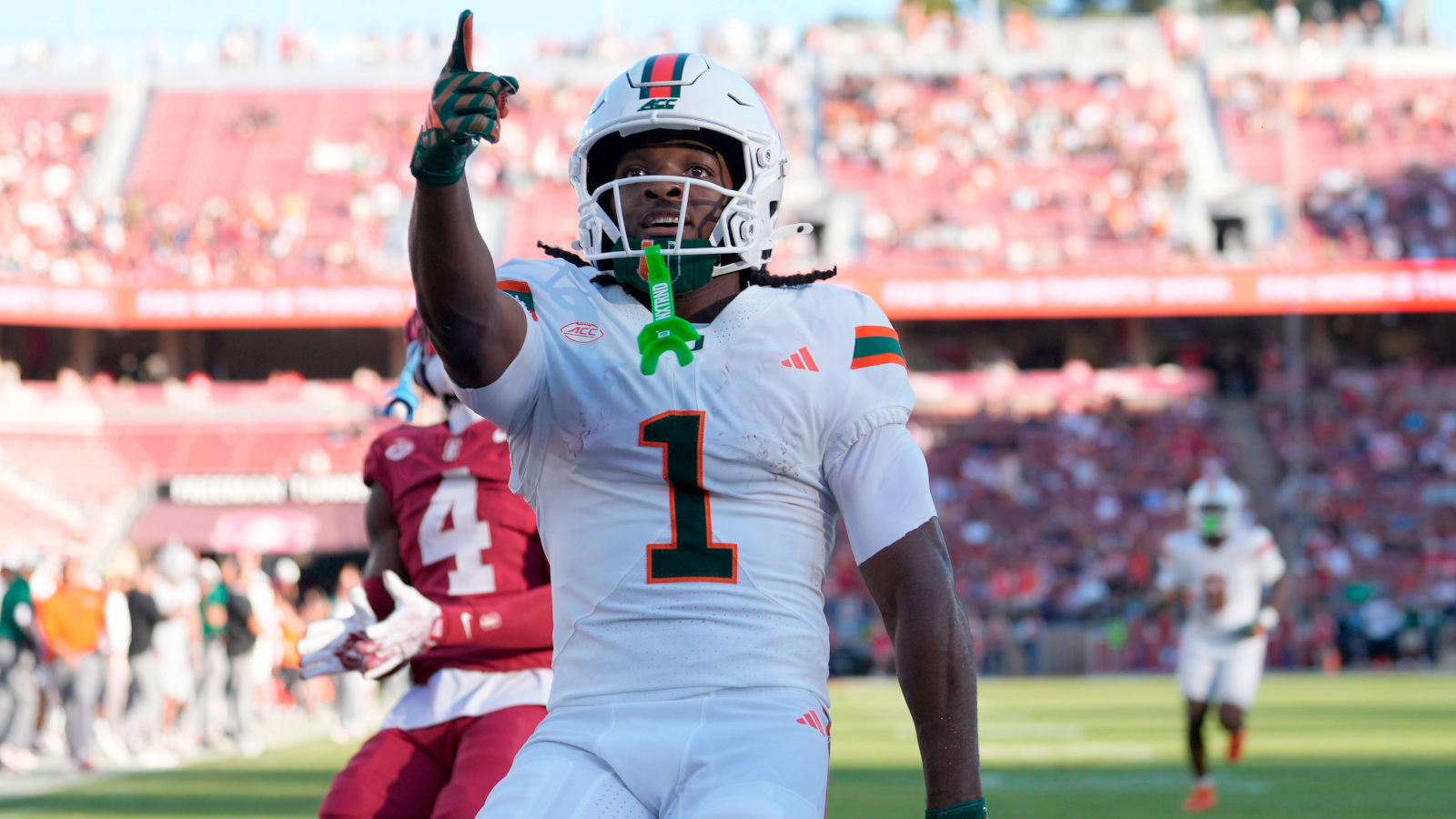


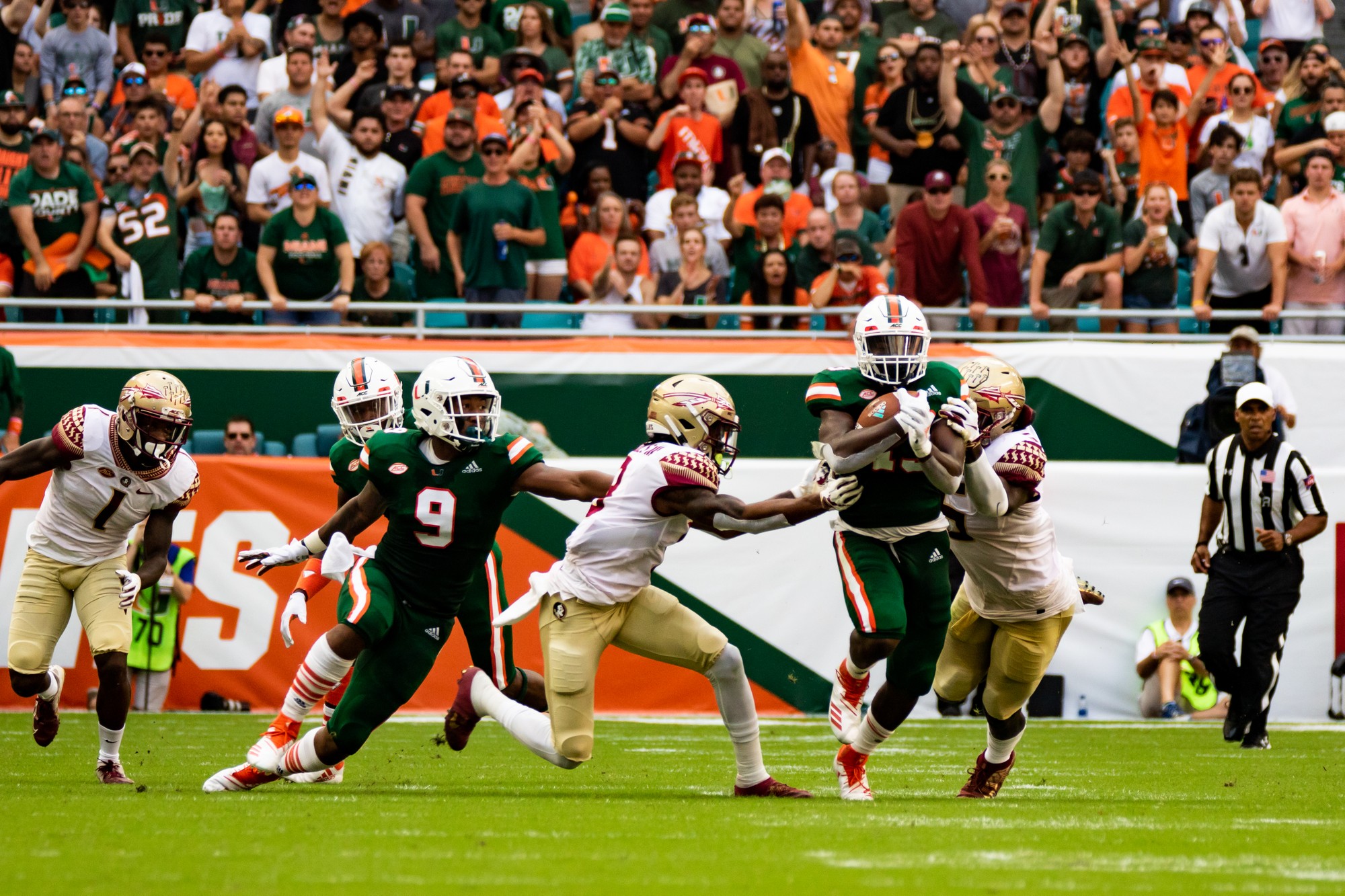

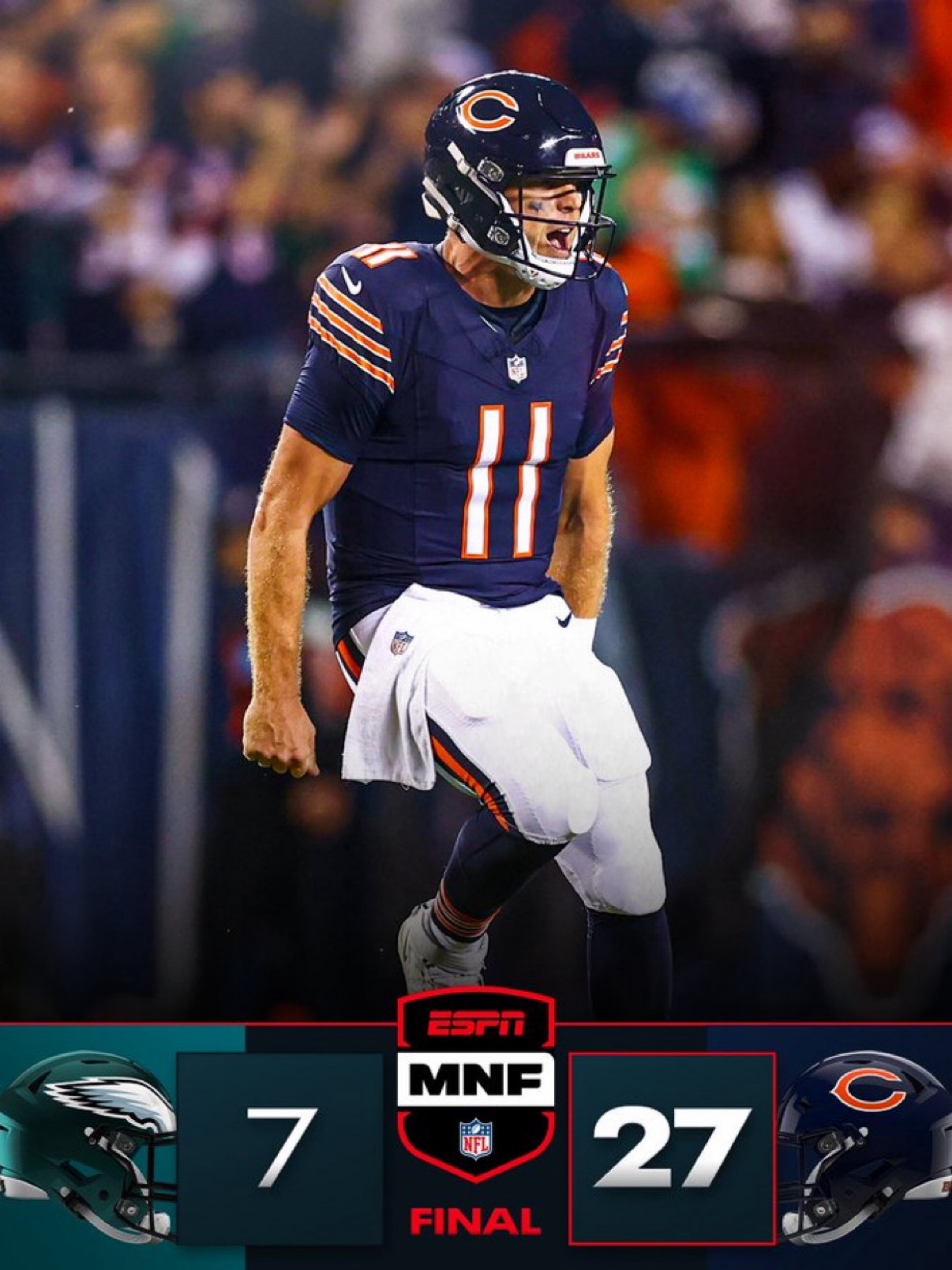
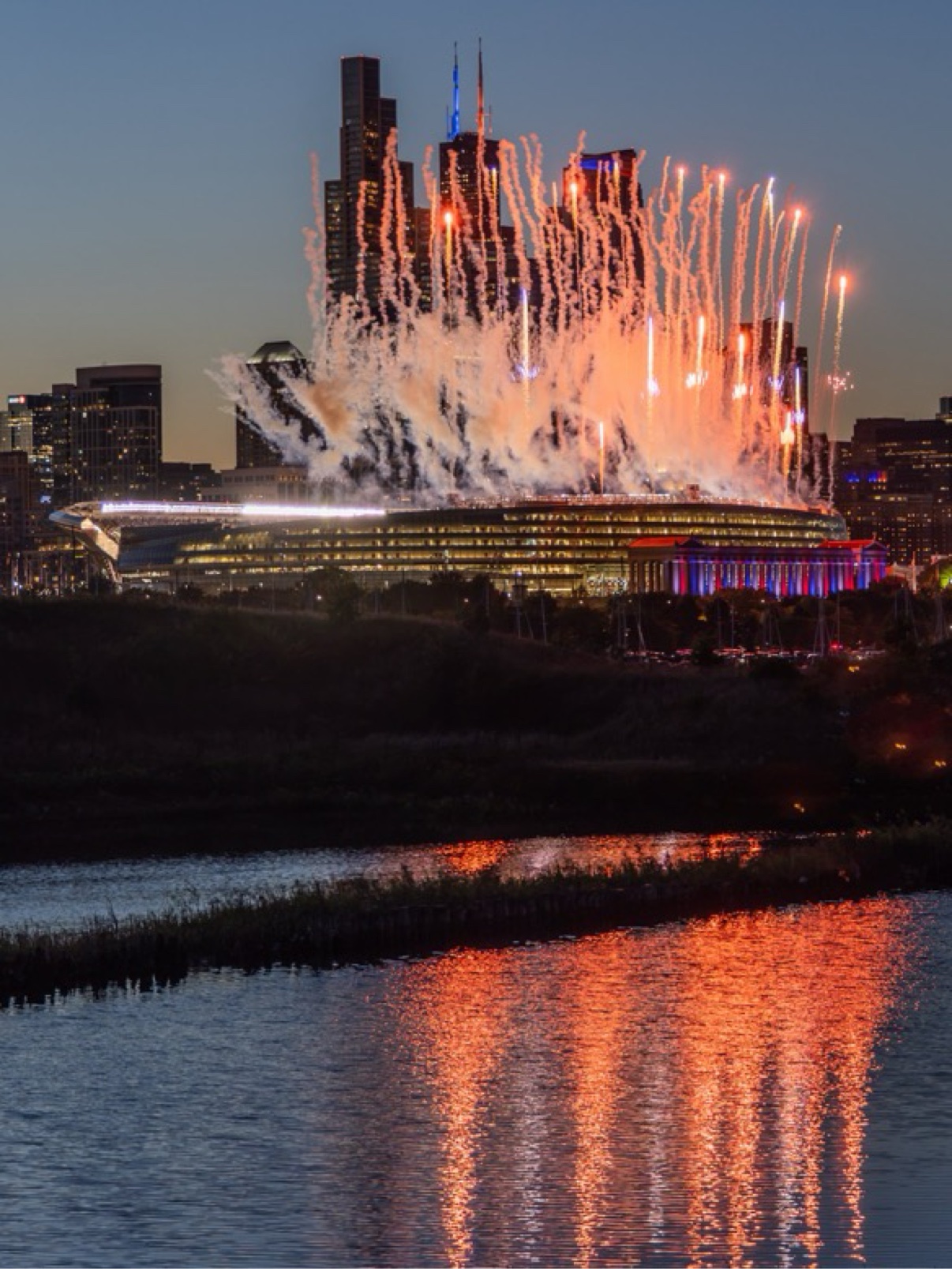

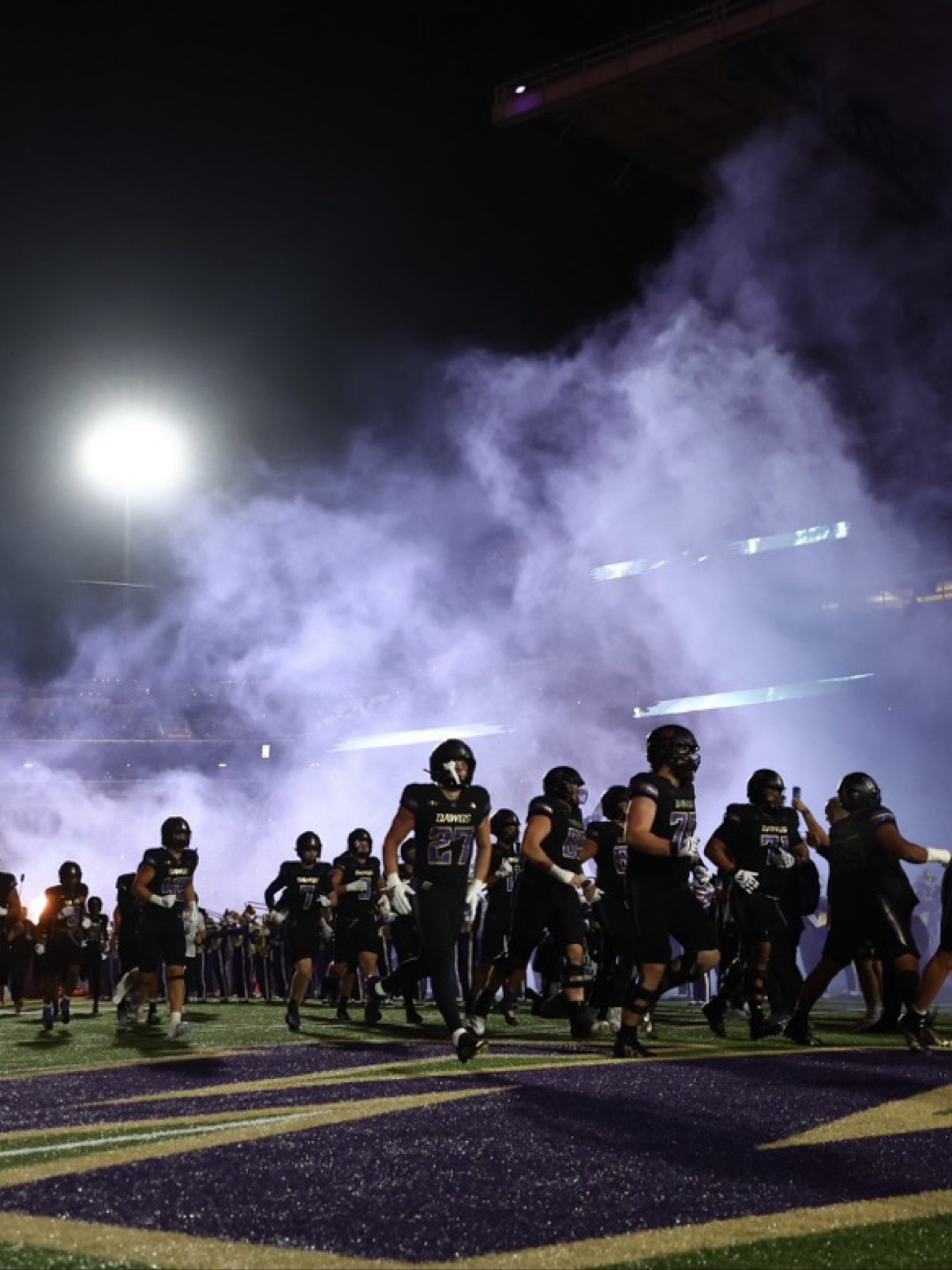
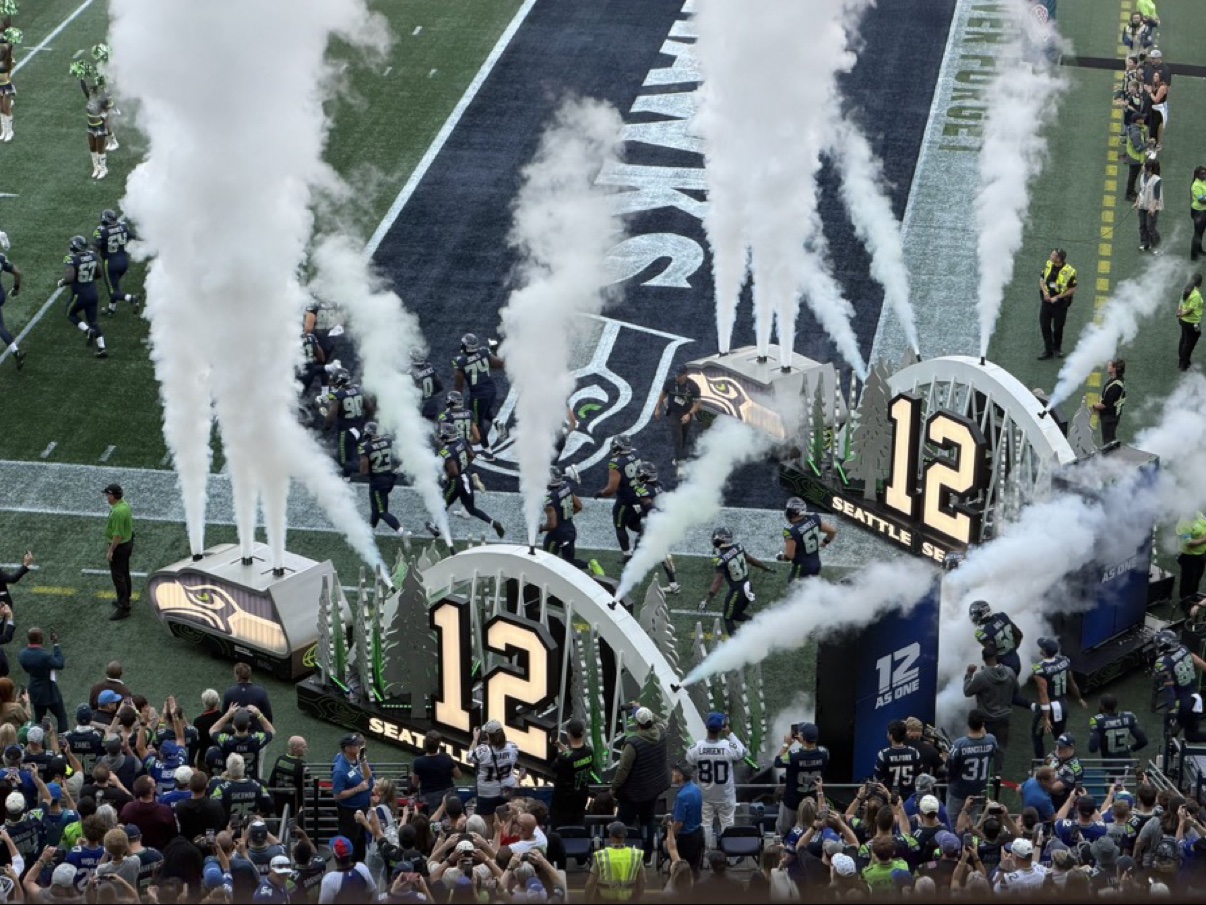


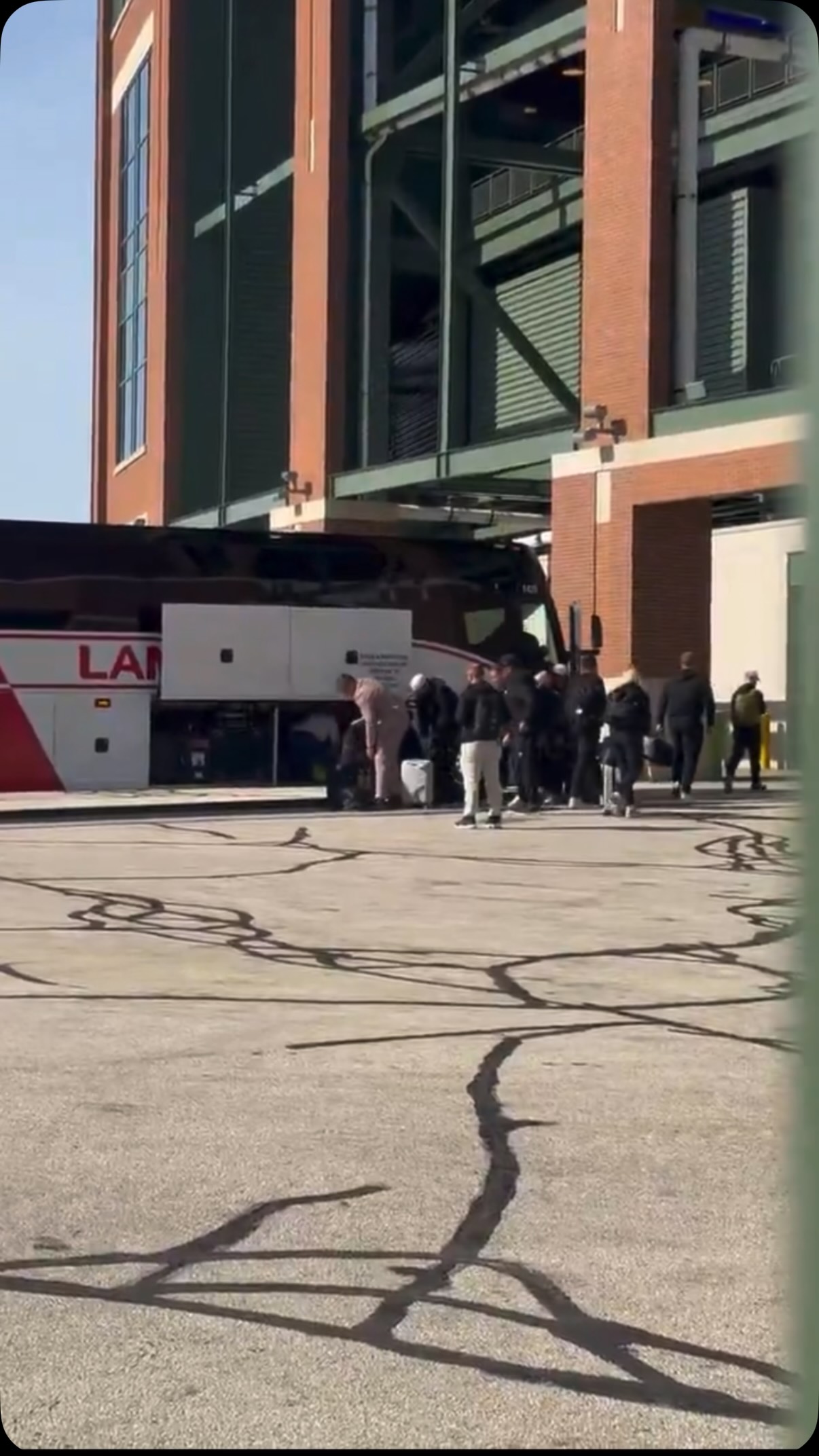
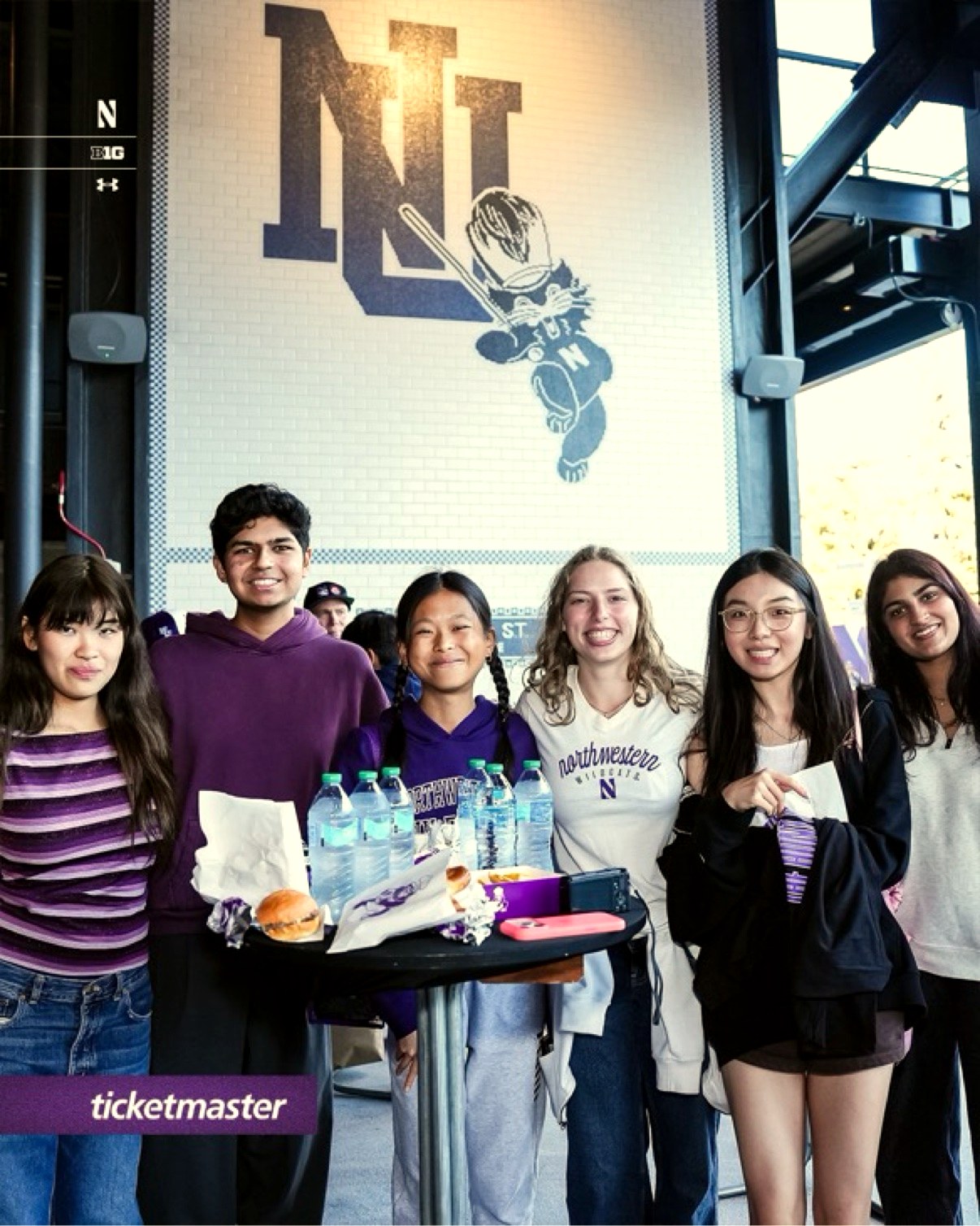
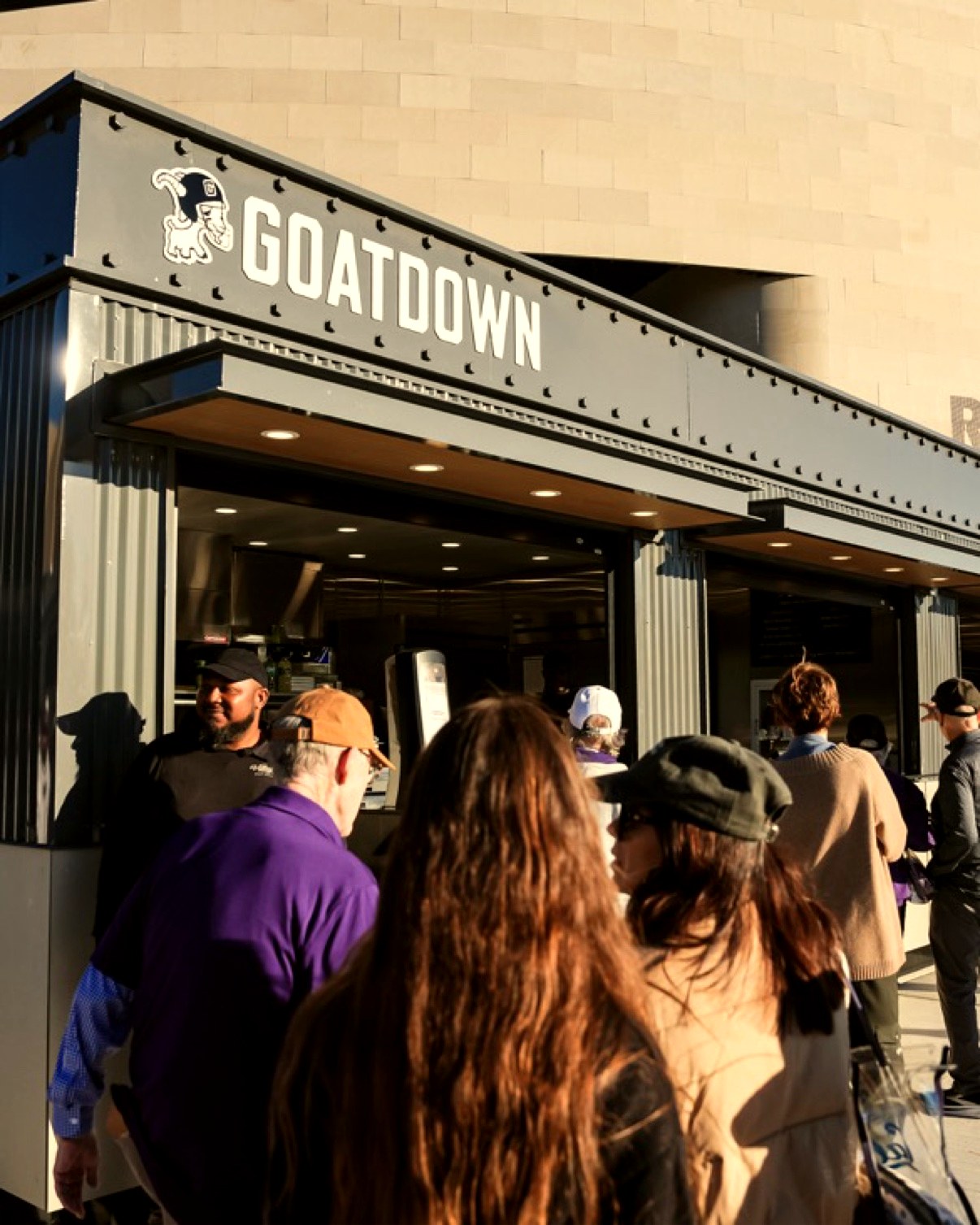
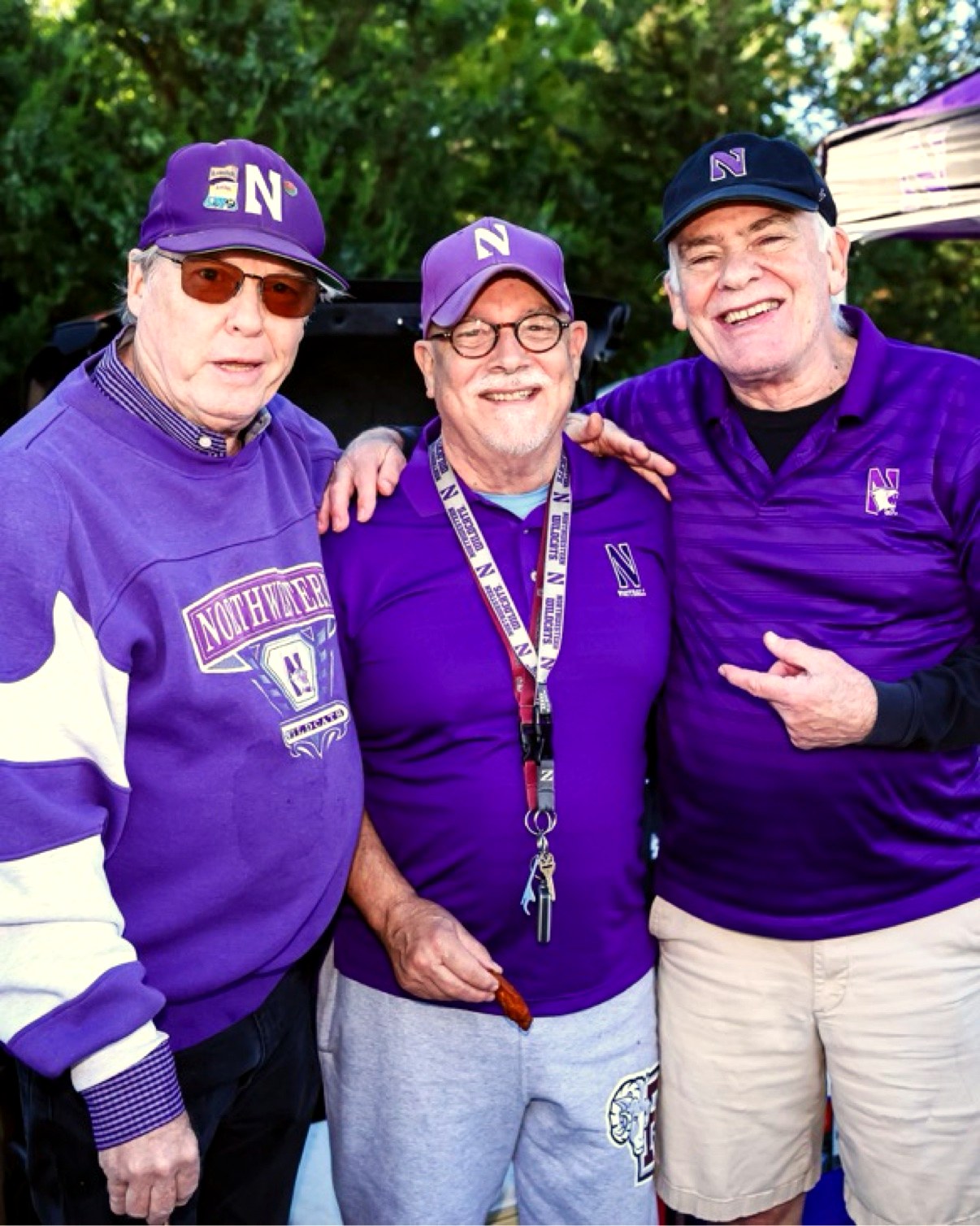
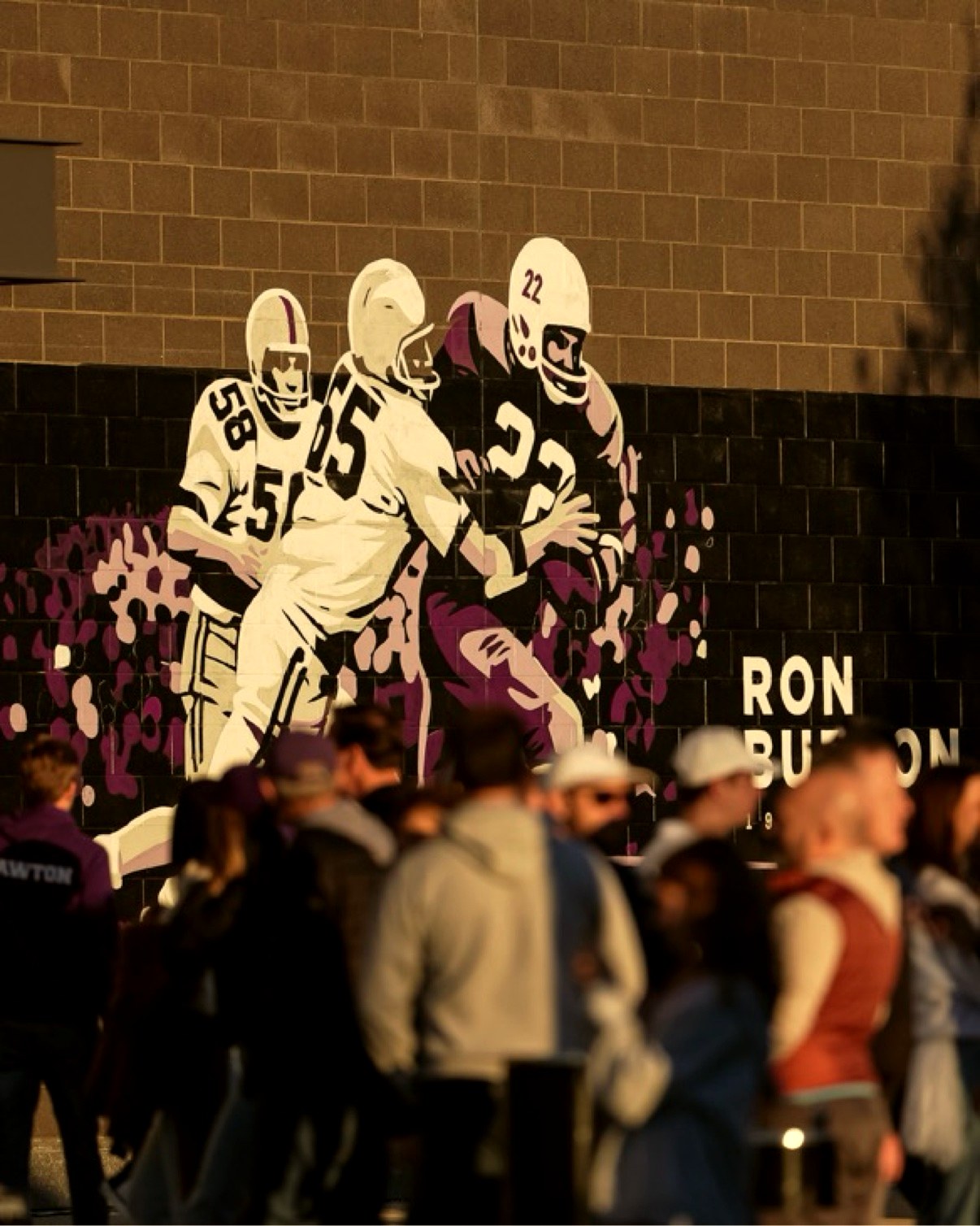
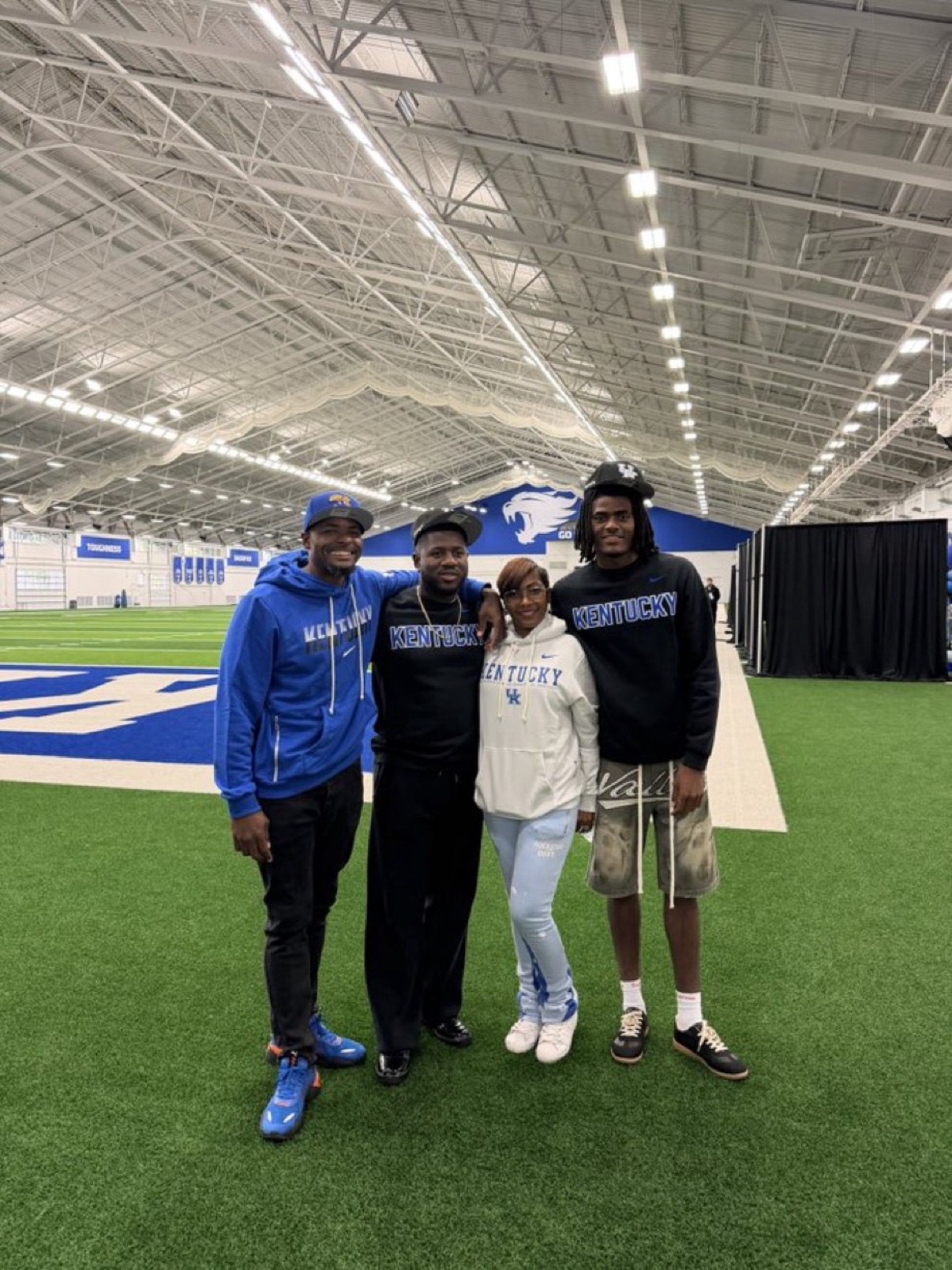
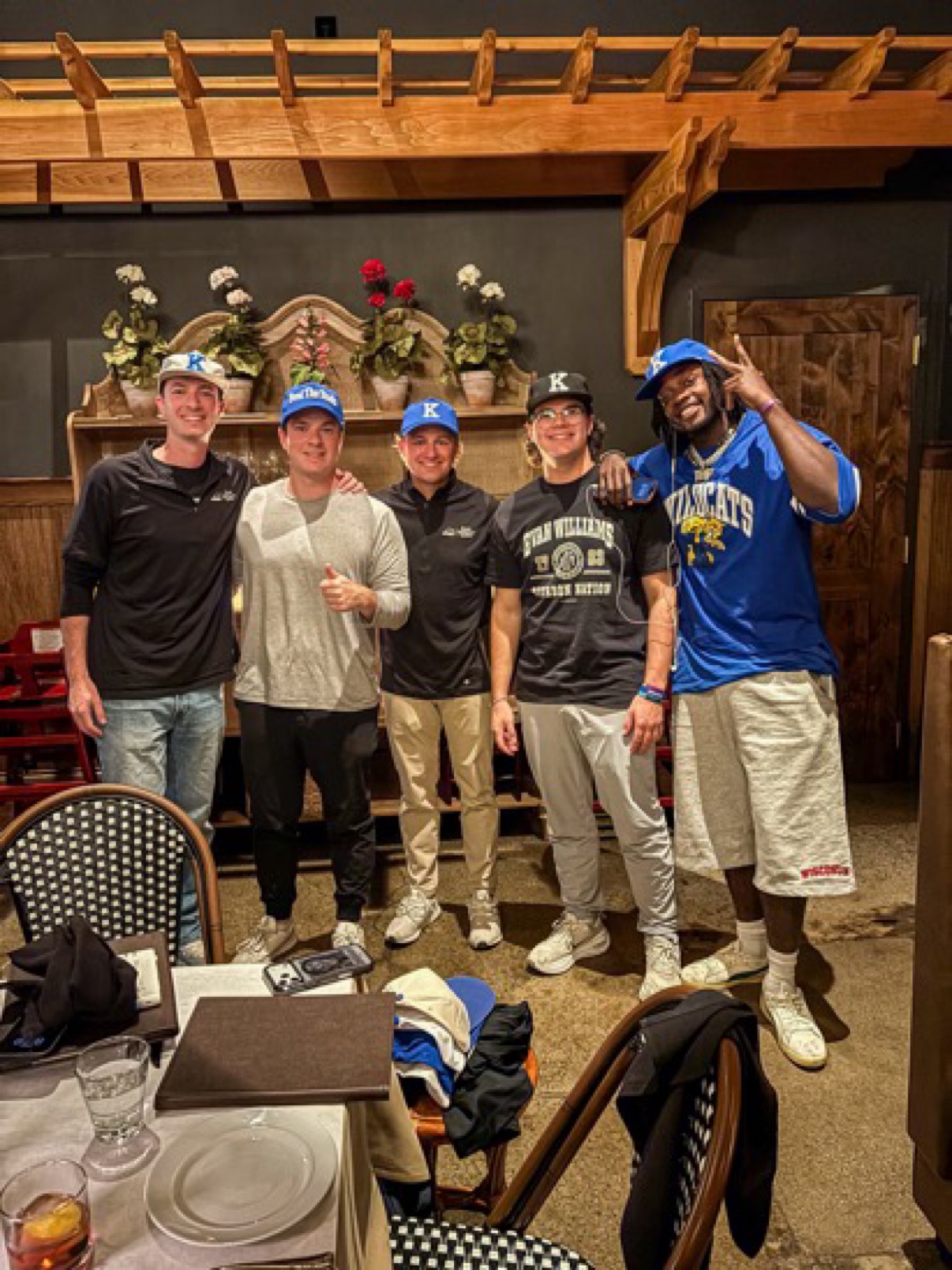
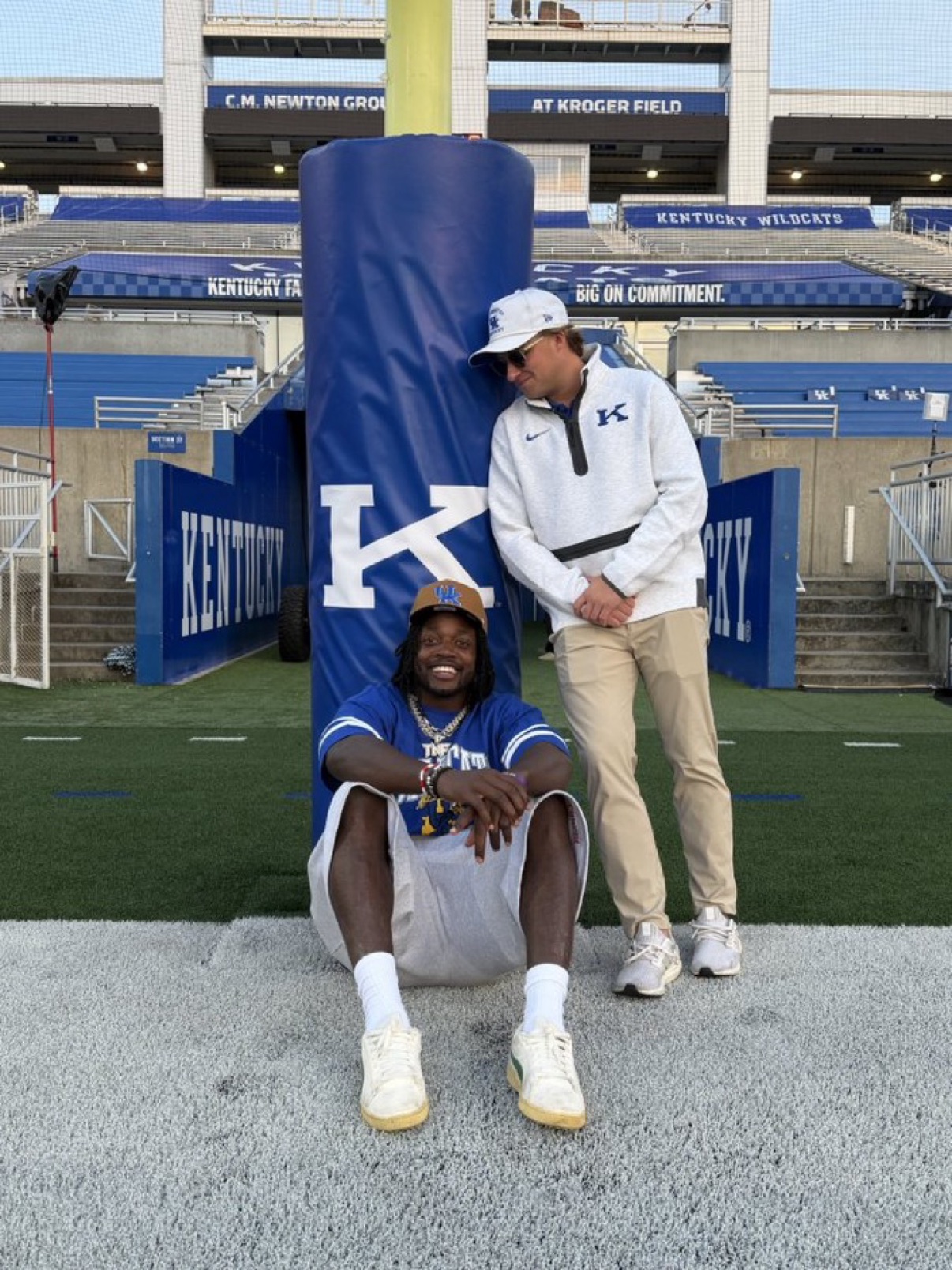


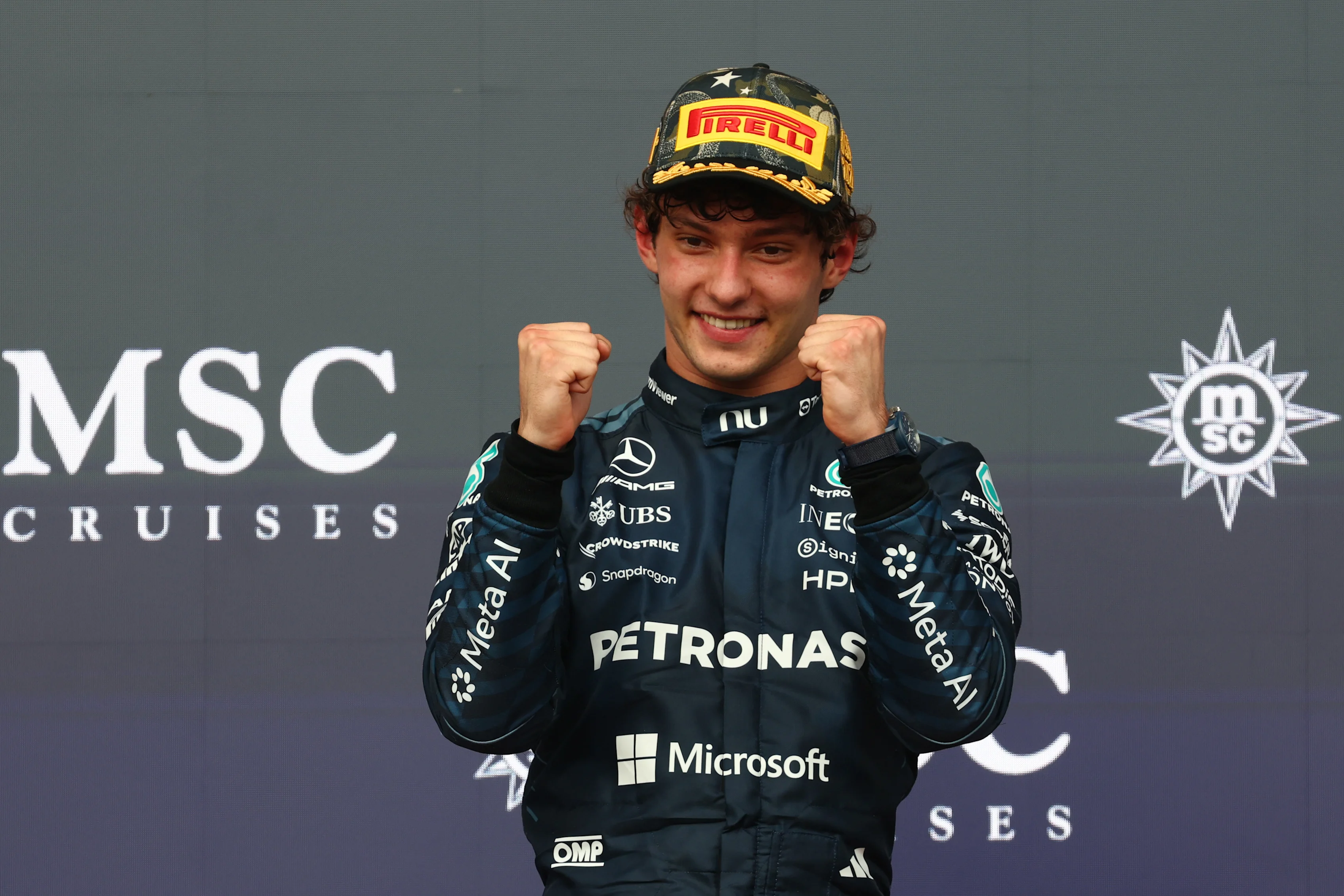


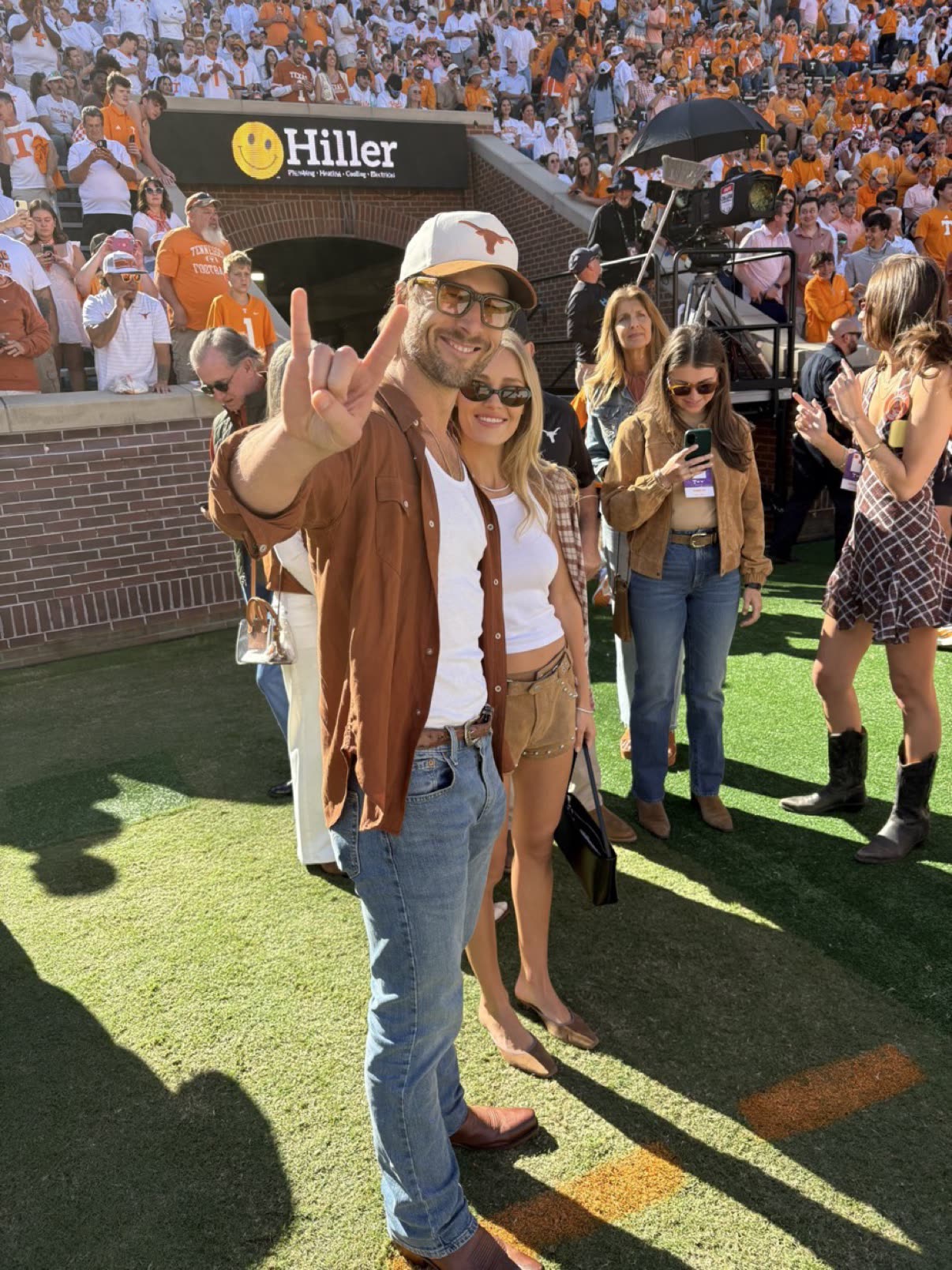
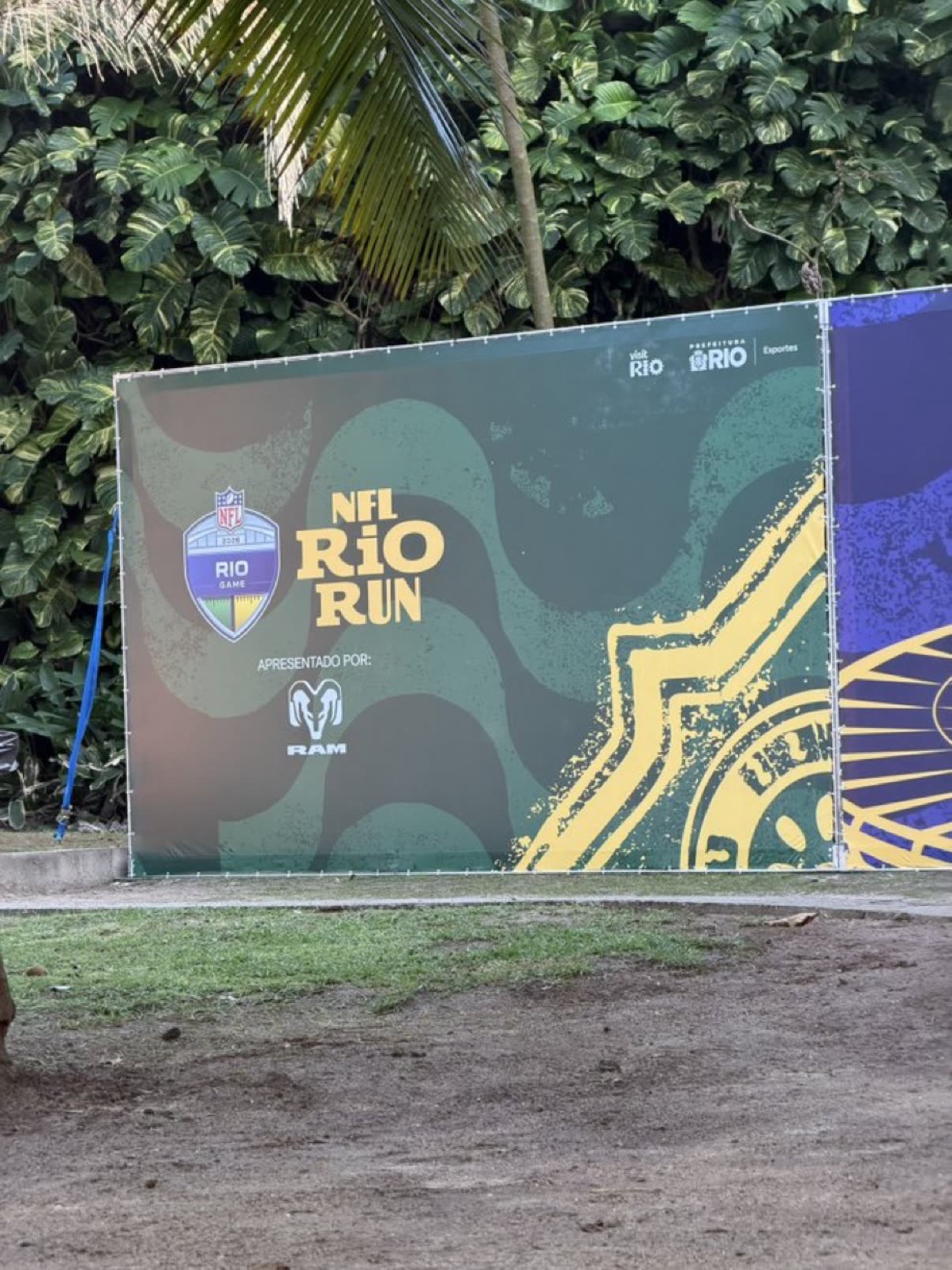


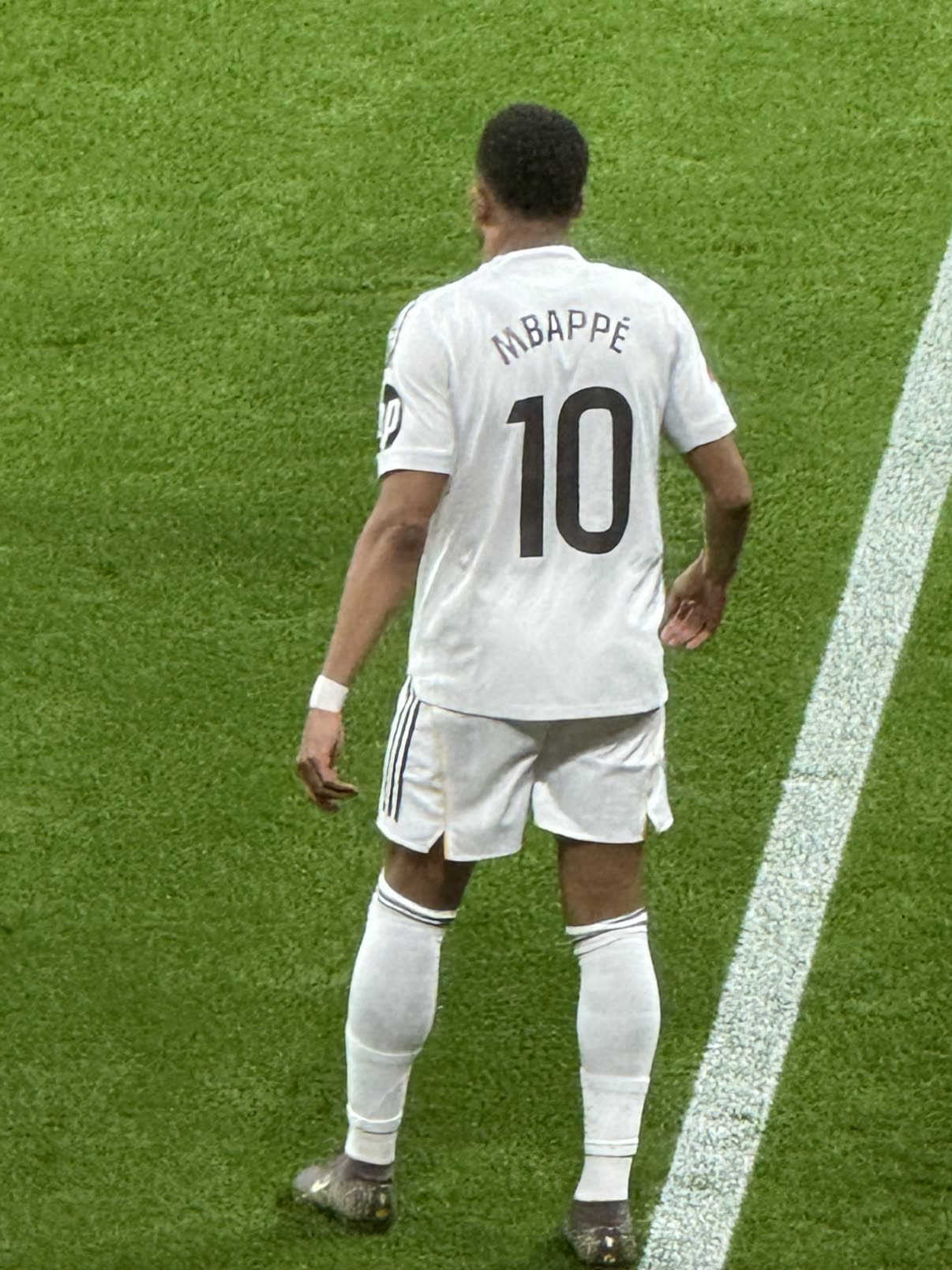

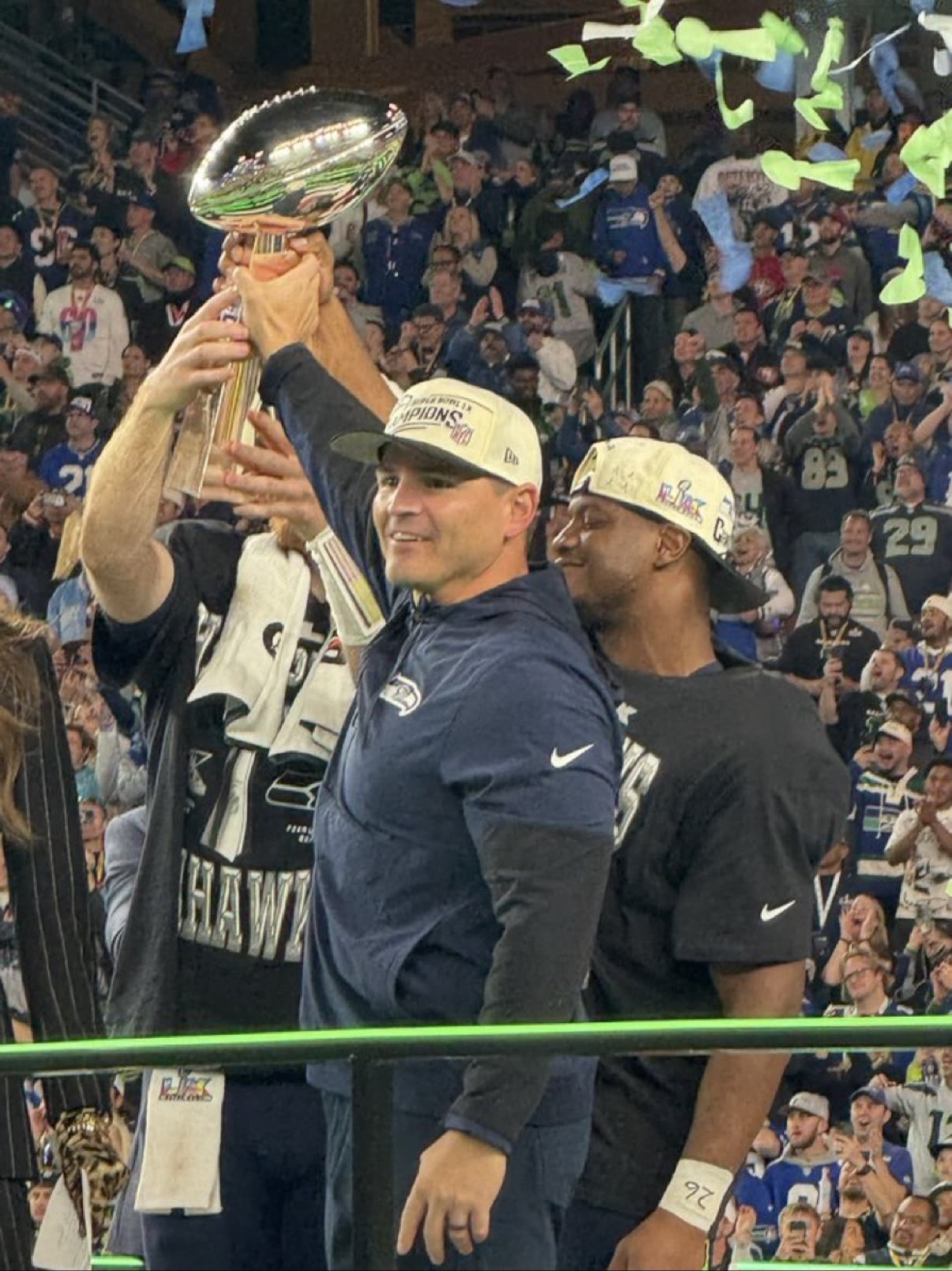


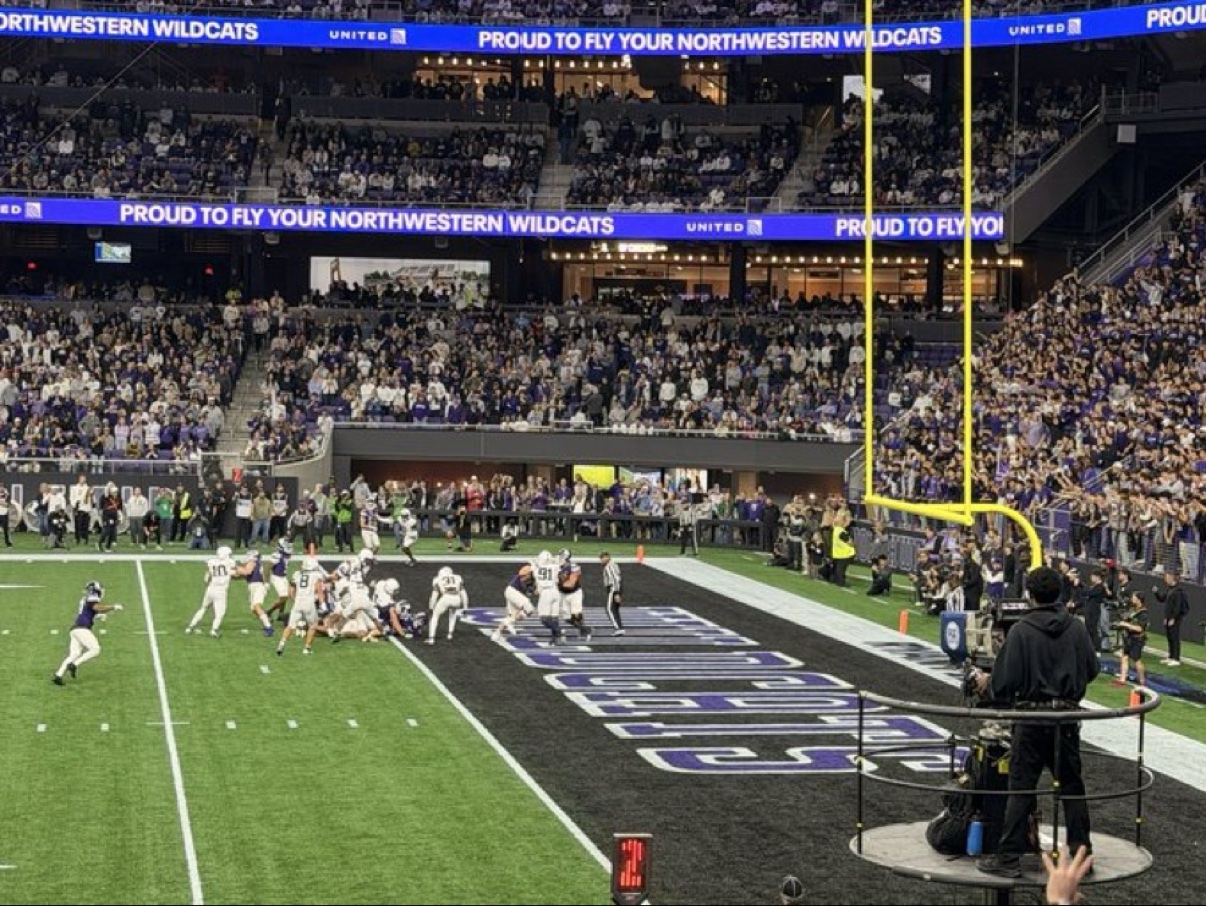
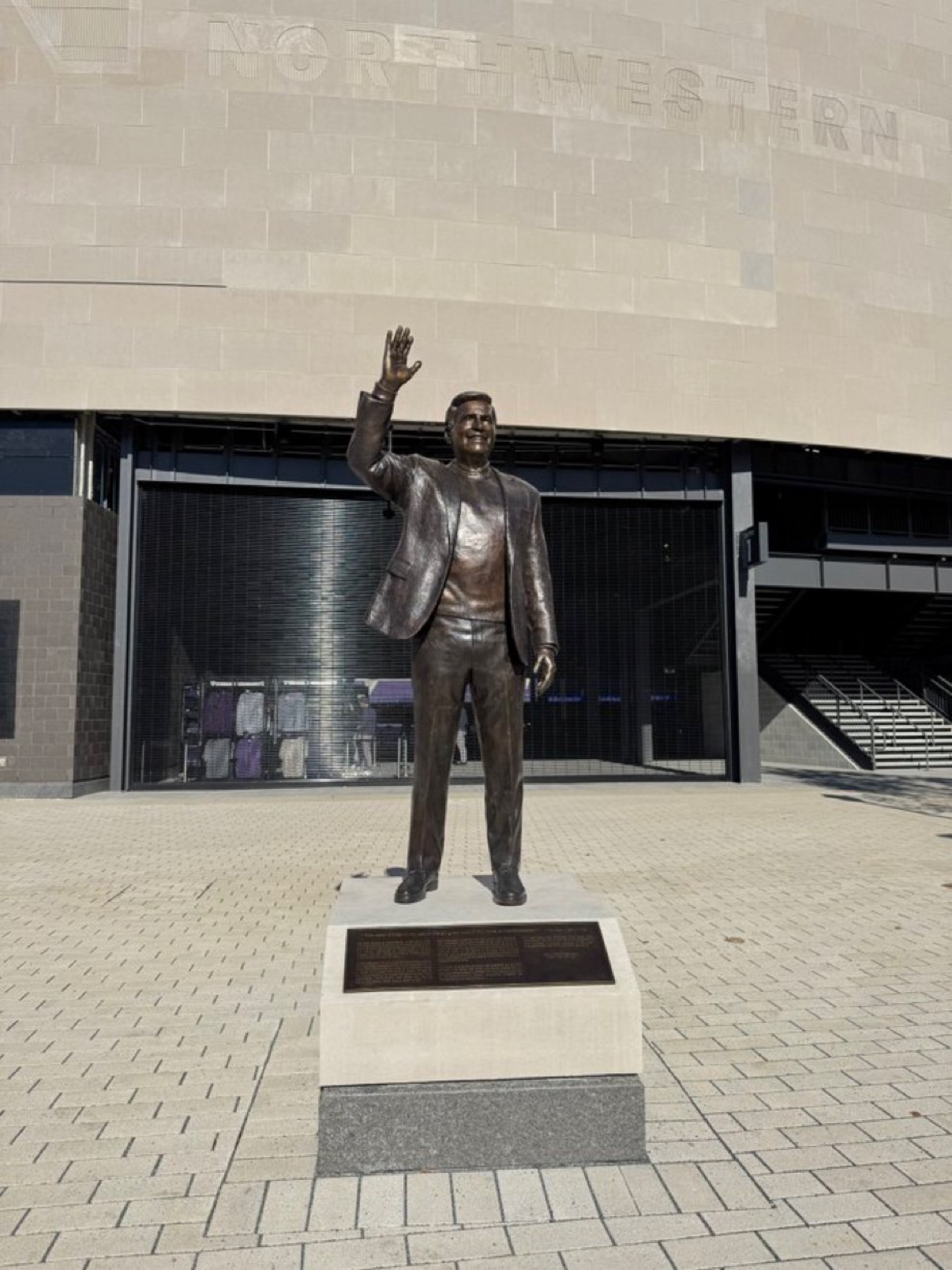
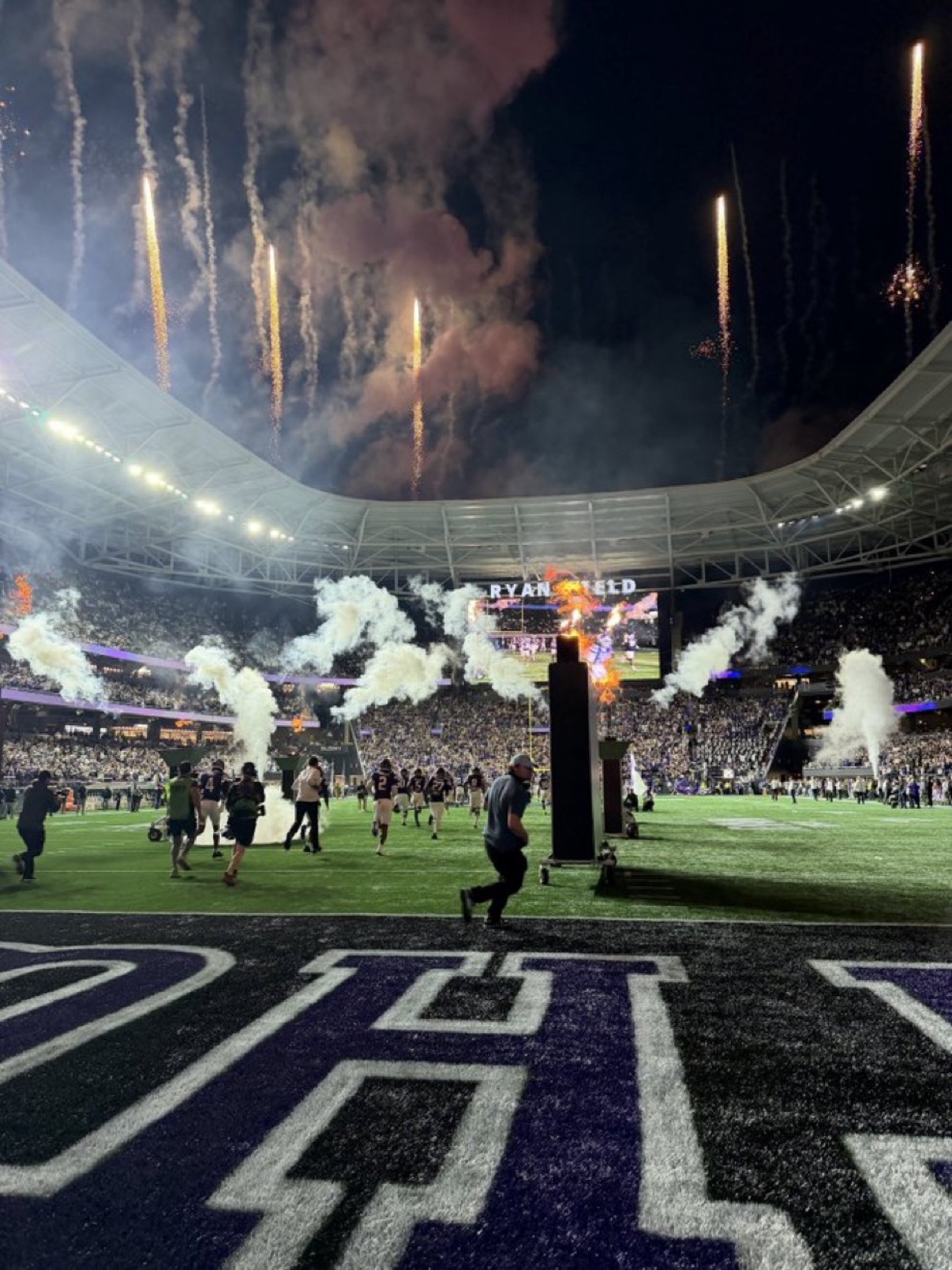
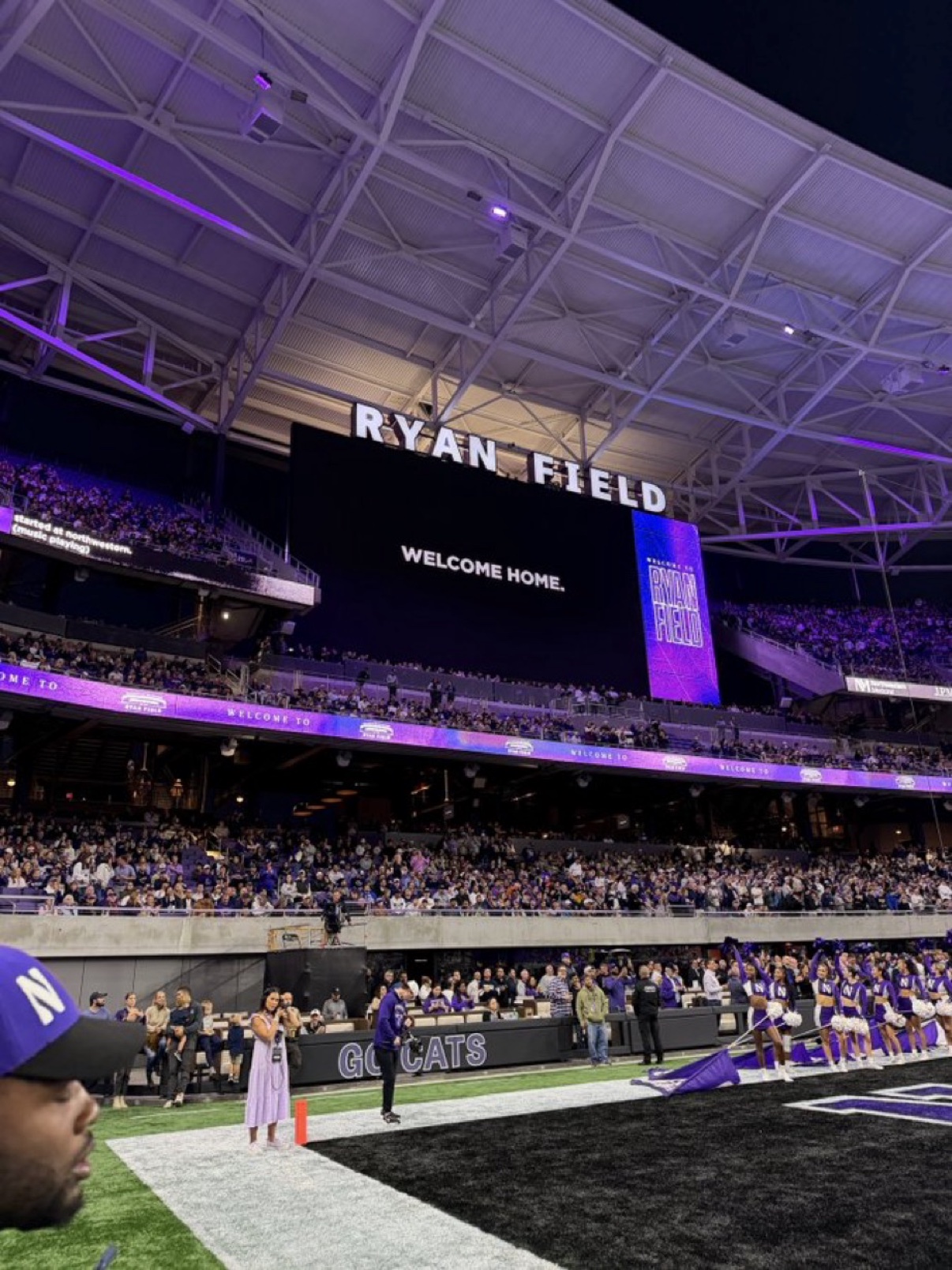
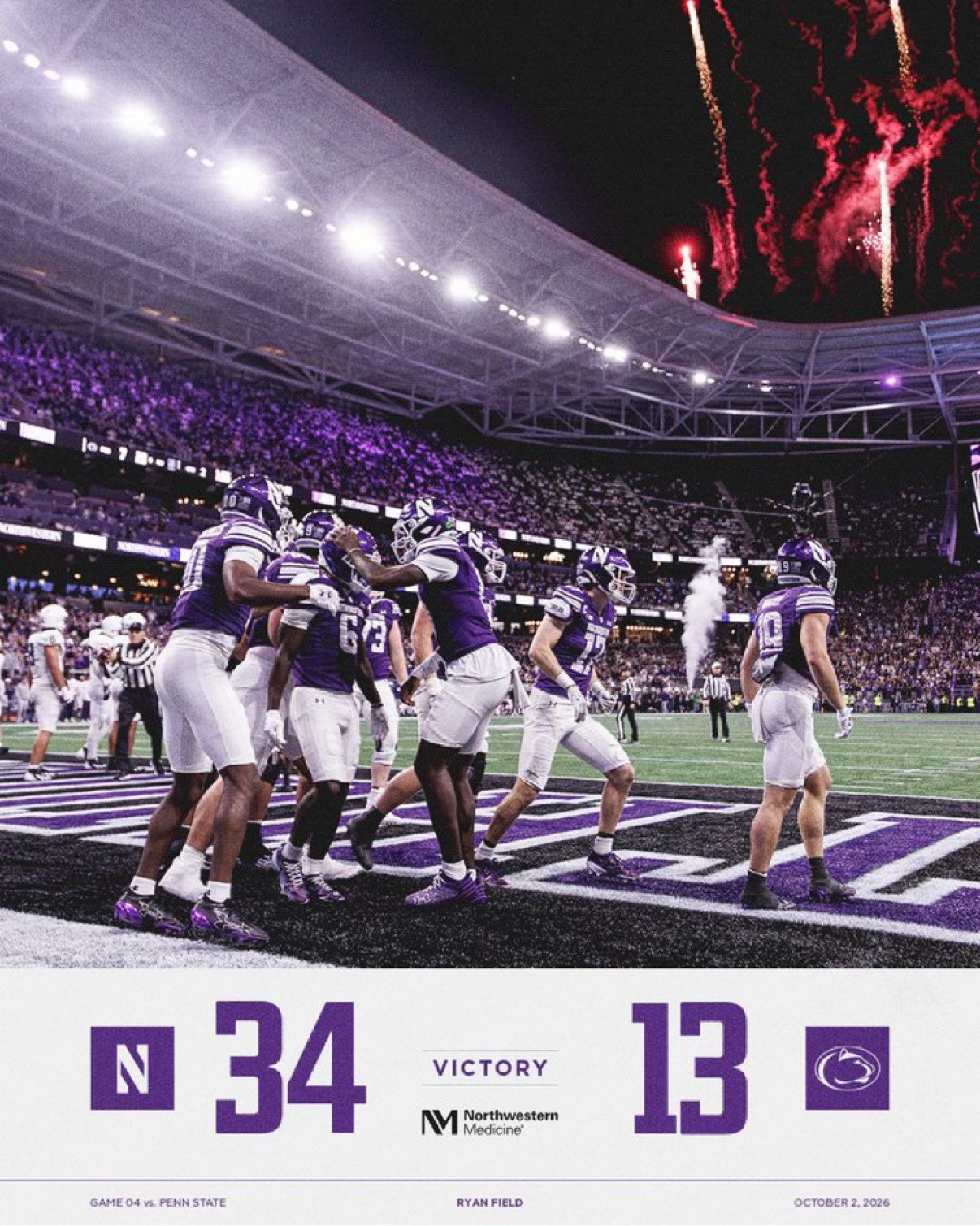
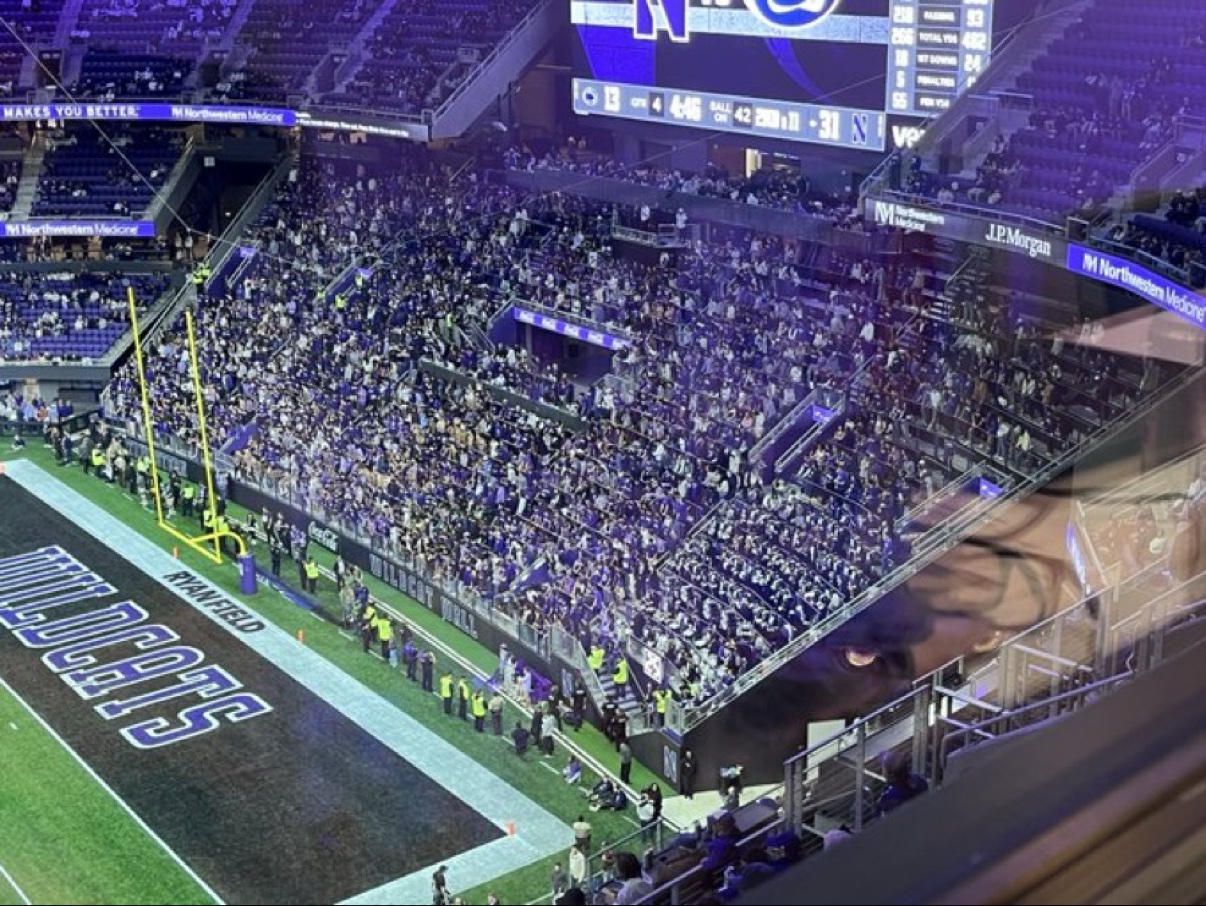
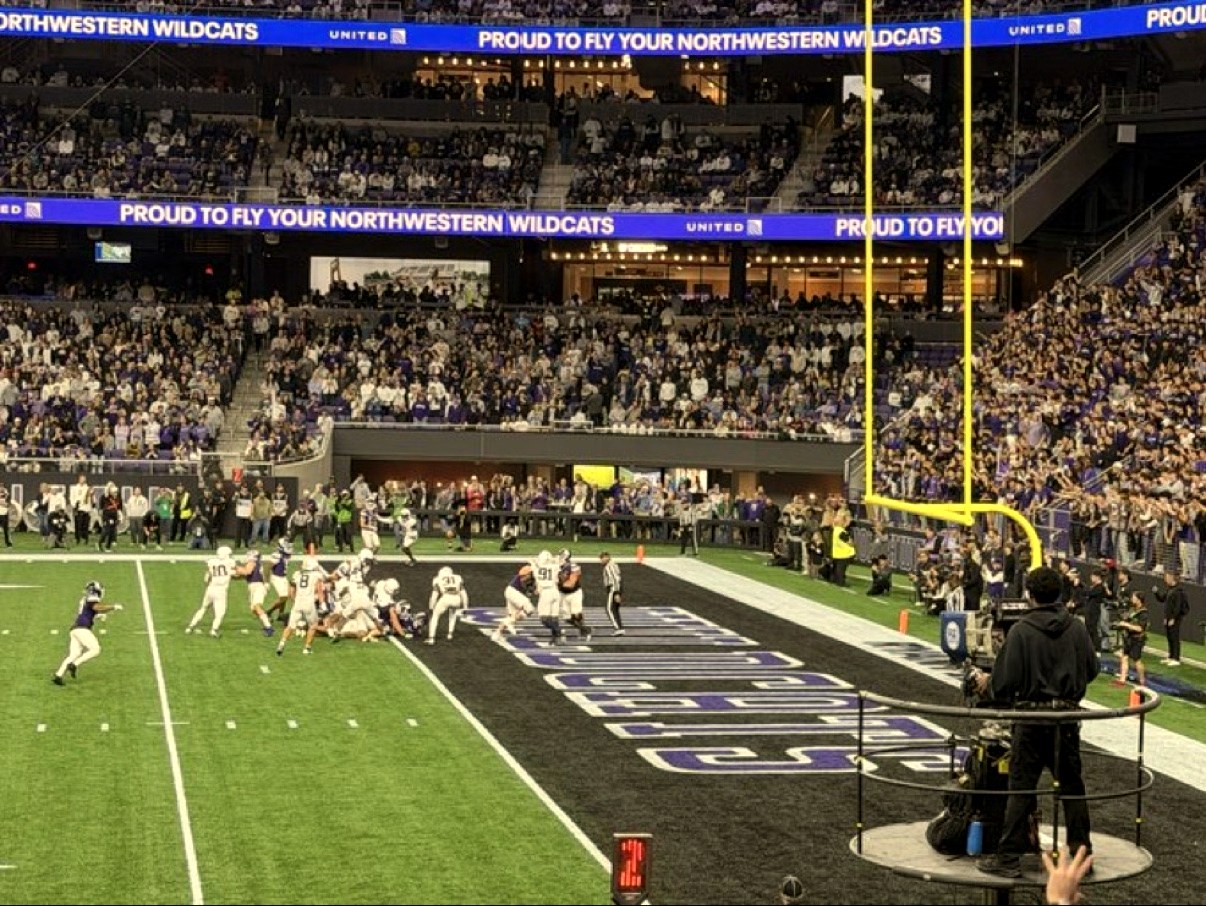
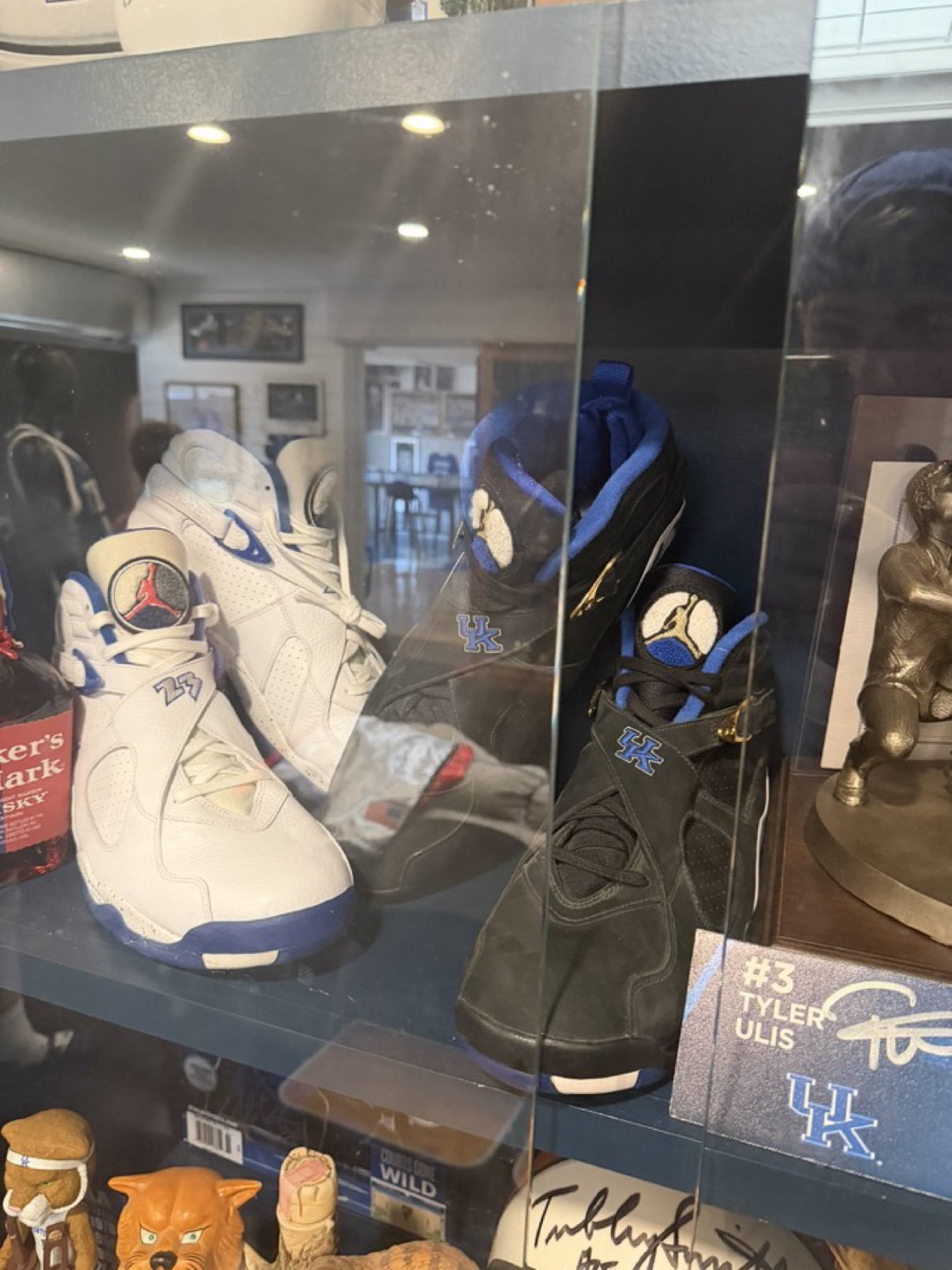
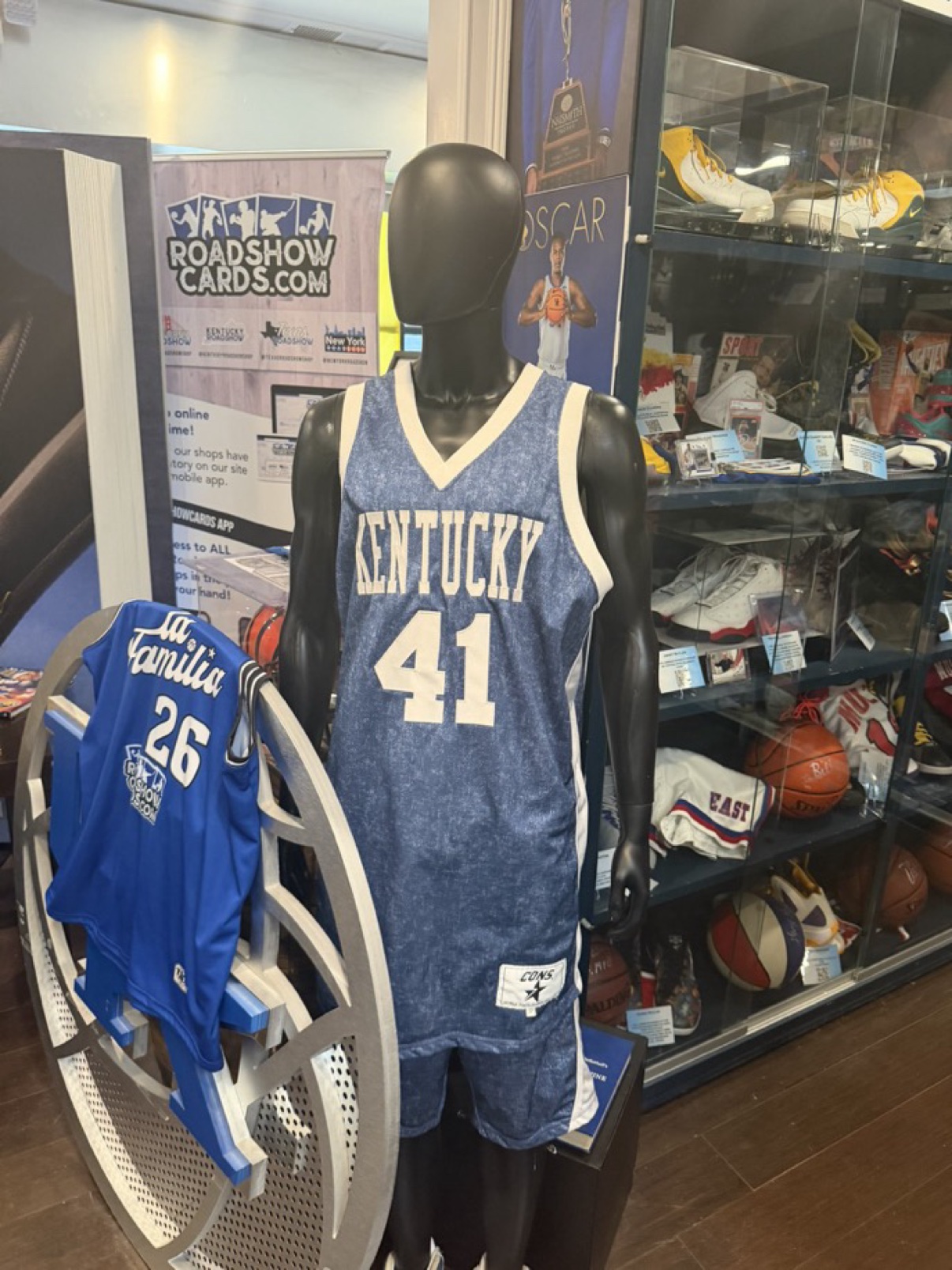
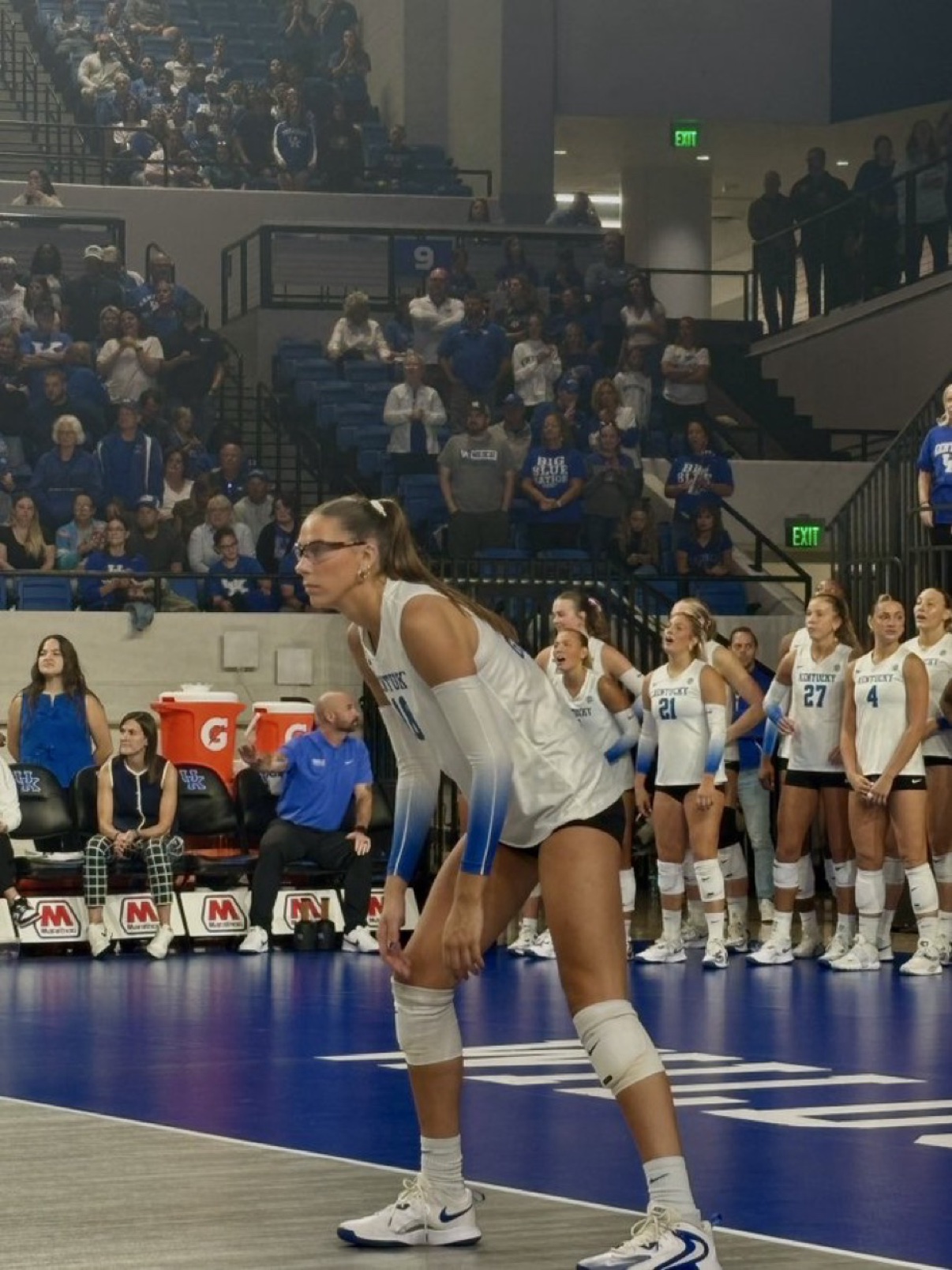
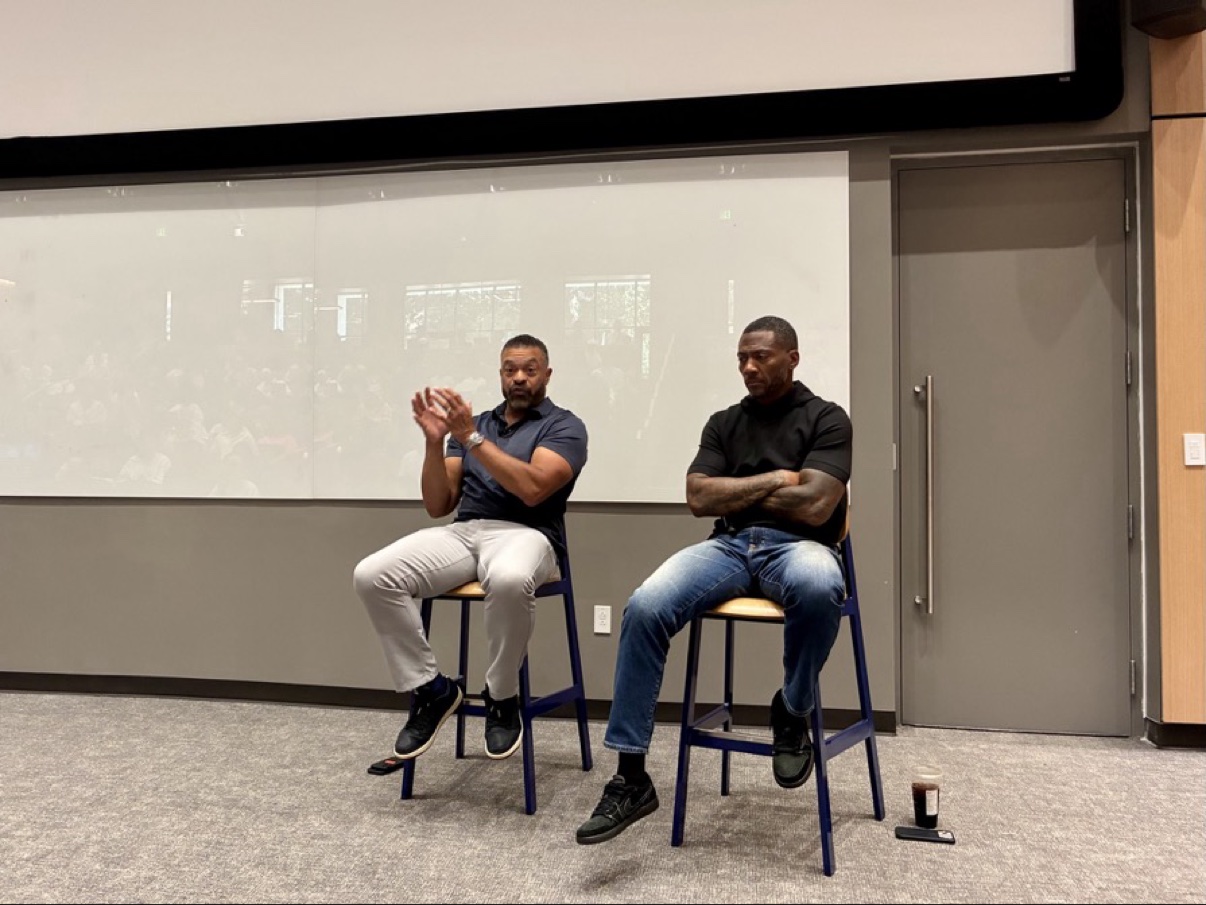
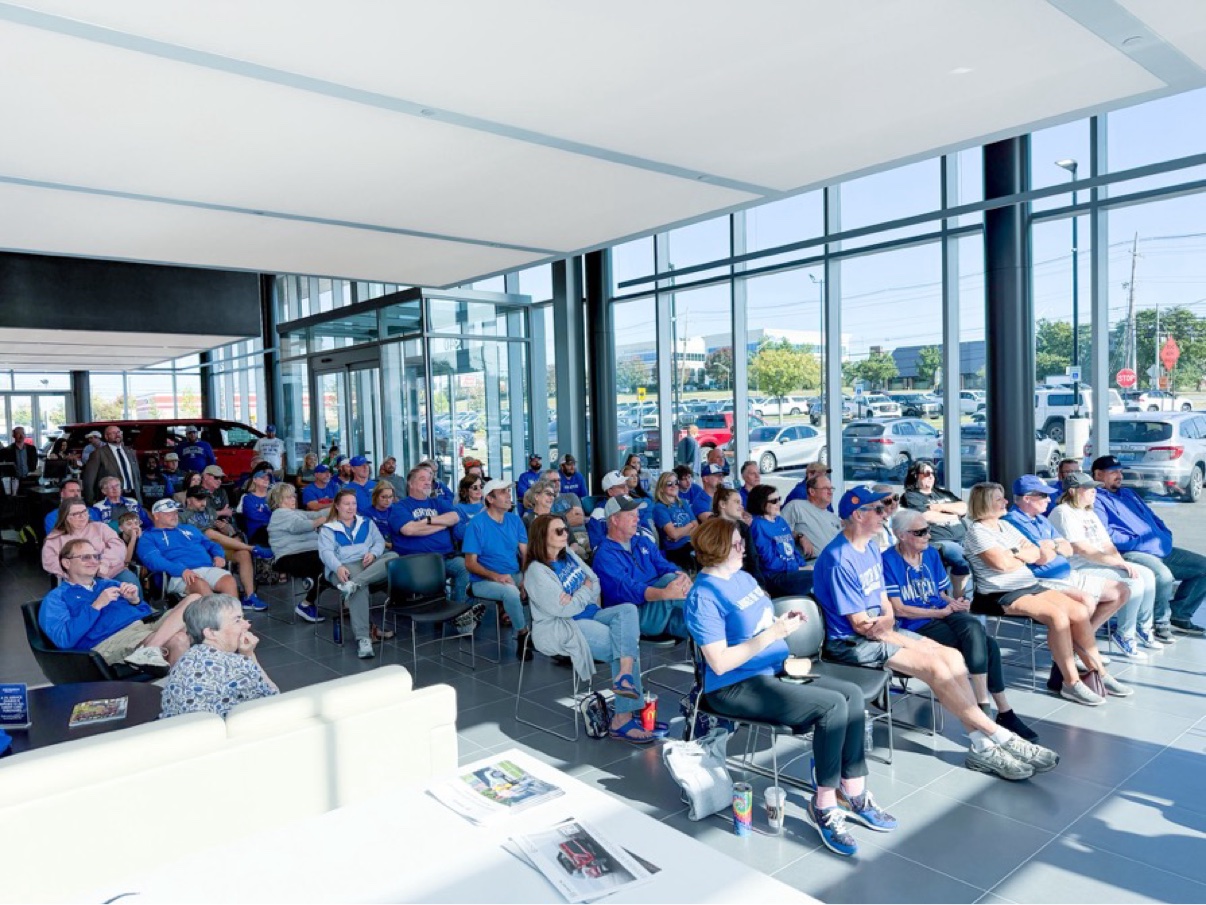
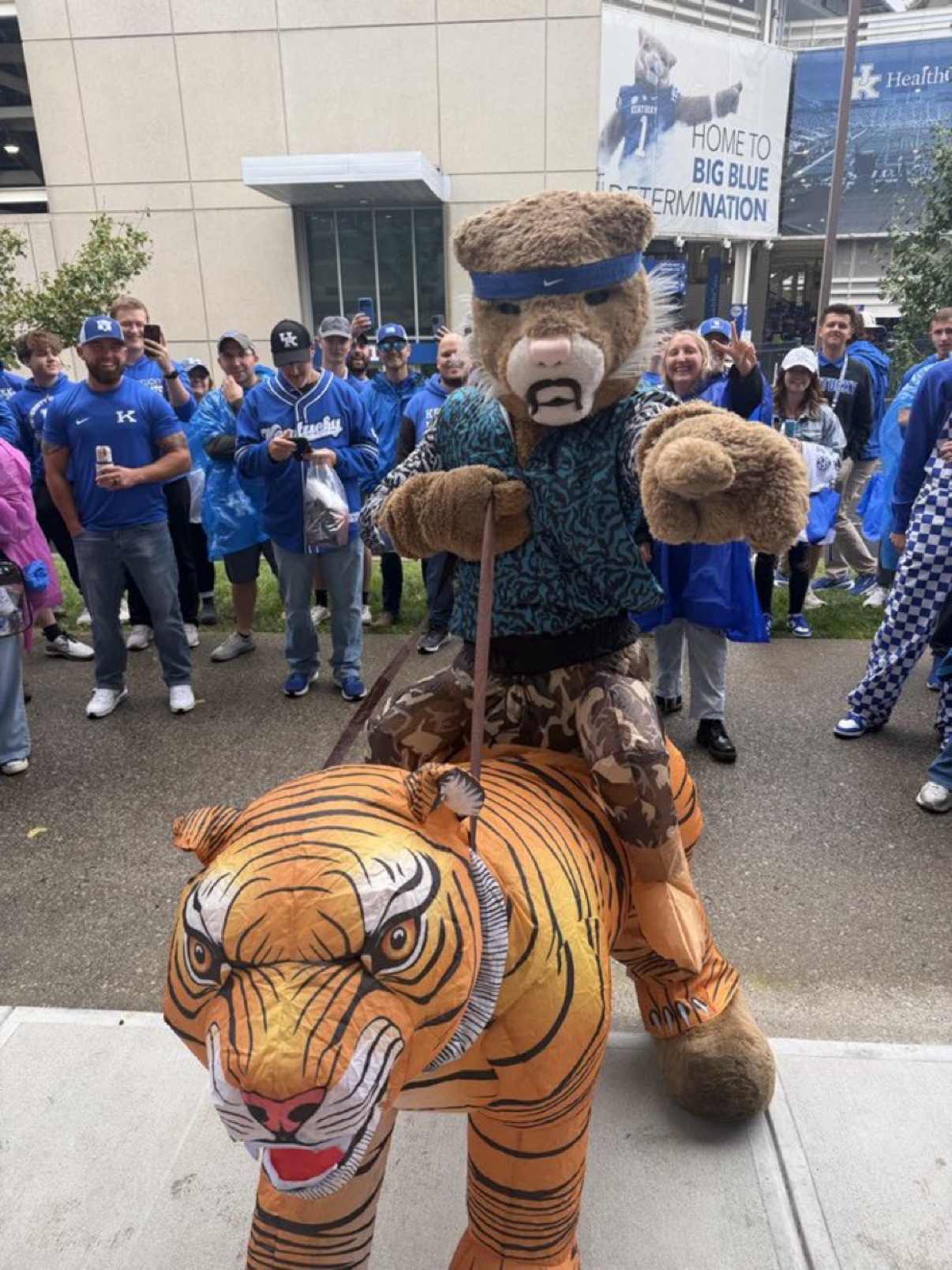
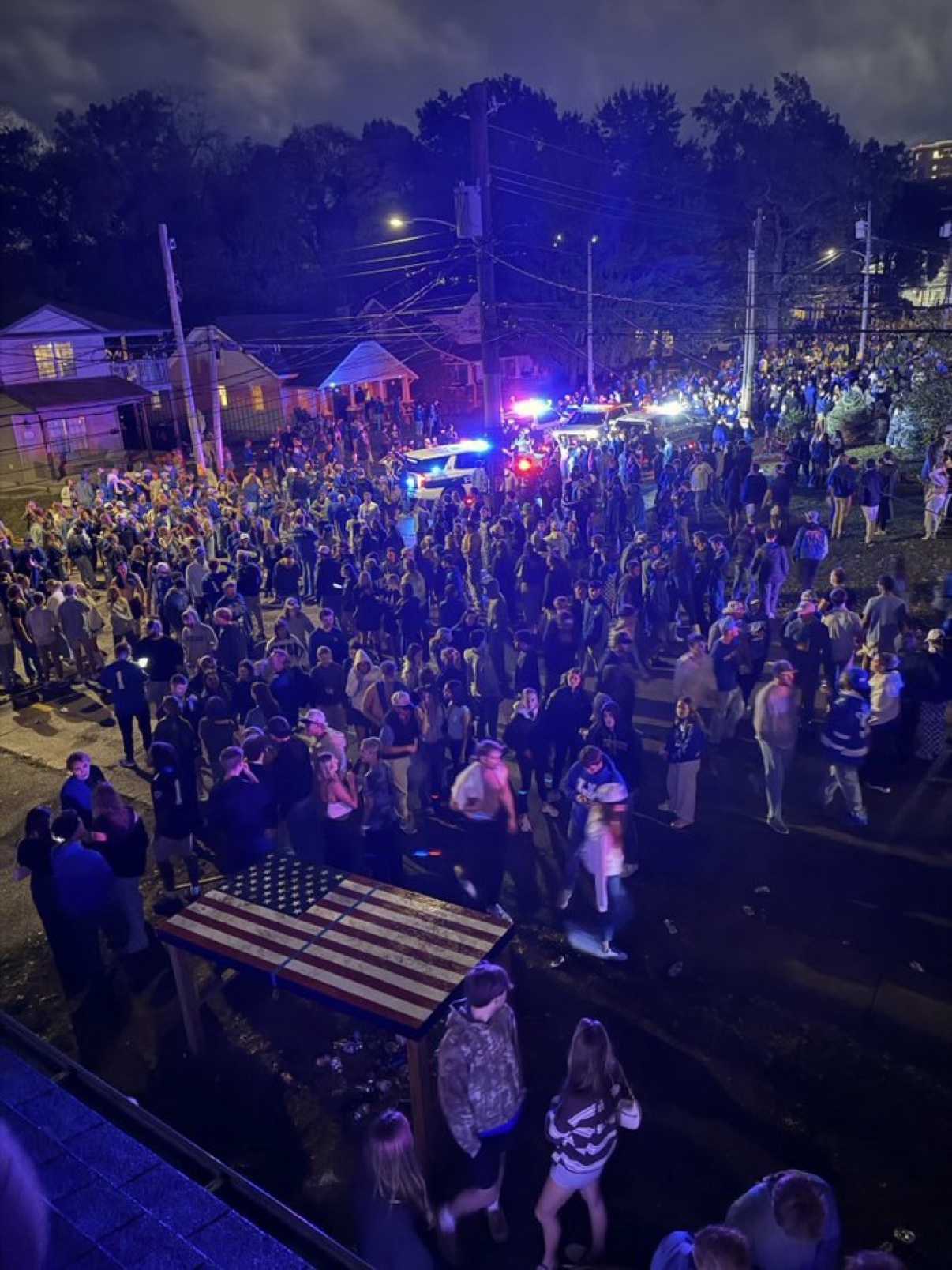


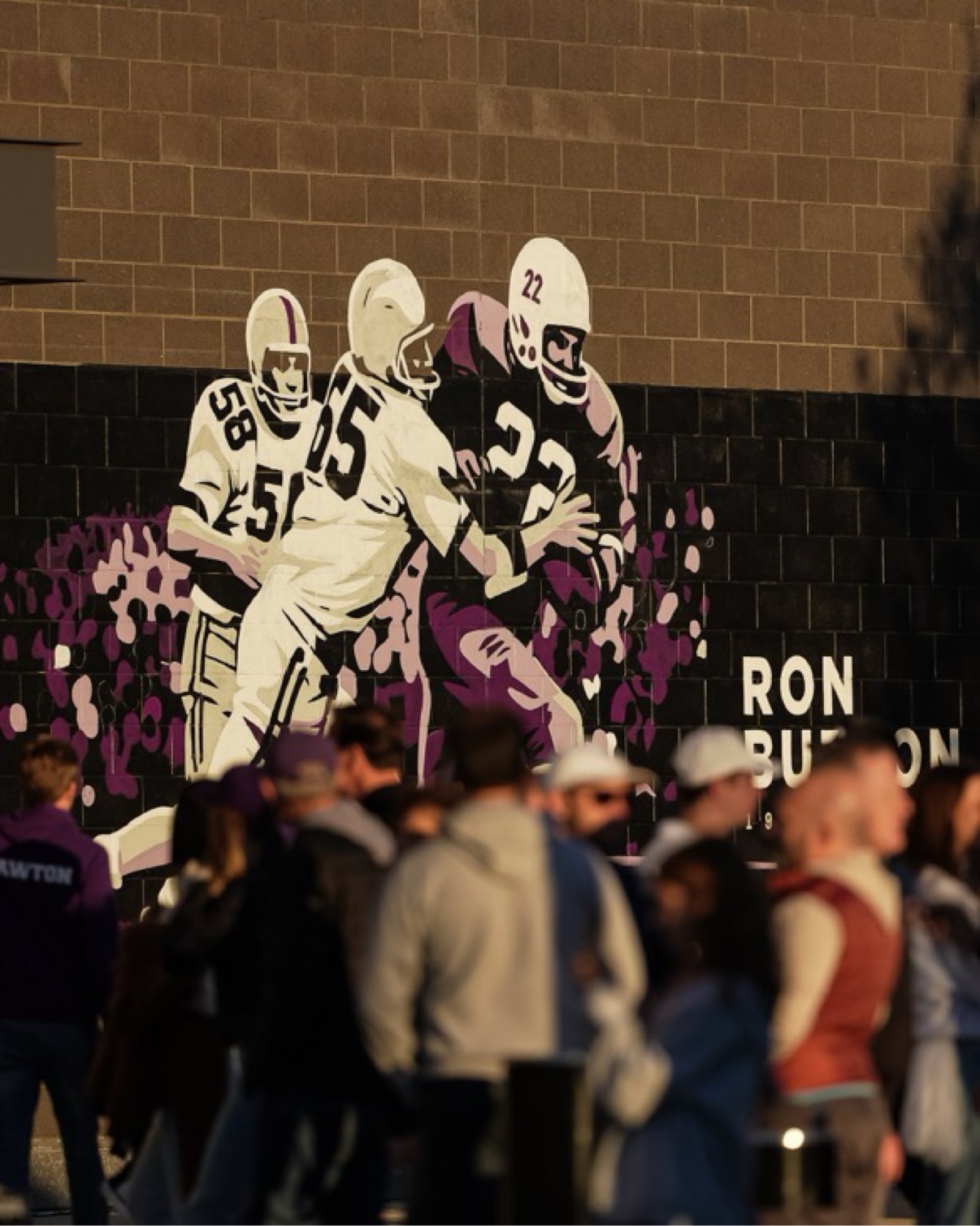
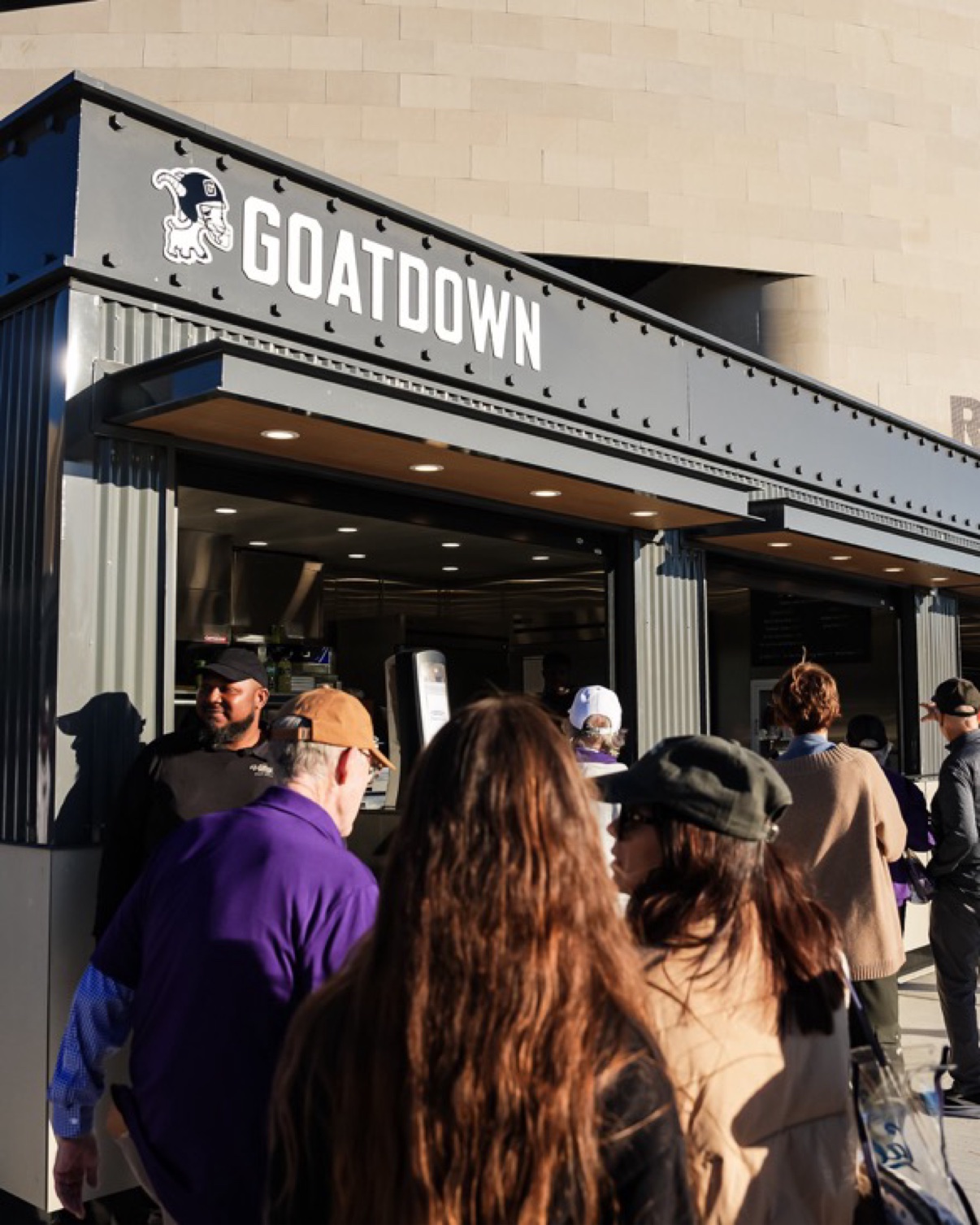


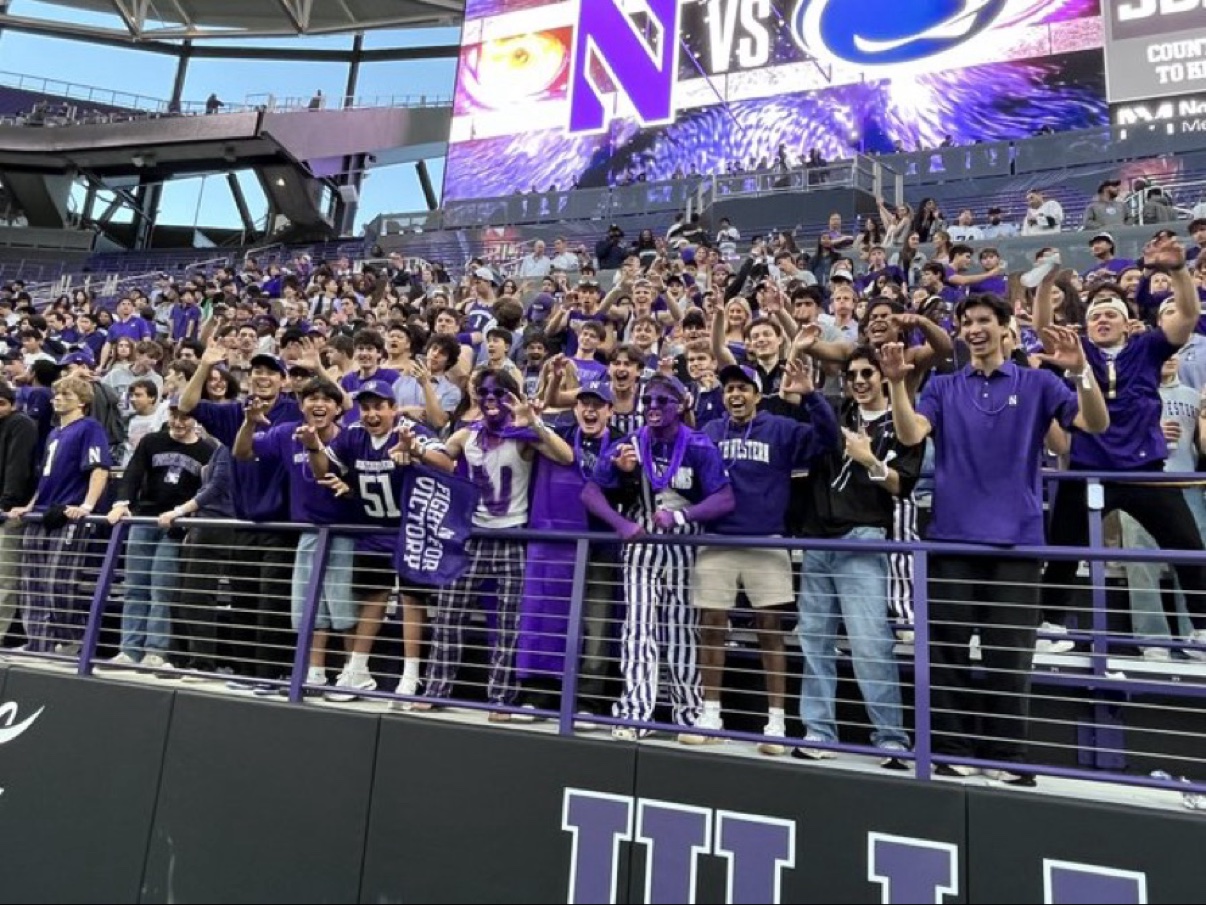
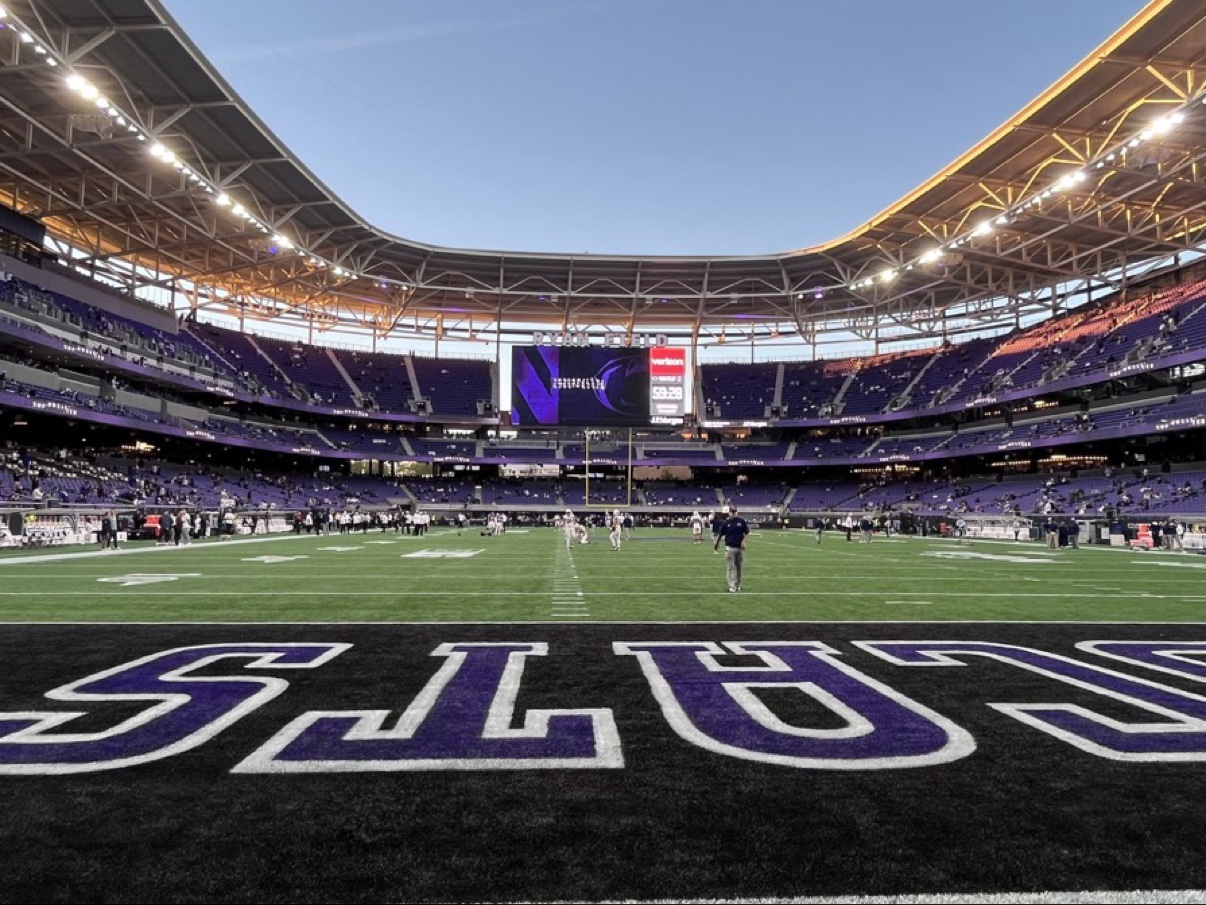
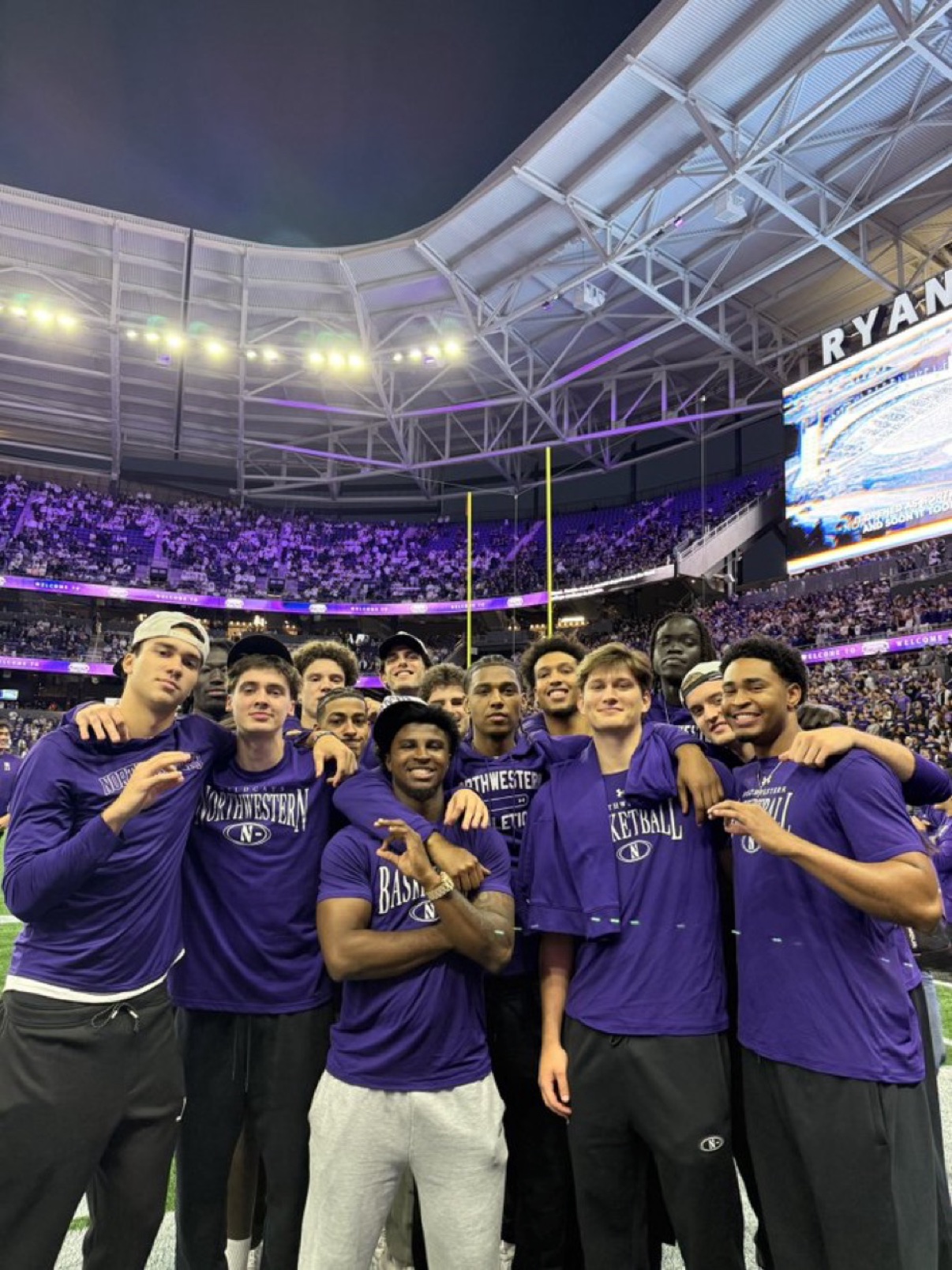
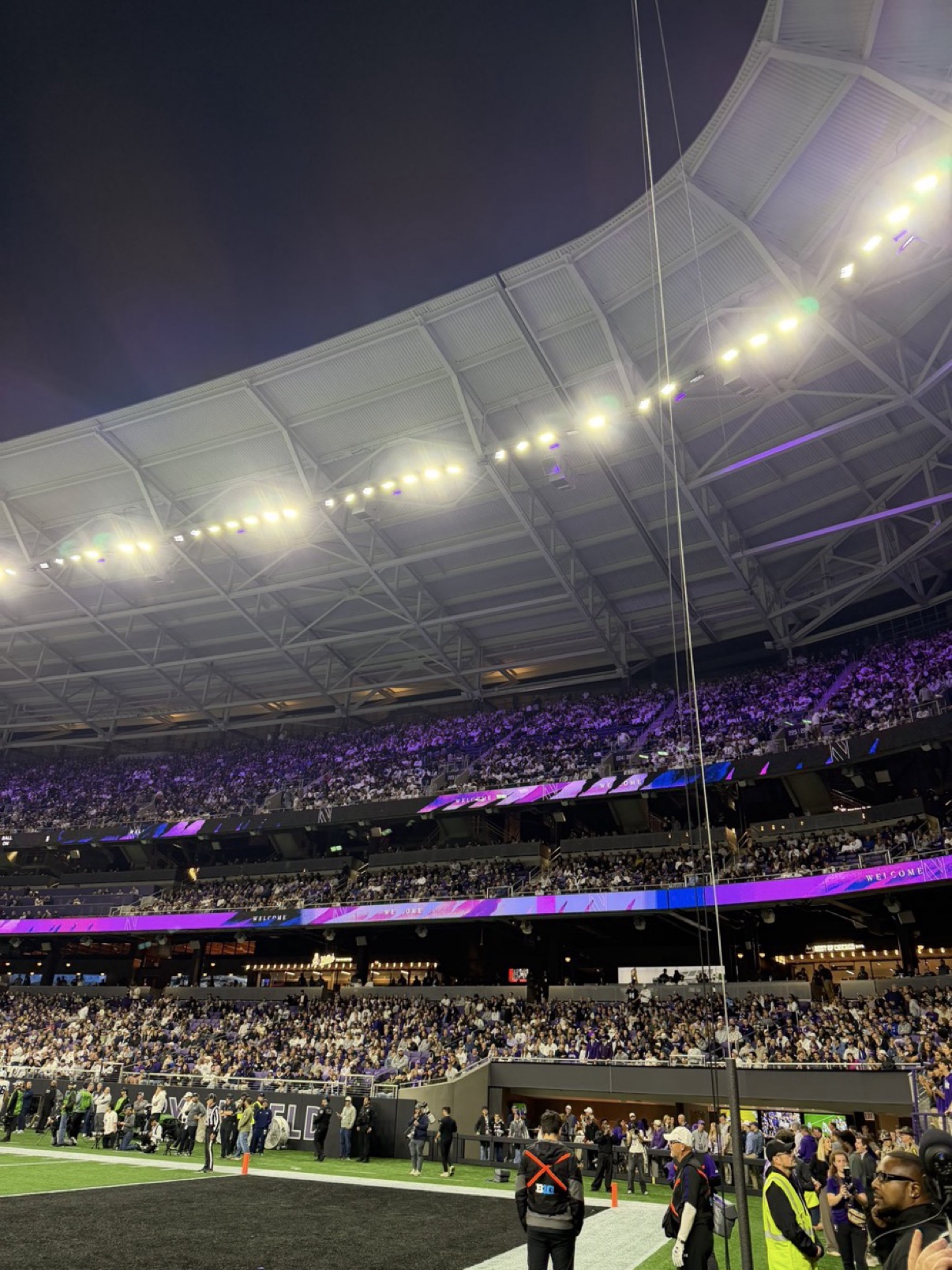
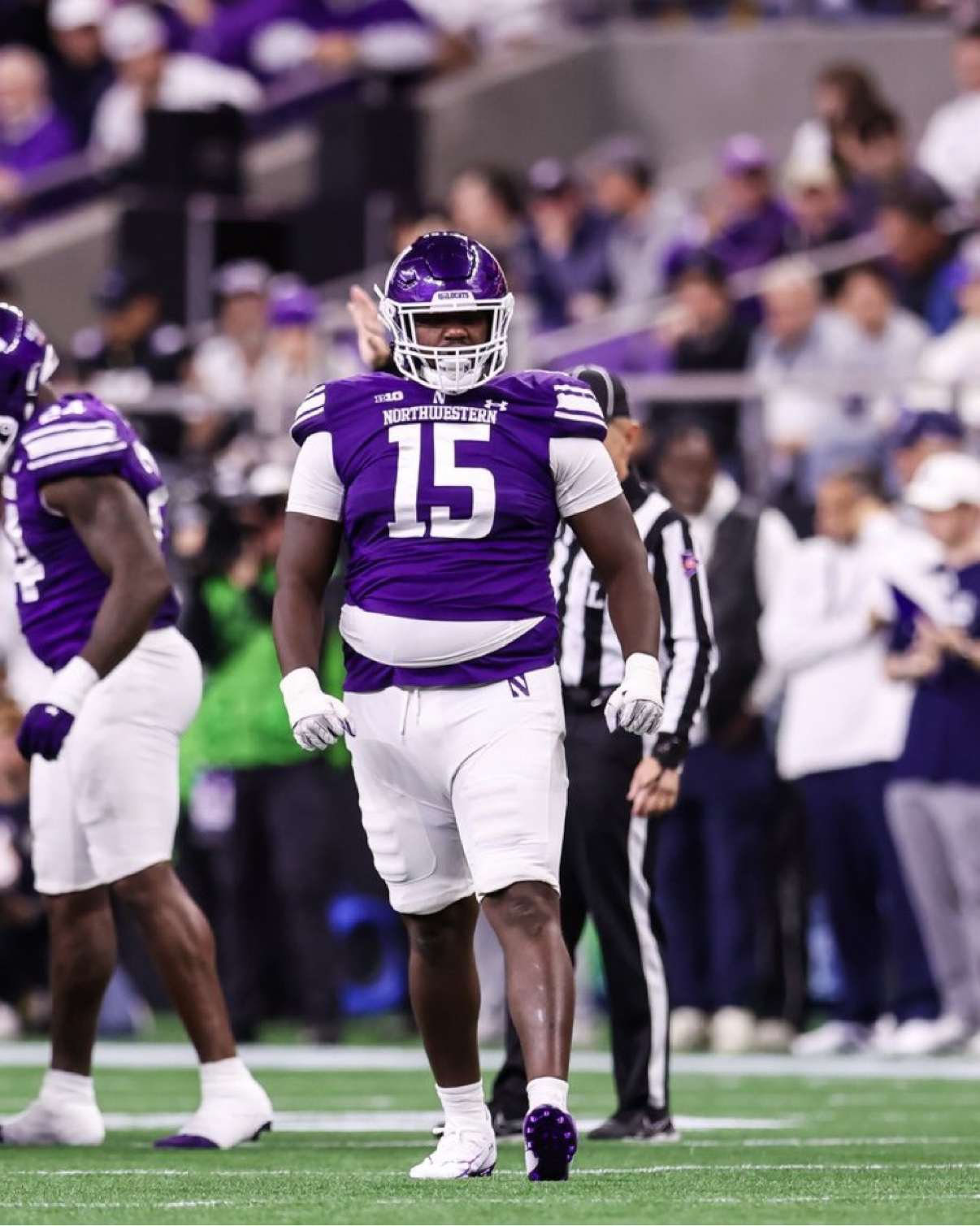
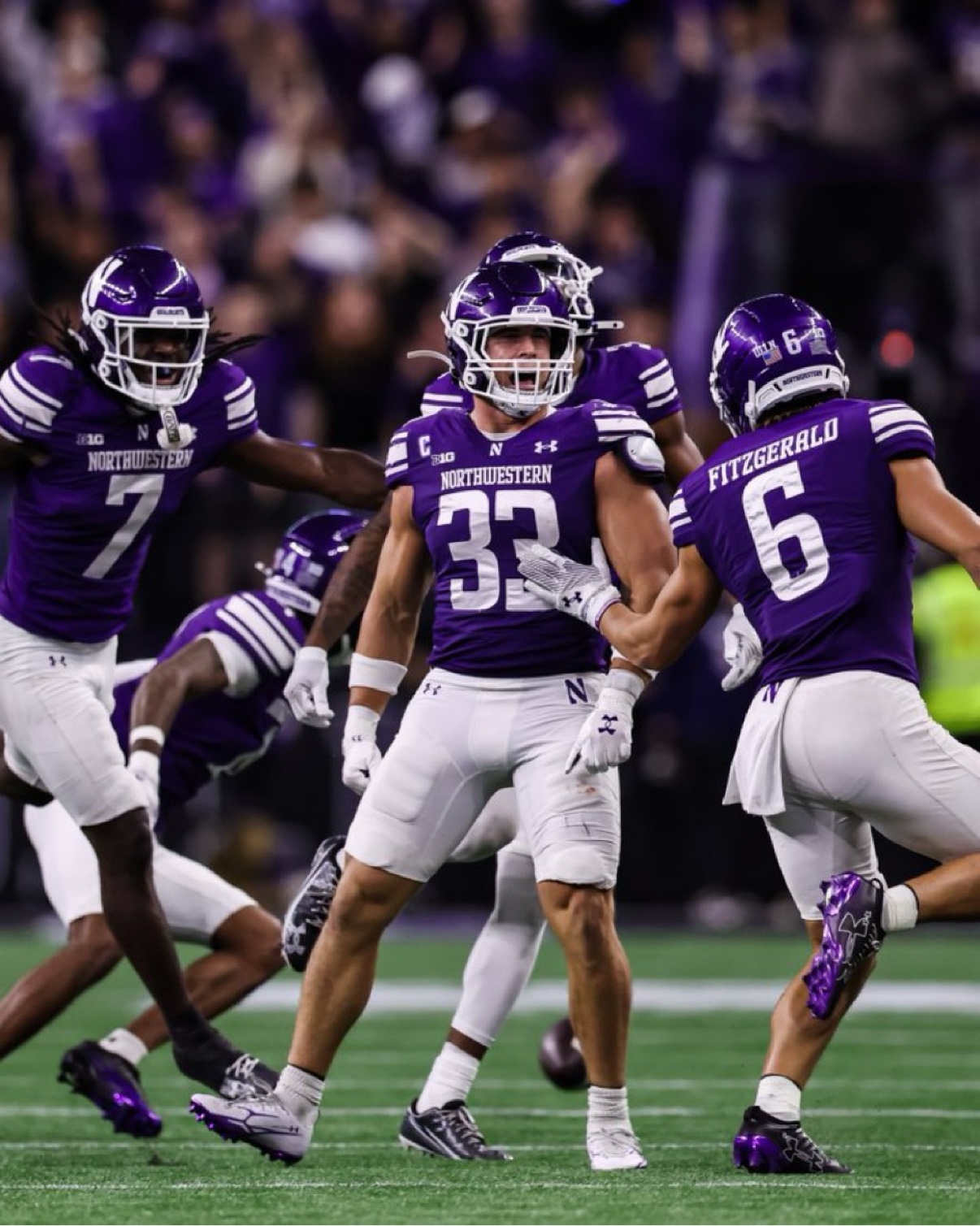
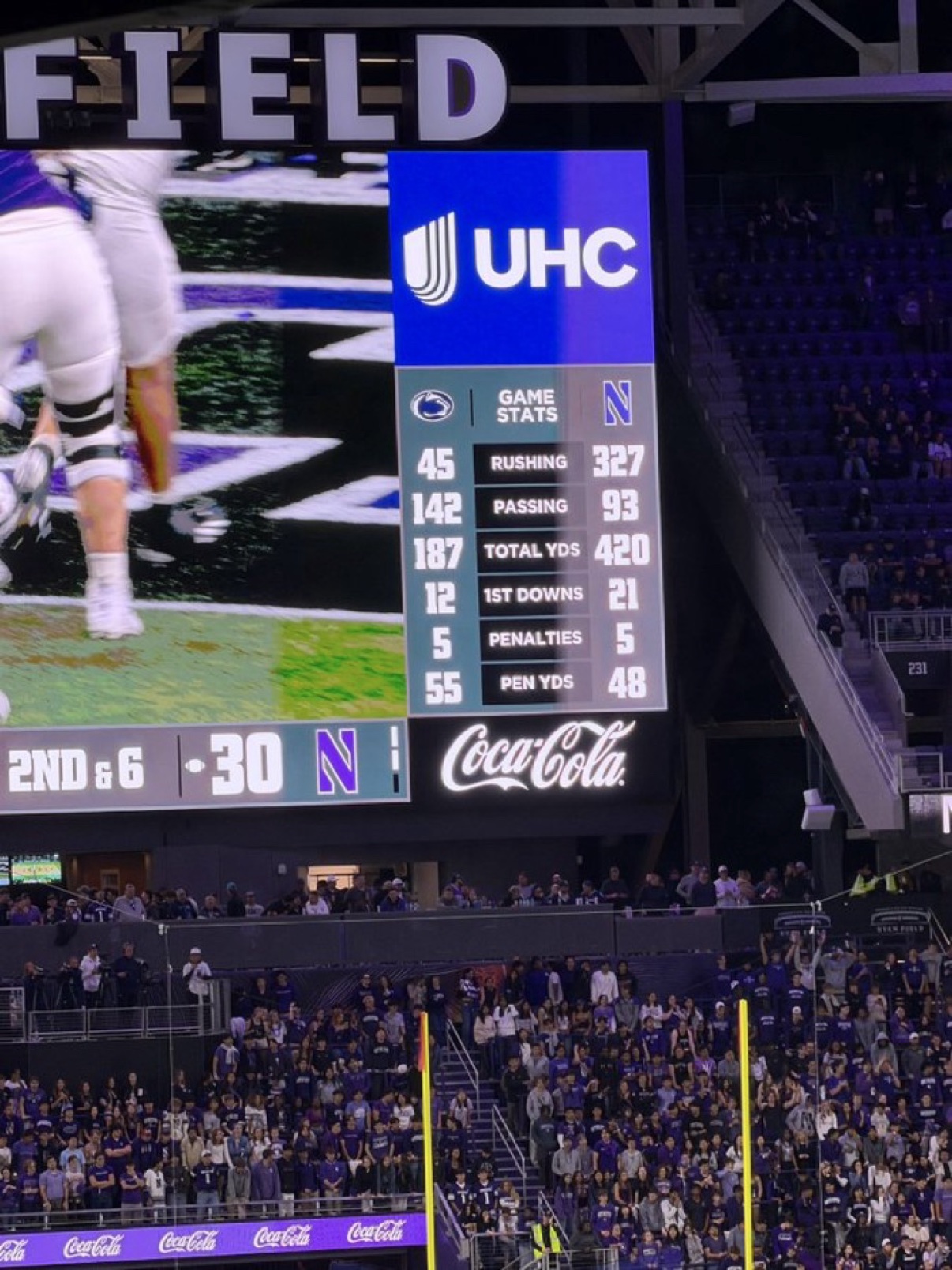
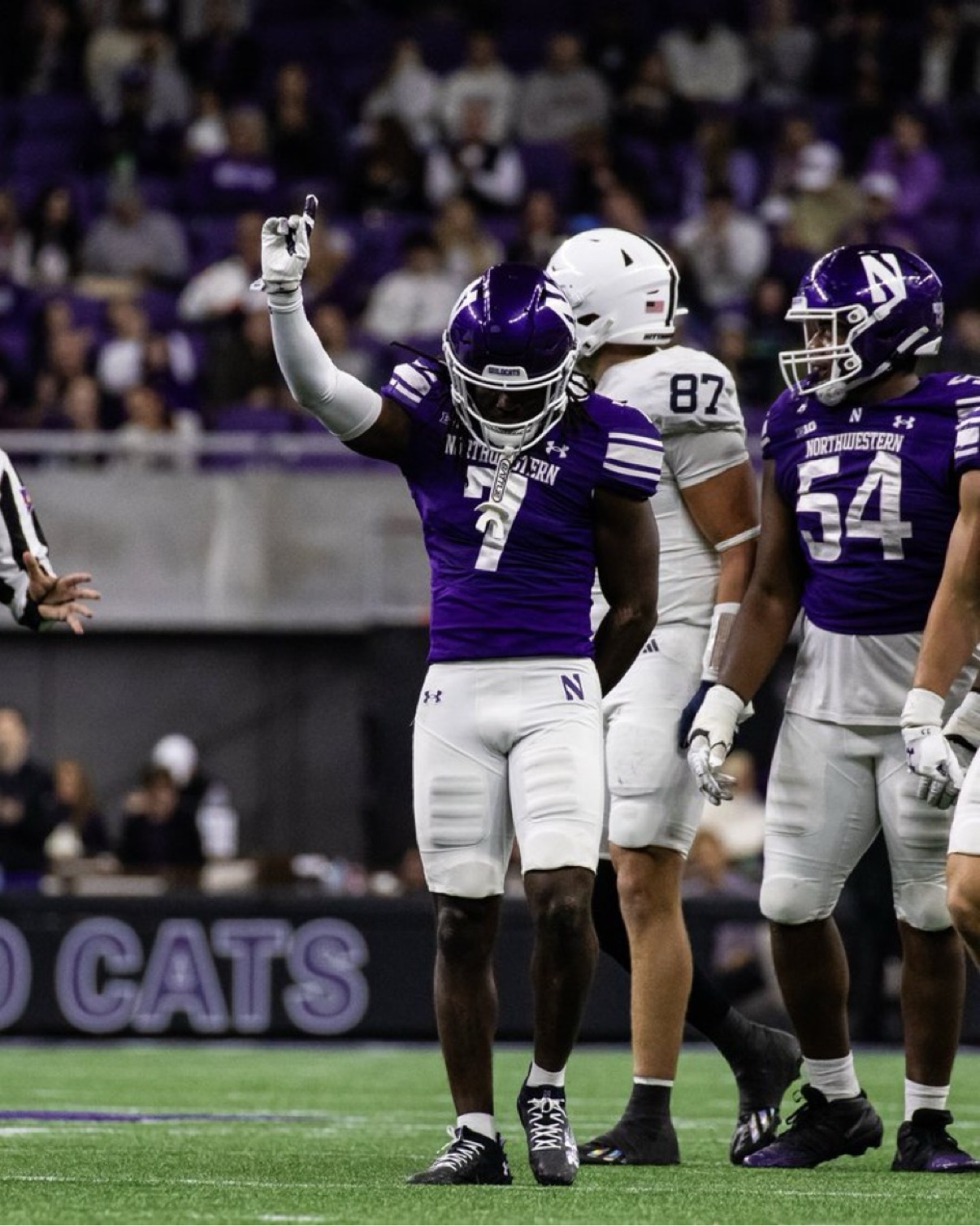






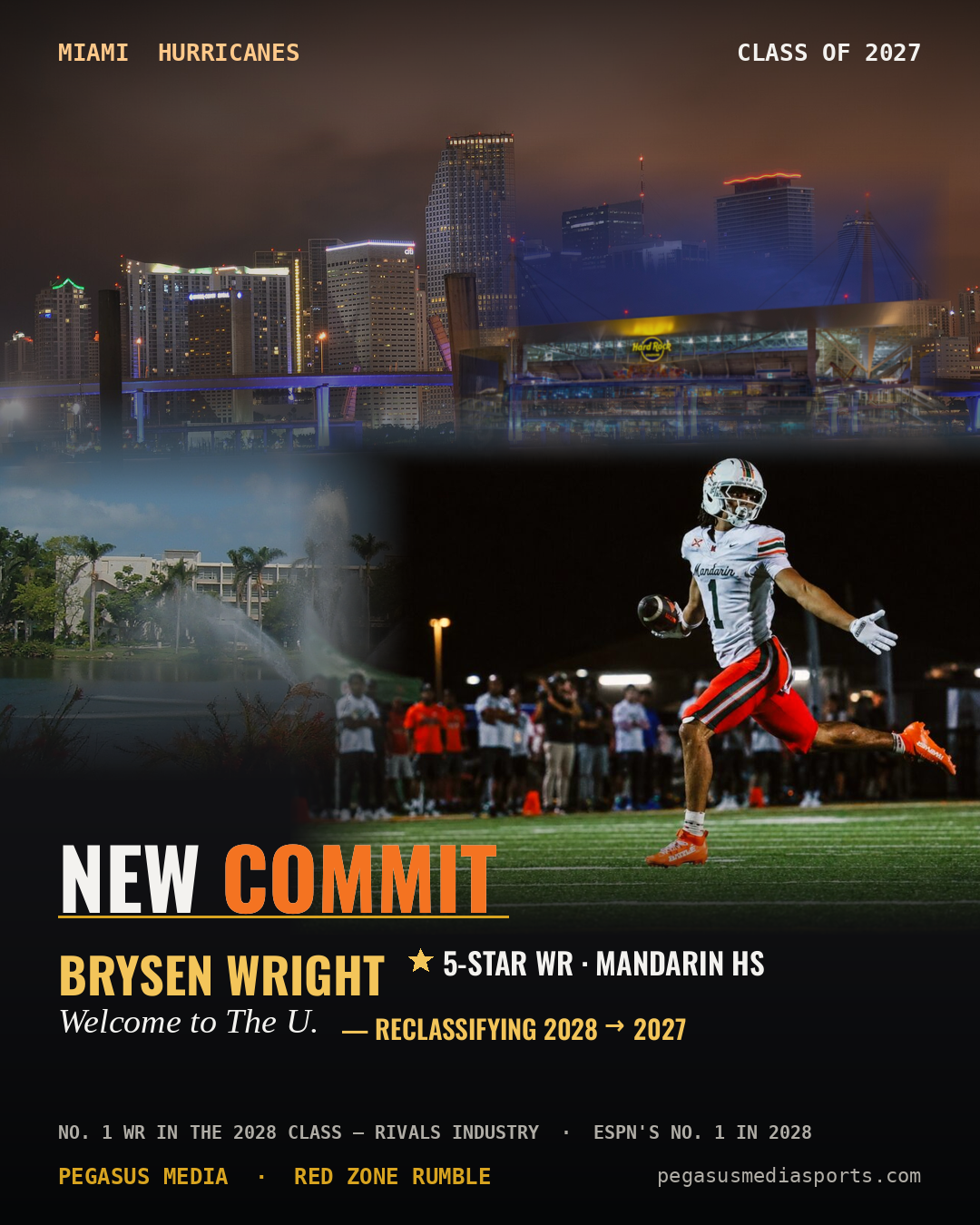
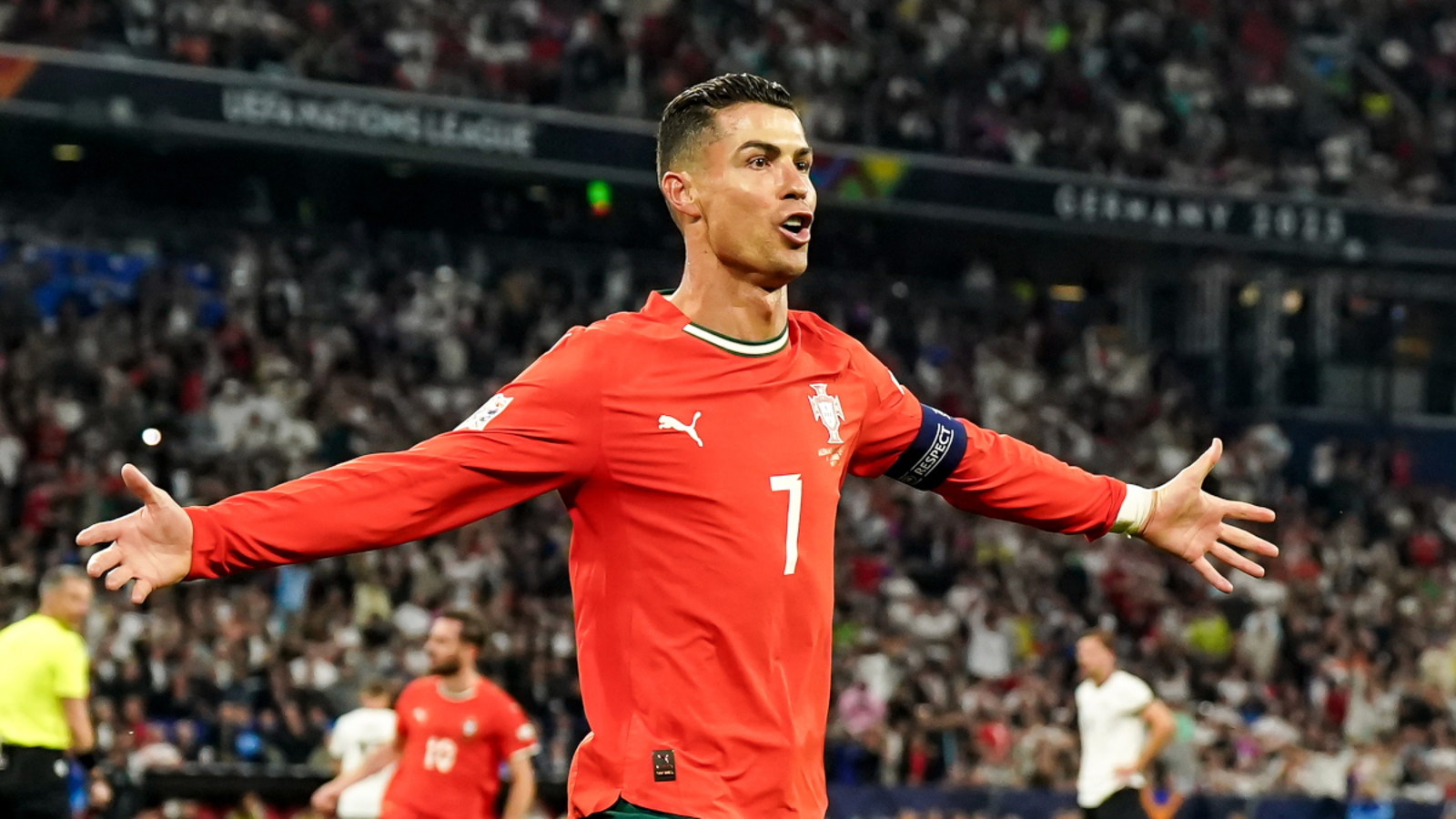


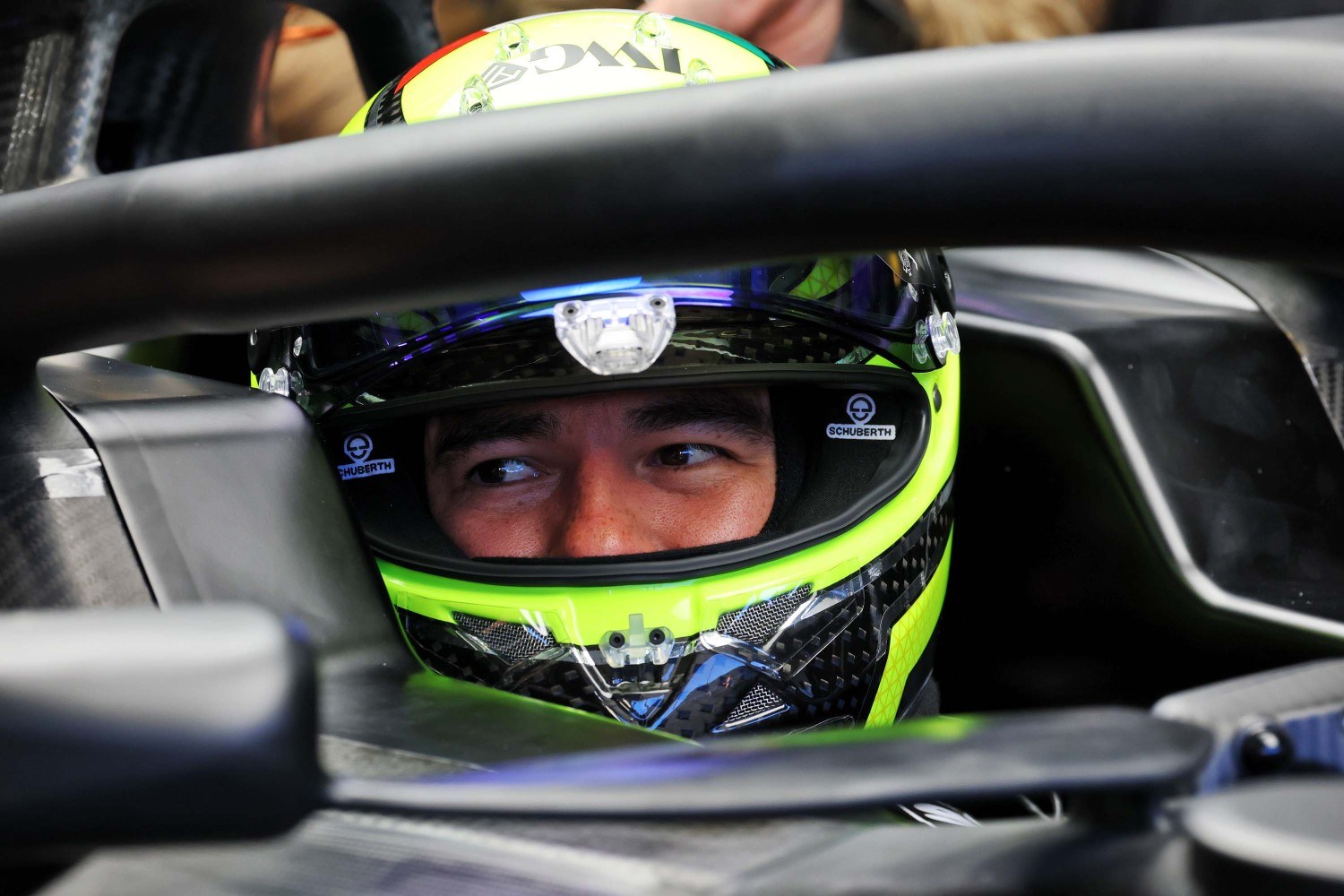

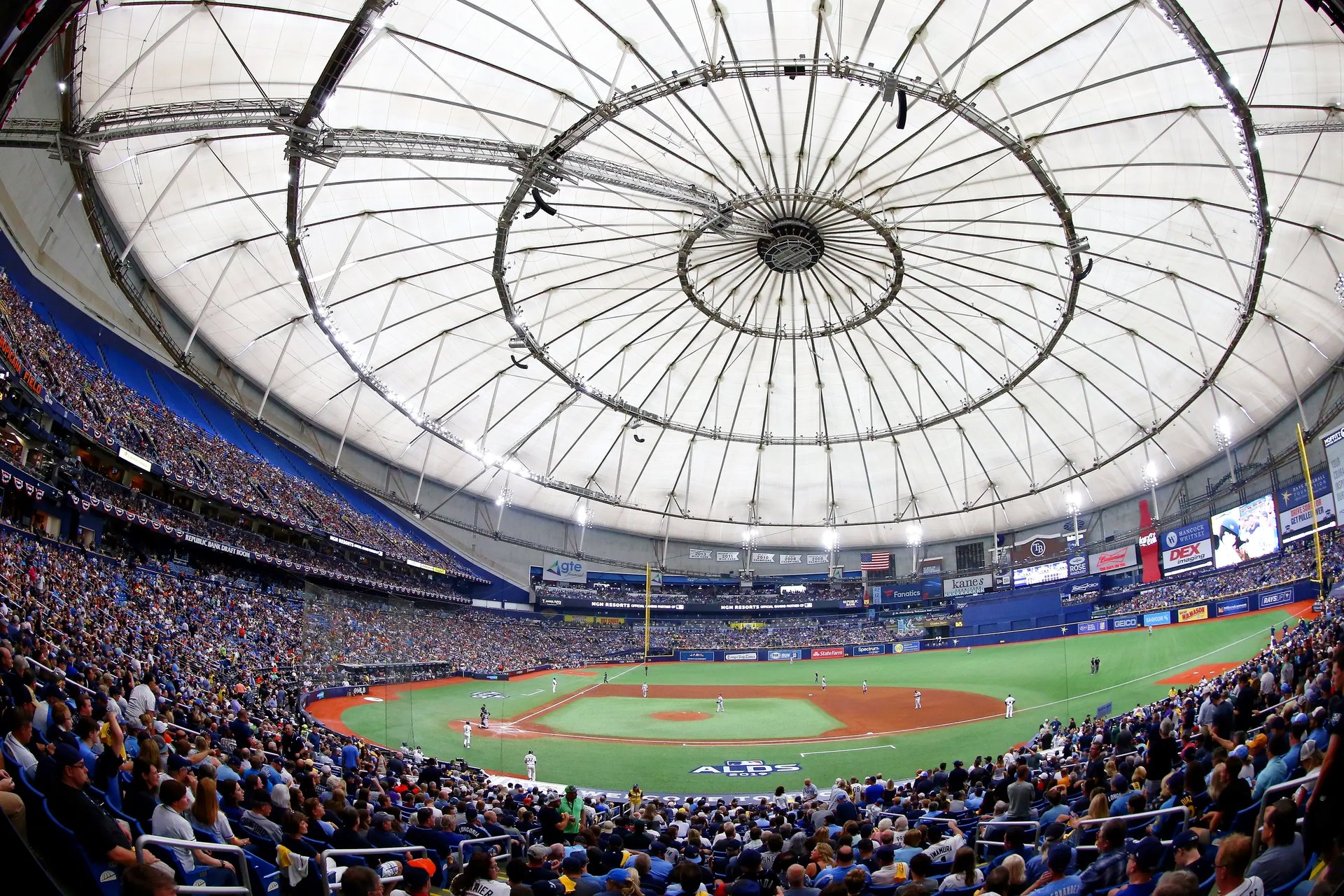


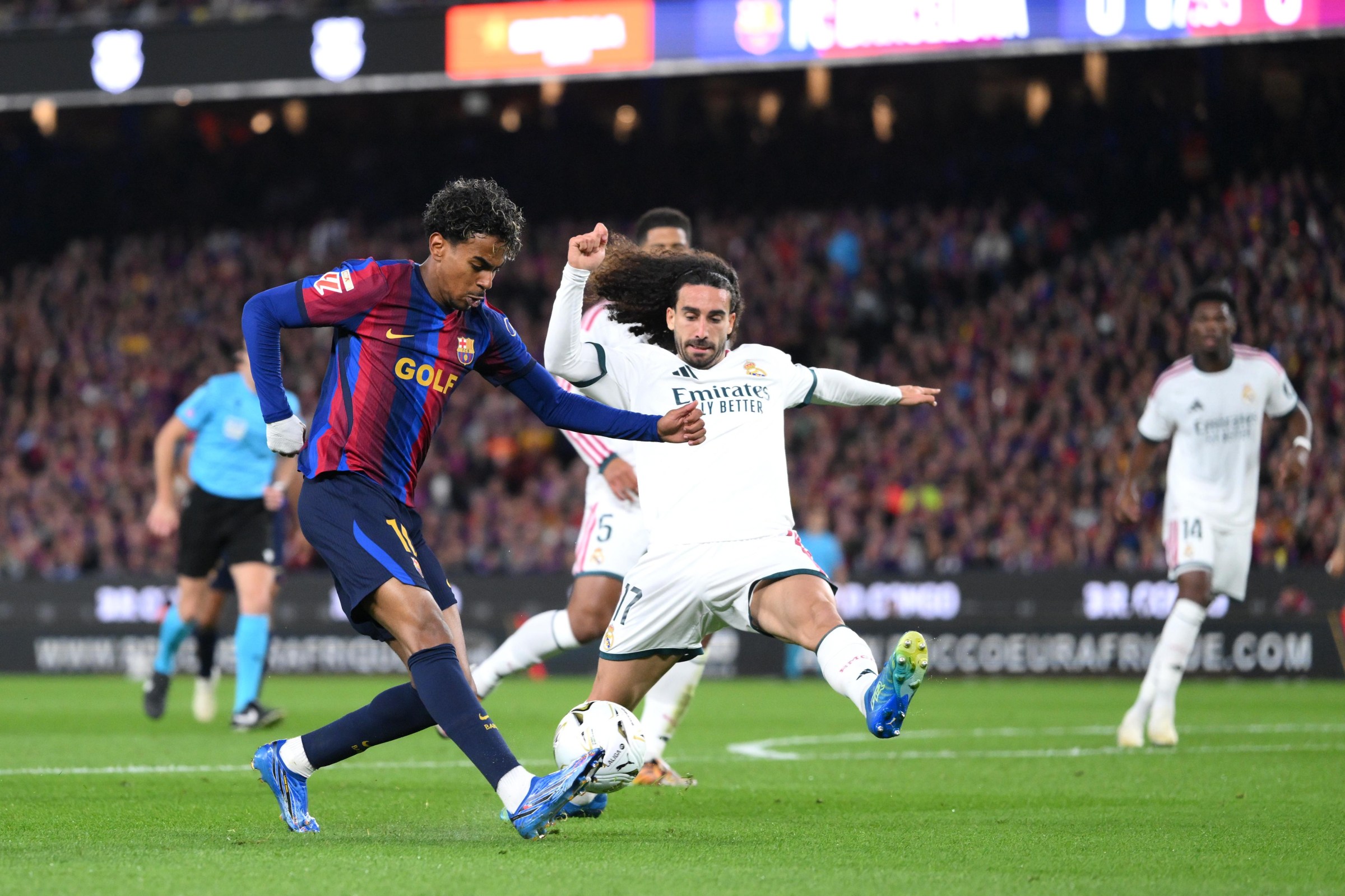
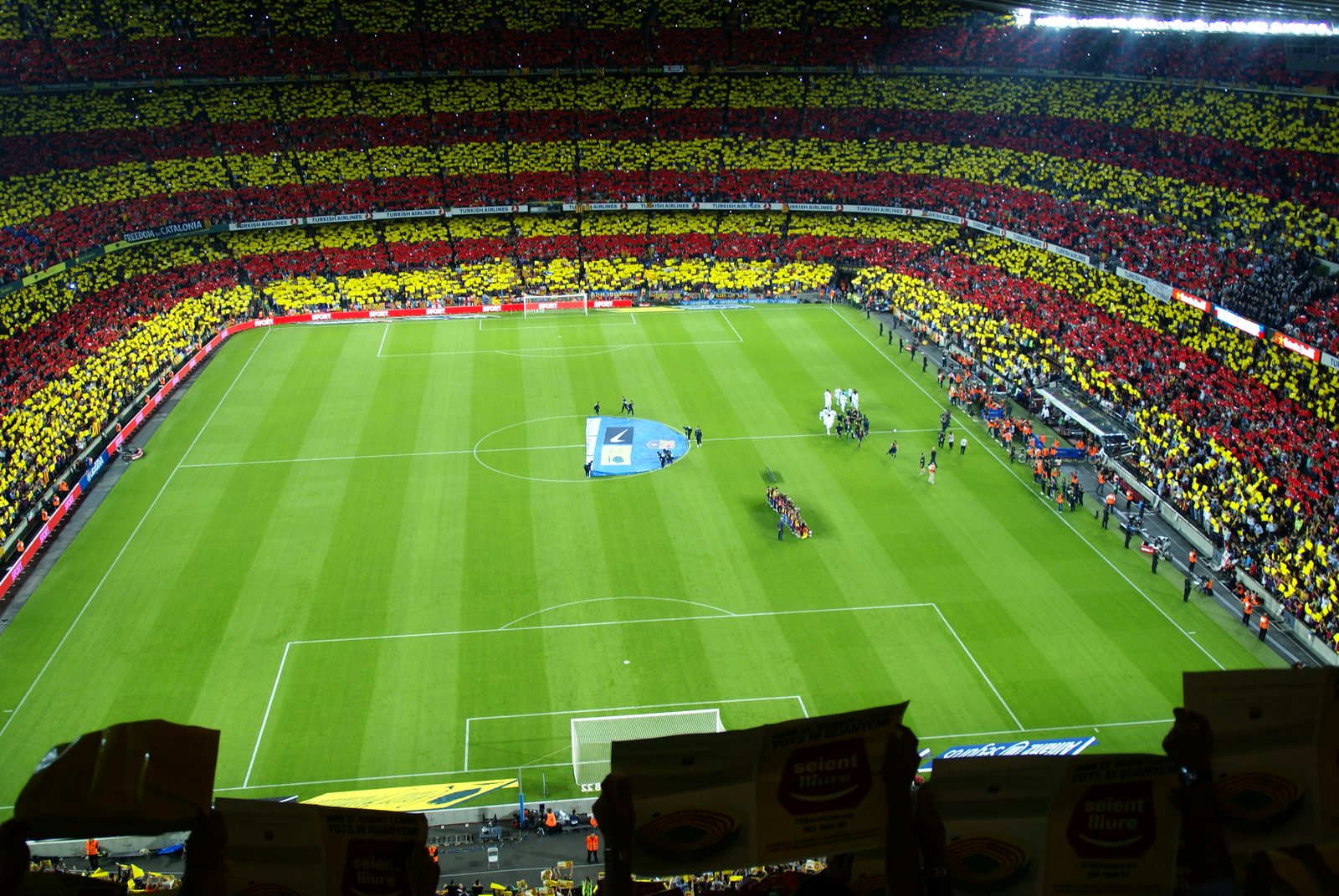
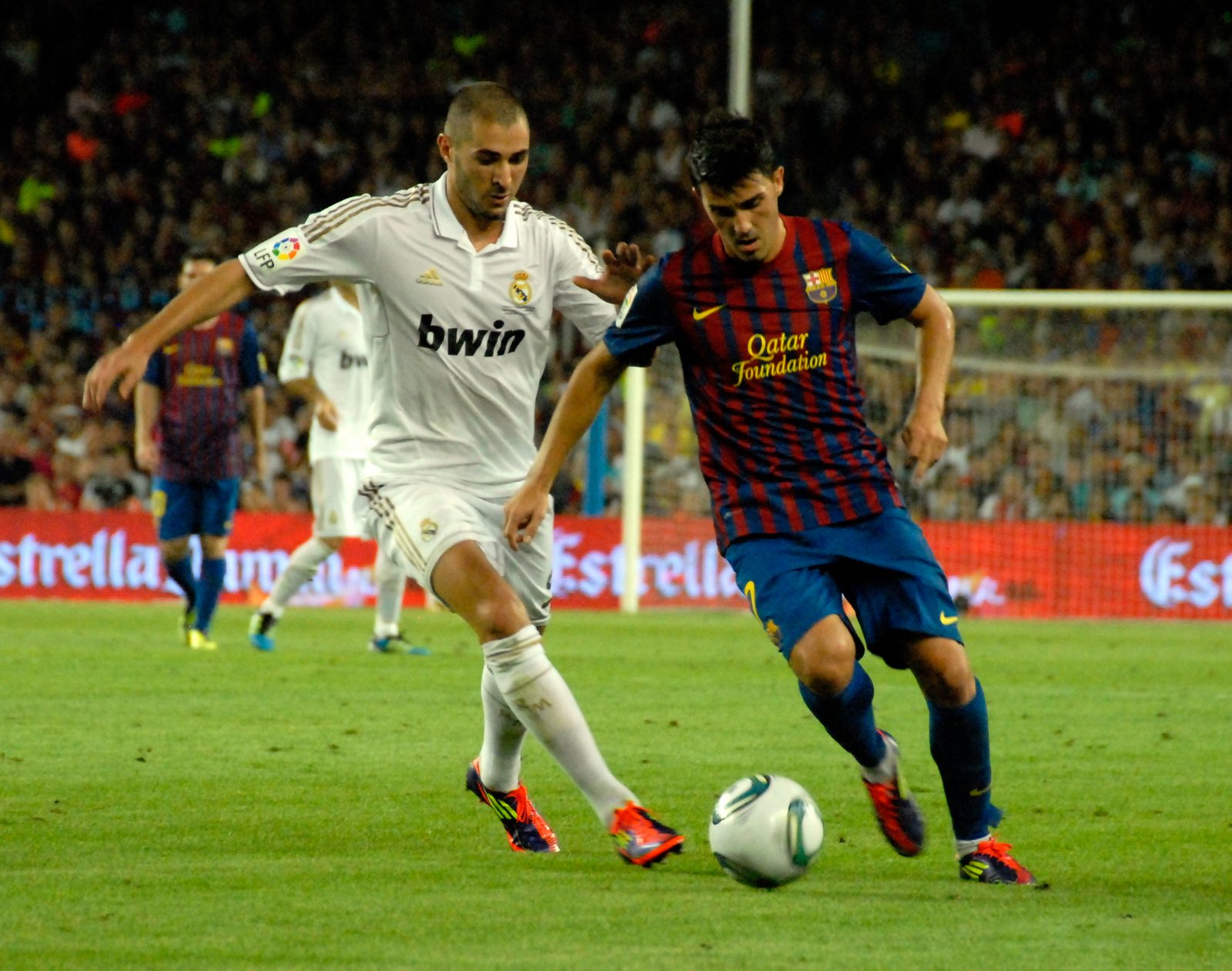


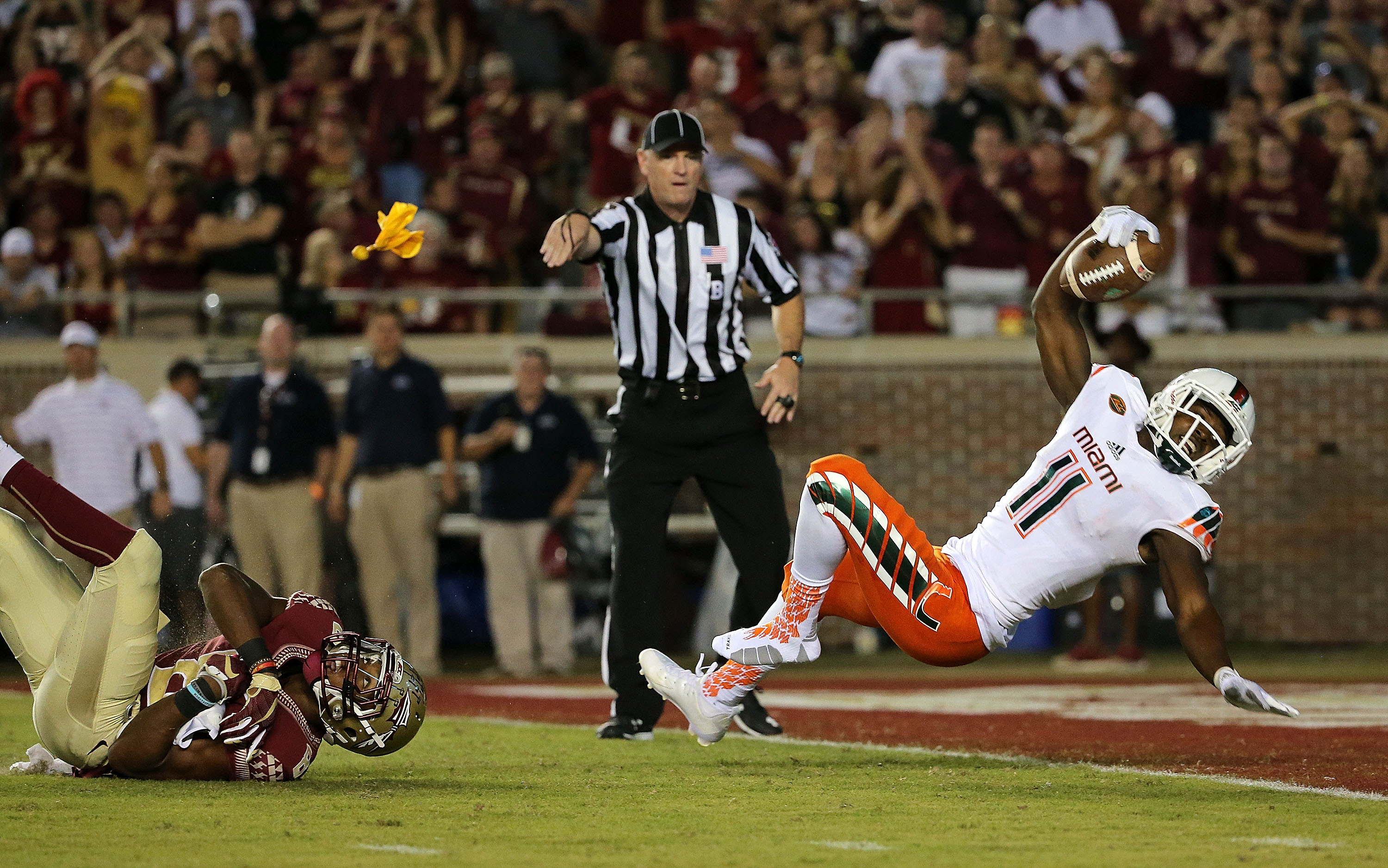

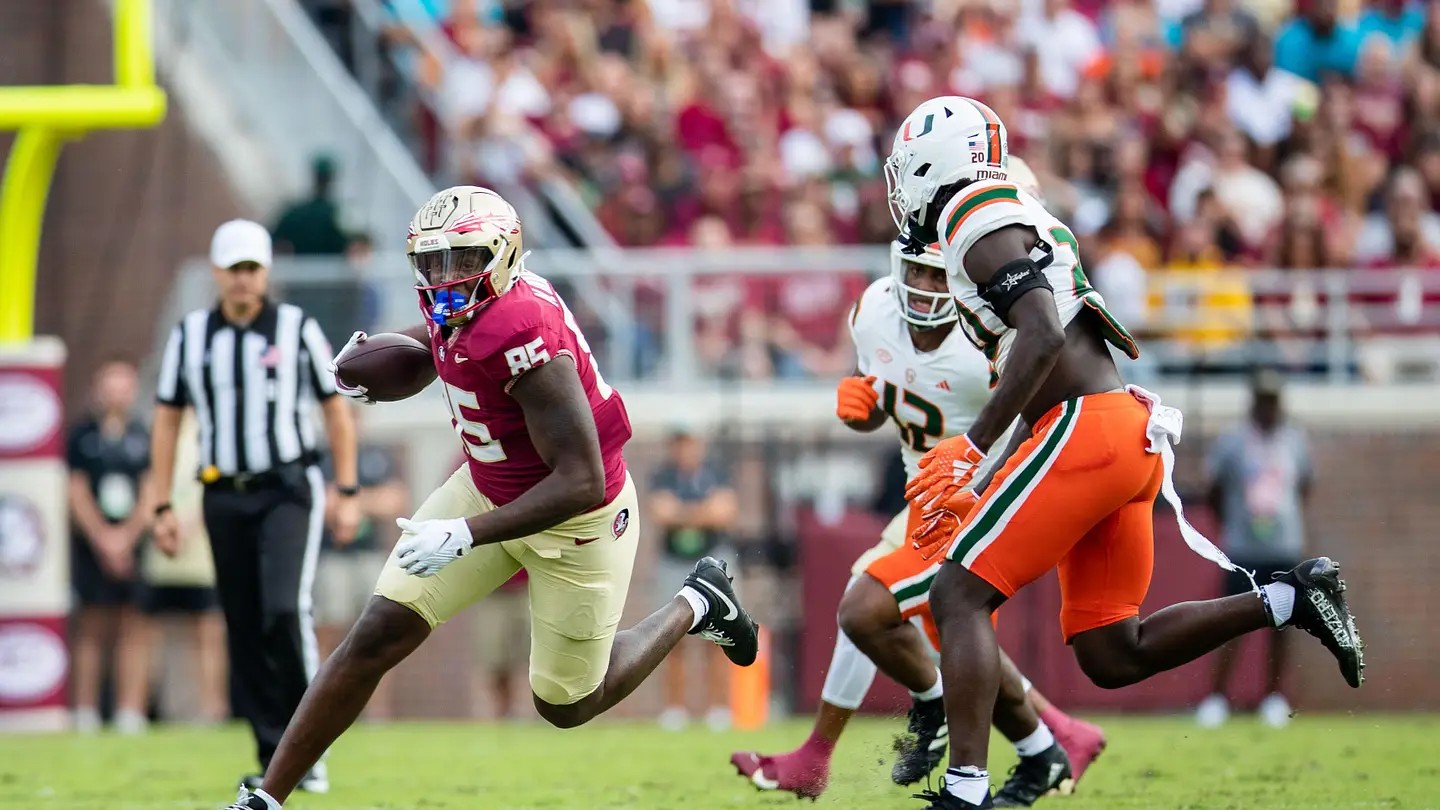
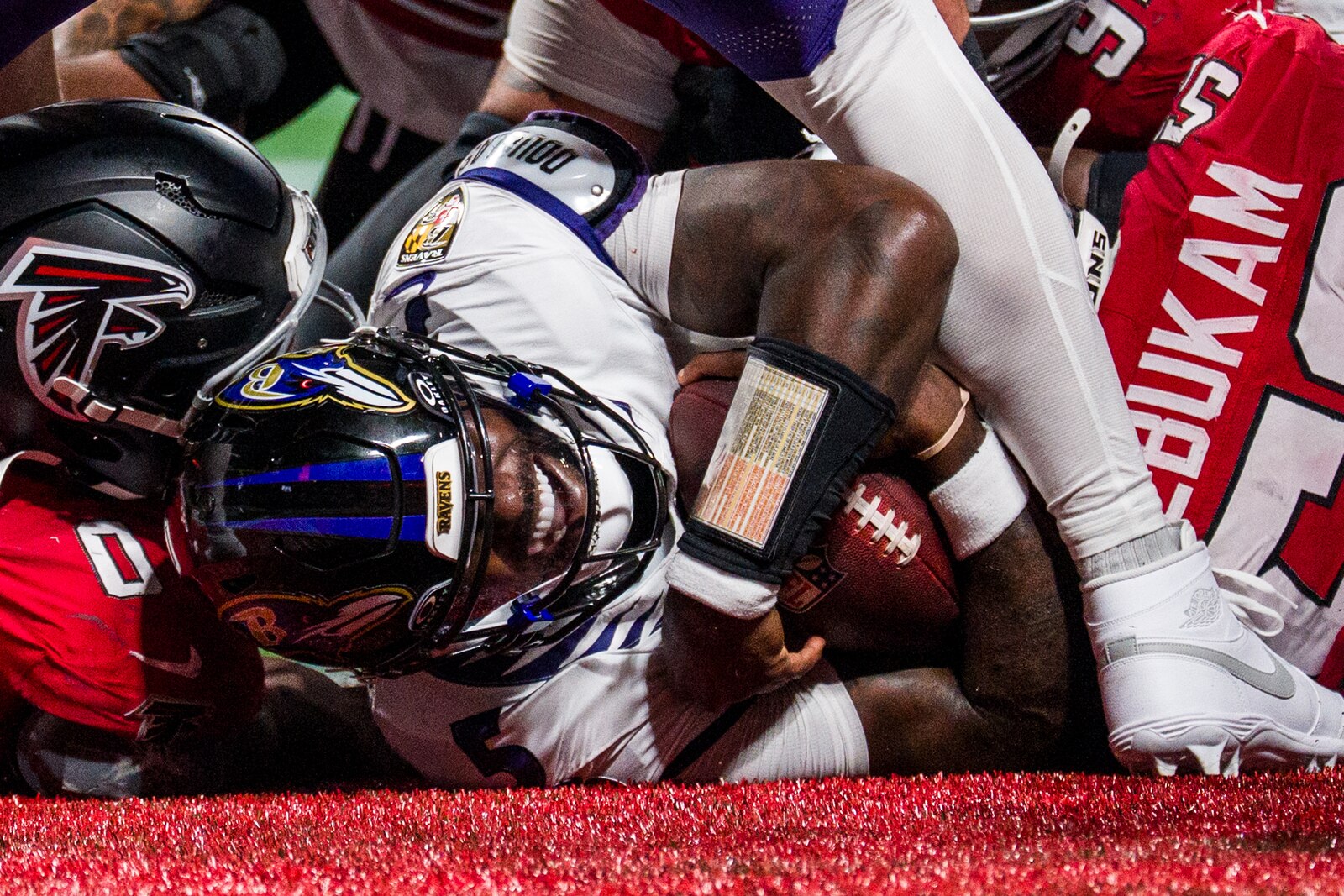
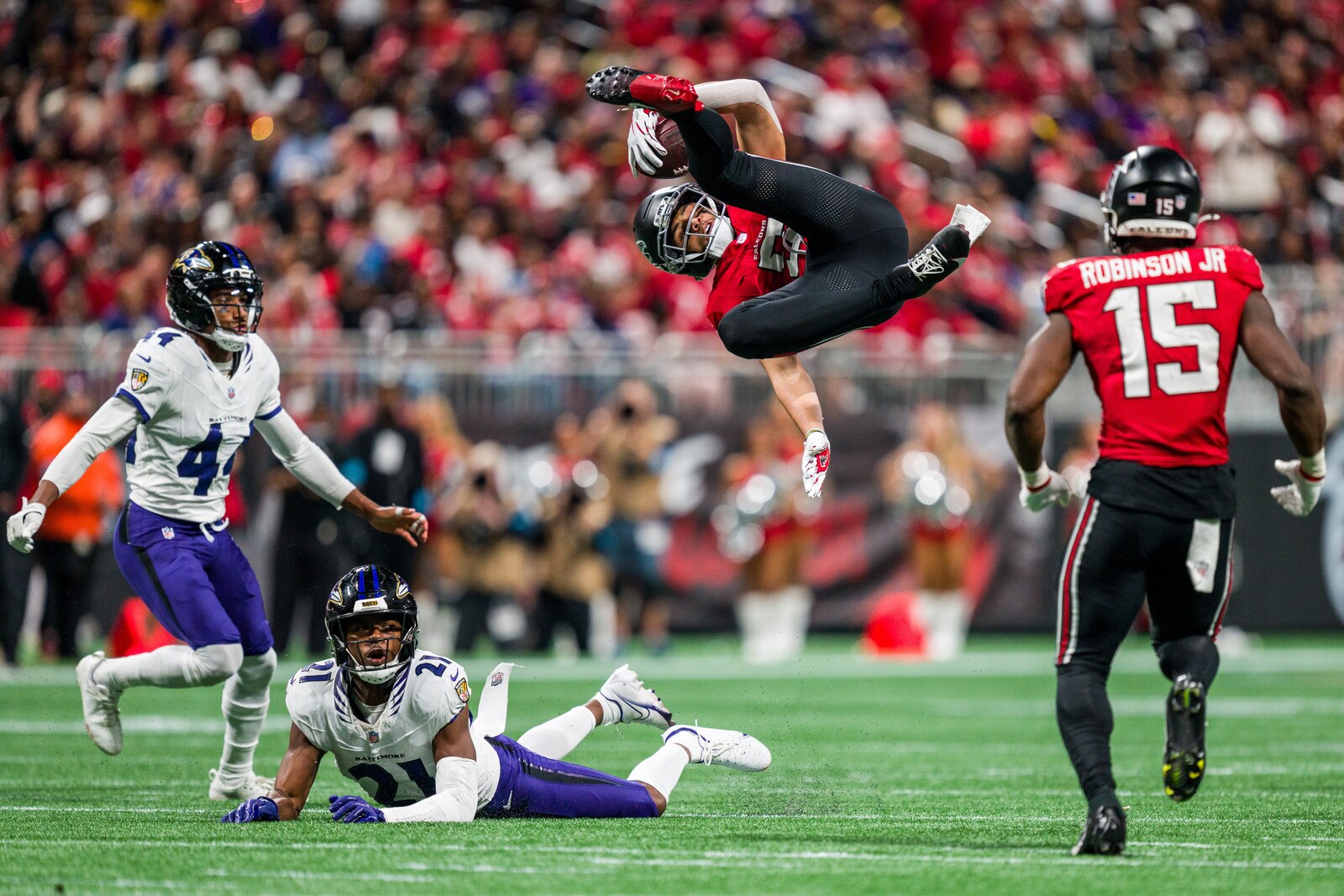
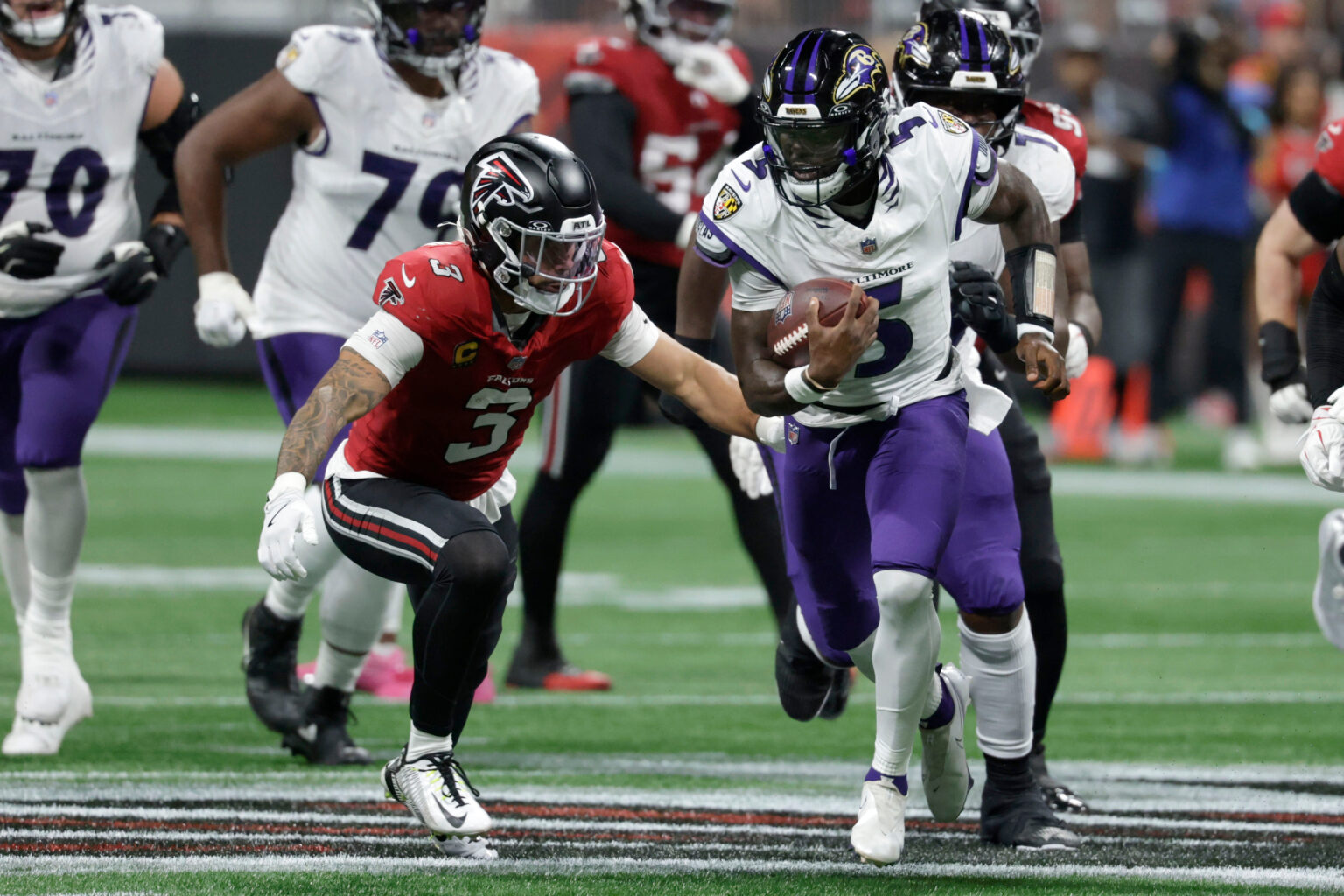
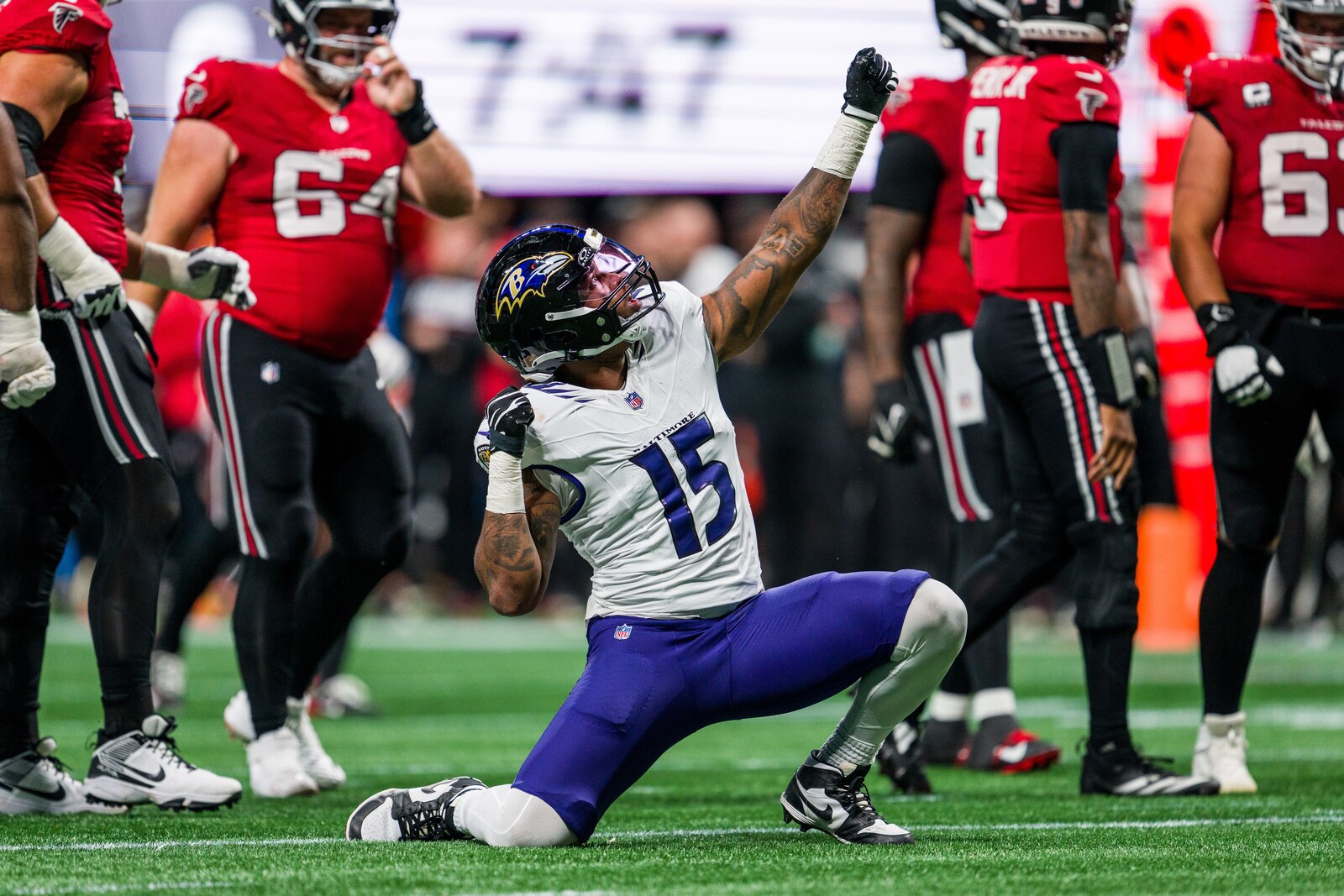
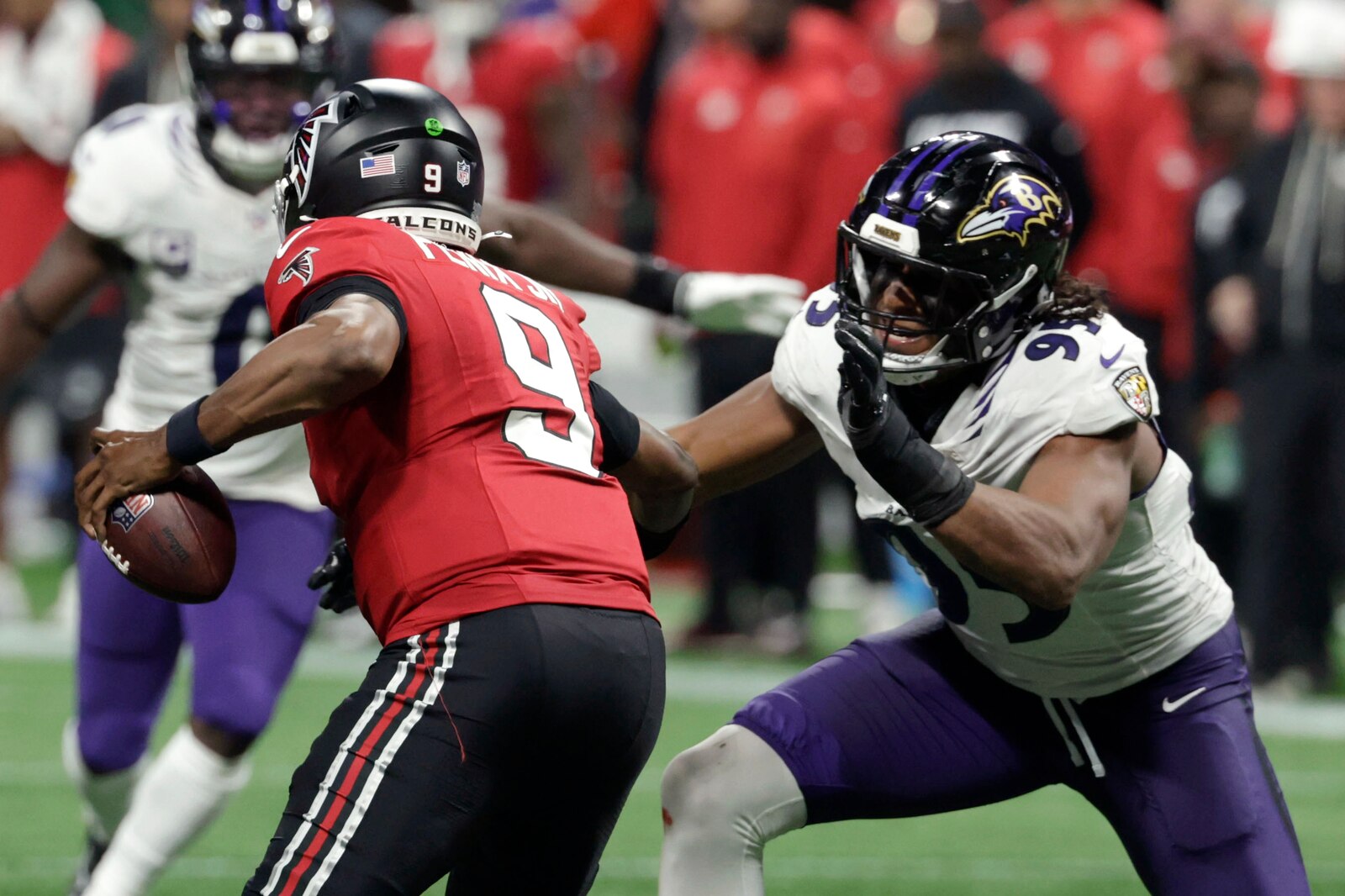


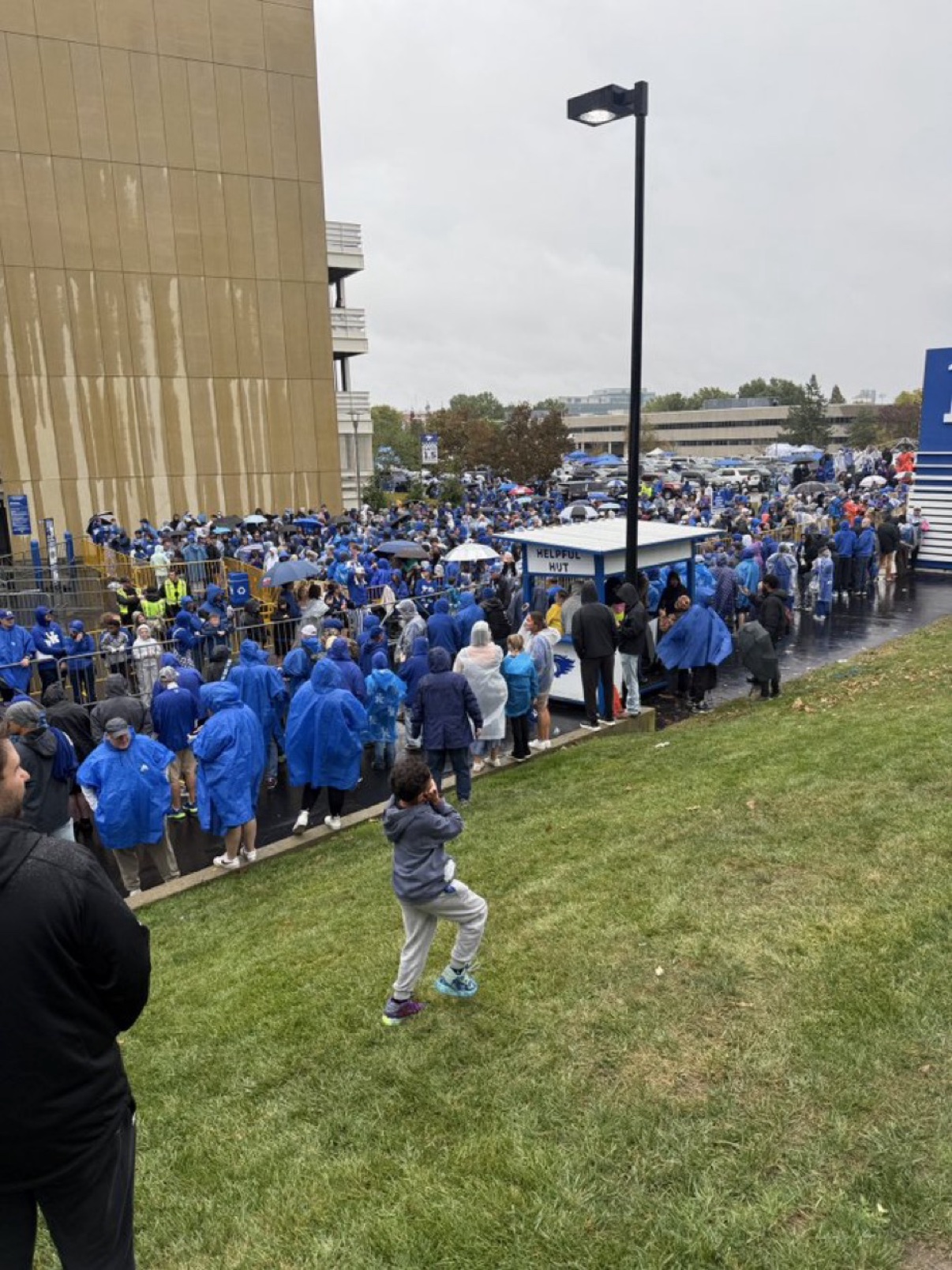
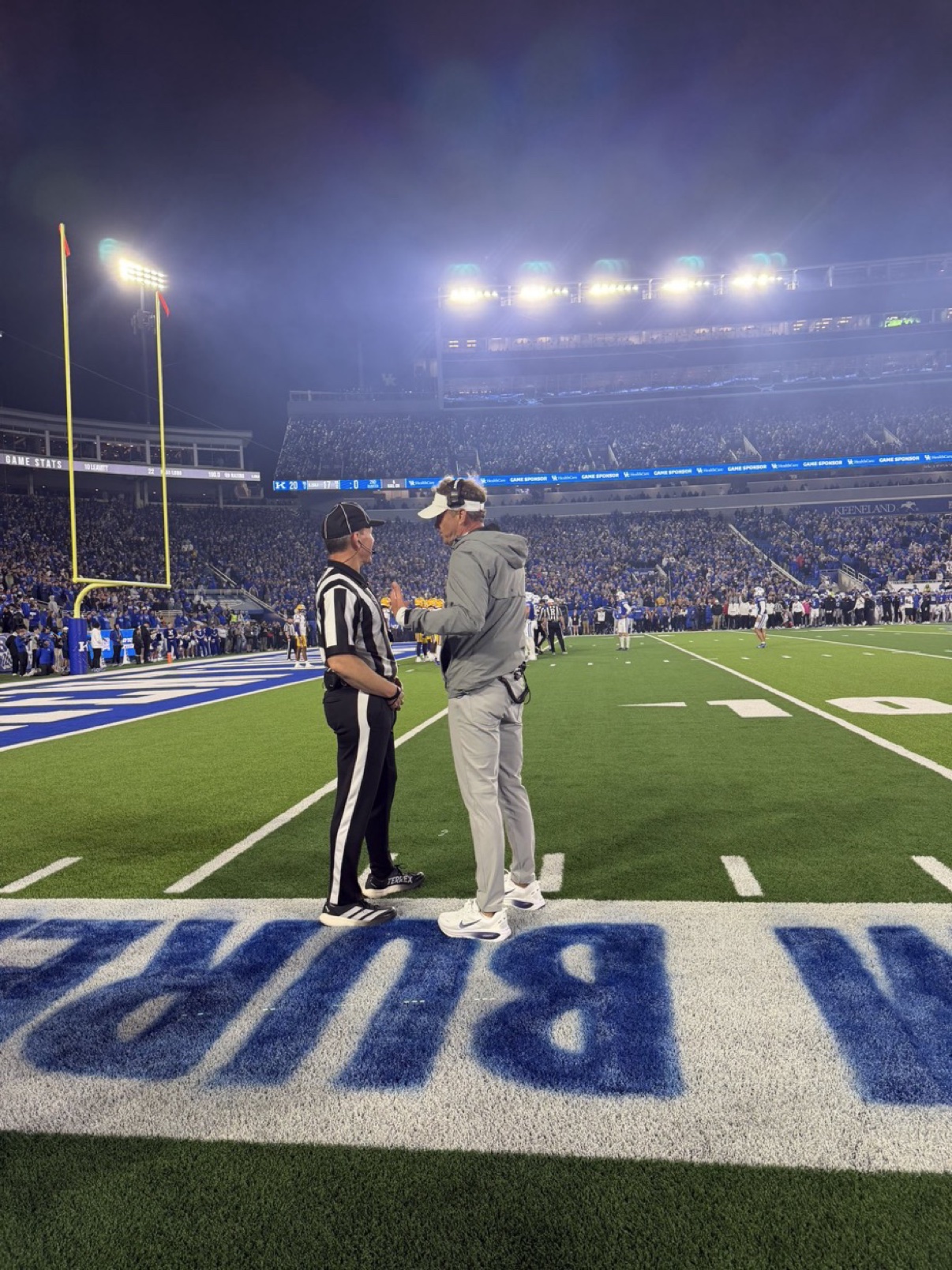
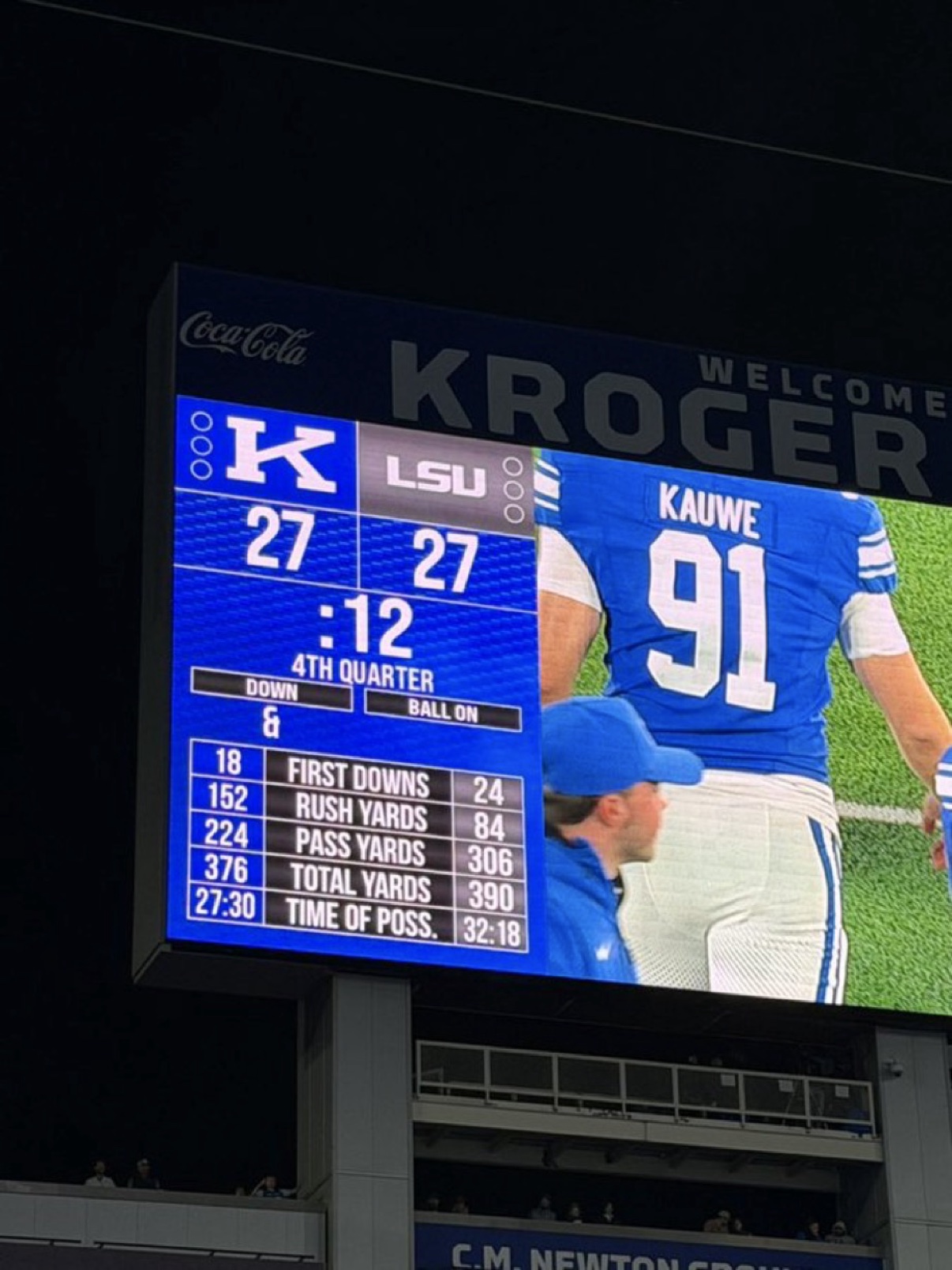
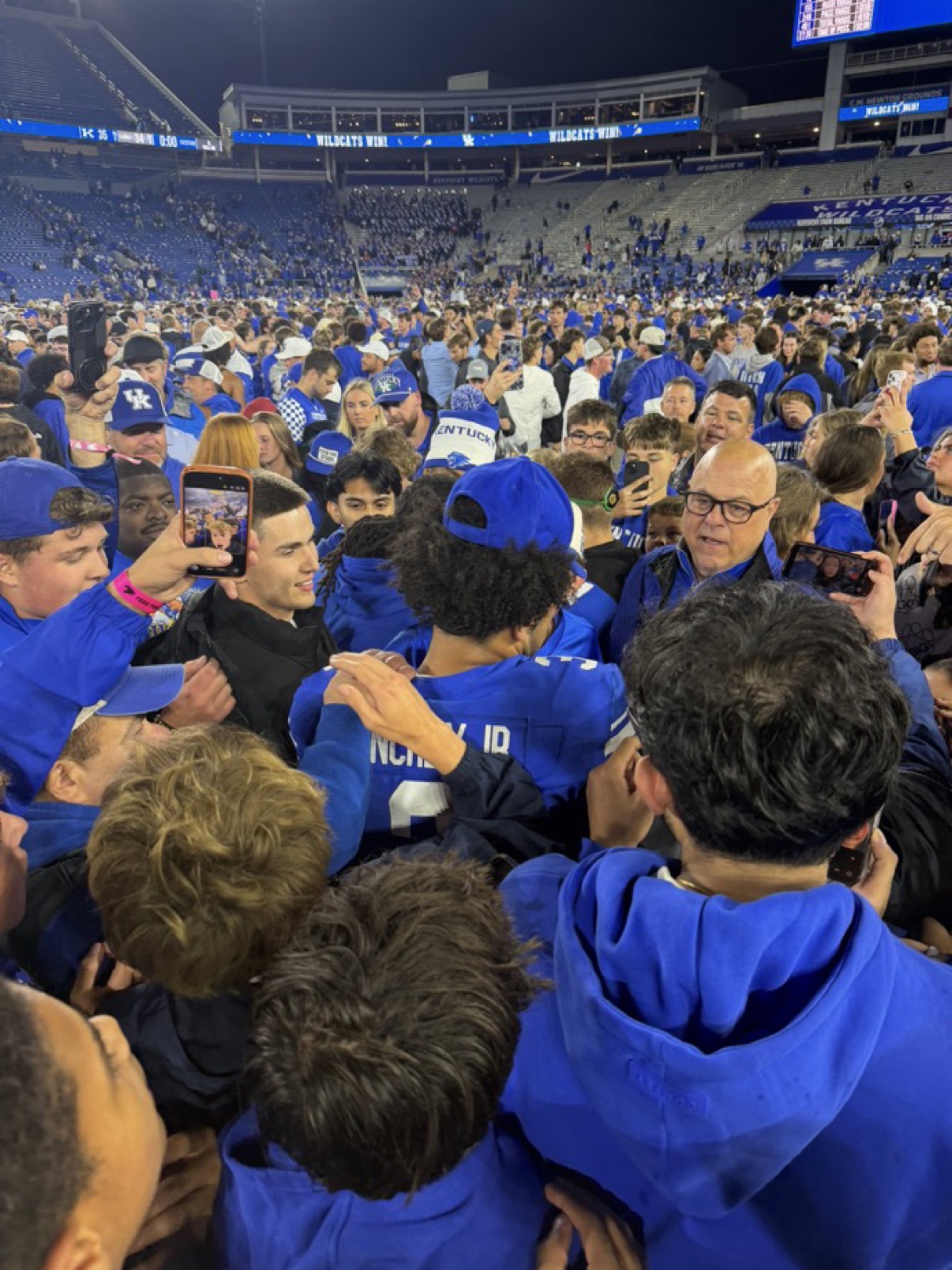
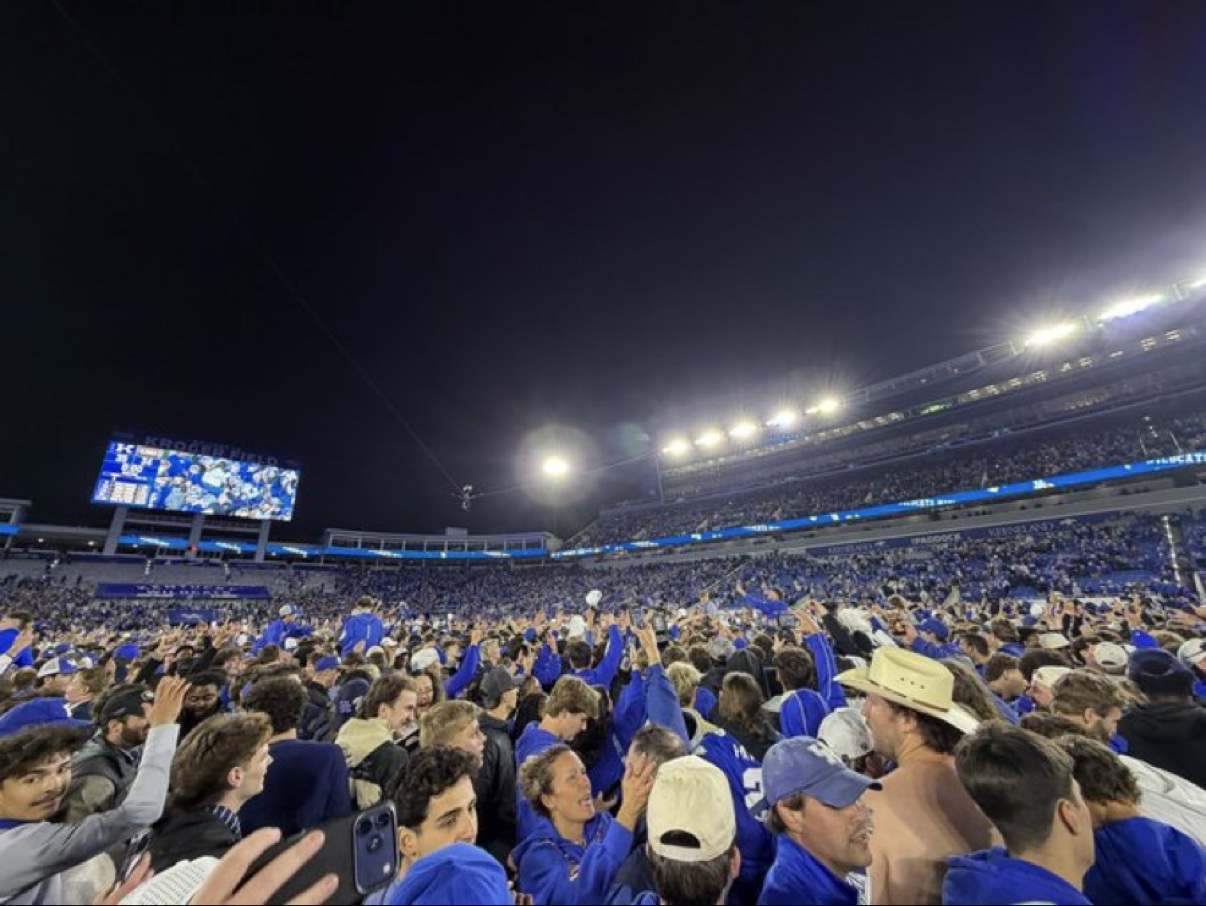
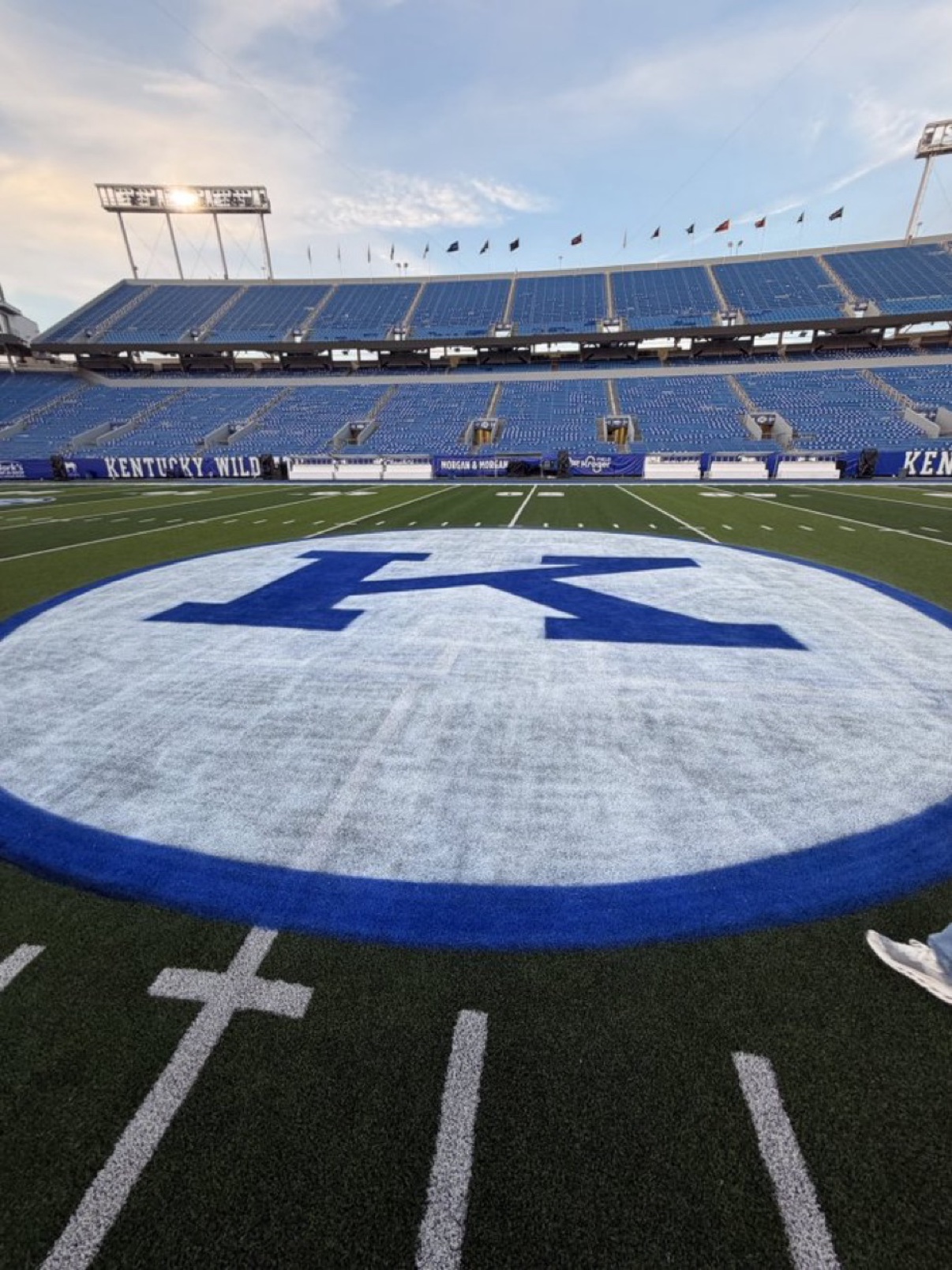
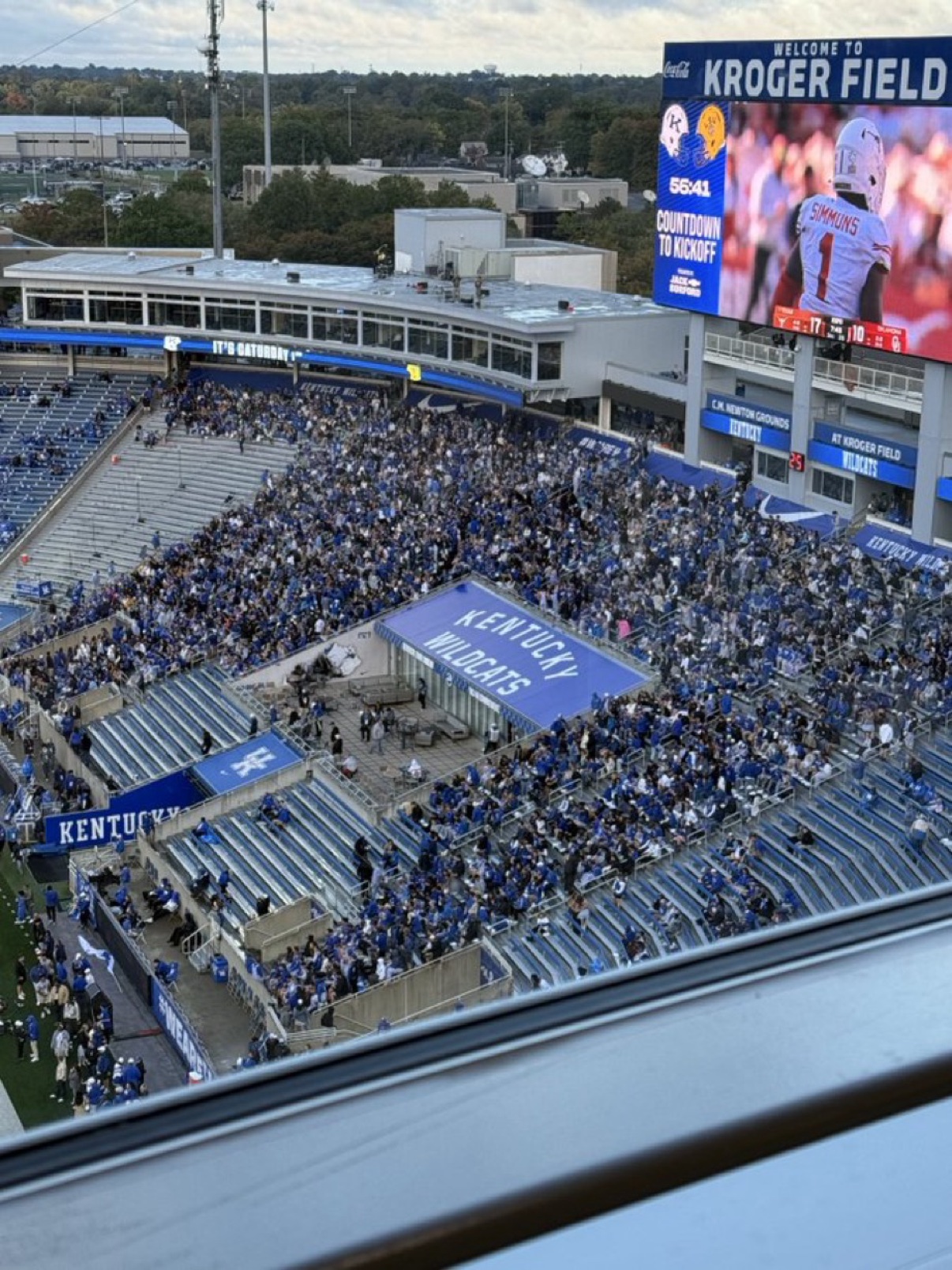
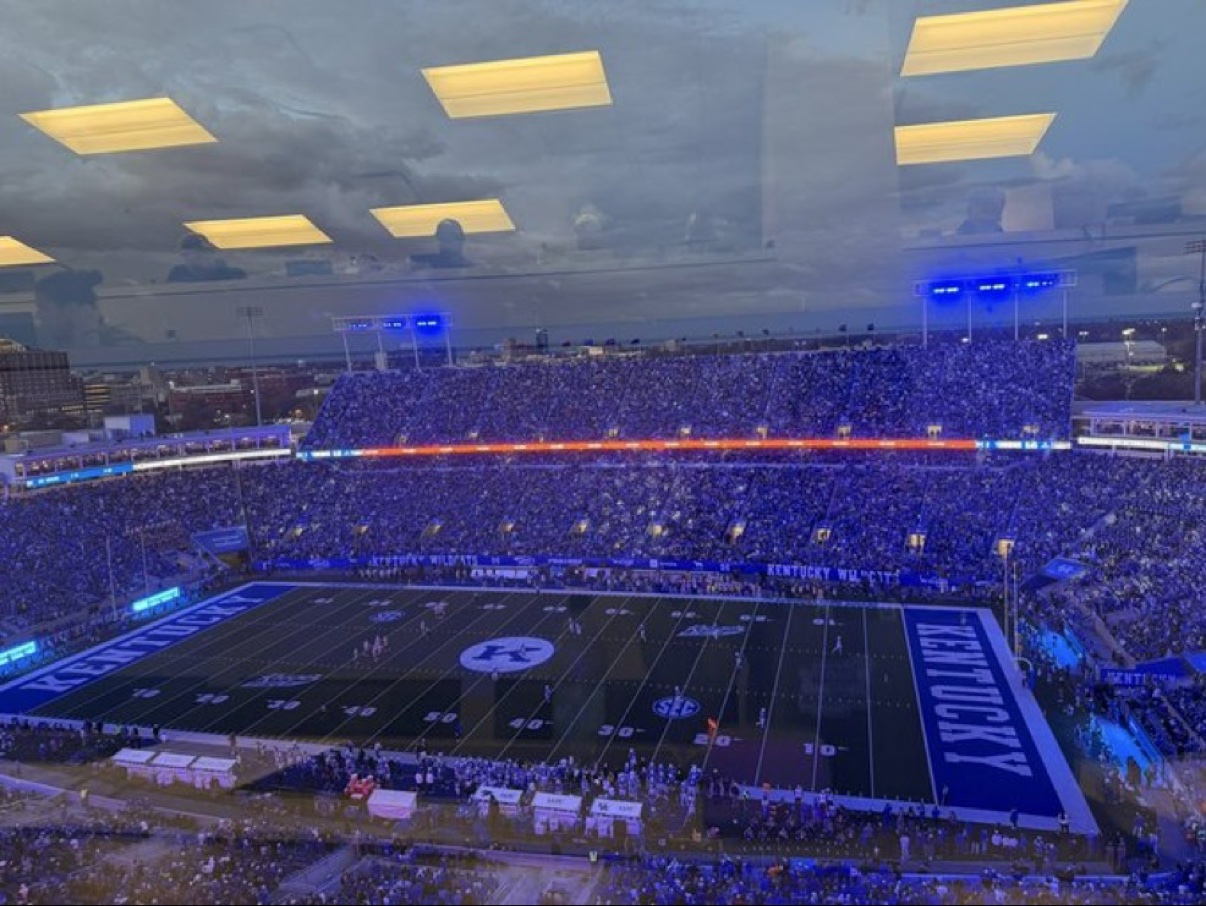
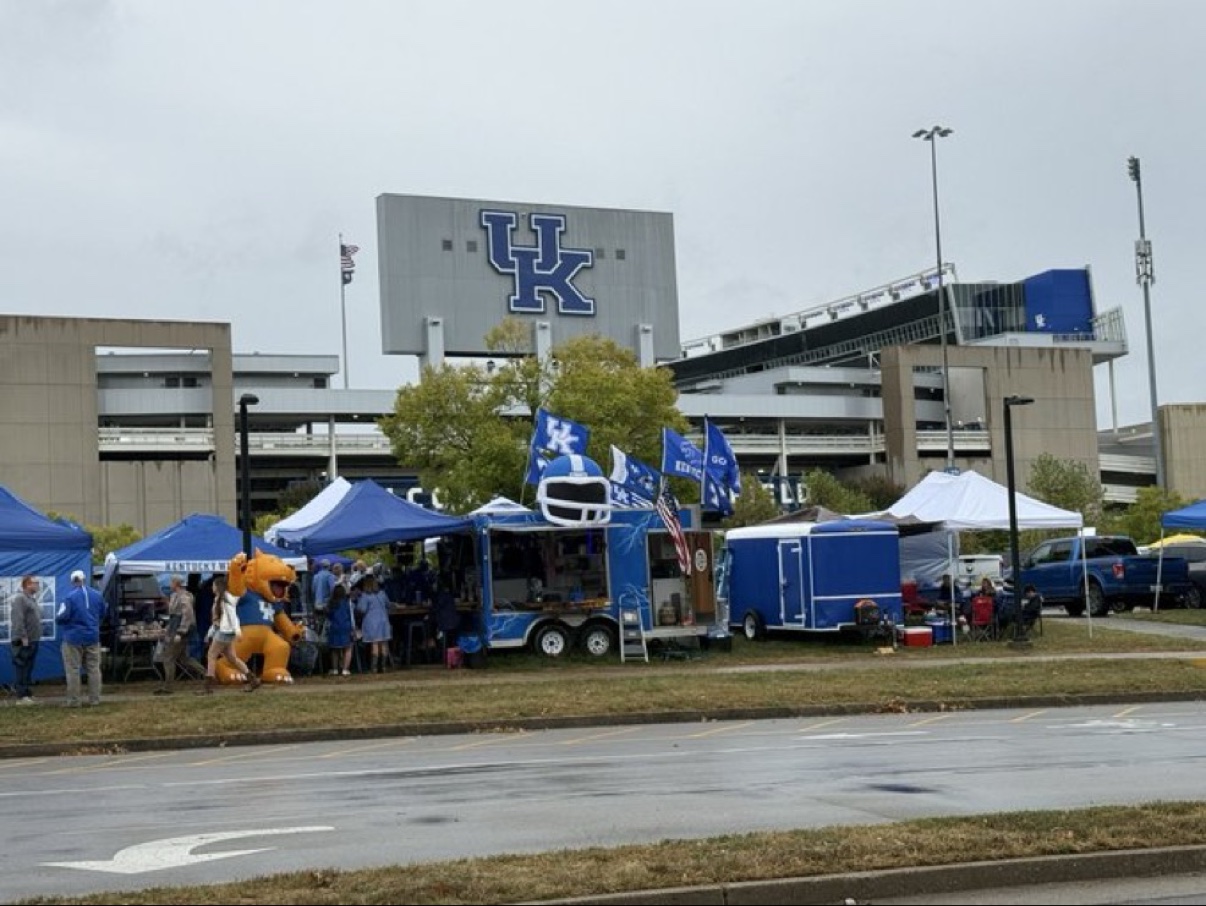
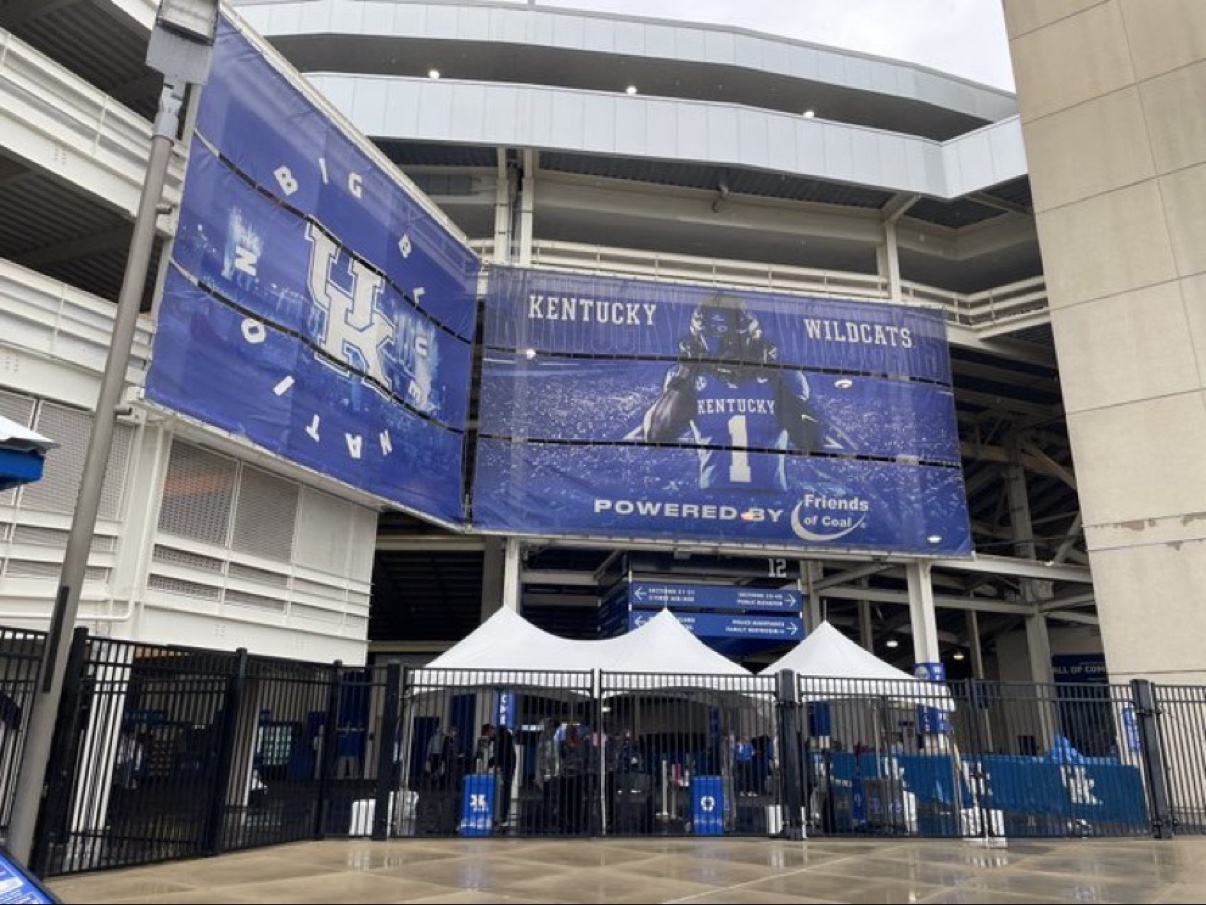
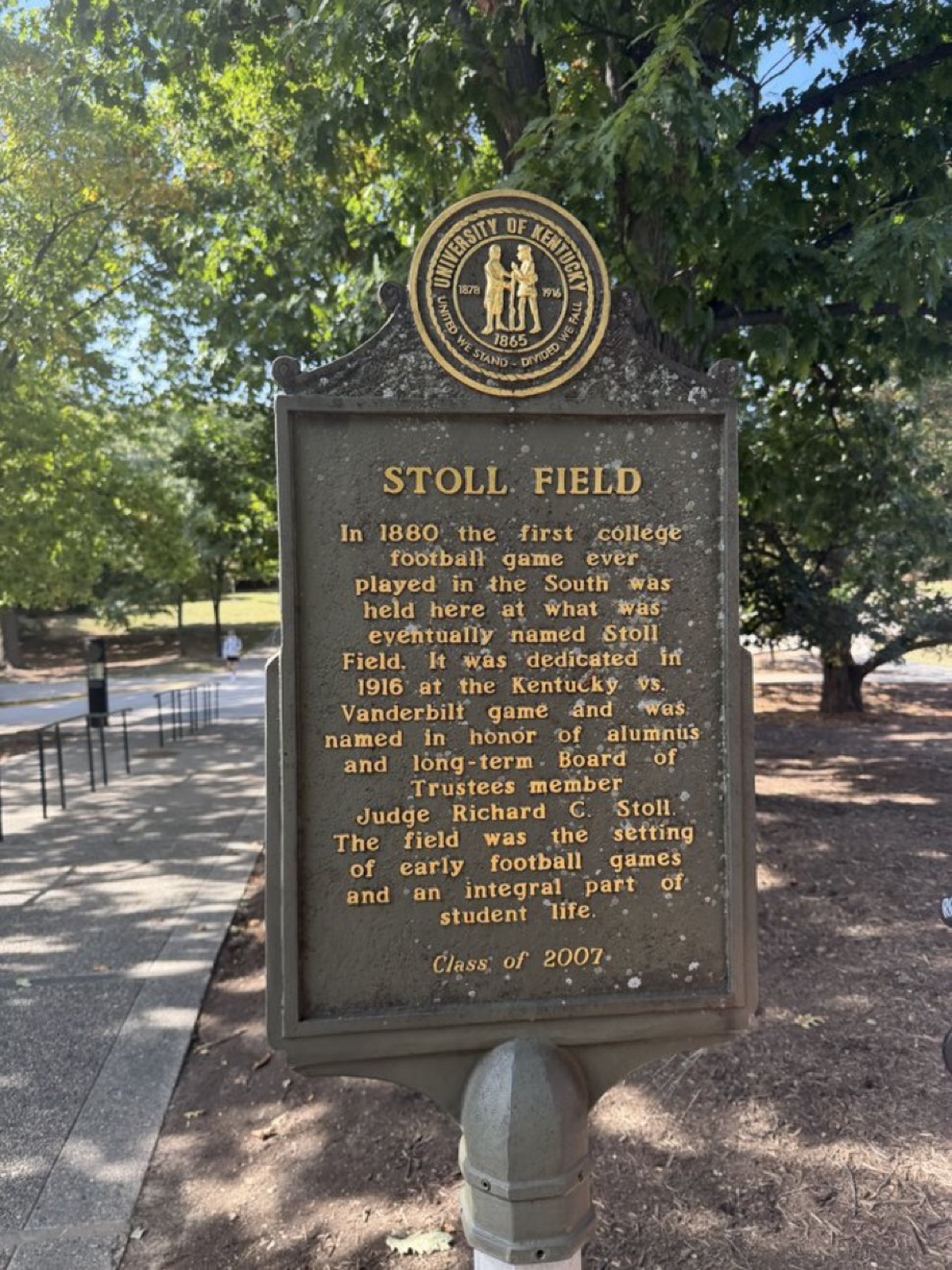

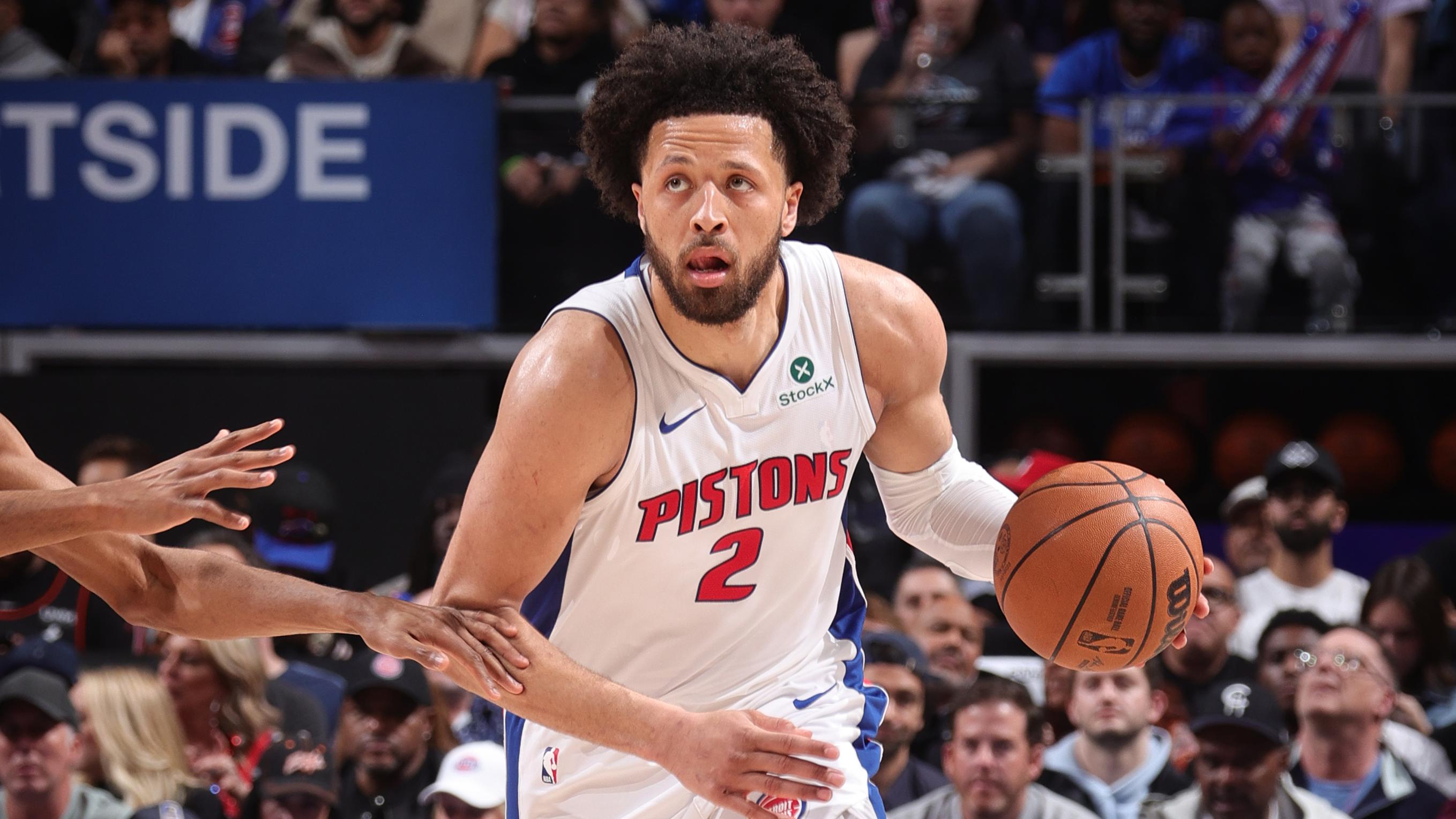


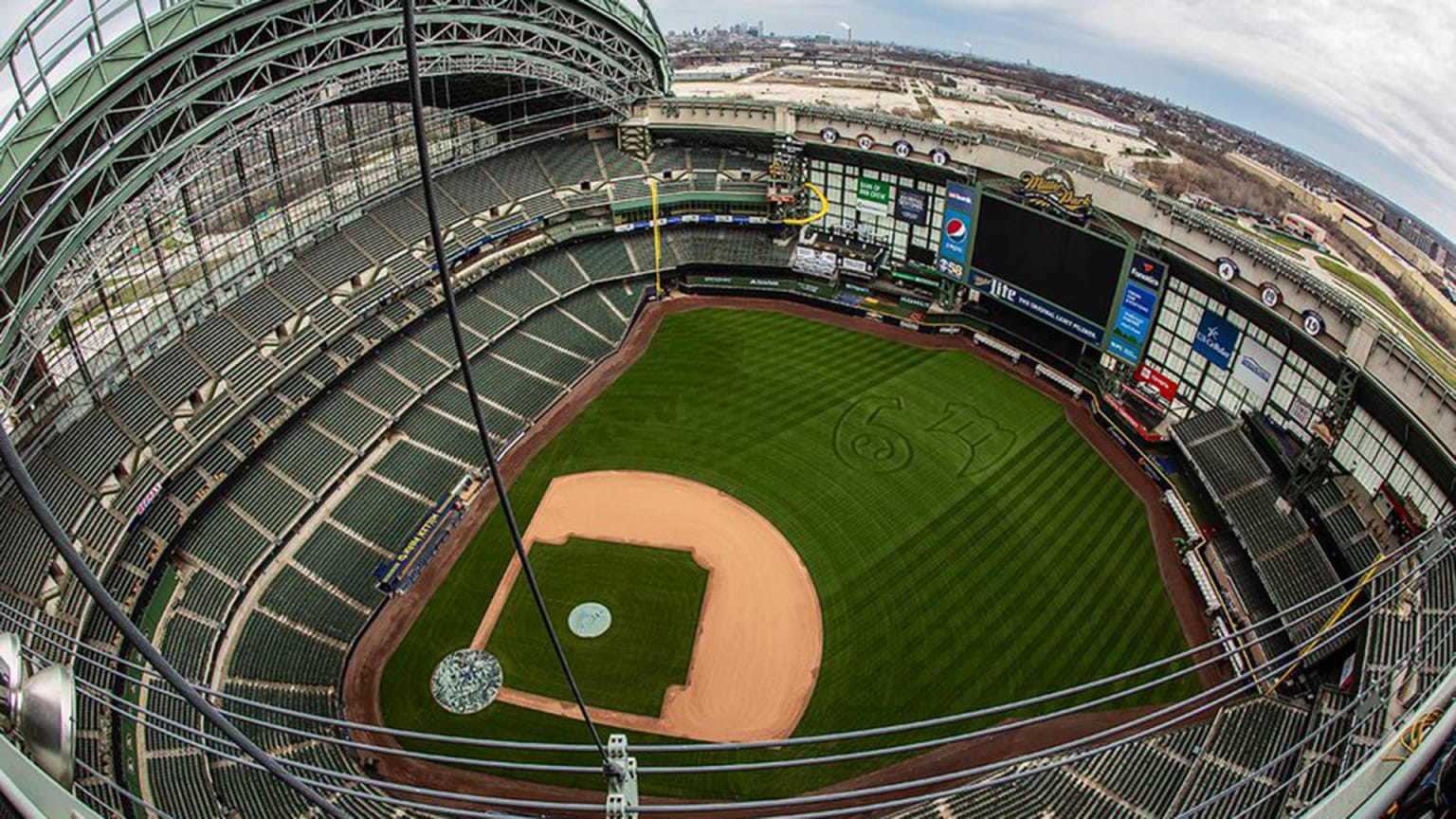
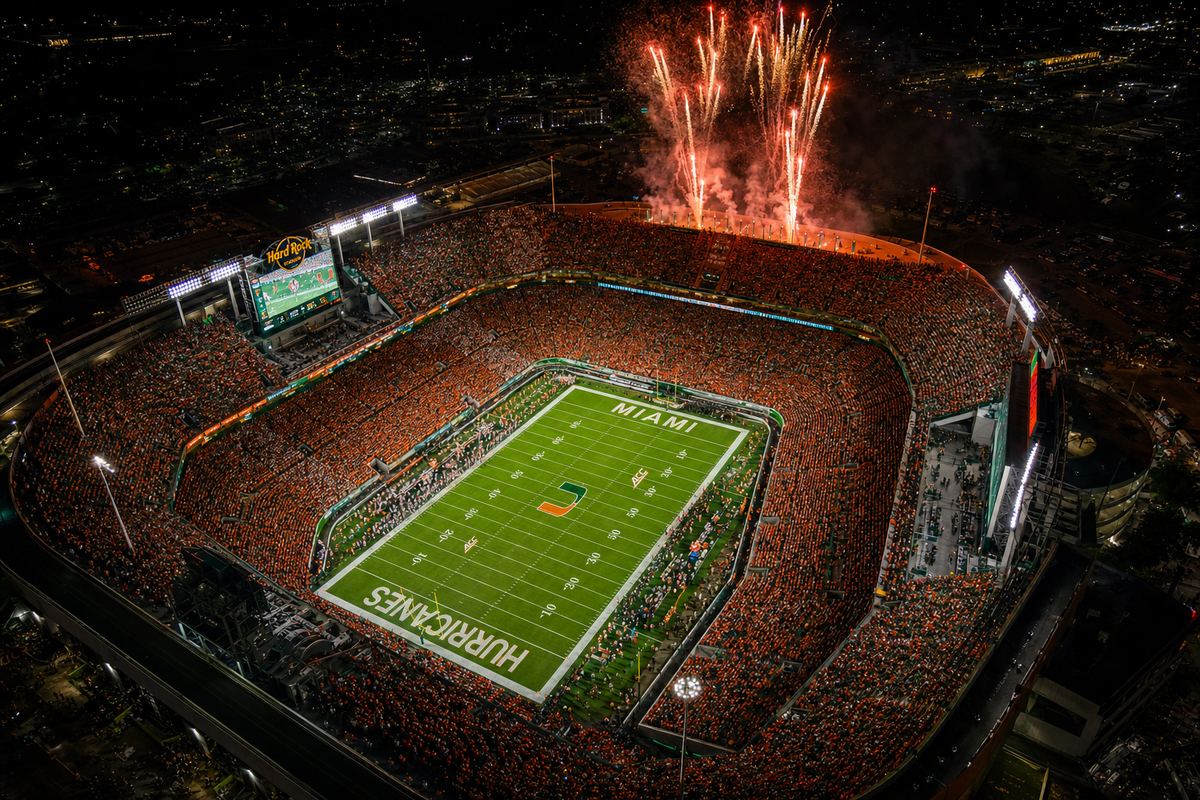

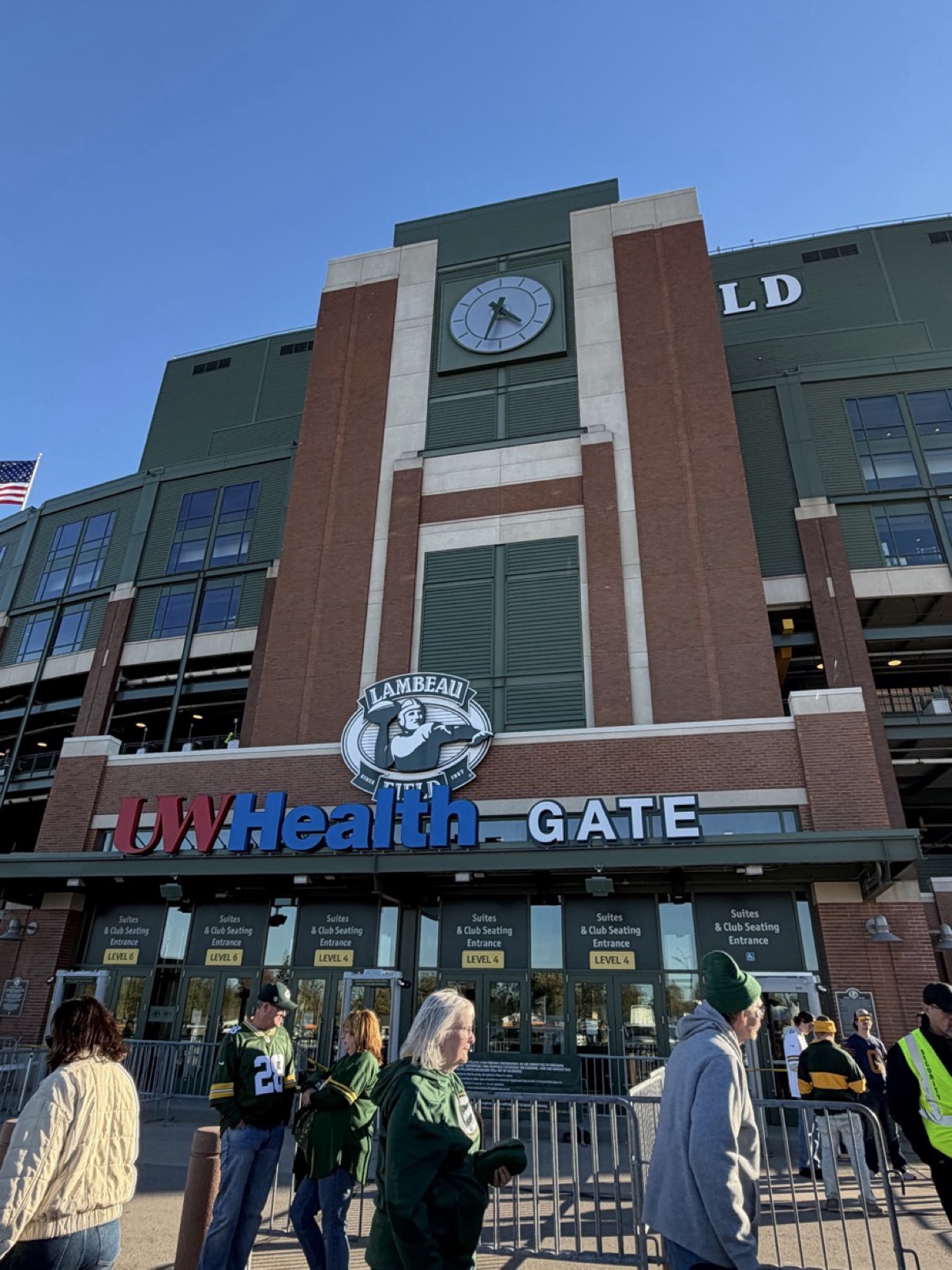
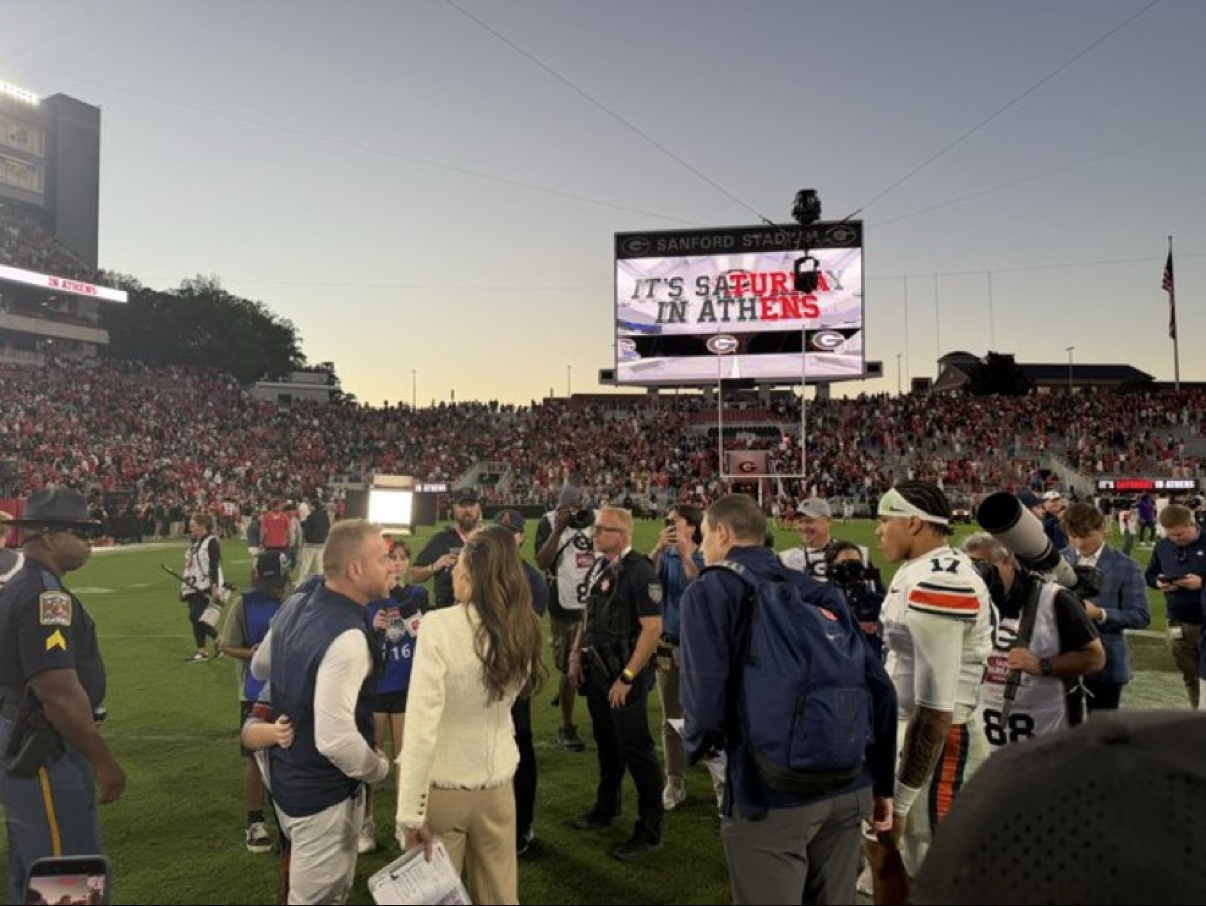
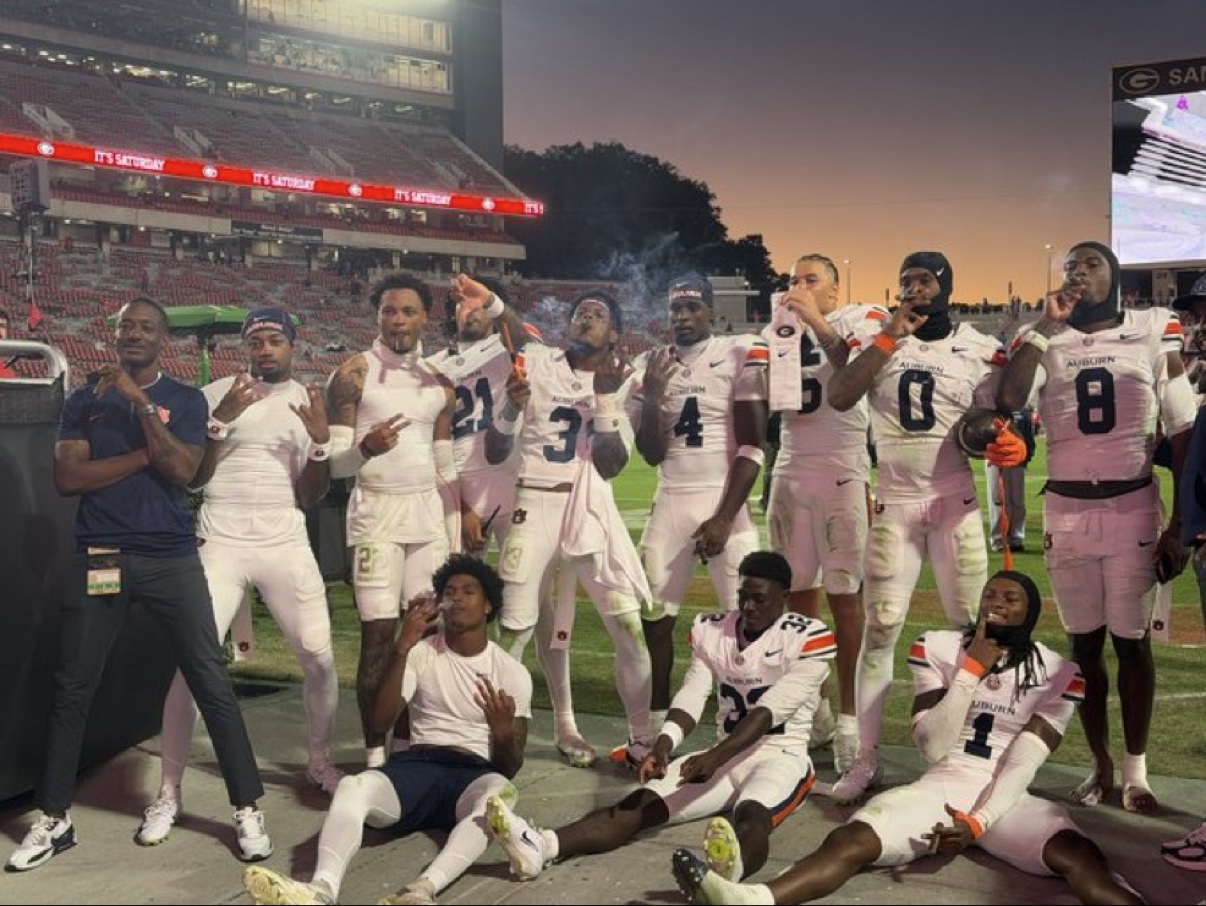
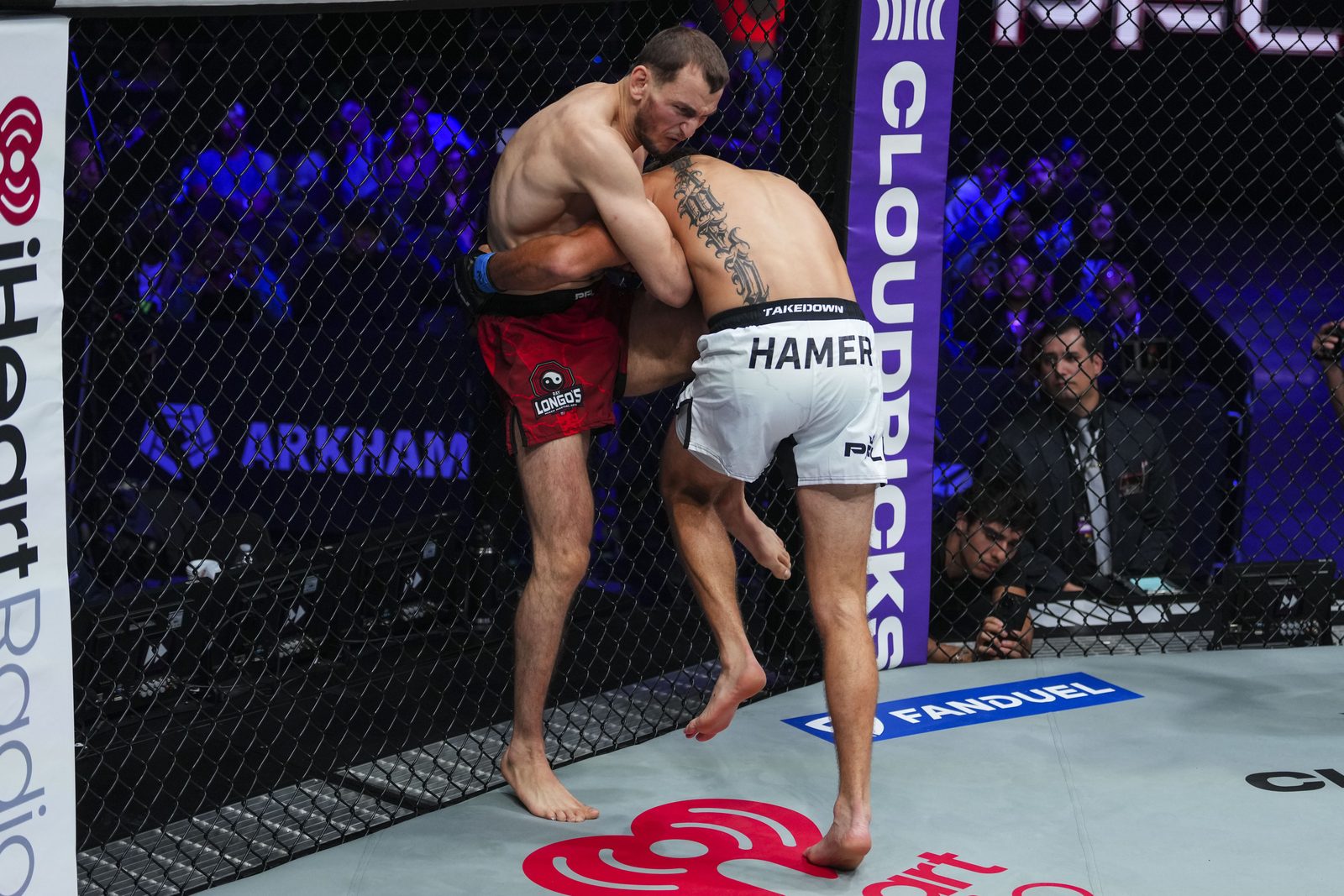

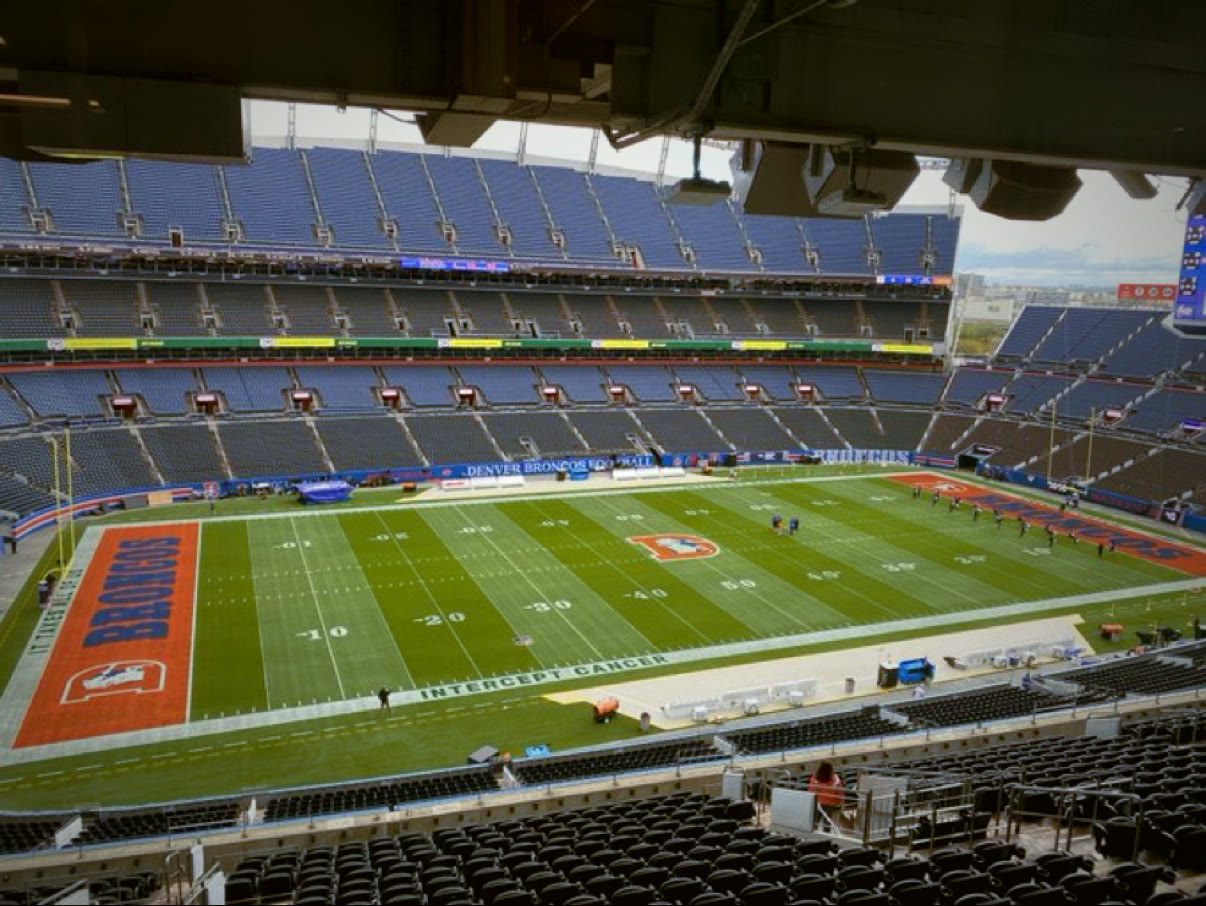
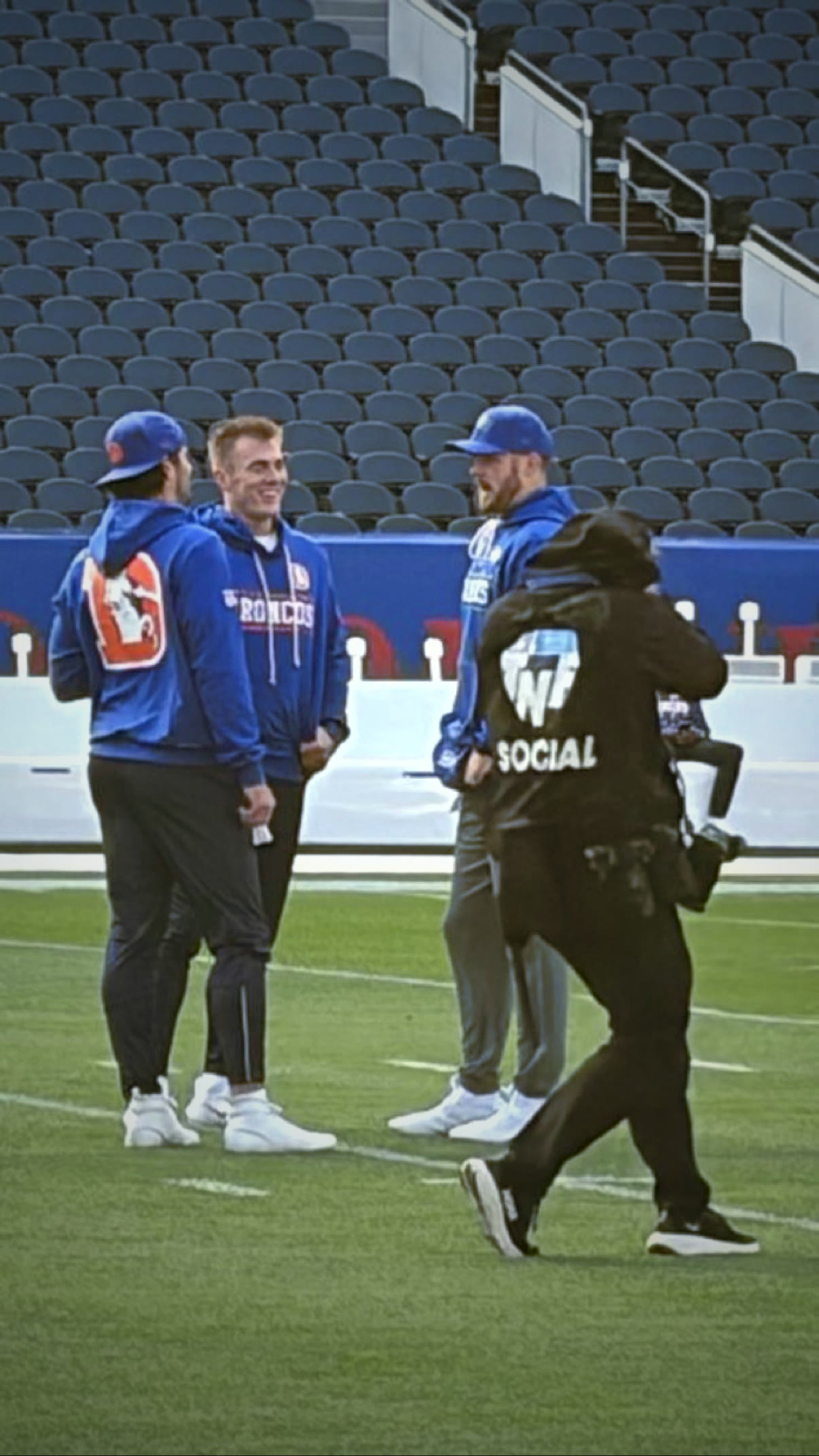


The road, cut close.
Numbered premium clips from the sideline, the smoke and the moments before the crowd arrives.
Inside the boundary
Field-level football, close enough to hear the sideline change gears.
Through the smoke
The tunnel breaks open and game day takes over.
Before the gates
A walk through the crowd before the first snap.
Names on the board
The reveal lands from inside the room.